Tuesday, November 24, 2026

Home Blog Page 51

TÜV Rheinland Invests $21.74 Million in Guangzhou Operation Center to Boost Industrial Tech Services

0

ZH compiled this report based on a news report from China Daily on February 26.

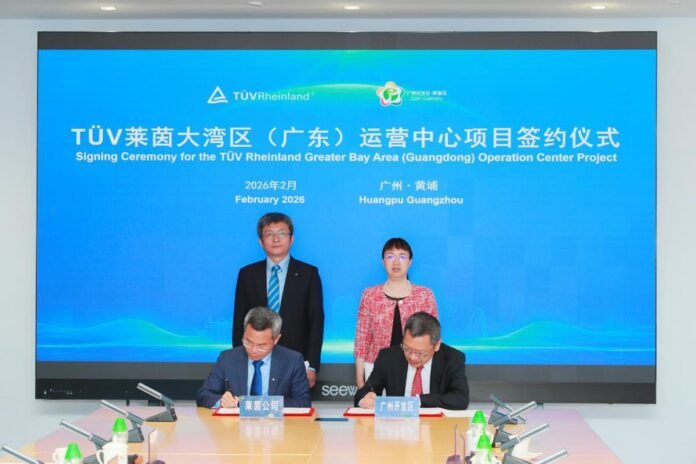
German testing, inspection, and certification (TIC) firm TÜV Rheinland Greater China has announced a $21.74 million (150 million yuan) investment to establish a new operation center in Guangzhou Development District, Guangdong province. The project, in cooperation with the Huangpu district government, is designed to strengthen the region’s industrial technology services and global competitiveness.

The upcoming TÜV Rheinland Greater Bay Area Operation Center will house research and development facilities, a capability center, and a comprehensive testing and certification platform. Laboratories will cover cutting-edge sectors including new energy vehicles, intelligent connected vehicle components, robotics, low-altitude aircraft, smart home appliances, and related components.

Beyond testing and certification, the center will provide management system certification, supply chain quality assessment, and sustainability evaluation, while a dedicated talent training center will focus on low-carbon development and intelligent manufacturing upgrading.

TÜV Rheinland, an independent third-party TIC body with over 30 years of experience in the Guangdong-Hong Kong-Macao Greater Bay Area, said the project is expected to enhance the competitiveness of local enterprises in global markets and advance the internationalization of industrial technical standards.

For international investors, the Guangzhou operation center reflects China’s growing emphasis on industrial technology services, standards compliance, and regional innovation clusters, offering opportunities for collaboration across smart manufacturing, green technology, and high-tech supply chains.

Article inline ad

Shein to Invest $1.46 Billion in Guangdong Supply Chain to Strengthen Domestic Operations

0

ZH compiled this report based on a news report from China Daily on February 26.

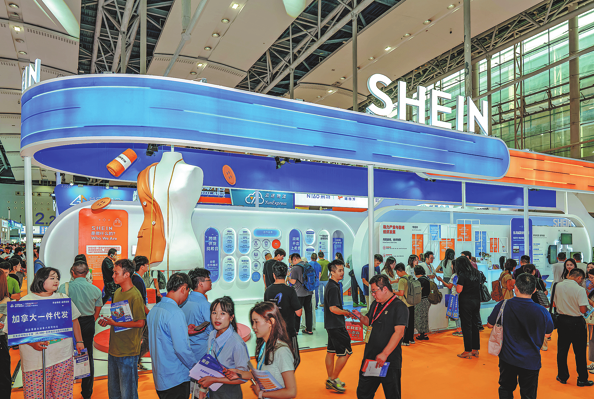
Chinese cross-border e-commerce giant Shein has announced plans to invest more than 10 billion yuan ($1.46 billion) in Guangdong province to enhance its supply chain and consolidate its domestic market presence. The move signals the company’s commitment to building a world-class fashion industry cluster while strengthening operational resilience amid evolving regulatory and capital market conditions.

Founder Xu Yangtian made the announcement at Guangdong’s high-quality development conference, emphasizing the development of a smart, digitalized supply chain system. By linking garment factories with logistics hubs, Shein’s supply chain aligns real-time market demand with production, shortening the design-to-delivery turnaround to just two to three weeks.

Since establishing operations in Guangzhou in 2014, Shein has expanded its product offerings from apparel and footwear to beauty and household goods, exporting to more than 160 countries. The company now collaborates with nearly 10,000 local suppliers, supporting over 600,000 jobs across Guangdong, highlighting the initiative’s significant industrial and employment impact.

In recent years, Shein has also developed a dual-engine domestic structure, with a China research and development center and national operations center in Nanjing complementing its manufacturing and fulfillment base in Guangdong. The strategic realignment enhances both innovation and production capacity while paving the way for a potential future public listing.

Economists note that while Shein has achieved strong growth internationally, its domestic market presence remains relatively limited. Investing in Guangdong reflects the company’s intent to deepen its footprint in China and take advantage of the province’s agile “small-batch, quick-response” production model, which positions it well amid increasing domestic competition.

For international investors, Shein’s Guangdong investment signals confidence in China’s e-commerce market and underscores the growing importance of integrated domestic supply chains in driving industrial competitiveness, employment, and market responsiveness.

Article inline ad

DJI Files Legal Challenge Against US Import Ban, Highlighting Tech Trade Risks

0

ZH compiled this report based on a news report from China Daily on February 26.

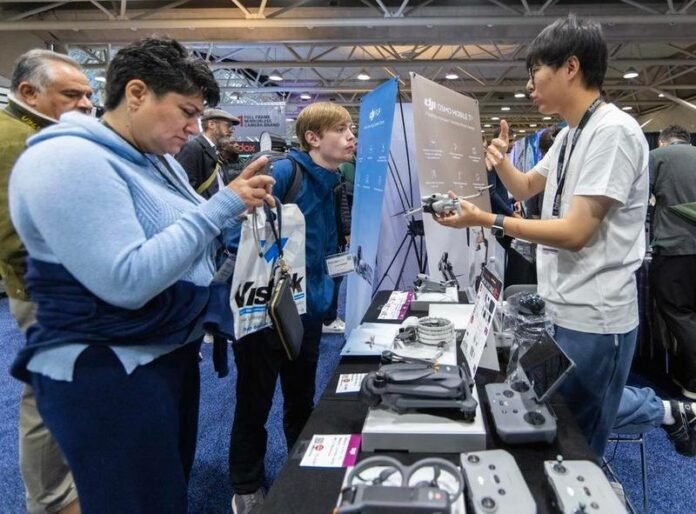
Chinese drone maker DJI, the world’s largest producer of civilian drones, has filed a petition with the United States Court of Appeals for the Ninth Circuit to challenge a US Federal Communications Commission (FCC) order blocking imports of its new models and key components. The move underscores ongoing tensions between US trade and technology policy and global market dynamics.

The FCC placed DJI on its “covered list” in December 2025, restricting the sale and authorization of products deemed to pose national security risks. DJI argues that the decision lacked substantive evidence and procedural fairness, effectively denying US customers access to its latest technology.

DJI holds over 70% of the global civilian drone market, with its US share estimated between 70% and 90% across consumer, commercial, and government segments. More than 80% of the 1,800+ state and local law enforcement agencies using drones in the US rely on DJI products. The ban has disrupted supply chains, spurred stockpiling, and driven up secondary market prices by as much as 200%.

“Users choose DJI products because of availability, affordability, and capability, not nationality,” noted Greg Reverdiau, co-founder of a drone operators’ association in Arizona. Beyond drones, DJI’s action cameras and panoramic imaging products hold substantial global market shares, surpassing competitors like GoPro in several segments.

Legal analysts note that DJI’s challenge is part of a broader pattern of Chinese companies contesting US technology restrictions, citing precedent cases such as Advanced Micro-Fabrication Equipment Inc. China and IDG Capital, which successfully overturned prior blacklist actions.

Liu Ying, senior researcher at the Chongyang Institute for Financial Studies at Renmin University, warned that “US suppression of Chinese technology firms will inevitably trigger countermeasures, from legal action to trade and rule-based responses.” Historical data from the World Trade Organization suggests that US attempts to decouple from trading partners often backfire, undermining supply chains and global competitiveness.

For international investors, the case highlights the risks and uncertainties in the tech sector arising from geopolitical frictions. DJI’s lawsuit may influence not only drone and imaging markets but also broader discussions on technology supply chains, regulatory transparency, and market access for foreign firms in the US.

Article inline ad

Shanghai Launches Pilot Program to Stabilize Preowned Housing Market

0

ZH compiled this report based on a news report from China Daily on February 26.

Shanghai is piloting a new mechanism to acquire preowned homes, aiming to guarantee the supply of government-subsidized rental housing while stabilizing the broader property market. Analysts see the initiative as a measured, targeted policy designed to support sustainable market circulation rather than drive a price surge.

The program, launched on February 2, allows local governments in Jing’an, Xuhui, and Pudong New Area to purchase preowned flats that meet specific criteria, including suitable size, reasonable design, established communities, and convenient transportation. These units, acquired with support from China Construction Bank, will later be matched with tenants such as new urban residents, young professionals, and university graduates.

Stabilizing the Secondary Market

Preowned housing accounts for roughly 70% of Shanghai’s home transactions, making a healthy secondary market crucial for overall stability. By entering the market as a buyer, the government establishes pricing benchmarks, curbing excessive volatility caused by speculative sentiment.

For instance, Pudong’s pilot targets flats built before 2000, under 70 square meters, and priced below 4 million yuan ($576,340). With over three-quarters of last year’s preowned transactions falling under this threshold, the initiative is expected to influence a substantial portion of the market.

Supporting Urban Mobility and Affordable Housing

The initiative is aligned with the broader policy direction outlined at China’s annual Central Economic Work Conference, which emphasized using existing commercial housing to support affordable housing goals. Analysts note that the program will accelerate the relocation process for families seeking improved living conditions while revitalizing older, smaller, or poorly maintained properties in city centers.

“The program is not a market rescue,” said Zhang Dawei. “It’s a precise regulatory measure that balances housing supply and demand, provides options for young residents, and ensures healthy circulation between new and existing homes.”

Market Reception and Potential Spillover

Early reactions from the market have been largely positive. Shanghai’s secondary home market warmed up in January, with 20,300 apartments changing hands — a 26.7% year-on-year increase. Analysts suggest the pilot could serve as a template for other major Chinese cities facing similar challenges, such as slow circulation and uneven pricing in the preowned market.

By targeting specific segments of the market and implementing clear criteria, Shanghai’s approach demonstrates a calibrated strategy to stabilize home prices, promote housing affordability, and support orderly market development.

Article inline ad

China Expands Services Imports to Power Innovation and Green Transition

0

ZH compiled this report based on a news report from China Daily on February 26.

China’s decision to expand its catalog of encouraged services imports signals a structural shift in the country’s opening-up strategy — one increasingly focused on innovation capacity, green transformation and deeper integration into global value chains.

According to new guidelines jointly released by the Ministry of Commerce, the National Development and Reform Commission and the Ministry of Industry and Information Technology, the revised catalog prioritizes the import of research and development, industrial design, testing services, intellectual property, and digital technology services.

While services trade has long been part of China’s economic framework, this update suggests a recalibration: services imports are no longer supplementary — they are becoming strategic inputs into high-quality development.

From Goods Powerhouse to Value Chain Integrator

China’s trade in services reached 8.08 trillion yuan ($1.18 trillion) in 2025, up 7.4 percent year-on-year. Services imports stood at 4.46 trillion yuan, reflecting steady expansion despite global trade headwinds.

More notably, imports of knowledge-intensive services reached 1.26 trillion yuan, underscoring rising demand for advanced expertise and technical capabilities.

This trajectory reflects a broader transition. Rather than focusing solely on manufacturing output, policymakers are positioning China as a hub for integrating high-end services into industrial upgrading.

Consultancy leaders, including executives from Roland Berger, note that producer services — such as supply chain management, consulting and R&D — are increasingly essential for extending value chains both upstream and downstream. In regions with strong manufacturing bases, these services can accelerate movement toward higher-end capabilities and foster industrial clustering.

Supporting the Green and Digital Shift

A significant portion of the updated catalog emphasizes green and sustainability-related services.

Priority areas include:

  • Energy conservation and resource recycling

  • Environmental governance and pollution control

  • Ecological restoration and carbon reduction

  • Circular economy and climate-related services

By expanding imports in these segments, China aims to access global expertise that can help accelerate its low-carbon transition and improve environmental governance.

At the same time, digital services and intellectual property-related imports are expected to reinforce innovation capacity, aligning with the country’s push to develop “new quality productive forces” and upgrade its industrial structure.

Signaling Deeper Opening-Up

Beyond industrial policy, the move also carries trade diplomacy implications.

By encouraging imports of high value-added services, China signals willingness to rebalance trade structures and create new market opportunities for global firms. Business leaders from multinational companies such as FedEx have emphasized China’s central role in global supply chains and expressed confidence in expanding their footprint as services trade deepens.

For international companies, the expanded catalog may translate into greater participation in sectors such as consulting, logistics, healthcare, green construction and digital infrastructure.

A Measured but Strategic Shift

The updated catalog does not represent a dramatic policy pivot. Instead, it forms part of a gradual restructuring of China’s economic model — one that seeks to:

  • Reduce reliance on traditional property- and infrastructure-led growth

  • Enhance productivity through service-manufacturing integration

  • Strengthen green and digital competitiveness

  • Embed China more deeply in global knowledge networks

For global observers, the significance lies less in short-term trade figures and more in long-term direction. Services imports are increasingly being treated as strategic enablers of innovation, sustainability and governance modernization.

If successfully implemented, the policy could help reshape China’s role in global trade — from a dominant goods exporter to a central orchestrator of cross-border expertise and high-value services integration.

Article inline ad

Shanghai’s Housing Easing Signals Turning Point for China’s Property Cycle

0

ZH compiled this report based on a news report from China Daily on February 26.

Shanghai’s latest round of housing policy adjustments may represent more than a localized easing measure — it could signal a broader inflection point in China’s multi-year property downturn.

The city this week unveiled a seven-point package aimed at relaxing homebuying restrictions, particularly for nonlocal residents. The measures include lowering eligibility thresholds for buyers without Shanghai household registration (hukou), easing housing provident fund loan requirements, and refining property tax exemption conditions.

While incremental in appearance, the timing and scope of the move carry macroeconomic significance.

A First-Tier Test Case

As one of China’s four first-tier cities and a bellwether for national property trends, Shanghai often serves as a policy testing ground. Adjustments introduced here are closely watched by developers, financial institutions and policymakers across the country.

According to analysts at 58 Anjuke Research Institute, the measures are “precisely calibrated” against a backdrop in which the national property market is approaching a cyclical bottom. The objective is not aggressive stimulus, but stabilization — restoring confidence while preventing renewed speculative excess.

If transaction volumes and prices stabilize in Shanghai over the coming months, it could reinforce expectations that China’s property sector is entering a consolidation phase rather than facing further systemic decline.

Unlocking Structural Demand

One notable feature of the policy package is its focus on nonlocal buyers — a group that accounts for roughly 40 percent of Shanghai’s population.

Under the revised rules:

  • Nonlocal residents who have paid taxes in Shanghai for at least one year may purchase homes within the Outer Ring Road.

  • Those with three years of tax payments can buy an additional property.

  • Long-term residence permit holders may qualify without income tax payment requirements.

By targeting this demographic, policymakers aim to unlock “structural demand” rather than encourage speculative investment.

Analysts at E-House China R&D Institute note that stimulating genuine end-user demand is critical to absorbing existing housing inventory, stabilizing pre-owned home prices, and restoring liquidity to the broader market.

Stabilization, Not Reflation

Importantly, the policy does not represent a return to the debt-fueled expansion era that defined China’s property boom in the 2000s and 2010s.

Instead, the emphasis is on:

  • Lowering transaction friction

  • Supporting reasonable housing needs

  • Improving supply-demand balance

  • Gradually rebuilding market expectations

This approach aligns with Beijing’s broader objective of promoting “stable and healthy development” in the property sector while avoiding renewed asset bubbles.

Broader Economic Implications

The property sector has long played an outsized role in China’s economy, influencing:

  • Local government revenue

  • Construction activity

  • Household wealth perceptions

  • Financial system stability

A sustained stabilization in Shanghai — particularly during the traditional spring transaction season — could have spillover effects across the Yangtze River Delta region and other major urban centers.

If transaction momentum improves in March and April, it may bolster consumer confidence and support broader domestic demand recovery in 2026.

Watching for a National Shift

Whether Shanghai’s easing marks the beginning of a nationwide pivot remains to be seen. However, the move suggests policymakers are increasingly confident that the sector is nearing its cyclical trough.

For global investors, the key question is not whether China’s property market will return to its previous growth model — it almost certainly will not — but whether the current phase of managed stabilization can successfully anchor expectations and prevent renewed volatility.

If Shanghai succeeds in consolidating market confidence without reigniting speculation, it could offer a template for other major cities navigating the delicate balance between stimulus and structural adjustment.

Article inline ad

Hong Kong Moves Into China’s Semiconductor Strategy as Global Tech Competition Intensifies

0

ZH compiled this report based on a news report from China Daily on February 26.

As global competition in semiconductors and advanced manufacturing accelerates, Hong Kong is being positioned as a new node in China’s strategic technology architecture.

In its 2026–27 Budget, the Hong Kong Special Administrative Region announced plans to allocate approximately HK$220 million to establish the first national-level manufacturing innovation center located outside the Chinese mainland. The move signals more than regional industrial support — it reflects a recalibration of Hong Kong’s role within China’s broader technology strategy.

A Strategic Expansion Beyond the Mainland

The center will focus on semiconductor-related research and development, an area widely regarded as central to technological sovereignty and industrial resilience worldwide.

Led by the Hong Kong Microelectronics Research and Development Institute, the facility will be built at Yuen Long InnoPark near the Shenzhen border — a location that physically connects Hong Kong’s research ecosystem with the manufacturing capacity of the Greater Bay Area.

After construction, the center will undergo accreditation by central authorities, underscoring its national-level status.

Reframing Hong Kong’s Economic Function

Speaking after delivering the budget, Paul Chan Mo-po emphasized that under the “one country, two systems” framework, Hong Kong can attract global talent and provide an internationalized environment for applied research.

In practical terms, this means leveraging:

  • Hong Kong’s universities and research institutions

  • Its global financial and legal systems

  • Its connectivity to international capital and talent

While pairing these strengths with mainland China’s scale advantages in pilot production and mass manufacturing.

This hybrid model reflects an emerging policy direction: integrating the full value chain — from research and prototyping to commercialization — within a coordinated national framework.

Semiconductor Geopolitics in the Background

The timing is significant.

Semiconductors have become a focal point of global technology competition, with export controls, supply-chain diversification and domestic capacity building reshaping industrial policies worldwide.

By situating a national innovation center in Hong Kong, China appears to be expanding its institutional footprint beyond traditional mainland tech hubs. The initiative aligns with the country’s 15th Five-Year Plan (2026–2030), which prioritizes high-quality development and technological self-reliance.

The project also stems from a 2024 cooperation agreement between the Hong Kong SAR government and the Ministry of Industry and Information Technology to promote “new quality productive forces” and advanced manufacturing coordination.

Bridging Global Talent and National Strategy

Policy analysts suggest the move may serve multiple strategic purposes:

  1. Attracting international scientists and engineers in an open regulatory environment

  2. Strengthening applied semiconductor research capacity

  3. Reducing fragmentation between research and industrialization

  4. Enhancing Hong Kong’s role in China’s industrial upgrading

The center is also expected to monitor frontier technologies, including artificial intelligence and health innovation — fields that increasingly intersect with semiconductor development.

A Signal of Structural Integration

For global observers, the establishment of the innovation center is less about the immediate funding scale and more about institutional design.

It suggests a deepening integration of Hong Kong into China’s strategic technology ecosystem — not merely as a financial gateway, but as an active participant in industrial innovation.

In an era defined by technological rivalry and supply-chain realignment, the move indicates that China is experimenting with diversified geographic and institutional platforms to sustain long-term competitiveness.

Article inline ad

Beyond 2026: Stability or Strategic Competition?

0

ZH compiled this report based on a news report from China Daily on February 26.

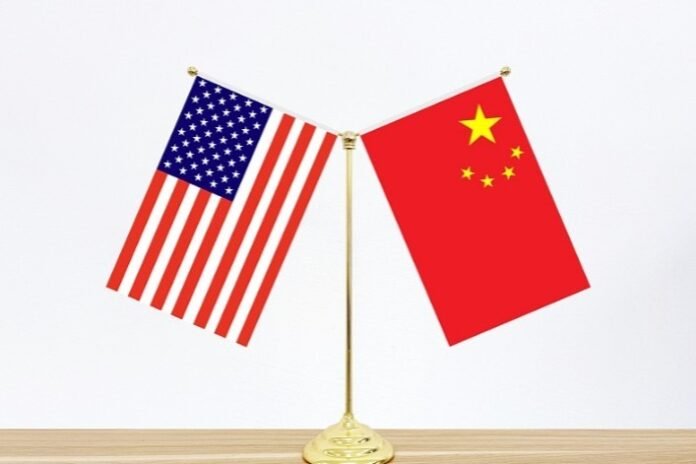
For global markets, the key question is not whether tariffs will disappear — but whether the two largest economies can prevent trade friction from spilling into systemic decoupling.

 The sixth round of talks may not produce dramatic breakthroughs. However, it could define the tone of economic engagement in 2026: managed competition, tactical stabilization, or renewed escalation.

 The answer will depend less on rhetoric — and more on each side’s economic resilience and technological strength.

 一、Shanghai Eastern Hub + AWE 2026

 Shanghai’s New Business Zone to Host AWE 2026, Signaling Deeper Opening in Tech Ecosystem

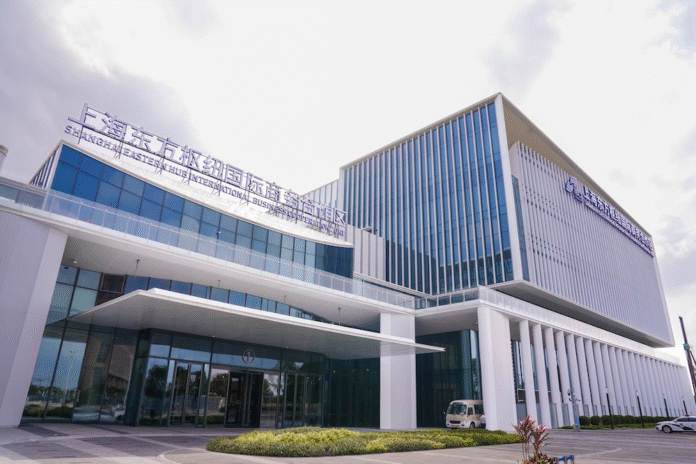
 Shanghai is positioning its newly established Eastern Hub International Business Cooperation Zone as a gateway for global technology collaboration, with the zone set to debut as one of two venues for the 2026 Appliance & Electronics World Expo (AWE).

 The move marks a significant step in China’s efforts to combine high-standard opening-up policies with next-generation industrial development.

 AWE — one of China’s largest trade fairs for home appliances and consumer electronics — will span 170,000 square meters this year. While the main exhibition remains at the Shanghai New International Expo Center, a newly added 30,000-square-meter section inside the Eastern Hub zone will focus on cutting-edge technologies and emerging product breakthroughs.

 Unlike traditional exhibition expansions, this addition carries institutional significance.

 A Policy-Backed Business Gateway

 The Eastern Hub International Business Cooperation Zone operates under a pilot framework designed to streamline international commercial engagement. One of its most notable features is a 30-day visa-free entry policy for invited foreign participants — a move aimed at facilitating cross-border collaboration, product launches and deal-making.

 For global companies, this effectively lowers friction in attending, exhibiting and negotiating within China’s innovation ecosystem.

 The zone’s policy architecture also allows visitors to move between the cooperation zone and Shanghai under existing visa-free arrangements, further integrating the pilot area into the broader Yangtze River Delta business environment.

 AI and Consumer Electronics Converge

 With 1,200 companies expected and around 200,000 visitors projected, AWE 2026 reflects China’s continued push to embed artificial intelligence across the consumer electronics supply chain.

 Organizers indicated that the Shanghai New International Expo Center will emphasize the AI ecosystem — highlighting smart home integration, intelligent devices and AI-driven applications — while the Eastern Hub zone will spotlight frontier technologies and global innovation showcases.

 This dual structure signals China’s strategy: combining domestic industrial upgrading with deeper international connectivity.

 For overseas firms, the expo provides not only market access but also insight into the evolving direction of China’s consumer technology sector — one increasingly shaped by AI integration, cross-border capital flows and talent mobility.

 二、Hong Kong National Manufacturing Innovation Center

 Hong Kong to Establish First National Manufacturing Innovation Center Outside Mainland China

 Hong Kong will establish the first national-level manufacturing innovation center located outside the Chinese mainland, marking a significant step in integrating the city more deeply into China’s advanced industrial strategy.

 The project, backed by approximately HK$220 million under the 2026–27 Budget, will focus primarily on semiconductor-related research and development — a sector widely regarded as central to global technological competition.

 Strategic Positioning Under “One Country, Two Systems”

 Hong Kong’s Financial Secretary Paul Chan Mo-po described the initiative as leveraging the city’s unique institutional framework to attract global talent while aligning with national innovation priorities.

 The center will be led by the Hong Kong Microelectronics Research and Development Institute and built at Yuen Long InnoPark, near the Shenzhen border — a location that symbolically and practically connects Hong Kong’s research base with the mainland’s manufacturing capacity.

 Following construction, the facility will undergo accreditation by central authorities, a process expected to take up to three years.

 Bridging Research and Industrialization

 The innovation center aims to close a long-standing gap between laboratory research and large-scale industrial application.

 By combining Hong Kong’s global financial networks and academic strength with the mainland’s pilot production and mass manufacturing capabilities, the project is designed to integrate the full semiconductor value chain — from R&D to commercialization.

 Beyond semiconductors, the center will monitor frontier technologies including artificial intelligence and health innovation, seeking to attract international scientists and engineers to conduct applied research in the city.

 A Broader Industrial Policy Shift

 The initiative aligns with China’s 15th Five-Year Plan (2026–2030), which emphasizes technological self-reliance and new industrialization. It also follows a 2024 cooperation agreement between Hong Kong and the Ministry of Industry and Information Technology to promote “new quality productive forces.”

 For international observers, the move signals a recalibration of Hong Kong’s economic role — from primarily a financial hub to a participant in strategic technology development.

 The center may also enhance Hong Kong’s attractiveness to global semiconductor firms seeking access to both mainland manufacturing networks and international capital markets.

Article inline ad

After The Tariff Reset: What The Sixth Round Of Sino-US Trade Talks Signals

0

ZH compiled this report based on a news report from China Daily on February 26.

The anticipated sixth round of Sino-US trade negotiations comes at an unusually fluid moment in bilateral economic relations. A recent US Supreme Court ruling invalidating broad-based tariffs imposed under the International Emergency Economic Powers Act has abruptly reshaped the legal foundation of Washington’s trade pressure strategy.

 The decision struck down both the 10 percent “fentanyl tariff” and the 34 percent “reciprocal tariff” on Chinese goods. In response, the White House swiftly invoked Section 122 of the Trade Act of 1974, introducing a temporary 10 percent import surcharge on all trading partners — a measure set to expire within 150 days.

 While the immediate tariff burden remains, the strategic environment has shifted.

 A Narrowing Window for Washington

 Section 122 is inherently temporary. Unlike Section 301 or Section 232 investigations, which can underpin longer-term tariff regimes, Section 122 functions as a short-term safeguard tool. Its limited duration creates a structural time constraint for US policymakers.

 This means the upcoming talks are not merely routine diplomatic engagements. They are taking place under a ticking clock.

 The legal setback also signals that Washington’s tariff toolkit may face increasing domestic scrutiny — a factor Beijing will closely monitor as it calibrates its own response.

 The Core Bargaining Chips

 Beyond the headlines, three negotiation fronts are likely to dominate:

 Rare earth export controls and supply chain security

 High-tech restrictions and industrial policy disputes

 The renewal or adjustment of previously agreed one-year tariff arrangements

 The fifth round of talks produced temporary stabilizing measures. As these approach expiration, both sides must decide whether to extend, revise or replace them.

 Washington seeks further relaxation of export controls in critical materials. Beijing, in turn, demands changes to what it views as containment efforts targeting China’s advanced technology sectors.

 These are structural disagreements — not transactional ones.

 Resilience as Leverage

 Ultimately, the balance of leverage may not hinge on tariffs alone.

 China’s export structure has undergone significant diversification in recent years, with expanded trade links across ASEAN, the Middle East, Latin America and Europe. This shift has reduced vulnerability to single-market shocks.

 Meanwhile, the US faces domestic political and legal complexities that limit its ability to rely solely on sweeping tariff instruments.

 In this context, the negotiations are likely to remain protracted and cyclical. But they are also becoming more calibrated and less prone to sudden escalation.

Article inline ad

Shanghai biz zone to launch debut expo

0

By Wang Ying in Shanghai | China Daily | Updated: 2026-02-26 

Shanghai Eastern Hub International Business Cooperation Zone, a benchmark area in terms of opening-up and business-friendly climate, will launch its debut exhibition as one of the two venues of the Appliance & Electronics World Expo (AWE) 2026, marking the commercial hub’s latest effort to provide an ideal platform for product launches, technology exchanges and business negotiations, said officials and industry leaders.

 As one of China’s largest exhibitions for home appliances and consumer electronics, AWE 2026 will set up an exhibition area in the zone for the first time since its inception in 1992, which is designed to showcase latest achievements in cutting-edge technologies worldwide, said Pan Yan, deputy director of the Shanghai Commission of Economy and Informatization, during a news conference on Wednesday.

 Pan said AWE’s combined exhibition space will amount to 170,000 square meters, which consists of a 140,000 sq m exhibition area at Shanghai New International Expo Center and the newly launched 30,000 sq m space in the zone.

 As the first of its kind across the nation, it is hoped that the pilot zone will invigorate the nation’s efforts to advance high-standard opening-up.

 “As one of the areas meeting the highest standards of international openness, the Shanghai Eastern Hub International Business Cooperation Zone is tasked with providing convenience and support for all types of international business activities, including consumer electronics exhibitions,” said Zhao Yugang, deputy director of the zone’s administration.

 The innovative measures in the cooperation zone are expected not only to promote people-to-people exchanges and cross-border transportation of products, but also facilitate the gathering of talent, technology and capital, Zhao said.

 “Featuring a high level of international openness, the cooperation zone allows invited individuals from all countries with valid invitations to enter without visas or other entry permits. They may stay for up to 30 days per entry, and can apply for extensions if needed,” Pan said.

 In addition to the special 30-day stay policy, inbound visitors can equally enjoy existing visa-free policies during their trips from the cooperation zone to Shanghai and surrounding areas, while people in China can enter the zone by applying for a relevant pass, he added.

 With 200,000 visitors expected, the expo — to be held in Shanghai from March 12 to 15 — will feature 1,200 companies in the home appliances and consumer electronics sectors.

 “It will offer visitors a panoramic view of the latest achievements and major products in consumer electronics, provide a world-class platform for industrial innovation, and bring together top-tier resources and expertise,” Pan said.

 Xu Dongsheng, vice-chairman of the China Household Electrical Appliances Association, said the two exhibition zones would adopt distinctive models.

 “The exhibitions at the Shanghai New International Expo Center will focus on the AI ecosystem. The Shanghai Eastern Hub International Business Cooperation Zone will highlight cutting-edge technologies, showcasing the latest breakthroughs in consumer electronics.”

Article inline ad