Wednesday, November 25, 2026

Home Blog Page 58

China’s Asset Management Industry Enters a Quality-Driven Era

0

According to China Daily on February 14, 2026

China’s asset management industry is entering what could be its most consequential transition in a decade — shifting from rapid scale expansion to a model centered on quality, risk control and capital efficiency.

By the end of 2025, total assets under management reached 184.53 trillion yuan (US$26.7 trillion), up 13.1% year-on-year, according to data from CITIC Financial Holdings. While the headline number confirms the sector’s massive scale, the more important story lies beneath the surface: structural refinement and regulatory consolidation.

For international investors, this transition signals both greater stability and clearer policy direction.


From Expansion to Discipline

China’s asset management sector expanded aggressively during the 2010s, often characterized by regulatory arbitrage, opaque structures and maturity mismatches. The sweeping “new asset management regulations” introduced in recent years have largely dismantled guaranteed-return products and curtailed shadow-banking practices.

The industry is now moving into what domestic analysts describe as a “value era” — prioritizing transparent products, standardized assets and long-term capital allocation.

All major segments posted steady growth in 2025:

  • Bank wealth management products: 33.29 trillion yuan (+11.15%)

  • Mutual funds: 37.71 trillion yuan (+14.89%)

  • Private equity funds: 22.15 trillion yuan (+11.25%)

  • Insurance funds utilization balance: 37.46 trillion yuan (+12.64%)

  • Trust assets: 32.43 trillion yuan (+20.11%)

The data indicates not explosive expansion, but controlled, broad-based growth across regulated channels.


Redirecting Capital to the Real Economy

A key policy objective is improving capital transmission to productive sectors.

According to the China Banking Wealth Management Registration and Depository Center, wealth management products provided approximately 21 trillion yuan in funding support to the real economy through bonds, equities and non-standardized debt assets.

Policy guidance has encouraged asset managers — under supervision of the National Financial Regulatory Administration — to channel funds into:

  • Advanced manufacturing

  • Technological self-reliance initiatives

  • Strategic emerging industries

  • Green and low-carbon projects

Investment in green bonds exceeded 380 billion yuan in 2025, while allocations to infrastructure and development-related special-purpose bonds surpassed 110 billion yuan. Nearly 5.4 trillion yuan in funding supported small and medium-sized enterprises.

For foreign observers, this reflects a broader recalibration: financial capital is being more tightly aligned with industrial policy and long-term strategic priorities.


ESG and Thematic Investing Gain Momentum

ESG integration is accelerating within China’s wealth management market.

In 2025 alone, 254 ESG-themed wealth management products were issued. Outstanding ESG product balances reached 311 billion yuan, up nearly 30% year-on-year.

More than 200 products targeting specialized and innovative enterprises, rural revitalization and green themes remain active.

Although still modest compared to total AUM, the growth trajectory suggests ESG is becoming embedded within mainstream capital allocation rather than remaining a niche category.


What This Means for Global Investors

For international asset managers and institutional investors, several implications stand out:

1. Lower systemic opacity
Post-reform structures reduce hidden leverage and implicit guarantees.

2. Stronger policy alignment
Capital flows are increasingly synchronized with national strategic sectors.

3. Growing ESG convergence
China’s financial system is expanding sustainable finance tools, narrowing perception gaps with global markets.

4. Moderate but stable growth outlook
Future expansion is likely to be slower but structurally healthier.

The next five years are widely viewed domestically as a “critical transition period” — a move from being large in scale to strong in resilience and innovation capacity.

Rather than chasing asset growth alone, China’s asset management industry is now being positioned as a disciplined capital allocator underpinning economic transformation.

For global investors assessing China exposure, the signal is clear: scale remains enormous, but the story has shifted toward quality, risk governance and strategic capital deployment.

Article inline ad

China’s AI Chip Sector Charges Ahead: IPO Wave and Strategic Self-Reliance

0

According to China Daily, February 12, 2026

China’s domestic AI chip industry is entering a pivotal growth phase, marked by a flurry of initial public offerings and rapid technological advancements. The surge is driven by strong domestic demand, escalating government support for self-reliant high-tech infrastructure, and increasing market opportunities resulting from global export restrictions on US chipmakers. Leading GPU firms such as Enflame Technology, Moore Threads, MetaX, and Biren Technology are now converging on China’s STAR Market and the Hong Kong Stock Exchange, signaling a strategic consolidation in the capital markets.

IPO Momentum and Market Expansion

The listing momentum began in late 2025 and continues into 2026. Shanghai-based Enflame Technology recently had its IPO application accepted on the STAR Market, while Iluvatar CoreX successfully went public on Hong Kong’s main board. Moore Threads and MetaX had already debuted on the STAR Market, attracting significant investor interest.

Tech giants are following suit: Baidu plans to spin off its AI chip subsidiary Kunlunxin for an independent listing, and Alibaba is reportedly exploring a similar move for its T-Head unit. This wave of public offerings is not just about fundraising; it represents a strategic step to capture technology iteration advantages, customer loyalty, and brand recognition during a formative period in China’s domestic AI chip ecosystem.

Domestic Capacity and Performance Metrics

China’s push for self-sufficiency in AI processors is gaining tangible traction. By mid-2025, at least nine domestic chip companies had surpassed 10,000 units in order shipments, indicating growing market adoption based on performance, reliability, and cost competitiveness.

Major players include Huawei’s Ascend series, Baidu’s Kunlunxin, Alibaba’s T-Head, and specialists such as Cambricon, Moore Threads, Enflame, and Iluvatar CoreX. Startups like Sunrise and Tsingmicro have also reached the 10,000-unit milestone. Leading companies such as Huawei, Baidu, and Alibaba are shipping several hundred thousand chips annually, demonstrating scale and market penetration.

Domestic AI chip shipments in the first half of 2025 reached over 1.9 million units, with a market value of $16 billion. While Nvidia continues to dominate high-end AI training markets with around 62% market share, Chinese chips captured approximately 35%, primarily in vertical sectors such as government, finance, industry, and healthcare, where cost-performance considerations are critical.

Strategic Drivers and Technology Trends

Two key drivers underpin the domestic AI chip surge:

Policy and Market Support: China’s national focus on autonomous and controllable computing capabilities in AI and high-end manufacturing creates strong government backing and market incentives.

Global Geopolitics: U.S. export restrictions on advanced chips, including Nvidia GPUs, have opened opportunities for domestic alternatives to capture market share.

Experts note that domestic AI chips are closing the technical gap with foreign competitors in areas such as architecture and performance. However, challenges remain in ecosystem compatibility. For instance, Nvidia’s CUDA framework has a long-established advantage for AI large language model applications, which domestic chips are actively addressing through alternative compatibility layers.

Industry Outlook

China’s domestic AI chip sector is poised for explosive growth. Analysts predict a dual-track market: high-end AI workloads will continue to rely on Nvidia’s technological edge, while domestic GPUs will dominate cost-sensitive and vertical applications, leveraging policy support, localized services, and security advantages.

The STAR Market and Hong Kong Stock Exchange have provided streamlined pathways for “hard tech” firms, supporting rapid capital formation and visibility. Continuous investments in AI infrastructure, combined with strategic emphasis on technological self-reliance, indicate that China’s AI chip ecosystem will expand both in scale and influence globally.

Zhang Wen, CEO of Biren Technology, emphasized, “The production capacity of advanced domestic AI chips will be crucial for the future of China’s AI industry, enabling both innovation and industrial sovereignty.”


Article inline ad

ByteDance Launches Seedance 2.0, Signaling a Major Shift in AI Video Production

0

According to China Daily, February 12, 2026

China’s tech giant ByteDance has unveiled the latest version of its AI-powered video-generation model, Seedance 2.0, marking a significant leap in generative AI (AIGC) technology and its applications in entertainment, advertising, gaming, and social media.

Currently in limited testing, Seedance 2.0 can produce multi-shot video sequences with synchronized sound in about 60 seconds, all generated from simple text prompts. Early clips shared on social media have impressed users with cinematic camera movements, seamless audio, and visually striking sequences.

Feng Ji, CEO of Game Science, the studio behind the popular game Black Myth: Wukong, described the model as a “game-changer,” signaling the end of the early phase of AI-generated content and the beginning of a more mature, commercially viable era.

Industry analysts say ByteDance’s launch positions the company to gain a competitive edge in the global AIGC market. While the U.S.-based OpenAI previewed its text-to-video model, Sora, progress on its rollout has slowed, leaving a window for competitors like ByteDance to accelerate.

“Seedance 2.0 could trigger a structural shift in video production,” Feng noted. “The cost of creating professional-quality videos is dropping rapidly, forcing studios and content platforms to rethink workflows that traditionally relied on large crews and expensive equipment.”

Experts also highlight ByteDance’s unique advantage: its massive content ecosystem, which includes some of the world’s largest short-video platforms, provides the model with rich data on visual styles and user preferences. This allows Seedance 2.0 to create short videos that closely match audience tastes, both in China and abroad.

Investors have responded quickly, with shares in several Chinese media and AI-related technology companies showing strong gains following the announcement.

At the same time, the rapid development of AI-generated content raises concerns. Early users have noted that the system can generate voices closely resembling real individuals from just a single photo — raising potential data security and deepfake issues. Sha Lei, an AI professor at Beihang University, emphasized that “the boundaries for data use and authorization are still being explored, and regulators, platforms, and creators will face growing pressure to balance innovation with safeguards.”

With Seedance 2.0, ByteDance is not only demonstrating cutting-edge AI capabilities but also redefining how video content can be produced, opening opportunities for creators, brands, and investors worldwide.


Article inline ad

China Accelerates Semiconductor Self-Sufficiency Amid Global Challenges

0

According to China Daily, February 12, 2026

China’s semiconductor sector is making steady progress in core technologies and domestic supply chains, as export restrictions from the US and the potential for further limits on advanced chip-making equipment drive the country to boost self-reliance.

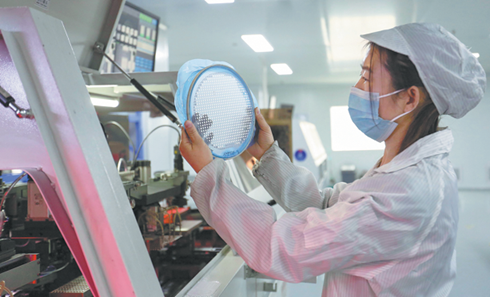
Domestic companies are increasingly closing the gap with global leaders in critical areas such as photoresist — the light-sensitive material essential for etching circuits onto silicon wafers. Jiangsu Nata Opto-electronic Material, for example, developed one of China’s first self-produced ArF deep-ultraviolet (DUV) photoresists, with revenues exceeding $1.4 million in 2024 and stable supply in 2025.

Chinese chip equipment makers are also rising in global rankings. In 2025, three domestic firms entered the top 20 worldwide for sales of chip manufacturing equipment, up from just one in 2022. Notably:

Naura Technology Group climbed from 8th to 5th place, supplying key etching equipment for advanced memory chip production.

Advanced Micro-Fabrication Equipment (AMEC) now ranks 13th, offering near cutting-edge etching technology.

Shanghai Micro Electronics Equipment secured 20th place in lithography machine sales, demonstrating China’s growing capabilities in a historically challenging segment.

Experts say the technological gap between Chinese firms and global leaders is narrowing, supporting domestic chipmakers in upgrading production and scaling operations despite restrictions on US-origin equipment.

Industry insiders see enormous potential for investment:

China has the world’s largest domestic market for chip-making equipment, providing a stable launchpad for growth.

The global semiconductor equipment market reached $133 billion in 2025, surpassing the previous record, with China expected to maintain a leading position through 2027.

With focused R&D, infrastructure, and strategic investments, Chinese companies are increasingly capable of delivering advanced solutions for both domestic and international markets.

Roger Sheng, vice-president of research at Gartner, notes: “Domestic tools are now widely used in Chinese semiconductor factories. Companies like Naura are key partners for producing advanced memory chips, showing the maturity and reliability of local supply chains.”

For global investors, China’s semiconductor sector offers opportunities at the intersection of technology advancement, market scale, and strategic policy support. As the country continues to push for self-sufficiency, both equipment manufacturers and chip producers are well-positioned to benefit from domestic growth and global market expansion.

Article inline ad

China’s Humanoid Robotics Market Poised for Global Investment Growth

0

According to China Daily, February 12, 2026

China’s humanoid robotics sector is entering a pivotal stage, shifting from industrial automation to consumer entertainment and high-profile cultural applications, creating new investment and partnership opportunities for global players.

Market Expansion & Commercialization

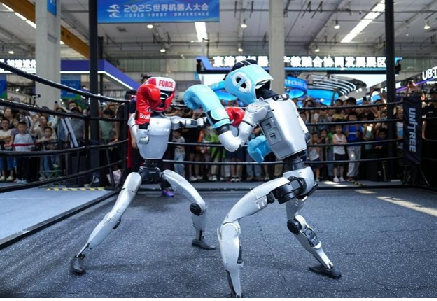
During the 2026 Chinese New Year, AgiBot deployed over 200 humanoid robots in a live gala featuring dances, comedy, magic, and martial arts. The event signals a broader strategy by robotics firms to leverage cultural platforms for brand exposure and commercial expansion. AgiBot has already received interest from theaters, museums, and performance centers to license the gala for regular shows, creating recurring revenue potential.

Growing Consumer Applications & Rental Market

The rise of humanoid robots in corporate and public events has given birth to a promising rental market. AgiBot’s Qingtian Rent platform now operates in 50 cities with about 1,000 robots ready for deployment. This model demonstrates scalable business opportunities, from event entertainment to experiential marketing.

Leading Players & Market Share

China leads global humanoid robot production. In 2025, AgiBot shipped over 5,100 units, securing a 39% global market share, ranking first in both volume and market reach. Unitree Robotics and UBTech of Shenzhen follow closely, indicating a competitive yet high-growth market. The strong domestic base positions these companies to expand internationally, particularly in AI-driven service and entertainment robotics.

Strategic Shift Toward Consumer Markets

Historically, Chinese humanoid robotics firms focused on industrial applications. Now, firms are pivoting to consumer-facing ventures, including cultural shows, virtual influencers, and live performances. Unitree Robotics, for example, has collaborated with the Spring Festival Gala for the third time, broadcast live to a global audience, gaining significant international attention.

Investment Insights

Industry analysts highlight several drivers for investment:

High-Tech Differentiation: Robotics companies integrate AI, advanced motion control, and interactive capabilities, offering unique products with both technological and commercial value.

Scalable Business Models: Licensing, event rentals, and IP-based experiences create multiple revenue streams beyond hardware sales.

Global Market Potential: China’s leading market share and rapid commercialization provide a testbed for international expansion, particularly in entertainment, corporate events, and education sectors.

Government & Cultural Support: Strategic alignment with national innovation policies and participation in high-visibility cultural events enhance credibility and brand recognition globally.

With China emerging as the world’s largest producer of humanoid robots and innovation-driven firms opening new commercial avenues, the sector presents an attractive opportunity for foreign investment, strategic partnerships, and early entry into a rapidly expanding global market.


Article inline ad

China’s Foreign Trade Hits Record, Shifts Toward High-Tech Exports

0

According to China Daily, February 12, 2026

China’s foreign trade showed remarkable resilience in 2025, reaching a record high despite a challenging global economic environment. Total imports and exports surpassed 45 trillion yuan ($6.2 trillion), up 3.8 percent from the previous year, marking the ninth consecutive year of growth.

Officials from the National Bureau of Statistics (NBS) and the General Administration of Customs (GAC) highlighted that the trade sector is not only expanding in size but also optimizing its structure, moving toward higher value-added and innovative products.

Rising Tech Exports

High-tech exports totaled 5.25 trillion yuan in 2025, an increase of 13.2 percent year-on-year, signaling China’s shift up the global value chain. The automotive sector, particularly new energy vehicles (NEVs), exemplifies this trend. Exports of NEVs reached 3.43 million units, a 70 percent increase from 2024, accounting for 41 percent of total auto exports. This surge underscores China’s position as the world’s largest auto exporter and reflects growing global demand for intelligent, high-quality Chinese products.

Policy Support and Strategic Planning

Experts attribute this stability to timely government interventions and long-term planning. In the second quarter of 2025, facing external headwinds, Chinese authorities introduced measures to stabilize foreign trade. Policies promoting high-quality development and the creation of a unified national market helped maintain growth momentum.

Port Efficiency as a Competitive Advantage

Beyond policy, the efficiency of Chinese ports has become a key factor in sustaining trade competitiveness. At Guangzhou Port’s Nansha Automobile Terminal, major improvements in infrastructure and procedures now allow ships to dock, load, and depart with minimal delays. A “one-stop” service station and smart clearance systems streamline customs, inspection, and logistics processes, ensuring faster, more reliable export operations.

These innovations extend beyond individual ports. Reforms such as the “One Port Pass” integrate logistics across the Guangdong-Hong Kong-Macao Greater Bay Area, enabling inland cargo to clear customs and reach international markets efficiently.

Global Implications

With high-tech and green energy sectors driving export growth, optimized logistics networks, and a robust policy framework, China’s foreign trade is not just recovering but evolving. For global businesses and investors, these developments highlight opportunities in sectors ranging from NEVs and electronics to high-tech equipment and advanced manufacturing.

As 2026 unfolds, China’s trade sector is poised to continue supporting global supply chains while delivering high-quality products to international markets.

Article inline ad

Technical Art Powers China’s Digital Economy: Investment Outlook

0

According to China Daily, February 12, 2026

China’s creative economy is undergoing a structural shift as technical art — the fusion of technology, aesthetics, and business — becomes a key driver of new industrial tracks. Technical artists are fueling growth in digital content, virtual production, and brand innovation, creating lucrative investment opportunities in China’s expanding virtual economy.

Global Brands Leverage Chinese Talent

U.S.-based Chinese technical artist Yilin Zhang has delivered innovative digital solutions for top global brands, including Nike and Kiehl’s. Her work transforms traditional marketing into interactive virtual experiences, such as retro-game-inspired campaigns and socially interactive virtual influencers.


projects showcase how combining digital production with strategic branding boosts consumer engagement and accelerates market adoption.

Market Potential and Commercial Applications

China’s technical art industry is increasingly embedded in sectors such as:

Digital fashion and e-commerce: creating visually appealing, brand-aligned digital assets.

Gaming and interactive media: designing immersive environments and narratives.

Virtual marketing campaigns: converting traditional IP into interactive virtual influencers.

For example, Nike’s “Big Head Mode” campaign improved brand exposure among younger consumers, while Kiehl’s virtual marketing campaign converted a classic character into a social virtual influencer, opening new engagement channels.

AI as a Productivity Enabler

AI accelerates creative workflows, allowing technical artists to scale content production without compromising quality. However, Zhang emphasizes that human insight remains critical for aligning digital outputs with brand strategy and commercial objectives.

Investment Highlights

Rising demand: Brands increasingly rely on technical artists for high-quality digital campaigns, fueling robust industry growth.

Government and policy support: China’s push for the digital economy and innovation-driven sectors provides a favorable ecosystem for digital content startups.

Scalable business models: Services in virtual production, interactive media, and brand content can target both domestic and international markets.

High ROI potential: Digital marketing campaigns integrating technical art demonstrate measurable growth in brand engagement and sales conversion, especially among younger consumer segments.

Outlook

The commercial and industrial expansion of technical art in China aligns with broader trends in AI-driven creativity, digital marketing, and the virtual economy. Investors targeting digital content, virtual production platforms, and brand innovation tools stand to gain from a rapidly growing market that is expected to expand significantly over the next 5–10 years.

“Technical art is unlocking new commercial vitality,” Zhang said. “It’s where technology, creativity, and business converge — creating opportunities for sustainable growth and cross-border investment.”

Article inline ad

China Eases Refinancing Rules to Boost Tech Innovation Funding

0

According to China Daily, February 12, 2026

China’s three major stock exchanges have unveiled streamlined refinancing measures designed to channel more capital to high-quality, innovation-driven companies, a move that could strengthen the country’s technology sector and attract investor interest.

The new rules allow publicly listed companies, particularly those with heavy research-and-development (R&D) investment but light physical assets, to access refinancing more efficiently. Companies on the Shanghai and Shenzhen main boards will now enjoy similar access to funds as those listed on the STAR Market and ChiNext boards, which are known for supporting startups and high-tech ventures.

Key Features of the New Measures:

Companies with R&D investments forming at least 15% of annual revenue (or a cumulative 300 million yuan over three years) are eligible for faster refinancing.

The cap on using refinancing funds to support working capital and repay debt has been relaxed, allowing excess funds to be used for core R&D activities.

For tech companies that have gone public but are not yet profitable, the waiting period for a new round of refinancing has been cut from 18 months to 6 months, helping startups maintain momentum.

Market analysts highlight that these changes address a major challenge facing China’s tech firms: insufficient capital for long development cycles. By prioritizing R&D and core business needs, the rules aim to ensure resources go to companies with real growth potential rather than speculative ventures.

“The previous focus on asset size often left tech companies at a disadvantage. Now, firms that invest heavily in innovation can access funding more efficiently, which should accelerate the commercialization of research and development results,” said Song Xiangqing, deputy head of the Commerce Economy Association of China.

The measures also emphasize transparency and accountability, requiring comprehensive reporting and supervision throughout the refinancing process. This is intended to boost investor confidence and curb the misuse of capital for frequent fundraising or arbitrage.

Since the announcement, more than 20 A-share companies have completed private placements in early 2026, raising over 134 billion yuan ($19.4 billion) in refinancing, according to Wind Info.

Experts believe the reforms could have a broader impact on China’s capital markets by reinforcing support for innovation-driven sectors, aligning with the country’s long-term economic goals under the 15th Five-Year Plan (2026–2030).

Implication for Investors:

Overseas investors looking at China’s tech market may see increased opportunities as more high-quality companies gain easier access to capital.

Emphasis on R&D-heavy firms may drive long-term growth in emerging sectors like biotech, AI, clean energy, and digital technologies.

Improved transparency and oversight in refinancing can reduce risk exposure for both domestic and foreign investors.

Article inline ad

China Targets Structural Drivers to Boost Domestic Consumption

0

According to China Daily, February 12, 2026

China is shifting its focus from short-term stimulus to long-term structural measures aimed at expanding domestic consumption, according to senior economists. The approach emphasizes household income growth, wealth distribution, and social safety nets as the main levers for sustainable demand.

“Short-term campaigns or temporary incentives can help consumption, but long-term growth depends on people’s income, savings, and access to social security,” said Lin Shuanglin, professor of economics at Peking University.

As the country enters the first year of its 15th Five-Year Plan (2026–30), fiscal policies are expected to prioritize investments in people. Vice-Minister of Finance Liao Min has signaled continued proactive spending, including measures to enhance household income and strengthen social protection.

Policy Moves to Support Income and Consumption

Economists suggest that broad-based tax cuts could be a key tool. Lin recommends lowering the standard corporate income tax from 25% to 20% to benefit labor-intensive enterprises, encouraging them to expand employment and boost household incomes.

“High-tech companies enjoy preferential rates, but labor-intensive firms often do not,” Lin said. “A general rate reduction would directly increase wages and disposable income for a large segment of workers.”

On the welfare side, expanding public services such as senior high school education and incentive-based pension schemes could reduce precautionary savings, further supporting household spending. For example, interest-subsidized personal pension accounts for rural residents could encourage long-term savings while stimulating future consumption.

Aligning Local and Central Fiscal Roles

Lin also highlighted the importance of central government fiscal leadership. Currently, central government expenditure accounts for roughly 14% of the total budget. Lin estimates that assuming responsibility for basic pensions and medical insurance could increase this share to over 30%, creating a more unified and equitable national labor market.

Meanwhile, local governments are encouraged to shift away from production-based taxes toward retail sales taxes, aligning fiscal incentives with consumer market development and a unified domestic market.

Implications for Investors

Consumer-focused sectors: Policies that enhance disposable income and social protections support growth in retail, education, healthcare, and eldercare services.

Labor-intensive industries: Tax reductions could improve profitability and encourage expansion, making these sectors attractive for foreign and domestic investors.

High-quality domestic goods: Rising domestic demand for green energy and environmental products supports exports, creating global trade opportunities.

“High-quality domestic products attract both local and international consumers, while expanded imports diversify choices for Chinese households,” Lin noted, highlighting the potential for investors to benefit from structural shifts in domestic consumption.


Article inline ad

Ningbo-Zhoushan Port Upgrades Strengthen China’s Global Trade Network

0

According to China Daily, February 12, 2026

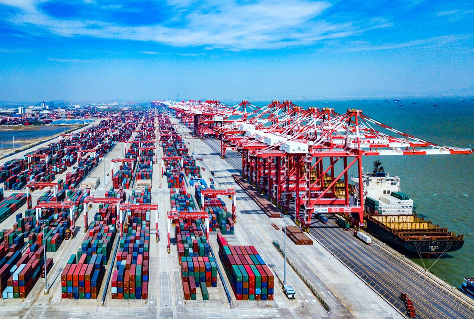
Ningbo-Zhoushan Port, in China’s eastern Zhejiang province, kicked off 2026 with major upgrades that reinforce its position as a cornerstone of global trade. As the world’s busiest port by cargo tonnage, the port is improving infrastructure and expanding international shipping connections to support faster, more efficient global logistics.

In 2025, the port handled more than 1.4 billion metric tons of cargo, marking the 17th consecutive year it ranked first globally. This growth was fueled by strategic deep-water channel expansions and efficiency upgrades at terminals, allowing the port to accommodate the shipping industry’s trend toward mega-vessels.

A key development was the Tiaozhoumen Channel expansion, which now allows 300,000-ton oil tankers to navigate at high tide and 200,000-ton container ships at all times. Previously, ships relied primarily on the Xiazhiman Channel, which was nearing saturation. The dual-channel capability significantly reduces waiting times for vessels and increases throughput capacity.

Smart technology is also playing a central role. At the Meishan Port Area, unmanned container trucks and remotely operated bridge cranes work alongside traditional operations, creating a seamless, high-efficiency workflow. Integrated 5G, Beidou satellite positioning, and vehicle-road coordination technologies have made remote crane operations comparable in efficiency to manual handling, with 24-hour peak throughput reaching 45,200 TEUs—enough to stack containers to the height of 13 Mount Everests.

Global connectivity is expanding as well. A newly launched direct shipping route links Ningbo-Zhoushan, Shanghai, and Qingdao with Brisbane and Sydney, providing Chinese exporters with faster, more flexible access to the Australian market. Overall, the port now connects to over 700 ports in more than 200 countries, with a total of 309 international routes, up from 289 in 2021.

According to port officials, these upgrades enhance both hard infrastructure and operational intelligence, ensuring Chinese goods can reach global markets more efficiently despite international uncertainties. For multinational corporations, logistics-heavy sectors, and international investors, Ningbo-Zhoushan’s improvements signal reliable, scalable, and technology-enabled trade channels capable of supporting long-term global commerce.


Article inline ad