Wednesday, November 25, 2026

Home Blog Page 57

Software Monetization Key for Chinese Firms’ Global Expansion, Says Thales

0

According to a report in China Daily on February 14, 2026

As Chinese companies expand overseas, software monetization is emerging as a critical tool for building trust, ensuring compliance, and scaling operations globally, according to Thales, a leading global cybersecurity and software licensing firm.

 Damien Bullot, Vice President of Thales Software Monetization, highlighted at the APAC Partner Summit in Guangzhou that Chinese enterprises face growing challenges when going global: data sovereignty, intellectual property protection, operational complexity, and cultural differences.

 “Effective software monetization allows companies to operationalize trust across borders,” Bullot said, emphasizing that firms are increasingly exporting not just hardware but hardware-software integrated products, and even pure software solutions. This shift moves value from physical devices to the software layer, unlocking new business models for global markets.

 Strategic Importance for Investors

 Global Competitiveness: Proper software licensing and monetization enhance product trustworthiness and long-term market adoption.

 Emerging Tech Integration: AI, IoT, and low-altitude economy applications increasingly rely on secure, flexible, and scalable software platforms.

 Untapped Value: Many hardware manufacturers are still early in software monetization strategies, offering potential upside for firms that manage software licensing effectively.

 Sustainable Growth: Software monetization supports revenue models, recurring services, and global compliance, enabling firms to expand efficiently in international markets.

 Bullot noted that Asia-Pacific’s mature industrial chains and large installed base of devices provide fertile ground for companies to monetize software while strengthening global customer trust.

 Takeaways for Global Investors

 Software licensing and monetization are not just compliance tools, but key engines of growth for Chinese tech exporters.

 The integration of software and hardware elevates product competitiveness and positions firms to capture value in AI, IoT, and smart industrial applications.

 For investors, companies effectively leveraging software monetization may see enhanced global adoption, higher margins, and scalable business models.

 The Thales summit underscores the growing recognition that trust, transparency, and monetization of software are central to the next phase of Chinese technology firms’ international expansion.


Article inline ad

Chinese Gold Firms Adjust Buyback Policies Amid Market Volatility

0

According to a report in China Daily on February 14, 2026

China’s leading gold companies are revising their repurchase policies in response to heightened price swings in the global precious metals market, signaling a strategic shift toward risk management and operational efficiency.

 China National Gold Group Co Ltd recently announced it would suspend gold repurchase services on Saturdays, Sundays, and public holidays, aligning with the Shanghai Gold Exchange’s non-trading days. The move affects both physical store and online channels.

 Similarly, Caibai Co Ltd has reduced its daily buyback limit from 200 kilograms to 100 kilograms and halted transactions during non-trading days across all channels.

 Why the Change

 The companies cited intensified market volatility and growing uncertainty in global financial markets as primary reasons for the adjustments. Analysts note that the high fluctuation of gold prices creates operational challenges in pricing and inventory management for repurchase services.

Liu Zhigeng, a fiscal and tax expert, stated that the suspension and limit adjustments reflect efforts to mitigate operational and financial risks while maintaining sustainable business practices.

 Investment Perspective

 Despite recent turbulence — with COMEX gold futures dropping to $5,088 per ounce — JPMorgan remains bullish on gold’s long-term prospects, raising its year-end 2026 forecast to $6,300 per ounce. The bank cites continued demand from central banks and institutional investors, as well as ongoing macroeconomic and geopolitical uncertainties, as key drivers supporting gold’s role as a safe-haven asset.

 For international investors, the policy changes indicate that Chinese gold firms are adapting to volatile conditions, while gold remains a resilient investment option in a diversified portfolio.

 Takeaways for Investors

 Operational caution: Non-trading day suspensions reduce exposure to extreme price swings.

 Market volatility awareness: Short-term fluctuations do not undermine long-term demand trends.

 Strategic positioning: Investors should consider China’s gold market dynamics within global portfolio allocation.

 The adjustments provide a clear signal that Chinese precious metals firms are balancing risk management with investor confidence, while gold continues to serve as a key instrument in portfolios seeking protection from macroeconomic uncertainties.

Article inline ad

AutoFlight Launches World’s First 5-Ton eVTOL, Paving Way for Heavy-Duty Urban Air Mobility

0

According to a report in the China Daily on February 14, 2026:

China’s aerospace company, High-Tech Aircraft, unveiled the Matrix V5000, the world’s first 5-ton class electric vertical takeoff and landing (eVTOL) aircraft, marking a significant milestone for China’s low-altitude economy.

The launch and full-mode conversion flight demonstration of this aircraft took place at the AutoFlight Low-Altitude Flight Test Center in Kunshan, Jiangsu Province. The aircraft successfully completed the transition from vertical takeoff to cruise flight and then to vertical landing, setting a world record for payload and operational scale.

A Leap Forward in Electric Vertical Takeoff and Landing (EVTOL) Capabilities

The Matrix represents a significant advancement in the 1.5-3 ton class of EVTOL aircraft:

Maximum Takeoff Weight: 5.7 tons

Wingspan: 20 meters; Length: 17.1 meters; Height: 3.3 meters

Vehicle Types: Passenger version (6-10 seats, VIP configuration, full amenities) and cargo version (1.5-ton payload, hybrid power system, large cargo door)

Experts emphasize that the aircraft’s large-scale distributed power integration, complex aerodynamic design, and high-strength lightweight structure demonstrate that Chinese companies have achieved a globally leading position in the field of heavy-duty EVTOL technology.

Strategic and Commercial Impact

The Matrix eVTOL is designed to move beyond experimental flights and towards practical industrial-scale applications:

Low-Altitude Area Transportation: Supporting urban commuting, intercity feeder flights, and freight transport.

Economies of Scale: Reducing transportation costs per seat-kilometer and per ton-kilometer, improving profitability.

Expanding the Low-Altitude Ecosystem: Facilitating the development of passenger and freight networks for China’s smart city transportation initiatives.

Industry Leadership: Demonstrating China’s ability to compete in the global high-tech electric aviation sector.

AutoFlight Founder and CEO Tian Yu points out that Matrix will challenge the perception that eVTOL is only suitable for short-haul, low-load applications, opening the door to heavy-duty commercial and urban air mobility solutions.

Why this is crucial for international investors:

First-mover Advantage: Matrix is ​​the world’s largest eVTOL with full transition flight capabilities.

Revenue Potential: Heavy-duty passenger and freight applications expand market size and service scope.

Technological Leadership: Breakthroughs in distributed power, aerodynamics, and lightweight structures are likely to shape global eVTOL standards.

Strategic Ecosystem: The convergence of industrial design, smart transportation, and regional logistics positions China as a hub for next-generation air transport.

For global technology investors and urban transportation planners, the launch of Matrix represents a technological and commercial turning point in the rapidly emerging eVTOL sector.
发送反馈

Article inline ad

Sands China, Alipay and MACAU Pass Team Up to Accelerate Smart Tourism in Macao

0

According to a report in China Daily on February 14, 2026

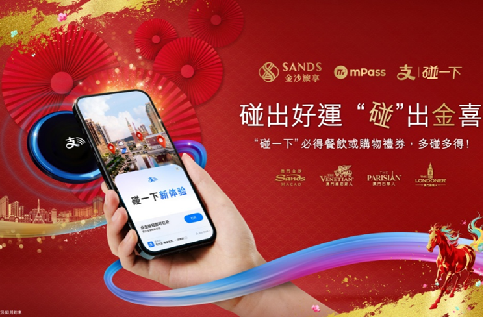
Sands China Ltd, Alipay, and MACAU Pass have launched a collaborative campaign to deepen digital engagement and upgrade Macao’s tourism ecosystem, signaling a growing trend of technology-driven innovation in the city’s leisure and hospitality sector.

The “Tap for Luck, Tap for Golden Surprises” Chinese New Year campaign leverages Alipay Tap! interactive technology, enabling tourists to engage in tap-to-check-in experiences, seamless payments, and interactive loyalty programs — all in a single digital interface.


Transforming Tourism Through Technology

Sands China has rolled out Alipay Tap! across its resorts, streamlining payments across retail, dining, entertainment, beauty, fashion, and souvenir shopping. The integration allows guests to enjoy a fully digitalized, touchless experience, while also opening opportunities for data-driven marketing and customer engagement.

Grant Chum, CEO of Sands China, noted that the rollout marks the company as Macao’s first resort operator to adopt Alipay Tap!, demonstrating a deeper collaboration between tourism operators and digital payment platforms.


Building a Broader Digital Ecosystem

Han Xinyi, CEO of Ant Group, emphasized that the campaign goes beyond payments to include interactive experiences, membership engagement, and handheld checkout, highlighting Macao’s potential as a hub for digital innovation within the Guangdong-Hong Kong-Macao Greater Bay Area.

MACAU Pass CEO Sun Hao added that the collaboration extends scenario-based applications of Alipay Tap!, expanding the service ecosystem and supporting Macao’s ambitions as a smart city.

Since its launch over a year ago, Alipay Tap! has evolved from a payment tool into a full digital ecosystem, now providing more than just transactions — it enables engagement, rewards programs, and interactive guest experiences across multiple service touchpoints.


Why It Matters for Investors

  1. Smart Tourism Expansion – Digital integration improves efficiency, visitor engagement, and customer data insights.

  2. Cross-Industry Collaboration – Payment platforms, resort operators, and local service providers are aligning to create new business models.

  3. Regional Digital Leadership – Macao is positioned as a testbed for smart-city applications in the Greater Bay Area.

  4. Potential Investment Opportunities – Companies driving digital tourism, interactive payment technologies, and smart-city infrastructure may benefit from early adoption and scaling.

For international investors and technology observers, the initiative illustrates how digital payment innovations can drive sector-wide transformation, enhance customer experiences, and support the growth of the Greater Bay Area’s smart tourism ecosystem.

Article inline ad

China’s Central Soes Form AI Consortium To Accelerate Embodied Intelligence

0

According to a report in China Daily on February 14, 2026

China’s central state-owned enterprises (SOEs) have joined forces to create an industry consortium focused on “embodied intelligence,” signaling a major push to advance artificial intelligence (AI) applications and innovation in the country.

 Guided by the State-owned Assets Supervision and Administration Commission, the consortium brings together central SOEs, private companies, universities, and research institutes. Its mission: to develop high-value AI applications, build robust datasets, tackle key technologies across the industrial chain, and strengthen links between AI development and real-economy applications.

 Strategic Priorities

 The consortium will focus on five priority areas:

 High-value application scenarios – targeting industries where AI can create the most economic and technological impact.

 High-quality datasets – essential for training robust AI models.

 Core technologies across the industrial chain – from robotics to intelligent computing infrastructure.

 Industry ecosystem coordination – fostering collaboration among SOEs, private firms, and research institutions.

 Industry-finance integration – ensuring that AI investment supports tangible economic outcomes.

 Open-Source Platform: Huanxin Community

 The consortium will leverage the Huanxin Community, an open-source AI platform launched in July last year. Its user base has already grown tenfold, attracting participants such as Huawei, Moore Threads, and Unitree Robotics.

 The platform provides:

 Free access to 2,200 domestically produced intelligent computing cards

 More than 4,700 AI models and 1,200 datasets

 For global tech investors, the Huanxin Community represents an opportunity to track China’s domestic AI innovation ecosystem and its commercial scaling potential.

 Implications for Investors and Industry

 SOE-backed scale – Central SOEs bring financial strength, market access, and industrial clout to accelerate AI deployment.

 Commercialization potential – Focus on moving innovations from prototypes to viable products and industrial applications.

 Ecosystem effects – Integration of public institutions, private firms, and open-source platforms can create network effects, driving adoption and reducing barriers to market entry.

 Strategic AI development – Emphasis on robotics, industrial automation, and embodied intelligence could shape global supply chains and technology standards.

 Analysts suggest that the consortium is a clear signal that China is consolidating its AI capabilities around SOE-led industrial initiatives, while maintaining an open and collaborative innovation environment for private and international participation.

 For international investors and tech firms, this initiative offers a front-row view of China’s emerging AI ecosystem, particularly in areas like robotics, autonomous systems, and intelligent industrial solutions.

Article inline ad

China Moves to Rein In Auto Price Wars With New Compliance Rules

0

据《中国日报》2026年2月14日报道

中国发布了首个全国汽车行业价格合规指导方针,这标志着监管部门正加大力度遏制全球最大汽车市场持续不断的价格战。

国家市场监督管理总局发布的新规共列出了 28 条条款,对整个汽车产业链(从制造商到经销商和销售平台)的定价行为进行规范。

对于全球投资者和汽车制造商而言,信息很明确:近年来在中国电动汽车价格战中盛行的激进折扣和低于成本的销售做法,正在进入风险更高的监管领域。


划定法律红线

监管机构明确规定,汽车制造商不得以低于生产成本的价格出售车辆或零部件,意图消除竞争。除依法进行的库存清理外,过度折扣、补贴、捆绑促销和人为压低的标价均可能构成“重大法律风险”。

该指南还涉及互联汽车和电动汽车中日益常见的新型商业模式,包括付费功能解锁和复杂的促销结构,要求提高透明度和可追溯的定价机制。

监管机构表示,目标是在多年利润空间被压缩的价格战之后,恢复有序竞争,保护消费者和企业的利益。


从销量大战到价值竞争?

中国汽车市场,尤其是电动汽车市场,一直深陷持续的价格竞争之中。大幅折扣、现金补贴和捆绑式融资优惠政策挤压了整个供应链的利润空间。

虽然这种环境加速了电动汽车的普及,但也带来了以下问题:

  • 行业整体利润率下降

  • 小型制造商面临越来越大的财务压力

  • 减少长期研发激励

  • 系统性竞争风险加剧

分析人士表示,新准则标志着从不惜一切代价追求增长转向更可持续的市场纪律。

如果严格执行这些规则,可能会逐渐将行业从“价格竞争”推向“价值竞争”,从而使技术差异化更强、成本效益更高、供应链控制更严格的品牌受益。


对电动汽车制造商和全球投资者的影响

小米集团等主要企业已公开承诺遵守新框架,这表明行业正在与监管方向保持一致。

对于在中国经营的跨国汽车制造商而言,这些指导方针可能会提供一个更可预测的竞争环境,尤其是在执法能够遏制极端折扣的情况下。

主要影响包括:

1. 利润稳定潜力
减少低于成本的销售可能有助于恢复定价纪律。

2. 行业整合压力 规模
较小或杠杆率较高的电动汽车初创公司如果没有积极的折扣策略,可能会面临更大的压力。

3.监管风险重新定价
估值可能会越来越考虑合规风险和定价透明度。

4. 转向差异化
技术、品牌定位和售后服务可能成为比大幅降价更重要的竞争手段。


更广泛的政策信号

此举符合监管干预的更广泛模式,旨在遏制“内卷式”竞争——这种激烈的价格战会破坏行业的可持续性。

其目的似乎并非限制增长,而是引导竞争走向更高质量的发展。

对于全球投资者而言,这一发展表明,中国电动汽车行业虽然仍然竞争激烈,但正在进入一个更加规范化的监管阶段。

接下来的几个季度将揭示,执法力度能否有效抑制价格波动,还是仅仅改变了折扣策略。

无论如何,中国汽车市场的监管力度正在加强——定价策略也需要相应调整。

Article inline ad

China’s Credit Expansion Accelerates As FDI Rebounds Sharply In 2025

0

According to a report in China Daily on February 14, 2026

 China began 2026 with a strong expansion in domestic credit, while new data also show a sharp rebound in foreign direct investment (FDI) last year — developments that together suggest improving macro stability despite persistent external headwinds.

 According to the People’s Bank of China, new yuan-denominated loans totaled 4.71 trillion yuan (US$679 billion) in January alone, reflecting seasonal front-loading but also solid demand for financing at the start of the year.

 Aggregate financing to the real economy — a broad measure of credit that includes bank lending, bond issuance and shadow-banking components — reached a record 7.22 trillion yuan for the month.

 Outstanding yuan loans rose 6.1% year-on-year to 276.62 trillion yuan, while broad money supply (M2) expanded 9% to 347.19 trillion yuan.

 For global investors, the January data reinforce three signals:

 Liquidity conditions remain supportive.

 Credit transmission to the real economy is functioning.

 Authorities are prioritizing stability over aggressive tightening.

 Foreign Investment Shows Structural Recovery

 Separate data from the State Administration of Foreign Exchange indicate that net FDI inflows into China quadrupled in 2025.

 On a balance-of-payments basis, China recorded US$76.5 billion in net direct investment inflows, compared with just US$18.6 billion in 2024.

 At the same time, China’s direct investment deficit — the gap between outbound and inbound investment — narrowed sharply to US$82 billion from US$153.7 billion a year earlier.

 This rebound occurred despite ongoing tariff pressures and technology export restrictions from the United States, suggesting that multinational corporations are adjusting to China’s evolving growth model rather than retreating from it.

 Analysts attribute the recovery to:

 Targeted policy measures to stabilize foreign investment

 Continued market opening in select sectors

 Stronger-than-expected macro resilience

 Corporate adaptation to China’s shift toward innovation-driven growth

 For global firms, the trend suggests selective re-engagement rather than wholesale decoupling.

 External Balance Remains Strong

 China also posted a current account surplus of US$734.9 billion in 2025, including a goods trade surplus of over US$1 trillion.

 On a renminbi basis, the current account surplus equaled roughly 3.7% of GDP, up from 2.2% in 2024.

 While robust exports supported the surplus, policymakers have emphasized that maintaining balance — rather than maximizing surplus — remains the objective. Officials have pointed to efforts to expand imports and deepen services-sector opening to ease structural imbalances.

 For currency markets, the combination of:

 Solid credit growth

 Recovering FDI inflows

 A sizable current account surplus

 provides underlying support for renminbi stability, even amid global volatility.

 What This Means for Global Investors

 Taken together, the latest data suggest a macro environment characterized by:

  1. Controlled monetary accommodation

Liquidity is ample but not excessively expansionary.

  1. Improving capital inflow dynamics

FDI recovery signals renewed corporate confidence. 

  1. Strong external buffers

A sizable current account surplus provides resilience.

  1. Policy focus on stability

Authorities appear committed to maintaining balanced growth rather than pursuing aggressive stimulus. 

The key question for 2026 will be whether credit growth translates into stronger domestic demand and whether the FDI rebound proves durable amid geopolitical uncertainties. 

For now, the data indicate that China is entering the year with firmer financial footing than many investors anticipated.

Article inline ad

APEC as a Stabilizer: Why Asia-Pacific Integration Matters More in 2026

0

According to a report in China Daily on February 14, 2026

As global growth remains uneven and geopolitical fragmentation reshapes trade flows, China is positioning the Asia-Pacific Economic Cooperation (APEC) platform as a key stabilizing force for regional commerce and supply chains.

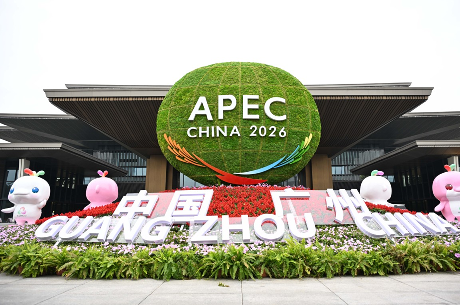
At the First Senior Officials’ Meeting of APEC China 2026 in Guangzhou, policymakers and scholars emphasized a central message: in an era of economic nationalism and strategic competition, openness is becoming more — not less — critical to sustaining growth.

The 33rd APEC Economic Leaders’ Meeting will be held in Shenzhen this November, with additional senior-level meetings scheduled in Shanghai and Dalian in the coming months, according to China’s Ministry of Foreign Affairs. Roughly 10 ministerial-level meetings covering trade, digital economy, transport, SMEs, energy and finance are planned starting in May.

For international businesses, the takeaway is clear: Beijing intends to use APEC as a platform to reinforce regional trade integration rather than retreat from it.


Fragmentation vs. Openness

Speaking at the Guangzhou session, Zheng Yongnian of the Chinese University of Hong Kong (Shenzhen) noted that both advanced and developing APEC economies are confronting mounting pressures from geopolitical tensions and deglobalization.

Trade, capital flows and technology exchange are increasingly shaped by political considerations. In such an environment, Zheng argued, economic growth depends on the continued free movement of production factors — capital, goods, technology and talent.

That message reflects a broader strategic calculation: if global multilateralism stalls, regional frameworks like APEC may serve as pragmatic engines of economic coordination.


Trade Numbers Underscore Interdependence

According to the General Administration of Customs, China’s trade with other APEC economies reached 26.29 trillion yuan (US$3.8 trillion) in 2025, accounting for nearly 58% of its total foreign trade.

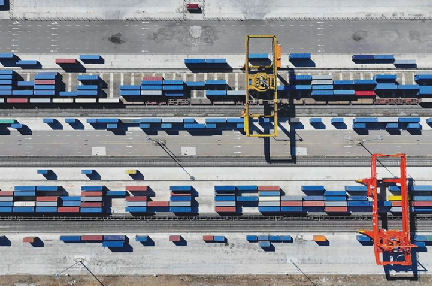
Trade momentum remained particularly strong with emerging markets including ASEAN members, Peru and Mexico. Meanwhile, diversification of logistics — including expanded rail and air freight corridors — reduced reliance on single maritime routes, contributing to greater supply-chain resilience.

China has simultaneously:

  • Deepened high-end manufacturing supply chains with Japan and South Korea

  • Expanded infrastructure cooperation with Southeast Asia

  • Strengthened resource and energy value-chain integration with Latin America

The result is a more regionally interlocked industrial ecosystem, less vulnerable to single-market shocks.


Aligning with Higher Trade Standards

Officials from the General Administration of Customs said China views APEC as a vehicle to align more proactively with higher-standard international trade and economic rules.

This positioning is significant for global investors. It suggests that China is not only defending market access within Asia-Pacific but also seeking to shape rule-making standards in areas such as digital trade, services and cross-border logistics.


Corporate Signals from the Ground

Exporters are already responding to regional demand signals.

A Zhejiang-based electric appliance manufacturer reported a 45% year-on-year surge in exports to South Korea in 2025, while a Guangzhou cosmetics firm saw nearly 200% growth in shipments to Southeast Asian APEC markets in January alone.

These micro-level examples reinforce a macro-level theme: Southeast Asia and broader Asia-Pacific consumer markets are becoming increasingly important growth drivers for Chinese exporters.


What This Means for Global Business

For multinational firms and investors, several implications stand out:

1. Asia-Pacific remains central to China’s trade strategy.
Nearly 60% of China’s foreign trade is tied to APEC economies.

2. Regional integration is accelerating despite global fragmentation.
Supply chains are being diversified and embedded within Asia.

3. Policy messaging favors openness within structured frameworks.
China appears intent on using APEC to reinforce trade predictability.

4. Emerging markets in Southeast Asia and Latin America are rising in importance.

While global trade politics remain volatile, Asia-Pacific integration may provide a counterweight to broader uncertainty.

As APEC 2026 unfolds, the region’s ability to sustain open markets and interconnected supply chains could prove decisive not only for China, but for global growth prospects as well.


如果你愿意,我可以再做一个:

Article inline ad

APEC Key Cog In Free Trade, Biz Expansion

0

Experts underline free movement of production factors for economic growth

By Zhong Nan | China Daily | Updated: 2026-02-13

Amid an uneven and fragile global economic recovery, stronger economic ties within the Asia-Pacific region can help sustain business growth by keeping markets open, stabilizing supply chains and boosting trade and investment in 2026, said market watchers and Chinese exporters.

 Speaking at a session during the first senior officials’ meeting and related meetings of APEC China 2026, held in Guangzhou, Guangdong province in early February, Zheng Yongnian, dean of the School of Public Policy at the Chinese University of Hong Kong (Shenzhen), said both developed and developing Asia-Pacific Economic Cooperation economies are grappling with the common challenge of development as geopolitical tensions, deglobalization, along with economic and technological nationalism reshape cross-border flows of capital, goods and talent.

 Zheng said mounting fragmentation in the global economy has made growth pathways more complex, with trade, investment and innovation increasingly influenced by political and strategic considerations.

 “In such an environment, openness becomes even more important,” he said, arguing that economic growth depends on the free movement of production factors.

 As the 33rd APEC Economic Leaders’ Meeting will be held in Shenzhen, Guangdong, in November, further rounds of senior officials’ meetings will be held in Shanghai in May and in Dalian, Liaoning province, in August, according to information released by the Ministry of Foreign Affairs.

 Starting from May, about 10 sectoral ministerial meetings or high-level events will take place in different locations, covering areas such as goods trade, trade in services, digital economy, transportation, human resources, small and medium-sized enterprises, energy, food security and finance.

 Guo Xueyan, director of the General Administration of Customs’ department of international cooperation, said China has positioned APEC as a key platform to align more proactively with high-standard international trade and economic rules.

 “An open APEC economic framework is essential for sustaining both regional and global growth,” Guo said.

 Customs data show that China’s total trade with other APEC economies reached 26.29 trillion yuan ($3.8 trillion) in 2025, accounting for 57.82 percent of the country’s overall foreign trade for the year.

 Last year, China’s trade with emerging economies such as member states of the ASEAN, Peru and Mexico maintained strong momentum, while rapid growth in overland and air freight reduced reliance on a single maritime transport model. Progress in supply chain connectivity has deepened, with closer links to ASEAN’s rail networks and a more resilient regional logistics system taking shape, according to the GAC.

 At the same time, China has been building high-end manufacturing supply chains with Japan and South Korea, expanding infrastructure cooperation with Southeast Asia, and strengthening integration of resource and energy value chains with Latin America — fostering a more complementary and mutually beneficial regional industrial ecosystem.

 Ningbo Cetus Electric Appliance Co, a Ningbo, Zhejiang province-based manufacturer of electric fans, saw its exports to South Korea, an APEC economy, reach 70 million yuan in 2025, up 45 percent year-on-year. It shipped 10 containers to its South Korean clients in early February, statistics from Ningbo Customs showed.

 “We will further expand customized offerings of high-end electric fans to other APEC markets this year,” said Zhu Dongri, the company’s director of the foreign trade unit, adding that based on current order levels, Ningbo Cetus expects strong growth to continue in 2026, with exports to South Korea topping 1.2 million units.

 Guangzhou Zuofun Cosmetics Co exported more than 1.15 million yuan worth of cosmetics, including perfumes, creams and facial masks, to other APEC economies — mainly Indonesia and Malaysia — in January, an increase of nearly 200 percent year-on-year, said Guangzhou Customs.

 Wu Shuang, the company’s chief financial officer, said the firm sees solid potential in APEC markets this year, citing rising consumer demand and expanding retail channels across Southeast Asia.

 zhongnan@chinadaily.com.cn


Article inline ad

HK sees 25% increase in family office

0

By LI XIAOYUN in Hong Kong | China Daily | Updated: 2026-02-13 09:13

 Skyscrapers at Victoria Harbour are illuminated by the afternoon sun. ANDY CHONG/CHINA DAILY

Hong Kong’s appeal as a world hub for asset and wealth management continues to strengthen, with the number of single-family offices in the special administrative region seeing robust growth in the past two years.

 Senior government officials and industry experts said the authorities will further optimize tax incentives to make it easier for deep-pocketed families to invest in Hong Kong.

 More than 3,380 single-family offices had been operating in the SAR late last year — an increase of about 680 from 2023, or over 25 percent — according to the Market Study on the Family Office Landscape in Hong Kong.

 The study estimates that single-family offices contribute about HK$12.6 billion ($1.6 billion) annually to the city’s economy through operating expenditure alone, and directly employ more than 10,000 full-time professionals.

 “Under the ‘one country, two systems’ framework, the HKSAR, backed by the motherland and connected to the world, offers a favorable environment that’s predictable and has high potential for family offices to grow,” said Secretary for Financial Services and the Treasury Christopher Hui Ching-yu.

 He said the global family office and asset management sector is undergoing a rapid evolution, placing greater emphasis on sustainable growth, inter-generational legacy and positive impact.

 To reinforce Hong Kong’s competitiveness, Hui said the SAR government plans to introduce legislative proposals in the first half of this year to expand the scope of qualifying investment for the preferential tax regimes offered to funds and single-family offices. The broadened range is expected to include precious metals, loans and private credit investments, and digital assets.

 With various policy measures in place, Hui said he’s confident of achieving the target set out in the 2025 Policy Address to help more than 220 family offices in establishing or expanding their business in the city between 2026 and 2028.

 Alpha Lau Hai-suen, director-general of InvestHK, said many overseas family offices showed strong interest in Hong Kong’s institutional advantages and tax incentives during the agency’s promotional activities in Europe and Southeast Asia.

 InvestHK is a government department tasked with attracting investment into the SAR.

 The SAR offers a highly flexible investment environment, with a preferential tax regime that imposes no restrictions on the geographical location of investments, allowing family offices to deploy capital globally through the city, Lau said.

 She said that, generally, single-family offices are not required to obtain a license in Hong Kong, thus helping to maintain a high level of privacy.

 The study, commissioned by InvestHK and conducted by Deloitte, also found that these family offices originate from various regions and economic sectors, “underscoring the city’s ability to attract capital from diverse geographical and industry backgrounds and across different wealth levels”.

 As inter-generational wealth transfer is actively underway, more than half of the surveyed family offices are led by second-generation or later family members.

 “Hong Kong’s family office ecosystem has evolved beyond simply increasing the number of family offices and is now focused on integrating family capital, businesses and next generations into the city’s long-term development,” said Deloitte Private Hong Kong Leader Anthony Lau Ming-young.

 With more first-generation wealth holders passing assets on to their successors, the city is well positioned to serve as an optimal hub for this process, he added.

 The study also highlights Hong Kong’s pivotal role in asset and wealth management in Asia, with assets under management of about HK$35 trillion by the end of 2024.

 Hong Kong ranked second globally in the number of ultra high-net worth individuals as of June last year, cementing its position as one of the world’s top destinations for family offices.


Article inline ad