Wednesday, November 25, 2026

Home Blog Page 56

China Signals: Rural Finance Becomes a Long-Term Structural Priority

0

According to a report by China Daily on February 15th

China is institutionalizing financial support for rural revitalization, marking a shift from campaign-style poverty alleviation to a permanent, development-oriented framework. A new guideline jointly issued by the People’s Bank of China, the National Financial Regulatory Administration, the China Securities Regulatory Commission, and the Ministry of Agriculture and Rural Affairs outlines a regular financial support mechanism aimed at preventing households from slipping back into poverty while advancing comprehensive rural revitalization.

 The key signal is structural rather than cyclical. Instead of short-term relief programs, policymakers are embedding rural support into the formal financial system. Measures include optimizing microcredit programs for formerly impoverished households, expanding medium- and long-term funding for rural infrastructure, strengthening financial services for grain and edible oil production, and encouraging the issuance of special-purpose bonds targeting agriculture-related sectors and small businesses in less-developed regions.

 This move reflects two broader priorities. First, food security and agricultural modernization remain central to China’s long-term economic resilience. Second, rural consumption and infrastructure development are increasingly viewed as underutilized growth drivers amid uneven domestic demand recovery.

 For investors, the implication is clear: rural China is transitioning from a poverty-alleviation narrative to an investable development theme. Financial institutions, agri-tech firms, and infrastructure players may find expanding opportunities as policy support becomes more systematic and predictable.

Article inline ad

China Signals: Financial Risk Control Enters a New Phase

0

According to a report by China Daily on February 15th

Chinese regulators have released an updated list of 21 domestic systemically important banks (D-SIBs), jointly published by the People’s Bank of China and the National Financial Regulatory Administration. The banks are categorized into five tiers in ascending order of systemic importance, signaling a more refined and risk-based supervisory framework.

 While the announcement appears technical, it reflects a deeper structural shift. China is strengthening its macro-prudential architecture at a time when financial stability remains a central policy priority. By formalizing tiered supervision, regulators are aligning domestic oversight more closely with global standards applied to systemically important banks, including differentiated capital and risk management requirements.

 The move also suggests that financial risk prevention remains a core objective entering the early phase of China’s 15th Five-Year Plan (2026–2030). Rather than aggressive stimulus-driven expansion, policymakers appear focused on building a more resilient banking system capable of supporting long-term, high-quality growth.

 For investors and multinational financial institutions, the signal is clear: China is reinforcing financial discipline while maintaining liquidity support for the real economy. Stability, not rapid credit expansion, is the dominant theme.

Article inline ad

Weekly China Economic Brief(Period: February 9–14, 2026)

0

Source: zhsailing.com

 1️⃣ Macro Snapshot

 Credit & Liquidity

 anuary 2026 yuan loans: 4.71 trillion yuan (~$679B), up 6.1% YoY.

 Aggregate financing to the real economy: 7.22 trillion yuan (record high).

 Money supply:

 M2: 347.19 trillion yuan (+9% YoY)

 M1: 117.97 trillion yuan (+4.9% YoY)

 M0: 14.61 trillion yuan (+2.7% YoY)

 Deposits: 8.09 trillion yuan added in January, household deposits contributing 2.13 trillion yuan.

 Foreign Direct Investment (FDI)

 Net FDI inflows quadrupled in 2025 to $76.5B, reflecting renewed confidence despite external shocks.

 Direct investment deficit narrowed to $82B from $153.7B in 2024.

 Trade in goods surplus: $1.0234T; current account surplus: $734.9B (~3.7% of GDP).

 Takeaways:

 China’s credit expansion and record financing point to continued support for the real economy.

 Strong rebound in FDI indicates China’s openness and resilience to geopolitical and macroeconomic uncertainties.

 2️⃣ Policy & Regulation

 Auto Industry Pricing Compliance

 China rolled out the first nationwide pricing guideline for automakers and dealers.

 Key rules: no below-cost sales to suppress competition; transparency required for subsidies, promotions, and paid feature unlocks.

 Expected impact: transition from price wars to value-based competition, particularly in EVs and connected vehicles.

 Digital Payment & Smart Tourism

 Sands China, Alipay, and MACAU Pass launched a Chinese New Year digital campaign.

 Integration of Alipay Tap! technology across resorts supports digitalized, scenario-based consumption and tourism experiences.

 SOE AI Consortium

 Central SOEs launched an Embodied Intelligence Consortium under SASAC guidance.

 Focus: high-value AI applications, datasets, core technologies, industry-finance collaboration.

 Open-source platform Huanxin Community now hosts 4,700+ AI models and 1,200 datasets.

 Takeaways:

 China continues strengthening governance, digitalization, and innovation-focused industrial policy.

 Regulation aims to stabilize competition, enhance consumer protection, and accelerate tech-driven growth.

 3️⃣ Signals of the Week

 Autonomous Driving

 China is taking a leading role in global autonomous driving standards, including ISO 34505.

 Real-world pilot deployment expanding in major cities; robotaxi fleets growing.

 Trade & Business Hubs

 Jinhua, Zhejiang Province, emerges as an inland global trading hub.

 2025 foreign trade: 1.05 trillion yuan ($150.5B), driven by Yiwu and digital commerce.

 Cross-border e-commerce reached 169.6B yuan; freight trains to Europe cut transit times by ~30%.

 Consumer Trends: AI Collectible Toys

 Market approaching turning point: AI-enabled collectibles (with personality, memory, and interactivity) redefine user engagement.

 AI collectible toy market projected to exceed 100B yuan by 2027, supported by government action plans.

 Takeaways:

 China is accelerating high-tech adoption in consumer products and logistics, demonstrating innovation-led growth and diversification.

 Inland cities with industrial depth can become international trade hubs, highlighting the role of infrastructure and policy support.

 4️⃣ Industry Focus

 EVTOL & Aerospace

 AutoFlight V5000, the world’s first 5-ton eVTOL, completed full conversion flight.

 Payload and scale increase mark shift from experimental to industrial applications in low-altitude transport.

 Wealth Management & Finance

 China’s asset management industry reached 184.53 trillion yuan ($26.7T) in 2025, growing 13.1% YoY.

 Wealth management products (WMPs, mutual funds, insurance funds) are increasingly channeling capital into real economy, green, and strategic industries.

 Global Companies Expanding in China

 Zeiss begins construction of Greater China HQ in Shanghai; focus on R&D and localized innovation.

 Thales emphasizes software monetization as a global expansion strategy for Chinese tech firms.

 Takeaways:

 Strategic industries including AI, aerospace, and fintech continue to attract both domestic and international investment, highlighting China’s industrial transformation.

 Innovation and high-tech deployment are central to sustainable growth and international competitiveness.

 5️⃣ Global Implications

 APEC & Regional Trade

 China highlights free movement of production factors as key to Asia-Pacific growth.

 Total trade with APEC economies: 26.29 trillion yuan ($3.8T) in 2025 (57.8% of China’s foreign trade).

 Collaboration with Southeast Asia, Japan, South Korea, and Latin America enhances supply chain resilience.

 Global Investor Signals

 China’s policies and infrastructure reforms attract FDI and foreign talent, including 10,000+ foreign work permits in Jinhua.

 Standardization in autonomous driving, aerospace, and EV sectors positions China to shape international technical and trade standards.

 Takeaways:

 Regional cooperation and open trade policies bolster China’s position as a central hub for global supply chains.

 Investors can leverage China’s robust market reforms, technological advancement, and policy stability to mitigate geopolitical risks.

Article inline ad

China’s AI Collectible Toy Market Set For Dynamic Growth

0

According to a report in China Daily on February 14, 2026

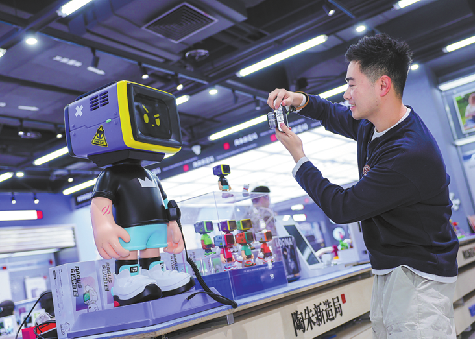
Beijing — China’s collectible toy market is entering a transformative phase as artificial intelligence (AI) is set to reshape how consumers interact with trendy toys, according to industry insiders.

 Traditionally, collectible toys relied on aesthetics and rarity to drive demand. Buyers would unbox, photograph, and share their new items online, but engagement typically peaked early and then tapered off.

 “Static toys have reached a ceiling,” said Jing Linyan, cofounder of AI collectible toy maker MarveLab. “The future lies in AI-driven characters that can interact, learn, and grow with users over time.”

 China’s AI toy segment has already seen rapid expansion, with official data showing the market reached 24.6 billion yuan ($3.56 billion) in 2024 and estimated growth to 29 billion yuan in 2025. A recent government action plan further prioritizes collectible toys, projecting the segment could surpass 100 billion yuan ($14.5 billion) by 2027.

 AI collectibles combine visually appealing designs and intellectual property (IP) strength with interactive capabilities. Unlike static toys, these AI-enabled characters remember user interactions, display evolving behaviors, and maintain long-term engagement. This shift is expected to extend the lifecycle of products and drive repeat purchases based on character vitality rather than scarcity.

 MarveLab’s flagship series, RAGUS & WHITE, exemplifies this trend. The company recently completed an angel funding round led by Jinqiu Capital, co-invested by Shoucheng Holdings, with Wave Capital serving as exclusive financial adviser. Funds will support content updates, diversified product lines, gameplay innovation, and collaboration with artists to expand the character ecosystem.

 “AI collectible toys are not simply static figures with tech features. They are dynamic characters powered by AI, designed to deliver rich experiences over time,” Jing said. “This approach positions the sector at the forefront of China’s next-generation consumer technology market.”

 As the segment matures, industry observers expect AI-driven collectibles to become a key driver of innovation in China’s $11-billion-plus toy market, blending gaming, storytelling, and digital interactivity to capture the attention of both domestic and international consumers.


Article inline ad

South China town gets down to business

0

China Daily | Updated: 2026-02-13 

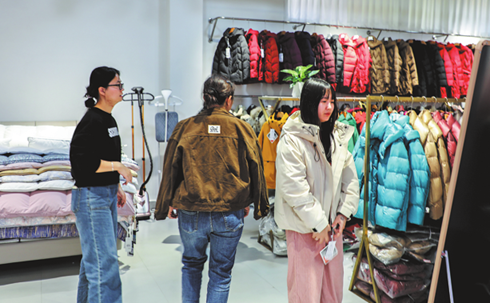
 Customers shop for down jackets in Guigang, Guangxi Zhuang autonomous region, on Dec 18. CHINA DAILY

NANNING — Inside a large, well-equipped factory in South China’s Guangxi Zhuang autonomous region, large glass chambers are filled with white duck and goose down, which is sorted and processed for various products.

 This is Qiaoxu, a township in Gangnan district, Guigang, that has quietly become a key source of winter wardrobes worldwide.

 Despite its modest profile, the town’s industrial footprint is nothing short of spectacular. Qiaoxu now processes around 100,000 metric tons of feathers and down annually, accounting for 28 percent of China’s total output and an estimated 18 percent of the global supply.

 In the early 1980s, Qiaoxu’s industry began not with high-tech invention or massive infrastructure investment. At the time, villagers would trek through the countryside, bartering candy for the one thing local poultry farmers would otherwise casually throw away — feathers.

 At the time, the plumes were dismissed as “worthless refuse”, bundled crudely and shipped to garment hubs in coastal provinces such as Zhejiang and Guangdong.

 The turning point came in 1987, when enterprising locals decided to move up the value chain. By copying and improving a basic wooden separator box, locals began sorting valuable down from feathers right in the township.

 It was a low-tech starting block that helped launch what would later become a multi-billion-yuan industry.

 Inside the facilities of veteran producer Chen Shaoping, executive vice-president of the local down association, the focus has shifted to intensive research and development. Chen’s team has spent years developing Guifei down, a premium variety harvested from long-cycle poultry in the region.

 “The secret is the size of the feather,” Chen said, adding that larger feathers trap air the way double-paned glass traps heat, while the down is denser and loftier, creating a thermal barrier that outperforms standard varieties.

 In an era of conscious consumption, traceability has become the new industrial currency. Local firms, such as one run by Yang Mei, embed digital birth certificates in their products. A quick scan of a QR code reveals lab-tested metrics.

 “We can show every customer the exact test data for their jacket: down content over 86 percent, residual rate 0.9 percent, which exceeds national benchmarks,” said Yang.

 By turning a simple purchase into a transparent data set, Qiaoxu is winning the trust of Western markets that demand high-end products.

 On the factory floor, these top-of-the-line statistics are propped up by ingenuity. Instead of traditional channel quilting, which is prone to heat leakage, local artisans use direct-fill techniques, injecting down through tiny apertures. The meticulous process can take more than an hour per premium jacket, producing a fashionably slim but thermally efficient end product.

 “Our grandparents started it, our parents sustained it and now our generation is building a full value chain, including R&D, design, production and global marketing,” said Yu Ke, head of a local down-and-feather company. “Our products now reach over 30 countries worldwide.”

 The township’s rapid growth is in part due to forward-thinking local policy. In the past, about 40 percent of Gangnan’s raw materials were imported from Southeast Asia but routed through distant ports in Hong Kong or Shanghai, resulting in over a month of transit.

 A recent customs reform, piloted by the authorities in Nanning and Guigang, bypassed these bottlenecks by rerouting shipments through the nearby port of Qinzhou. Logistics time was cut by one-third, shipping distance slashed by 1,500 kilometers, and costs reduced by about 5,000 yuan ($719) per twenty-foot equivalent unit (TEU).

 The streamlined “green channel” has turbocharged growth. In the first 10 months of 2025 alone, about 200 Qiaoxu-based enterprises, including 61 large-scale firms, posted a combined output of 3.16 billion yuan, according to an official account.

 Qiaoxu is also diversifying to adjust to market shifts. The town has entered the high-performance sports sector, using wing feathers to produce professional-grade badminton shuttlecocks.

 China’s booming ice and snow economy has driven surging demand for premium thermal products, with official data showing that the 2023-24 season recorded 430 million winter tourism trips.

 Against this backdrop, Gangnan has set a target to achieve an annual output value of 10 billion yuan in the coming years.

 “Down has long been the backbone of the local economy,” said Tao Jianquan, an official of Gangnan. “Our focus is to help our local businesses move up the value chain with stronger tech and brands, raising our industry’s profile.”

 Xinhua

Article inline ad

Jinhua Emerges as Inland City Driving Global Trade and Investment

0

According to a report in China Daily on February 14, 2026

China’s inland city of Jinhua, in Zhejiang province, is rapidly gaining recognition as a global business hub, leveraging its manufacturing strength, logistics efficiency, and forward-looking institutional support to connect domestic production with international markets.

 Despite lacking direct access to ports or land borders, Jinhua recorded foreign trade worth 1.05 trillion yuan ($150.5 billion) in 2025, joining China’s small group of “trillion-yuan trade cities.” At the heart of this success is Yiwu, the city’s renowned wholesale market, often described as the world’s largest hub for small commodities. Yiwu’s International Trade Market hosts nearly 80,000 booths offering over 2.1 million products, supplying more than 230 countries and regions.

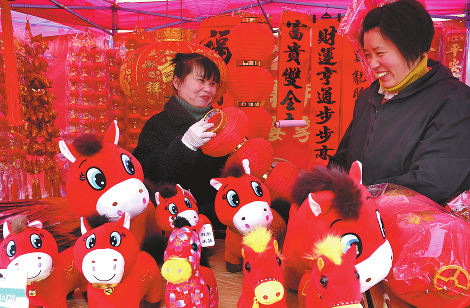
 Yiwu’s exports contributed 921.3 billion yuan to Jinhua in 2025, up 19.4% year-on-year, with strong demand from Southeast Asia and other overseas markets. Niche products, such as Spring Festival couplets and zodiac-themed accessories, illustrate how specialized goods from Jinhua reach global consumers efficiently.

 Integrated Manufacturing and Logistics

 Jinhua’s rise is underpinned by a diversified manufacturing base covering 33 of China’s 41 industrial categories. Counties such as Yongkang have become global leaders in hardware manufacturing, producing:

 70% of China’s security doors

 60% of insulated cups

 45% of leisure sports vehicles

 Digitalization has accelerated Jinhua’s trade efficiency. In 2025, over 4,000 export-oriented online shops were established, and cross-border e-commerce transactions reached 169.6 billion yuan. Innovative logistics, including Yiwu-Xinjiang-Europe freight trains, reduced transit times to Germany by 30%, allowing shipments to arrive in about 15 days, 20 days faster than by sea.

 Foreign Investment and Institutional Support

 Jinhua’s global appeal is strengthened by predictable and streamlined business procedures. Foreign investors benefit from:

 One-stop international trade service platforms

 Reduced registration times (from 15 working days to less than one)

 Access to local services, education, and healthcare on par with residents

 Since 1989, Yiwu has attracted investors from over 160 countries and regions, with 81% from Belt and Road partner countries. By 2025, the city had nearly 10,000 foreign professionals holding work permits, over half with specialized skills, reflecting a talent-friendly environment.

 Foreign entrepreneurs, like Romanian electric-mobility businessman Sorin Sirbu, highlight the city’s supportive policies, access to freight networks, and incentives for skilled talent, making Jinhua a sustainable base for international operations.

 Strategic Takeaways for International Investors

 Jinhua demonstrates that port access is no longer a prerequisite for global trade success. Its integrated ecosystem — combining deep manufacturing capabilities, digital logistics, cross-border e-commerce, and robust institutional support — offers significant opportunities for:

 Investment in export-oriented manufacturing and consumer goods

 Participation in specialized supply chains and niche products

 Collaboration in cross-border digital trade and logistics innovations

 For investors and global businesses, Jinhua exemplifies how an inland city can emerge as a globally connected, investment-ready hub, reshaping the landscape of international trade in China.


Article inline ad

Used home transactions show uptrend

0

By WANG YING in Shanghai | China Daily | Updated: 2026-02-13 

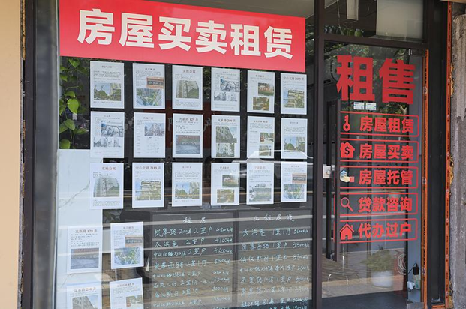
China’s four biggest cities are showing tentative signs of recovery in the pre-owned home market, pointing to a possible bottoming-out in these cities, but analysts still remain cautious about an overall rebound in the country’s property sector.

January is traditionally a slow season for home transactions, but trading volumes for existing apartments in the first-tier cities of Beijing, Shanghai, and Shenzhen and Guangzhou in Guangdong province, have shown signs of bouncing.

 In Beijing, as many as 15,082 existing homes changed hands via online contracts in January, marking the third consecutive month that the transaction volume has remained above 14,000 units, according to data from the Beijing Municipal Commission of Housing and Urban-Rural Development.

 “In the first 29 days of January, Beijing’s secondhand home transactions jumped 15 percent month-on-month, evidence that the market is recovering,” Gao Yuan, director of the Beijing Lianjia Research Institute, was quoted as saying by Economic Daily.

 “Both demand and market activity are picking up, paving the way for a near-term recovery,” Gao said.

 Pre-owned home transactions in Shanghai also bucked the trend, with 20,300 apartments changing hands across the city, marking a 26.69 percent year-on-year increase, according to data collected by Centaline Shanghai.

 “This is the third consecutive month that Shanghai’s secondhand home transactions surpassed 20,000 units,” said Lu Wenxi, an analyst at Centaline Shanghai.

 “A seasonal shortage of new home supply, combined with the steady rollout of favorable homebuying policies, also helped buoy transaction volumes,” Lu said.

 In Guangzhou, a total of 8,881 existing homes, covering a combined gross floor area of 894,000 square meters, were sold online in January, up 1.07 percent and 2.05 percent month-on-month, respectively. The figures indicate resilient demand in the capital of Guangdong province, Chinese financial news outlet Yicai said in a report, citing sources from the Guangzhou Association of Real Estate Agents.

 According to the Shenzhen Real Estate Intermediary Association, the southern metropolis recorded 6,802 existing home transactions in January, representing a month-on-month increase of 2.9 percent and a sharp 45.5 percent rise year-on-year. The annual growth marks the highest volume in nearly 10 months.

 With monthly pre-owned home transaction volumes surpassing the 5,000-unit mark for 11 consecutive months, homebuyers’ restored confidence is setting the stage for a market warm-up in spring, said the Yicai report.

 “After a market consolidation of four and a half years, home prices in hot spot Chinese cities have become relatively favorable, with existing home prices entering into a point of bottoming out,” said Li Yujia, a researcher on residential policy in Guangdong province.

 “It is worth noting that market stabilization requires coordinated efforts from all parties involved. Continued reductions in transaction costs, the creation of a fair and orderly trading environment, and the restoration of homebuyer confidence will all be pivotal,” Li said.

 “In terms of prices, both Beijing and Shanghai saw month-on-month declines in existing home prices in January, according to our data tracking the major 100 cities across China,” said Cao Jingjing, general manager of research at the China Index Academy.

 “Currently, market performance is mixed, but all signs point to the fact that older apartments with poorer quality and more remote locations will remain under pressure,” said Cao.

 The real estate market is undergoing a transition from being dominated by new home sales to a landscape where pre-owned home transactions now take the lion’s share. In the 30 key cities monitored by the China Index Academy, a total of 1.74 million existing homes changed hands, accounting for 65 percent of total housing transactions in those cities.

 wang_ying@chinadaily.com.cn

Article inline ad

China Strengthens Global Role In Autonomous Driving Standards

0

According to a report in China Daily on February 14, 2026

China is rapidly expanding its influence in the autonomous driving sector, both in international standard-setting and large-scale deployment, positioning itself as a global leader in self-driving technology.

 Chinese regulators and companies have actively participated in dozens of international automotive standards projects, culminating in the release of ISO 34505, an international standard defining how automated driving test scenarios are evaluated and test cases are generated. Developed under the ISO road vehicles committee (ISO/TC 22) and in collaboration with China’s Ministry of Industry and Information Technology and the China Automotive Technology and Research Center, ISO 34505 provides a shared technical framework for simulation and real-world validation.

 Cui Dongshu, Secretary-General of the China Passenger Car Association, emphasized that participation in standards-setting is strategically critical. “It helps Chinese autonomous vehicles and technologies gain wider international recognition,” he said.

 Real-World Deployment

 Chinese companies are simultaneously expanding Robotaxi pilots across major cities:

 Pony.ai and Baidu are increasing fleet sizes and operational zones.

 Testing in challenging urban and overseas environments helps validate system resilience and feeds back into both product development and international standards discussions.

 Sun Hang, Chief Engineer at the China Automotive Standardization Research Institute, noted that China’s regulatory framework — including national standards and road-testing rules in place since 2018 — provides stable, long-term guidance for the sector.

 Implications for Global Investors and Industry

 Standards Leadership: China’s involvement in ISO 34505 enhances its global voice in autonomous vehicle regulations and technology benchmarks.

 Market Deployment: Accelerated real-world Robotaxi operations signal a mature testing ecosystem and faster commercialization potential.

 Competitive Edge: Global companies, including US players like Waymo and Tesla, acknowledge China’s rapid progress as a strategic factor in autonomous driving leadership.

 For international investors and technology observers, China’s dual approach — setting global standards while scaling real-world operations — highlights opportunities in autonomous vehicle technology, mobility services, and smart city infrastructure, positioning the country as a pivotal player in shaping the future of self-driving vehicles worldwide.


Article inline ad

Zeiss Expands China Investment With Shanghai Innovation Campus

0

According to a report in China Daily on February 14, 2026

German optics giant Zeiss Group is deepening its commitment to China with the launch of its Greater China headquarters campus in Shanghai, marking the largest single infrastructure investment the company has ever made in the country.

 Andreas Pecher, CEO of Zeiss Group, said the move reflects a long-term localization and innovation strategy, aligning China’s 15th Five-Year Plan (2026–2030) with Zeiss’s global five-year agenda. “This strategic investment is not just financial, it represents a commitment to future growth in China and innovations that will benefit the world,” Pecher noted.

 Strategic Significance

 Global Innovation Hub: The campus will host advanced laboratories, research centers, and the largest customer center in Greater China, enabling product customization and enhanced R&D collaboration with local partners.

 Local Market Engagement: By embedding resources in China, Zeiss strengthens customer enablement, operational capacity, and market responsiveness.

 “In China, For China, For the World”: The campus reflects a model increasingly adopted by multinational enterprises, combining local innovation with global expertise.

 Catalyst for Industrial Ecosystem: Local authorities expect the campus to spur innovation across Shanghai and Pudong’s technology sectors, supporting broader industrial development.

 Martin Fischer, CEO of Zeiss Greater China, emphasized that the campus will accelerate technology development tailored to the local market, foster a dynamic innovation ecosystem, and enhance collaboration with regional partners and clients.

 Why It Matters for Investors

 Long-term Commitment: Zeiss’s largest-ever China investment signals confidence in the Chinese market and stable business conditions.

 Innovation Leverage: Advanced R&D capabilities may drive next-generation optics, imaging, and high-tech applications, with potential global spillover.

 Strategic Localization: Multinationals that combine global experience with local operations gain efficiency, customer insight, and market agility.

 For global investors and technology observers, Zeiss’s Shanghai campus underscores China’s role as a hub for high-tech innovation and foreign enterprise localization, offering opportunities in R&D collaboration, industrial partnerships, and advanced technology markets.

Article inline ad

Lenovo reports AI-driven record growth

0

By Ma Si | chinadaily.com.cn | Updated: 2026-02-13 

Chinese tech heavyweight Lenovo Group Ltd delivered record revenues, accelerated profitability, and continued artificial intelligence revenue expansion in the quarter ended in December.

 The company said its overall revenue reached an all-time fiscal quarter high of $22.2 billion, up 18 percent year-on-year, with revenue from all business groups growing double-digit year-on-year.

 Its adjusted net income increased by 36 percent year-on-year to $589 million, with adjusted net income margin expanding to 2.7 percent.

 According to Lenovo, the results demonstrate the company’s ability to deliver on its promise of double-digit growth and sustained profitability, while proving its ability to manage through cycles by leveraging innovation to drive growth and operational excellence to navigate volatility.

 AI has become a leading multi-year growth engine for Lenovo, with AI-related revenue growing 72 percent year-on-year to represent nearly a third, or 32 percent, of overall group revenue, driven by strong demand across AI devices, infrastructure, services and solutions.

 Yang Yuanqing, chairman and CEO of Lenovo, said the company “delivered an outstanding performance across all fronts in the third fiscal quarter, with all main businesses achieving strong double-digit revenue growth and AI becoming a leading growth engine”.

 According to Yang, to better capture the multi-year AI training demand and long-term AI inferencing growth, Lenovo implemented a strategic restructuring of its infrastructure solutions business, setting it on a solid path toward sustainable and profitable growth.

 “By leveraging our operational excellence, we effectively navigated market challenges of component cost increases and supply shortages, delivered our commitment of gaining market share and improving profitability,” he said.

 “Looking ahead, as AI increasingly integrates into individuals’ daily lives and enterprise operations, we will continue to drive Hybrid AI to capture the significant opportunities brought by AI democratization, accelerate growth, improve profitability, and deliver long-term value to our shareholders,” he added.

Article inline ad