Wednesday, November 25, 2026

Home Blog Page 61

New Commercial Mediation Rule Strengthens China’s Business Environment

0

According to a report by China Daily on February 9th

 China is set to modernize its commercial dispute resolution framework with the upcoming implementation of the Regulation on Commercial Mediation, issued by the State Council on December 31, 2025 and effective May 1, 2026. As the country’s first administrative rule specifically targeting commercial mediation, the 33-article regulation establishes a systematic, legal, and internationally aligned framework for resolving commercial disputes.

 Strengthening Domestic Legal Foundations

 Commercial mediation offers a flexible, efficient alternative to litigation and arbitration, particularly for cross-border disputes. The new regulation clarifies the independent legal status of commercial mediation and its scope, covering trade, investment, finance, transportation, real estate, construction, and intellectual property. By clearly distinguishing commercial mediation from personal, labor, or judicial mediation, the regulation defines its professional and commercial character.

 It also standardizes the establishment, operation, and management of mediation institutions, fostering professional, credible organizations and improving overall market confidence. Administrative responsibilities and compliance requirements for mediators and institutions further ensure operational integrity and protect parties’ rights.

 Enhancing Efficiency and Business Confidence

 A key goal of the regulation is to elevate the efficiency and quality of commercial dispute resolution. Unlike litigation or arbitration, mediation emphasizes negotiation, flexibility, and cost-effectiveness, allowing parties to resolve disputes without rigid evidentiary or trial procedures. Article 18 encourages the use of digital tools and AI-assisted online mediation, reflecting China’s push for digital modernization and further compressing resolution timelines.

 By promoting principles such as good faith, confidentiality, and cooperative negotiation, the regulation also supports long-term business relationships, helping enterprises maintain or repair partnerships while resolving disputes. This contributes to a stable, predictable, and trust-based business ecosystem.

 Aligning with International Standards

 The regulation directly supports China’s commitments under the Singapore Convention on Mediation, which establishes enforceable mechanisms for cross-border settlement agreements. China’s alignment with the convention enhances the international credibility of its commercial mediation system, creating a foundation for the country to become a global hub for commercial dispute resolution.

 Provisions allow mediation organizations to engage overseas mediators, establish foreign-linked institutions, and participate in pilot programs in the Guangdong-Hong Kong-Macao Greater Bay Area and Free Trade Zones. These measures facilitate cross-regional and international collaboration, promote best practices, and attract top global mediation professionals.

 Implications for Investors and Global Businesses

 For foreign investors and international companies, the regulation signals a more transparent, predictable, and business-friendly legal environment. By improving the reliability of commercial dispute resolution, the regulation reduces operational risks, strengthens confidence in China’s market, and promotes fair, efficient, and cooperative business practices.

 In the context of increasing global economic integration and initiatives such as the Belt and Road, this legal framework not only enhances China’s domestic market efficiency but also strengthens its position in the international trade and investment landscape.

 The Regulation on Commercial Mediation represents a major milestone in China’s efforts to modernize governance, protect market autonomy, and establish a globally recognized, rule-of-law-based business environment.

 

Article inline ad

Three Keys to China’s Economic Outlook in 2026

0

According to a report by China Daily on February 9th

 As China enters 2026, the first year of its 15th Five-Year Plan, the focus of economic debate is shifting. Policymakers and analysts are moving beyond headline growth figures to examine how growth is generated, distributed, and anchored in social realities. Recent policy signals suggest that China’s next phase of economic management will emphasize structural reorientation, with people, coordinated policies, and external conditions at the center.

 People-Centric Growth

 A defining feature of China’s new development approach is the explicit elevation of human development as both a means and a goal of economic policy. With demographic dividends declining, traditional growth drivers such as physical investment alone are no longer sufficient. Economic sustainability increasingly depends on investing in people—through education, healthcare, and human capital development—to enhance productivity, innovation, and consumption capacity.

 Changing demand patterns are reinforcing this shift. As incomes rise, households are moving beyond basic material needs toward services, experiences, and personal development. Policymakers are signaling that the services sector will become a central pillar of future growth, matching supply with evolving expectations of a higher quality of life. Urbanization, improved public services, and inclusive residency policies further illustrate how people-centric thinking intersects with macroeconomic objectives.

 2.Coordinated and Efficient Policy

 Policy coordination is becoming a priority in 2026. Analysts note that effective economic management now depends as much on aligning policy tools as on deploying additional resources. For example, fiscal and state-owned enterprise assets remain substantial, but inefficiencies in allocation and institutional design limit their impact. Unlocking this potential requires coordinated action across monetary conditions, credit mechanisms, and targeted reforms rather than relying on single policy levers.

 Policy coordination is also critical in balancing trade-offs, such as in real estate, where easing supply may relieve fiscal pressure but risk oversupply, while restricting supply stabilizes prices but constrains revenues. A systematic framework to assess such interactions is emerging as a key element of China’s economic strategy.

 3.Navigating External Conditions

 External factors, particularly the renminbi’s exchange rate, will shape China’s economic trajectory in 2026. While appreciation is broadly expected, the sequencing of domestic demand policies relative to currency adjustments is crucial. Uncoordinated moves could dampen exports and accelerate imports, creating imbalances.

 Geopolitical factors, including investment restrictions and export controls, continue to influence currency pressures and capital flows. Recent foreign exchange reserve stability indicates that market forces, rather than administrative intervention, are guiding adjustments. Gradual normalization of external relations, particularly with major trading partners, is expected to help stabilize the outlook.

 A More Nuanced Phase of Economic Management

 Taken together, China’s 2026 economic agenda signals a shift toward more nuanced, sustainable growth. Success will be measured not only by headline growth, but by composition, inclusiveness, and resilience. By placing people at the center, improving policy coordination, and managing external uncertainties, China is moving toward a model that prioritizes sustainability, coherence, and broadly shared prosperity.


Article inline ad

China Expands Imports, Offering Growth Opportunities Globally

0

According to a report by China Daily on February 9th

 China’s continued push to expand imports is emerging as a key feature of its high-level opening-up strategy, offering predictable demand and new opportunities for global businesses amid economic uncertainty.

 The effort aligns with President Xi Jinping’s repeated statements that China’s development is not pursued in isolation. Instead, the country aims to share the opportunities of its vast domestic market with the world. Xi has emphasized that high-quality opening-up is a long-term commitment rather than a short-term policy.

 “China remains committed to advancing high-standard openness and helping all sides succeed through greater connectivity,” Xi said in a written speech at the APEC CEO Summit in Gyeongju, Republic of Korea, last year.

 Import Expansion as a Strategic Platform

 Chinese officials are translating policy into action. Commerce Minister Wang Wentao announced plans to organize more than 100 import promotion events in 2026, connecting global suppliers with Chinese buyers. The Ministry of Commerce is also promoting initiatives such as “Export to China” to facilitate imports and strengthen market access.

 China imported 18.5 trillion yuan ($2.67 trillion) in goods in 2025, making it the world’s second-largest import market for the 17th consecutive year. Imports from over 130 countries and regions recorded growth, while nearly 80 countries regard China as a major export destination.

 Analysts note that China’s import strategy increasingly emphasizes quality over quantity. Denis Depoux, global managing director at Roland Berger, said, “The focus is shifting from satisfying demand quantitatively to enriching it qualitatively, using consumption upgrading to drive supply-side innovation and high-quality economic growth.”

 Experts from China’s Development Research Center and the Chinese Academy of International Trade and Economic Cooperation echoed this view, highlighting opportunities in advanced consumer goods, specialized services and high-tech equipment. They noted that easing export restrictions from Western countries could further boost China’s demand for high-value imports.

 Opportunities for Global Businesses

 Foreign business leaders are seeing concrete potential. Peter Wilson, UK ambassador to China, said British companies are well positioned to meet the needs of Chinese consumers, with opportunities for two-way trade and practical collaboration.

 Oliver Oehms, chief representative of the Delegation of German Industry and Commerce in Beijing, added that foreign firms are increasingly competing directly in the Chinese market, not just exporting. China is now recognized as a critical destination for production, investment, and long-term business engagement.

 China’s continued commitment to opening-up is sending a clear signal: the country’s vast market is not only a national advantage but a platform for shared global growth. For foreign companies, this represents both a strategic opportunity and a chance to engage in one of the world’s most dynamic consumer markets.


Article inline ad

China’s AI Adoption Enters Business-Scale Deployment Phase

0

According to a report in China Daily on February 8, 2026

Artificial intelligence adoption in China is moving beyond pilot projects and early experimentation, entering a new phase in which scalability, governance and measurable business value are becoming decisive factors, according to industry executives.

 “Over the past two years, AI in China has progressed from conceptual discussions to intensive pilot programs,” said Liu Lifang, solutions engineering director at Cloudera Greater China. “As we head into 2026, the focus is shifting from experimentation to business-scale deployment.”

 Liu noted that technologies ranging from large language models and agentic AI to automation tools have already completed their initial testing cycles in many enterprises. The central question for companies is no longer whether AI can be deployed, but whether it can operate reliably, securely and sustainably—and deliver tangible business results.

 From experimentation to returns

 Recent data suggest that Chinese enterprises are beginning to see financial payoffs from AI adoption. A report released this month by PwC found that 52 percent of surveyed Chinese CEOs said AI had contributed to revenue growth, significantly higher than the global average of 29 percent.

 This marks a transition toward what analysts describe as “industrialized AI adoption,” where success is measured by return on investment, efficiency gains and replicability, rather than model size or computing power.

 “In 2026, business value and scalability will become the primary benchmarks of AI success,” Liu said.

 Industry-driven deployment

 In sectors such as manufacturing, finance and telecommunications, companies are increasingly prioritizing the reuse of proven AI capabilities and embedding them into core workflows, rather than relying on isolated tools or experimental projects.

 “Enterprise AI applications are clearly moving beyond chatbots,” Liu said. “The emphasis is shifting toward process optimization, operational automation and industry-level intelligent systems.”

 Agent-based workflows, he added, are expected to play a growing role in integrating AI into end-to-end business processes.

 Governance and private AI take center stage

 Another defining feature of China’s AI trajectory is the rising importance of trusted and governable AI systems. Data security, regulatory compliance and access control have long been prerequisites for AI adoption in China—and are becoming even more critical as deployment scales up.

 While public cloud services and pre-trained models have lowered the barriers to experimentation, many companies are finding that weak data governance can amplify risks alongside efficiency gains.

 As a result, more enterprises are turning to private AI deployments, including running models in controlled environments, keeping data within defined domains with full traceability, and using techniques such as retrieval-augmented generation to enhance performance while maintaining data control.

 “Trusted AI is no longer a best practice—it is becoming the baseline requirement for enterprises that want to scale AI,” Liu said.

 A distinct China AI pathway

 According to Cloudera’s forecast, localized private deployment will become the foundational infrastructure for large-scale AI adoption in China. As AI moves into production-level use, enterprises are increasingly focused on whether systems can operate continuously, evolve over time and reliably support core business operations.

 “Governance and agility are not opposing choices,” Liu said. “They are two essential components of AI maturity.”

 For global observers, China’s shift toward business-scale AI deployment highlights a distinctive path—one shaped not only by rapid technological progress, but also by strong emphasis on governance, security and real-world commercial value.


Article inline ad

China Extends Gold-Buying Streak Despite Record Prices

0

According to a report in China Daily on February 8, 2026

China added to its official gold reserves in January despite elevated global prices, extending a 15-month buying streak as the country continues to diversify and optimize its international reserve assets.

 According to data released on Saturday by the State Administration of Foreign Exchange, China’s gold holdings rose to 74.19 million ounces at the end of January, an increase of 40,000 ounces from the previous month.

 The latest addition follows a net increase of 860,000 ounces in 2025, after the central bank resumed gold purchases in November 2024, ending a brief pause earlier that year.

 Strategic diversification, not short-term trading

 Analysts say the steady pace of accumulation—maintained even as gold prices hover near historical highs—underscores Beijing’s long-term approach to reserve management rather than a reaction to short-term market movements.

 Wang Qing, chief macroeconomic analyst at Orient Golden Credit Rating, said the continued, measured purchases signal an effort to improve the structure of China’s official reserves. By the end of 2025, gold accounted for about 9.7 percent of the country’s total reserves, still well below the global average of roughly 15 percent, he noted.

 “Short-term price volatility is unlikely to materially alter the central bank’s broader strategy of gradually increasing its gold holdings,” Wang said.

 Global context

 The World Gold Council said in a recent report that while the pace of purchases may have been tactically adjusted as prices surged, China’s ongoing accumulation reflects a strategic push toward greater diversification as its international reserves continue to expand.

 For global markets, China’s sustained gold buying has been closely watched as part of a broader trend among central banks—particularly in emerging economies—to reduce exposure to single-currency risks and enhance the resilience of reserve portfolios.


Article inline ad

China’s Nanshan Emerges as Global Hardware Innovation Hub

0

According to a report in China Daily on February 7, 2026

 SHENZHEN — Nanshan, a district in southern China’s tech powerhouse Shenzhen, is rapidly cementing its status as a global center for hardware innovation. The 10-kilometer stretch of Liuxian Avenue, dubbed “Robot Valley,” now hosts more than 100 high-tech exhibitors at international trade shows, including CES 2026, reflecting the district’s dense industrial ecosystem.

 Local startups benefit from close proximity to suppliers, universities, and corporate R&D labs, enabling same-day prototyping and production cycles. The district has fostered over 6,000 high-tech enterprises, including nearly 400 nationally recognized “little giant” firms specializing in sophisticated hardware technologies.

 Government support is a key driver. Nanshan authorities provide startups with bundled packages combining workspace, early-stage funding, and expedited regulatory approvals. “Our role is an invisible string — we don’t pick winners but ensure the ecosystem moves efficiently,” said local officials.

 High-profile success stories include RoboSense, a LiDAR technology firm that grew from a doctoral project to a publicly listed company, and Insta360, whose panoramic cameras gained international traction. The district also hosts the Guangdong-Hong Kong-Macao Greater Bay Area Venture Capital Fund, targeting 50.45 billion yuan for early-stage hard tech investments.

 With Nanshan’s GDP exceeding 1 trillion yuan ($144 billion) in 2025, the district exemplifies China’s approach to concentrated innovation, combining industrial density, talent proximity, and supportive policies to accelerate next-generation hardware development.


Article inline ad

AI Transforms China’s Workforce, Fuels New Jobs and Entrepreneurship

0

According to a report in China Daily on February 7, 2026

 BEIJING — Artificial intelligence is rapidly reshaping China’s labor market, creating new professions, lowering entrepreneurial barriers, and driving skill upgrades among employees, according to industry experts and official reports.

 At Xunfei Healthcare in Hefei, Anhui province, Hu Pingping, a former gastroenterologist, now works as an AI trainer, analyzing how large language models diagnose complex medical cases. “My new role combines clinical knowledge with AI technology,” she said, reflecting a broader trend across sectors where human expertise is augmented by advanced AI systems.

 Across China, emerging roles include AI content annotators, AI product managers, and AI-assisted animators. PwC’s 2025 Global AI Jobs Barometer noted nearly all AI-related positions grew, with workers commanding a 56% wage premium, up from 31% the previous year. Domestic recruitment platform Zhaopin reported a 19% year-on-year increase in AI-related job openings in Q4 2025, particularly in algorithm engineering, machine vision, and robotics.

 “AI is shifting the workforce toward higher-value roles centered on human-machine collaboration,” said Liu Cong, head of iFLYTEK’s Research Institute. Yet the fast pace of AI innovation also shortens career lifecycles, challenging the traditional model of mastering a single skill over a lifetime. Continuous skill renewal is becoming critical for competitiveness.

 Entrepreneurship is also being transformed. One-person companies (OPCs) are increasingly viable, allowing individuals to leverage AI tools for content creation, operations, and service delivery. Cities like Suzhou are actively promoting themselves as OPC-friendly hubs. “AI is becoming as essential as electricity or telephones,” said Wei Qing, CTO of Microsoft China. “It enables a single person to operate like a full team.”

 In Wuhan, a January AI training program on the historic Hanzheng Street attracted over 50 local apparel business owners, ranging from post-2000 designers to seasoned entrepreneurs. Fashion designer-turned-AI entrepreneur Yang Jian led the session, demonstrating how small firms can integrate AI to improve design, manufacturing, and marketing efficiency.

 The national “AI Plus” initiative supports skill training, entrepreneurship, and reemployment opportunities, while the Ministry of Industry and Information Technology is guiding universities to align curricula with AI industry needs. Wang Xiaoping, Minister of Human Resources and Social Security, said China will implement early-warning and response systems to monitor AI’s employment impact, ensuring technology development remains employment-friendly.

 Experts stress that AI complements rather than replaces uniquely human skills. Creativity, critical thinking, and emotional intelligence remain indispensable. Zhang Junping, professor at Fudan University, emphasized the value of “slash careers,” where individuals combine multiple skills to remain resilient amid rapid technological change.

 With AI adoption accelerating, China is witnessing a broader recalibration of its workforce, entrepreneurship, and lifelong learning culture, positioning the country at the forefront of global AI-driven labor transformation. Analysts say these trends could enhance productivity, stimulate innovation, and unlock new economic value for both enterprises and individuals.


Article inline ad

Honor Leads Global Smartphone Shipment Growth in 2025

0

According to a report in China Daily on February 7, 2026

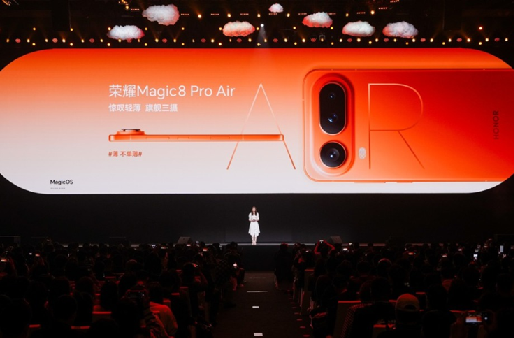
 Chinese technology company Honor emerged as the fastest-growing smartphone brand among the world’s top ten manufacturers in 2025, highlighting the firm’s successful global expansion and strategic emphasis on innovation.

 According to the latest data from global market research firm Omdia, Honor achieved an 11% year-on-year increase in worldwide smartphone shipments, placing it at the top for growth rate among major international competitors. The performance underscores Honor’s ability to capture market share amid intensified competition across the mobile device sector.

 Industry analysts attribute Honor’s success to its core focus on technological advancement and product diversification. Key areas of investment include imaging systems, artificial intelligence integration, and battery technology, which have enhanced the appeal of its smartphones in both domestic and overseas markets.

 Beyond smartphones, Honor’s tablet business also demonstrated significant momentum, particularly in the mid-to-high-end segment priced between $300 and $600. According to data from International Data Corp in the United States, Honor led all major overseas brands in shipment growth for this segment in 2025, reinforcing the company’s expanding footprint in global consumer electronics.

 “Honor’s strategy combines cutting-edge technology with a diversified portfolio, allowing it to compete effectively on a global scale,” said an industry analyst. “The company’s rapid growth reflects both strong product innovation and an increasingly sophisticated approach to international market expansion.”

 With ongoing investments in research and development, Honor aims to consolidate its position as a leading global technology brand, leveraging both smartphones and tablets to drive sustained growth in competitive markets worldwide.


Article inline ad

China’s Smartphone Market Faces Adjustment Amid Intensified Competition in 2025

0

According to a report in China Daily on February 7, 2026

 BEIJING — China’s smartphone market concluded 2025 with a notable slowdown in monthly shipments, reflecting intensified competition and a broader industry transformation driven by technological upgrades and ecosystem expansion, according to the latest industry data.

 Domestic mobile phone shipments in December 2025 totaled 24.5 million units, representing a sharp 29.1% year-on-year decline, the China Academy of Information and Communications Technology reported. Among these, 5G smartphones accounted for 22 million units, down 27.3% from the previous year, yet still representing 90.4% of total shipments, highlighting the continued dominance of next-generation connectivity in the Chinese market.

 For the full year, China shipped 307 million mobile devices, marking a modest 2.4% decline compared with 2024. While the overall market contracted, domestic brands continued to aggressively innovate: December saw the release of 40 new models, up nearly 38% year-on-year, accounting for 97.6% of all new devices launched that month.

 Industry insiders note that the surge in product launches reflects a strategy to counteract market saturation by driving differentiation and building brand ecosystems. iQOO, a leading Chinese smartphone brand, unveiled its latest flagship, the 15 Ultra, targeting the gaming segment. The company also rolled out a “Creator Incentive Program” in partnership with video platform Bilibili and collaborated with popular mobile game Honor of Kings to engage content creators and streamers.

 “The market is shifting from pure volume competition to innovation-driven growth,” said an industry analyst. “Brands are leveraging software, gaming, and community engagement to cultivate user loyalty and unlock new revenue streams.”

 Despite the short-term shipment decline, domestic manufacturers remain confident that continuous product iteration, coupled with deepening integration into entertainment, social, and AI-driven ecosystems, will sustain China’s leadership in global smartphone innovation.


Article inline ad

China’s Tech Giants Race to Dominate AI Market During Lunar New Year

0

According to a report in China Daily on February 7, 2026

 BEIJING — Chinese technology companies are leveraging the Lunar New Year holiday to capture users for their AI-powered digital assistants, signaling a pivotal year for intelligent agents as they transition from novelty tools to essential daily utilities.

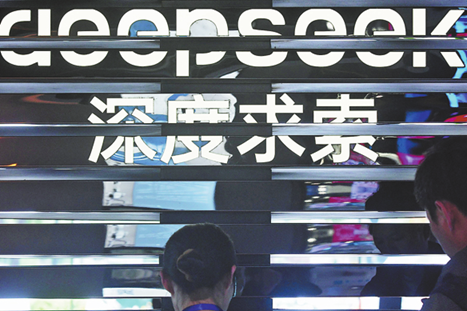
 Tencent, Alibaba, ByteDance, and Baidu are aggressively competing to secure the next-generation AI gateway, offering massive financial incentives to attract users. Tencent launched a 1-billion-yuan ($144 million) campaign through its AI-enabled Yuanbao app, distributing top prizes of up to 10,000 yuan. The initiative propelled the app, powered by models including DeepSeek, to the top of Apple’s free app rankings in China.

 Alibaba followed with its flagship AI platform, Qwen, unveiling a 3-billion-yuan “festival treat” to subsidize shopping, dining, travel, and entertainment bookings within its AI-powered ecosystem. The company also directed traffic to its healthcare AI application, Ant Afu, highlighting the convergence of AI and consumer services.

 Industry analysts note that this competition resembles China’s earlier race for digital payment dominance, but with higher stakes: the winner could control the “AI gateway” that manages end-to-end task execution, from booking movie tickets to ordering daily necessities.

 “On-device AI agents have the potential to replace traditional apps by automating tasks directly on the user’s phone,” said Chen Jianguang, partner at EY Greater China. Qwen, for example, can handle cinema recommendations, bookings, and payments through a single chat interface, streamlining user experience.

 The scale of China’s AI adoption is significant. By mid-2025, generative AI users reached 515 million, doubling in just six months, while mobile AI users totaled 720 million by October. Market research projects China’s AI sector growth to exceed 30 percent in 2026, driven by rising consumer adoption and expanding commercial applications.

 However, experts caution that long-term success depends on genuine innovation and measurable efficiency gains rather than mere user acquisition. Recent product launches, including Qwen, Kimi, and DeepSeek, indicate a shift toward context-aware AI solutions addressing real-world problems.

 Tech firms are also diversifying applications: ByteDance’s Doubao assists students with homework, Alibaba’s Lingguang AI supports mini-program development, and JD.com deploys AI avatars for live e-commerce. Meanwhile, the one-person company (OPC) model is enabling solo entrepreneurs to leverage AI for content creation, product operations, and service delivery, highlighting the democratization of AI-driven business in China.

 “2026 is poised to be the year when AI moves from model innovation to tangible real-world impact, driving productivity growth across industries,” said Ma Beibei, AI analyst at CCID Consulting under China’s Ministry of Industry and Information Technology.


Article inline ad