Wednesday, November 25, 2026

Home Blog Page 62

China’s Machinery Sector Posts Steady Growth, Industrial Robots Drive Expansion

0

According to a report in China Daily on February 7, 2026

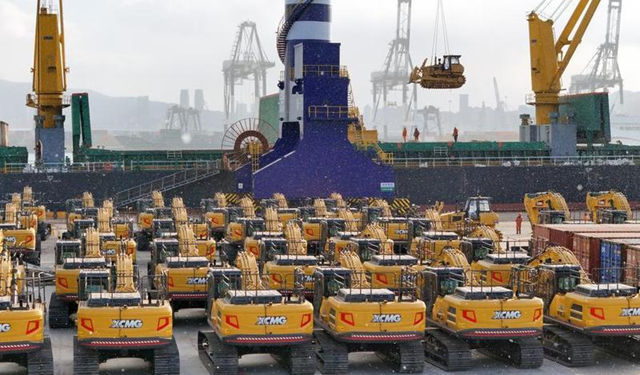
 BEIJING — China’s machinery industry maintained steady growth in 2025, supported by strong domestic demand, rising exports, and accelerated adoption of industrial automation, according to the China Machinery Industry Federation (CMIF).

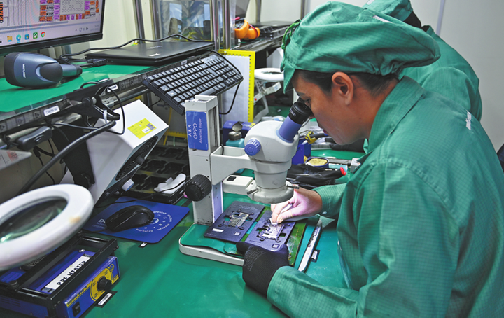
 The added value of major machinery enterprises increased 8.2 percent year-on-year, outpacing the overall industrial sector by 2.3 percentage points. Among 122 key machinery product categories tracked by CMIF, 85 saw output growth, highlighting broad-based expansion across the sector. Industrial robot production led the gains, jumping 28 percent, a record high that underscores China’s push to integrate automation across manufacturing.

 Total operating revenue of major machinery firms reached 33.2 trillion yuan ($4.8 trillion), up 6 percent from 2024, while total profits rose 5.9 percent to 1.7 trillion yuan. Analysts said revenue growth was supported by strong global demand for construction machinery, industrial equipment, and automation solutions, even as international trade uncertainties persist.

 “The machinery industry is benefiting from a combination of government support, rising domestic consumption, and global demand for high-value equipment,” said Ye Dingda, deputy head of CMIF. “While headwinds remain, the sector’s overall trajectory remains positive for 2026.”

 China’s focus on high-tech machinery, particularly robotics, precision equipment, and green technology, is aligning with national strategies to upgrade manufacturing capabilities and strengthen export competitiveness. Observers note that continued investment in automation and digital solutions will likely help Chinese machinery companies capture more international market share.

 

Article inline ad

China’s Gold Production Edges Up as Investment Demand Surges

0

According to a report in China Daily on February 7, 2026

China’s gold output increased modestly in 2025, even as overall consumption declined, reflecting a clear shift from jewelry toward investment-oriented products, according to the China Gold Association (CGA).

 Data released Thursday showed that domestic gold production reached 381.34 metric tons, up 1.09% from the previous year. Output from imported raw materials rose 8.81% to 170.68 tons, as exploration, development, and technological initiatives achieved notable progress.

 While total gold consumption fell 3.57% to 950.10 tons, the drop was driven by a sharp decline in jewelry demand. In contrast, demand for investment products such as gold bars and coins surged, marking the first year that annual investment gold purchases exceeded jewelry consumption in China.

 Trading activity on domestic exchanges reflected this shift. Both the Shanghai Gold Exchange and Shanghai Futures Exchange reported robust turnover, highlighting elevated participation amid rising prices.

 The investment trend extended to financial markets. Gold-backed exchange-traded funds (ETFs) in China recorded inflows of 133.12 tons in 2025, a 149.9% increase compared with 2024, boosting total ETF holdings to 247.85 tons by year-end.

 Analysts say the data signals a growing appetite among Chinese investors to use gold as a safe-haven asset, driven by macroeconomic uncertainty and rising global gold prices. The trend also positions China’s gold market as a key driver of liquidity and investment flows in the region.

 “The surge in investment demand indicates a structural shift in China’s gold market,” said a CGA spokesperson. “Investors are increasingly prioritizing bullion and ETFs over traditional jewelry, reflecting broader trends in wealth management and financial asset diversification.”

 With domestic production stable and investment demand accelerating, China’s gold market is expected to maintain its pivotal role in both physical and financial markets, influencing global pricing and trading patterns in the years ahead.


Article inline ad

China Boosts Railway Investment to Drive Economic Growth

0

According to a report in China Daily on February 7, 2026

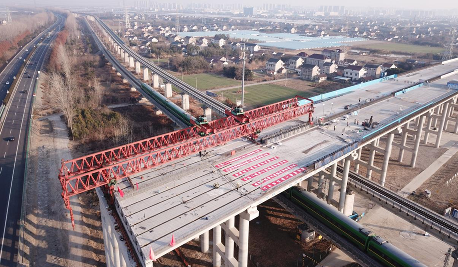
BEIJING — China’s railway sector demonstrated robust investment and expansion in 2025, reinforcing the country’s broader infrastructure-led economic growth strategy, according to data from China State Railway Group.

 Fixed-asset investment in the railway industry reached 901.5 billion yuan ($126.8 billion) last year, marking a 6 percent increase compared with 2024. The nation also commissioned 3,109 kilometers of new railway lines, including 2,862 km of high-speed rail, underscoring the sector’s role in enhancing connectivity and regional integration.

 “The ongoing expansion of railway infrastructure is not just a transport project — it’s a strategic economic lever,” said an investment analyst at China Galaxy Securities. “By linking urban centers with rural areas and integrating high-speed rail with existing highway networks, China is creating a more efficient and resilient transportation ecosystem.”

 The momentum builds on the foundation laid during the first four years of the 14th Five-Year Plan (2021–25), when annual railway investment ranged from 710.9 billion yuan to 850.6 billion yuan. These projects are part of a long-term strategy to improve inter-regional connectivity and facilitate economic modernization.

 In Jiangsu province, the Haimen–Taicang Yangtze River Tunnel illustrates the country’s integrated infrastructure approach. China Railway 24th Bureau Group recently completed the installation of 502 box girders over active railway lines, linking the tunnel to the urban network. Once operational, the tunnel will reduce cross-Yangtze River travel time to just 10 minutes, while connecting highways and railways for seamless transit.

 Experts note that such projects not only enhance passenger and cargo efficiency but also stimulate urban-rural coordination and regional economic cooperation, creating multiplier effects across local economies.

 Looking ahead, continued railway investment is expected to further optimize China’s transport network, strengthen logistics efficiency, and provide a critical backbone for sustained high-quality economic growth.


Article inline ad

Schneider Electric Highlights China as Global Energy Transition LeaderBy Ren Qi

0

According to a report in China Daily on February 7, 2026

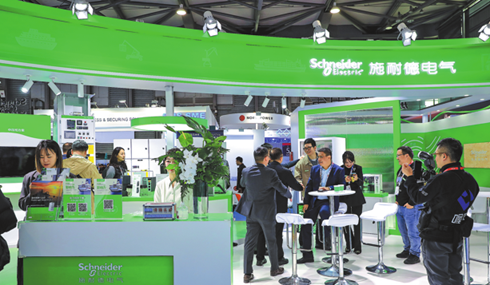
 Shanghai — China’s long-term planning and massive infrastructure investment have positioned it as a “pioneer” in the global energy transition, according to Frederic Godemel, executive vice-president of energy management at Schneider Electric.

 Speaking exclusively to China Daily, Godemel emphasized the French multinational’s deep integration in the Chinese market. “You can call us a foreign company, but we are extremely local,” he said.

 China’s distinct advantage lies in its coordinated approach to electrification and green development, he explained. A recent UBS report predicts domestic power demand could grow by 8 percent annually from 2028 to 2030 — double previous estimates — signaling the start of a five- to ten-year “super cycle” for China’s power sector.

 Schneider Electric identifies a “three-pronged” strategy behind China’s progress: simultaneous investment in power generation, grid infrastructure, and demand-side management. This aligns with the country’s 15th Five-Year Plan (2026-30), which targets fixed-asset investments of 4 trillion yuan ($556 billion) in new power systems and ultrahigh voltage transmission. The plan also aims for “West-to-East Power Transmission” capacity to exceed 420 million kilowatts by 2030.

 Godemel highlighted China’s forward-looking approach compared to other countries. “If you want a resilient electrical system, you need to anticipate 10 years in advance. Not all countries have done that,” he said.

 For Schneider Electric, China is not only a key market but also an innovation hub. Its Shanghai R&D center — one of the company’s largest globally — develops technologies both for domestic deployment and export. Partnerships with Chinese firms such as StarCharge and HyperStrong allow Schneider Electric to develop charging and storage solutions in China that are subsequently applied in Europe, reflecting a “China for Global” dynamic.

 Global demand for electricity is rising sharply, driven by population growth and energy-intensive technologies like artificial intelligence. Godemel stressed that this surge highlights China’s strategic foresight.

 AI is a central element of Schneider Electric’s strategy to manage complexity and enhance safety. Smart panels that communicate in natural language can alert technicians to live currents and hazards, reducing workplace accidents. AI integration has already helped the company cut carbon emissions at its Wuxi “Sustainability Lighthouse” factory and shorten new product development cycles by 63 percent at its Putuo, Shanghai, facility.

 Looking ahead, Godemel said the focus will shift toward retrofitting existing buildings to improve energy efficiency. “We want to be at the forefront of this revolution,” he said, underscoring the company’s commitment to deepening partnerships and R&D in China to drive global energy innovation.


Article inline ad

China Becomes Central Asia’s Top Trading Partner as Bilateral Commerce Hits $106 Billion

0

According to a report in China Daily on February 7, 2026

 BEIJING — China has emerged as the largest trading partner for Central Asian countries, with bilateral trade surpassing $106 billion in 2025, driven by deepening economic ties and strategic cooperation, official data and experts said.

 According to the Ministry of Commerce, trade between China and Central Asia exceeded the $100 billion mark for the first time, marking five consecutive years of positive growth. Data from China Customs showed a 12% year-on-year increase, with the growth rate accelerating by 6 percentage points compared to 2024.

 Analysts attribute the surge to high-frequency interactions and precise alignment of strategic interests, underpinned by active policy coordination among Chinese and Central Asian authorities. “The most significant consensus is a shared commitment to mutual benefit and regional development,” said Li Ziguo, director of the China Institute of International Studies’ Department for European-Central Asian Studies.

 The trade structure is also evolving, with innovative arrangements and Chinese investments fueling reindustrialization and economic modernization across the region. Financial institutions, including the China-Eurasian Economic Cooperation Fund, the Silk Road Fund, the Asian Infrastructure Investment Bank, and the China Development Bank, have provided critical financing support, while cross-border electronic payment agreements, such as those between Kazakhstan’s Kaspi.kz and China’s Alipay and WeChat, have streamlined transactions.

 “The China-Central Asia partnership extends beyond trade,” said Timur Abylaev, deputy director of the National Institute for Strategic Initiatives under the President of Kyrgyzstan. “It includes sharing governance experience and exploring modernization paths, with the Chinese model offering practical lessons for national development.”

 China’s trade with Central Asia reflects broader trends in its global economic engagement. With a total foreign trade volume exceeding $6.35 trillion last year, China remains a primary trading partner for over 160 countries, leveraging its scale and investment capacity to expand influence in strategically important regions.


Article inline ad

Brazil Considers Visa-Free Entry for Chinese Citizens, Boosting Bilateral Trade and Investment

0

According to a report in China Daily on February 7, 2026

 China and Brazil are moving closer to easing travel restrictions between the two countries, a development that analysts say could strengthen one of the world’s most significant South-South economic partnerships.

 Brazilian President Luiz Inacio Lula da Silva recently announced plans to grant visa-free entry for certain short-term visits by Chinese nationals, although the official implementation date has not yet been confirmed. The measure is widely seen as a reciprocal move following China’s visa-free policy, which has allowed Brazilian passport holders to enter China without a visa for up to 30 days since June 2025.

 Market analysts note that a visa exemption is likely to streamline commercial operations by lowering travel costs, enhancing efficiency in trade negotiations, factory inspections, and personnel mobility. “Visa-free travel will facilitate the entire business process, from market research to post-investment management,” said Zhou Mi, senior researcher at the Chinese Academy of International Trade and Economic Cooperation.

 The two economies exhibit strong complementarities: China excels in machinery, electronics, and infrastructure construction, while Brazil remains highly competitive in agriculture-related industries. These complementarities are already reflected in the trade data: bilateral trade reached a record $171 billion in 2025, up 8.2 percent from the previous year. By comparison, Brazil’s trade with its second-largest partner, the United States, totaled $83 billion over the same period.

 Visa facilitation is also expected to support growth in services and digital trade, sectors where bilateral cooperation remains limited. Analysts highlight opportunities in tourism, finance, education, and healthcare, often supported by emerging digital platforms.

 For companies operating locally, the impact is likely to be immediate. Sinovac Biotech, a Chinese vaccine manufacturer, said the policy will ease in-person exchanges required for research, clinical trials, and technology collaboration in Brazil. The company recently signed two partnership agreements with Brazil’s Ministry of Health, valued at over $700 million over ten years, which include supplying roughly 60 million doses of varicella and rabies vaccines and supporting local production capacity.

 However, experts caution that visa convenience alone will not drive rapid market expansion. Regulatory compliance, taxation, and policy uncertainty remain key challenges. Logistical constraints also persist: Fitch Ratings notes that while a visa waiver could modestly boost passenger traffic, the high costs and long-haul nature of China-Brazil flights limit rapid expansion of direct routes.

 “Visa facilitation is not a cure-all,” Zhou Mi emphasized. “But it signals strong intent to deepen bilateral economic ties and represents an important step toward broader trade and investment collaboration.”


Article inline ad

Hainan Launches First Duty-Free Stores for Daily Essentials

0

According to a report in China Daily on February 7, 2026

Boosting Consumption and Local Free Trade Port Benefits

 Hainan province is set to open five duty-free retail outlets for daily consumer goods across Haikou, Sanya, and Danzhou on Feb. 11, marking the first implementation of a new national policy aimed at lowering living costs and expanding the benefits of the island’s free trade port to residents.

The stores, three in Haikou and one each in Sanya and Danzhou, will allow eligible residents—including Chinese citizens with local identification or social security cards, and foreign nationals with valid residence permits—to purchase imported goods free of import tariffs, value-added tax, and consumption tax, up to an annual quota of 10,000 yuan ($1,440) per person. Products include food, beverages, household goods, and maternal and infant items.

Provincial authorities said the initiative aims to meet growing consumer demand, stimulate local retail activity, and align with festive spending during the Chinese New Year. Hainan plans to gradually expand the network until all cities and counties on the island are covered.

“The new duty-free outlets will tailor offerings to holiday demand and provide additional consumption incentives such as vouchers and payment discounts,” said Lu Wei, deputy director of the Hainan Provincial Department of Commerce.

This measure exemplifies China’s broader strategy to leverage free trade zones to enhance domestic consumption, attract retail investment, and strengthen regional economic ties.


Article inline ad

China Boosts Digital Services and Payment Access for Overseas Visitors and Investors

0

According to a report in China Daily on February 7, 2026

New guidelines aim to enhance internationalization of China’s digital ecosystem, improving convenience and market access for foreigners

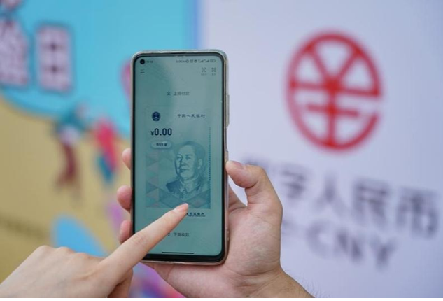
China has issued a set of measures to streamline digital services and payment systems for foreigners and overseas personnel, signaling a step forward in the country’s high-standard opening-up strategy. The guidelines, jointly released by 11 government authorities including the Cyberspace Administration of China and the People’s Bank of China, are designed to make China’s digital ecosystem more international-friendly and support tourism, investment, and business activities.


The new framework covers 14 key initiatives, including:

Expanding basic digital services such as accessible telecom networks for foreign users.

Enhancing cross-border digital payments and supporting overseas e-wallet integration.

Providing multilingual digital interfaces and translation features across popular platforms.

Upgrading digital public services related to healthcare, education, entrepreneurship, and government administration.

Strengthening cybersecurity, data protection, and privacy safeguards for foreign users.

Authorities said the measures aim to eliminate bottlenecks in digital access and create a more seamless experience for overseas visitors and business professionals. By integrating services into widely used mobile apps, China seeks to make tourism, shopping, dining, and investment more convenient for foreign users, while maintaining strong safeguards for data and personal information.

Experts note that the initiative reflects China’s ongoing efforts to enhance its global digital competitiveness and attract foreign engagement, supporting both economic growth and deeper international cooperation.


Article inline ad

China Eyes New Wave of Foreign Investment Amid Market Reform

0

According to a report in China Daily on February 7, 2026

Multinationals Expand Production and Services in China as Government Enhances Business Environment

China is ramping up efforts to attract foreign direct investment (FDI) as multinational corporations plan new factories and service-sector projects, signaling confidence in the country’s market potential and long-term growth prospects.

 BEIJING — With global investment conditions remaining challenging, China is actively seeking new FDI commitments, government officials and foreign business leaders said. The Ministry of Commerce emphasized reforms to the foreign investment promotion system, institutional opening, and enhancements to the overall business environment, aiming to strengthen the country’s appeal among global investors.

 “China will expand market access and open its services sector, including telecom, healthcare, and education, while supporting foreign companies to grow their value chains locally,” said Wang Ya, head of the Commerce Ministry’s foreign investment administration department.

 Recent FDI data highlight China’s continued attractiveness: in 2025, actual FDI inflows reached 747.69 billion yuan ($107.74 billion), including 241.77 billion yuan directed to the high-tech sector. E-commerce services saw a 75% surge in foreign investment, medical devices rose 42.1%, and aerospace vehicles increased 22.9%.

 Major multinational corporations are already acting on these opportunities. German chemical manufacturer Covestro AG recently inaugurated a thermoplastic polyurethane (TPU) plant in Zhuhai, Guangdong province, and plans to expand it in phases to a global-scale 120,000 metric tons per year by the 2030s.

 “China’s rapid market growth and scalability make it essential to stay close to customers and remain deeply rooted in the local market,” said Monique Buch, Covestro’s chief commercial officer.


Article inline ad

China Launches Satellite-Based SMS Service, Expanding Global Mobile Connectivity

0

According to a report in China Daily on February 7, 2026

Beidou Navigation System Enables Reliable Messaging in Remote Areas, Unlocking New Opportunities for Telecom and Satellite Industries

China has rolled out a satellite-based short messaging service via its Beidou Navigation Satellite System, allowing mobile users to send texts in regions without cellular coverage. Collaborating with Huawei, Xiaomi, and major telecom operators, the service strengthens emergency communication capabilities and represents a new frontier for satellite-enabled connectivity and high-tech investment

Targeting scenarios such as remote hiking, maritime operations, and disaster response, the service strengthens emergency communication infrastructure while expanding the commercial scope of satellite-enabled messaging. Analysts note that this positions China as a global leader in integrating satellite navigation with consumer telecommunications, creating new opportunities for cross-industry collaboration.

Beidou, one of four global navigation networks alongside the U.S. GPS, Russia’s GLONASS, and Europe’s Galileo, currently operates over 50 active satellites. Since 2000, China has launched 64 Beidou satellites, providing full global coverage since 2020. According to the Global Navigation Satellite System and Location-Based Services Association of China, the sector’s total value reached 576 billion yuan ($83 billion) in 2024, with satellite hardware, software, and data infrastructure contributing 170 billion yuan.

The initiative aligns with China’s broader strategy to commercialize space technologies, integrate AI and big data with geospatial services, and stimulate high-tech investment opportunities. For telecom operators, smartphone manufacturers, and global investors, Beidou-based services represent a rapidly growing segment in satellite communications and a model for combining state-backed infrastructure with market-driven innovation.


Article inline ad