Wednesday, November 25, 2026

Home Blog Page 63

China-US Trade Gradually Rebalances Amid Structural Shifts

0

据《中国日报》2026年2月7日报道

 尽管面临关税、技术限制和地缘政治不确定性,双边资金流动仍展现出韧性。

业内专家和官方数据显示,中美贸易正经历着平稳调整,而非急剧脱钩。尽管中国对美出口增速放缓,但中国对美能源和农产品进口持续增长,这表明双边贸易正逐步多元化,双方在高价值领域的合作日益密切。

在关税加重、技术限制和地缘政治紧张局势加剧的背景下,预计到2025年,中美贸易额将同比下降18.2%,至4.01万亿元人民币(约合5780亿美元),占中国贸易总额的8.8%。分析人士认为,贸易额下降是由于结构性调整,而非经济关系破裂。

专家指出,尽管制成品仍是中国进口商品的主要组成部分,但中国从美国进口的能源和农产品正在加速增长,这反映出中国正朝着更加平衡的贸易模式转变。“我们看到的是贸易格局的逐步重塑,这一过程周期更长,结构也更加复杂,”中国现代国际关系研究院副院长孙立鹏表示。

科技领域,尤其是半导体领域,仍然是最敏感的领域,出口管制和市场准入预计将逐步调整。与此同时,各公司正在调整战略以适应不断变化的贸易环境。例如,总部位于美国的米利肯公司(Milliken & Co.)正在加强其在中国的供应链、技术支持和本地化运营,以更有效地服务亚洲市场。

中国当局重申愿管控分歧,深化与美国的合作,强调双边贸易关系的持续韧性和战略重要性。


Article inline ad

China Reshapes Solar Industry for Long-Term Global Competitiveness

0

According to a report in China Daily on February 6, 2026

Export tax reforms and technology-led strategies signal a shift from price wars to value-driven growth in China’s photovoltaic sector.

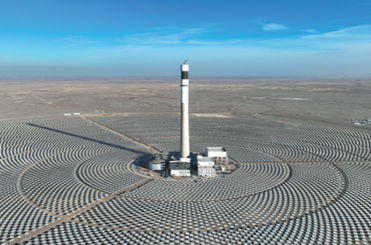
China’s photovoltaic (PV) industry is entering a new phase of quality-focused growth as the government phases out export tax rebates. The shift encourages companies to leverage technological leadership, brand strength, and integrated solar-storage solutions, positioning the sector for long-term global competitiveness despite short-term market fluctuations.

Industry experts say the Chinese solar sector is moving from a price-driven race to a value-based competition, emphasizing technological advantage, scale, and product quality. The change comes as the government begins phasing out export tax rebates for photovoltaic products starting April 1, 2026, with a complete removal of battery product rebates by January 2027.

 While the policy may temporarily increase export costs and pressure margins, analysts see it as a strategic intervention to curb low-efficiency competition, reduce trade friction, and encourage sustainable, high-quality growth.

 “The withdrawal of continuous tax incentives marks the moment for the industry to compete in the fire of pure market dynamics,” said Liu Yiyang, executive secretary-general of the China Photovoltaic Industry Association.

 China remains the global leader in solar manufacturing, producing over 90% of the world’s capacity in key supply-chain segments. However, fierce domestic price competition since 2024 has eroded profits and triggered international anti-subsidy investigations. By phasing out rebates, the government aims to stabilize export prices, rationalize competition, and allocate fiscal resources more efficiently.

 Leading companies with strong technology, established channels, and brand reputation are expected to weather the adjustment period and drive higher industry concentration. The policy encourages a transition from “price wars” to “value wars”, where competitiveness depends on product quality, technological advancement, and integrated solar-storage solutions.

 Market forecasts anticipate a short-term dip in newly installed domestic capacity in 2026 to 180–240 GW, but the sector is expected to rebound strongly, with annual installations projected at 280–350 GW by 2035. Emerging concepts such as space-based solar power could create additional growth opportunities if technological breakthroughs and cost reductions in orbital delivery are achieved.

 “Even as the industry undergoes deep adjustments, companies equipped with technology and scale will lead China’s solar sector into a globally competitive, innovation-driven future,” Liu said.


Article inline ad

Global CEOs Show Renewed Investment Confidence in China

0

According to a report in China Daily on February 6, 2026

PwC survey highlights rising interest, AI-driven growth, and supply-chain resilience among Chinese and multinational companies.

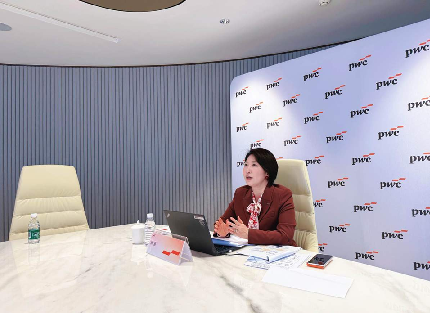
Global CEOs are increasingly placing China among their top investment destinations, with 11% ranking the mainland in their top three, up from 9% last year, according to PwC’s 29th CEO Survey China. Chinese companies are also leading in AI adoption and operational flexibility, signaling a robust business environment and long-term growth opportunities for international investors.

PwC’s latest survey, covering 4,454 CEOs across 95 countries, shows a rebound in China’s investment appeal. CEOs from Indonesia, South Korea, Germany, and Switzerland were especially bullish, with more than 20% naming China as a top-three destination.

 Industry-specific trends reveal growing confidence in industrial products and energy sectors. 14% of global industrial companies now prioritize China, up from 2025, while the energy, utilities, and resources sector rose to 13%.

 Chinese executives are also displaying exceptional macroeconomic confidence. 67% of Chinese CEOs anticipate sustained global recovery over the next year, surpassing the 61% global average. This optimism reflects China’s stable business environment and strategic adaptability.

 A standout theme is AI-driven growth. Over half of Chinese CEOs (52%) reported revenue gains from AI adoption—well above the global 29% average. 17% achieved both cost reduction and revenue growth, demonstrating the mainland’s edge in applying AI across demand generation, support services, product enhancement, and strategic decision-making.

 The survey further highlights resilience against supply-side shocks. More than 40% of Chinese firms report high operational flexibility, compared with 28% globally, underpinned by China’s comprehensive industrial ecosystem and diversified supply chains.

 “China’s companies are redefining global investment norms,” said Zhou Xing, PwC China. “Long-term optimism, agile strategy, and AI-enabled growth are driving sustainable value creation.”

 As China deepens its high-quality development strategy, firms are actively optimizing global investment footprints, integrating technology, and building multi-dimensional resilience, offering international investors clear insights into both market opportunities and strategic risks.


Article inline ad

China’s Gold Market Shifts Toward Investment Assets as Production Climbs

0

According to a report in China Daily on February 6, 2026

Subtitle: Record ETF inflows and rising bullion demand highlight investors’ preference for safe-haven assets amid market uncertainty.

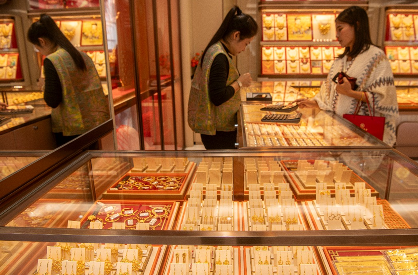
China’s gold sector demonstrated resilience in 2025, with domestic production rising 1.09% to 381.34 metric tons. While jewelry demand softened, investment-grade assets surged, including a 149.9% jump in gold-backed ETF inflows, signaling a strategic pivot among Chinese investors toward bullion as a safe-haven asset.

According to the China Gold Association (CGA), 2025 saw a marked shift in China’s gold market dynamics. Domestic raw gold output increased slightly to 381.34 metric tons, supported in part by aggressive overseas expansion of major Chinese mining groups, which contributed approximately 90 tons—up 25% year-on-year.

 While traditional jewelry consumption fell 31.6% to 363.84 tons, demand for physical investment products soared. Gold bars and coins jumped 35.1% to 504.24 tons, reflecting growing investor appetite for secure assets amid market volatility.

 The financial sector saw the most dramatic growth. Gold-backed ETFs recorded a historic inflow of 133.12 tons, nearly 1.5 times the 2024 level, pushing total domestic ETF holdings to 247.85 tons by year-end.

 “Investors are increasingly treating gold as a strategic asset, not just a luxury item,” said an industry analyst. “The surge in ETF inflows underscores a broad shift in capital allocation priorities.”

 High-tech and industrial usage of gold also edged upward, rising 2.3% to 82.02 tons, driven by China’s expanding electronics and green energy sectors.

 Overall, the data highlight a dual trend in China’s gold market: stable production coupled with a strategic pivot toward investment-grade assets, offering a clear signal for global investors and portfolio managers monitoring safe-haven demand in one of the world’s largest bullion markets.

Article inline ad

China’s Ice and Snow Economy Surges Past 1 Trillion Yuan

0

According to a report in China Daily on February 6, 2026

Winter sports boom fuels manufacturing, tech innovation, and tourism, creating new opportunities across China’s cold-weather industry.

China’s ice and snow economy has crossed a milestone: by 2025, the sector’s total value surpassed 1 trillion yuan ($143.9 billion), driven by winter sports participation, domestic consumption initiatives, and rapid industrial innovation. From ski equipment to smart snow machines, the industry is transforming China’s cold-weather regions into hubs of economic growth and technological experimentation.

Since hosting the 2022 Winter Olympics, China’s winter sports sector has grown rapidly, with the industry expanding from 270 billion yuan in 2015 to nearly 980 billion yuan in 2024, and topping 1 trillion yuan in 2025. The growth spans the full industrial chain, including personal gear, professional equipment, venue facilities, and intelligent snow technology.

 Government programs, like the 2026 National Ice and Snow Consumption Season under the “Shopping in China” initiative, are boosting demand through innovative consumption scenarios, attracting both domestic and international attention.

 “China’s ice and snow industry is leveraging AI, robotics, and smart manufacturing to achieve rapid innovation and efficiency,” said Adam Zhang, founder of Key-Solution Sports Consulting.

 Participation in winter sports is rising sharply. During the 2024–2025 season, consumer spending reached 187.5 billion yuan, a 25% year-on-year increase. Platforms like Huabei report that skiing and snowboarding are attracting diverse demographics, driving demand for specialized equipment and experiences.

 Domestic brands, such as Yepro, are capturing market share with competitively priced, technologically advanced products. Meanwhile, companies like Harbin Zhongcheng Technology Development are developing intelligent snow machines capable of optimizing operations in real time, integrating R&D collaborations with local universities.

 “This sector represents a new frontier for China’s manufacturing and tech capabilities,” Zhang noted. “It’s a latecomer advantage: regions can leapfrog in innovation while creating a robust ecosystem across sports, equipment, and services.”

 Industry analysts highlight that the ice and snow economy is not only stimulating local growth in provinces like Heilongjiang but also expanding investment opportunities in winter sports infrastructure, smart equipment, and tourism services.

 With robust consumer demand, ongoing technological integration, and supportive government policies, China’s ice and snow economy is poised for continued high growth, setting a global example for transforming natural resources into a diversified, tech-driven economic engine.

Article inline ad

Shanxi Leads China’s Clean Energy Shift, Overtakes Coal Capacity

0

According to a report in China Daily on February 6, 2026

Northern China’s coal heartland emerges as a testbed for renewable integration, smart grids, and high-efficiency power generation.

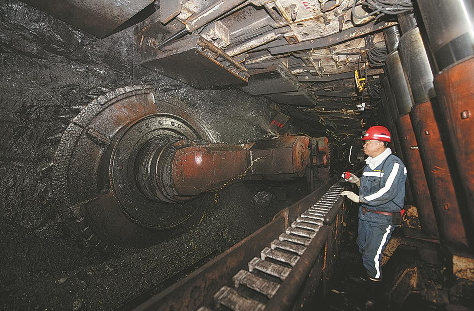
Shanxi province, historically China’s coal powerhouse, has crossed a milestone: in 2025, installed clean energy capacity surpassed coal-fired generation, accounting for 55.1% of total power capacity. The transition demonstrates how resource-heavy regions can embrace renewables without compromising energy stability or economic growth.

Shanxi, one of China’s largest coal producers, has long supplied electricity across 24 provinces. Under China’s dual carbon goals—peaking emissions before 2030 and achieving carbon neutrality by 2060—the province is now a laboratory for energy transition.

 “Roughly one-third of electricity consumed in Shanxi now comes from clean sources,” said the provincial energy administration, highlighting a twin-track strategy: phasing out inefficient coal units while rapidly expanding renewable installations.

 Between 2021 and 2025, Shanxi retired over 4 million kW of outdated coal units and brought 6 million kW of advanced, efficient coal power online. Meanwhile, wind and solar capacity has grown at double-digit rates for several consecutive years.

 “The change is not merely statistical. It reflects a broader realignment between energy transition, economic growth, and environmental governance,” said Qiao Junwei, professor at Taiyuan University of Technology.

 Experts note that the next step involves enhancing grid flexibility and improving utilization of renewable power. Initiatives include smart grids, renewable hubs, and direct green-power supply to industrial users, allowing coal and clean power to complement each other efficiently.

 “Shanxi’s shift shows that even fossil-fuel heartlands can lead the energy transition, sending a clear signal to other regions,” said Sun Yuhan, head of Shanxi Research Institute of the Huairou Laboratory.

 Shanxi’s experience illustrates a pragmatic approach to balancing carbon reduction, economic stability, and energy security, providing a model for other resource-rich regions navigating the global shift to low-carbon energy.


Article inline ad

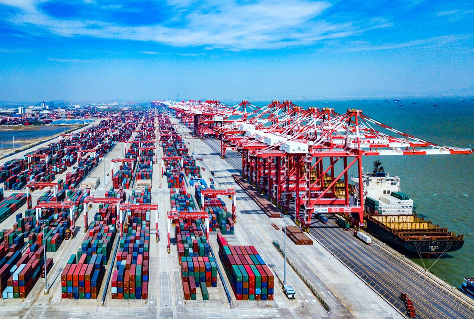
Evergreen Marine Orders 16 Container Ships From China’s CSSC Unit

0

According to a report in China Daily on February 6, 2026

$736–896 Million Deal Highlights China’s Shipbuilding Capabilities and Commitment to Green, Low-Carbon Maritime Solutions.

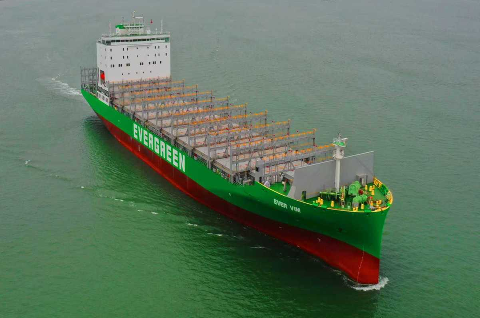
China State Shipbuilding Corp’s Huangpu Wenchong Shipbuilding has secured a landmark order from Taiwan-based Evergreen Marine to build sixteen 3,000-TEU container vessels worth $736–896 million. The deal marks the largest in the shipyard’s history and underscores China’s growing leadership in global shipbuilding and sustainable maritime technologies.

The contract, signed this week, represents the third phase of collaboration between Huangpu Wenchong and Evergreen Marine. Since beginning their partnership in 2021, the two companies have cumulatively developed 30 container ships, with 24 vessels already delivered.

 “This new order aligns with global decarbonization and low-carbon development trends in shipping, while showcasing our advanced technical capabilities,” Huangpu Wenchong stated.

 The 16 new vessels will be constructed to meet green, low-emission standards, reflecting the international shipping industry’s shift toward sustainability. The project further demonstrates China’s ability to deliver high-quality, technologically advanced maritime solutions at scale.

 Huangpu Wenchong, headquartered in Guangzhou, is a subsidiary of China State Shipbuilding Corp (CSSC) and one of the country’s leading shipbuilders. The company emphasizes continuous innovation and supply chain excellence, aiming to maintain its position as a global supplier of cutting-edge container ships.

 Analysts say the contract highlights China’s critical role in global maritime supply chains, not only as a shipbuilder but also as a provider of advanced, environmentally conscious industrial technology.

“This partnership exemplifies how Chinese manufacturing is powering global shipping, supporting both economic growth and sustainable industrial practices,” industry observers noted.

Looking forward, Huangpu Wenchong plans to leverage this expanded order to enhance its technological leadership, production efficiency, and sustainable shipping solutions, reinforcing China’s position as a key hub in the international maritime supply chain.

Article inline ad

Rio Tinto Taps Chinese Suppliers for $4.3 Billion Global Mining Push

0

According to a report in China Daily on February 6, 2026

 Anglo-Australian mining giant leverages China’s engineering and high-tech equipment to strengthen global supply chain and advance greener, smarter mining.

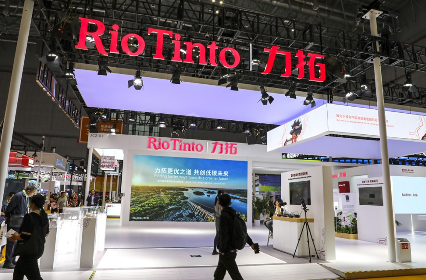
Rio Tinto spent a record $4.3 billion on Chinese suppliers in 2025, signaling a strategic pivot from China as a market to China as a critical partner in its global mining operations. The move underscores the role of Chinese manufacturing and innovation in powering major projects across Australia, Mongolia, Guinea, and beyond.

The mining giant procured 230-ton mining trucks, high-horsepower graders, battery-swap electric haulers, and specialized railway components from Chinese suppliers to support projects including the Simandou iron ore mine in Guinea, Oyu Tolgoi copper mine in Mongolia, and Pilbara operations in Australia.

 “China is our largest customer and also a vital supply base for us. The capabilities of Chinese suppliers in terms of rapid response and fast-paced innovation are unique on a global scale,” said Jamie Sanders, head of global procurement at Rio Tinto.

 Industry experts note that the collaboration model has evolved from a traditional buyer-supplier relationship into co-creating value across international projects, with Chinese partners contributing to equipment, infrastructure, and high-tech solutions.

 Recent partnerships include:

 China Railway 18th Bureau Group and China Harbour Engineering supporting infrastructure at Simandou.

 XCMG Group supplying 230-ton trucks and heavy graders for Rio Tinto’s global mining hubs.

 State Power Investment Corp providing battery-swap electric haul trucks for Oyu Tolgoi.

 “By merging Rio Tinto’s century of mining experience with China’s drive for innovation, the two are building a faster, greener, and more connected global mining industry,” Zhao Xiangbin, chief strategist at Beijing Gold and Forex Fortune Investment Management, said.

 The surge in Chinese procurement highlights China’s strategic role in the global supply chain for critical mining infrastructure and advanced equipment, reinforcing its position as both a leading market and a key source of technological and manufacturing capabilities for multinational corporations.

 Looking ahead, Rio Tinto plans to deepen cooperation with regional Chinese partners, aiming to further integrate Chinese technology and engineering into its global operations while advancing low-emission and high-efficiency mining solutions.


Article inline ad

ABB Becomes First MNC to Secure Full Robotics Certification in China

0

According to a report in China Daily on February 6, 2026

CR certification for entire product portfolio underscores ABB’s commitment to local industrial ecosystem, smart manufacturing, and collaborative innovation.

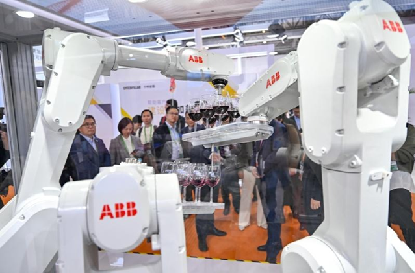
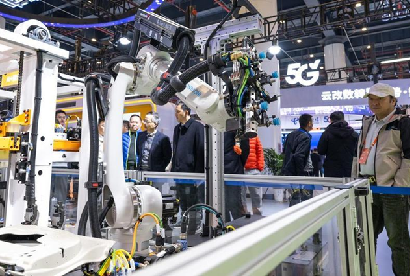
ABB Robotics has become the first multinational company in China to secure full China Robot (CR) certification for its entire product portfolio. The move highlights the company’s integration into China’s industrial ecosystem, support for smart manufacturing, and commitment to local standards and high-quality development.

The CR certification is China’s authoritative safety and quality system for robotics, launched in 2016 under the guidance of multiple government departments, including the Ministry of Industry and Information Technology. It is the world’s only state-endorsed high-end certification for robotics products.

ABB’s industrial robots—including the IRB 1520, IRB 1600, IRB 1660, and PoWa collaborative series—successfully passed the assessment, marking the first major milestone since ABB’s strategic collaboration with the Shanghai Electrical Apparatus Research Institute (SEARI) last year.

“The first batch of CR certifications is a critical step in advancing our ‘China, for China’ strategy. It recognizes our products’ safety, reliability, and high quality, while demonstrating our active integration into China’s industrial ecosystem,” said Henry Han, senior VP and president of ABB Robotics China.

The company plans to expand CR certification to cover over 120 products by 2026, aiming for comprehensive compliance across its robotics portfolio. The certification also positions ABB to contribute to technical standards and co-develop industry innovations with local partners.

“ABB’s cooperative model, transitioning from ‘compliance’ to ‘co-creation,’ sets a positive example for collaborative innovation across the industrial chain,” said Zheng Junqi, president of Shanghai Robot Industrial Technology Research Institute.

Industry observers emphasize that CR certification acts as both a “passport” for market access and a “booster” for industrial upgrading. According to Wu Yehua, chairman of the Testing and Certification Alliance for Robot, ABB’s achievement serves as a benchmark for the robotics sector, supporting safer, more intelligent, and more reliable development.

Looking forward, ABB plans to continue working closely with local partners, fostering an open, collaborative, and sustainable robotics ecosystem. The company’s strategy underscores the importance of localization, innovation, and high-quality industrial development in China’s smart manufacturing sector.


Article inline ad

China Advances Industrial Standards, Aligning Domestic Rules with Global Norms

0

According to a report in China Daily on February 6, 2026

Conversion rate of international standards reaches 88.9% as Beijing submits 505 new proposals and strengthens market regulation to support high-quality economic growth.

China accelerated efforts in 2025 to align domestic rules with international standards, enhance business vitality, and promote fair competition, according to the State Administration for Market Regulation (SAMR). The move aims to support high-quality economic growth and a more unified national market, analysts say.

By the end of 2025, China’s conversion rate of international standards into domestic regulations reached 88.9%, the SAMR reported. On the outbound front, China led the development and release of 285 international standards in fields such as new energy, traditional medicine, and brain-computer interfaces, up 26.7% year-on-year. Additionally, the country submitted 505 new international standard proposals, covering biotechnology, artificial intelligence, and industrial internet, a 15.8% increase from 2024.

Standards are increasingly treated as a “common language” in global trade and industrial cooperation, serving as a strategic tool to boost competitiveness in emerging industries. Authorities adopted 1,510 international standards domestically in 2025, with full adoption in culture and meteorology, and conversion rates above 90% in aviation, construction materials, and machinery.

China also strengthened market regulation to foster a unified national market. New business registrations reached 25.745 million, with active enterprises rising 9.8% year-on-year. Regulators investigated antitrust cases, addressed destructive price wars, and handled 14,600 unfair competition cases, contributing to fairer market conditions.

The SAMR highlighted progress in quality and measurement infrastructure, breaking through 21 key technical bottlenecks in industrial chains and addressing 71 urgent gaps in quality-related technologies. Oversight of e-commerce and livestreaming platforms was tightened, targeting false marketing, excessive fees, and opaque algorithms.

“Looking ahead, China will deepen reforms to build a unified national market, energize business entities, strengthen quality infrastructure, and guard against key safety risks, supporting both qualitative and quantitative improvements in economic growth,” said Deng Zhiyong, deputy head of the SAMR.

Experts note that these measures not only enhance market efficiency but also signal stability and predictability for investors, particularly in emerging industries and high-tech sectors where standards and regulatory clarity are increasingly critical.

Article inline ad