Wednesday, November 25, 2026

Home Blog Page 64

China’s Provinces Moderate Growth Targets for 2026, Emphasizing High-Quality Development

0

According to a report in China Daily on February 6, 2026

    China’s provincial-level governments are taking a more measured approach to economic growth in 2026, with two-thirds of regions moderating their GDP targets while emphasizing domestic demand and emerging industries, signaling a shift toward high-quality development, analysts say.

     Data released this week show that 21 out of 31 provincial-level governments have lowered their growth targets compared with 2025, either by reducing the numerical target or by adjusting the wording from “above” a certain rate to “around” it. Major economies such as Guangdong, the country’s largest provincial-level economy, set targets at 4.5–5 percent, down from “around 5 percent” previously, while Jiangsu, the second largest, revised its target to 5 percent, from “above 5 percent” last year.

     Economists describe these adjustments as pragmatic, reflecting structural pressures from demographics and ongoing property-sector adjustments.

     “The solid growth delivered by major economic provinces in 2025 was hard-won, but underlying data still points to continued headwinds,” said Lu Ting, chief China economist at Nomura.

     Analysts expect that the national GDP growth target for 2026 is likely to fall between 4.5 and 5 percent, consistent with long-term strategic goals and considered achievable under current economic conditions. Guan Tao, global chief economist at BOCI China, noted that market expectations have increasingly converged on this range.

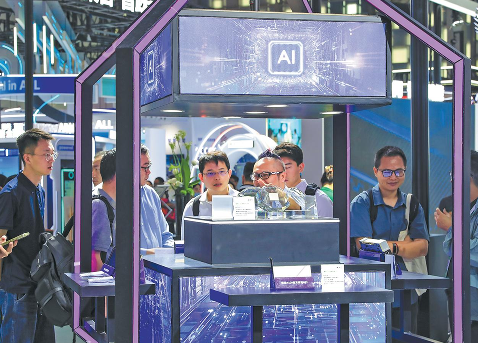
     The emphasis on growth quality is also prompting provincial governments to pursue policies that support sustainable development. This includes fostering domestic consumption, promoting infrastructure investment, and nurturing emerging sectors such as artificial intelligence, according to the report.

     “Using nominal GDP growth as a policy anchor could help lift household incomes, shore up corporate profitability, and stabilize price expectations,” said Guo Kai, executive president of the CF40 Institute.

     Experts caution, however, that growth targets also serve as important signals to the public and markets. Su Jian, director of Peking University’s National Center for Economic Research, warned that setting targets too low could unsettle expectations and undermine long-term development objectives.

     Despite some moderation, 24 provinces have maintained targets at or above 5 percent, underlining a balanced approach that seeks both stability and progress. Analysts say that resilient external demand, improving trade relations with the United States, and recovery in manufacturing investment could help sustain growth.

     China’s provincial growth targets are closely watched indicators for investors and international observers, as they provide early signals of the country’s broader economic trajectory under the 15th Five-Year Plan (2026–2030). According to Goldman Sachs, maintaining an average annual growth rate of around 4.5 percent over this period would be necessary to reach China’s 2035 goal of per capita GDP comparable to moderately developed economies.

     “The focus is increasingly on ‘around 5 percent’ growth, with flexibility emphasized over rigid targets, while highlighting policies that strengthen domestic consumption and emerging sectors,” noted Lu Ting.

     As China continues to navigate domestic structural adjustments and external uncertainties, provincial-level targets reflect a pragmatic balancing act: promoting high-quality development while keeping growth expectations realistic, a shift that is likely to influence national economic planning and global market perceptions.


    Article inline ad

    Why China’s Two-Way Investment Is Powering Global Innovation — Not Fragmenting It

    0

    According to a report in China Daily on February 6, 2026

    At a time when geopolitical tensions are reshaping global investment flows and protectionist sentiment is gaining traction, a common assumption has taken hold in parts of the international discourse: that China’s growing economic footprint is contributing to fragmentation rather than integration.

    The evidence suggests otherwise.

    China’s expanding role in two-way investment—both inbound and outbound—is increasingly functioning as a catalyst for global innovation, industrial upgrading and digital transformation, rather than a force pulling the global economy apart.

    Two-Way Investment as an Innovation Multiplier

    One of the most underappreciated dynamics in today’s global economy is the changing nature of cross-border investment. While traditional manufacturing-oriented foreign direct investment has slowed worldwide, capital flows tied to the digital economy have continued to expand, reshaping how innovation is created and diffused.

    China has become a central node in this process.

    On the inbound side, foreign enterprises are not merely accessing China’s consumer market. They are increasingly integrating into local innovation ecosystems—leveraging China’s scale, engineering talent, and fast-moving commercialization environment to accelerate product development and technological iteration.

    On the outbound side, Chinese investment is playing a growing role in advancing digital infrastructure, smart manufacturing and platform-based services across emerging and developed economies alike. Rather than exporting a closed model, this outward investment often embeds local partners into broader value chains, amplifying rather than displacing domestic capabilities.

    Digital Capital Flows Defy the Fragmentation Narrative

    Global data reinforce this point. According to UNCTAD, cross-border investment in the digital economy has surged over the past decade, with total project value rising sharply even as overall global investment growth has struggled. The United States, Singapore and China have emerged as the primary engines of this expansion—hardly a picture of a world neatly splitting into isolated economic blocs.

    In this context, China’s role is less that of a challenger to existing innovation hubs and more that of a complementary force. Its participation helps sustain scale effects, diversify innovation pathways and keep global technology diffusion economically viable at a time when political risks might otherwise suppress cross-border collaboration.

    Openness as a Policy Choice, Not a Rhetorical Slogan

    Importantly, this outcome is not accidental. Two-way investment has been formally embedded into China’s medium-term policy framework, including preparations for the 15th Five-Year Plan (2026–30). This reflects a strategic judgment: that sustained growth and technological progress depend on remaining deeply embedded in global industrial and innovation networks.

    At the same time, Chinese policymakers and economists increasingly acknowledge the risks of rising economic concentration and monopoly power in a more competitive global environment. Calls for further opening-up are therefore paired with a growing emphasis on ensuring that market access translates into genuine operational viability for foreign enterprises—not merely formal entry.

    What This Means for the Global Economy

    For global investors and policymakers, the implication is clear. Interpreting China’s investment strategy solely through a geopolitical lens obscures its more consequential economic function: maintaining connective tissue in a global system under strain.

    As cross-border investment becomes more selective and politically sensitive, the countries that continue to facilitate two-way capital flows—particularly in the digital economy—will disproportionately shape the next phase of global innovation and growth. China, for now, is choosing to remain one of those countries.

    The real question, then, is not whether China is fragmenting the global economy, but whether the global economy can afford to fragment without the stabilizing effects of large, open innovation ecosystems that still operate at scale.

    Article inline ad

    China’s AI Chip Sector Charges Ahead

    0

    Flurry of GPU-related initial public offerings puts nation’s high-tech on global stage

    By MA SI | China Daily | Updated: 2026-02-11

    A wave of initial public offerings is sweeping China’s graphics processing unit, or GPU sector, marking a critical phase in the nation’s push for self-reliance in advanced computing power.

     On Jan 22, Shanghai-based Enflame Technology’s application to list on Shanghai’s Nasdaq-style STAR Market was accepted by the exchange. This move paves the way for “The Four Dragons” — Enflame, Moore Threads, MetaX and Biren Technology — to complete their convergence in the capital markets.

     This follows the successful listing of another Shanghai GPU firm, Iluvatar CoreX, on the main board of the Hong Kong stock exchange on Jan 8. It became the second homegrown GPU company to go public in Hong Kong after Biren. Earlier, industry leaders Moore Threads and MetaX had already debuted on the STAR Market to significant investor interest.

     The listing momentum which started from late 2025 extends beyond dedicated chip designers. Baidu Inc has announced plans to spin off its non-wholly owned subsidiary Kunlunxin for an independent listing. Informed sources told China Daily that Alibaba Group is also considering a similar spin-off plan for its chip design arm T-Head.

     This IPO rush unfolds against a backdrop of stringent US semiconductor export controls and an explosive growth in domestic artificial intelligence applications, thus driving demand for alternative computing solutions.

     At a recent news conference, Li Chao, a spokeswoman for the National Development and Reform Commission, highlighted China’s deepening “AI+” initiative, which “provides extensive application scenarios for AI computing chips”. Li pointed to “rapidly growing demand and vibrant innovation across all types of computing chips”, adding that “domestic chip products are accelerating their adaptation across different scenarios with very good results”.

     The comments acknowledge the sector’s vitality while setting higher expectations for its future development. Computing power forms the bedrock of the digital economy, a strategic resource underpinning data flow, algorithm training and intelligent application deployment.

     If AI is a lush crop, computing infrastructure is the “fertile black soil” it depends on. As the global computing industry shifts from scale expansion to qualitative leaps, building a secure ecosystem — from underlying chips to applications — has become imperative for China to secure its developmental sovereignty, experts said.

     Dong Peng, a senior economist and member of the assets committee of the China Enterprise Confederation, described this listing wave as “a collective breakthrough for domestic computing power during a strategic window of opportunity”.

     “Beneath the surface heat in capital markets lie two fundamental drivers,” Dong said.

     “First, the national demand for autonomy and controllability in AI and high-end manufacturing has created an unprecedented dual engine of policy and market support. Second, Washington’s export restrictions on US leaders like Nvidia have opened a precious market window for domestic firms.”

     He emphasized that listing is not merely about fundraising, but a crucial step to establish industry standards and ecosystem influence. “The race to go public is about seizing the advantage in technology iteration, customer lock-in and brand recognition while the competition landscape is still taking shape. This is a battle for survival and, more importantly, for future power.”

    The Hong Kong stock exchange and the STAR Market, as preferred boards for “hard tech” firms, have provided a streamlined pathway for these companies. Driven by continuous investment in AI infrastructure and the escalating strategic priority of technological self-reliance, China’s domestic AI chip sector is poised for substantial market expansion, experts said.

     Zhou Di, a senior engineer and expert with the National Science and Technology Expert Database of the Ministry of Science and Technology, said China’s AI computing market is likely to evolve toward a “dual-track, domestically led” new market landscape.

     “Nvidia is likely to retain a share in the high-end AI training market, represented by the demand of hyper-scale internet companies and cutting-edge research institutes, by virtue of its technical advantages. Domestic GPUs, leveraging cost-performance ratios, customized services, policy support and security advantages, are positioned to dominate vertical sectors like government affairs, finance, industry and healthcare, as well as broader cost-performance-sensitive markets,”Zhou said.

     The wave of listings also comes as China’s push for self-sufficiency in AI processors is gaining remarkable momentum, with at least nine domestic chip companies having surpassed a significant threshold of 10,000 units in terms of order shipments.

     This 10,000-chip club signals that domestic AI chips are gaining tangible market traction based on their performance, stability and cost. It heralds a shift from mere scale competition to a more comprehensive battle encompassing software ecosystems, commercial services and sustained reliability, experts said.

     The cohort includes the in-house chip divisions of tech heavyweights such as Huawei’s Ascend, Baidu’s Kunlunxin and Alibaba’s T-head, alongside listed or soon-to-be-listed AI chip specialists such as Cambricon, Moore Threads, Enflame and Iluvatar CoreX. Even some startups, including Sunrise and Tsingmicro, have crossed this volume threshold.

     Companies with the largest scale of shipments, such as Huawei, Baidu and Alibaba, have reached several hundred thousand.

     He Hui, semiconductor research director at the United Kingdom-based tech research firm Omdia, said, “Alibaba’s T-head is at the forefront in terms of AI chip shipments, benefiting from its early start and massive internal demand.”

     According to US market research company International Data Corp, in the first half of 2025, the size of China’s server market powered by AI chips reached $16 billion, with over 1.9 million units shipped. Nvidia held about 62 percent of the market share, while Chinese chips captured about 35 percent.

     IDC ranked Huawei’s Ascend series first in market share among domestic chips in the first half of 2025. Backed by its parent company’s vast ecosystem, Ascend enjoys stable demand, whose chips are used in large-scale clusters by telecom operators and tech firms.

     Omdia’s He said Chinese internet companies are adopting a two-way approach. On the one hand, they are making efforts to buy Nvidia’s advanced chips within regulatory frameworks. On the other hand, they are supporting the development of domestic AI processors as much as possible. For instance, ByteDance is testing and using chips from Baidu’s Kunlunxin and Cambricon, while Tencent is using processors from Enflame.

     The growing demand for Chinese AI chips is also reflected in the documents filed by listed enterprises. Prospectuses submitted between late 2025 and early 2026 by companies such as Moore Threads, Iluvatar CoreX and Enflame show accumulated shipments surpassing 10,000 chips. Iluvatar CoreX, for example, reported delivering 52,000 AI chips to 290 clients across finance, healthcare and transportation sectors by June 30.

     Industry insiders said they view the emergence of multiple 10,000-chip vendors as a critical transition. Roger Sheng, vice-president of research at US market research company Gartner, said it marks the entry into a “large-scale verification” phase for this round of industrial trial and error, as Chinese AI chip companies make progress.

     But challenges exist. Sheng outlined critical areas for improvement, including adopting advanced packaging technologies and optimizing computer algorithms through cooperation with Chinese large language model providers.

     Xiang Ligang, director-general of the Zhongguancun Modern Information Consumer Application Industry Technology Alliance, a telecom industry association, said that Nvidia’s dominance in the global AI chip market relies not only on chip performance, but also on its entrenched CUDA ecosystem — a 20-year-old framework for AI compatibility.

     While Chinese chips, such as Huawei’s Ascend series, can technically rival certain Nvidia chips, they lack CUDA’s universal adaptability for AI large language models, Xiang said. “However, geopolitical uncertainty is driving users toward Chinese chips, and developers are now shifting their focus to compatibility layers for domestic alternatives, eroding Nvidia’s ecosystem advantage,” Xiang added.

     Omdia’s He said that with domestic manufacturing capacity for AI chips expected to be ramped up in 2026, the industry anticipates “another wave of explosive growth”.

     Zhang Wen, founder, chairman and CEO of AI chipmaker Beijing Biren Tech, said, “The production capacity of advanced domestic AI chips will be crucial for the future of China’s AI industry.”

     masi@chinadaily.com.cn

    Article inline ad

    Seedance 2.0 Signals Big Shift In AI Sector

    0

    By CHENG YU | CHINA DAILY | Updated: 2026-02-12

    Chinese tech company Byte-Dance has launched the latest version of its artificial intelligence video-generation model Seedance 2.0, intensifying China’s push in generative AI at a time when the United States’ OpenAI appears to have slowed development of its similar product, Sora.

     Seedance 2.0, which is currently in limited testing, is able to generate a multi-shot film sequence with sound in roughly 60 seconds. The model has attracted attention from developers and on social media, where users have been sharing clips showing cinematic scenes, fluid camera movements and synchronized audio — all generated from simple prompts.

     Feng Ji, CEO of Game Science, the studio behind the video game sensation Black Myth: Wukong, described the system as a game-killer. He said the technology marked the end of the “childhood” phase of AI-generated content, or AIGC.

     Industry experts said ByteDance’s latest move underscores how Chinese companies are racing to gain an edge in the AIGC sector — a field with huge commercial potential across the entertainment, advertising, gaming and social media segments.

     While OpenAI’s text-to-video model Sora set off global excitement upon its preview, public updates on its broader rollout have been limited in recent months, leaving room for competitors to gain visibility, experts said.

     Feng said that Seedance 2.0 and the technology behind it could trigger a structural shift in the video industry and an explosion of AIGC offerings.

     “The cost of producing ordinary videos will no longer follow the traditional logic of the film and television industry, and will instead begin to become increasingly low. This would compel studios and platforms to rethink workflows that have long depended on large crews and expensive equipment,” he added.

     Pan Helin, a member of an expert committee under China’s Ministry of Industry and Information Technology, said that Seedance’s unexpected performance can be partially attributed to ByteDance’s vast content ecosystem, as the company operates some of the world’s largest short-video platforms with access to extensive data on visual styles and user preferences.

     “Compared with some overseas competitors, the new model can better help people create short videos. Such alignment could make the model particularly attractive to online creators in both China and abroad,” he said.

     Investors have been quick to respond. Shares of several Chinese media and technology companies associated with AI content production and Byte-Dance-related companies have surged in recent trading sessions.

     However, some concerns remain about the rapid progress of AIGC technology and related products. Some early users said that after uploading just one photo, the system is able to generate voices closely resembling real individuals — even without audio samples — posing a data security concern.

     Sha Lei, a professor at Beihang University’s AI research institute, said: “Most large AI models, both in China and abroad, are trained on publicly available data. Authorization and boundaries of use are still being explored.”

     “Also, increasingly realistic AI-generated videos could intensify data security problems like deepfakes. Regulators, platforms and creators are likely to face growing pressure to balance innovation with safeguards,” Sha said.


    Article inline ad

    External Challenges Catalyzing Semiconductor Supply Chain Self-Sufficiency

    0

    By MA SI | China Daily | Updated: 2026-02-11

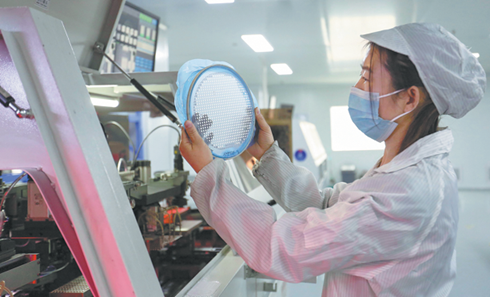
    China’s semiconductor supply chain companies are making steady progress in core technologies and materials as US-led export controls and the possibility of more restrictions on advanced chip-making equipment catalyze the country’s drive for greater self-sufficiency.

     For instance, there is “significant progress” in the domestic production potential of photoresist, the light-sensitive “ink” essential for etching microscopic circuits onto silicon wafers, sources from leading Chinese chipmakers like Semiconductor Manufacturing International Corp and Huahong Group told China Daily.

     Jiangsu Nata Opto-electronic Material, which has developed one of China’s first batches of self-developed photoresist for ArF DUV (argon fluoride deep ultraviolet) lithography — a type of high-end photoresist — said the company’s revenue from ArF photoresist exceeded 10 million yuan ($1.44 million) in 2024, and it maintained a stable supply of ArF photoresist in 2025.

     Meanwhile, in 2025, three Chinese chip equipment manufacturers ranked among the world’s top 20 by sales volume for the first time, according to data from Japanese research firm Global Net.

     This marks a rise from just one company in 2022, prior to the stricter US government restrictions, underscoring China’s accelerated progress in bolstering the domestic supply chain.

     The sales ranking reveals a climb for State-backed Naura Technology Group, which jumped from eighth place in 2022 to fifth in 2025. It now only trails global giants ASML, Applied Materials, Lam Research and Tokyo Electron.

     Founded in 2001, Naura has not yet disclosed its annual revenue for 2025, and Global Net based the ranking partly on estimated data. Financial services provider Suntime compiled forecasts from multiple securities companies to estimate Naura’s revenue to stand between 46.8 and 52 billion yuan in 2025.

     New to the list at 13th place is Advanced Micro-Fabrication Equipment Inc China, or AMEC, whose etching equipment technology is now close to the cutting edge.

     In chip making, etching is the key process of selectively removing unwanted material layers from a silicon wafer to engrave precise 3D patterns, circuits and transistor structures.

     Shanghai Micro Electronics Equipment, specializing in lithography machines that “print” circuit patterns onto silicon wafers, secured the 20th position. While acknowledging generational gaps with market leader ASML, the Shanghai-based company’s presence highlights China’s domestic capability in this most critical and challenging segment.

     Expanding the list to the top 30 would include two more Chinese firms — ACM Research and Hwatsing Technology.

     Roger Sheng, vice-president of research at US market research company Gartner, said: “It’s fair to say that Chinese companies’ technological gap with international industry leaders is continuously narrowing. This progress has provided strong support for domestic chip manufacturers in their technological upgrades and production expansion efforts, even amid restrictions on access to US technology and equipment.”

     “With the exception of lithography machines, domestic tools are now being increasingly used in Chinese semiconductor factories. For instance, in etching, Naura has become a key equipment provider for production of a Chinese company’s advanced memory chips.”

     Yin Zhiyao, chairman and general manager of AMEC, said at a meeting in May 2025 that the company’s product portfolios include 30 percent of all the integrated circuit equipment categories, and it aims to collaborate with partners to offer 60 percent of all high-end IC equipment categories over the next five to 10 years.

     The progress is an outcome of Chinese companies’ hard work and big investment in beefing up technological prowess, but a gap still exists in core equipment such as lithography machines, and more efforts are needed to achieve breakthroughs, experts said.

     China’s massive domestic market, now the world’s largest for chipmaking equipment, also provides a powerful launchpad. The global semiconductor industry association SEMI, which has more than 3,000 member companies, estimated that worldwide sales of semiconductor manufacturing equipment would reach $133 billion in 2025, surpassing the previous record of $104.3 billion in 2024 and setting an all-time high.

     The Chinese mainland is projected to maintain the leading position through 2027, as domestic chipmakers continue to invest in both mature and select advanced chip manufacturing technologies, SEMI said.

    Article inline ad

    Humanoid Robots To Grab Spotlight In ’26

    0

    China Daily | Updated: 2026-02-11

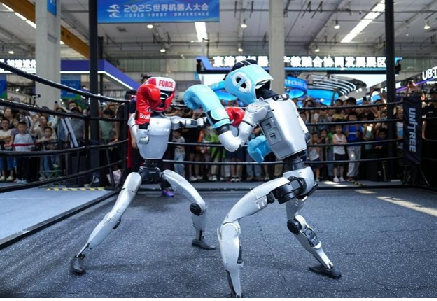
    SHANGHAI — China’s robots are poised to command the spotlight this Chinese New Year season. Kicking off the festivities, AgiBot deployed over 200 humanoid robots across various models at a trailblazing live gala.

     The Sunday night event showcased a diverse lineup ranging from synchronized dances and comedy skits to magic acts and traditional martial arts, signaling a shift by Chinese humanoid robotics firms from purely industrial applications toward consumer entertainment and cultural ventures.

     While confirming earlier that it would sit out the massively popular Spring Festival Gala, the Shanghai firm instead unveiled its own meticulously staged production, a bold demonstration of its technological prowess.

     AgiBot announced that it had already received cooperation intentions from large-scale song and dance theaters, performance centers and science and technology museums, which plan to purchase the copyright to the entire evening gala for regular performances.

     This gambit signaled a broader trend: China’s humanoid robotics players are leveraging high-profile cultural exposure to raise their profile as they muscle into the consumer market.

     Unitree Robotics, meanwhile, confirmed its third collaboration with the annual Spring Festival Gala, set to be broadcast live to a global audience on Monday night. The robotics firm, based in Hangzhou in East China’s Zhejiang province, made headlines in December when its G1 robots shared the stage with a pop star during a concert, a clip that later earned an emphatic “impressive” endorsement from Elon Musk on social media.

     Also included in the 2026 Spring Festival Gala lineup are three more Chinese humanoid robotics firms, namely MagicLab, Noetix Robotics and Galbot. Their presence as official partners is expected to turn a sentiment-drenched celebration, traditionally centered on warm blessings, into a stage for cutting-edge hardware.

     This surge in robotic shows during local celebrations and at corporate year-end events has given rise to a promising rental market. AgiBot has entered the space with its newly launched platform, known as Qingtian Rent, rolling out across 50 cities with a fleet of about 1,000 robots ready for deployment.

     This April, Beijing will host another humanoid robot half-marathon, following the world’s first edition in 2025, which also took place in China’s capital.

     An industry report has revealed that Chinese robotics firms emerged as the largest producers of humanoid robots worldwide in 2025. AgiBot achieved an annual shipment volume of more than 5,100 units last year, securing a 39 percent share of the global humanoid robot market and ranking first in the world for both shipment volume and market share.

     It was followed by Unitree and UBTech, based in Shenzhen, South China’s Guangdong province, according to the report released by Omdia, a tech consultancy based in London.

     Xinhua – China Daily

    Article inline ad

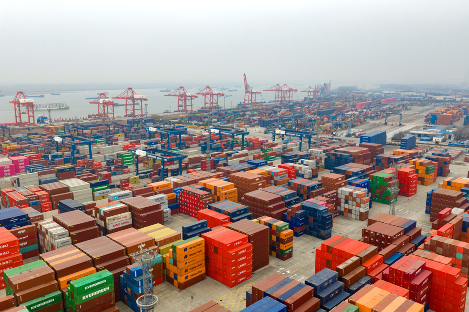
    Resilient Trade Highlights China’s Economic Vitality

    0

    Nation’s import-export sector, which hit record high last year, not only growing in volume, but also optimizing in structure

    By Ren Qi | China Daily | Updated: 2026-02-12   

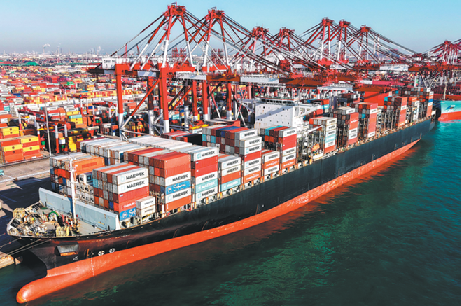
    China’s foreign trade demonstrated remarkable resilience and vitality in 2025, overcoming a complex and volatile international environment to hit a record high.

     The total import and export value exceeded 45 trillion yuan ($6.2 trillion), marking a 3.8 percent year-on-year increase and the ninth consecutive year of growth. This achievement highlights the robustness of the world’s largest goods trader as it navigates global economic headwinds.

     The “report card” for 2025, released recently by the National Bureau of Statistics and the General Administration of Customs (GAC), reveals a trade sector that is not only growing in volume, but also optimizing in structure.

     Kang Yi, head of the NBS, noted that the total value of goods trade reached 45.47 trillion yuan, with exports growing by 6.1 percent to 26.99 trillion yuan and imports rising by 0.5 percent to 18.48 trillion yuan. This marked the longest continuous expansion since China joined the World Trade Organization in 2001, underscoring the nation’s ability to maintain momentum despite external pressures.

     A significant shift toward high-quality development is evident behind the headline numbers.

     Wang Jun, deputy head of the GAC, highlighted that exports are increasingly trending toward “new and optimized” products. High-tech product exports reached 5.25 trillion yuan, a jump of 13.2 percent, signaling that China is moving up the global value chain.

     The automotive sector, in particular, has witnessed explosive growth, serving as the prime example of this structural optimization. According to data from the GAC, the export volume of new energy vehicles (NEVs) reached 3.43 million units in 2025, representing a year-on-year increase of 70 percent.

     This growth rate marked a significant acceleration compared to the 16 percent growth observed in 2024. NEVs accounted for 41 percent of the total automobile export volume, which stood at 8.32 million units. The surge has not only solidified China’s position as the world’s largest auto exporter, but also underscored the global appetite for high-quality, intelligent Chinese manufacturing.

     Dong Yu, executive vice-president of the China Institute for Development Planning at Tsinghua University, attributed this stability to timely policy interventions and long-term strategies.

     Dong explained that in the second quarter of 2025, changes in the external environmental exerted fresh pressure on exports. In response, the central government introduced a series of measures to stabilize foreign trade, which acted as a crucial “ballast stone”.

     Dong emphasized that the growth is also a result of the persistent push for high-quality development and the construction of a unified national market, strategies that are now bearing fruit in the trade sector.

     While policy provides the foundation, the efficiency of China’s ports — the soft environment — has become a critical competitive advantage, especially while handling the booming volume of complex exports like automobiles. If infrastructures such as channels and cranes are the “hardware”, then streamlined customs procedures and intelligent scheduling are the “software” that keep trade flowing.

     A prime example of this transformation is visible at the Guangzhou Port Nansha Automobile Terminal in Guangdong province. Here, massive roll-on/roll-off ships are frequently seen loading the country’s “star products” — NEVs — destined for global markets.

     Shen Junhui, a veteran in the auto import-export business, has witnessed this shift firsthand over a decade. His business, which initially focused on imports, now heavily involves exporting domestic NEVs. He said the “geometric growth” in efficiency he is experiencing is due to institutional innovation.

     To cope with the booming export volume and the larger scale of the terminal, Nansha Port has implemented a “one-stop” service station. Previously, procedures such as customs declarations, licensing and transfer for export required trips between the city center and the port, consuming valuable time. Now, all the processes are completed within the port area.

    Lu Chunrong, assistant general manager of Guangzhou Port Nansha Automobile Terminal Co Ltd, said that the port has created a high-efficiency operating mode where seven ships can dock and operate in parallel. Through scientific ship scheduling and resource integration, the terminal has achieved a normalized standard of loading over 4,000 vehicles per single ship within 24 hours. This precision is essential in meeting the requirement of “docking upon arrival, fast loading and immediate departure”.

    Efficiency is further boosted by cross-departmental collaboration. The Nansha Border Inspection Station has introduced a “full-chain” smart clearance model. Ships can complete pre-inspections online before arrival, allowing for immediate docking.

     Crucially, for cargo leaving the port, electronic intelligent supervision has eliminated the need for secondary handling and detours through municipal roads. Vehicles now move directly from the warehouse to the ship’s side, achieving “point-to-point” direct access.

     Furthermore, the “One Port Pass” reform launched by Guangzhou Customs has integrated logistics across the Guangdong-Hong Kong-Macao Greater Bay Area, allowing export goods to complete customs procedures at local inland river terminals before being shipped out.

     From the “efficiency change” of a single enterprise to the “capacity change” of a port, and finally to the “network change” connecting the hinterland to the globe, these efforts ensure the stability of global industrial and supply chains.

     The external environment continues to remain severe as 2026 unfolds.

     However, with a solid economic foundation, a proven ability to innovate in manufacturing as evidenced by the NEV sector, and a continuously optimizing logistics environment, China’s foreign trade sector is poised to continue injecting certainty into the global economy.


    Article inline ad

    New-Type Duty-Free Stores A Hit In Hainan

    0

    By Chen Bowen in Haikou | China Daily | Updated: 2026-02-12

    Much to her surprise, Wang Min of Haikou, Hainan province, completed her first tax-free grocery run on Wednesday in just minutes. After presenting her ID card to verify her annual tax-free quota at the counter, she simply scanned a payment code and finished the checkout process in a jiff.

     The biggest difference — and a major draw — was the substantial “discount”. Thanks to a newly launched preferential tax-free policy at Hainan Free Trade Port, Wang bought two imported durians at a price roughly 30 percent lower than regular market rates.

     “It’s smooth, and it’s a great deal,” said Wang as she shopped around a designated area in Wanghao Supermarket in Longfor Paradise Walk, a shopping mall in Haikou. And she was not alone — shoppers who have visited such new-type duty-free stores expressed the same enthusiasm as Wang did.

     As a key move to boost the FTP, five daily consumer goods duty-free shops were opened on Wednesday, offering various imported goods for personal use within the FTP.

     Eligible individuals, including Chinese citizens with a Hainan ID, residence permit or local social security card — as well as foreign nationals with valid local residence permits — are granted an annual duty-free allowance of 10,000 yuan ($1,410), with no limit on the number of transactions, in these stores.

     The allowance covers purchases of selected foods, beverages, household goods, and maternal and infant items from approved stores, exempting them from import tariffs, value-added taxes and consumption taxes.

     Wanghao Supermarket is among the first batch, and has become a popular shopping destination. On Wednesday — its first day of operations — long lines formed before the store opened, with locals brimming with excitement to be among the first to enjoy the new exclusive benefits.

     Imported fruit is a major draw. Malaysian durians, also highlighted when the island-wide special customs operations were launched on Dec 18, were again a consumer favorite due to the sharp price drop.

     “This durian might cost over 300 yuan in a regular market. Using the duty-free quota, it’s about 20 yuan cheaper per 500 grams,” said a shopper surnamed Lin, who planned to buy two for Spring Festival feasts.

     The store also attracts foreign customers. Karnail Singh, an Indian national working in Haikou’s catering industry, used his residence permit to buy a box of butter cookies imported from Malaysia.

     “The process was very clear, almost like shopping in a regular supermarket, just with an extra ID check at payment,” Singh said.

     Liu Chunyin, general manager of Wanghao Supermarket, said initial offerings included over 50,000 items across 40 categories, from biscuits and coffee to diapers and detergent. Prices average about 20 percent lower than taxed goods.

     “We aim to eventually cover all 202 product categories on the zero-tariff list,” Liu said.

     Easy access has been applauded by local shoppers. When checking out, locals merely need to present their physical ID cards before proceeding to pay with their smartphones — taking only about two minutes. Electronic IDs are not yet accepted.

     Under the newly effective regulations, the preferential policies are exclusively designed for local residents, and product resales are strictly prohibited. Xiong Wen, deputy director of Yecheng Customs under Haikou Customs, said authorities have implemented routine inspections to ensure full policy compliance across the shopping venues.

     Referring to the approaching Spring Festival, Zhu Yuanjiao, head of user operations at Haikou’s Longfor Paradise Walk, said the mall has prepared directional signs and policy explanations to facilitate shopping during the initial opening period.

    Article inline ad

    Technical Art A Key Force In Widening New Industrial Tracks

    0

    By Han Jingyan | chinadaily.com.cn | Updated: 2026-02-11

    At a time when digital transformation has penetrated the creative industry, technical art — as a core link connecting technology and aesthetics, creativity and business — is becoming a key force in opening up new industrial tracks.

     United States-based Chinese technical artist Yilin Zhang has created customized virtual narrative solutions for multiple international top brands in the fields of virtual production and digital visual development.

     As the virtual economy is ushering in a period of rapid development, the commercial application scenarios of technical art are constantly expanding, and the market demand is continuing to rise, she said.

     Coming from New York-based creative studio ZeroSpace, Zhang has achieved mutual empowerment of artistic value and commercial value by presenting a practical model for the industry of technical art driving commercial growth.

     “My practices showed that technical art is not only an important part of digital art, but also an important force driving brand commercial growth and promoting industrial transformation and upgrading,” she said.

     As a senior practitioner with a business philosophy of letting “technology serve business and aesthetics empower value”, Zhang has a solid foundation in product logic and narrative structure from Tsinghua University Academy of Fine Arts, where she majored in interaction design.

     She said that to accurately capture the commercial needs of brands, she pursued her graduate study at the Interactive Telecommunications Program at New York University, which enabled her to master the application capabilities of cutting-edge digital tools.

     “At NYU, I found a balance between rational technical processes and emotional brand narratives, accurately connecting with the commercial communication and value expression needs of brands,” she recalled.

     In commercial practice, Zhang has always focused on “capturing the digital soul of brands and activating the potential of commercial transformation”.

     In Nike’s “Big Head Mode” computer graphics promotion project, she integrated retro game aesthetics with brand product features by building an efficient technical workflow, creating digital content with both visual appeal and brand recognition.

     “This effectively improved the brand’s exposure and favorability among young consumer groups, helping the brand achieve the dual goals of younger transformation and product communication,” Zhang said.

    Meanwhile, In Kiehl’s “Bones and Bonito” virtual marketing campaign, Zhang took charge of virtual environment and animation production, transforming the brand’s classic image Mr Bones into a socially interactive Virtual Influencer.

     “This innovative virtual IP operation model breaks the time and space limitations of traditional marketing,” she said, noting that “it not only elevates user stickiness, but also opens up a new path for virtual marketing for the brand”.

     In addition to practices in mainstream commercial field, the music video A Barely Lit Path she created in collaboration with avant-garde musician OPN also showed the commercial potential of technical art in the niche cultural field.

     Faced with the industrial changes brought by artificial intelligence, Zhang maintained a clear industry understanding, providing key references for the commercial development of the technical art industry.

     “I regard AI as an efficient ‘collaborator’, and believe that AI can improve the creation efficiency of technical art and optimize work processes, but it cannot replace the emotional insights accumulated by creators and their accurate judgment on the commercial needs of brands,” she said.

     She said the core commercial value of technical art lies in “using technology to realize aesthetic expression and using narrative to connect commercial needs.”

     Her practice not only provides an “art + business” development idea for technical art practitioners, but also offers references for the commercial transformation of the entire industry, promoting technical art to continuously release new commercial vitality in the wave of the virtual economy.

    Article inline ad

    Streamlined Refinancing Set To Boost Tech Funding

    0

    By SHI JING in Shanghai | China Daily | Updated: 2026-02-11

    The optimized refinancing measures recently unveiled by three major Chinese stock exchanges will help direct resources more precisely to quality companies and better nurture technological innovation, said experts and market mavens.

     For quality companies with high market recognition and competitiveness, revision of their refinancing requests will be streamlined, especially regarding their operation, corporate governance and information disclosure.

     The refinancing funds will be used in new industries, business models and emerging technologies that are in line with the companies’ main operations, according to announcements made by the Shanghai, Shenzhen and Beijing exchanges late on Monday.

     Innovation-driven companies trading at the main board of the Shanghai and Shenzhen bourses will access refinancing provisions similar to those set for STAR Market and ChiNext companies, which feature light assets and heavy research and development investments.

     Main board companies eligible for this new measure should have physical assets accounting for no more than 20 percent of their total assets. Their average R&D investment over the past three years should form at least 15 percent of their annual revenue. Alternatively, their cumulative R&D investment over the past three years should total no less than 300 million yuan ($43.4 million), with the average R&D investment accounting for at least 5 percent of revenue.

     Additionally, the new regulations allow qualified main board companies to exceed the 30 percent cap on supplementing working capital and repaying debt, with the excess being used for main business-related R&D investment.

     For tech-focused companies that have gone public by using the nonprofit standards and that have not yet turned profitable, the interval period for initiating a new round of refinancing will be shortened from 18 months to six months if the companies have exhausted previous financing. The interval will remain unchanged for companies reporting continued losses for other reasons.

     The new measures will help address insufficient capital supply, which is a major challenge confronting most tech companies. Short-term financing pressure can be further mitigated so that tech startups can raise more funds for their main operations, said Song Xiangqing, deputy head of the Commerce Economy Association of China.

     “The size of assets used to be the major criterion for financing. The new measures have removed the barrier, precisely addressing tech companies’ characteristics of high R&D investment and long development cycle. With more resources directed to R&D and transformation of research results, the Chinese capital market can further consolidate its foundation of serving tech innovation,” Song said.

     Zhang Peng, deputy director of the listed companies research center at the Chinese Academy of Social Sciences, said the new measures have attached greater importance to comprehensive information disclosure and full-chain supervision. Higher transparency in refinancing will also help boost investor confidence.

     The new measures have strictly mandated that the refinancing should be used for main operation, indicating the regulators’ purpose of helping those companies with urgent needs rather than the less competitive ones, said Tian Lihui, university chair professor of finance at Nankai University.

     “The new sets of refinancing measures are aimed at building a closed-end circle with relaxed entry, strict in-process supervision and hefty post-refinancing accountability. They will help curb issues of frequent fundraising and arbitrage by occupying resources. As more less-qualified companies exit the market, companies creating real value will truly benefit,” he said.

     During a forum held in late January, China Securities Regulatory Commission’s Chairman Wu Qing said that the refinancing mechanism should be more accessible, flexible and attractive to better serve new quality productive forces.

     As of late Monday, more than 20 A-share companies had completed private placement so far this year, with the total refinancing value exceeding 134.7 billion yuan, according to market tracker Wind Info.

     shijing@chinadaily.com.cn

    Article inline ad