Wednesday, November 25, 2026

Home Blog Page 66

Nianhuo Revenue Galloping In With Year Of Horse

0

By ZHENG YIRAN in Shanghai | China Daily | Updated: 2026-02-11

With the Year of the Horse just around the corner, people in Shanghai are busy stocking up on nianhuo, or New Year’s goods, that families traditionally prepare ahead of Spring Festival — including foodstuffs, clothing, home decor, and gifts for relatives and friends.

 Instead of going to brick-and-mortar stores, online purchasing of nianhuo merchandise has become a major trend as consumers prefer to get products delivered to their front door by using popular e-commence platforms.

 Taobao said that since it launched nianhuo festival from Jan 19 to 26, its sales of such goods surged 201 percent year-on-year.

 On Freshippo, a grocery and fresh goods retail chain under Alibaba Group, purchases of nianhuo are seeing exponential growth. Sales of Freshippo’s nianhuo package boxes surged by 467 percent week-on-week, boxes of frozen durian jumped 226 percent and nut gift boxes were 168 percent higher. Orders for babaofan (rice pudding with eight savory ingredients) along with two-piece sashimi with salmon were also popular items.

 Sought-after gift options such as fresh milk and Chilean cherries have become must-have selections. Sales of fresh milk increased 232 percent while cherries surged by over 228 percent, Freshippo said.

 Gao Chengyuan, president and CEO of Guangzhou TY Marketing, said: “The new trend of purchasing nianhuo in Shanghai exhibits distinct characteristics of the times and an upgraded consumption mindset. The increasing popularity of online purchasing channels reflects consumers’ ultimate pursuit of convenience.”

 According to Taobao, this year, the trend of “light cooking” is being further displayed. Sales of ready-to-cook ingredients, expensive seafood, freshly cooked edibles and holiday-themed beverages surged 259 percent, 271 percent, 225 percent and 250 percent, respectively.

 “New Year goods are no longer merely a collection of material items, but also a representation of emotions and cultural heritage. The trends of ‘light cooking’ and ’empty package travel’ are direct manifestations of modern lifestyles and consumption concepts.

 “Overall, the new trend of purchasing nianhuo in Shanghai is a comprehensive reflection of the maturity of the consumer market and the progress of consumer attitudes, providing businesses with new market opportunities and development directions,” Gao said.

 To better offer nianhuo to consumers, Gao suggested merchants keep up with the development of online channels and optimize online sales platforms and services.

 “In terms of product development, they should focus on the design and quality improvement of exquisite gift boxes. In addition, merchants can increase the research and promotion of ready-to-eat meals and instant foods, and develop more products that are easy to carry and store,” he said.

 Apart from convenient e-commence platforms, many still purchase nianhuo offline to enjoy a sense of ritual.

 “Online shopping offers lower prices and convenience, while shopping in brick-and-mortar supermarkets provides me with a more festive atmosphere during Chinese New Year. It is a ritual to shop around, buy stuff and prepare for the holiday,” said Mo Cha, a 33-year-old office clerk in Shanghai.

 zhengyiran@chinadaily.com.cn


Article inline ad

Nation’s Digital Trade Surplus Doubles In 2025

0

By CHENG YU and ZHANG CHENXU | CHINA DAILY | Updated: 2026-02-11

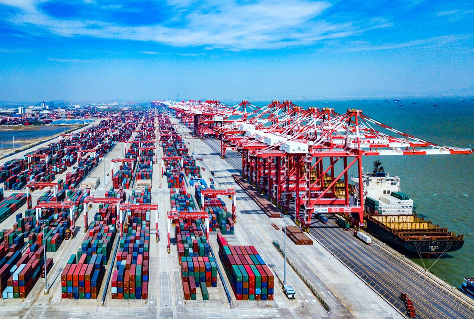
China’s digital services exports hit a record high in 2025, propelled by the rapid global expansion of technology giants in cloud computing and artificial intelligence, helping the country more than double its digital trade surplus and partially fill a long-standing gap in overall services trade.

 Latest data from the State Administration of Foreign Exchange showed that the country’s digital services trade surplus jumped to about $33 billion in 2025, a more than 100 percent increase from the previous year.

 While it covers a broad swath of sectors from telecom operations to cloud computing and AI-related services, the surplus in telecom, computer and information services reached roughly $31.8 billion, up nearly 30 percent from a year earlier.

 The rapid rise of digital exports has helped counterbalance China’s structurally weak services trade position. While the country posted a $1.2 trillion goods trade surplus in 2025, it has long run a deficit in services, largely due to heavy spending on overseas travel and transportation.

 Chen Jianwei, a professor at the University of International Business and Economics’ Academy of China Open Economy Studies, said: “The sharp narrowing of the services trade deficit signals an optimization of the current account structure and suggests that services trade is gradually becoming a new engine supporting China’s trade balance.

 “In 2025, service exports grew much faster than imports, knowledge-intensive services expanded their surplus, and inbound travel rebounded strongly. These point to improving international recognition of China’s high-value-added services and a fundamental improvement in the consumption environment for foreign visitors,” Chen said.

 He added that the growth in import and export of telecommunications, computer and information services demonstrated that China has moved into a more dominant technological niche in the global digital supply chain.

 According to the International Monetary Fund’s classification of cross-border activities, China ranks as the world’s fourth-largest provider of telecommunications, computer and information services. This global standing is further reflected in a recent report on digital trade, which shows that China’s computer services exports account for 9.3 percent of the global total.

 This robust momentum is underpinned by the global expansion of major Chinese tech companies. Tech players such as Alibaba Group and ByteDance have established mature overseas footprints in the e-commerce, gaming and social networking sectors. Meanwhile, Tencent Holdings’ cloud presence has extended from Silicon Valley to Riyadh, the capital of Saudi Arabia, and Singapore, providing a range of services from video conferencing support to low-latency connections for gaming.

 Notably, cloud computing has emerged as a standout performer in international markets, with its overseas market scale reaching 45 billion yuan ($6.3 billion) in 2024, a year-on-year surge of more than 40 percent, data from the China Academy of Information and Communications Technology showed.

 Liu Weiguang, senior vice-president of Alibaba Cloud Intelligence Group, said that Chinese cloud providers have benefited from years of experience supporting high-traffic domestic platforms, such as e-commerce festivals and short-video apps.

 “Those extreme, high-concurrency scenarios pushed us to build globally unified architectures and strong cross-region deployment capabilities,” Liu said.

 He added that Chinese firms’ emphasis on round-the-clock, rapid-response customer service — once criticized as too labor-intensive — has become a competitive advantage overseas.

 China has placed digital trade at the center of its economic strategy. Commerce Minister Wang Wentao said in a recent interview with Xinhua News Agency that China will make full use of its strengths in AI and the digital economy to develop services trade and cultivate new engines for foreign trade growth.

 Local governments are echoing that push. In its government work report delivered in early 2026,Guangdong province pledged to accelerate the cultivation of leading digital trade enterprises with strong innovation-driven and resource-allocation capabilities. Zhejiang province has set annual targets, aiming for a 6 percent increase in services trade and more than 8 percent in digital trade.

 Contact the writers at chengyu@chinadaily.com.cn

Article inline ad

Shanghai Tops In Ease Of Doing Biz

0

By WANG YING in Shanghai | China Daily | Updated: 2026-02-10

Shanghai is not only a good place for businesses to grow, but also a place that is willing to contribute and build together for the long-term, senior executives and experts said.

 The comments follow Shanghai’s latest action plan to improve its business environment.

 “My first and deepest impression is that the Shanghai municipal government has made great efforts to improve the business environment across various areas,” said Simon Lichtenberg, founder and CEO of Shanghai-based furniture manufacturer Trayton Group.

 The Danish entrepreneur, who has been working in China for 38 years, said these efforts are not superficial but involve coordinated measures that make businesses feel valued and supported in practical ways.

 Lichtenberg made the remarks during the release of Shanghai’s latest iteration of its action plan -which seeks to accelerate the creation of a world-class business environment (2026) — in January.

 The plan is intended to provide clearer guidance, improve operational efficiency, and address the evolving needs of both domestic and international enterprises.

 The new edition of the plan also seeks to stimulate the vitality of various market entities, and enhance Shanghai’s attractiveness to high-end domestic and international resources, according to Chen Jining, Party secretary of Shanghai.

 “During the 15th Five-Year Plan (2026-30) period, we will continue to prioritize the optimization of the business environment as a key driver of high-quality development, further deepen high-standard opening-up, attract top enterprises and talent from home and abroad, and fully unleash innovation and creativity,”Chen said, emphasizing that the plan is a long-term strategy to sustain growth and competitiveness.

 This is the ninth consecutive action plan issued by the Shanghai municipal government and consists of 26 tasks across four key areas. Compared with previous versions, this year’s plan features more focused task arrangements and a more concise wording, said Kong Yuan, deputy head of the business environment construction division at the Shanghai Municipal Development and Reform Commission.

 “The plan’s design reflects careful thought and aims to make implementation smoother and results more tangible for enterprises,” Kong added.

 Lu Ming, a professor at Shanghai Jiao Tong University’s Antai College of Economics and Management, said the latest plan reflects a more pragmatic approach and better incorporates Shanghai’s own characteristics. Lu added that it is shorter and more streamlined than last year’s version.

 “The emphasis is on measurable outcomes, ensuring that each initiative directly benefits market entities while reinforcing Shanghai’s long-term development goals,” he said.

 Lu said the plan integrates World Bank business environment evaluation standards into concrete practices of the city, while also highlighting Shanghai’s long-standing strengths in industrial ecosystems and social governance. “It demonstrates how local characteristics can be aligned with global benchmarks, providing a model that other cities may learn from,” Lu said.

 Xu Yuxuan, vice-president of public affairs at Black Lake Technologies, an industrial internet company based in Shanghai’s Changning district, shared a similar view.

 Xu said that the company -which was founded in 2016 and which faced significant challenges in market orders in 2024 — has benefited directly from Shanghai’s streamlined policies and support measures.

 “If Black Lake were not headquartered in Shanghai, and without the strong industrial ecosystem of the Yangtze River Delta region and policy support from Shanghai’s improved business environment, it would have been difficult for us to overcome funding pressure and achieve financial self-sufficiency,”Xu said.

 He added that the city’s administrative procedures have become increasingly efficient, with many services now completed through a single online platform, significantly reducing paperwork and offline processing.

Article inline ad

Xinjiang Sees Sharp Rise in Foreign Firms and Capital Inflows in 2025

0

According to a report in China Daily on February 6, 2026

 Xinjiang Uygur autonomous region in northwest China recorded a notable acceleration in foreign investment activity in 2025, signaling stronger market confidence in the region’s opening-up agenda, according to data released by the regional department of commerce.

The number of newly established foreign-funded enterprises in Xinjiang rose by 21.97 percent year on year, while actual foreign capital utilization increased by 9.8 percent, underscoring a dual expansion in both market participation and capital inflows.

Officials attributed the growth to a package of targeted measures aimed at stabilizing and expanding foreign investment. Key initiatives included incentives for foreign companies to establish R&D centers within the China (Xinjiang) Pilot Free Trade Zone, as well as efforts to align the region’s business environment with market-oriented, rules-based and internationally compatible standards.

Xinjiang has also stepped up its international investment promotion efforts. In 2025, the region leveraged global platforms to deepen engagement with multinational companies and hosted its first live-streamed investment promotion event, reaching overseas investors directly and projecting an image of openness and inclusiveness.

Beyond promotion, local authorities adopted a more business-needs-driven approach to foreign-invested enterprises. Measures included proactive outreach to understand operational challenges, regular government–business roundtables, and on-site visits to ensure policy incentives were delivered effectively. These steps have helped reinforce foreign firms’ confidence in maintaining and expanding their presence in the region, officials said.

Foreign trade performance provided further support for the investment momentum. Xinjiang’s total foreign trade value increased 19.9 percent year on year in 2025, ranking first nationwide in terms of growth rate among provincial-level regions, according to Li Xuan, deputy director of the regional commerce department.

The region’s opening-up framework is anchored by a multi-level platform system, led by the Xinjiang Pilot Free Trade Zone and complemented by national economic and technological development zones, cross-border economic cooperation zones, and comprehensive bonded zones. Together, these platforms are designed to facilitate deeper integration with regional and global markets.


Article inline ad

Shanghai Targets 5% GDP Growth in 2026, Eyes Boost in Consumption and Innovatio

0

According to a report in China Daily on February 5, 2026

Shanghai has set an ambitious GDP growth target of around 5 percent for 2026, signaling the city’s commitment to steady expansion while navigating evolving global and domestic economic conditions.

The target follows stronger-than-expected growth in 2025, when Shanghai’s GDP rose 5.4 percent year-on-year to 5.67 trillion yuan ($814.6 billion), according to the city government.

Economists say the target reflects Shanghai’s strategic and pragmatic approach. “Setting growth at around 5 percent balances stability with the need for structural adjustment and high-quality development,” said Lu Ming, director of the Shanghai Institute for National Economy at Shanghai Jiao Tong University.

Domestic consumption is expected to play a central role in driving economic growth this year. The city plans to expand emerging sectors such as the debut economy, nighttime economy, livestreaming economy, and silver economy, while promoting integration across culture, tourism, commerce, sports, and exhibitions. Measures to facilitate inbound tourism, departure tax refunds, and cross-border payments are also aimed at boosting spending by foreign visitors.

In 2025, Shanghai welcomed 9.36 million inbound tourists, up nearly 40 percent from the previous year, setting a new record for the city.

Shanghai also plans to stabilize foreign trade and attract investment into advanced manufacturing, high-tech industries, modern services, and energy conservation and environmental protection sectors. Last year, the city’s total imports and exports reached 4.51 trillion yuan, up 5.6 percent, while foreign investment inflows totaled $16.06 billion. Additionally, more multinational firms established regional headquarters or research centers in Shanghai.

Technological innovation and emerging industries remain key growth drivers. The city aims to strengthen its position as an international science and technology hub, promoting the integration of technological and industrial innovation to cultivate new productive forces. In 2025, R&D expenditure accounted for roughly 4.5 percent of Shanghai’s GDP.

By setting a balanced growth target and emphasizing consumption, innovation, and investment, Shanghai aims to maintain momentum as a global financial and economic powerhouse amid shifting domestic and international landscapes.

Article inline ad

Hong Kong Kicks Off 2026 IPO Market With Strong Start

0

According to a report in China Daily on February 5, 2026

Hong Kong’s initial public offering (IPO) market opened 2026 on a high note, as strong investor sentiment and a robust pipeline of listings fueled a record-breaking January.

According to Hong Kong Exchanges and Clearing Ltd (HKEX), 13 new IPOs debuted last month, a 62.5% increase year-on-year, raising approximately HK$39.3 billion ($5.03 billion). The performance marks the city’s strongest January fundraising on record.

Tech companies, particularly in artificial intelligence (AI), led the surge. Mainland China’s leading generative AI startups, MiniMax and Zhipu, alongside AI chipmakers Biren and Iluvatar CoreX, collectively raised nearly HK$20 billion.

“Naturally, Hong Kong’s AI ecosystem spans hardware, foundation models, and vertical applications, creating new markets and a supply-driven demand dynamic,” said Ning Bo, director of equity research at China Merchants Securities (HK). He noted that continued southbound and overseas capital inflows could drive a 15% gain in the Hang Seng Index in 2026.

The IPO momentum comes alongside heightened regulatory oversight. The Securities and Futures Commission (SFC) of Hong Kong issued a circular on January 30 highlighting deficiencies in some listing applications, including sponsors’ inexperience and mismanagement. By year-end 2025, the SFC had required 13 sponsors — responsible for about 70% of IPO projects — to conduct comprehensive reviews within three months.

“Maintaining the quality of listings is critical to sustaining investor confidence,” SFC CEO Julia Leung Fung-yee said. Regulators aim to ensure that Hong Kong retains its position as a leading international fundraising center.

With 440 companies in the listing pipeline as of January, including 26 already approved, analysts expect continued IPO activity, though tighter oversight may moderate pace and improve overall quality.

After reclaiming the top global spot for IPOs in 2025 following a slump since 2021, Hong Kong appears well-positioned to continue attracting high-quality listings in the coming year, particularly in the technology and AI sectors.

Article inline ad

China Strengthens Trade Ties with APEC Economies Amid Growing Global Challenges

0

According to a report in China Daily on February 5, 2026

China is stepping up efforts to deepen trade and economic cooperation with other APEC economies, focusing on cross-border e-commerce, green trade, and expanded market access for agricultural and high-tech products, according to senior customs officials.

Speaking at the First Senior Officials’ Meeting of APEC China 2026 in Guangzhou, Zhao Zenglian, Vice Minister of the General Administration of Customs (GAC), emphasized the importance of fostering a stable, transparent, and predictable business environment amid rising pressures on global supply chains.

“Customs authorities across APEC need to enhance regulatory transparency, improve policy communication, and streamline procedures to support smooth trade flows,” Zhao said.

Customs data show that China’s trade with APEC economies reached 26.29 trillion yuan ($3.79 trillion) in 2025, accounting for nearly 58% of the nation’s total foreign trade. Over the 14th Five-Year Plan period (2021–25), cumulative trade with APEC members rose 39.4% from the previous five years.

China’s exports to emerging APEC markets, including ASEAN nations, Peru, and Mexico, maintained strong growth, reflecting a diversification of trade patterns. High-tech exports, led by electric vehicles, lithium-ion batteries, and photovoltaic equipment, reached 4.63 trillion yuan, up 8.1% year-on-year.

At the company level, LM Wind Power Blades in Fuzhou reported exporting 17 batches of high-end wind turbine blades valued at 650 million yuan in 2025, representing year-on-year growth of nearly 90% in volume. CJ (Shenyang) Biotech, a subsidiary of South Korea’s CJ Group, exported feed additives to APEC economies such as Australia, Mexico, and Thailand, totaling 630 million yuan, up 45% from the previous year.

Industry leaders highlighted the growing demand for high-quality, specialized products across the region. “As offshore wind power and sustainable agriculture continue to expand in APEC markets, our focus is on tailoring products to meet local needs and building long-term partnerships,” said Feng Zili, GM of LM Wind Power Blades, and Xiao Chuanhong, head of CJ Biotech’s export unit.

Officials from Australia and New Zealand stressed that closer customs cooperation, digital connectivity, and the use of artificial intelligence to speed up border processing will be key to facilitating trade in the region.

With these initiatives, China aims to solidify its position as a reliable trade partner for APEC economies, promoting balanced, sustainable, and high-value economic growth amid an increasingly complex global trade landscape.


Article inline ad

World’s Fastest Full-Size Humanoid Robot Sets New Speed Benchmark

0

According to a report in China Daily on February 5, 2026

Zhejiang University and Shanghai-based robotics firm JingShi Technology have unveiled Bolt, a full-size humanoid robot that has achieved a top running speed of 10 meters per second — positioning it as the fastest full-size humanoid robot in the world.

Standing 175 centimeters tall and weighing 75 kilograms, Bolt surpasses previous speed records for full-size humanoid robots. The robot’s name pays homage to sprinting legend Usain Bolt, reflecting its unprecedented agility.

The breakthrough builds on the team’s earlier achievement in January, when a quadruped robot they developed exceeded 10 meters per second, setting a world record for four-legged running machines. Bolt represents the latest step in China’s rapidly advancing robotics sector, highlighting the country’s push to lead in high-performance AI and robotic mobility technologies.

Researchers said the robot combines advanced dynamic balance control, lightweight materials, and cutting-edge actuators, allowing it to maintain stability at high speeds — a challenge that has long limited humanoid robots compared with quadruped machines.

“Bolt demonstrates that China’s robotics research is entering a new era, bridging laboratory innovation with real-world applications,” said a project engineer. “Its performance opens doors for humanoid robots in logistics, disaster response, and other high-speed operational scenarios.”

The development is part of a broader trend in robotics, where Chinese startups and academic institutions are increasingly targeting consumer-facing AI, industrial automation, and mobility solutions with global competitiveness in mind.

Article inline ad

China Accelerates Brain-Computer Interface Tech for ADHD Treatment

0

According to a report in China Daily on February 5, 2026

BEIJING — China is pushing forward the clinical adoption of brain-computer interface (BCI) technology, aiming to provide new treatment pathways for millions of children with attention deficit hyperactivity disorder (ADHD) and other neuropsychiatric conditions.

On Jan. 31, Zhejiang Qiangnao Technology Co Ltd (BrainCo) launched its “FocusXin” Medical Edition, a BCI-based device designed for pediatric ADHD intervention, at the Brain-Computer Interface Diagnosis and Treatment Innovation Exchange in Beijing. The product integrates both software and hardware, marking a global first in fully certified medical device use for children’s attention training.

BCI systems link brain activity to external devices, allowing for real-time monitoring and intervention. By combining rehabilitation software with a lightweight prefrontal lobe EEG collector, FocusXin simplifies traditional EEG setups, making clinical application more accessible while reducing operational complexity.

Tan Weihong, academician at the Chinese Academy of Sciences, said the initiative represents a new model of “diagnosis-treatment-rehabilitation” integration, emphasizing the potential of BCI to transform pediatric neurorehabilitation. “Our goal is simple: to ensure BCI technologies translate into tangible health benefits for patients,” Tan said.

ADHD affects roughly 6.4 percent of Chinese children aged 6–16, amounting to an estimated 23 million young patients, according to the first nationwide epidemiological survey on child mental health in China. The launch of FocusXin comes as part of broader efforts to explore multidisciplinary solutions for neuropsychiatric disorders.

Experts at the event highlighted the importance of collaboration across hospitals, schools, and technology companies to optimize treatment pathways, cultivate specialized talent, and build a robust application ecosystem. Zhang Guojun, former Party secretary of Beijing Children’s Hospital, noted that emerging technologies like BCI offer novel intervention options for conditions that are difficult to address solely with medication.

Han Bicheng, founder and CEO of BrainCo, said the company aims to enhance the lives of millions of patients with neuropsychiatric disorders over the next decade. “By bridging laboratory research with clinical practice, we hope to scale BCI applications in ways that are safe, effective, and accessible,” Han added.

The introduction of FocusXin Medical Edition demonstrates China’s growing commitment to integrating high-tech solutions into healthcare, signaling opportunities for innovation-driven growth in the global pediatric neurotech sector.

Key Takeaways for International Readers:

FocusXin represents a globally unique combination of software and hardware for ADHD treatment.

China is accelerating BCI clinical translation, targeting both public health impact and technological leadership.

The initiative reflects broader trends in pediatric neurorehabilitation, multidisciplinary collaboration, and commercial medical device innovation.

Article inline ad

Shanghai Moves to Balance Homeownership and Rental Market

0

According to a report in China Daily on February 5, 2026

推荐标签:

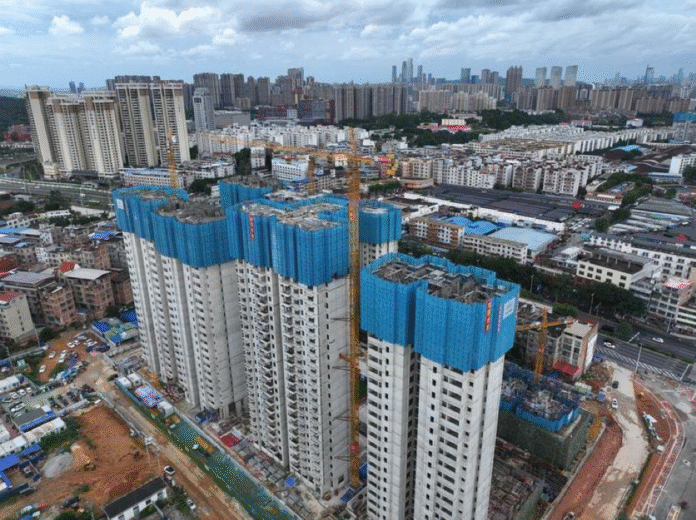
Shanghai is piloting a new initiative aimed at stabilizing its housing market by acquiring pre-owned apartments to supply government-subsidized rental housing. The program seeks to address diverse leasing needs while promoting a balanced development between homeownership and rental options.

The first batch of projects was officially launched on Monday, with districts including Jing’an, Xuhui, and Pudong New Area piloting the program separately, according to local reports.

“Linking pre-owned properties to rental housing helps reduce the stock of older, less competitive homes,” said Yan Yuejin, deputy head of the Shanghai-based E-House China R&D Institute. “It also encourages existing homeowners to move into new apartments, which can ease inventory pressures in the new housing market.”

Under the plan, apartments of suitable size and design in established communities with convenient transport links will be purchased by district authorities and allocated to meet rental demand from young professionals, university graduates, and new residents.

For instance, Pudong aims to acquire flats under 70 square meters and priced below 4 million yuan ($580,000) within the Inner Ring Road area. Jing’an district is prioritizing moderately priced apartments, while Xuhui is sourcing small units through affordable housing developers, standardizing renovations and fittings after acquisition.

Financial backing from China Construction Bank is expected to secure the supply of these government-subsidized rentals, helping lower living costs for younger residents and attracting talent to the city, said Zhang Wenjing, general manager of Shanghai data at China Index Academy.

The initiative also aims to stabilize transactions and prices in the pre-owned housing market, drive sales of new apartments, and maintain a healthy balance between ownership and rental supply.

Separately, Shanghai has confirmed the continuation of its property tax pilot for eligible homeowners through January 2031. In Shanghai, taxes are levied on families with more than 60 square meters per person, at rates of 0.4% or 0.6% of total property value, depending on unit price per square meter.

The city and Chongqing are the only two Chinese mainland cities currently collecting property taxes, a measure originally introduced in 2011.

By combining rental support with targeted property tax policies, Shanghai is seeking to promote a more resilient and inclusive urban housing market while ensuring long-term stability for both owners and renters.

Article inline ad