Wednesday, November 25, 2026

Home Blog Page 67

China’s Commercial Space Boom Powers Emerging Space Solar Market

0

According to a report in China Daily on February 5, 2026

China’s rapidly expanding commercial space sector, propelled by breakthroughs in reusable rockets and satellite mega-constellations, is driving unprecedented growth in the nascent space photovoltaics (PV) market, according to industry experts.

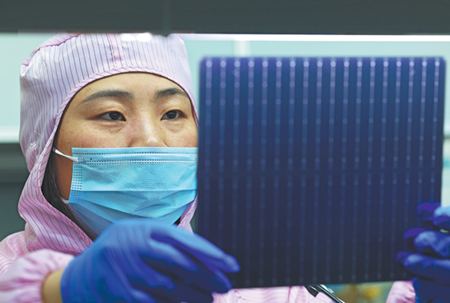
Space photovoltaics — solar power systems designed for spacecraft — are increasingly recognized as the backbone for long-term satellite energy supply. Leveraging the nearly constant sunlight available in geostationary orbit, these systems deliver energy generation efficiencies far beyond those possible on Earth.

Investor interest in the sector is surging. According to financial data provider Wind Info, share prices of Chinese space PV companies climbed more than 26 percent from early December 2025 to late January 2026, reflecting optimism over the commercial space economy.

“Satellites can’t plug into a terrestrial power grid, and carrying fuel is prohibitively expensive,” explained Wu Ziyi, an analyst at CITIC Securities. “Solar power is effectively the only viable long-term energy solution for space missions.”

Solar radiation in space is over 30 percent more intense than on Earth, while foldable, lightweight solar arrays allow engineers to scale power capacity in line with modern satellite demands.

The industry’s rapid growth is tied to the rise of satellite “mega-constellations,” such as China’s Qianfan network, which plans to deploy tens of thousands of satellites. This unprecedented scale is creating a massive demand for space-grade solar cells.

Yang Fu, a researcher at Caixin Securities, noted a shift in the quality of demand: satellites now support advanced functions such as in-orbit computing and electric propulsion, pushing the industry toward more efficient, commercially viable solar solutions.

CITIC Construction Investment Securities analyst Zhu Yue projects a three-stage technological evolution for space PV:

Short-term: Traditional gallium arsenide (GaAs) batteries dominate high-value missions, like deep-space exploration, due to their high efficiency despite high costs.

Medium-term: Heterojunction (HJT) batteries gain prominence for commercial satellite constellations, offering a balance of cost, weight, and radiation resistance.

Long-term: Next-generation perovskite batteries promise superior power-to-weight ratios, potentially enabling large-scale infrastructure such as space-based solar power stations by 2030 and expansive orbital data centers after 2035.

“China’s commercial space surge is accelerating the industrialization of space PV,” Yang said. “With hundreds of satellites planned for deployment, the market opportunity is immense, and technological innovation is moving fast.”

As commercial spaceflight becomes a strategic priority in China, investors and technology firms are eyeing the space solar sector as a high-growth frontier, blending advanced materials, orbital engineering, and renewable energy technologies.


Article inline ad

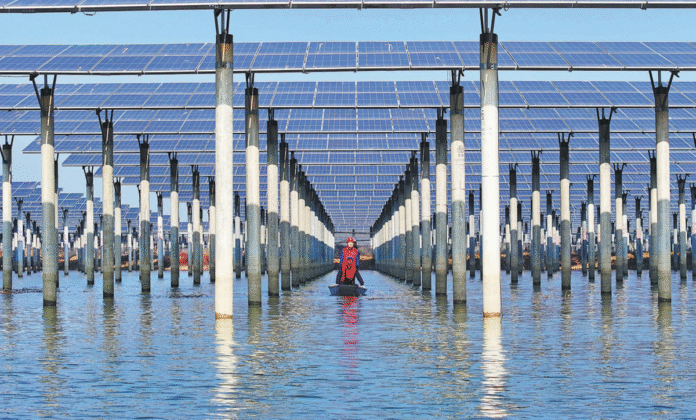
China’s Solar Capacity Set To Outpace Coal In 2026

0

据《中国日报》2026年2月5日报道

业内专家表示,中国今年的太阳能装机容量有望首次超过煤炭,这标志着全球最大的可再生能源市场迈出了重要一步。

 据中国电力企业联合会(CEC)预测,到2026年,中国预计将新增超过4亿千瓦的发电装机容量,其中太阳能和风能将超过3亿千瓦。到年底,这些可再生能源发电量合计将占中国总发电量的一半。

 这一快速扩张是北京更广泛计划的一部分,该计划旨在2030年前实现碳排放达峰,2060年前实现碳中和。2025年,中国的电力消耗量达到创纪录的10.37万亿千瓦时,是美国年用电量的两倍多,巩固了其作为世界最大能源消费国的地位。

 “可再生能源现在是中国能源转型的主要引擎,”中国能源经济研究中心主任林伯强表示。预计太阳能发电装机容量将超过煤炭,成为最大的单一能源来源,这将标志着中国能源格局的历史性转变。

 国家能源局报告称,中国可再生能源累计装机容量现已超过18亿千瓦,预计到2026年底,非化石能源将占总装机容量的63%。中国能源委员会表示,煤炭的份额将继续下降至约31%。

 高科技制造业、电动汽车普及、5G 网络和充电基础设施也在推动电力需求增长,仅电动汽车相关服务一项,到 2025 年,这些行业的电力消耗量就将同比增长高达 48.8%。

 去年中国能源投资总额达到3.5万亿元人民币(5036亿美元),超过其他主要经济部门,凸显了中国加速向低碳能源转型。

 随着全球目光转向清洁能源,中国可再生能源(尤其是太阳能)的扩张规模和速度可能会重新定义国际能源市场和供应链,为其他追求脱碳的国家树立新的标杆。


Article inline ad

Chinese Wind Turbine Leader Goldwind Responds to EU Probe

0

According to a report in China Daily on February 5, 2026

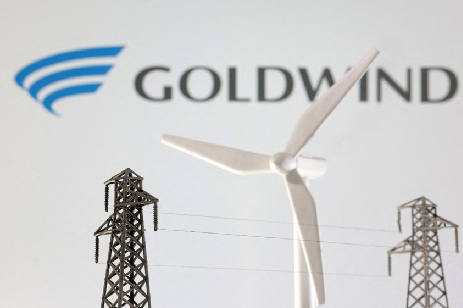
Chinese wind energy giant Goldwind Science and Technology Co Ltd said on Wednesday that it will fully cooperate with the European Commission following the launch of a detailed investigation into its EU operations under the Foreign Subsidies Regulation.

The Commission’s preliminary review indicated that Goldwind “may have received foreign subsidies that distort the internal market.”

In a statement, Goldwind emphasized that it places compliance at the core of its global operations, and is committed to maintaining transparent communication with EU authorities throughout the legal process.

“All of our business activities in the EU remain normal and orderly,” the company said, assuring customers and partners that service quality and operational reliability will continue despite the ongoing probe.

Goldwind stressed that its market competitiveness is driven by technological innovation, reliable product quality, and market-based strategies, rather than external subsidies. The company also called for an open, fair, and non-discriminatory global trade and investment environment as essential for advancing the energy transition and addressing climate change.

Industry analysts note that the investigation highlights increasing scrutiny of foreign energy firms in Europe, reflecting broader geopolitical tensions and the sensitivity of the renewable energy sector amid the global push for decarbonization.

“Fact-based and constructive dialogue with EU regulators will be key for clarifying the situation,” Goldwind said.

The probe is part of the European Commission’s wider efforts to enforce transparent competition rules, ensuring that the energy transition within the EU proceeds fairly and competitively.


Article inline ad

Geely Explores Production Partnership at Ford’s European Plant

0

According to a report in China Daily on February 5, 2026

Chinese automaker Geely is reportedly in talks with Ford to utilize spare production capacity at the US carmaker’s European plants, potentially expanding its footprint in one of the world’s largest automotive markets, Reuters reported.

The discussions are believed to focus on Ford’s longstanding Spain facility, operational since 1976, though no final agreements have been confirmed. Sources cited by Reuters also indicate that the two companies have explored technology-sharing frameworks, including automated driving systems.

Geely, which acquired Volvo from Ford in 2010, aims to achieve 6.5 million global vehicle sales by 2030, with overseas markets contributing over one-third of that total. In 2025, the company delivered 4.12 million vehicles, a 26% year-on-year increase, marking its fifth consecutive year of rapid growth. Achieving its target would elevate Geely into the top five global automakers by volume.

The potential partnership reflects a broader trend of Chinese automakers establishing manufacturing bases overseas, particularly in Europe, a key market for new energy vehicles (NEVs). Other examples include:

Leapmotor producing EVs at a Stellantis plant in Spain

Xpeng manufacturing an electric model at Magna International in Austria

Geely collaborating with Renault in South Korea and Brazil to produce vehicles based on Geely technology

Ford has previously announced European collaborations, including a partnership with Renault to develop Ford-branded EVs produced in France, highlighting the automaker’s strategy to optimize its global manufacturing network amid declining European sales.

Industry analysts see the Geely-Ford discussions as part of a strategic shift by Chinese carmakers to secure production capacity and access advanced technologies abroad, positioning them to compete more effectively in key international markets.

“With European EV demand rising and manufacturing costs increasing domestically, leveraging existing plants abroad is a pragmatic way for Chinese firms to scale globally,” said an automotive market analyst.

Article inline ad

LEGO Expands China-Focused Sets to Tap Growing Cultural and Consumer Trends

0

According to a report in China Daily on February 5, 2026

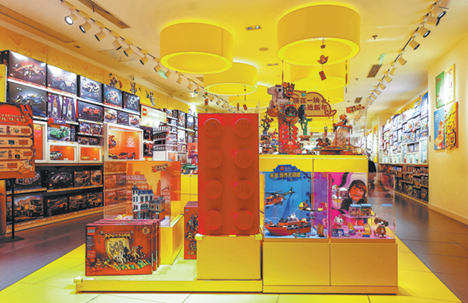
As China’s Lunar New Year approaches, LEGO Group is deepening its engagement with Chinese consumers by launching products inspired by local traditions and cultural symbols, signaling the Danish toymaker’s long-term commitment to one of the world’s fastest-growing markets.

The new sets, including the LEGO Galloping Horse Canvas and LEGO Prosperity Firecrackers, are designed to resonate with cultural celebrations and gifting trends, offering consumers a blend of creativity, tradition, and emotional connection. The Galloping Horse Canvas, for example, reflects themes of good fortune and success through delicate ink-wash styling, while the Prosperity Firecrackers set reimagines classic festive motifs for a modern collectible experience.

“China is the only market where we specifically design products for local holidays such as the Spring Festival,” said Maciek Selinski, head of LEGO China. “Our goal is to create products that emotionally connect with consumers while honoring cultural traditions.”

Since introducing its first China-inspired sets in 2019, LEGO has expanded its portfolio to include symbols like plum blossoms, orchids, and chrysanthemums. The Denmark-based design team balances local cultural relevance with global appeal, targeting children, families, and the rapidly growing segment of adult fans seeking creative outlets.

LEGO’s retail footprint in China now spans over 400 stores across 120 cities, supported by a local manufacturing facility in Jiaxing, Zhejiang province. The opening of Shanghai Legoland in 2025 further strengthens the LEGO ecosystem in China, attracting more than one million visitors since its debut.

The strategy reflects a broader trend in China’s “emotional economy,” where consumers increasingly seek products that combine creativity, personal expression, and cultural resonance. According to iiMedia Research, this market is projected to exceed 4.5 trillion yuan ($648 billion) by 2029, with young adults and families driving demand for premium, emotionally engaging, and collectible items.

LEGO has also leveraged global intellectual property collaborations — including F1, Minecraft, and Disney — while exploring localized partnerships to align with regional tastes. These efforts have contributed to strong global growth, with the company reporting a 12% revenue increase in the first half of 2025, reaching 34.6 billion Danish krone ($5.5 billion).

“The Chinese market is still in the early stages, but we see immense potential,” Selinski said. “By enhancing our retail presence and expanding culturally relevant products, we aim to reach more families and children, while continuously innovating to meet evolving consumer expectations.”

LEGO’s approach illustrates how multinational brands can combine cultural insight, product innovation, and retail strategy to tap the scale and dynamism of China’s consumer market, offering a blueprint for others seeking growth in Asia.

Article inline ad

Nestle Boosts Juice Gummy Production in China with Smart Factory Expansion

0

According to a report in China Daily on February 5, 2026

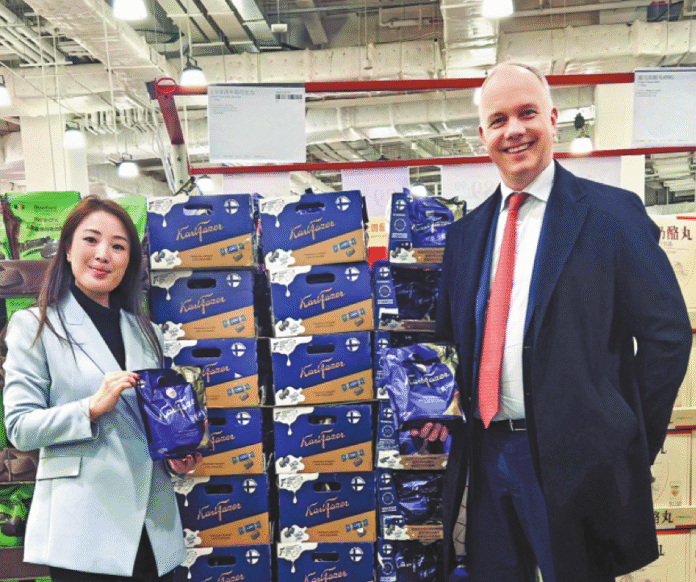
As China’s Lunar New Year approaches, Nestle is ramping up production of its popular Hsu Fu Chi juice gummies to meet surging festive demand, signaling continued investment in the country’s growing snack sector.

On Feb. 2, Nestle unveiled a new 14,000-square-meter juice gummy production facility in Dongguan, Guangdong province, representing a 200 million yuan ($28.8 million) investment. The plant, equipped with fully automated production lines, is designed to produce 40 metric tons of juice gummies per day, leveraging AI and smart manufacturing technologies to optimize efficiency and sustainability.

The facility integrates advanced German technology, automated guided vehicles, robot-assisted material handling, unmanned forklifts, and a fully automated cleaning system. Nestle expects the upgrades to boost production capacity by 30%, increase efficiency by 20%, and reduce energy consumption by 15%.

“This expansion is more than just a capacity increase,” said Kais Marzouki, chairman and CEO of Nestle Greater China. “It demonstrates our commitment to China, our second-largest market, and how intelligent manufacturing can enhance the value chain while supporting local innovation and regional development.”

Nestle’s Hsu Fu Chi brand has become a key player in China’s fast-growing snack segment, particularly during the Lunar New Year period, when demand for festive sweets peaks. The company’s strategy combines smart production with local insights into consumer preferences, aiming to meet both traditional tastes and emerging trends toward healthier, functional snacks.

Research from Mintel Group highlights that younger consumers, families, and parents with children are driving the market, with preferences ranging from nostalgic flavors and holiday-limited editions to products with added nutritional benefits such as vitamins, probiotics, or reduced sugar.

Since 2020, Nestle has invested over 5 billion yuan in China, focusing on high-growth sectors including infant formula, snacks, and pet care. The full acquisition of Hsu Fu Chi in 2025 has enabled the company to leverage China’s industrial ecosystem, applying smart manufacturing and digital technologies to enhance product quality and operational efficiency.

“This investment illustrates how multinational companies can combine local market understanding with global expertise in production innovation,” said Liu Xinggang, president of Hsu Fu Chi. “It positions Nestle to meet evolving consumer demands while solidifying its leadership in the Chinese confectionery market.”


Article inline ad

China Unveils “Export to China” Campaign to Help Global Brands Tap Domestic Demand

0

According to a report in China Daily on February 5, 2026

China has unveiled a new international communication campaign aimed at helping foreign brands and multinational companies expand their presence in its domestic market, as the country steps up efforts to position itself as a key source of global demand amid rising trade uncertainty.

China Daily on Wednesday released the road map for its “Export to China” campaign, an initiative designed to connect international chambers of commerce, overseas companies and Chinese consumers, while offering clearer market signals to global businesses seeking growth opportunities.

The campaign comes as China accelerates high-level opening-up and pushes for a more balanced trade structure, shifting its global economic role from primarily an export base to an increasingly important destination for imported goods and services.

“China is not only a manufacturing hub, but also a major consumption market with long-term growth potential,” said Liu Weiling, deputy editor-in-chief of China Daily. “This initiative aims to help foreign companies better understand demand trends, showcase their products and translate market access into real sales.”

Turning market access into sales

At the core of the campaign are two report series targeting international business audiences.

The first, Dialogue with Chambers of Commerce, will feature interviews and case studies drawn from major foreign chambers of commerce and their member companies. The reports will focus on how overseas brands — from consumer goods to industrial products and services — have successfully entered and scaled in the Chinese market.

The second, Diplomats’ Selections, will invite foreign ambassadors and trade officials in China to highlight signature products from their home countries, offering international suppliers a high-visibility platform to reach Chinese buyers.

China Daily said it will also work with multinational executives, economists and global think tanks to provide deeper analysis of how China’s import expansion is reshaping consumption, supply chains and competitive dynamics across industries.

Multinationals double down on China

For many global companies, the initiative reinforces China’s role as a strategic market rather than a short-term opportunity.

Hubert de Haan, senior vice-president for China at German home appliance manufacturer BSH, said China’s scale and consumer diversity make it indispensable for multinational firms.

“We need to be successful in China because this is one of the world’s most important markets,” he said. “The speed at which Chinese consumers adopt new technologies and innovations helps companies shorten product development cycles globally.”

The “Export to China” campaign builds on China Daily’s earlier launch of the Shopping in China platform, which provides international audiences with insights into retail, tourism, dining and lifestyle consumption trends across major Chinese cities.

Together, the initiatives reflect China’s broader message to global businesses: while protectionism and fragmentation are rising elsewhere, China is seeking to anchor global growth by expanding imports, deepening market access and offering multinational companies a stable, large-scale consumer base.

Article inline ad

China’s Vast Market as Strategy: Why Beijing Is Doubling Down on Imports and Global Firms

0

According to a report in China Daily on February 5, 2026

Beijing — As global trade becomes increasingly fragmented, China is making a deliberate strategic choice: to position its domestic market not merely as an engine for its own growth, but as a stabilizing anchor for international businesses navigating an uncertain global economy.

At a recent import promotion event in Beijing, Chinese officials emphasized expanding imports and market access, framing China’s 1.4-billion-strong consumer base as a shared platform for global growth. While such messaging is not new, the policy context behind it is shifting in meaningful ways.

Why It Matters

China’s renewed emphasis on imports and market openness comes at a moment when multinational companies face slowing demand in developed economies, supply chain disruptions and rising political risk across multiple regions. By contrast, China is signaling continuity: large-scale demand, policy predictability and a willingness to integrate foreign firms into its consumption-driven growth model.

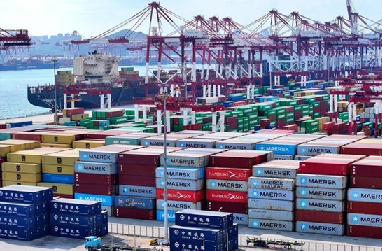
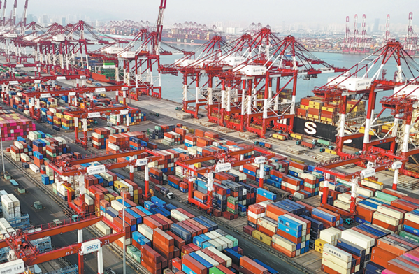
In 2025, China imported goods worth 18.48 trillion yuan ($2.66 trillion), about 10 percent of global imports, maintaining its position as the world’s second-largest import market. More importantly, imports are no longer treated as a secondary outcome of export growth, but as a policy objective in their own right — a shift that will be formalized in China’s 15th Five-Year Plan (2026–30).

This reflects a broader recalibration of China’s development model. As investment-led growth slows and external demand becomes less reliable, Beijing is leaning more heavily on domestic consumption — and recognizing that foreign brands, services and technologies are an integral part of that ecosystem.

From Access to Sales

Unlike earlier phases of opening-up that focused primarily on market entry, current policy priorities are increasingly centered on commercial viability. The Ministry of Commerce plans to organize more than 100 import promotion events this year, designed not just to attract foreign suppliers, but to help them generate sustained sales and local partnerships.

This approach addresses a longstanding concern among foreign firms: that formal access does not always translate into scalable business outcomes. By emphasizing matchmaking, digital channels and localized demand, China is attempting to narrow the gap between policy openness and commercial reality.

Beijing has emerged as a testing ground for this model. As the city accelerates its transformation into an international consumption center, local authorities are linking import growth with retail, services and digital platforms, positioning the capital as a gateway for premium global goods.

The Role of Platforms and New Entrants

E-commerce platforms are becoming central to China’s import strategy. JD.com’s plan to introduce 1,000 new overseas brands in 2026 highlights how digital infrastructure is reshaping foreign firms’ routes into the Chinese market — particularly for small and medium-sized enterprises that lack extensive local networks.

For foreign chambers of commerce, the opportunity lies in sectors where demand growth aligns with China’s structural priorities: healthcare, green technology, advanced manufacturing, education and digital services. Executives from Germany, Italy and the UK emphasized that future cooperation is likely to be driven less by volume trade and more by innovation and specialization.

A Signal, Not a Guarantee

China’s market openness should not be read as a risk-free proposition. Regulatory complexity, geopolitical tensions and uneven implementation remain real constraints. However, the direction of policy is increasingly clear: China sees sustained engagement with global firms not as a concession, but as a strategic necessity.

For multinational companies recalibrating global strategies, the message is nuanced but significant. China is not retreating into isolation; instead, it is competing to remain indispensable — as a market, a growth partner and a source of long-term demand.

In a world of shrinking certainties, China is betting that the scale and resilience of its domestic market will continue to matter — not just to itself, but to the global economy at large.


Article inline ad

China Positions Its Vast Market as Anchor for Global Firms Amid Trade Uncertainty

0

According to a report in China Daily on February 5, 2026

Beijing — As global trade faces growing fragmentation and protectionist pressures, China is positioning its vast domestic market as a source of stability and long-term demand for international businesses, Chinese officials and foreign business leaders said this week.

At a Beijing event promoting imports under the banner “Big Market for All: Export to China,” Commerce Minister Wang Wentao said China aims to further expand market access and imports, framing the country’s consumer base as a shared growth platform rather than a closed system.

China imported goods worth 18.48 trillion yuan ($2.66 trillion) in 2025, accounting for about 10 percent of global imports, according to customs data. The figure underscores China’s role as the world’s second-largest import market for the 17th consecutive year, at a time when global demand remains uneven and geopolitical tensions continue to disrupt supply chains.

Officials say a more balanced relationship between exports and imports will be a central pillar of China’s next five-year economic blueprint (2026–30), reflecting Beijing’s effort to rely more on domestic demand while maintaining integration with global markets.

The Ministry of Commerce plans to host more than 100 import promotion events this year, aiming to match overseas suppliers with Chinese buyers and translate market access into commercial results, particularly for small and medium-sized foreign firms.

Beijing, which is seeking to establish itself as an international consumption hub, has been positioned as a key gateway for premium global products. Mayor Yin Yong said the capital would continue to link import growth with consumer demand, reinforcing its role as an entry point for foreign brands.

Foreign business representatives attending the event echoed cautious optimism. British Ambassador to China Peter Wilson said China is already the UK’s third-largest trading partner and that further growth would depend on practical market access rather than political signaling alone.

German and Italian business leaders emphasized complementary opportunities in sectors such as biopharmaceuticals, green technology, smart manufacturing and digital services, arguing that future economic ties should be driven by innovation rather than zero-sum competition.

Digital platforms are also playing a growing role. JD.com announced plans to introduce 1,000 new overseas brands to the Chinese market in 2026, highlighting how e-commerce is lowering entry barriers for foreign suppliers seeking access to Chinese consumers.

For multinational firms, executives said China’s appeal lies not only in its scale — a market of 1.4 billion consumers — but also in the expanding middle-income population and rising demand for quality goods.

Despite ongoing geopolitical tensions and regulatory uncertainties, business leaders said China’s continued emphasis on opening its market sends a clear signal: access to Chinese demand remains a central part of global growth strategies.

China Market Access

Article inline ad

Beijing’s Flagship Shopping Districts Signal Shift in China’s Consumer Economy

0

According to a report in China Daily on February 5, 2026

Beijing’s leading commercial districts, including Taikoo Li Sanlitun, are emerging as symbols of a broader transformation in China’s consumer economy, as policymakers and businesses push to reposition the country as a global destination for shopping, lifestyle and cultural consumption.

China’s Ministry of Commerce has made “Shopping in China” a priority this year, aiming to boost domestic demand while attracting international tourists and global brands. The initiative focuses on three areas: goods consumption, services consumption and consumption scenarios — a framework that reflects how China’s retail sector is moving beyond price-driven growth toward experience-led spending.

 In Beijing, that shift is most visible in the ongoing upgrade of major retail hubs. Taikoo Li Sanlitun, long known for its international appeal, has recently completed a phased renovation that emphasizes experiential retail, cultural integration and flagship brand concepts.

 “Consumers no longer need to travel to Paris or Tokyo to experience the world’s leading brands and trends,” said CT Ma, general manager of Taikoo Li Sanlitun. “Those experiences are increasingly available in Beijing.”

 Nearly half of the commercial space in the district’s North Zone has been renovated, transforming the area into a concentration of luxury flagship stores from brands such as Dior, Louis Vuitton, Hermès and Tiffany & Co. Many of the new outlets are designed by internationally renowned architects, positioning the district as both a retail destination and an urban landmark.

 The changes reflect a broader evolution in Chinese consumer behavior. As incomes rise and the retail market matures, spending decisions are increasingly shaped by emotional connection, cultural relevance and immersive experiences rather than price alone. For international brands, China is becoming not just a sales market, but a testing ground for new retail concepts and localized product launches.

 According to Ma, several brands have begun using Beijing as a launch platform for culturally adapted products. Louis Vuitton, for example, introduced cardholders with customized local stamping, while Adidas rolled out designs incorporating traditional Chinese clothing elements — an indication of growing demand for culturally resonant offerings.

 Retail upgrades are being reinforced by policy measures aimed at boosting inbound tourism. Simplified tax refund procedures, expanded visa-free access and improved payment convenience for foreign visitors have contributed to a rise in overseas shoppers, particularly from Southeast Asia, South Korea, Russia and Central Asia.

 Foot traffic from Russia and Central Asia has increased by 30–40 percent year-on-year, Ma said, with inbound tourists spending not only on luxury goods but also on mass-market brands and duty-free retail. The trend suggests that China’s retail ecosystem is broadening its appeal across price segments.

 Local authorities see the renewal of Taikoo Li Sanlitun as part of a wider urban strategy. “The upgrade is not only improving the quality of the commercial district itself, but also driving higher-quality development across the entire area,” said Sun Shuguang, a local official in Sanlitun.

 Commercial property developers are also adapting to the shift. Swire Properties, the owner of Taikoo Li, has emphasized localization as a core strategy. “The more a retail project integrates into local life, the more attractive it becomes internationally,” said Han Zhi, head of retail at Swire Properties.

 For global brands and investors, Beijing’s flagship shopping districts offer a window into China’s next phase of consumption growth — one driven less by volume expansion and more by urban experience, cultural identity and the integration of domestic and international demand.

 As projects like Taikoo Li Sanlitun continue to evolve, they are redefining what large-scale retail can look like in China — and how cities position themselves in the global consumer economy.


Article inline ad