Wednesday, November 25, 2026

Home Blog Page 68

China’s Film Industry Emerges as a Key Driver of Consumption and Economic Growth

0

According to a report in China Daily on January 27, 2026

 China’s cinema sector is fast evolving from a box-office-centric industry into a broad-based driver of consumer spending and economic activity, according to industry analysts and government data. In 2025, the sector generated an estimated 817 billion yuan ($117 billion) in total output, positioning it among the world’s largest film markets. Each yuan earned at the box office reportedly creates an additional 15.8 yuan in related industries, highlighting the sector’s multiplier effect on China’s economy.

 The transformation is visible in both consumer behavior and business strategy. Popular animated films such as “Nobody” and “The Legend of Hei 2” have extended their impact far beyond cinemas, spawning merchandise, IP licensing deals, co-branded products, and tourism. One film-inspired coffee chain promotion sold more than 5 million drinks within three days, while regional attractions tied to film narratives have seen visitor numbers triple, as in the case of Yibin’s Nezha Palace and Anyang’s Yin-Shang cultural sites.

 Policy support has further catalyzed growth. In 2025, the China Film Administration implemented a series of “film-plus” initiatives, designed to integrate the industry with tourism, retail, technology, and immersive entertainment. The government’s push to foster consumption-oriented culture aligns with broader objectives to upgrade China’s service economy and diversify sources of domestic demand.

 Technological upgrades in cinema infrastructure are another area of rapid expansion. Orders for LED cinema screens increased by roughly 50% in 2025, making China home to the largest number of LED-equipped theaters worldwide. Virtual reality (VR) films have also received regulatory approval, prompting investment in next-generation screening halls, exemplified by Beijing’s 798 Hyper Vision, which welcomed around 63,000 visitors in its first year.

 Despite the rapid growth, challenges remain. Industry observers note that revenue from film merchandise is still relatively low, and there is a need for high-quality intellectual property and advanced production capabilities to fully realize the potential of the sector.

 Nonetheless, experts say the film industry’s integration with tourism, retail, and technology reflects a broader shift in China’s domestic economy—from scale-focused growth to quality-driven expansion. “China’s film sector is not only generating new forms of cultural business, it is also actively upgrading the service consumption ecosystem, demonstrating the sector’s significant economic and social contribution,” said Zhu Di, a researcher at the Chinese Academy of Social Sciences.

 For international investors and industry players, the sector offers insight into China’s evolving consumption landscape, highlighting opportunities in cultural IP, consumer products, tourism, and immersive media. With policy backing and a vast domestic market, China’s film economy is emerging as a strategic pillar for broader economic growth.

Article inline ad

China Introduces ‘Digital IDs’ to Power EV Battery Recycling and Circular Economy

0

According to a report in China Daily on January 27, 2026

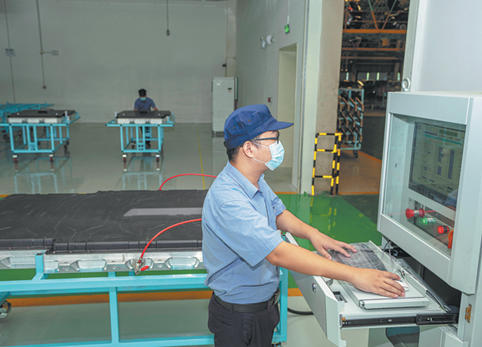
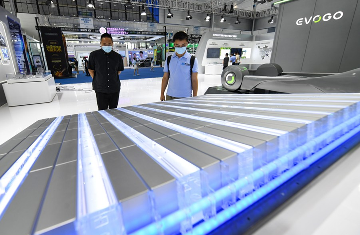
 China is set to revolutionize the management of electric vehicle (EV) batteries with the introduction of unique “digital identities” for every new-energy vehicle power battery, a move designed to improve lifecycle tracking, enhance safety, and unlock greater efficiency in the rapidly growing battery recycling sector.

 The initiative, announced by the Ministry of Industry and Information Technology (MIIT), comes as the country anticipates an unprecedented wave of battery retirements in the coming decade. According to MIIT estimates, retired EV batteries could surpass 1 million metric tons annually by 2030, creating both environmental risks and opportunities for resource recovery.

 Each battery will be assigned a unique digital code, linking production, installation, usage, replacement, vehicle decommissioning, recycling, and eventual reuse. The system, MIIT officials say, represents a first-of-its-kind institutional innovation, combining digital technology with industrial lifecycle management.

 “This is a critical step for ensuring environmental safety while enabling the efficient reuse of valuable metals,” said Wang Peng, head of MIIT’s energy conservation and comprehensive utilization department. “It allows regulators and manufacturers to monitor the entire lifecycle of batteries, from assembly to recycling, with unprecedented transparency.”

 The regulatory framework, formalized in the Interim Measures for the Recycling and Comprehensive Utilization of Retired NEV Power Batteries, also clarifies the responsibilities of automotive and battery manufacturers, while laying out enforcement mechanisms and penalties for non-compliance.

 High Stakes in a Burgeoning Market

 EV batteries contain high-value metals such as lithium, cobalt, nickel, and manganese, alongside hazardous substances like fluoride compounds. If not handled correctly, retired batteries pose significant environmental and safety risks, including contamination of soil and water.

 China’s NEV market has expanded rapidly over the past decade, and with it, the volume of batteries reaching end-of-life. According to government data, more than 400,000 metric tons of retired batteries were comprehensively reused in 2025, a 33% year-on-year increase, with top-tier recycling firms achieving recovery rates on par with international standards.

 Industry observers note that the success of this initiative will hinge on coordination between regulators, manufacturers, and financial institutions, as well as robust data management systems to track and trace battery lifecycles.

 Building Standards and International Alignment

 The State Administration for Market Regulation (SAMR) has pledged to work closely with MIIT to accelerate the formulation of technical standards and certification systems for battery recycling. Pilot programs on carbon footprint labeling and international cooperation on standard harmonization are also planned, aimed at boosting the low-carbon competitiveness of China’s EV battery products in global markets.

 “This initiative positions China as a potential leader in sustainable battery lifecycle management,” said Wen Xuefeng, deputy director of SAMR’s solid waste and chemicals department. “By setting clear rules for traceability and recycling, it not only safeguards public safety but also strengthens resource efficiency and supply chain resilience.”

 Consumer Role and Corporate Responsibility

 The regulations place shared responsibility on consumers and manufacturers. Owners of EVs are required to follow manufacturer instructions for battery recycling, provide traceability information such as license plate numbers, and deliver end-of-life vehicles and batteries to authorized recyclers. Manufacturers, in turn, must ensure data security and protect consumer privacy.

 Violations—including failure to code batteries, improper disposal, or non-reporting—can result in fines or other administrative penalties, reinforcing the government’s commitment to strict enforcement.

 Strategic Implications

 Experts argue that China’s move to standardize battery lifecycle management is not just environmental but strategically economic. By improving recycling efficiency, reducing reliance on imported battery metals, and fostering a circular economy, the policy strengthens China’s position in the global EV supply chain.

 “The introduction of digital IDs represents a major leap in China’s green industrial policy,” said an analyst at a Shanghai-based consultancy. “It aligns with broader ambitions to decarbonize the transport sector, enhance resource security, and create a replicable model for sustainable industrial practices worldwide.”

 With the EV market expanding globally, China’s digital ID system for batteries may serve as a benchmark for other countries grappling with the twin challenges of environmental sustainability and industrial efficiency.

 If you want, I can also slot this article into your website’s editorial structure with a short summary and metadata so it’s ready to post under China Economy → Structural Transformation with FT/Nikkei-style headings and tags for overseas investors.

 Do you want me to do that next?


Article inline ad

Haikou Emerges as a Laboratory for China’s Industrial Green Transition

0

 By ZH,According to a report in China Daily on January 27, 2026

 Beneath the tropical sun of Hainan, Haikou’s high-tech industrial zone is quietly demonstrating the future of Chinese manufacturing. Silver-gray “solar trees” convert sunlight into electricity, while benches embedded with wireless chargers allow park-goers to recharge devices with clean energy. These are not art installations—they are tangible examples of China’s ambition to fuse industrial innovation with sustainability.

 The Haikou National High-Tech Industrial Development Zone has been designated as Hainan’s pilot for a national-level zero-carbon industrial park, part of a broader push by Beijing to create green manufacturing exemplars that can be scaled nationwide. The goal is to build a fully operational “model room” for zero-carbon operations within five years, leveraging the province’s Free Trade Port advantages.

 Zheng Yuhua, general manager of Hainan Special Economic Zone Donghu High-tech Investment Co, said the approach integrates energy, construction, and digital operations. “Buildings themselves are becoming power generators,” he explained, highlighting photovoltaic panels, energy storage systems, and smart energy dispatching as core tools for reducing emissions.

 The Haikou zone’s ambition is mirrored by strategic provincial agreements. Hong Jianhui, chief economist at the zone, revealed that Datang International Power Generation Co Ltd will supply between 100 million and 400 million kilowatt-hours of offshore wind power annually to the park—a critical step toward long-term low-carbon viability.

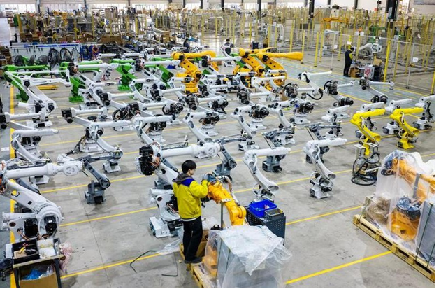
 Across China, green manufacturing has become a central component of industrial strategy. The Ministry of Industry and Information Technology (MIIT) reports 6,430 national-level green factories, 491 green industrial parks, and 727 green supply chains. These factories now contribute more than 20% of the country’s industrial output by value, up from 9% in 2020, while consuming roughly two-thirds of the energy and a quarter of the water per unit of output compared with national averages.

 From a global perspective, China’s green industrial ecosystem has tangible export impact. The country supplies over 80% of the world’s photovoltaic modules and 70% of wind-power equipment, helping developing nations access reliable, affordable renewable energy. Between 2021 and 2024, Chinese factories produced 15.6 trillion kilowatt-hours of photovoltaic modules, generating an estimated 3.2 trillion kWh of green electricity globally and reducing CO₂ emissions by roughly 2.54 billion tons.

 Yet sustaining this momentum requires large-scale financing. Since the 14th Five-Year Plan (2021–25), national green factories have undertaken over 10,000 green upgrade projects, with investment exceeding ¥300 billion ($43.1 billion). Recognizing this, MIIT and the People’s Bank of China issued a joint directive in December 2025 to create a working mechanism connecting green finance with industrial projects, aiming to align capital flows with sustainability targets.

 Wang Peng, head of MIIT’s energy conservation department, emphasized that policy measures focus on three areas: enabling process innovation in traditional industries, accelerating green upgrade projects for energy and pollution reduction, and constructing zero-carbon factories. Financial institutions, including ICBC and China Minsheng Bank, have tailored products such as “green factory loans” and equipment leasing to support these initiatives.

 On the ground, Haikou is already seeing innovation across industries. Projects under construction range from smart vehicle dismantling and battery recycling to liquid hydrogen energy and methanol-powered commercial vehicles. Financial mechanisms have enabled faster capital deployment and risk mitigation, making green industrial investment increasingly attractive for both domestic and foreign participants.

 Lei Wen, deputy head of MIIT’s finance department, highlighted that green industrial loans grew 22.3% year-on-year in the first eleven months of 2025, reaching ¥73.56 billion. “The ecosystem is designed for precision,” he said, noting coordinated oversight between the ministry and 12 major banks to ensure funds are directed toward genuine low-carbon projects.

 Experts argue that Haikou’s pilot program is illustrative of China’s strategy to make green manufacturing a core economic pillar. By embedding sustainability into production, supply chains, and finance, policymakers aim to create scalable models capable of shaping industrial standards nationwide. As one analyst put it, “The Haikou initiative is less about a single park and more about proving that industrial decarbonization can be financially viable and technologically replicable.”

 With China targeting 40% of industrial output to come from green factories by 2030, the Haikou experiment offers a window into how innovation, policy, and capital are converging to redefine the country’s industrial future—an opportunity foreign investors are increasingly monitoring closely.

Article inline ad

China Expands Services Sector Access, Boosting Opportunities for Foreign Investors

0

According to a report in China Daily on January 27, 2026

Beijing moves to widen market access across telecoms, healthcare, and education, while accelerating consumption-led growth, signaling new opportunities for foreign businesses in China.

 China is set to further open its services sector in 2026, expanding market access for foreign investors and accelerating pilot projects in key areas such as telecommunications, healthcare, and education, according to senior officials at the Ministry of Commerce.

 The measures aim to translate policy commitments into tangible outcomes, supporting foreign-invested service companies in extending their value chains and adopting more specialized, integrated, and digitalized operations. Tax incentives will allow overseas investors to reinvest profits earned in China, while foreign-funded companies will receive equal treatment in consumption promotion, government procurement, and competitive bidding processes.

 “The goal is to steer investment toward service-oriented consumption and improve both the quality and diversity of services offered to the public,” said Vice-Minister Yan Dong.

 Encouraging Industries and Investment

 From February 1, 2026, China will implement the latest edition of its Catalogue of Encouraged Industries for Foreign Investment, featuring 1,679 items — a net increase of 205 entries since 2022 — along with revisions to 303 existing items. The updated catalogue is expected to channel foreign capital toward advanced manufacturing, modern services, high-tech industries, and environmentally sustainable projects.

 For multinational firms, this policy environment offers clearer pathways to scale operations in China’s increasingly service-oriented economy. Switzerland-based hybrid workspace operator International Workplace Group (IWG), for example, plans to expand its footprint in lower-tier Chinese cities, targeting emerging demand beyond first-tier metropolitan areas. Edward Hu, country general manager of IWG China, said that policy support for services consumption and urban development underpins sustainable growth prospects for the sector.

 Consumption as a Driver of Growth

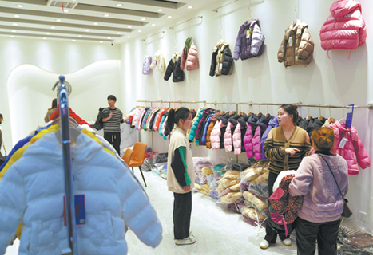
 The government is also actively linking service sector liberalization to broader consumption-driven growth. Authorities are enhancing the shopping environment through the development of international consumption hub cities and pilot programs to introduce new retail formats, models, and scenarios. Over 20 themed promotional events under the “Shopping in China” initiative will be held nationwide in 2026, complemented by 15 city-level showcases.

 Since late 2025, Nanjing and Wuxi have implemented streamlined procedures enabling 24-hour direct transit for foreign passengers, coupled with improved departure tax-refund arrangements. These measures have directly boosted spending by overseas visitors: tax-refund claims at Nanjing Lukou and Wuxi Sunan airports jumped 138.8% and 91.4% year-on-year in 2025, totaling 52.72 million yuan ($7.58 million).

 “The combination of market liberalization, tax incentives, and enhanced international consumer experiences is designed to make China a more attractive destination for global services providers,” said Yang Mu, head of the department for market operation and consumption promotion.

 Implications for Investors

 For global investors and multinational enterprises, the expansion of China’s services sector signals a two-fold opportunity: first, to participate in a growing, consumption-driven domestic market; second, to leverage policy support for integrated, digitalized, and specialized service operations.

 By aligning investment policies with urban development and consumption strategies, China is creating a more predictable and internationally friendly environment, encouraging foreign firms to embed deeper into local value chains while meeting the rising demand for high-quality services.


Article inline ad

Shanghai’s Manufacturing and Tech Sectors Now Account for Half of City GDP

0

According to a report in China Daily on January 27, 2026

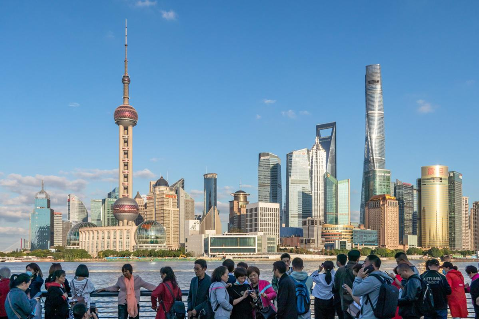
Shanghai’s industrial and technology-driven economy continues to expand, with the city’s manufacturing base, software, and information services contributing roughly 50% of GDP in 2025 — underscoring its role as China’s innovation and economic hub.

 Shanghai reported a GDP of 5.67 trillion yuan ($813 billion) last year, marking a 5.4% growth, slightly above the national average. Analysts point to the city’s industrial and software sectors as the key drivers, reflecting both the city’s deepening specialization in high-value manufacturing and the rapid rise of the digital economy.

 Manufacturing resurgence led by strategic sectors

 Industrial output among Shanghai’s enterprises above the designated size — those with annual revenue exceeding 20 million yuan — reached 4.07 trillion yuan, setting a new record. Key subsectors posted robust growth: transportation equipment (railway, aerospace, shipbuilding) rose 15.8%, electrical machinery 11.1%, automobile manufacturing 7.8%, and computer, communication, and electronic equipment 7.7%.

 Three strategically prioritized industries — integrated circuits, biomedicine, and artificial intelligence — saw their combined scale expand by 9.6% in 2025. Over the 14th Five-Year Plan (2021–25) period, their output grew 85%, boosting their share of the city’s industrial production from 7.8% to 12.4%. Integrated circuits and AI manufacturing alone grew 15.1% and 13.6% respectively, becoming pillars of Shanghai’s industrial economy.

 “These sectors are no longer marginal contributors; they are anchoring the city’s economic growth and underpinning its industrial upgrading strategy,” said a local economist monitoring Shanghai’s industrial trends.

 Digital economy increasingly central

 Shanghai’s software and information technology services have also emerged as a major growth engine. Annual revenue in this sector rose from 683.2 billion yuan in 2020 to an estimated 1.9 trillion yuan in 2025, with the added value of information transmission and IT services reaching 713.99 billion yuan, accounting for 12.6% of the city’s GDP.

 The rapid expansion of the software sector signals a broader structural shift toward knowledge-intensive industries. “Shanghai is transitioning from a manufacturing-first city to a high-tech and digital economy hub,” noted an investment strategist based in Hong Kong.

 Implications for investors and policymakers

 The combined strength of traditional industries and emerging high-tech sectors reinforces Shanghai’s resilience amid domestic and global uncertainties. For multinational corporations, the city represents both a stable market and a testing ground for advanced manufacturing, AI applications, and biotechnology.

 From a policy perspective, Shanghai’s strategy illustrates the Chinese government’s dual approach: supporting established manufacturing while nurturing high-growth, high-tech sectors. This balanced growth has enabled the city to outperform the national GDP average, attracting both foreign investment and domestic talent.

 Bottom line: Shanghai’s economy exemplifies China’s push toward high-quality growth, with manufacturing and digital services jointly forming the backbone of the city’s GDP. For global investors, understanding this structural composition is key to identifying opportunities in China’s leading industrial and technology clusters.


Article inline ad

Multinational Chemical Firms Double Down on China as Demand and Policy Dialogue Hold Firm

0

According to a report in China Daily on January 27, 2026

Despite global uncertainty and rising geopolitical risks, multinational chemical companies are deepening their engagement with China, betting on resilient industrial demand, clearer policy communication and the country’s central role in the global energy transition.

 The Association of International Chemical Manufacturers (AICM), which represents leading multinational chemical producers operating in China, has stepped up cooperation with Chinese authorities in a move that signals continued long-term commitment from foreign investors in the sector.

 Earlier this month, the Shanghai-based industry body signed a strategic cooperation agreement with the Investment Promotion Agency of China’s Ministry of Commerce. The framework aims to institutionalize policy dialogue and improve industrial matchmaking for foreign-invested chemical companies, including the establishment of regular CEO-level forums with multinational executives.

 For foreign companies navigating an increasingly complex operating environment, access to clear and predictable policymaking has become as critical as market size itself.

 “Direct, timely and transparent policy communication is the most important foundation for long-term investment decisions,” said Xia Fuliang, chairman of AICM, in an interview with China Daily. “Such mechanisms significantly strengthen the confidence of multinational companies in China.”

 China’s structural weight in global chemicals

 China now accounts for roughly 42 percent of global chemical output, a share that industry estimates suggest could approach 50 percent by 2030. For multinational producers, the country is no longer simply a low-cost manufacturing base, but a core market with deep structural demand across advanced manufacturing, energy transition and healthcare.

 Founded in 1988, AICM has witnessed China’s chemical sector evolve from fragmented production into large-scale, integrated and increasingly low-carbon industrial clusters. Its members span Europe, North America, Asia and the Middle East, including global leaders such as BASF, Evonik, ExxonMobil and SABIC.

 Xia, who also heads Evonik’s China operations, said China’s chemical demand is increasingly driven by downstream industries such as electric vehicles, renewable energy, pharmaceuticals and high-end equipment — sectors that rely heavily on specialty and performance materials.

 “The chemical industry is not a sunset industry in China,” he said. “It is an essential enabler of the green transition and advanced manufacturing.”

 From price competition to technology-led investment

 Multinational chemical companies are also recalibrating their China strategies. Rather than competing primarily on price, many are shifting toward higher value-added production, bringing advanced technologies, proprietary processes and global supply-chain integration into their China operations.

 Major ongoing investments underline that trend. ExxonMobil is building a large-scale petrochemical complex in Guangdong province; SABIC is expanding its footprint in Fujian; and Evonik is investing in specialty chemicals projects in Jiangsu and Sichuan.

 These projects suggest that, despite geopolitical tensions and concerns about overcapacity in some industrial sectors, foreign chemical producers continue to see China as indispensable — both as a demand center and as a base for serving global markets.

 Green transition as opportunity, not constraint

 AICM revised its mission statement in 2025 to reflect changes in China’s industrial and regulatory environment, placing greater emphasis on innovation, sustainability and production safety.

 Xia argued that climate targets and environmental regulations, often viewed as constraints, are in fact creating new growth opportunities for the chemical sector.

 Materials used in photovoltaic panels, batteries, energy-efficient buildings and lightweight vehicles are all chemically intensive. As China pushes toward its “dual carbon” goals of peaking emissions before 2030 and achieving carbon neutrality by 2060, demand for advanced chemical materials is expected to expand further.

 At the same time, multinational companies are accelerating the adoption of digital tools in China, including smart manufacturing systems, data-driven safety management and AI-assisted research and development.

 A test case for foreign investment confidence

 While China’s broader foreign investment landscape has faced scrutiny amid slowing economic growth and regulatory adjustments, the chemical industry stands out for its relative resilience.

 Industry executives say the sector’s long investment cycles, capital intensity and deep integration with China’s industrial ecosystem make short-term exits impractical — and long-term engagement rational.

 “The chemical industry operates on a multi-decade horizon,” Xia said. “What matters most is whether the policy environment supports stable, high-quality development.”

 For multinational chemical companies, China remains both the world’s largest market and one of its most important testing grounds for green and digital industrial transformation — a combination that few global economies can match.


Article inline ad

Anta Takes Strategic Stake in Puma, Opting for Influence Over Control

0

According to a report in China Daily on January 27, 2026

 China’s largest sportswear group, Anta Sports Products Ltd, has agreed to acquire a 29.06 per cent stake in Puma SE from Groupe Artémis, the Pinault family’s investment vehicle, in a €1.5 billion transaction that underscores a distinctive feature of Anta’s global expansion strategy: strategic influence without outright control.

 The deal, expected to close by the end of the year pending regulatory approvals, will make Anta the single largest shareholder in the German-listed sportswear brand, while stopping deliberately short of a takeover. Anta said the acquisition would be fully funded from internal cash reserves and confirmed it has no plans to launch a full bid for Puma.

 Why 29.06% Matters

 The precise size of the stake is not accidental.

 Under German corporate governance rules, a shareholding above 30 per cent typically triggers mandatory takeover obligations. By settling at 29.06 per cent, Anta secures significant shareholder rights and board representation, while avoiding both regulatory complexity and the political sensitivity that can accompany foreign control of a flagship European brand.

 More importantly, the structure reflects Anta’s growing preference for a “partner-owner” model rather than full operational integration.

 “Our goal is not to interfere in Puma’s day-to-day management,” Anta chairman Ding Shizhon said, adding that the company intends to respect Puma’s independence, governance framework and corporate culture. Anta will seek seats on Puma’s supervisory board, allowing strategic alignment while leaving execution to existing management.

 For European stakeholders, the arrangement offers reassurance. For Anta, it provides exposure to Puma’s global brand, technology and distribution network — without the execution risk of a cross-border takeover.

 A Contrast With FILA and Amer Sports

 The Puma investment marks a clear evolution from Anta’s earlier acquisitions.

 In 2009, Anta acquired the China operations of FILA from Italy’s Gruppo FILA, taking full control of the brand’s positioning, retail network and product strategy within China. The turnaround is now widely seen as one of the most successful brand revivals in China’s consumer sector, with FILA becoming Anta’s most profitable business line.

 A decade later, Anta took a different approach with Amer Sports, the Finnish owner of brands including Arc’teryx, Salomon and Wilson. In a 2019 consortium-led buyout, Anta became a controlling shareholder but retained Amer’s international management team and brand autonomy. While the group exerted strategic oversight, operational independence remained central — particularly for premium outdoor brands with strong Western consumer identities.

 The Puma deal goes a step further along that trajectory.

 Unlike FILA, Puma is already a mature global brand with deep roots in Europe and the US. Unlike Amer Sports, it remains publicly listed and closely scrutinized by investors, regulators and labor representatives. In this context, minority ownership with board influence offers Anta a way to participate in Puma’s growth without disrupting its market positioning.

 A Broader Global Playbook

 Anta describes its strategy as “single-focus, multi-brand, globalization” — a framework that prioritizes long-term brand value over short-term financial engineering.

 By investing rather than acquiring outright, Anta gains:

 Exposure to Puma’s innovation pipeline and global supply chain

 A foothold in premium international markets where Chinese brands still face perception barriers

 Optionality for deeper cooperation — or increased ownership — over time

 At the same time, the company avoids the integration risks that have undermined previous high-profile Chinese outbound acquisitions in consumer and industrial sectors.

 Industry analysts note that the move also reflects Anta’s confidence in capital discipline. Funding the acquisition entirely from cash reserves signals a balance sheet strong enough to support expansion without leverage — a point closely watched by global investors amid volatile markets.

 Implications for China’s Global Brands

 Anta’s Puma investment highlights a broader shift in how leading Chinese consumer companies are engaging with global brands.

 Rather than pursuing control at all costs, they are increasingly prioritizing governance alignment, brand autonomy and incremental influence — a model that mirrors private equity practices more than traditional state-led acquisitions.

 For Puma, the partnership offers access to China’s vast consumer market and a shareholder deeply experienced in scaling sportswear brands across Asia. For Anta, it represents another step in transforming from a domestic champion into a long-term global brand operator and capital allocator.

 As Chinese companies recalibrate their overseas ambitions, the message from Anta is clear: in today’s geopolitical and regulatory environment, owning less can sometimes mean achieving more.


Article inline ad

South Korea’s Galaxy Corp Bets on China as a Long-Term Growth Engine

0

According to a report in China Daily on January 27, 2026

 For South Korea–based entertainment technology company Galaxy Corp, China is no longer just a large consumer market — it is becoming a strategic anchor for its global expansion.

 Citing China’s scale, depth of talent and rapid advances in frontier technologies such as artificial intelligence and robotics, Galaxy Corp is preparing to deepen its presence in the country through local partnerships, targeted investments and the establishment of a dedicated China unit.

 “China’s market offers virtually unlimited development potential,” said Choi Yong-ho, Galaxy Corp’s chief executive officer and chief happiness officer, in a recent interview. “It is creative, innovative and dynamic, and already operates at the global frontier in several key industries.”

 A Strategic Bet on Market Scale and Technology

 Galaxy Corp operates at the intersection of entertainment, technology and intellectual property — a space increasingly shaped by AI-generated content, immersive experiences and intelligent hardware.

 For Choi, China’s appeal lies not only in its consumer scale but also in its industrial ecosystem. He pointed to the country’s growing leadership in robotics and artificial intelligence, as well as the emergence of a younger, highly skilled workforce.

 “China’s strength in robotics and AI is shaping industrial development,” he said. “Combined with a new generation of capable talent, this gives the market strong momentum for sustained growth.”

 Choi was the youngest CEO in the South Korean economic delegation that accompanied President Lee Jae-myung on his recent state visit to China, underscoring Galaxy Corp’s prominence among a new cohort of Korean technology and content companies looking beyond traditional markets.

 Why China Matters in Galaxy’s Global Strategy

 Galaxy Corp positions China as a central pillar of its long-term global strategy rather than a peripheral growth option.

 According to Choi, China’s economic resilience rests on three structural factors: continuous technological innovation; a business culture that encourages experimentation and challenge; and a policy environment that allows companies to recover from setbacks and re-enter the market.

 “These elements together create a system with strong regenerative capacity,” he said. “That is rare at this scale.”

 Such characteristics are particularly attractive to companies operating in emerging technology fields, where failure rates are high and long-term investment horizons are essential.

 Local Partnerships Over Market Entry

 Rather than pursuing rapid standalone expansion, Galaxy Corp plans to establish Galaxy China jointly with local partners — a strategy that reflects lessons learned by foreign firms navigating China’s complex regulatory and consumer landscape.

 The company intends to increase strategic investment while advancing its businesses across what it describes as three time horizons: “today, tomorrow and the day after tomorrow.”

 “Today” focuses on entertainment IP, media, commerce and technology, with co-development of content and intellectual property tailored specifically to Chinese audiences.

 “Tomorrow” centers on artificial intelligence and robotics, where Galaxy Corp sees strong complementarities between China’s hardware manufacturing capabilities and South Korea’s strengths in software and creative technologies.

 “The day after tomorrow” points to longer-term bets on new digital forms of entertainment and human–machine interaction, areas where the boundaries between content, AI and robotics are increasingly blurred.

 A Broader Regional Pattern

 Galaxy Corp’s China push reflects a broader recalibration by South Korean companies, many of which are reassessing China not just as a manufacturing base or sales market, but as a co-innovation partner.

 As China moves up the value chain in AI, robotics and advanced manufacturing, collaboration increasingly takes the form of joint development rather than simple market access. For entertainment technology firms like Galaxy Corp, this shift opens opportunities to embed themselves more deeply in China’s digital and cultural economy.

 At the same time, the strategy carries risks. Competition in China’s content and technology sectors is intense, and regulatory dynamics remain fluid. Success will depend on Galaxy Corp’s ability to localize products, align with domestic partners and adapt quickly to evolving consumer preferences.

 Still, Choi remains confident. “With its market scale, talent base and technological capabilities,” he said, “China will continue to be one of the most important engines of global innovation.”


Article inline ad

China Breaks Through in High-End Polymer as POE Enters Industrial-Scale Production

0

According to a report in China Daily on January 27, 2026

China has reached a critical milestone in its long-running effort to reduce dependence on foreign suppliers of high-end industrial materials, achieving industrial-scale production of polyolefin elastomer (POE) — a key component used in photovoltaic modules, electric vehicles and advanced packaging.

 The breakthrough comes as the country accelerates its push toward supply chain resilience in strategic emerging industries, particularly renewable energy and new energy vehicles, where access to advanced materials increasingly determines cost competitiveness and technological leadership.

 From “Industrial Gold” to Strategic Bottleneck

 Often described by industry insiders as “industrial gold,” POE is a high-performance polymer that combines the elasticity of rubber with the processability of plastic. Its unique properties make it indispensable in next-generation N-type photovoltaic modules, where it serves as an encapsulation material that improves durability, power output and resistance to environmental stress.

 Despite China’s dominance in global solar panel manufacturing, POE long remained a weak link in the value chain. For years, production was controlled almost entirely by a small number of foreign chemical giants, with China relying on imports for as much as 95 percent of its domestic demand through the first three quarters of 2025, according to industry estimates.

 This dependence exposed Chinese manufacturers to supply disruptions, volatile pricing and geopolitical risk — a vulnerability that became increasingly visible amid global trade frictions and tighter technology controls.

 A Domestic Process Reaches Scale

 That dynamic began to change in 2025, when the Dushanzi petrochemical plant in Xinjiang — a subsidiary of state-owned China National Petroleum Corp (CNPC) — produced nearly 60,000 metric tons of POE using a domestically developed gas-phase polymerization process.

 The achievement marks the first successful industrialization of this technology in China, CNPC said, overcoming long-standing technical barriers related to catalyst performance, reaction stability and process control — challenges that have historically limited POE production to a handful of advanced chemical producers worldwide.

 Industry analysts view the development as more than a single-plant success. “This is a structural shift,” said Hua Wei, head of the Chemical Industry and Engineering Society of China. “POE has moved from a high-tech dependency to a controllable, scalable domestic capability.”

 Implications for Solar and EV Supply Chains

 The timing is significant. As global solar installations accelerate and manufacturers transition toward higher-efficiency N-type cells, demand for POE has surged. At the same time, cost pressure across the photovoltaic industry has intensified, making material efficiency and price stability increasingly important.

 Greater domestic availability of POE is expected to stabilize China’s renewable energy supply chains and reduce production costs for high-efficiency solar modules, reinforcing the country’s competitive edge in the global energy transition.

 The impact extends beyond solar. POE is also used in lightweight automotive components, helping electric vehicles improve energy efficiency and driving range — another area where China is seeking to consolidate its lead.

 From Volume to Value in Chemicals

 China’s POE breakthrough reflects a broader transformation underway in its chemical industry. After decades of expansion driven by scale and volume, the sector is now pivoting toward high-value, innovation-led growth, as demand rises for advanced materials tailored to emerging industries such as energy storage, electric mobility and life sciences.

 International trade frictions have accelerated this shift, raising costs for chemical producers and underscoring the risks of overreliance on external technology. Under these conditions, technological self-reliance and green transformation have become central to corporate survival and long-term competitiveness.

 “Future opportunities lie in mastering catalysts, reaction engineering and specialized equipment,” Hua said, “and translating those capabilities into materials that meet precise downstream requirements.”

 Global Context: Asia as an Innovation Testbed

 The POE milestone also highlights Asia’s evolving role in the global chemical industry. While the region has long been the world’s largest market for chemical production and consumption, it is increasingly emerging as a testing ground for innovation in sustainable and advanced materials.

 China, in particular, faces a structural imbalance: vast capacity in standard chemical products but persistent gaps in high-end materials critical to strategic industries. Closing that gap has become a policy and industrial priority.

 Maximilian Butek, executive director of the German Chamber of Commerce in China, has previously noted that European and US companies once dominated technology transfer into the Chinese market. “Today,” he said, “an increasing number of Chinese enterprises and local engineers are driving innovation themselves — not only for China, but for global markets.”

 Indeed, several multinational chemical companies are now shifting their China strategies toward high-tech materials research and development, seeking to tap into local ecosystems and growing downstream demand.

 Scaling Up: The Next Phase

 With the technology now verified at industrial scale, CNPC is moving to expand capacity rapidly. Multiple POE projects are under construction, and the company expects total annual capacity to exceed 300,000 tons by the end of 2026.

 The expansion forms part of PetroChina’s broader new materials acceleration program. Since the start of China’s 14th Five-Year Plan (2021–25), the group has prioritized high-value-added chemicals, achieving growth of more than 50 percent annually in new material output for four consecutive years.

 Beyond One Material

 While POE alone will not determine the future of China’s manufacturing competitiveness, analysts see its industrialization as emblematic of a larger shift: from participation at scale to control over critical technologies.

 In sectors ranging from renewable energy to electric vehicles, the battle is increasingly fought not only on factory floors, but in catalysts, polymers and process engineering — areas that quietly underpin global industrial power.

 China’s success in bringing POE from laboratory challenge to industrial reality suggests that, at least in some strategically chosen materials, that balance is beginning to change.


Article inline ad

China Approves First-in-Class Hepatitis D Drug, Marking Breakthrough in Original Drug Innovation

0

According to a report in China Daily on January 27, 2026

BEIJING — China has approved a first-of-its-kind treatment for chronic hepatitis D, a move widely seen as both a medical breakthrough and a milestone in the country’s ambition to develop globally competitive original medicines.

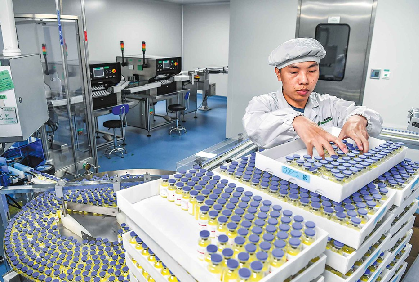
 China’s National Medical Products Administration (NMPA) on Friday granted conditional approval to Libevitug, a monoclonal antibody developed by Beijing-based Huahui Health, for adult patients infected with the hepatitis D virus (HDV), including those with compensated cirrhosis. Chronic hepatitis D is considered the most severe form of viral hepatitis and has long lacked effective treatment options.

 Libevitug works by blocking hepatitis B and D viruses from entering liver cells, targeting the PreS1 domain of the viral envelope. Because HDV relies on hepatitis B virus (HBV) to replicate, the disease occurs only in HBV carriers and is associated with accelerated liver damage and sharply elevated risks of cirrhosis and liver cancer.

 According to the World Health Organization, an estimated 12 million people worldwide are coinfected with HBV and HDV, yet therapeutic options have remained extremely limited.

 Strong Clinical Results and International Recognition

 Huahui Health said clinical trials showed Libevitug significantly outperformed the control group across key indicators, including viral suppression, normalization of liver enzymes and improvement in liver stiffness.

 After 48 weeks of treatment, the combined response rate reached 44.1%, while the virological response rate stood at 60%. The results were presented at the 2025 annual meeting of the American Association for the Study of Liver Diseases (AASLD) in November.

 The drug had previously received breakthrough therapy designation from both China’s NMPA and the US Food and Drug Administration, underscoring its clinical potential and international relevance.

 From Basic Science to Market: A Full-Chain Innovation

 Beyond its immediate medical impact, Libevitug has attracted attention as a rare example of full-chain pharmaceutical innovation originating entirely in China — from fundamental discovery to clinical application and regulatory approval.

 The scientific roots of the drug trace back to 2012, when a research team led by Li Wenhui at the National Institute of Biological Sciences (NIBS) in Beijing identified the sodium taurocholate cotransporting polypeptide (NTCP) as the key receptor enabling both HBV and HDV to enter liver cells. The discovery solved a question that had challenged scientists globally for nearly half a century and opened a new pathway for antiviral drug development.

 Building on this breakthrough, Li partnered with antibody engineering specialist Sui Jianhua to translate the discovery into a therapeutic candidate. A prototype antibody was developed in 2015, and Huahui Health was later established to advance the program into clinical trials.

 After more than a decade of sustained research and development, the drug has now reached the market.

 Wang Xiaodong, director of NIBS Beijing and cofounder of BeOne Medicines, described Libevitug as a rare case in which a single team led the entire process “from zero to one, and from one to market.” Such end-to-end innovation, he said, remains uncommon even in mature pharmaceutical ecosystems.

 A Broader Shift in China’s Drug Innovation Landscape

 Libevitug’s approval comes amid accelerating momentum in China’s innovative drug sector. In 2025, the NMPA approved 76 innovative drugs, a record high, spanning chemical medicines, biologics and traditional Chinese medicines. About 70% of eligible new drugs approved in the first half of the year were subsequently included in China’s national reimbursement list, expanding patient access.

 Industry observers attribute the surge to years of regulatory reform aimed at prioritizing innovation. Fast-track mechanisms — including breakthrough therapy designation, conditional approval and priority review — have shortened review timelines and reduced development uncertainty.

 “China’s innovation system has proved effective in advancing drug development in a fast and cost-efficient way,” said Zhang Fangning, a partner at McKinsey & Company, citing a supportive macro environment, dense local ecosystems and a growing talent pool.

 She cautioned, however, that first-in-class innovation still requires deeper translational research, long-term capital commitment and stronger links between academia and industry — areas that continue to evolve.

 Global Implications

 For global investors and pharmaceutical companies, Libevitug’s approval signals that China is no longer merely a fast follower in drug development but is increasingly capable of delivering original therapies with global clinical relevance.

 As China seeks to move up the pharmaceutical value chain, cases like Libevitug suggest that the country’s life sciences sector is entering a new phase — one defined less by imitation and more by genuine scientific discovery and commercialization.

Article inline ad