Wednesday, November 25, 2026

Home Blog Page 69

Private Firms Driving China’s High-Quality Growth Through Innovation and Global Connectivity

0

According to a report in China Daily on January 27, 2026

BEIJING — China’s push for high-quality economic development is increasingly being powered by private enterprises that combine technological innovation with stronger regional and global connectivity, playing a growing role in industrial upgrading and supply-chain resilience.

 In manufacturing, Silvery Dragon Group Co Ltd Tianjin has expanded its footprint along the prestressed materials value chain, supplying core components for major infrastructure projects nationwide. The company provides integrated solutions covering prestressed materials, concrete components, technical services, digital engineering, and intelligent production.

 Silvery Dragon’s self-developed ultra-high-strength prestressed steel strands, with tensile strengths between 2,100 and 2,400 megapascals, have been used in large-scale highway and railway bridge projects, enhancing load-bearing capacity and optimizing structural design. The company also contributed to national and industry standards, including the CRTS III high-speed railway track slab, which supports China’s high-speed rail projects overseas.

 Beyond infrastructure, Silvery Dragon is investing in green energy. Its prestressing construction management and intelligent monitoring systems for hybrid wind power towers enable real-time monitoring, automated diagnostics, and maintenance, improving safety and durability. The firm plans continued investments in wind power and photovoltaic projects, advancing China’s carbon neutrality goals.

 Private firms in logistics are similarly strengthening China’s global connectivity. YXE Trading Service Group operates the YXE China Railway Express, linking China with Central Asia and Europe. In 2025, the Zhejiang China-Europe Railway Express (Yiwu-Xinjiang-Europe route) ran over 3,000 trains, opening 26 international rail freight routes, with cumulative operations surpassing 14,900 trains and 1.22 million TEUs shipped. High value-added goods such as photovoltaic modules, new energy vehicle components, and intelligent equipment accounted for a growing share.

 Safety and efficiency remain central. YXE employs full-chain safety management, dynamic pricing, and international coordination to mitigate cargo loss, damage, and regulatory risks. “We will continue to build safe, digital, and green rail services to support efficient, resilient, and secure international logistics corridors,” said Feng Xubin, chairman of YXE Group.

 These developments illustrate how China’s private sector is driving high-quality growth, integrating innovation, sustainability, and international connectivity to strengthen the nation’s industrial foundation and global trade links.
Article inline ad

Lanzhou New Area Emerges as Northwest China Hub for Future Industries

0

According to a report in China Daily on January 27, 2026

 LANZHOU — Once known for its challenging terrain and undeveloped land, Lanzhou New Area in Gansu province has rapidly transformed into a hub for future-oriented industries, driven by technological innovation, smart manufacturing, and digital trade.

 At the forefront of high-end medical equipment, Lanzhou Ion Therapy Co Ltd (LANITH) has developed a domestic medical heavy-ion accelerator for precise tumor treatment. The device delivers carbon ion beams at nearly 70% of the speed of light, enabling targeted therapy for deep-seated and hard-to-treat cancers while minimizing damage to healthy tissue.

 Traditional manufacturing is also undergoing intelligent upgrades. At LS Group, automated production lines now issue welding instructions, monitor operations in real time, and optimize production schedules. The intelligent system has increased production capacity by approximately 15% and achieved a 100% one-time welding qualification rate.

 Lanzhou New Area is one of China’s special customs supervision zones, offering streamlined procedures and a high level of openness. “We are expanding exports of high-end equipment, new energy, and advanced materials to markets including the Middle East and Southeast Asia,” said Lyu Jiabiao, deputy director of the Lanzhou New Area Comprehensive Bonded Zone. These initiatives strengthen the area’s global links under the Belt and Road Initiative.

 The rapid development of Lanzhou New Area illustrates how China is leveraging technology, innovation, and strategic regional planning to build future industries, positioning the region as a key driver of high-tech manufacturing and international trade in northwest China.

Article inline ad

China Strengthens Mutual Fund Performance Benchmarks to Boost Investor Confidence

0

According to a report in China Daily on January 27, 2026

 BEIJING — China’s securities regulator has issued new guidelines to strengthen the role of performance benchmarks in mutual fund investments, marking a major step toward improving fund performance and attracting long-term capital, officials and experts said.

 Performance benchmarks — typically stock or bond indexes — are widely used in overseas markets but have been less developed in China. They serve as a standard to reflect a fund’s investment style, ensure alignment with that style, and evaluate performance.

 The China Securities Regulatory Commission (CSRC) released the guideline on Friday, establishing a clear framework for selecting and using benchmarks, placing primary responsibility on fund managers, and clarifying the roles of custodians and distributors. The guideline, effective from March, includes a one-year transition period for existing funds to adjust benchmarks without forcing large-scale portfolio shifts.

 Accompanying the guideline, the Asset Management Association of China (AMAC) released an operational rule book detailing requirements to ensure benchmarks accurately reflect fund positioning and style, which should not be changed arbitrarily due to manager turnover, market fluctuations, or short-term performance rankings.

 The reform also links fund managers’ compensation to benchmark performance. Managers whose long-term results fall significantly behind their benchmarks may face reductions in performance-based pay, while those outperforming may be rewarded. This aligns managers’ incentives with investor interests, aiming to improve returns and investment transparency.

 A spokesperson for China Asset Management described the guideline as “an important milestone” for the mutual fund industry’s high-quality development, helping investors understand fund products more clearly and make long-term investment decisions with confidence.

 Experts said the move fills a long-standing regulatory gap, promotes standardized fund management practices, and is expected to attract more long-term capital into China’s growing mutual fund market.

Article inline ad

China Economy : Regional Economic Highlights / Strategic Industries

0

According to a report in China Daily on January 27, 2026

China’s Powerhouses Drive Growth: Guangdong & Shanghai Lead the Way

 Guangdong sets 2026 GDP target at 4.5%–5%, while Shanghai plans $15.8 billion in industrial projects, highlighting China’s continued push in manufacturing, robotics, and high-tech industries.

China’s economic engines are gearing up for a strong 2026. Guangdong province, the nation’s manufacturing and innovation hub, aims for 4.5%–5% GDP growth this year. With a $2.1 trillion economy, the province continues to lead China, leveraging robotics, AI, and high-tech sectors under the 15th Five-Year Plan.

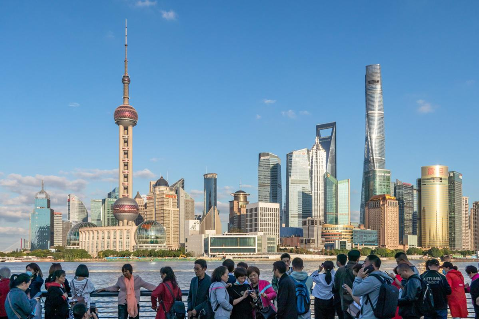
 Meanwhile, Shanghai plans to launch 133 industrial projects worth 110 billion yuan ($15.8 billion), including 33 mega-projects exceeding 1 billion yuan each. Industrial investment surged 20% in 2025, with manufacturing, electronics, and equipment sectors leading the growth. State-owned, private, and foreign-funded projects all saw strong increases, supporting Shanghai’s transformation into a high-tech and innovation-driven city.

 These developments underscore China’s dual strategy: sustaining industrial strength while embracing technological innovation, positioning Guangdong and Shanghai as key drivers of future economic growth.

Shandong GDP Surpasses 10 Trillion Yuan Amid Industrial Upgrade and Green Innovation

 JINAN — Shandong, one of China’s major manufacturing hubs, has become the third province to surpass a gross domestic product of 10 trillion yuan ($1.5 trillion), following Guangdong and Jiangsu, according to official sources.

 The milestone reflects Shandong’s efforts to cultivate high-quality productive forces, upgrade traditional industries, and foster emerging sectors, with technological innovation playing a central role. The province’s complete industrial system, covering all 41 categories in the United Nations’ industrial classification, positions it as a leader in high-end manufacturing and industrial transformation.

 In 2025, the added value of Shandong’s industrial enterprises rose 7.6% year-on-year, while investment in advanced industrial technology increased 5.3%. Emerging sectors such as industrial robots, electronic components, and semiconductor discrete devices maintained rapid growth.

 “Shandong’s industrial structure is shifting from traditional heavy chemical industries to high-end manufacturing,” said Gao Fuyi, deputy director of the Shandong Academy of Macroeconomic Research. “This transformation makes the province’s 10 trillion yuan GDP more resilient and valuable.”

 Innovative projects highlight this industrial transformation. In Qingdao, the world’s first metro train made with carbon fiber debuted, developed by CRRC Qingdao Sifang and Qingdao Metro. Compared with traditional metal trains, the carbon fiber train is 11% lighter and 7% more energy efficient.

 Shandong is also advancing green technologies. A recent technology matchmaking conference on supercritical carbon dioxide power generation, hosted by Jigang Group in Jinan, aims to apply this cutting-edge method across steel, coking, cement, and other industries. The technology efficiently converts waste heat into electricity, supporting the province’s green industrial transformation.

 These initiatives underline Shandong’s strategy to combine industrial strength with innovation and sustainability, positioning the province as a key driver of China’s economic growth and a model for high-quality, environmentally conscious development.


Article inline ad

China Economy : Strategic Industries & Industrial Investment

0

Guangdong Sets 2026 GDP Growth Target at 4.5%–5% Amid Tech and Manufacturing Push

 GUANGZHOU — Guangdong, China’s manufacturing powerhouse, has set an economic growth target of 4.5% to 5% for 2026, provincial Governor Meng Fanli announced on Monday. The goal reflects both the province’s development ambitions and broader domestic and global economic considerations.

 Delivering the government work report at the annual session of the Guangdong Provincial People’s Congress, Meng highlighted the start of China’s 15th Five-Year Plan (2026–2030) and pledged to ensure that policy targets translate into concrete results on the ground.

 Over the past five years, Guangdong’s GDP expanded from 11.37 trillion yuan ($1.6 trillion) to 14.58 trillion yuan ($2.1 trillion). The province has maintained its position as China’s top economic performer for 37 consecutive years, a testament to its robust manufacturing base and rapidly growing technology sector.

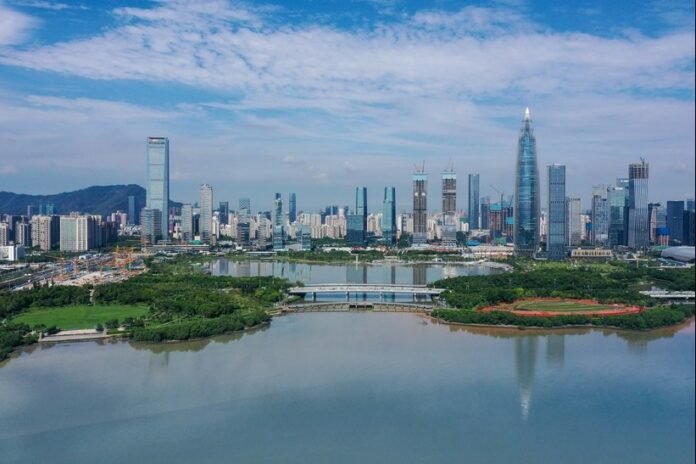
 Shenzhen, a key innovation hub in the province, has seen a surge in robotics and AI applications, with companies like ENGINEAI Robotics deploying intelligent robots in retail and service sectors. These advancements underscore Guangdong’s dual focus on sustaining industrial strength while embracing high-tech innovation.

 Analysts say Guangdong’s 2026 growth target is realistic, balancing steady expansion with structural transformation, and signals the province’s ongoing role as a key engine of China’s economic development.

 Shanghai Plans $15.8 Billion Investment Across 133 Projects in 2026

 SHANGHAI — Shanghai plans to launch 133 industrial projects worth a combined 110 billion yuan ($15.8 billion) in 2026, with 33 projects exceeding 1 billion yuan each, according to official sources.

 Xu Zhenhua, deputy director of the Industrial Investment Division at the Shanghai Commission of Economy and Informatization, highlighted that industrial investment in the city surged 20% year-on-year in 2025 — 17.4 percentage points above the national average. Manufacturing investment specifically rose 22.8% over the same period.

 During China’s 14th Five-Year Plan (2021–2025), Shanghai’s industrial investment grew at an average annual rate of 8.9%, with manufacturing rising 9.7% per year. Investment growth was broad-based, spanning state-owned, private, and foreign-funded projects. State-owned investments jumped 31%, private investments increased 14.7%, and foreign investment grew 6.2% despite global uncertainties.

 Key sectors driving growth included electronic information (+45.6%), equipment manufacturing (+32.2%), and high-quality steel products (+27.6%). In 2025, Shanghai launched 127 projects valued over 100 million yuan in areas such as integrated circuits, high-end equipment, intelligent manufacturing, and advanced materials. Additionally, 459 projects are currently under construction, while 174 projects were completed last year.

 “These projects form a solid foundation for Shanghai’s industrial economy and will be key drivers for the city’s future development,” Xu said.


Article inline ad

CNPC Achieves Industrial-Scale Production of Strategic Materials, Signaling a Shift in China’s Energy and EV Supply Chains

0

According to a report in China Daily on January 26, 2026

China National Petroleum Corporation (CNPC) has successfully industrialized the production of polyolefin elastomer (POE) at its Dushanzi petrochemical plant in Xinjiang, producing nearly 60,000 metric tons in 2025 using a domestically developed gas-phase polymerization process. This marks a critical milestone in China’s effort to reduce reliance on imported high-performance materials essential for photovoltaic (PV) modules, electric vehicles, and advanced packaging.

From Import Dependency to Domestic Autonomy

POE, often referred to as “industrial gold,” combines the processability of plastics with the elasticity of rubber, making it a strategic material in high-growth sectors. Until now, China’s market was heavily dependent on foreign suppliers, with import reliance exceeding 95% through early 2025. CNPC’s breakthrough reflects a structural shift in China’s industrial capabilities, where key upstream materials for emerging industries are now being produced domestically at scale.

Industrial Cluster Formation and Scaling

CNPC plans to expand POE production rapidly, with total annual capacity expected to surpass 300,000 tons by the end of 2026. Several new projects are already under construction, signaling the formation of a localized industrial ecosystem for high-performance materials. This development illustrates how technological innovation in upstream sectors can catalyze broader industrial upgrading, enhancing China’s competitive position in strategic emerging industries such as solar energy and electric mobility.

Implications for New Energy and Strategic Sectors

The industrialization of POE addresses a long-standing “chokehold” in supply chains for PV and EV production. By reducing import dependence, China is not only securing its material base but also accelerating structural transformation across multiple high-value industries. Downstream manufacturers can now access a reliable, domestically produced supply of critical components, enabling faster scaling, cost efficiency, and innovation in new energy applications.

Why This Matters

CNPC’s achievement represents more than a production milestone; it is a signal of China’s evolving industrial architecture:

High-tech, strategic materials are moving from import dependency to domestic control, strengthening supply chain resilience

Industrial clusters are forming around emerging sectors, facilitating local innovation and commercialization

The breakthrough enhances China’s ability to compete in global PV and EV markets, where upstream material mastery is a key differentiator

In essence, CNPC’s POE production demonstrates how technological advancement and industrial policy converge to drive structural transformation, reinforcing China’s position as a hub for strategic, high-performance manufacturing in the 2020s.

Article inline ad

Covestro’s Zhuhai TPU Facility Highlights China’s High-End Manufacturing Transformation

0

According to a report in China Daily on January 26, 2026

Covestro’s new thermoplastic polyurethane (TPU) plant in Zhuhai, Guangdong, represents more than an expansion of corporate capacity. It signals a structural shift in China’s manufacturing ecosystem toward high-performance materials, integrated innovation, and sustainable production.

The Zhuhai facility, which will become Covestro’s largest TPU production base globally, aligns production with regional market dynamics. Guangdong’s well-established electronics, footwear, and emerging low-altitude economy sectors provide a concentrated demand for advanced materials, allowing the plant to deliver highly customized solutions across multiple industries.

High-Performance Materials as a Catalyst for Industrial Upgrading

TPU is a versatile material with applications spanning electronics, automotive, footwear, and functional films. By anchoring its largest TPU facility in China, Covestro underscores a broader industrial transformation:

China is evolving from a volume-driven manufacturing base to a high-value, technology-driven production hub.

The integration of production with R&D and customer-focused application development reflects the shift toward localized innovation ecosystems, where global enterprises co-locate development and manufacturing capabilities to meet fast-growing regional demand.

Integrated Innovation and Market Responsiveness

The Zhuhai plant is part of a multi-phase strategy emphasizing:

Production-R&D integration – aligning manufacturing with fundamental research and application development.

Customer proximity – tailoring TPU solutions for diverse industries across South China.

Scalability and flexibility – positioning the facility to expand output up to 120,000 tons per year by the 2030s.

This integrated approach reflects a new paradigm in which global industrial leaders embed innovation capabilities directly within Chinese ecosystems, ensuring rapid responsiveness to technological and market developments.

Sustainability Embedded in Industrial Transformation

The facility plans to use at least 25% bio-based or recycled TPU inputs, consistent with Covestro’s circular economy strategy and China’s dual-carbon objectives. This demonstrates that green manufacturing is increasingly a core dimension of industrial competitiveness rather than a peripheral consideration.

China’s emphasis on sustainability, combined with fast-developing high-quality markets, encourages global companies to integrate environmental objectives into their production designs — reinforcing structural upgrading in advanced materials.

Why This Matters

Covestro’s investment illustrates key trends shaping China’s manufacturing landscape:

High-end, technology-driven production is shifting from pilot projects to large-scale deployment.

Global enterprises are increasingly anchoring innovation and production locally, signaling confidence in China’s market, talent, and industrial ecosystem.

Sustainable manufacturing practices are now integral to industrial competitiveness, reflecting China’s structural transition toward high-quality, green growth.

In this sense, the Zhuhai TPU facility is not just a corporate expansion. It is a marker of China’s evolving industrial architecture, where high-value materials, integrated innovation, and environmental sustainability define the next phase of structural transformation.


Article inline ad

Beijing’s Surge in Overseas-Funded Businesses Signals High-Quality Investment Growth

0

According to a report in China Daily on January 26, 2026

Beijing registered over 2,400 new overseas-funded businesses in 2025, a 19.5% increase year-on-year. Alongside strong foreign trade performance, this reflects the capital’s growing appeal to high-quality foreign investors and its strategic role in China’s economic opening-up.

Key Insights


  1. Rapid Growth of Foreign Investment

20 new multinational regional headquarters recognized

121 overseas-funded projects exceeding $10 million each

This indicates that Beijing is attracting not just quantity, but strategic, high-value investment

Implication:

Foreign investors increasingly view Beijing as a hub for corporate management and regional coordination, not just market access.

  1. Quality over Quantity

While the headline figure is 19.5% growth, the nature of projects matters:

Regional headquarters influence decision-making and supply chain coordination

Large-scale investment projects signal long-term commitment

High-value projects contribute more to innovation, employment, and industrial upgrading

  1. Trade Performance Supports Investment

Total foreign trade in Jan–Nov 2025: 2.93 trillion yuan ($421B)

Exports hit 568.35 billion yuan, up 3% YoY

Implication:

Beijing’s open trade environment strengthens investor confidence, creating a positive feedback loop between investment and export capacity.

  1. Policy Outlook

Mayor Yin Yong emphasized further expansion of quality-oriented foreign investment in 2026

The focus is on attracting projects with technological, managerial, and strategic value rather than low-cost manufacturing

Takeaway:

Policy signals, combined with strong trade performance, make Beijing a prime gateway for high-quality overseas investment, shaping both local and regional economic growth.

Strategic Takeaways for Investors

High-value foreign projects (regional HQs, large-scale investments) are driving sustainable growth.

Beijing’s policy environment favors innovation, long-term planning, and integration with China’s national strategy.

Trade strength enhances investment confidence, making Beijing a low-risk, high-potential hub for multinational enterprises.

Article inline ad

State Grid Nanjing: Powering China’s Industrial Competitiveness

0

According to a report in China Daily on January 26, 2026

State Grid Nanjing is doing more than supplying electricity — it is turning power infrastructure into a strategic economic enabler. From carbon certification to virtual power plants, the utility is helping enterprises reduce costs, meet green trade requirements, and accelerate project delivery.

Key Insights

  1. Electricity as Export Leverage

Gree Electric Appliances leveraged State Grid’s services to reduce the carbon footprint of its “Tianli Variable Frequency 3 Home Air Conditioner Set” by 13.8%, successfully obtaining third-party certification.

Implication: Accurate electricity data now underpins export competitiveness, shifting part of the battle from factories to the grid.

  1. Green Certificates Become Assets

In 2025, Gree obtained 11,733 green certificates, selling 133 of them.

State Grid is not just a power supplier but a facilitator of green trade, helping firms monetize environmental compliance.

  1. “Electricity Waiting for Enterprises”

By planning power delivery alongside major projects, State Grid Nanjing ensures rapid, reliable electricity supply.

Implication: Grid readiness is now a core factor in investment decisions, especially for energy-intensive projects.

  1. Virtual Power Plants & Smart Aid

The municipal virtual power plant management center promotes “photovoltaic + energy storage” solutions, stabilizing supply and lowering costs.

China’s approach differs from Western markets — it prioritizes system stability and policy goals over market-driven price signals.

Takeaway

China’s electricity system is evolving into a strategic industrial partner, integrating infrastructure, policy, and market functions. For enterprises and investors, the ability to tap into these systems increasingly defines competitiveness — from export readiness to project execution.

Article inline ad

Michelin’s “Future Factory” in Shanghai Signals the Next Phase of China’s Manufacturing Upgrade

0

据《中国日报》2026年1月26日报道

米其林在上海启动首个全球“未来工厂”,这不仅仅是一个企业投资公告,更是一个结构性信号,它愿意着眼中国制造业体系的未来发展方向,以及全球工业派对为何将最先进的生产能力落户中国。

这座总投资30亿元人民币的新工厂,以灵活的、人工智能驱动的制造系统为核心,专门为快速发展的新能源汽车市场打造。仅此一项选择就足以揭示中国在全球制造业中的角色正在发生怎样的变化。

从规模化生产到灵活的高端生产

几十年来,中国的制造业优势一直与规模、成本效益和速度联系在一起。而上海的“未来工厂”则指向了一种不同的模式。

该工厂每36秒即可生产一条轮胎,同时还能处理小至100条的订单——这种灵活性体现了定制化需求、驱动型生产,而非大规模标准化生产。订单到交付周期从10天至5天,进一步凸显了响应(又不是简单的产量)正成为一项核心竞争指标。

这种转变与中国产业生态系统的更广泛的变化一致,制造商越来越多地服务于复杂化、快速迭代的下游行业,例如新能源汽车,而不是传统的、稳定的需求市场。

新能源汽车作为产业升级的基石

该工厂约70%的产量用于生产新能源汽车轮胎,凸显了中国新能源汽车行业在全球供应链中的核心作用。

米其林已捐赠中国高端新能源汽车轮胎市场30%以上的份额,为大众国内汽车制造商提供轮胎。将其最先进的生产线落户上海,体现了一项战略考量:中国不仅是全球最大的新能源汽车市场,也是汽车制造商与上游供应商进行高价值产业整合的重要基地。

对于全球制造商而言,随着中国新能源汽车生态系统的接近程度决定了他们创新、产能扩张和扩大新规模的能力。

智能制造作为一种系统能力

这“未来工厂”将人工智能集成电路生产管理,实现实时优化和定位控制。关键在于,这不是实验性的生产线,而是商业化规模的工厂,建成后米其林在上海的年产量将提升至950万条轮胎。

这一点至关重要,因为它揭示了一个更广泛的趋势:中国的智能制造正在从示范项目转向核心产能。人工智能、自动化和驱动数据生产正在转向主流工业运营,而不再是孤立的示范项目。

绿色转型弥补妥协

重要的是该工厂的持续设计。该工厂完全使用可再生能源,并在整个生产链中的巴基斯坦绿色实践中保持一致,证明了环境的激烈程度如何迫切要求工业招标。

全球制造在中国并没有将持续商视为一种限制,而是将其作为下一代工厂的设计原则。这与中国向高质量增长的整体转型相契合,在高质量增长的背景下,环境标准和产业升级齐头并进。

跨国公司为何仍押注中国

其林对中国的长期投入——可以追溯到上个世纪80年代——反映了全球工业政党的普遍趋势。尽管地缘政治局势持续存在不确定性,但当三个条件同时满足时,企业仍然将最先进的制造雇佣资产留在中国:

庞大且快速发展的终端市场(新能源汽车)

能够快速协调的核心工业生态系统

一个既能支持规模化生产又能支持复杂化生产的制造环境

上海“未来工厂”就贴在这个十字路口。

为什么这很重要

这个项目的主要目的不是扩大产能,而是让中国制造业吸收并制度化全球先进的生产模式。

随着越来越多的跨国公司在中国部署“未来工厂”,中国在全球工业中的角色不断转变——从最后的生产基地转变为下一代制造业的试验场和核心市场。

从这个角度来讲,上海工厂与其说是一项独立的投资,不如说是中国开展的结构转型,是朝着更智能、更绿色、更灵活的工业方向增长发展的标志。

Article inline ad