Wednesday, November 25, 2026

Home Blog Page 70

Financial Sector Reform: Why China’s Next Growth Phase Demands a New Financial Model

0

According to a report in China Daily on January 26, 2026

China’s financial system is approaching a structural inflection point. After decades of expansion driven by scale, interest margins, and balance-sheet growth, the sector now faces a markedly different environment — one defined by capital abundance, declining traditional returns, technological disruption, and growing outward capital flows.

During the 15th Five-Year Plan period (2026–2030), sustaining growth will depend less on the size of China’s financial system and more on how effectively it reallocates capital in a changing economic landscape. Market-oriented reform, digital and intelligent transformation, and internationalization are no longer optional upgrades; they are prerequisites for relevance.

From Capital Scarcity to Capital Abundance

China’s total financial assets have reached an unprecedented scale, while production capacity in most industries is already substantial. The challenge is no longer mobilizing capital, but finding sufficiently high-quality domestic investment opportunities.

As investment returns compress, it is increasingly rational for capital to seek opportunities abroad. This shift should not be interpreted as a loss of confidence in the domestic economy, but as a structural outcome of China’s development stage. In fact, during the 15th Five-Year Plan period, China is likely to transition into a net capital exporter, with outbound investment exceeding foreign capital inflows.

Returns generated from overseas investment will therefore become a more visible component of China’s growth model — marking a significant change from the past, when growth was driven primarily by domestic capital formation.

Financial Globalization as an Extension of Industrial Strength

China’s outward investment is closely tied to its industrial competitiveness. While exports face mounting pressure, many countries continue to welcome Chinese capital, technology, and industrial capacity.

A coordinated “going global” strategy — integrating industrial expansion with overseas investment — is becoming increasingly viable. As Chinese enterprises expand abroad, financial institutions that follow these industries overseas will encounter clearer pathways to sustainable returns. In this sense, financial internationalization is not a geopolitical ambition, but a commercial necessity.

The Rise of Industry-Led Innovation Finance

China has entered a phase of concentrated technological breakthroughs. Yet the beneficiaries of this innovation wave are not necessarily traditional financial institutions.

In recent years, both China and the United States have seen a contraction in traditional venture capital and private equity activity. The underlying reason is structural: investing in frontier technology now requires capabilities that go beyond conventional financial expertise. Massive datasets, AI-driven modeling, and deep industry-specific knowledge are increasingly essential to assess technological feasibility and investment risk.

As a result, corporate venture capital (CVC) has emerged as a dominant force. In China, leading technology firms such as Alibaba, Ant Group, and Tencent are often at the forefront of early-stage investment. These firms deploy capital in areas closely aligned with their strategic roadmaps, giving them a natural advantage in project selection.

Many of today’s most advanced research efforts — including large-scale AI models — are no longer confined to universities or public research institutes. Instead, they are driven by enterprises that possess capital, algorithms, computing power, proprietary models, and the ability to attract top-tier talent. These firms are therefore better positioned to invest in the technologies shaping their own futures.

Patient Capital and the Limits of Traditional Finance

CVC investors typically act as long-term, patient capital, aiming to strengthen technological capabilities and complete strategic value chains rather than pursue short-term exits alone. While profitability remains important, strategic alignment often takes precedence.

By contrast, even when banks or traditional financial institutions mobilize large sums for innovation finance, identifying genuinely high-quality projects among a vast pool of candidates remains extremely difficult. This challenge is compounded by the fact that government-backed venture capital is also increasingly active, raising unresolved questions around project selection efficiency and capital allocation discipline.

Meanwhile, high-quality Chinese technology firms continue to enjoy access to diversified global financing channels. Despite heightened geopolitical tensions, a significant share of companies listed on China’s STAR Market still choose overseas listings, reflecting continued confidence among international investors in China’s innovation prospects.

In short, good projects do not lack funding. The greater challenge lies with the traditional financial sector, which risks being sidelined if it fails to adapt.

Three Pillars of Financial Transformation

To remain relevant in China’s next growth phase, financial institutions must accelerate transformation along three dimensions.

  1. Market-Oriented Reform

At its core, market-oriented reform aims to improve the efficiency of capital allocation while safeguarding systemic stability. A healthy financial market is one that remains attractive — offering reasonable returns in a secure and transparent environment. Digital technologies can play a critical role in supporting this balance.

  1. Digital and Intelligent Transformation

China’s financial sector has already made significant progress in digitalization. The emergence of generative AI, however, represents a qualitative shift.

The availability of open-source models such as DeepSeek has lowered barriers to AI adoption, enabling institutions of all sizes to leverage advanced tools. The opportunity now lies in embedding AI more deeply into risk assessment, investment decision-making, and service delivery — transforming financial services rather than merely automating existing processes.

  1. Internationalization

Capital is relatively abundant in China but remains scarce in many developing economies. Combined with China’s industrial and technological strengths, this creates compelling opportunities abroad.

As financial services increasingly follow Chinese industries overseas, the internationalization of the financial sector becomes an urgent and promising avenue for growth — one grounded in commercial logic rather than policy ambition.

Why This Matters

China’s financial system is no longer constrained by scale, but by adaptability. As the economy transitions toward innovation-led growth and outward capital deployment, financial institutions must reinvent their role — from balance-sheet expanders to intelligent allocators of capital, from domestic intermediaries to global financial partners.

Whether China’s next growth phase can be sustained will depend not on how much capital the system controls, but on how intelligently — and globally — that capital is deployed.


 

Article inline ad

Investment in People: China’s Quiet Shift Toward a Demand-Led Growth Model

0

Compiled from a China Daily report dated January 26, 2026.

China’s latest top-level policy documents point to a subtle but consequential shift in its development strategy: investment in people is being elevated to the same strategic level as investment in physical assets.

The recommendations adopted at the Fourth Plenary Session of the 20th Central Committee for the 15th Five-Year Plan (2026–2030), together with signals from the December Central Economic Work Conference, underscore a coordinated effort to improve livelihoods, strengthen domestic demand, and raise the efficiency of investment. At the center of this agenda lies a clearer integration of human capital investment, public services, and redistribution mechanisms into China’s long-term growth framework.

This shift reflects changing constraints facing the Chinese economy — and a growing recognition that income growth alone is no longer sufficient to sustain shared development or common prosperity.

From Capital Accumulation to Human Development

Historically, China’s rapid growth was powered by high investment in physical capital and labor mobilization. As per capita GDP rises and the economy enters a more advanced stage, that model is reaching its limits.

International experience suggests that countries with narrower income gaps and stronger social cohesion rely not only on growth, but on effective redistribution and public investment in people. Expanding social spending, increasing the supply of public goods, and ensuring more equal access to basic public services are therefore becoming central to China’s development agenda.

Importantly, “investment in people” does not imply abandoning fiscal prudence. Rather, it represents applying the principle of “doing the best within one’s means” at a higher and more dynamic level — reallocating resources toward areas that enhance long-term productivity, consumption capacity, and social stability.

Demand Constraints and the Role of Human Capital

China’s growth constraint has increasingly shifted from the supply side to the demand side. Consumption is now expected to play a larger role in driving growth, yet household spending remains structurally constrained by demographic pressures, income uncertainty, and uneven access to public services.

At the same time, breakthroughs in artificial intelligence and automation are likely to raise labor productivity significantly. Without complementary investment in people, however, productivity gains risk being unevenly distributed — limiting their impact on aggregate demand.

Strengthening human capital and promoting all-round human development are therefore not only social objectives, but also macroeconomic necessities. Investment in people helps unlock demand by improving income security, labor mobility, and consumption confidence.

Why the Family Is Becoming the Policy Anchor

A notable feature of the current policy discourse is the emphasis on a family-centered approach. Childbirth, education, consumption decisions, and eldercare largely take place at the household level, making families a natural focal point for human capital investment and public service provision.

Targeting families directly allows policymakers to better balance fairness and efficiency. Measures that support family development — from childcare and education to employment services and eldercare — are increasingly being framed as core components of “investment in people”, backed by greater public spending.

Three Structural Priorities

  1. Reversing the Low-Fertility Trap

China’s total fertility rate fell to around 1.3 by 2020 and has continued to decline, placing the country below the commonly cited “low-fertility trap” threshold of 1.5. While this trend reflects broader socioeconomic change, it also suggests the presence of unrealized childbearing intentions.

Translating latent demand into actual births requires policy support at sufficient scale — easing real-world constraints such as childcare costs, work-family balance, and housing pressures, while creating credible long-term incentives for childbearing.

  1. Reallocating Resources Across the Life Cycle

Demographic transition also creates opportunities. Smaller cohorts reduce pressure on education systems, while uneven population decline across age groups allows for strategic rebalancing of public resources.

For example:

Declining kindergarten enrollment can free capacity for childcare services.

Underutilized primary and junior secondary schools can support extensions of compulsory education.

Reduced vocational school enrollment makes it easier to redirect resources toward adult training and lifelong learning — a key enabler for gradually raising the statutory retirement age.

Realizing these gains, however, requires more integrated governance and the removal of institutional barriers that fragment funding and resource allocation across sectors.

  1. Addressing Structural Employment Imbalances

Structural mismatches in the labor market — particularly affecting young people and older workers — are becoming more pronounced. Youth unemployment remains elevated, while participation among older workers lags behind the overall average.

As AI reshapes labor demand, these pressures are likely to intensify, increasing the natural rate of unemployment and expanding precarious forms of gig work. Strengthening public employment services, retraining systems, and lifelong career support is therefore essential to maintaining labor participation and income stability.

Redistribution as an Enabler of Growth

Finally, greater emphasis is being placed on redistribution tools — taxation, transfer payments, and social security — to narrow income gaps and ensure more equal access to basic public services.

Experience suggests that keeping inequality within a socially sustainable range — for example, a Gini coefficient below 0.4 and an urban–rural income ratio below 2.0 — requires robust redistribution on top of primary income distribution.

Two indicators are particularly relevant:

The share of redistributive taxes (personal income, corporate income, capital gains) in total tax revenue.

The ratio of government expenditure to GDP.

Well-designed transfer payment mechanisms are critical to translating fiscal capacity into tangible improvements in public service provision across regions and population groups.

Why This Matters

As China enters the 15th Five-Year Plan period, investment in people is emerging as a foundational pillar of its next growth phase. It reflects a deeper reassessment of development priorities — from growth quantity to growth quality, from capital accumulation to human development, and from supply-led expansion to demand-driven sustainability.

If implemented effectively, this shift could help unlock consumption potential, guide more efficient investment, and strengthen the economy’s endogenous growth drivers in the years ahead.


Article inline ad

China Economy & Tech Signals – Overseas Investor Edition

0

According to a report by China Daily on January 25, 2026

Curated insights for global investors on China’s economy, strategic industries, and tech trends – January 2026

  1. China Stock Market Outlook

Source: BOC – Long-Term Bull Run in Offing

Key Insight:

Chinese A-shares and Hong Kong stocks poised for long-term bull market, supported by capital market reforms, economic recovery, and RMB appreciation expectations.

Investors may consider allocation to high-quality Chinese assets amid global liquidity adjustments.

Takeaway for Global Investors: China is emerging as a prime destination for portfolio rebalancing, with dual-engine growth from valuation and earnings.

  1. Regional Economic Growth

Source: Wenzhou GDP Surpasses 1 Trillion Yuan

Key Insight:

Wenzhou joins China’s top economic performers, driven by private sector dynamism, industrial growth, and technological innovation.

High-value sectors and innovation projects underpin long-term regional competitiveness.

Takeaway for Global Investors: Private-sector-led regional economies like Wenzhou offer insights into China’s high-quality growth nodes for investment in consumer, tech, and industrial segments.

  1. Financial Market Enforcement

Source: CSRC Steps Up Enforcement on Private Fund Sector

Key Insight:

China’s securities regulator imposes record fines on private fund misconduct, reinforcing regulatory rigor.

Highlights risk control and compliance as critical for asset management investors.

Takeaway for Global Investors: Stronger oversight enhances market transparency; compliance-ready private funds are preferable for cross-border capital exposure.

  1. Auto & Mobility

Source: Tesla FSD Approval Not Imminent in China

Key Insight: China remains cautious on Full Self-Driving approval, despite global media speculation.

Takeaway for Global Investors: Regulatory timelines are key for autonomous vehicle investments; cautious approach needed when evaluating Chinese EV and AI mobility plays.

  1. Healthcare & Biotech

Source: China Approves Pioneering Hepatitis D Treatment (Libevitug)

Key Insight: First conditional approval for a monoclonal antibody targeting HDV, filling a critical treatment gap.

Takeaway for Global Investors: China is expanding innovative biopharma pipelines, presenting opportunities in novel therapeutics and health tech investments.

  1. Semiconductors & AI Chips

Source: Nvidia CEO Visits Shanghai Amid Eased H200 Restrictions

Key Insight: Nvidia’s H200 chips now approved for selected Chinese customers, highlighting US-China technology cooperation trends.

Takeaway for Global Investors: China remains a strategic market for AI and semiconductor players; regulatory shifts can impact supply chain allocation and market entry strategies.

  1. Social Media & Tech Compliance

Source: TikTok US Joint Venture Deal

Key Insight: TikTok establishes majority US-owned JV, securing user data and algorithm compliance.

Takeaway for Global Investors: Regulatory-aligned business models are critical for sustainable operations in cross-border digital markets.

  1. Retail & Luxury

Source: CTG Duty-Free Acquires DFS Travel Retail Business

Key Insight: CTG Duty-Free expands luxury brand portfolio in Greater Bay Area, boosting China-chic global retail strategy.

Takeaway for Global Investors: Strategic acquisitions in luxury retail offer exposure to domestic consumption growth and cross-border retail expansion.

  1. Consumer Electronics

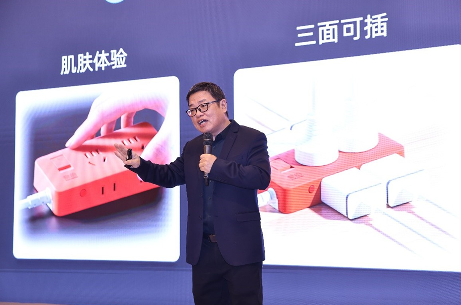
Source: Zhongshan Gamder Launches UNI Socket Series

Key Insight: Transition from wall switches to innovative power strips, targeting quality-conscious consumers.

Takeaway for Global Investors: Mid-sized Chinese manufacturers are pursuing innovation-driven growth, signaling potential consumer electronics and smart home opportunities.

  1. Infrastructure & Transportation

Source: Xi’an–Chongqing HSR Expansion

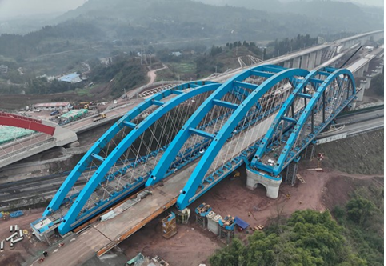
Key Insight: Completion of large-span arch bridge, part of China’s Western high-speed rail expansion, demonstrates advanced engineering and infrastructure scale.

Takeaway for Global Investors: HSR network growth supports regional development and logistics efficiency, highlighting infrastructure investment opportunities.

  1. Foreign Trade & Regional Development

Source: Xinjiang Reports Record Foreign Trade Growth

Key Insight: Total trade hits 520.4 billion yuan, driven by high-tech exports and private enterprises.

Takeaway for Global Investors: Xinjiang is a strategic hub for BRI-linked exports, offering insight into high-value manufacturing and cross-border trade potential.

  1. AI Consumerization & Industrial Deployment

Source: Distinct Chinese Pathway for AI Growth Highlighted

Key Insight: China’s AI emphasizes application, industrial integration, and cost-effective deployment, from manufacturing to retail.

Takeaway for Global Investors: Application-first AI creates opportunities in enterprise automation, smart devices, and consumer tech markets, beyond frontier model development.


Article inline ad

China’s Distinct AI Pathway Highlights Industrial and Consumer Growth Opportunities

0

According to a report by China Daily on January 25, 2026

Application-driven approach positions China as a major AI deployment hub

China’s AI momentum continues to accelerate, with 87% of domestic companies increasing AI investment in 2025 and many reporting faster-than-expected adoption, according to Deloitte China and McKinsey Greater China executives at the World Economic Forum in Davos.

Unlike a focus on frontier models alone, China is following an application-first pathway, emphasizing industrial integration, practical deployment, and cost-effective solutions across manufacturing, logistics, healthcare, finance, and retail.

Key Context

Retail platforms, led by JD.com, saw AI product sales double year-on-year, while smart devices such as robots and AI-enhanced glasses grew 3x to 10x, with consumer interest skyrocketing, according to JD’s CEO Xu Ran.

Enterprise adoption spans every business function, from generative design in marketing to automation across supply chains, as highlighted by Tencent Cloud CEO Dowson Tong.

Startups like Moonshot AI benefit from China’s industrial breadth and openness to new technology, leveraging real-world data to scale AI beyond lab environments.

Investor Takeaways

Short-term: China’s AI adoption across manufacturing, logistics, and retail offers immediate opportunities for tech partners, system integrators, and industrial IoT suppliers.

Medium-term: The application-driven model positions China to generate measurable productivity gains, providing a fertile landscape for enterprise AI investments.

Strategic insight: Consumer acceptance and market scale create long-term growth potential in AI-driven products and services, signaling opportunities in smart devices, automation tools, and cross-industry AI solutions.

Article inline ad

Xinjiang Achieves Record Foreign Trade Growth, Driven by High-Tech Exports

0

According to a report by China Daily on January 25, 2026

Robust growth highlights the region’s role in China’s western economic and industrial strategy

Xinjiang Uygur Autonomous Region reported a record 520.4 billion yuan ($74.7 billion) in total import and export value in 2025, representing a 19.9% year-on-year increase, the fastest growth among all Chinese provinces, according to Urumqi Customs District.

Exports rose 25% to 460.7 billion yuan, led by high-tech and high-value-added products including electrical equipment, new energy vehicles, lithium batteries, and mechanical and electrical components. Agricultural exports also climbed 25.4%, driven by international demand for walnuts, grapes, and other fresh and dried products.

Key Context

Trade with Belt and Road Initiative (BRI) countries accounted for 88.1% of Xinjiang’s total foreign trade, with Central Asia contributing over half and ASEAN markets growing 98.3% to 67.4 billion yuan.

Private enterprises dominated the export surge, contributing 92.8% of total trade, including self-branded goods worth 52.11 billion yuan, up 40.3% year-on-year.

Li Qinghua, deputy director of Urumqi Customs District, highlighted government initiatives to boost port development, expand the Xinjiang Pilot Free Trade Zone, and promote smart port construction, optimizing trade structures and supporting enterprise growth.

Investor Takeaways

Short-term: Xinjiang’s private-sector-led export growth underscores strong demand for high-tech and green products, indicating opportunities for supply chain investments.

Medium-term: Strategic location and BRI integration make the region a gateway for trade with Central Asia, ASEAN, and beyond, supporting long-term cross-border business.

Strategic insight: High-tech, green-energy, and self-branded product exports highlight China’s westward industrial upgrade, offering potential investment avenues in logistics, high-value manufacturing, and export-oriented enterprises.

Article inline ad

Xi’an–Chongqing High-Speed Rail Expansion Marks Major Engineering Milestone

0

According to a report by China Daily on January 25, 2026

Advanced bridge technology and HSR network growth highlight China’s commitment to Western region development

Constructors from China Railway No. 4 Engineering Group (CREC4) have completed a 443.1-meter rod-tied arch bridge with cable suspension on the Xi’an–Chongqing High-Speed Railway (HSR), part of the larger Beijing–Kunming HSR network. The project, located in Dazhou, Sichuan province, consists of three parallel bridges and represents China’s largest grid-type hanger cable-stayed arch bridge on a high-speed rail line.

The bridge employed innovative “four new” technologies, ensuring engineering quality and safety during complex construction stages, including tie-rod arch supports, suspension cables, steel structure docking, and multi-process beam-to-arch connections.

Key Context

The Xi’an–Chongqing HSR is a segment of China’s “Eight Vertical and Eight Horizontal” high-speed railway network, linking Beijing, Hebei, Shanxi, Shaanxi, Sichuan, Chongqing, and Yunnan.

China plans to expand its railway network from 165,000 km to 180,000 km by 2030, with HSR coverage growing from 50,000 km to 60,000 km.

Completion of the Xi’an–Chongqing HSR will enhance transport connectivity across central and western regions, facilitating logistics, mobility, and regional economic growth.

Investor Takeaways

Short-term: Engineering completion demonstrates China’s continued capability in large-scale infrastructure projects, providing confidence in ongoing HSR investments.

Medium-term: Expanding HSR coverage in western China supports regional economic development, driving opportunities in logistics, tourism, and industrial supply chains.

Strategic insight: The project highlights technological innovation in high-speed rail construction, signaling China’s leadership in engineering solutions and offering long-term strategic investment potential for infrastructure and related sectors.

Article inline ad

Zhongshan Gamder Enters Power Strip Market with UNI Series

0

According to a report by China Daily on January 25, 2026

Strategic move highlights China’s mid-sized manufacturers pursuing innovation-led growth

Zhongshan Gamder Electric Appliance Co Ltd, a Guangdong-based electrical products manufacturer, announced its entry into the power strip market with the launch of the UNI socket series, signaling a strategic shift from its traditional wall switch business. The move comes after the company experienced sluggish sales in 2025, partly due to a downturn in the domestic housing market.

Key Context

The UNI series represents a comprehensive product overhaul, including upgraded materials, improved craftsmanship, and enhanced usage scenarios.

Kuang Jian, Gamder’s general manager, emphasized the company’s strategy: “We aim to leverage our technological foundation and target consumers seeking quality and transparent pricing, addressing pain points in the existing market.”

According to ChinaIRN, the global switch and socket market is projected to reach 157.2 billion yuan ($22.57 billion) by 2030, growing at a CAGR of 4.2%, highlighting substantial long-term market potential.

Investor Takeaways

Short-term: Gamder’s expansion into power strips opens a new revenue stream to counteract slowing demand in wall switches.

Medium-term: The launch demonstrates innovation-driven industrial transformation, aligning with broader trends of upgrading Chinese mid-sized manufacturers toward higher-value consumer electronics.

Strategic insight: The initiative underscores the opportunity for overseas investors to track Chinese manufacturing firms shifting from traditional segments into emerging product niches, particularly in home appliances and smart home infrastructure.

Article inline ad

CTG Duty-Free Acquires DFS Travel Retail Business to Expand Luxury Portfolio

0

According to a report by China Daily on January 25, 2026

China Tourism Group Duty-Free (CTG Duty-Free) has reached an agreement to acquire DFS Group’s travel retail business in Hong Kong and Macao, along with related intangible assets on the Chinese mainland, in a deal valued at up to $395 million, the company announced Friday.

The acquisition will be executed through CTG’s wholly owned subsidiary, China Duty Free International Ltd, and marks a significant step in the company’s expansion within the Greater Bay Area.

As part of the transaction, LVMH, which holds a majority stake in DFS, and DFS co-founder Robert Miller will participate in a capital increase by subscribing to newly issued H shares listed in Hong Kong. CTG and LVMH have also signed a memorandum of understanding to explore future collaborations on product sales, brand promotion, and customer experience in China.

“This acquisition aligns with our ambitions to create a global platform promoting China-chic brands and expand our international presence,” said Luke Chang, executive director and president of CTG Duty-Free. “It will further strengthen our network across the Greater Bay Area and advance the promotion of Chinese brands globally.”

CTG Duty-Free currently operates more than 200 stores across 100 cities in China and overseas. Despite a 7% decline in third-quarter revenue for the 2025 fiscal year to 39.86 billion yuan ($5.72 billion) and a 22% drop in net profit to 3.05 billion yuan, the company has recorded strong growth in Hainan province, driven by the zero-tariff offshore duty-free policy. Notably, Hainan stores achieved over 300 million yuan in daily sales on Jan. 1, following a surge of 250 million yuan on Dec. 18.

DFS, meanwhile, reported modest improvement in sales trends in Hong Kong and Macao in Q3 2025, supported by operational optimizations. LVMH’s specialty retail division posted a 7% increase in revenue year-on-year in the same quarter.

“This operation underscores our confidence in the long-term potential of the Chinese market,” said Michael Schriver, president of LVMH for North Asia.

Article inline ad

TikTok Forms Majority-US-Owned JV to Secure US Operations

0

According to a report by China Daily on January 25, 2026

Regulatory compliance and executive oversight aim to preserve TikTok’s US market amid long-running scrutiny

TikTok has finalized a deal to create a majority US-owned joint venture to manage its operations in the United States, marking a major milestone after years of regulatory uncertainty. Under the agreement, US and global investors—including Oracle, Silver Lake, and Abu Dhabi-based MGX—collectively hold 80.1% of the new entity, while TikTok parent ByteDance retains 19.9%, keeping below the 20% ownership threshold required by US law.

The JV will manage US user data and TikTok’s content recommendation algorithm, storing and processing both within Oracle’s US cloud environment. The platform’s algorithms will be retrained, tested, and updated under third-party-certified privacy and cybersecurity programs, in line with US regulations.

Key Context

TikTok has faced potential bans in the US over national security concerns since 2020.

The new JV structure balances data sovereignty, algorithm compliance, and operational continuity, allowing TikTok to maintain access to its ~200 million US users.

Chinese authorities have emphasized the importance of a lawful and balanced resolution, underscoring the interplay of domestic regulation and international market access.

Investor Takeaways

Short-term: TikTok avoids a potential US ban, stabilizing its business model and revenue streams.

Medium-term: Compliance oversight may slow algorithm innovation but establishes a transparent operational framework, reducing regulatory uncertainty.

Strategic insight: The JV demonstrates how Chinese tech companies can navigate foreign regulatory environments, balancing market presence, data governance, and cross-border investment structures.

Broader implication: Successful execution of this model could serve as a template for other Chinese consumer tech firms aiming to expand globally while complying with local regulations.

Article inline ad

Nvidia CEO Visits China as US Eases Curbs on H200 Chips

0

According to a report by China Daily on January 25, 2026

Regulatory shift and executive engagement underscore China’s central role in the global AI chip market

Nvidia CEO Jensen Huang visited Shanghai on Friday, highlighting China’s strategic importance for the US semiconductor giant. The trip comes shortly after the US government eased export restrictions, allowing Nvidia to sell its H200 AI chips to approved Chinese customers. The H200 is one generation behind Nvidia’s latest Blackwell chips.

Huang is also scheduled to visit Beijing, attending company gatherings and meeting key clients, emphasizing Nvidia’s continued commitment to the Chinese market despite prior export curbs.

Key Context

Nvidia has faced a series of US export controls restricting advanced AI chip sales to China.

The H200 relaxation signals incremental policy easing, allowing Chinese enterprises access to high-performance AI computing hardware.

China remains a critical market for AI infrastructure adoption, particularly for cloud computing, AI training, and enterprise-level deployments.

Short-term: Approved Chinese customers now gain access to H200 chips, enabling faster AI adoption and commercial rollout.

Medium-term: Policy signals suggest the US may allow incremental AI technology flows, reducing supply chain uncertainty for Nvidia and partners.

Strategic insight: Nvidia’s executive presence in China highlights market prioritization and client relationship management, reinforcing China as a key revenue driver for global AI hardware companies.

Article inline ad