Wednesday, November 25, 2026

Home Blog Page 71

China Approves First-in-Class Treatment for Hepatitis D

0

According to a report by China Daily on January 25, 2026

Conditional approval highlights China’s growing role in innovative biopharma and global liver disease therapies

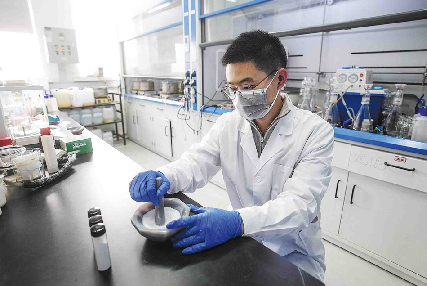
China’s National Medical Products Administration (NMPA) has granted conditional approval to Huahui Health’s Libevitug injection, a monoclonal antibody for treating chronic hepatitis D virus (HDV) infection in adults. The therapy can be used in patients with or without compensated cirrhosis, filling a long-standing treatment gap for one of the most severe forms of viral hepatitis.

Libevitug works by blocking hepatitis B and D viruses from entering liver cells, targeting the PreS1 domain of the viral envelope. Chronic HDV, a “defective” virus that requires HBV to replicate, accelerates liver disease progression, increasing risks of cirrhosis and liver cancer. According to the World Health Organization, about 12 million people worldwide with chronic hepatitis B are also co-infected with HDV.

Key Context

Clinical trials showed significant improvements in viral response, liver enzyme normalization, and liver stiffness reduction. At 48 weeks, the combined response rate reached 44.1%, with a virological response rate of 60%.

international regulatory recognition.

Approval aligns with broader national priorities to enhance innovative drug development and improve treatment options for serious liver diseases.

Investor Takeaways

Short-term: Biopharma investors may view Huahui Health and related innovative therapeutics as high-growth opportunities in China’s fast-expanding market.

Medium-term: Conditional approval demonstrates China’s regulatory system is increasingly aligned with global standards, providing clearer pathways for innovative drugs to enter both domestic and international markets.

Strategic insight: The approval signals China’s growing leadership in next-generation biologics, particularly monoclonal antibodies for rare or difficult-to-treat diseases, potentially influencing cross-border partnerships, licensing, and M&A activity.

Article inline ad

China Not Poised to Approve Tesla Full Self-Driving Soon, Sources Say

0

According to a report by China Daily on January 25, 2026

Regulatory caution signals slower rollout for autonomous driving tech in China, the world’s largest EV market

Reports suggesting that Tesla’s Full Self-Driving (FSD) system is about to receive regulatory approval in China appear premature, according to sources familiar with the matter.

The clarification comes after Reuters cited Elon Musk saying the company hopes to obtain “Supervised Full Self-Driving approval” in Europe soon, and possibly China shortly thereafter. A Chinese source told China Daily on Friday that this timeline is inaccurate, providing no further details on when or if the system might be reviewed by regulators.

Key Context

Tesla currently offers a less-capable Autopilot system in China; FSD represents the next-generation, fully supervised autonomous technology.

China is the world’s largest EV market, making regulatory approval critical for Tesla’s growth strategy.

The cautious regulatory stance underscores China’s careful approach to consumer-facing autonomous driving technologies, balancing innovation with safety and public confidence.

Investor Takeaways

Short-term: Tesla’s FSD launch in China is unlikely to be imminent, limiting upside from next-gen autonomous features for the Chinese market in 2026.

Medium-term: Regulatory scrutiny indicates that China is prioritizing safety and controlled deployment, not blocking innovation.

Strategic insight: Investors should monitor policy signals from the Ministry of Industry and Information Technology (MIIT) and the Ministry of Transport, as approvals will shape the adoption curve of autonomous EV technology in the world’s largest car market.

Broader implication: The pace of AI consumerization in mobility will continue to vary across regions, and China’s measured approach may favor companies with strong safety data and compliance frameworks.

Article inline ad

China’S Securities Regulator Hits Private Fund Sector With Record Penalty

0

According to a report by China Daily on January 25, 2026

CSRC fines Zhejiang Ruifengda and affiliates over 41 million yuan; signals stronger enforcement for private asset managers

China’s securities regulator has imposed its largest-ever penalty on privately offered asset management firms, reflecting Beijing’s ongoing push to tighten oversight of the private fund sector and safeguard investor interests.

The China Securities Regulatory Commission (CSRC) said on Friday that Zhejiang Ruifengda Asset Management Co Ltd, several affiliated private funds, and their ultimate controller Sun Wei were fined and had illegal gains confiscated, totaling more than 41 million yuan ($5.9 million). Investigations found serious violations including false or misleading disclosures and other breaches of laws governing privately offered funds. Sun has been barred for life from participating in China’s securities market.

The penalties exceed previous records, underscoring the regulator’s zero-tolerance stance. The CSRC also referred case details to police authorities and revoked registrations of the private fund managers involved.

“This sends a clear signal that the private fund sector is no longer a regulatory blind spot,” said sources familiar with the matter. “Any serious misconduct will face comprehensive enforcement.”

Intensified Oversight

The record fine comes amid a broader crackdown on misconduct in the private fund industry. According to CSRC data for 2025:

Over 600 entities and individuals underwent administrative inspections

Around 30 investigations were launched

Approximately 40 cases were referred to police

Regulators have emphasized that violations such as illegal fundraising, misappropriation, embezzlement, and self-dealing will not be tolerated.

Market observers say this enforcement surge reflects China’s effort to professionalize and normalize the private fund sector, aligning it more closely with global market standards.

Why It Matters for Investors

For international investors, the ruling highlights a more predictable and disciplined regulatory environment in China’s private fund sector. While heightened enforcement may introduce short-term volatility for some private fund operators, the move reduces systemic risk and reinforces market credibility, signaling that China is serious about investor protection and transparency in asset management.

Article inline ad

Wenzhou Joins China’s Trillion-Yuan City Club, Highlighting The Rise Of Private-Led Growth

0

According to a report by China Daily on January 25, 2026

Zhejiang manufacturing hub crosses a symbolic milestone as innovation and industrial upgrading reshape local economies

Wenzhou, long known as a cradle of China’s private entrepreneurship, has joined the ranks of the country’s trillion-yuan cities after its gross domestic product surpassed 1 trillion yuan ($144 billion) in 2025, underscoring the growing role of private-sector–driven regional growth in China’s economy.

The milestone was announced on Jan 20 during the annual session of the Wenzhou Municipal People’s Congress, making Wenzhou the third city in Zhejiang province—after Hangzhou and Ningbo—to reach the threshold.

Economists say the achievement reflects more than headline growth.

“This is not just a statistical milestone,” said Lyu Miao, an expert at Tsinghua University’s Yangtze Delta Region Institute. “It represents a broader upgrade in Wenzhou’s economic structure, industrial ecosystem, and capacity for innovation.”

A Private-Sector Powerhouse

Wenzhou’s rise is closely tied to its exceptionally strong private economy, a distinguishing feature that sets it apart from many other large Chinese cities.

By November 2025, the city hosted 1.56 million market entities, the highest number in Zhejiang province. Private firms accounted for more than 90% of the value-added output of large industrial enterprises, providing a key engine for sustained growth.

At the national level, Wenzhou is now one of 28 mainland cities with GDP exceeding 1 trillion yuan—a group increasingly seen as the backbone of China’s economic resilience as growth becomes more regionally differentiated.

Manufacturing Upgrade and Industrial Momentum

A robust industrial base continues to anchor Wenzhou’s economy. In 2025, the city supplied a record 15,200 mu (about 1,013 hectares) of industrial land, channeling resources toward advanced manufacturing and emerging industries.

Output in Wenzhou’s five traditional pillar industries rose 11.4%, while its five leading emerging industries expanded 12.6% year-on-year. Overall industrial output grew 10.3%, ranking first in Zhejiang and outperforming the national average for 33 consecutive months.

The data highlight how parts of China’s manufacturing heartland are shifting from low-cost production toward higher-value, more technology-intensive activity.

Innovation as a Policy Anchor

Local authorities have increasingly framed innovation as a central growth strategy. For five consecutive years, Wenzhou’s municipal government has devoted its first official meeting of the year to science and technology development.

In 2025, government spending on research and innovation rose 10.4%, supporting a package of initiatives designed to accelerate commercialization and strengthen links between laboratories and industry. The city’s network of high-tech zones—described locally as “one port and five valleys”—has become a focal point for this push.

A Regional Signal, Not Just a Local Story

The trillion-yuan milestone reinforces Wenzhou’s role as the third pillar of Zhejiang’s economy, aligning with provincial policies introduced in 2022 and reaffirmed in 2024 to support the city’s rise as a hub for high-quality growth.

More broadly, analysts see Wenzhou as a case study in how private enterprise, manufacturing depth, and policy-driven innovation are reshaping China’s regional growth model—often away from the country’s largest metropolitan centers.

Why it matters

For international observers, Wenzhou’s ascent illustrates how China’s next phase of growth is increasingly being driven by mid-sized industrial cities with strong private sectors, rather than solely by megacities or state-led investment. As China’s economy becomes more fragmented and regionally diverse, these local success stories offer clues about where sustainable growth and industrial upgrading are still taking place.

Article inline ad

Bank of China Flags a Slow-Burning Bull Market for China Equities

0

According to a report by China Daily on January 25, 2026

A-shares and Hong Kong stocks seen benefiting from reforms, earnings recovery, and global portfolio rebalancing

China’s equity markets are entering the early phase of a gradual but potentially long-lasting bull cycle, according to Bank of China (BOC), as structural reforms, improving corporate earnings, and shifting global capital flows converge.

In a newly released outlook, the state-owned lender said it is overweight on mainland A-shares and Hong Kong equities in 2026, arguing that China’s markets combine relatively attractive valuations with policy support and a more favorable global liquidity backdrop.

BOC expects the global financial environment to remain broadly accommodative this year, while China’s economy continues to expand at a pace above most major economies. The bank forecasts GDP growth of 4.7% to 5% in 2026, supported by proactive macro policies and a gradual recovery in domestic demand.

From Valuation Rebound to Earnings-Led Growth

2026 marks the first year of China’s 15th Five-Year Plan (2026–2030), a policy cycle that BOC believes will emphasize structural support and long-term economic resilience rather than short-term stimulus.

Senior executives at the bank said corporate profitability has reached an inflection point, a shift that could alter the character of China’s equity rally. While the market rebound in 2025 was largely driven by valuation repair, BOC expects earnings growth to play a more central role in 2026.

Citing projections from international institutions, the bank noted that non-financial Chinese listed companies are expected to post revenue growth of about 2.2% and profit growth of 5–8% this year.

If realized, this would mark a transition toward a more sustainable, “dual-engine” market expansion supported by both earnings growth and valuation re-rating.

Structural Forces Supporting a Re-rating

BOC International highlighted several longer-term forces that could underpin a re-assessment of Chinese equities:

Capital market reforms aimed at improving governance, disclosure, and long-term investment mechanisms

Economic transformation, including the shift toward advanced manufacturing and high-tech supply chains

Improved market infrastructure, enhancing the role of equities in capital allocation

Global asset diversification, as investors reassess exposure amid rising geopolitical and currency risks

The bank also pointed to expectations of gradual RMB appreciation, which could reinforce inbound capital flows and support equity valuations.

“Chinese assets are increasingly viewed not as conventional emerging market exposure, but as an integral part of global portfolios,” the report said, citing China’s role in high-tech supply chains and the broader global diversification away from US dollar–centric assets.

Wealth Management and Financial Opening

The outlook also touched on China’s efforts to expand household wealth and deepen financial opening. Policy discussions tied to the new Five-Year Plan include measures to raise household property income and promote the development of a more mature wealth management industry.

Reflecting this trend, Bank of China this week launched a new cross-border personal financial services platform, allowing clients to manage accounts across the Chinese mainland and Hong Kong through a unified interface.

What it means for global investors

For international investors, BOC’s outlook reinforces a growing narrative that China’s equity market is shifting from a tactical rebound story to a strategic allocation case.

If earnings growth continues to recover and capital market reforms gain traction, China could attract incremental long-term capital, particularly from investors seeking diversification, valuation discounts, and exposure to non-dollar assets. The implication is less about a sharp cyclical rally, and more about a slow re-entry of global capital into Chinese equities after several years of underweight positioning.

Article inline ad

BOC Sees China Equities Entering a Slow, Long-Term Bull Mark

0

According to China Daily on January 25, 2026

Bank of China recommends overweight positioning in A-shares and Hong Kong stocks amid reforms, earnings recovery, and global capital rebalancing

China’s equity market has entered the early stages of a slow but durable bull run, with structural reforms, improving corporate earnings, and global capital reallocation expected to support a long-term upward trend, according to Bank of China (BOC).

In a report released this week, BOC said it is overweight on both mainland A-shares and Hong Kong equities in 2026, citing valuation advantages, easing global liquidity conditions, and China’s growing role in global asset diversification.

“In 2026, the global financial environment is likely to remain accommodative,” BOC said. “Against the backdrop of China’s relatively strong economic growth, attractive equity valuations, and the ongoing global de-dollarization trend, Chinese equities are positioned to become a preferred destination for global portfolio rebalancing.”

Policy Support and Earnings Inflection

2026 marks the first year of China’s 15th Five-Year Plan (2026–2030), a period during which policymakers are expected to prioritize structural support over short-term stimulus. BOC expects macroeconomic policies to remain proactive, helping stabilize domestic demand and reinforce the economic recovery.

The bank forecasts China’s GDP growth at 4.7% to 5% this year.

Cai Zhao, executive vice-president of Bank of China, said China’s internal economic momentum is strengthening despite a fragile global recovery.

“While the global economy continues to face overlapping uncertainties, China’s domestic growth drivers are becoming more resilient under supportive policies,” Cai said. “This enhances the long-term allocation value of Chinese assets.”

Wen Xiaobo, a senior manager at BOC’s personal banking division, said corporate profitability has reached an inflection point, paving the way for a more sustainable equity rally.

According to estimates cited by the bank, non-financial listed companies in China are expected to post revenue growth of around 2.2% and profit growth of 5–8% in 2026.

“If these projections materialize, China’s stock market could shift from a valuation-driven rally in 2025 to a dual-engine expansion supported by both earnings growth and valuation re-rating,” Wen said.

Structural Reform and Capital Market Re-rating

Guan Tao, global chief economist at BOC International (China), identified four structural forces underpinning the long-term outlook for China’s capital markets:

Comprehensive institutional reform, aimed at removing constraints on high-quality growth

Economic transformation, creating new growth sectors and investment opportunities

Improvements in capital market infrastructure, strengthening long-term investment and financing mechanisms

Global asset rebalancing, as international investors reassess the role of Chinese assets in diversified portfolios

BOC said expectations of a gradual, long-duration bull market are strengthening, particularly as RMB appreciation expectations rise, potentially accelerating inbound capital flows.

“Chinese assets are no longer viewed as conventional emerging market exposure,” the report said. “They are increasingly integrated into global high-tech supply chains and form a key component of the global de-dollarization narrative.”

Wealth Management and Cross-Border Allocation

The report also highlighted policy recommendations tied to the 15th Five-Year Plan, including efforts to expand household property income and support the development of a more mature wealth management industry.

As China advances high-level financial opening-up, cross-border investment and wealth management demand is becoming more diversified, BOC said.

On Wednesday, the bank launched a global personal financial services solution built around unified account management across the Chinese mainland and Hong Kong. Clients can view and manage cross-border accounts through Bank of China or Bank of China (Hong Kong) mobile banking platforms.

BOC described the initiative as part of its broader strategy to facilitate global asset allocation and address growing cross-border financial needs among Chinese and international clients.

Article inline ad

AI Drives Shift In New-Type Power Systems

0

Experts highlight digital solutions for greener, more resilient energy transition

By Ren Qi | China Daily | Updated: 2026-02-10

China’s push to fuse artificial intelligence with new-type power systems is steering a paradigm shift toward integrated, data-driven intelligent automation, hydrogen-enabled zero-carbon energy, and scalable storage to bolster resilience and efficiency, experts said.

 China’s digitalization drive is reshaping its energy sector, with AI integration in new-type power systems taking center stage.

 “The digital transformation of power systems is a paradigm shift toward intelligent automation through an integrated methodology,” said Zhou Aoying, a fellow at the China Computer Federation and professor at the School of Data Science and Engineering at East China Normal University, at the AI-Empowered New-Type Power System Innovation Forum earlier last month.

 Zhou said the transformation should not rely on simply layering existing experience and technologies, but should return to fundamental energy laws, basic properties of data and core AI principles for systemic, root-level reconstruction.

 Building on these methodological foundations, Zhou proposed a new automation paradigm for AI-empowered power systems grounded in “data intelligence” and “first-principles” thinking. He noted that today’s AI is essentially “data intelligence”, built on three elements: data, algorithms and computing power.

 “The fundamental goal of smart tools is to automate cognition and decisionmaking,” he said, adding that “data engineering is the scientific foundation of intelligent automation”.

 Zhou said AI has moved from theory to practice, pushing research into a data-centric “fourth paradigm” that discovers knowledge directly from data and emphasizes correlations alongside causality. He called “integration” the core methodology of the AI era, saying application scenarios, technological innovation and industrial development must be tightly coupled.

 Turning to system design and deployment, Guan Xiaohong, an academician of the Chinese Academy of Sciences and professor at Xi’an Jiaotong University, outlined routes and practical schemes for building zero-carbon smart energy systems.

 “Hydrogen-enabled zero-carbon smart energy systems can achieve local energy balance and be scaled through market-based pathways under economic feasibility, dispelling the notion that decarbonization inevitably raises costs,”Guan said at the forum.

 Guan said large-scale, long-duration, and cost-effective storage is crucial for the wider use of renewables and for supplying green power to future computing and data centers. He cited the Yulin zero-carbon smart energy station in Shaanxi province, which uses an integrated architecture of intelligent sensing, resilient communications, autonomous computing, and coordinated optimization to couple hydrogen, electricity and heat. This forms a distributed “power-hydrogen-heat” supply/demand system with comprehensive energy utilization exceeding 92 percent.

 Guan added that hydrogen-enabled zero-carbon systems are not only a technological innovation, but also a pathway to transform the energy structure and secure the green attributes of emerging productive forces.

 He proposed combining centralized grids with distributed zero-carbon energy systems to balance and absorb renewables locally in real time, reduce reliance on backbone grid adjustments and strengthen grid resilience.

 Guan said smart parks with physically traceable zero-carbon supply can offer a competitive edge for export-oriented firms. His team’s solutions have been deployed in projects including the Xi’an Metro zero-carbon depot in Shaanxi, the Jinchuan zero-carbon mining area in Gansu province, and the Zhangbei zero-carbon park in Hebei province, forming a replicable, scalable solution.

 From research to operations, Wang Licheng, a lecturer at the AI division of the Shanghai University of Electric Power, said that as China advances its energy transition and the share of wind and solar rises, building a new-type power system presents both opportunities and challenges.

 Wang called AI-empowered power systems an emerging frontier with fundamental research questions and broad application scenarios. Wang said AI is reshaping the architecture and development path of new-type power systems.

 He said large language models and reinforcement learning have achieved practical results in load forecasting and intelligent inspection.

 Wang added that he will continue to advance AI innovation tailored to the power sector and promote the deep integration of algorithms across power generations, grids, loads and storage systems to help build a safer, lower-carbon and smarter energy outlay.


Article inline ad

Bytedance Launch Of Next-Gen AI Video Model Boosts Chinese Tech Stocks

0

By Cheng Yu | chinadaily.com.cn | Updated: 2026-02-10

TikTok-owner ByteDance launched a pre-release version of its next-generation artificial intelligence video model, Seedance 2.0, on Sunday — a move that boosted shares in several Chinese technology and AI companies on Monday.

 ByteDance said the new model offers multi-modal content creation by combining images, video, audio, and text to produce what it described as “cinematic content” with enhanced control via natural language prompts.

 According to information on ByteDance’s website, Seedance 2.0 can export content in 2K resolution and generates output about 30 percent faster than its predecessor, Seedance 1.5.

 Swiss consulting firm CTOL described the model as the “most advanced AI video generation model available”, saying in tests it outperformed rival tools such as OpenAI’s Sora 2 and Google’s Veo 3.1.

Article inline ad

Green Energy Transition Brings Fortune Across China

0

China Daily | Updated: 2026-02-10

CHANGCHUN — Amid the freezing cold and snow-covered houses of his village in Northeast China’s Jilin province, Kong Xiangling moves comfortably around the kitchen before the Chinese New Year holiday, tending a biomass stove as a pot of sauerkraut and pork simmers, filling the air with its rich aroma.

 Hot water from the stove flows through pipes to the radiators, keeping the room at above 20 C, a sharp contrast to the smoky, frigid winters in Tangjiagangzi, Baishishan town of Jiaohe, that Kong remembers from decades ago.

 “We used to burn firewood for everything, whether cooking, heating our kang beds, or just keeping warm,” Kong recalled. “The kitchen was always thick with smoke that stung our throats and frost clung to every corner of the house. I would get up before dawn to add coal and clear out the ash, and my relatives would always complain about the smoke whenever they visited.”

 That harsh reality has eased in recent years thanks to China’s push for clean energy in rural areas.

 Kong and more than 100 other households in her village have witnessed dramatic changes. Pit latrines have been replaced by flush toilets, coal stoves swapped for clean biomass ones and tap water has eliminated the daily chore of carrying water from wells. “A handful of compressed straw does the work of both cooking and heating now,” she said. “No smoke, no odor, and it saves us money.” The old coal stove now sits in the corner as a relic of the past.

 Jiaohe has been a pioneer in this transformation. It is the only county in the three northeastern provinces chosen as one of China’s first rural energy revolution pilot zones. Beyond promoting biomass stoves, the city is developing a medium-deep geothermal heating project in Baishishan town that will cover 593,000 square meters and put an end to coal-burning heating for good.

 Hundreds of kilometers to the east, in Tianqiaoling town of Wangqing county, Jilin’s Yanbian Korean autonomous prefecture, clean energy is also transforming winter life. Inside the snow-covered Taoyuan black fungus industrial park, constant-temperature greenhouses hum with activity as steam curls through the air and clusters of plump black fungus grow steadily on the racks.

 Yan Cuilian, a villager working at the industrial park, holds a power detector and watches the stable current reading with relief. “Even when heavy snow blocks the roads, our greenhouses never lose power thanks to the electrified equipment,” she said. “That used to be unthinkable.”

 Perched on China’s border, Wangqing long struggled with an unstable power supply. As a remote area at the edge of the national grid, winter snow and rain often froze power lines, causing blackouts. Traditional black fungus farming was entirely weather-dependent, and once winter arrived, work ground to a halt, leaving villagers with little to do but wait out the cold.

 “We couldn’t even watch TV freely in the old days, let alone grow fungus in winter,” recalled Yan. “The voltage was always fluctuating, and appliances would trip constantly.”

 Everything changed in 2023, when State Grid Jilin Electric Power Co Ltd launched a county-level autonomous clean energy power grid in Wangqing. Engineers braved temperatures below -20 C to climb snow-covered mountains and survey photovoltaic sites. They went door to door, listening to villagers’ energy needs and promising a self-sufficient power solution.

 “We were skeptical at first,” Yan said. “But within a few months, the photovoltaic bases, small hydropower stations and energy storage stations were all linked together, and our power problems were solved for good.”

 The clean energy revolution lifting rural lives in Northeast China is also unfolding at a grand scale in the country’s arid west, turning barren deserts into sources of green power and tangible wealth.

 On Feb 3, the second package of the 1,000-megawatt photovoltaic desert-control project in Minfeng county, Hotan prefecture, Xinjiang Uygur autonomous region, completed the installation of all 22,772 fixed mounting structures and 592,072 PV panels. Built by China Railway 23rd Bureau Group (CR23G), the milestone lays a solid foundation for the upcoming grid connection.

 Located on the southern edge of the Taklimakan Desert, the project is a key national initiative under China’s large-scale wind and solar base development across deserts, Gobi and wastelands. It also serves as a core ecological barrier to lock shifting sands and protect communities in Minfeng and the surrounding areas.

 Once fully operational, the project will generate 1.902 billion kilowatt-hours of clean electricity in its first year. More importantly, it will adopt an integrated ecological model: generating power on the panels, stabilizing sand beneath them, and growing grass between rows. This will form a nearly 9.8-kilometer green belt along the desert edge, effectively curbing sand dune movement and safeguarding local ecological security.

 Xinhua – China Daily

Article inline ad

Investments In Key Energy Projects Surge In 2025

0

By Zheng Xin | China Daily | Updated: 2026-02-10

China’s investment in key energy projects surged to a record 3.5 trillion yuan ($505 billion) in 2025, as the world’s largest energy consumer immensely expanded its renewable capacity while reinforcing domestic energy security, according to authorities.

 The nearly 11 percent year-on-year growth in energy spending significantly outpaced other sectors of the Chinese economy, according to the National Energy Administration.

 The growth rate for energy investment was 12.9 percentage points higher than that of national infrastructure and 10.1 percentage points higher than that of the manufacturing sector over the same period, figures released by the administration show.

 Xing Yiteng, deputy director of the NEA’s development planning department, said the investment surge highlights the energy sector’s role as a primary engine of China’s industrial upgrading and economic stability.

 The 2025 data underscore Beijing’s commitment to its dual carbon goals — peaking carbon emissions before 2030 and achieving carbon neutrality before 2060.

 “Investment in new energy formats is being released at an accelerated pace,” Xing said. He noted that emerging sectors, specifically new-type energy storage and hydrogen energy, saw investment figures double compared to the previous year, as China seeks to solve the intermittency issues associated with its massive renewable fleet.

 Cumulative renewable capacity has currently surpassed 1.8 billion kilowatts. Renewable generation reached approximately 4 trillion kilowatt-hours — surpassing the total electricity demand of the 27 EU member states, which stands at roughly 3.8 trillion kWh, he said.

 A significant portion of China’s renewable energy growth was driven by onshore wind projects, where investment in key developments jumped nearly 50 percent year-on-year.

 The energy storage sector also saw explosive growth, with new energy storage capacity surging 84 percent compared to the end of 2024. By the end of 2025, China’s operational energy storage capacity had reached 136 million kW, a more than 40-fold increase since 2020, according to the NEA.

 In a shift that highlights the increasing role of private actors in China’s energy landscape, private sector investment outpaced the national average. Investment by private firms in key energy projects grew by 12.9 percent year-on-year, roughly 2 percentage points higher than the overall industry growth rate. Private capital has remained particularly active in solar power, wind power and coal mining.

 The robust participation of private capital is crucial for the “distributed” energy model Beijing is promoting, which places solar panels on rooftops and smaller-scale wind farms closer to demand centers, said Lin Boqiang, head of the China Institute for Studies in Energy Policy at Xiamen University.

 Despite the rapid shift toward renewables, the NEA emphasized that traditional energy security remains a top priority. Investment in coal-fired power and conventional hydropower remained steady to ensure a stable baseload for the national grid.

 Large-scale hydropower clusters in China’s southwest river basins are being fast-tracked. Simultaneously, the country is pouring capital into its ultra-high voltage power grid.

 These cross-regional transmission lines are essential for moving clean electricity from the wind and solar hubs in the remote west to the power-hungry industrial hubs in the east.

 The NEA report highlighted five regions and provinces — the Inner Mongolia autonomous region, the Xinjiang Uygur autonomous region, as well as Shandong, Guangdong and Jiangsu provinces — as the primary drivers of this spending, with each surpassing 200 billion yuan in annual energy investment.

 The briefing comes as China manages its winter peak demand period. The NEA noted that the record investment in 2025 has provided a critical buffer, ensuring that power supplies remain stable despite high seasonal heating demands.

 The NEA expects the momentum to continue in 2026, particularly as the integration of artificial intelligence with the energy sector and smart grids begins to attract more capital.

 The 3.5 trillion yuan milestone marks a turning point for China, indicating that the nation is no longer transitioning at the margins but is fundamentally retooling its entire economic infrastructure around a low-carbon, high-security energy model, the NEA said.


Article inline ad