Wednesday, November 25, 2026

Home Blog Page 73

Aumovio Sets Up China Management Board For A Deeper Localization Push

0

By Li Fusheng | CHINA DAILY | Updated: 2026-02-09

Aumovio has established a China management board, the first of its kind in the German automotive supplier’s global operations, as part of its efforts to enable the Chinese team’s faster and more agile responses to local customer needs while leveraging its role as a key driver of the group’s global growth.

 The move, unveiled on Tuesday, reflects a broader recalibration underway among global automotive suppliers as China’s market dynamics, technological pathways, and pace of innovation increasingly diverge from those of Europe and other regions.

 Aumovio CEO Philipp von Hirschheydt said the idea behind setting up the China management board is to empower the local team with a high level of decision-making autonomy.

 “We want to build a deeply localized operating system that allows us to respond faster to the market and strengthen our competitiveness in China,” said von Hirschheydt.

 He added that the group had full confidence in its China team’s ability to combine local insight with global resources. “We are confident that China can become one of the core growth engines for Aumovio globally,” he said.

 Why the market — and why now

 Internally, the decision to establish the China management board was announced in November 2025, following months of preparation.

 According to von Hirschheydt, setting up a board-level governance structure is far from straightforward, as it requires fundamental changes to internal processes and decision-making mechanisms.

 “Establishing a board is not easy,” he said. “You need to have the processes changed, and that’s what we worked on for quite some time to ensure the board has a chance to be successful.”

 Aumovio has operated in China for more than three decades. Over that period, many of its internal processes were developed in Germany and later rolled out globally.

 While those systems proved effective for many years, von Hirschheydt said they have become increasingly misaligned with the realities of the Chinese market.

 “They were very good for many years,” he said. “But now they are not fast enough anymore, and they’re not adapted to the Chinese market. That needs to be changed.”

 In his view, China stands apart not only because of its market size, but also because of the speed and intensity of competition.

 “The first difference is the pace of the market — the willingness to invest in becoming faster, better and more agile,” he said. “That is something you don’t experience as much in other markets.”

 Product usage patterns also differ significantly. “Many products we offer are used slightly differently in China,” von Hirschheydt noted, pointing to China’s distinct approaches to autonomous mobility systems and electronic architectures.

 “In China, vehicle digitalization is significantly more important than in Germany,” he said. “In Germany, chassis is still very important, which is not so much the case in China.”

 From presence to autonomy

 Aumovio’s China board has six members, five of whom are Chinese, which von Hirschheydt said aligns with its long-standing strategy of “in the market, for the market”, with an emphasis on empowering local management teams.

 What has changed, however, is the level at which that empowerment now operates.

 “You can have the best cultural attitude,” von Hirschheydt said, “but if you are strangled by processes from Germany, you have no chance.”

 The China management board, he explained, is intended to remove those constraints.

 “That’s why we established the China management board and changed processes — to give them a chance,” he said. “Now is the right time. We have done everything necessary, and now we are ready to rumble.”

 While the board grants China greater autonomy, it is not designed to operate in isolation.

 The group emphasized that close coordination with global teams will remain central, particularly in areas such as technology development, knowledge sharing and strategic alignment.

 This dual-track approach — local decision-making combined with global collaboration — reflects a growing recognition among multinational suppliers that China is no longer just an execution market, but an increasingly important source of innovation.

 Von Hirschheydt described China as a proving ground for organizational agility. “Being here in China is a great chance to see what we are capable of, how far we can go in terms of agility, and how much we can achieve in such an environment,” he said.

 Despite intense competition, Aumovio has continued to secure new business wins in China. Growth rates fluctuate depending on customer mix, but overall performance has reinforced management’s confidence in the market.

 He credited the China team’s mindset as a key factor. “They always accept strong targets, saying,’Let’s try, let’s do it.’ They consistently deliver,” he said. “This ‘can-do’ and ‘will-do’ mentality is very much appreciated and is a base of success.”

 The growing weight

 At present, Aumovio remains predominantly European in terms of revenue, with around 48 to 49 percent of sales generated in Europe. China currently accounts for about 14 percent, a figure von Hirschheydt believes should rise significantly.

 “China is the biggest car market in the world, accounting for about 30 percent of total production volume,” he said. “We are far from having 30 percent of our sales here. I would expect that figure to grow further.”

 The strategic logic is underpinned by shifting regional growth patterns. “Sales in Europe will shrink, but they will grow in China and Asia,” he said. “We want a more rounded portfolio and an organization more balanced between regions.”

 Beyond scale, China’s importance also lies in its role as a source of technical solutions.

 “It is a give-and-take. We are going to invest in China and into Chinese innovations. Then, of course, these innovations will be valued and even expected to be shared with the rest of the world. Having an innovation hub in China will benefit the rest of the world,” said von Hirschheydt.

 Looking ahead to 2026, von Hirschheydt remains cautious about overall market growth, but confident in Aumovio’s long-term positioning.

 “With our strategy ‘Lead, Transform, Deliver’, if we focus on the right products, we will have a good chance. What I mean is that you need to have global significance. You need to be successful in local and regional markets, but also be able to balance between regions,” he said.

 This strategic focus and strengthened local autonomy are expected to support the company’s financial targets in the coming years.

 With its China management board now in place, Aumovio is betting that deeper localization — not just in products, but in governance — will be critical to competing in the next phase of the global automotive industry.

 “We have promised to achieve midterm profitability of 4 to 6 percent again. And that is the next step we are very much focusing on,” said von Hirschheydt.

 lifusheng@chinadaily.com.cn


Article inline ad

New Commercial Mediation Rule Bolsters Business Environment

0

By Duan Xinrui | China Daily | Updated: 2026-02-09

On Dec 31, the State Council — China’s Cabinet — issued the Regulation on Commercial Mediation, which will come into effect on May 1. As China’s first administrative rule specifically targeting commercial mediation, the promulgation of the 33-article regulation marks a new stage in the systematization and legalization of the country’s commercial dispute resolution mechanism.

 International commercial mediation, as a vital component of diversified dispute resolution mechanisms, has unique advantages in efficiently and amicably resolving cross-border commercial disputes. The regulation not only responds to the new trend of international commercial mediation development since the entry into force of the Singapore Convention on Mediation, but also offers a solid legal guarantee for optimizing the business environment through institutional innovation.

 The core of a business environment is stability, fairness, transparency and a predictable legal environment. In the business field, the efficiency and credibility of dispute resolution mechanisms directly impact the business confidence and investment safety of enterprises. The regulation establishes the independent legal status of commercial mediation, regulates the mediating organizations and procedures, and solidifies the effectiveness of agreements and their implementation connection, thus constructing a new ecosystem for resolving commercial disputes in China from three dimensions — building a legal framework for commercial mediation, improving the quality and efficacy of commercial dispute resolution, and aligning with international rules.

 For a long time, there have been prominent problems in the sphere of commercial mediation in China, such as lagging legislation and haphazard rules. The ambiguous legal status, inconsistent procedural rules and unstable effectiveness of commercial mediation made it difficult for market entities to have stable expectations, limiting the role that mediation played in resolving commercial disputes.

 The promulgation of the regulation fundamentally reversed this situation and established a unified and authoritative legal foundation for commercial mediation.

 First, Article 2 of the regulation for the first time clarifies the independent legal status and scope of the application of commercial mediation. It limits the scope of mediation to fields in “trade, investment, finance, transportation, real estate, engineering construction and intellectual property”, clearly distinguishing it from disputes such as regarding marriage/family and labor/personnel, clarifying the boundary between commercial, personal and judicial mediation, and establishing its professional attributes for commercial disputes.

 Second, the regulation systematically stipulates the establishment, management and operation of commercial mediation organizations. It aims to cultivate a group of professional and standardized mediation institutions, change the previous situation of “scattered, weak, and small” mediation organizations, and bolster the overall credibility of the commercial mediation industry through market-oriented and professional service supply.

 Finally, to safeguard the legal and compliant operation of commercial mediation institutions and the effective protection of the mediation rights and interests of related parties, the regulation stipulates the administrative responsibilities of mediation institutions and mediators for unauthorized mediation, and imposes fines and disqualifications in combination.

 All these together create a procedural environment that respects business logic, ensures negotiation autonomy and maintains transaction security, enabling enterprises to flexibly and pragmatically resolve disputes within a trustworthy framework, thereby effectively activating the autonomy of market entities.

 One of the core indicators of a rule-of-law business environment is whether the dispute resolution channels for enterprises are efficient, convenient and cost-effective. The regulation significantly elevates the quality and efficiency of commercial dispute resolutions by optimizing mediation procedures, enhancing agreement effectiveness and linking judicial confirmation, thus helping save enterprises time and cost.

 Compared with litigation and arbitration, the regulation fully reflects the flexible and convenient advantages of commercial mediation as a dispute resolution mechanism. The mediation process does not require rigid evidence, cross examination and/or trial procedures, and thus related parties can directly focus on negotiating the balance of interests under the auspices of mediators. Article 18 of the regulation encourages the use of digital means such as artificial intelligence and online mediation, which is in line with the current trend of digital development and further compresses the dispute resolution cycle.

 The regulation also guides enterprises to build long-term and cooperative business relationships through institutional design, reflecting the deep logic of optimizing the business environment. The principles of friendly consultation, confidentiality and good faith advocated by the regulation help related parties to resolve current disputes while maintaining or even repairing business partnerships, thus achieving a win-win situation through litigation. This plays an irreplaceable role in building a stable and predictable business ecosystem, enhancing the overall “soft power” of a business environment, and helping gradually cultivate a dispute resolution trend that prioritizes mediation in society.

 In the context of enhanced integration of the global economy and the high-quality promotion of the Belt and Road Initiative, it is an important part of the national core competitiveness of the rule of law to have an internationally acceptable commercial dispute resolution mechanism that aligns with international standards.

 The Singapore Convention on Mediation aims to establish a cross-border direct enforcement mechanism for international settlement agreements, and as one of the first signatory countries, China needs to align its domestic laws accordingly. The promulgation of the regulation is a crucial step for China to fulfill its international commitments and actively align with international high-standard economic and trade rules. The regulation has laid an institutional foundation for China to become a global center for resolving commercial disputes.

 First, the regulation provides a direct domestic legal basis for the ratification and implementation of the Singapore Convention on Mediation.

 Second, the regulation elevates the internationalization level of China’s commercial mediation services with an open mind. The regulation stipulates that commercial mediation organizations may appoint mediators from overseas professionals on the basis of completing the filing procedures, supports domestic mediation organizations to establish overseas institutions, allows regional pilot projects to introduce overseas mediation organizations, encourages international cooperation and participation in international rulemaking and bolsters international mutual recognition of mediator capabilities. These moves will attract outstanding international mediators and institutions to gather in China, speed up the exchange and mutual learning of mediation concepts as well as rules between China and its foreign peers, and directly enhance the international competitiveness of China’s commercial legal services.

 Finally, at the practical level, the regulation sets special rules for mediation in the Guangdong-Hong Kong-Macao Greater Bay Area and China’s free trade zones. Article 24 allows overseas commercial mediation organizations to establish business institutions in areas such as FTZs and Hainan Free Trade Port — approved by the State Council in accordance with relevant national regulations — to conduct foreign-related commercial mediation activities. Article 26 specifically supports the connection of commercial mediation rules and mechanisms in the GBA. Based on China’s unique multijurisdictional environment, it safely and effectively explores and studies cross-regional commercial mediation experiences and cases, laying a strong foundation for promoting mediation mechanisms applicable to cross-border commercial disputes in the future.

 To sum up, the promulgation and implementation of the Regulation on Commercial Mediation is a milestone in China’s efforts to improve its diversified dispute resolution mechanisms and promote the modernization of governance capabilities. In the future, with the effective implementation of the regulation and the coordinated development with the Singapore Convention on Mediation, a more market rules-respecting, judicially efficient, and internationally credible commercial dispute resolution ecosystem will accelerate its formation in China.

 The writer is an assistant professor at the School of International Law at Zhongnan University of Economics and Law.

 The views do not necessarily reflect those of China Daily.


Article inline ad

Three Keys To China’s Outlook In 2026

0

By Xu Qiyuan | China Daily | Updated: 2026-02-09

As China enters 2026, the first year of its 15th Five-Year Plan (2026-30) period, the country’s economic debate is undergoing a quiet but significant shift. The focus is no longer narrowly on how to sustain headline growth, but increasingly on how such growth is generated, distributed and anchored in social realities. Recent policy signals suggest that China’s next phase of economic management will be shaped less by short-term stimulus logic and more by structural reorientation — placing people, policy coordination and external conditions at the center of the discussion.

 At the heart of the upcoming five-year plan lies a recalibrated development philosophy. While the previous planning cycle emphasized the “dual circulation” framework — strengthening domestic demand while remaining open to global markets — the new framework sharpens two priorities. One is the balance between improving economic quality and maintaining reasonable growth. The other, more fundamental shift is the explicit elevation of human development as both the means and the ultimate goal of economic policy.

 This people-centric orientation reflects a recognition that China’s traditional growth drivers are changing. As demographic dividends diminish, the policy challenge is no longer solved by expanding physical investment alone. Instead, economic sustainability increasingly depends on how effectively the country invests in people — both in quantitative terms, such as stabilizing population trends, and in qualitative terms, through long-term investment in education, healthcare and human capital. The emphasis is not simply social in nature. It is economic at its core, shaping productivity, innovation and consumption capacity over time.

 Changing demand patterns reinforce this shift. As income levels rise, households naturally move beyond basic material needs toward services, experiences and personal development. This transition, long described in economic theory, is now becoming a defining feature of China’s demand structure. In response, policymakers are signaling a greater role for the services sector, not as a supplement to industry, but as a central pillar of future growth. Expanding and upgrading services is increasingly seen as essential to matching supply with the population’s evolving expectations of a better quality of life.

 Urbanization further illustrates how people-centric thinking intersects with macroeconomic objectives. From the household perspective, urbanization offers access to better public services and opportunities. From the broader economy’s perspective, it enables a more efficient allocation of labor and capital.

 Recent policy discussions on providing basic public services based on actual place of residence, rather than formal household registration, reflect continuity with a more inclusive, human-oriented approach to urban development. International comparisons suggest that China still has room to advance in this area, particularly when measured by residency rather than registration. Better spatial allocation of the existing population suggests that bridging this gap is not just a social imperative, but also a critical lever to unlock domestic demand, supporting both consumption growth and real estate market stabilization.

 Ultimately, this shift reframes the goal of development itself. Improving livelihoods and advancing broadly shared prosperity are no longer peripheral aspirations, but central benchmarks of success. In this context, frequently debated measures — such as subsidies for first-time homebuyers or the long-term expansion and quality improvement of higher education — are best understood not as isolated interventions, but as part of a broader strategy to unlock demand by investing in people.

 Alongside this conceptual shift, 2026 is likely to mark a stronger emphasis on policy coordination. Recent official language has repeatedly highlighted the need to generate a combined effect from existing policy tools and new initiatives, while ensuring consistency across economic and noneconomic measures. This reflects growing awareness that policy effectiveness depends as much on transmission and alignment as on headline phenomena.

 From a fiscal perspective, accumulated policy space remains substantial. In recent years, fiscal deposits have risen sharply, pointing to inefficiencies or bottlenecks in translating available resources into actual spending. When existing funds are not effectively deployed, introducing additional stimulus risks running into the same constraints. Improving efficiency of what is already on balance sheets may therefore matter as much as expanding the balance sheet itself.

 A similar logic applies to State-owned assets. Despite well-documented local government debt pressures, the consolidated balance sheets of State-owned enterprises reveal a vast stock of assets and financial capacity by international standards. The key constraint is liquidity and institutional design rather than sheer scale. Financial instruments such as REITs remain constrained by regulatory and tax frameworks, while some policy-oriented assets generate relatively low returns. Unlocking this potential will require coordinated action — combining supportive monetary conditions, credit enhancement mechanisms and targeted institutional reform — rather than reliance on any single policy lever.

 Policy coordination also matters where existing and new measures may pull in opposite directions. Real estate offers a clear example: expanding land supply may ease fiscal pressure but worsen inventory overhangs, while restricting supply may stabilize prices but constrain revenue. Without a unified framework to assess such trade-offs, well-intended policies risk undermining one another. The growing emphasis on consistency assessment reflects an attempt to manage these tensions more systematically.

 External conditions, particularly the renminbi’s exchange rate, form the third layer of the 2026 outlook. While markets broadly expect appreciation, views differ on its pace and scale. What matters most is sequencing. Currency appreciation, if not accompanied by stronger domestic demand, could exacerbate existing imbalances by dampening exports and encouraging imports. For this reason, demand-expansion policies must move at least in step with, and ideally ahead of, exchange rate adjustments.

 Current undervaluation of the renminbi, to the extent it exists, appears difficult to explain purely through economic fundamentals. Interest rate differentials and purchasing power parity would ordinarily point toward a stronger currency. The divergence suggests the influence of noneconomic factors, most notably geopolitical tensions. Investment restrictions, heightened scrutiny of China-related business exposure, and export controls have produced a chilling effect on capital flows, contributing to exchange rate pressure through market channels rather than policy manipulation.

 The stability of China’s foreign exchange reserves underscores this point. Recent movements reflect market supply and demand dynamics rather than administrative intervention, a reality implicitly acknowledged by the absence of a “currency manipulation” designation. Research suggests that even limited financial sanctions can exert meaningful pressure on exchange rates, reinforcing the link between geopolitics and currency valuation.

 Looking ahead, a gradual stabilization of external relations — particularly between China and the United States — is expected to help correct these distortions. Any appreciation that follows would represent a normalization of expectations rather than a policy-driven shift.

 Taken together, the outlook for 2026 points to a more nuanced phase of economic management. Growth will matter, but so will its composition, its beneficiaries and its resilience. By placing people at the center, improving policy coordination and navigating a complex external environment, China’s economic agenda is moving toward a model that prioritizes sustainability over speed and coherence over short-term performance.

 The writer is a senior fellow of the Institute of World Economics and Politics at the Chinese Academy of Social Sciences. The article is translated from a recent speech by Xu at the China Macroeconomy Forum.

 The views do not necessarily reflect those of China Daily.

Article inline ad

China Expands Imports, Shares Growth Globally

0

Country’s continued commitment is translating into tangible opportunities

By Zhong Nan and Wang Keju | China Daily | Updated: 2026-02-09

China’s drive to expand imports is emerging as a crucial feature of its high-level opening-up strategy, underscoring Beijing’s commitment to sharing the opportunities of its vast domestic market with the rest of the world and, at a time of heightened economic uncertainty, offering predictable demand and a stable source of growth, market analysts and foreign business leaders said.

 The emphasis on import expansion is consistent with President Xi Jinping’s statements that China will remain committed to opening-up, and its development is not pursued in isolation, but in a way that seeks shared growth with the world.

 Xi has said on multiple occasions that China will strengthen the domestic market and import more high-quality products, emphasizing that opening-up is a long-term commitment rather than a short-term policy choice.

 Delivering a written speech at the APEC CEO Summit in Gyeongju, Republic of Korea, last year, Xi said that China can provide more growth opportunities for the global business community. It is now the world’s second-largest market of consumption and imports, and the only developing country that hosts a national-level international import expo and continually opens its market to the world.

 “The China market is huge and promising. We are continually advancing high-standard opening-up, and strive to help all sides succeed through greater openness and connectivity,” said Xi.

 Foreign business leaders and market analysts said the policy direction shows that China views its mega-sized market not merely as a national advantage, but as a platform for mutually beneficial engagement. Rising imports of high-quality goods, advanced technologies and services are helping align domestic demand with global supply, while enabling a wider range of economies to participate in and benefit from China’s long-term growth trajectory.

 The comments came as Commerce Minister Wang Wentao said the government will organize more than 100 import promotion events this year to bring together global sellers and Chinese buyers, ensuring that quality products and services not only gain access to the Chinese market, but, more important, secure solid sales.

 Wang said China remains dedicated to turning its vast market into one that benefits the whole world, expanding the pie of cooperation, jointly tackling development challenges, upholding the multilateral trading system and free trade, and injecting positive momentum into the global economy.

 “China welcomes all countries to capitalize on the new opportunities presented by its promotional series, aimed at making the country a preferred export destination for more countries across the world,” he said.

 He Yadong, a spokesman for the Ministry of Commerce, said that beyond targeted policies to improve import facilitation, refine sourcing and link imports with investment and consumption, the government will promote the “Export to China” initiative and expand imports with solid measures in the next phase.

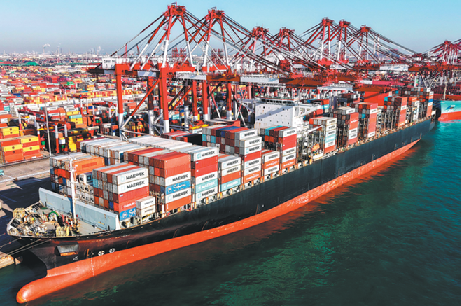
 China’s goods imports reached 18.5 trillion yuan ($2.67 trillion) in 2025, making it the world’s second-largest import market for the 17th consecutive year, statistics showed.

 Meanwhile, China’s imports from more than 130 countries and regions recorded growth, while the nation has emerged as a major export destination for nearly 80 countries.

 Market watchers said China’s import expansion is increasingly focused on quality upgrading rather than volume growth alone. At its core, these measures encourage a leap from quantitative satisfaction to qualitative enrichment, using consumption upgrading to drive supply-side innovation and power high-quality economic growth, said Denis Depoux, global managing director of management consultancy Roland Berger.

 Wang Wei, an expert at the Development Research Center of the State Council in Beijing, echoed that view. “Given that China’s imports are still heavily skewed toward commodities, it is practical to bring in more high-quality consumer goods, advanced equipment and specialized services to better match domestic demand, enrich supply and raise overall consumption quality,” he said.

 Mei Xinyu, a research fellow at the Chinese Academy of International Trade and Economic Cooperation in Beijing, said, “If Western countries ease their restrictive high-tech export controls on China, Chinese demand for imported products would expand significantly, creating market access and balanced, mutually beneficial trade flows.”

 From the perspective of trading partners, China’s push to boost consumption and expand high-quality imports is translating into tangible opportunities.

 Peter Wilson, the United Kingdom’s ambassador to China, said that as China looks to boost domestic consumption and expand high quality imports, British businesses are well positioned to meet the needs of Chinese consumers. The UK will work actively alongside its Chinese partners to advance two-way trade, promote practical collaboration and support business growth, Wilson said, adding that this would deliver more concrete benefits for people in both countries.

 European business representatives said the shift is also reshaping how foreign companies engage with the Chinese market.

 Oliver Oehms, chief representative of the Delegation of German Industry and Commerce Beijing, said it is no longer just about German companies exporting more to China.

 Now, it is about being here, competing in the Chinese market and matching the best international rivals, he said, adding that for German companies, China as a crucial destination for production and investment is a known fact.

Wang Yu contributed to this story.

Contact the writers at zhongnan@chinadaily.com.cn


Article inline ad

China To Boost AI-Focused Data Trading

0

By CHENG YU | chinadaily.com.cn | Updated: 2026-02-07

China will support the growth of data circulation service providers and encourage closer cooperation with artificial intelligence companies, as part of a broader push to accelerate the market-based use of data as a production factor, several top industry regulators said on Saturday.

 The National Data Administration — together with the Ministry of Industry and Information Technology, the Ministry of Public Security, and the China Securities Regulatory Commission — unveiled guidelines on Saturday aimed at nurturing data service institutions and promoting the secure, compliant, and efficient trading of data.

 The move also came as Liu Liehong, head of the National Data Administration, chaired four round-table meetings to gather views from industry experts and corporate representatives on advancing the Digital China initiative.

 Leading tech firms — including Huawei Technologies, New H3C Group, Inspur Group, Tencent Holdings, Alibaba Group, ByteDance, Baidu, JD.com, Meituan, and Didi Chuxing — participated in the meetings. Tech and software leaders like Beijing Galaxy Universal Robotics, Enflame Technology, FanRuan Software, and Tanji Technology also attended.

 According to the newly-released guidelines, a key priority is expanding the circulation and trading of high-quality datasets suited for artificial intelligence development. Authorities said data service institutions will be encouraged to work with leading companies across industrial chains to build such datasets.

 They will also be supported in deepening cooperation with AI firms, using data infrastructure to provide services, including data aggregation, governance, and model training.

 Authorities said they will guide companies to develop diversified and compliant data exchange mechanisms, including arrangements where data can be traded for services, orders, models, or application scenarios. The guidelines also encourage exploration of new value-realization paths, such as using data as capital contributions.

 Third-party platforms — such as data exchanges and data circulation service platforms — will be supported in matching supply and demand and handling delivery and settlement, in a bid to lower transaction costs and enable wider data flows.

 The document urges service providers to develop a wider range of data products and services that support technological innovation, industrial development, social governance, and improvements to public services.

 These include resource-style products, such as curated datasets, as well as decision-support offerings such as verification services, analytical reports, data indices, and visualization tools. The policy also highlights emerging formats including intelligent agent-based services tailored to industry use cases.

Article inline ad

Satellite-Based SMS Opens To Mobile Users

0

By ZHAO LEI | CHINA DAILY | Updated: 2026-02-07

Thanks to the Beidou Navigation Satellite System, China has launched a new short messaging service that provides reliable communication for people in distress when ground-based mobile networks are unavailable.

 China Space-Time Information, the State-owned operator of Beidou services, has collaborated with the nation’s three primary telecom operators — China Mobile, China Telecom, and China Unicom — to enable paying users to access the Beidou-based short messaging service if their mobile phones support the function. Users do not need to change their SIM card or phone number and can send and receive text messages directly via Beidou satellites in areas without cellular coverage.

 Leading Chinese mobile phone makers such as Huawei and Xiaomi have released nearly 60 models compatible with this functionality. China Space-Time Information stated that the service is intended to supplement conventional mobile networks, ensuring safety and communication reliability in scenarios such as hiking in remote mountains, working at sea, and engaging in disaster relief and emergency response. The company plans to continue collaborating with mobile phone companies to develop more phones that support Beidou messaging.

 Beidou is China’s largest civilian satellite system and one of the four global navigation networks, alongside the United States’ GPS, Russia’s GLONASS, and the European Union’s Galileo. Since 2000, 64 Beidou satellites, including four experimental ones, have been launched on 47 Long March 3 series rockets from Xichang. The system was declared complete in July 2020 and began providing full-scale global services. Currently, more than 50 Beidou satellites are in active service, operating in multiple types of orbits.

 According to the most recent statistics from the Global Navigation Satellite System and Location-Based Services Association of China, the overall value of satellite-enabled navigation and positioning services in China reached about 576 billion yuan ($83 billion) by the end of 2024, a 7.39 percent year-on-year increase. The combined output of chips, equipment, software, data, and infrastructure totaled 170 billion yuan in that year.

 Established in April 2024, China Space-Time Information is a joint venture of three State-owned conglomerates: China Satellite Network Group, China North Industries Group Corp, and China Mobile. The company is involved in satellite navigation and communications, big data services, artificial intelligence development, and geospatial remote sensing operations. China Satellite Network Group is the nation’s major operator of space-based internet networks. China North Industries Group Corp is the country’s largest maker of land armaments. China Mobile is the world’s largest telecom carrier in terms of mobile subscribers.

 zhaolei@chinadaily.com.cn


Article inline ad

Sino-US Trade Shift Seen As A Gradual Rebalancing

0

By ZHONG NAN | CHINA DAILY | Updated: 2026-02-07

Amid mounting challenges such as tariff barriers, technology restrictions and heightened geopolitical uncertainty, China-US trade is undergoing a gradual adjustment, with market watchers and business leaders saying that bilateral trade flows are showing signs of a slow recalibration and becoming more structurally complex, rather than moving toward full-scale decoupling.

 They noted that the growth of China’s exports to the United States has moderated, with some manufacturing orders shifting to alternative markets as global supply chains are reconfigured. Meanwhile, China still holds substantial potential to expand imports of US energy and agricultural products, alongside deepening two-way engagement in services trade and premium consumption-related sectors.

 These trends point to a gradual rebalancing of China-US trade away from a model dominated by China’s surplus in manufactured goods toward a more diversified pattern, supported by broader product categories and increasingly two-way demand, said Yan Xuetong, a professor at Tsinghua University’s Institute of International Relations.

 Amid severe disruptions to the global economic and trade order last year, China-US trade fell 18.2 percent year-on-year to 4.01 trillion yuan ($578 billion) in 2025, accounting for 8.8 percent of China’s total trade by value, data from the General Administration of Customs showed. The decline is seen as reflecting structural adjustment pressures rather than a collapse in bilateral trade.

 John Quelch, executive vice-chancellor and an economics professor at Duke Kunshan University, said that beyond agriculture, energy has emerged as another potential area for cooperation, reflecting the US’ ambition to expand energy exports and China’s long-term demand for diversified and stable energy supplies.

 “Technology, particularly semiconductors, is expected to remain one of the most complex and contentious aspects of the bilateral economic relationship,” Quelch said. “Export controls and market access for advanced chips are likely to be negotiated on a generation-by-generation basis.”

 Sun Lipeng, deputy director of the Institute of American Studies at the China Institutes of Contemporary International Relations, said that overall, the ongoing recalibration reflects both market-driven adjustments and policy constraints, rather than a wholesale decoupling.

 “What we are seeing is a gradual reshaping of trade patterns, unfolding over a longer cycle and with greater structural complexity,” he added.

 Official data also point to the continued scale and resilience of bilateral trade. Lyu Daliang, director of the General Administration of Customs’ department of statistics and analysis, said that based on bilateral goods trade statistics in 2025, China remained the US’ third-largest export destination and third-largest source of imports, while the US was China’s largest goods export destination and its third-largest source of imports.

 At a news conference in Beijing last week, Wang Zhihua, director of the foreign trade department at the Ministry of Commerce, responded to a media inquiry regarding remarks by US Trade Representative Jamieson Greer at the recent World Economic Forum annual meeting in Davos, Switzerland, on the possibility of another round of bilateral trade talks.

 Wang said China stands ready to work with the US through the China-US economic and trade consultation mechanism to manage differences, deepen cooperation and promote the stable and sustainable development of bilateral trade ties.

 At the company level, businesses are adjusting strategies in response to the shifting trade environment.

 One such company is Milliken & Co, a US manufacturer of specialty chemicals and performance materials. The South Carolina-based company will strengthen its technical, supply chain and customer support capabilities in China, while advancing its “localization — China serving Asia” framework to enhance operational agility and service efficiency.

 “China is not only one of the world’s largest coatings markets, but also one of the most dynamic hubs for green technology innovation,” said Simon Oram, vice-president of Milliken’s coating additives business.

 zhongnan@chinadaily.com.cn

Article inline ad

Nanshan Rises As Hardware Innovation Hub

0

China Daily | Updated: 2026-02-06

SHENZHEN — When a Chinese robotics innovator faced an urgent space crunch for his laser sensor startup a few years ago, he did what many entrepreneurs in the country’s southern tech hub of Shenzhen, Guangdong province, do — he called the local government.

 By the next day, multiple authorities responded. Within three months, Qiu Chunxin’s RoboSense was moved into a new facility. Today, the tech firm born of his doctoral research is a publicly listed leader in LiDAR technology, with its sensors acting as the “eyes” for a new generation of autonomous machines.

 What happened in between wasn’t just a startup success story. It was a rapid trajectory of how a small district in Shenzhen — specifically a 10-kilometer stretch of asphalt known as Liuxian Avenue — has become the world’s most concentrated ecosystem for hardware innovation, driven by the city’s dense, readily available industrial chain and handson government incubation policies.

 Vital district

 The strip’s output is impressive. In 2025, the GDP of Nanshan district exceeded 1 trillion yuan ($144 billion).

 At this year’s CES in Las Vegas, the geographic advantage was unmistakable. Of roughly 4,100 exhibitors, approximately 380 came from Shenzhen; more than 100 from Nanshan alone, with at least 65 clustered along the Liuxian corridor, also known as “Robot Valley”.

 Its model is not quite Silicon Valley, which long ago outsourced its manufacturing; nor is it Austin, Texas, whose tech boom relies on luring cost-sensitive refugees from San Francisco. Startups stay not because it’s cheap, but because leaving means exiling themselves from the ecosystem. They benefit from the speed afforded by proximity.

 Logic of density

 Nanshan, where China’s first open industrial zone, Shekou, was founded, marks the start of the country’s opening-up policy and serves as an early incubator for its high-tech manufacturing sector. Since then, this densely packed district has fostered more than 6,000 national high-tech enterprises, including 394 specialized and sophisticated “little giant” firms.

 Facing severe land constraints, Nanshan even pioneered an “Industrial Upstairs” initiative, stacking factories vertically in multi-story buildings. This concentration creates a “same-day closed-loop” supply chain, in which all stages, from prototyping to assembly, occur within a single geographic hub on a single day.

 The mountain-flanked valley’s layout itself accelerates innovation: local campuses like Tsinghua and Harbin Institute of Technology face directly onto industrial parks and corporate headquarters. Joint university-corporate labs enable seamless lab-to-industry translation, turning this compressed geography into a “petri dish” where future industries are cultivated at pace.

 Helping hand

 Nanshan local officials describe their role as providing an “invisible string” that ties the ecosystem together, rather than picking winners. Their approach is described in a maxim: no disturbance, but always responsive to requests.

 The government provides startups with a bundled package that includes a workspace, early-stage funding and expedited regulatory approvals — all in one offering.

 “This policy package is more precisely tailored to serve startups with technological breakthroughs, sustained research and development investment and broad commercial prospects,” said Liu Jingkang, founder of Insta360. This Nanshan-based hardware maker’s panoramic camera became an instant US hit, with customers lining up at dawn to grab the new release.

 Last December, the national venture capital guidance fund was launched in China. Among the three regional funds under its guidance, the Guangdong-Hong Kong-Macao Greater Bay Area Fund was registered and established in Nanshan, with a target scale of 50.45 billion yuan. The fund follows early-stage, small-scale, long-term investments in hard technology.

 As evening traffic thickens along the avenue, engineers inside Nanshan’s industrial parks are still huddled over prototypes. In an era defined by technological upheaval, this sense of urgency reflects China’s broader ambition.

 Xinhua – China Daily

Article inline ad

AI Reshaping China’s Workforce

0

Cutting-edge tech has generated new professions, lowered the threshold for starting a business, and empowered employees to upgrade their skills

China Daily | Updated: 2026-02-06

BEIJING — The widespread rise of artificial intelligence is modifying China’s labor market in ways that go far beyond job replacement or creation.

 It has generated new professions, lowered the threshold for starting a business and empowered employees to upgrade their skills in a bid to stay competitive.

 At Xunfei Healthcare’s office in Hefei, capital of East China’s Anhui province, Hu Pingping, a former doctor specializing in stomach and gut diseases, spends her days analyzing how a medical large language model diagnoses complex cases. Having transitioned into an AI trainer five years ago, her new profession merges clinical expertise with cutting-edge AI technology.

 This shift also mirrors a broader evolution within China’s professional landscape. As AI integrates into every sector, there has been a rapid emergence of new roles like AI content annotator, AI product manager and AI-assisted animator.

 According to PwC’s 2025 Global AI Jobs Barometer, nearly all AI-related positions are increasing globally, and workers with AI skills command a wage premium of 56 percent, up 25 percent from the previous year.

 Data from online recruitment platform Zhaopin show that in the fourth quarter of 2025, job openings in China’s AI sector grew by 19 percent year-on-year, led by algorithm engineers, machine vision specialists and robotics algorithm developers.

 “AI is pushing the labor force toward higher value-added roles centered on human-machine synergy and intelligent augmentation,” said Liu Cong, head of Chinese AI firm iFLYTEK’s research institute.

 With humanoid robots joining production lines, smart equipment running through farmlands, and AI models increasing work efficiency in newsrooms, there are also concerns about AI being a potential job killer.

 The fast iteration of AI technology is shortening career lifecycles and challenging the traditional idea of “mastering one skill for a lifetime”, with some workers finding it hard to transition into new professions.

 Industry experts say in this context, accelerating the renewal of knowledge and skills to meet the demands of new technologies and changes in the labor market has become crucial.

 This wave is reaching the legendary Hanzheng Street, a 500-year-old commercial center located in Central China’s Wuhan, known as the first small commodity market run by self-employed and private businesses after China’s reform and opening up in 1978. An AI training session in January this year attracted over 50 local apparel business owners to this area in the capital city of Hubei province.

 “The enthusiasm was incredible,” said Wang Ruijue, the AI training program organizer, pointing to late-night sign-ups in his WeChat group. Attendees ranged from post-2000s designers seeking to update their traditional craft to veterans born in the 1970s, one of whom brought a postgraduate daughter along to assist with learning how to use this new tool.

 Yang Jian, a fashion designer-turned AI entrepreneur, served as their instructor. He sees AI as a “super tool” in revolutionizing the apparel chain, from design and manufacturing to marketing.

 Since large apparel enterprises are already mature in terms of AI adoption, Yang has dedicated his efforts to helping small and medium-sized firms use AI to improve their businesses.

 On this old street in Wuhan, both tech-savvy youth and middle-aged business owners are now joining the AI learning journey, embracing not just a new tool for work but a new culture of lifelong learning.

AI, notably, is also lowering entrepreneurial barriers in China.

 An example is the rise of one-person company (OPC), where individuals leverage AI tools for content creation, operations and service delivery. Cities like Suzhou in East China’s Jiangsu province are promoting themselves as OPC-friendly hubs.

 Industry insiders believe that this OPC rise is mainly driven by widespread adoption of AI technology, supportive local policies and platforms, and a growing talent pool.

 Wei Qing, Microsoft China’s chief technology officer, said that as AI becomes as commonplace as electricity and the telephone, using it to launch ventures and solve real-world problems is turning into an essential skill. Also, evolving applications like AI agents are making it possible for “one person to function like a full team”.

 With AI generating content at staggering speeds, one could be tempted to question if anything remains uniquely human in today’s workplace. Experts respond to such musings by pointing to imagination, aesthetic sense, critical thinking and emotional intelligence as irreplaceable human advantages.

 A “slash career”, which refers to a working life revolving around multiple professions, will be important for future employment, said Zhang Junping, a professor at Shanghai-based Fudan University.

 “Employees must avoid relying on a single skill or a single profession,” Zhang explained, adding that since AI shortens the path from novice to expert, people have to develop comprehensive capabilities to enhance their capacity to withstand risks in terms of employment.

 Zhang suggested including “AI thinking” in youth education, but at the same time also cautioned against “overreliance on AI”, stressing that priority should be given to exercising independent learning and cultivating unique imagination.

 China’s national initiative, known as “AI Plus”, proposes support for AI skills training to stimulate innovation and entrepreneurship, while also boosting the potential to secure reemployment. Departments including the Ministry of Industry and Information Technology also issued a document outlining measures such as conducting forecasts for talent demand in the AI industry, releasing talent demand forecast reports, and supporting higher education institutions in planning and optimizing relevant disciplines and programs.

 Minister of Human Resources and Social Security Wang Xiaoping said China will accelerate efforts to build a monitoring, early-warning and response system for AI’s impact on employment and follow an employment-friendly technology development path.

 Xinhua


Article inline ad

Honor Tops Global Smartphone Shipment Growth In 2025

0

By Ma Si | chinadaily.com.cn | Updated: 2026-02-06

Chinese tech company Honor secured the top position in global smartphone shipment growth among the world’s top 10 phone manufacturers in 2025, according to the latest industry data.

 The performance highlights Honor’s successful global expansion and its strategic focus on innovation and a diversified product portfolio amid intensified competition.

 The latest report from global research firm Omdia reveals that Honor’s smartphone business achieved a remarkable 11 percent year-on-year growth in global shipments for 2025, ranking first in growth rate among the world’s top ten smartphone brands.

 Analysts attribute the performance to Honor’s core strategy of driving advancement through technological innovation. The company has invested in key areas such as imaging, artificial intelligence, and battery technology.

 Complementing its smartphone success, Honor’s tablet business emerged as a significant growth pillar in its global expansion. Data from the US market research company International Data Corp shows that in the mid-to-high-end consumer tablet market segment (priced between $300 and $600) in 2025, Honor led all major overseas brands in shipment growth rate.

Article inline ad