Wednesday, November 25, 2026

Home Blog Page 74

China’s Smartphone Market Sees Shift In 2025 Amid Intensified Competition

0

By Ma Si | chinadaily.com.cn | Updated: 2026-02-06

China’s domestic mobile phone market concluded 2025 with a notable decline in monthly shipments, while full-year figures remained relatively stable, the latest industry data showed.

 The performance came as the market is undergoing a transformation characterized by intensified competition, driven by technological progress and ecosystem expansion.

 According to the latest report from the China Academy of Information and Communications Technology, domestic mobile phone shipments in December 2025 reached 24.5 million units, marking a significant year-on-year decrease of 29.1 percent.

 Of these, 5G smartphone shipments stood at 22 million, down 27.3 percent from the same period last year. Despite the drop, 5G devices accounted for 90.4 percent of all phones shipped during the month, underscoring the technology’s dominant market position.

 For the entirety of 2025, the market shipped 307 million units, a slight decrease of 2.4 percent compared to the previous year.

 A closer look at December figures reveals a contraction for domestic brands. Shipments of Chinese-branded phones fell 31.0 percent year-on-year to 21.24 million units, making up 86.8 percent of the monthly total. However, in a case of relentless product iteration, domestic brands launched 40 new models in December, a substantial 37.9 percent increase year-on-year, accounting for 97.6 percent of all new models released.

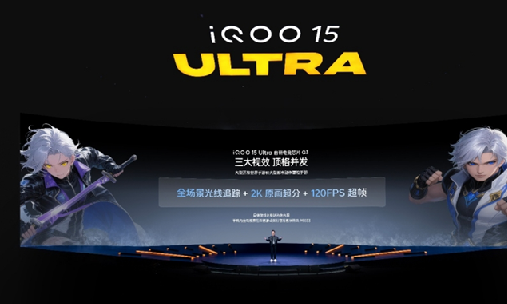
 Amid the broader market adjustment, industry players are betting on innovation and community building to stimulate demand. The Chinese smartphone brand iQOO, for instance, unveiled its latest product — the 15 Ultra — to target gaming enthusiasts. iQOO announced a partnership with Chinese video platform Bilibili to launch a “Creator Incentive Program”. Furthermore, in collaboration with the popular game “Honor of Kings,” it initiated a creator incentive plan specifically targeting streamers and content creators.

Article inline ad

Tech Giants Jockey For Super AI Gateways In Festival Campaign

0

China Daily | Updated: 2026-02-06

BEIJING — China’s technology titans are leveraging the Chinese New Year holiday season to secure users for their intelligent assistants, betting that 2026 will be the year when “AI agents” evolve from novelties into indispensable daily tools.

 This high-stakes race, not only for user attention but also for control over the next-generation artificial intelligence gateway, was ignited by their digital cash incentives.

 Tencent kicked off a 1-billion-yuan ($144.05 million) giveaway on Sunday, offering users a chance to win up to 10,000 yuan through its AI-enabled Yuanbao app. That same day, at least 16 users claimed the top prize, propelling the app, powered by AI models such as DeepSeek, to first place in the free Chinese app rankings on Apple’s App Store.

 Not to be outdone, Alibaba’s flagship AI product Qwen followed on Monday, poised to offer a 3-billion-yuan “festival treat”, starting from Feb 6, to subsidize commodities, dining, travel and entertainment bookings, all within a unified, AI-powered shopping ecosystem. This big tech’s holiday-season generosity also involves directing traffic to its dedicated healthcare AI app, named Ant Afu.

 Two other heavyweight rivals, ByteDance and Baidu, meanwhile, are running promotional campaigns tied to the widely-watched holiday television galas.

 This marketing blitz echoes the country’s fierce battle for digital payment gateways over a decade ago. Only this time, the prize is the next game-changer, one expected to be capable of end-to-end task execution, thus making AI the primary portal for everything from ordering coffee to booking holidays.

 A recent industry report sees 2026 as a key strategic juncture for China’s internet giants, amid growing consumer AI investment and fierce competition to create all-encompassing AI gateways.

 “On-device AI agents could make traditional apps gradually fade into the background,” said Chen Jianguang, a partner at EY Greater China. He explained that phone-based AI agents will automate tasks based on user data with no app opening required.

 In Qwen’s chatbot, for example, a simple message like “I want to watch a movie nearby” automatically handles cinema recommendations, booking and payment via Taopiaopiao and Alipay, all within one interface.

 “Once an operating-system-level AI agent gains control over traffic distribution, it will become the new gatekeeper of user access,” said Sang Jitao, a professor at Beijing Jiaotong University.

 This competition comes amid dual powerful dynamics: the government’s drive to expand domestic consumption and the AI industry’s quest for viable commercial pathways.

 China’s vast digital population is fueling this economic sector with remarkable potential. The country’s generative AI user base had reached 515 million by June 2025, doubling in just six months, while its mobile AI users stood at 720 million by October last year.

 “Our AI market is projected to grow at a rate exceeding 30 percent in 2026,” said Liu Lichao, an AI analyst at CCID Consulting under China’s Ministry of Industry and Information Technology.

 Yet, as DeepSeek’s sudden rise a year ago made clear, securing sustainable corporate advantage requires more than just subsidizing user growth alone. A broader industry truth is that long-term success hinges on a decisive shift toward genuine innovation and delivering tangible gains in efficiency.

 In January, leading Chinese AI developers unveiled a new wave of smarter models, ranging from Qwen to Kimi and DeepSeek. Rather than chasing top spots on leaderboards, the race has shifted to creating agents that truly understand context and solve real-life problems.

 Chinese tech giants are starting to explore and sharpen their AI focuses: ByteDance’s Doubao helps students with homework, Alibaba’s Lingguang AI enables easy mini-program creation, and e-commerce platforms like JD.com are deploying digital avatars for live commerce.

 Pony Ma, chairman and CEO of Tencent, noted that a one-size-fits-all “AI suite” may not be what users truly want, calling instead for an ecosystem designed around individual needs and privacy.

 Now, the one-person company (OPC) model is rapidly emerging in China, fueled by the coding capabilities of large AI models and support from local governments, resulting in a greater diversity of products.

 In this low-cost form of entrepreneurship, a solo founder uses AI tools to handle content creation, product operations and service delivery, succeeding by precisely identifying a niche need and delivering an effective solution.

 “In 2026, AI will further advance from model innovation to real-world applications, driving a measurable increase in overall productivity,” said Ma Beibei, a CCID researcher.

 Xinhua


Article inline ad

China’s Machinery Industry Records Stable Growth In 2025

0

Xinhua | Updated: 2026-02-06

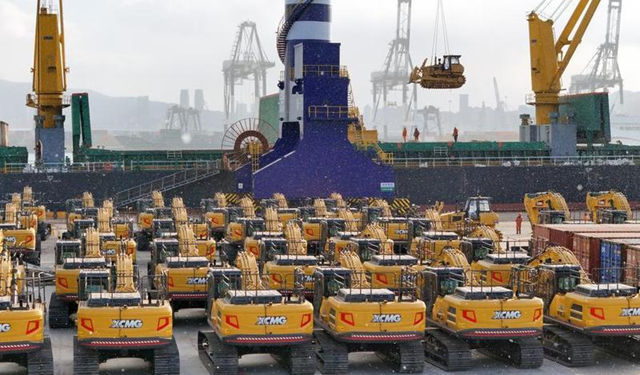
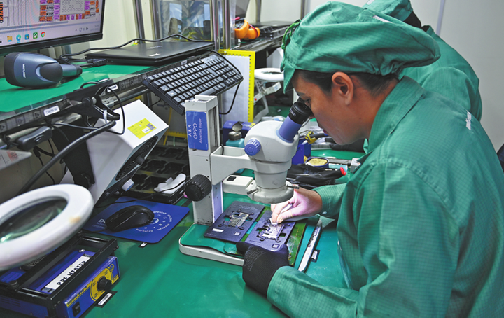
BEIJING – China’s machinery industry posted steady performance in 2025 as both sales and profits increased, the China Machinery Industry Federation (CMIF) said on Thursday.

 The added value of major machinery enterprises rose by 8.2 percent year-on-year in 2025, the CMIF said. The increase outpaced the overall industrial sector by 2.3 percentage points and the manufacturing sector by 1.8 percentage points.

 Among the 122 categories of key machinery products monitored by the federation, 85 recorded output growth, 13 more than a year earlier. In particular, industrial robot output hit a record high, rising by 28 percent year-on-year.

 In 2025, major machinery companies posted total operating revenue of 33.2 trillion yuan ($4.8 trillion), up 6 percent year-on-year, the CMIF said. Total profits came in at 1.7 trillion yuan, an increase of 5.9 percent.

 Looking ahead to 2026, Ye Dingda, deputy head of the federation, said that the machinery industry faces both opportunities and challenges, but favorable conditions are expected to outweigh headwinds overall.

 As policies to stabilize growth and advance transformation continue to take effect, the industry is expected to remain on a steady footing, Ye added.

Article inline ad

Gold Output Increases, Investment Demand Surges

0

China Daily | Updated: 2026-02-06

China’s gold production edged up in 2025 while overall consumption declined, amid a shift from jewelry toward investment products, data from the China Gold Association showed on Thursday.

 The country produced 381.339 metric tons of gold last year, up 1.09 percent year-on-year, while output from imported raw materials rose 8.81 percent to 170.681 tons, the data revealed.

 The association said that a number of exploration, development and technology projects had achieved phased breakthroughs in 2025.

 On the consumption side, gold consumption totaled 950.096 tons last year, down 3.57 percent from a year earlier, as jewelry demand fell sharply while purchases of gold bars and coins jumped, marking the first instance of annual investment gold levels overtaking jewelry consumption in China.

 Trading activity related to gold surged across domestic markets, with total gold turnover rising strongly on both the Shanghai Gold Exchange and the Shanghai Futures Exchange, reflecting heightened participation within a context of elevated prices.

 Higher prices also drove robust inflows into gold exchange-traded funds, which added 133.118 tons during the year, surging 149.91 percent from the volume recorded in 2024 and lifting total ETF holdings to 247.852 tons by the end of December, according to the data.

 Xinhua – China Daily


Article inline ad

China’s Railway Investment Facilitates Growth

0

By Zhuang Qiange | chinadaily.com.cn | Updated: 2026-02-06

China’s railway sector registered robust investment and infrastructure expansion in 2025, with fixed-asset investment reaching 901.5 billion yuan ($126.8 billion), a year-on-year increase of 6 percent, according to the national railway operator China State Railway Group.

 Last year also saw the commissioning of 3,109 kilometers of new railway lines across the country, including 2,862 km of high-speed rail, underscoring the strong driving role of railway investment in bolstering infrastructure development and economic growth.

 The steady investment momentum builds on the solid foundation laid in the first four years of the 14th Five-Year Plan period (2021-25). From 2021 to 2024, China’s railway fixed-asset investment stood at 748.9 billion yuan, 710.9 billion yuan, 764.5 billion yuan and 850.6 billion yuan, respectively, reflecting the country’s consistent focus on advancing railway network construction to improve transportation connectivity.

 The ongoing construction of key railway and transportation interconnection projects across China vividly demonstrates the progress of the sector’s infrastructure drive.

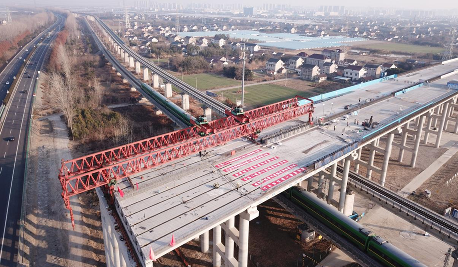
In Jiangsu province, China Railway 24th Bureau Group Corp, a State-owned construction enterprise has recently completed the installation over active railway lines of box girders for the Haimen–Taicang Yangtze River Tunnel in Nantong.

 The SOE has placed 502 girders to complete a crucial link connecting the tunnel to the urban area. Once fully operational, the tunnel will integrate highways with rail networks, slashing cross-Yangtze River travel time to just 10 minutes.

 This landmark tunnel project is a typical example of China’s integrated transportation infrastructure development, which combines railway and highway networks to break geographical barriers and enhance regional connectivity, said an investment consultant with China Galaxy Securities Co Ltd.

 Such projects not only form an important part of the country’s expanding railway system but also drive coordinated development of urban and rural areas, as well as inter-regional economic cooperation, Long said.

 The continuous growth in railway investment and the commissioning of new lines are set to further optimize China’s comprehensive transportation network, improve the efficiency of cargo and passenger flow, and provide a stronger transportation guarantee for high-quality economic and social development, he said.


Article inline ad

Schneider Electric: Nation ‘Pioneer’ In Energy Shift

0

By Ren Qi | China Daily | Updated: 2026-02-06

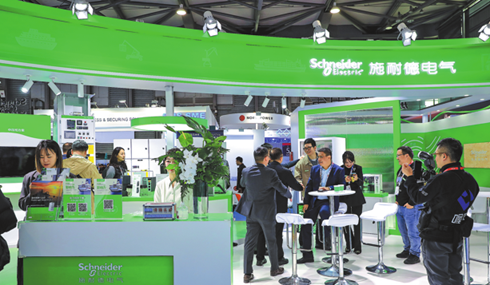
China is a “pioneer” in the global energy transition, outpacing other nations through consistent long-term planning and massive infrastructure investment, according to a senior executive.

 “You can call us a foreign company, but we are extremely local,” said Frederic Godemel, executive vice-president of energy management at Schneider Electric, emphasizing the French MNC’s deep roots in China.

 Godemel said China remains a distinct outlier in the global landscape, characterized by its unparalleled commitment to electrification and green development.

 This confidence is underpinned by robust market fundamentals. A recent report by UBS has predicted that China’s power demand growth could surge to 8 percent annually between 2028 and 2030 — double the previous estimate of 4 percent. This signals the arrival of a five — to 10-year “super cycle” for the domestic power industry, driven by a resonance of exploding demand and supply-side reshaping.

 Frederic Godemel

In an exclusive interview with China Daily, Godemel highlighted that China’s advantage stems from a “three-pronged” investment strategy — investing simultaneously in power generation, grid infrastructure and the demand side. This strategy is consistently executed through the recommendations for formulating the 15th Five-Year Plan (2026-30).

 Recent policy announcements have further validated this approach. State Grid Corp of China recently announced that fixed-asset investment during the 15th Five-Year Plan period is expected to reach 4 trillion yuan ($556 billion), a 40 percent increase from the previous FYP period.

 The investment will focus on new power systems and ultrahigh voltage (UHV) transmission channels to meet the targets set by the National Development and Reform Commission, which aims for “West-to-East Power Transmission” capacity to exceed 420 million kilowatts by 2030.

 “If you want a resilient electrical system, you need to anticipate 10 years in advance. Not all countries have done that,” he said. “Better to anticipate than to be late.”

 For Schneider Electric, China is not only a market but also a crucial hub for innovation. Godemel pointed to the company’s research and development setup in Shanghai, one of its largest globally, where technologies are developed not only for the local market but are increasingly exported to the rest of the world.

 He cited partnerships with Chinese companies like StarCharge and HyperStrong as examples of this “China for Global” dynamic. Schneider Electric is collaborating with these firms to develop charging and storage solutions that are subsequently deployed in Europe, leveraging China’s advanced position in the new energy sector.

 Godemel’s bullish view on China came after his recent return from the World Economic Forum in Davos. There, he observed a concerning trend: global attention on sustainability appeared to have waned compared to previous years, with many Western nations now scrambling to catch up after years of underinvestment in their electrical grids.

 Godemel said the world is facing a surging demand for energy driven by population growth and the rise of energy-intensive technologies like artificial intelligence. He noted that global electricity demand is projected to surge significantly, creating a massive gap that will require infrastructure typically taking five to 10 years to construct. In this context, China’s strategic foresight has positioned it as a global leader.

 To meet these future demands, a key focus for Schneider Electric’s roadmap is the integration of artificial intelligence into energy management. Godemel said he believes that the ultimate role of AI is to “simplify complexity”.

 Beyond efficiency, Godemel highlighted AI’s potential in enhancing safety for frontline electricians. He envisions smart panels that can “speak” to operators in natural language, actively warning them of live currents and potential hazards during maintenance, thereby reducing workplace accidents.

 This vision is already a reality in Schneider Electric’s own facilities. The company’s factory in Wuxi, Jiangsu province, recognized as a “Sustainability Lighthouse”, has utilized AI to reduce carbon emissions. Similarly, the Putuo factory in Shanghai has shortened new product development cycles by 63 percent through digital integration.

 Looking ahead, Godemel sees immense potential in the retrofitting of existing buildings. As the volume of new construction in China stabilizes, the focus is shifting toward making existing infrastructure more efficient and autonomous. He envisions a future where the “electrical revolution” mirrors the automotive revolution.

 “We want to be at the forefront of this revolution,” Godemel concluded, affirming that Schneider Electric will continue to deepen its partnerships and R&D presence in China to drive the next wave of global energy innovation.

Article inline ad

Rising trade uplifts regional economic ties

0

High-frequency, deep interactions facilitate precise interest alignment

By REN QI | CHINA DAILY | Updated: 2026-02-07

China became the largest trading partner of Central Asian countries in 2025, with two-way trade reaching a record amount, a shift driven by expanding cooperation and closer regional ties, experts said.

 Data released by the Ministry of Commerce on Jan 18 revealed that the total value of goods traded between China and Central Asia reached $106.3 billion, surpassing the $100 billion benchmark for the first time and maintaining positive growth for five consecutive years.

 Also, statistics from China Customs showed the annual trade value last year rose 12 percent year-on-year. Notably, the growth rate accelerated by 6 percentage points compared to the previous year, further increasing the weight of Central Asia in China’s overall foreign trade profile.

 Experts noted that high-frequency and deep interactions have facilitated the precise alignment of strategic interests, serving as a driving force behind these figures. Under the strategic guidance of state leaders, departments at all levels have engaged in indepth policy communication.

 Li Ziguo, director of the China Institute of International Studies’ Department for European-Central Asian Studies, said the most significant consensus between China and Central Asian nations is their shared commitment to mutual benefit and common development.

 “China is the world’s second-largest economy with a scale approaching $20 trillion, and its foreign trade volume exceeded $6.35 trillion last year, making it the world’s largest trader of goods and a major trading partner for over 160 countries. As neighbors, it is only logical that China has become the largest trading partner for Central Asian countries,” Li said.

 Li further highlighted that the trade structure is being continuously optimized, with innovative trading methods emerging. Chinese investment is not only driving reindustrialization and economic modernization in Central Asia, but also transforming the trade relationship.

 Moreover, financial cooperation has also injected vitality into economic ties. Institutions such as the China-Eurasian Economic Cooperation Fund, the Silk Road Fund, the Asian Infrastructure Investment Bank and China Development Bank have provided robust financing support.

 Furthermore, cross-border electronic payment cooperation has accelerated, evidenced by agreements between Kazakhstan’s payment platform Kaspi.kz and Chinese services like Alipay and WeChat.

 Sun Zhuangzhi, director of the Chinese Academy of Social Sciences’ Institute of Russian, Eastern European and Central Asian Studies, said China is aligning its goals of the 15th Five-Year Plan (2026-30) with the medium-to-long-term development strategies of Central Asian countries.

 Sun said the goal is to create and share new development opportunities, translating the “China-Central Asia Spirit” into tangible actions that improve the well-being of people.

 Timur Abylaev, deputy director of the National Institute for Strategic Initiatives under the President of Kyrgyzstan, said the bond connecting Central Asian countries and China extends beyond trade. It also encompasses the tireless exploration of national governance, reform and modernization paths. For Kyrgyzstan, the practical experience of the Chinese path to modernization is of particular interest, he added.

 renqi@chinadaily.com.cn

Article inline ad

Brazil eyes visa-free policy for China

0
By Li Jing | China Daily | Updated: 2026-02-06

China and Brazil are moving toward easing travel between the two countries, a step analysts say could deepen one of the world’s most important South-South economic relationships.

Following an announcement in late January that unveiled a decision by Brazilian President Luiz Inacio Lula da Silva to grant visa-free entry for certain short-term visits by Chinese citizens, expectations are high for a surge in bilateral exchanges. While the Brazilian side has not yet announced the exact implementation date, the move is widely seen as a reciprocal gesture to China’s visa-free policy, effective from June 1, 2025, to Dec 31, 2026, which allows Brazilian passport holders to enter China visa-free for up to 30 days for business, tourism, family visits and transit.

Analysts say the impending visa waiver will lower the cost of doing business and will improve efficiencies across trade and investment channels.

“Visa-free travel will facilitate the entire commercial process — from market research and negotiations to factory inspections and post-investment personnel mobility,” said Zhou Mi, a senior researcher at the Chinese Academy of International Trade and Economic Cooperation, highlighting the strong complementarities between the two economies.

China’s advantages lie in machinery, electronics, new energy vehicles and traditional automobiles, while Brazil is highly competitive in agriculture-related industries, Zhou said. Additionally, China has strengths in large-scale infrastructure construction, where efficiency and integrated supply chains offer room for cooperation in Brazil.

Those complementarities are already reflected in the data. A recent study from the Brazil-China Business Council showed that bilateral trade hit a new record in 2025, reaching $171 billion, an 8.2 percent increase year-on-year. Trade with China was more than double Brazil’s exchange with the United States, its second-largest partner, which totaled $83 billion over the same period.

Beyond goods, analysts say easier travel is expected to support growth in services and digital trade, areas where cooperation remains relatively limited. Tourism, finance, education and healthcare services could see expanded collaboration, often supported by digital technologies, Zhou said.

For Chinese companies operating on the ground, the impact is likely to be immediate. Sinovac Biotech, a leading Chinese vaccine company, expects the policy to facilitate the frequent in-person exchanges required for research, clinical trials and technology cooperation in Brazil.

“Visa-free travel will help Sinovac conduct technical discussions, innovative product development and local clinical cooperation in Brazil,” said Meng Weining, vice-president of Sinovac, noting that many clinical trial projects rely heavily on close communication and on-site visits by research and medical personnel.

In November, Sinovac signed two product development partnership agreements with Brazil’s health ministry, launching a 10-year collaboration worth more than $700 million. Under the agreements, Sinovac will supply around 60 million doses of varicella and rabies vaccines to Brazil over the next decade and work with local partners to strengthen local manufacturing capacity.

Meng cautioned, however, that visa convenience alone does not guarantee market expansion. “The key drivers for expanding product categories, such as influenza vaccines, are local disease prevention needs and market demand,” he said, adding that regulatory compliance, taxation and policy uncertainty remain common challenges for cross-border operations.

Logistical constraints remain another limiting factor. Fitch Ratings said that while Brazil’s possible visa exemption for Chinese citizens could provide a modest boost to passenger demand, it is unlikely to trigger a rapid expansion of non-stop routes on its own.

“This is an ultra-long-haul market with high operating costs and strong sensitivity to load factors and yields,” said Zoey Wang, director of global infrastructure ratings at Fitch Ratings, adding that near-term adjustments are more likely to involve increased flight frequencies or restored capacity on existing routes, typically centered on Sao Paulo.

Beyond travel logistics, analysts note that trade policy barriers persist. Brazil’s tariff levels remain relatively high, while customs procedures, quarantine standards and financial restrictions still leave room for improvement.

“Visa facilitation is not a cure-all,” Zhou said. “But it is a clear signal — and an important step toward stronger bilateral cooperation.”

Article inline ad

Hainan To Open Five Duty-Free Stores For Daily Goods

0

By Chen Bowen in Haikou | chinadaily.com.cn | Updated: 2026-02-06

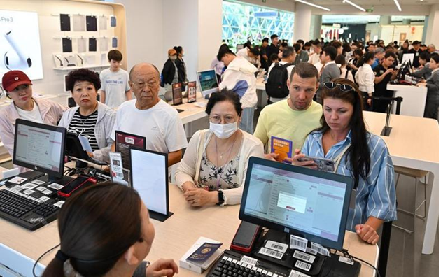
Hainan province will open five duty-free stores for daily consumer goods across three cities on Feb 11, provincial authorities announced Friday, marking the first retail outlets under a new national policy designed to lower living costs and share the benefits of the island’s free trade port with residents.

 The stores will be located in Haikou, Sanya, and Danzhou, according to Lu Wei, deputy director of the Hainan Provincial Department of Commerce. Haikou will open three stores, with one each in the districts of Guomao, Chengxi, and West Coast. Sanya will open one store in the Fenghuang Coast area of its central business district, and Danzhou will open one at its Summer Plaza.

 The openings follow a policy jointly introduced on Thursday by the Ministry of Finance, the General Administration of Customs, and the State Taxation Administration. The policy allows eligible Hainan residents to purchase imported consumer goods free of import tariffs, import value-added tax, and consumption tax, within an annual quota.

 Qualified residents include Chinese citizens with a Hainan identification card, residence permit, or local social security card, as well as foreign nationals living and working in Hainan with valid residence permits. Each person is entitled to an annual duty-free allowance of 10,000 yuan (about $1,440), with no limit on the number of transactions.

 The eligible products cover daily necessities such as selected food, beverages, household chemicals, home goods, and maternal and infant items. All goods purchased under the policy are for personal use and cannot be resold.

 Officials said the measure aims to reduce living expenses and meet diverse consumer demand.

 Lu added that Hainan will evaluate the initial stores and gradually expand the network “until all cities and counties on the island are covered”.

 The opening of the daily consumer goods duty-free stores coincides with the Chinese New Year period. “We will tailor offerings to holiday spending, encourage the stores to promote festive popular products, and increase the supply of holiday goods,” he said.

 The government also plans to provide a Chinese New Year gift package in the form of duty-free consumption vouchers for daily goods and coordinate with financial institutions and payment platforms to offer additional payment discounts.

Rising trade uplifts regional economic ties

Article inline ad

China Promotes Digital Tourism, Payment Services For Overseas Personnel

0

Xinhua | Updated: 2026-02-06

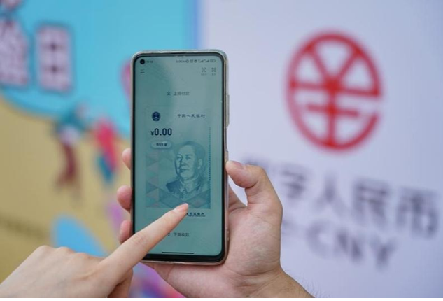
BEIJING – Chinese authorities have issued guidelines on enhancing the convenience of digital services for the entry of foreigners and people from outside the Chinese mainland, including measures to improve basic digital services and digital payment systems.

 This approach is designed to further promote the country’s high-standard opening up, according to the guidelines jointly issued by 11 authorities and departments including the Cyberspace Administration of China (CAC), the Ministry of Culture and Tourism and the People’s Bank of China. The guidelines were posted on the CAC website on Thursday.

 The guidelines call for addressing bottlenecks in digital services for personnel from overseas to make the country’s digital environment more internationalized and convenient.

 The guidelines define 14 measures, such as strengthening basic digital services by providing more accessible telecommunication services for overseas personnel and enhancing the convenience of digital payment by better supporting the use of overseas e-wallet services within the Chinese mainland.

 The document also mandates the enhancement of digital services in foreign languages, encouraging relevant service platforms to provide translation features or multilingual versions.

 Improved digital services should be provided to enhance the tourism, shopping, and dining experiences for overseas personnel. Efforts should also be made to make integrated digital service information available on mobile apps that are widely used by foreigners in China, it says.

 It further calls for upgraded digital public services for overseas personnel, including those regarding healthcare, education, investment and entrepreneurship and government services.

 The need to enhance the protection of cybersecurity, data security and personal information privacy is also stressed.


Article inline ad