Wednesday, November 25, 2026

Home Blog Page 75

China Keen On Boosting FDI

0

Further steps mulled to advance deeper opening-up, optimize biz environment

By Zhong Nan | China Daily | Updated: 2026-02-06

With global investment conditions remaining challenging, China is expected to lock in new investment plans from foreign corporations to build new factories and invest in the services sector in the country in the years ahead, said government officials and foreign business leaders.

 Speaking at a weekly news briefing on Thursday in Beijing, He Yadong, spokesman for the Ministry of Commerce, said China will deepen reforms in its foreign investment promotion system, expand institutional opening and further improve the business environment.

 He said the aim is to strengthen the nation’s appeal among foreign investors, turn its vast market into a global opportunity, and ensure foreign companies can enter, stay and thrive as key participants in China’s development process.

 Wang Ya, head of the department of foreign investment administration at the Commerce Ministry, said China will remain unwavering in expanding high-standard opening-up as it seeks to foster new strengths in attracting foreign investment and enhance the “Invest in China” brand this year.

 “The government will expand market access and the opening-up of the services sector, including telecom, healthcare and education. It will also support foreign-funded businesses in the services sector in expanding their value chains,” said Wang.

 The recommendations for formulating the 15th Five-Year Plan (2026-30) further underscore the development of new quality productive forces and high-quality growth, while sending a clear signal of high-standard opening-up and mutually beneficial cooperation, and providing strong policy impetus for China’s steady economic expansion and efficiency-driven upgrading, said the National Development and Reform Commission.

 Even though global investment sentiment has remained subdued, the actual use of foreign direct investment in China reached 747.69 billion yuan ($107.74 billion) in 2025, including 241.77 billion yuan directed to the high-tech sector, said the Ministry of Commerce.

 In the meantime, FDI inflows into China jumped 75 percent year-on-year in e-commerce services, 42.1 percent in medical devices and equipment, and 22.9 percent in aerospace vehicles and equipment.

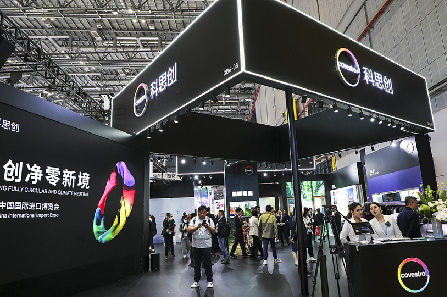
 After setting up a new thermoplastic polyurethane (TPU) manufacturing facility in Zhuhai, Guangdong province, in late December, German chemical manufacturer Covestro AG plans to increase investment in China as part of its strategy to strengthen local production, innovation and market responsiveness in the coming year.

 TPU is a highly versatile material used across various industries, including footwear, consumer electronics, functional films, and seating and cushioning systems in the automotive sector.

 Monique Buch, chief commercial officer of Covestro, said the Zhuhai site will be rolled out in three phases, with capacity rising to as much as 120,000 metric tons per year when the final phase is completed in the 2030s, making it Covestro’s largest TPU production facility globally.

 Highlighting China’s vast, high-quality and steadily growing market, Buch said the country’s strong emphasis on sustainability aligns closely with the company’s corporate philosophy.

 “More importantly, the speed of market development and the ability to scale in China are rare globally, which is why we believe it is essential to stay close to customers and remain deeply rooted in the Chinese market,” she added.

 As it seeks to expand its presence in China, Cargill Inc, a United States-based agricultural conglomerate, broke ground on a factory expansion project in Beijing last week.

 The project involves more than 45 million yuan in planned investment and will add two new food production lines, alongside a new automated warehouse, with operations expected to begin in the first half of 2027.

 Xue Huayun, president for North Asia of Cargill’s food business, said this project strengthens both the group’s manufacturing capacity and its long-term commitment to China.

 China saw FDI from Switzerland jump 66.8 percent year-on-year in 2025, while investment from the United Arab Emirates rose 27.3 percent and that from the United Kingdom expanded 15.9 percent, said the Ministry of Commerce.
 

Article inline ad

China Recalibrates Solar Industry For Long-Term Competitive Strength

0

By Zheng Xin | chinadaily.com.cn | Updated: 2026-02-06

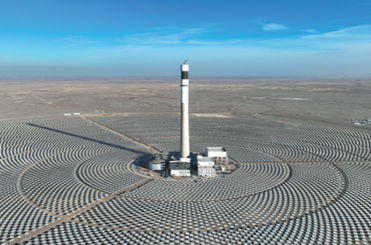
China’s photovoltaic industry is poised to enter a higher phase of quality-oriented growth, driven by a strategic transition from a price-based competition to a paradigm in which leading enterprises leverage their core advantages in technology and scale to maintain global competitiveness, said industry experts.

 As the sector prepares to bid farewell to export tax rebates, enterprises are accelerating their transformation and upgrading efforts, a move experts said will fortify the industry’s resilience.

 Lin Boqiang, director of the China Center for Energy Economics Research at Xiamen University, said that China’s solar power industry is on the cusp of a historic transformation.

 After years of rapid expansion fueled by policy support, the sector is making a strategic move that is expected to curb low-efficiency competition, reduce trade friction and steer the industry toward high-quality development, he said.

 According to an announcement made by related government authorities earlier this year, the country will eliminate the value-added tax export rebate for photovoltaic products starting on April 1. The policy also stipulates a phased reduction for battery products, lowering the rebate rate from 9 percent to 6 percent, before completely phasing it out by Jan 1, 2027.

 While the cancellation will inevitably increase export costs and compress profit margins in the short term, industry insiders see the move as a timely intervention to break the current deadlock of intense internal competition.

 “The withdrawal of continuous tax dividends marks the moment for the Chinese photovoltaic industry to temper itself in the fire of pure market competition,” said Liu Yiyang, executive secretary-general of the China Photovoltaic Industry Association.

 As a global leader in solar technology, China boasts a complete manufacturing system where capacity and output in core chain links exceed 90 percent of the global total.

 However, this dominance has come with challenges. Since 2024, the industry has faced a “volume up, price down” dilemma, in which fierce price wars at home have depressed export prices, eroding profits and leading to anti-subsidy investigations abroad.

 The association believes that adjusting tax rebates will help rationalize export prices.

 “Although not the only solution, removing rebates will inhibit the overly rapid decline in export prices in the long run, thereby lowering the probability of international trade friction,” Liu said.

 The move would also alleviate the country’s fiscal burden, allowing for a more efficient allocation of resources, he added.

 Wang Shijiang, deputy director of the electronic information department at the Ministry of Industry and Information Technology, emphasized that addressing industry involution is a top priority for 2026.

 “The industry is currently in a deep adjustment period where deep-seated supply-demand mismatches remain unresolved,” he said.

 Market analysts predict a volatile but constructive adjustment period.

 Liu, from the photovoltaic industry association, forecasts a “window period” surge in the first quarter of 2026, as overseas buyers rush to stock up before the policy takes effect. This, he said, is likely to be followed by a distinct drop in demand in the second quarter.

 However, leading enterprises equipped with technological advantages, established channels and strong brands are expected to weather the storm, leading to higher industrial concentration, he noted.

 “The policy will force a shift from a ‘price war’ to a ‘value war’,” Liu said. “Regardless of the total installed capacity, core competitiveness will now hinge on product quality, technological advancement and integrated solar-storage solutions.”

 Regarding the market scale, the association predicts that while 2026 may see a temporary dip, with domestic newly installed capacity estimated between 180 gigawatts and 240 GW, the sector will soon rebound.

 By 2035, China’s annual newly installed capacity is forecast to reach between 280 GW and 350 GW, it said.

 Emerging concepts, such as space-based solar power, have also garnered attention recently. Liu, however, said these technologies are still in the early stages of verification.

 If future commercial space launch capacity achieves significant breakthroughs and orbital delivery costs are further reduced, China’s photovoltaic industry chain will encounter immense opportunities, he said.

 zhengxin@chinadaily.com.cn


Article inline ad

Global Ceos Show Increased Investment Interest In China: Pwc Report

0

By Chen Liubing | chinadaily.com.cn | Updated: 2026-02-05

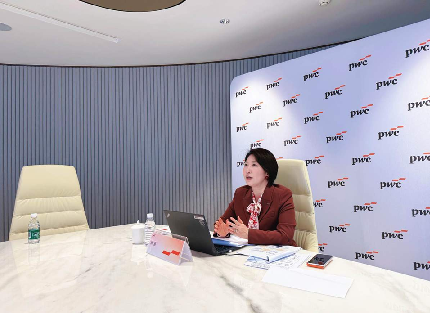
The investment appeal of the Chinese mainland is rebounding, establishing it as a key anchor in global capital allocation, according to PwC’s 29th CEO Survey China report, released on Wednesday.

 The survey reveals that 11 percent of global CEOs now rank the Chinese mainland among their top three investment destinations, up from 9 percent in 2025. Notably, over one-fifth of surveyed business leaders from countries including Indonesia, South Korea, Germany and Switzerland placed China in their top three.

 Sector-specific data shows that 14 percent of global companies in the industrial products and services sector consider China as a top-three investment destination, marking an increase from the previous year. This is followed by the energy, utilities and resources sector, where the proportion rose to 13 percent, up from 10 percent the previous year.

 In addition, Chinese CEOs are leading their global peers in macroeconomic confidence. They have consecutively raised their expectations for global economic growth, with 67 percent optimistic about a sustained recovery over the next 12 months—a figure higher than the 61 percent global average. This sustained optimism over a three-year horizon underscores their strong belief in the long-term resilience of the Chinese market.

 “Despite near-term revenue pressures, global CEOs maintain robust confidence in mid-to-long-term development, with the strategic resilience of Chinese CEOs being particularly outstanding,” said Zhou Xing, head of Public Affairs, PwC China. “This long-term optimism stems from China’s stable and predictable business environment, coupled with the corporate sector’s agile strategic adaptability and continuous innovation.”

 The survey also indicates that AI adoption by Chinese companies has entered a phase of positive, revenue-driven returns, outpacing global progress. Specifically, 52 percent of Chinese CEOs reported increased revenues from AI, significantly higher than the 29 percent global average. Furthermore, 17 percent achieved a dual benefit of “cost reduction and revenue growth” through AI, exceeding the global figure by 5 percentage points.

 Chinese firms are leading the global average in applying AI across five key business areas: demand generation, support services, product/service/experience enhancement, direction setting and demand fulfillment.

 “Chinese companies are now at the forefront of global practice in AI implementation and value realization,” said Wilson Chow, Artificial Intelligence Leader at PwC China, via video link.

 Additionally, companies in the Chinese mainland demonstrate strong resilience against supply-side volatility. Over 40 percent exhibit significant operational flexibility, well above the 28 percent global average. This strength is attributed to China’s comprehensive industrial ecosystem and diversified supply chain, which serve as core advantages in mitigating external shocks.

 “CEOs must adopt a long-term perspective, balancing risk management with value creation, and drive a trinity upgrade encompassing strategy, organization, and ecosystem to systematically capture emerging opportunities,” said Julius Shen, Lead Partner, Strategy&China at PwC.

 As China embarks on its new five-year plan and deepens its transition to high-quality development, Chinese enterprises are taking proactive measures. By optimizing their global investment footprints, accelerating innovation, integrating AI with core business functions, and building multi-dimensional operational resilience, they are unleashing vigorous momentum for sustainable growth and injecting fresh vitality into the global economy, the report said.

 PwC’s 29th CEO Survey China report includes insights from 4,454 CEOs across 95 countries and regions, including 216 from the Chinese mainland. It explores core issues such as macroeconomic confidence, global investment strategy, innovation and AI application, offering a comprehensive view of corporate development and strategic considerations in an era of global reconfiguration and technological revolution.


Article inline ad

China’s Gold Output Up 1.09% In 2025 Amid Shift To Investment-Grade Assets

0

By Zheng Xin | chinadaily.com.cn | Updated: 2026-02-05

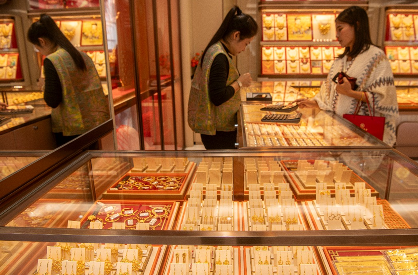
China’s gold sector demonstrated robust resilience and a strategic pivot toward investment-grade assets in 2025, as domestic production climbed and investor appetite for bullion reached record heights, according to the latest data from the China Gold Association (CGA).

 China saw its domestic raw material gold output rise to 381.34 metric tons in 2025, a steady 1.09 percent increase from the previous year. This growth was partly bolstered by aggressive global expansion strategies from the nation’s leading mining conglomerates.

 Overseas production by major Chinese gold groups surged to approximately 90 tons, signaling a remarkable 25 percent year-on-year increase, it said.

 The 2025 data reveals a significant evolution in Chinese consumer behavior. While traditional jewelry consumption adjusted to 363.84 tons, down 31.61 percent year-on-year, the market saw an extraordinary surge in demand for physical investment products.

 Demand for gold bars and coins skyrocketed by 35.14 percent to 504.24 tons, reflecting a powerful trend among investors to prioritize gold as a premier safe-haven asset. High-tech and industrial usage also maintained an upward trajectory, growing 2.32 percent to 82.02 tons, fueled by the nation’s expanding electronics and green energy sectors.

 The most striking growth occurred in the financial sector. China’s gold-backed Exchange-Traded Funds (ETFs) witnessed an unprecedented inflow of 133.12 tons in 2025—a staggering 149.91 percent increase compared to the 53.27 tons added in 2024.

 By the end of December 2025, total domestic gold ETF holdings reached a record 247.85 tons, it said.

Article inline ad

Popularity Of Ice And Snow Sports Fuels Related Industries

0

Nation’s cold weather sector has grown from 270 bln yuan in 2015 to 980 bln yuan in 2024, surpassing 1 trln in 2025

By WANG ZHUOQIONG | China Daily | Updated: 2026-02-05

China’s ice and snow economy continues to heat up, as the launch ceremony of the 2026 National Ice and Snow Consumption Season kicked off in January in Harbin, Heilongjiang province, marking a key initiative under the “Shopping in China” program.

 The event, initiated by the Ministry of Commerce and designed to leverage the country’s ice and snow resources, aims to drive growth through innovative “ice and snow +” consumption scenarios. The initiative seeks to introduce new high-quality products and services, create an international consumption environment, and stimulate demand for winter sports and tourism, while advancing the development of the ice and snow economy.

 The China Ice and Snow Industry Development Research Report (2025), compiled by World Winter Sports (Beijing) Expo and published in October 2025, underscores the rapid expansion of China’s winter sports sector. The report said the industry’s total scale was expected to have topped 1 trillion yuan ($143.9 billion) by the end of 2025. Since the country’s successful hosting of the 2022 Winter Olympics, China’s ice and snow industry has exploded in size, growing from 270 billion yuan in 2015 to 980 billion yuan in 2024.

 China has developed a product system covering 15 major categories of ice and snow equipment, achieving full industrial chain coverage — from personal gear to venue facilities, and from recreational sports to professional competitions. This includes personal gear like ski suits, protective equipment, goggles for skiing enthusiasts, large-scale facility equipment such as ski lifts, snowmakers, and even innovative tools like intelligent ice sculpture robots.

 Significant progress has been made in the field of high-end ice and snow facilities and equipment, said Adam Zhang, founder of Key-Solution Sports Consulting.

 “As a major manufacturing country and a manufacturing powerhouse, once market demand becomes clear, supply capacity will swiftly follow,” Zhang said. “It is anticipated that in the future, Chinese manufacturing — particularly through the integration of smart manufacturing, robotics, AI and other technologies — will achieve iterative innovation in the field of ice and snow equipment.”

 Technologies such as artificial intelligence and robotics are being deeply integrated into the ice and snow economy, with technological elements being infused across all aspects — from hardware equipment and software systems to teaching, training and sports experiences, he added.

 This infusion of technology will propel the country’s ice and snow industry to achieve a “latecomer advantage”, fostering a development trend where it catches up to and surpasses others, Zhang noted.

 Participation in ice and snow sports has surged, with the 2024-2025 season generating over 187.5 billion yuan in consumption — marking a 25 percent increase from the previous year.

 According to the Huabei app, a leading digital platform for skiers in China that tracks over 10 million registered users, skiing enthusiasts now reflect a more diverse profile. The platform reveals that 41 percent of skiers are male, with 68 percent preferring snowboarding. Furthermore, 25 percent of surveyed skiers visit resorts once a season, while 12 percent make more than 10 trips. This data highlight the growing demand for specialized products and experiences.

 Ye Bo, general manager of GSPO Sports, a Beijing-based company, emphasized the growing market opportunity in recent years. Founded in 2017, GSPO has capitalized on China’s expanding demand for snowboarding gear, a segment particularly popular among younger consumers post-Winter Olympics. Despite a brief downturn in the market, Ye said that sales of their own brand, Yepro, have grown 20 percent annually in the domestic market, driven by increased consumer interest and technological innovations in their product lineup.

 “Our focus on snowboard bindings and accessories has resonated with the market,” Ye said. “We’re investing in research and development, particularly in binding technology, where we’ve created manual adjustments that save users valuable time when changing on the slopes.”

 With domestic brands like Yepro offering competitive pricing — roughly 20 to 50 percent lower than foreign counterparts — Ye believes Chinese companies are well-positioned to capitalize on the industry’s growth, leveraging local supply chains and innovative technology.

 Harbin, known as China’s “Ice City”, has seen remarkable growth in its ice and snow sector. As of November 2025, more than 2,300 enterprises were involved in the local ice and snow industry, with over 1,000 new companies launched in the past three years — reflecting a compound annual growth rate of 23.6 percent. This growth spans not only tourism but the entire industrial chain, which includes equipment manufacturers and service providers.

 Harbin’s ice and snow economy is increasingly robust, with over 80 enterprises focusing on manufacturing ski equipment such as snowboards and ice skates.

 Harbin Zhongcheng Technology Development Co Ltd’s innovative “Snow Lion” machine, for instance, is capable of pulverizing, pushing and shoveling ice and snow, and features an intelligent control system that optimizes its operation in real time based on the thickness of the ice and the temperature, said Yuan Zhihui, a board member of Harbin Zhongcheng Technology Development.

 Over the years, the company has invested heavily in research and technology, collaborating with five top universities in the province to develop self-created technologies for snow shoveling machines. The company has seen revenue grow by 25 percent year-on-year, boosted by supporting policies and measures from the government and industry associations, as well as rising demand for the ice and snow industry.

 The ice and snow economy shows no signs of slowing down. Supported by policy initiatives such as the “Shopping in China” campaign, which aims to promote new consumption scenarios, the sector is positioned for continued expansion. From snow sports equipment to tourism, the ice and snow industry’s rapid growth is cementing its status as a key driver of China’s winter sports economy, said Zhang of Key-Solution Sports Consulting.

 wangzhuoqiong@chinadaily.com.cn


Article inline ad

Shanxi Blazes Trail For Clean Energy Shift

0

China Daily | Updated: 2026-02-05

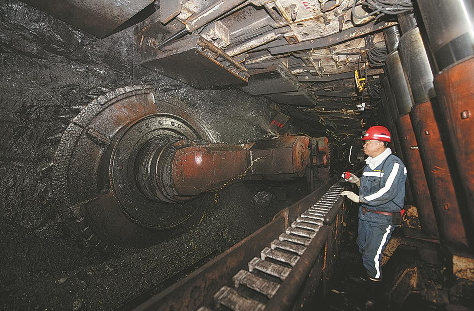
TAIYUAN — For decades, Shanxi province has been synonymous with coal in China. The northern province sits at the heart of the country’s energy system, supplying fuel and electricity to factories and cities far away.

 Now it is also becoming a test site for something else — whether China’s energy transition can work in areas that are heavily dependent on fossil fuels.

 In 2025, Shanxi crossed a symbolic threshold. According to the annual session of its provincial people’s congress that opened on Monday, Shanxi’s installed capacity of new and clean energy reached 90.48 gigawatts, accounting for 55.1 percent of the province’s total power capacity, overtaking coal-fired generation for the first time. In practical terms, roughly one-third of the electricity consumed in Shanxi now comes from clean energy sources.

 As one of the country’s largest comprehensive energy bases, Shanxi ranks among the nation’s top coal producers, and its power plants supply electricity to 24 provincial-level regions through long-distance transmission lines. The province has long played a stabilizing role in China’s energy system.

 The role is now undergoing a recalibration. Under China’s dual carbon goals — peaking carbon dioxide emissions before 2030 and achieving carbon neutrality before 2060 — energy-producing regions are no longer just suppliers, but front-runners in reshaping the national energy mix.

 As of 2025, the share of renewable energy in China’s total installed power capacity had risen to over 60 percent. Consequently, coal is no longer positioned as the primary driver of growth in electricity supply, but rather serves to underpin the system’s stability when renewables fall short.

 Resource-heavy provinces often face a double constraint: they must cut emissions without undermining output, and diversify without destabilizing local economies. Shanxi has taken a pragmatic approach to achieving these goals.

 Shanxi has relied on a twin-track approach: shrinking inefficient coal capacity while rapidly expanding renewables. On the coal front, the province phased out more than 4 million kilowatts of outdated coal-fired units between 2021 and 2025, while bringing six million-kW-level new units online. The result is not less coal power, but cleaner and more efficient coal power.

 At the same time, renewable capacity has expanded rapidly. According to the provincial energy administration, wind and solar installations have recorded double-digit annual growth for several consecutive years, pushing both installed capacity and actual power generation higher.

 Qiao Junwei, professor at the College of Materials Science and Engineering, Taiyuan University of Technology, noted that as a coal powerhouse, Shanxi’s choices ripple across China’s energy system. Its embrace of clean power sends a clear signal: if even the fossil-fuel heartlands are reorienting around renewables, regions with fewer conventional resources have little excuse not to do the same.

 “The change is not merely statistical. It reflects a broader realignment in the relationship between energy transition, economic growth and environmental governance in Shanxi and beyond,” Qiao said.

 Industry experts note that the next step is to enhance the efficiency of clean energy utilization and to build a larger power grid with greater flexibility and balancing capacity.

 For Shanxi and other energy-rich regions, smarter grids, renewable energy collection hubs and pilot schemes for direct green-power supply to industrial users would allow coal and clean power to be combined more effectively, improving the power system’s flexibility in balancing supply and demand and raising the share of renewables that are actually consumed, according to Sun Yuhan, head of the Shanxi Research Institute of the Huairou Laboratory.

 Xinhua – China Daily

Article inline ad

Evergreen Marine Orders 16 Container Ships From CSSC Unit

0

By Zheng Caixiong | chinadaily.com.cn | Updated: 2026-02-05

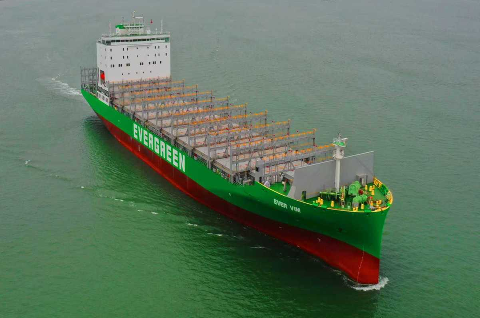
CSSC Huangpu Wenchong Shipbuilding signed a contract with Taiwan-based Evergreen Marine Corp on Wednesday to build sixteen 3,000-TEU container vessels valued between $736 million and $896 million.

 The contract signing represents the third round of in-depth collaboration between the two parties. The order is the largest in Huangpu Wenchong’s history, said a statement released by the company on Thursday.

 The 16 new container ships covered by the contract align with the decarbonization, emission reduction, and green low-carbon development trends of the international shipping industry, according to the statement.

 Guangzhou-based Huangpu Wenchong, a subsidiary of China State Shipbuilding Corp, and Evergreen Marine Corp began their business relationship in 2021 and have cumulatively developed 30 container ships since, according to the statement.

 Huangpu Wenchong has delivered 24 vessels to Evergreen Marine so far, it added.

 Huangpu Wenchong Shipbuilding signed a contract with Taiwan-based Evergreen Marine Corp. on Wednesday to build sixteen 3,000-TEU container vessels valued between $736 million and $896 million. [Photo provided to chinadaily.com.cn]


Article inline ad

Rio Tinto Bags Chinese Supplies For Global Mining

0

By ZHENG XIN | China Daily | Updated: 2026-02-05

If you peeked into Rio Tinto’s global “shopping cart” for 2025, you wouldn’t just find the usual mining essentials.

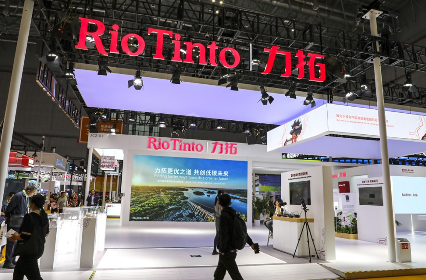
 You would see a record-breaking $4.3 billion receipt from Chinese suppliers, a clear sign that the world’s mining giant has gone from being China’s “favorite rock salesman” to one of its most enthusiastic business partners.

 Rio Tinto’s recent-year purchase in China, including massive 230-metric-ton mining trucks and high-horsepower graders for the Simandou project in Guinea, cutting-edge 90-ton battery-swap electric haulers for Oyu Tolgoi in Mongolia, and specialized railway components for the Pilbara in Australia, is evidence that China has transitioned from being Rio Tinto’s largest customer to an indispensable architect of its global supply chain ecosystem.

 The relationship between China, the world’s largest importer and consumer of iron ore, and Rio Tinto, the world’s largest seaborne iron ore producer, has officially entered its “upgrade” era as global mining giants are leaning into China’s high-tech manufacturing and rapid-fire innovation to power its mines across the world, said industry experts.

 “Made in China” is now the high-tech heartbeat of the world’s most ambitious industrial projects, said Zhao Xiangbin, chief strategist at Beijing Gold and Forex Fortune Investment Management.

 It is no longer just about sending iron ore from the red dust of Australia to the steel mills of China, he said.

 “China is our largest customer and also a vital supply base for us,” said Jamie Sanders, head of global procurement at Rio Tinto. “We clearly see the distinct advantages of the Chinese supply chain.”

 Sanders noted that the capabilities of Chinese suppliers in terms of rapid response and fast-paced innovation are unique on a global scale.

 The engagement model with Chinese firms has evolved from a traditional buyer-supplier relationship into a “much closer partnership” focused on cocreating value across the company’s international project portfolio, he said.

 According to Rio Tinto, Chinese enterprises have played a foundational role in the construction of massive infrastructure abroad.

 The company recently announced the first shipment of high-grade iron ore from the Simandou deposit to Rizhao Port in Shandong province, another cooperation project between Rio Tinto and Chinese partners, including China Railway 18th Bureau Group, China Harbour Engineering Co Ltd and Chinese construction machinery manufacturer XCMG Group.

 While China Harbour Engineering provided critical equipment and services to support the construction, XCMG provided essential engineering services and heavy equipment to bridge the gap between the inland mines and the coast, it said.

 The deal with XCMG also includes an 800 million yuan ($110 million) order for a complete set of core mining equipment, including dozens of 230-ton mining trucks and massive 350hp and 550hp graders that will be serving as the high-tech muscles Rio Tinto has selected to build a new global resource hub from scratch.

 In addition, Rio Tinto also bought eight battery-swap electric haul trucks from China’s State Power Investment Corp for its Oyu Tolgoi copper mine, which is on track to become the world’s fourth-largest copper mine by 2030.

 The surge in procurement underscores a strategic pivot for the Anglo-Australian miner, which has increasingly looked to Chinese engineering and equipment to support massive infrastructure developments, said Zhao.

 By leveraging Chinese supply chain advantages, the company aims to enhance operational efficiency while accelerating its transition toward lower-emission mining technologies, he said.

 While China has long been a major market for global mining giants thanks to its vast market size, major players including Rio Tinto, BHP and Vale are keen to purchase equipment from Chinese manufacturers, he added.

 “The capabilities of Chinese suppliers in terms of rapid response and fast-paced innovation are unique on a global scale,” said Sanders.

 As China accelerates its development of new quality productive forces, Rio Tinto is standing right at the front of the line to catch those new opportunities, he said.

 For Rio Tinto, the $4.3 billion spent in 2025 isn’t the finish line — it’s the new baseline. The company is now on a mission to dig even deeper into the Chinese market, looking for regional partners who can solve the next generation of mining puzzles.

 “We need to have a more profound understanding of which regions and which partners in China we can collaborate with more deeply,” Sanders said.

 “By merging Rio Tinto’s century of mining experience with China’s relentless drive for new quality productive forces, the two are doing more than just moving rocks, but building a faster, greener and more connected version of the global mining industry — one $4.3 billion shopping trip at a time.”

 zhengxin@chinadaily.com.cn


Article inline ad

ABB 1st MNC To Pursue, Secure Full CR Portfolio Certification In China

0

By ZHENG YIRAN | China Daily | Updated: 2026-02-05

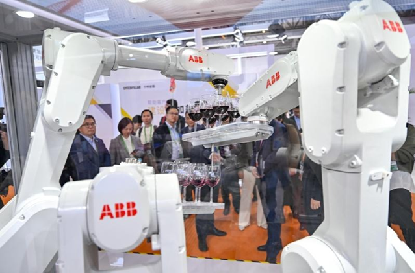
A range of ABB Robotics products has obtained China Robot (CR) certification, making the company the first multinational corporation to pursue and secure the certification for its full product portfolio in China.

 CR certification is an authoritative safety and quality certification system for China’s robotics industry. Launched in 2016 under the joint guidance of several key government departments, such as the Ministry of Industry and Information Technology, it is currently the world’s only State-endorsed high-end certification for robotics products.

 ABB industrial robots, including the IRB 1520, IRB 1600, IRB 1660 and the PoWa collaborative robot series, successfully passed the CR assessment, marking the first significant milestone since the strategic collaboration between ABB Robotics and the Shanghai Electrical Apparatus Research Institute (Group) Co Ltd was announced last year.

 “The first batch of CR certifications is a critical step in advancing our ‘China, for China’ strategy. It serves as authoritative recognition of our products’ safety, reliability and high quality, and strong proof of our active integration into China’s industrial ecosystem to better meet local customer needs,” said Henry Han, group senior vice-president and president of ABB Robotics Division in China.

 “Moving forward, we will continue to work closely with SEARI, expanding certification scope, contributing to technical standards, while also setting and collaborating on common technology research. Together, we aim to build a more robust industry ecosystem to support the transformation and upgrade of smart manufacturing in China,” Han said.

 According to ABB Robotics, the company is now progressing with CR certification for its complete portfolio, aiming to achieve comprehensive certification for over 120 product types by 2026.

 Zheng Junqi, president of Shanghai Robot Industrial Technology Research Institute, said:”We are pleased to see the rapid progress ABB Robotics has made in the CR certification process. The cooperative model, transitioning from ‘compliance’ to ‘co-creation’, sets a positive example for collaborative innovation across the industrial chain. We look forward to deepening our cooperation with ABB Robotics to jointly drive the robotics industry toward safer, more reliable and more intelligent development.”

 Wu Yehua, chairman of the Testing and Certification Alliance for Robot, said that CR certification serves as a “passport” in the product market and also functions as a “booster” for industrial upgrading. ABB Robotics’ achievement of CR certification for its full product line has played a positive, exemplary and leading role for the entire industry.

 “In the future, the alliance will continue to improve the system, especially deepening its layout in cutting-edge fields such as humanoid robots, and collaborating with outstanding global enterprises to jointly build an open, collaborative and sustainable new ecosystem for the robotics industry,” he said.

 Going forward, ABB Robotics will continue to collaborate with local partners, committing to continuous innovation and an open cooperative ecosystem to empower the high-quality and sustainable development of smart manufacturing and the robotics industry in China, said the company.

 zhengyiran@chinadaily.com.cn


Article inline ad

Conversion Rate Of Intl Standards Hits 88.9%

0

China also submits 505 new global proposals last year for sundry sectors

By Cheng Yu | China Daily | Updated: 2026-02-06

China’s market regulator said it accelerated efforts last year to align domestic rules with international standards, further energize business entities and promote fair competition, as part of a broader drive to support high-quality economic growth and a more unified national market.

 At a State Council Information Office briefing on Thursday, the State Administration for Market Regulation said China’s overall conversion rate of international standards into domestic ones had reached 88.9 percent by the end of 2025.

 On the outbound front, China led the formulation and release of 285 international standards in 2025 in areas including new energy, traditional medicine and brain-computer interfaces, up 26.7 percent year-on-year, the SAMR said.

 China also submitted 505 new international standard proposals in fields such as biotechnology, artificial intelligence and industrial internet, a rise of 15.8 percent from a year earlier.

 Standards are often described by Chinese officials as a “common language” in global trade and industrial cooperation, and China has increasingly framed standards adoption and formulation as a strategic tool to boost competitiveness in emerging industries.

 During the year, authorities adopted 1,510 international standards, with full adoption in sectors such as culture and meteorology, and conversion rates above 90 percent in aviation, construction materials and machinery.

 Deng Zhiyong, deputy head of the SAMR, said, “China has also strived to build a unified national market through boosting business vitality and driving fair competition.”

 In 2025, 25.745 million new business entities were registered nationwide. The number of active enterprises rose 9.8 percent year-on-year, with their share of all registered entities increasing by 4.7 percentage points, said the administration.

 Deng said fair competition enforcement remained a priority as China pushes to build a unified national market.

 In 2025, regulators carried out random reviews of fair competition policies and urged relevant authorities to rectify measures that hindered market integration. They also investigated a series of antitrust cases in the pharmaceutical sector, leading to sharp price cuts for some drugs, and handled 14,600 unfair competition cases.

 The SAMR said it had also moved to address so-called cutthroat competition — destructive price wars and excessive subsidies — through cost investigations, price inspections and regulatory guidance, helping cool aggressive discounting practices.

 Notably, the regulator highlighted progress in quality and measurement infrastructure, saying it had broken through 21 key technical bottlenecks in industrial chains and filled 71 urgent gaps in quality-related technologies.

 As the world’s largest online retail market for 13 consecutive years, China has also tightened oversight of platform companies. In 2025, the SAMR launched new rules on online platform governance and livestreaming e-commerce, targeting problems such as abuse of rules, unreasonable fees, false marketing and opaque algorithms.

 “Looking ahead, China would deepen reforms to build a unified national market, further energize business entities, strengthen quality infrastructure and guard against risks in key safety areas, in a bid to support both qualitative and quantitative improvements in China’s economic growth,” Deng added.

 chengyu@chinadaily.com.cn


Article inline ad