Wednesday, November 25, 2026

Home Blog Page 76

Provinces Set Targets To Ensure Growth Quality

0

By Zhou Lanxu and Ouyang Shijia | China Daily | Updated: 2026-02-06

Two-thirds of China’s provincial-level governments have moderately lowered their GDP growth targets for 2026, as they emphasized boosting domestic demand and fostering emerging industries, a move that analysts said reflects a pragmatic and proactive stance aimed at promoting high-quality development.

 The shift has increased the likelihood of China setting its real GDP growth target for 2026 at between 4.5 and 5 percent, analysts said, describing the range as achievable and consistent with longer-term goals.

 Economists also called for greater attention toward achieving a reasonable pace of nominal GDP growth, which would help lift household incomes, shore up corporate profits, and anchor expectations for price level recovery.

 As of Thursday, 31 provincial-level governments on the Chinese mainland had set their GDP growth targets for the first year of the 15th Five-Year Plan (2026-30) period — a closely watched indicator that carries implications both for this year’s national growth target and the overall growth trajectory for the five-year period.

 Of the 31 regions, 21 lowered growth targets compared with 2025, either by setting a lower numerical target or by shifting the wording from “above” a certain rate to “around” that rate.

 Guangdong province, the country’s largest provincial-level economy, set its 2026 growth target at 4.5 to 5 percent, from “around 5 percent” previously. Jiangsu province, the second-largest, set its target at 5 percent, compared with “above 5 percent” last year, signaling a more flexible stance.

 Lu Ting, chief China economist at financial services group Nomura, described the decision of some provinces to moderately lower their GDP growth targets as “pragmatic and reasonable”.

 “The solid growth delivered by major economic provinces in 2025 was hard-won, but underlying data still points to continued headwinds,” Lu said, citing the structural pressures from demographic changes and adjustments in the property sector.

 With some major provinces lowering targets, Lu said he sees a rising possibility that China’s national GDP growth target for 2026 will be set at between 4.5 and 5 percent in real terms, compared with the “around 5 percent” used since 2023.

 Guan Tao, global chief economist at BOCI China, said that market expectations have increasingly converged on a national economic growth target between 4.5 percent and 5 percent as it is both “achievable” and consistent with long-term development goals.

 The 2035 goal of reaching the per capita GDP level of moderately developed economies is estimated by Goldman Sachs to require average annual economic growth of about 4.5 percent between 2026 and 2030.

 However, Su Jian, director of Peking University’s National Center for Economic Research, warned that setting the target too low could undermine longer-term development goals and unsettle expectations.

 “The growth target serves as an important signal to the public, and should remain ‘around 5 percent’ while emphasizing flexibility rather than a stringent binding requirement,” Su said.

 A total of 24 provincial-level governments set their 2026 GDP growth targets at above or around 5 percent.

 Many regions vowed to strive for better results in actual work, while emphasizing bolstering service consumption, promoting infrastructure investments in key areas and nurturing emerging industries such as artificial intelligence.

 Guo Kai, executive president of the CF40 Institute, said that China’s real GDP growth this year is likely to stay close to 5 percent, while nominal GDP growth may improve from about 4 percent last year to around 4.5 percent or higher, with the latter reflecting both economic expansion and changes in price levels.

 Guo said resilient external demand and steadier China-United States trade relations would support exports, while investment may recover as capacity adjustments in many manufacturing sectors near completion. Consumption, he said, is unlikely to rebound sharply but should remain resilient.

 He added that using nominal GDP growth as a policy anchor could help China move out of prolonged subdued inflation more effectively, which should be feasible as it would be compatible with China’s governance structure.

 A CF40 Institute report noted earlier that persistently weak prices have squeezed corporate profitability and intensified fiscal pressure on local governments, adding that moderately raising nominal GDP growth would help improve sentiment and expectations across the economy.

 Dilinazi Dilimulati contributed to this story.
 

Article inline ad

Provinces Focus On Growth Quality

0

By ZHOU LANXU and OUYANG SHIJIA | chinadaily.com.cn | Updated: 2026-02-06

Two-thirds of China’s provincial-level governments have moderately lowered their GDP growth targets for 2026, even as they emphasized boosting domestic demand and fostering emerging industries, a move that analysts said reflects a pragmatic and proactive stance aimed at promoting high-quality development.

 The shift has increased the likelihood of China setting its real GDP growth target for 2026 at between 4.5 and 5 percent, analysts said, describing the range as achievable and consistent with longer-term goals.

 Economists also called for greater attention toward achieving a reasonable pace of nominal GDP growth, which would help lift household incomes, shore up corporate profits, and anchor expectations for price level recovery.

 As of Thursday, 31 provincial-level governments on the Chinese mainland had set their GDP growth targets for the first year of the 15th Five-Year Plan (2026-30) — a closely watched indicator that carries implications both for this year’s national growth target and the overall growth trajectory for the five-year period.

 Of the 31 regions, 21 lowered growth targets compared with 2025, either by setting a lower numerical target or by shifting the wording from “above” a certain rate to “around” that rate.

 Guangdong province, the country’s largest provincial-level economy, set its 2026 growth target at 4.5 to 5 percent, from “around 5 percent” previously. Jiangsu province, the second largest, set its target at 5 percent, compared with “above 5 percent” last year, signaling a more flexible stance.

 Lu Ting, chief China economist at financial services group Nomura, described the decision of some provinces to moderately lower their GDP growth targets as “pragmatic and reasonable”.

 “The solid growth delivered by major economic provinces in 2025 was hard-won, but underlying data still points to continued headwinds,” Lu said, citing the structural pressures from demographic changes and adjustments in the property sector.

 With some major provinces lowering targets, Lu said he sees a rising possibility that China’s national GDP growth target for 2026 will be set at between 4.5 and 5 percent in real terms, compared with the “around 5 percent” used since 2023.

 Guan Tao, global chief economist at BOCI China, said that market expectations have increasingly converged on a national economic growth target between 4.5 percent and 5 percent as it is both “achievable” and consistent with long-term development goals.

 The 2035 goal of reaching the per capita GDP level of moderately deve­loped economies is estimated by Goldman Sachs to require average annual economic growth of about 4.5 percent between 2026 and 2030.

 However, Su Jian, director of Peking University’s National Center for Economic Research, warned that setting the target too low could undermine longer-term development goals and unsettle expectations.

 “The growth target serves as an important signal to the public, and should remain ‘around 5 percent’ while emphasizing flexibility rather than a stringent binding requirement,” Su said.

 A total of 24 provincial-level governments set their 2026 GDP growth targets at above or around 5 percent.

 Many regions vowed to strive for better results in actual work, while emphasizing bolstering service consumption, promoting infrastructure investments in key areas and nurturing emerging industries such as artificial intelligence.

 Guo Kai, executive president of the CF40 Institute, said that China’s real GDP growth this year is likely to stay close to 5 percent, while nominal GDP growth may improve from about 4 percent last year to around 4.5 percent or higher, with the latter reflecting both economic expansion and changes in price levels.

 Guo said resilient external demand and steadier China-United States trade relations would support exports, while investment may recover as capacity adjustments in many manufacturing sectors near completion. Consumption, he said, is unlikely to rebound sharply but should remain resilient.

 He added that using nominal GDP growth as a policy anchor could help China move out of prolonged subdued inflation more effectively, which should be feasible as it would be compatible with China’s governance structure.

 A CF40 Institute report noted earlier that persistently weak prices have squeezed corporate profitability and intensified fiscal pressure on local governments, adding that moderately raising nominal GDP growth would help improve sentiment and expectations across the economy.

Dilinazi Dilimulati contributed to this story.
 

Article inline ad

China Acting As ‘Catalyst’ For Innovation Worldwide: Report

0

By Wang Keju | chinadaily.com.cn | Updated: 2026-02-05

Amid intensifying geopolitical tensions and growing investment protectionism worldwide, China has continued to widen its opening-up, enhance the liberalization and facilitation of investment, and further solidify its position as a major global investment player, according to a recent report.

 China’s integration into global industrial and supply chains through two-way investment is acting as a significant catalyst for worldwide innovation, industrial transformation and economic expansion, according to the China Two-way Investment Report 2025 released earlier this week.

 In particular, the report states, as global cross-border investment struggles for momentum, capital directed toward the digital economy is emerging as a critical driver of growth and industrial transformation.

 The report was jointly compiled by the organizing committee of the China International Fair for Investment and Trade, the Information Center of the Development Research Center of the State Council and the Department of Foreign Economic Research at the Development Research Center of the State Council.

 Within this shift, China is not only attracting foreign enterprises into its own innovation ecosystem but also using its outward investment to accelerate digitization worldwide, said Wan Zhe, an economist and professor at Beijing Normal University.

 According to the United Nations Conference on Trade and Development, cross-border investment in the global digital economy surged over the past decade, with total project value rising 146 percent. The United States, Singapore and China have emerged as the primary engines driving this expansion.

 For the world’s second-largest economy, pursuing two-way investment has been incorporated into key policy recommendations for formulating China’s 15th Five-Year Plan (2026–30).

 Chai Haitao, an expert at the Chinese Academy of International Trade and Economic Cooperation, cautioned about rising economic hegemony and monopoly alongside intensified global competition for investment.

 “Further widening openness is crucial. We must devote real effort to ensuring that enterprises are both allowed entry and able to conduct business effectively,” Chai said.

Article inline ad

NW China’s Xinjiang Sees Dual Rise In Foreign Firms, Investment In 2025

0

Xinhua | Updated: 2026-02-05

URUMQI — Xinjiang Uygur autonomous region in Northwest China saw foreign investment play an increasingly prominent role in its economic development in 2025, with strong growth in both new foreign firms and capital utilization, according to the regional department of commerce.

 Last year, Xinjiang recorded a 21.97-percent increase in newly established foreign-funded firms and a 9.8-percent expansion in actual foreign capital utilization.

 The department said that Xinjiang has implemented a series of targeted measures to stabilize foreign investment, including policies to encourage the establishment and development of foreign-funded R&D centers in the China (Xinjiang) Pilot Free Trade Zone. These efforts aim to create a comprehensive business environment characterized by market-oriented principles, rule of law and international standards.

 Through international platforms, Xinjiang has promoted its investment opportunities and deepened cooperation with multinationals. The region also held its first live-streamed investment promotion event, conveying Xinjiang’s open and inclusive development vision to a global online audience.

 Moreover, Xinjiang has adopted a business-needs-driven approach, which last year included proactive outreach to understand the operations of foreign-invested firms, convening regular roundtables to address their concerns, and delivering policy benefits directly to them through on-site visits. These efforts collectively enhance the confidence and resolve of foreign businesses to invest and grow in the region, the department added.

 Xinjiang saw a 19.9 percent year-on-year increase in the total value of its foreign trade in 2025, ranking first in terms of growth rate among all Chinese provincial-level regions, said Li Xuan, deputy director of the department.

 Xinjiang has established a multi-level and three-dimensional platform system for opening up, spearheaded by the China (Xinjiang) Pilot Free Trade Zone and supported by national economic and technological development zones, cross-border economic cooperation zones and comprehensive bonded zones, Li noted.


Article inline ad

Shanghai Sets 2026 GDP Growth Target At Around 5%

0

China Daily | Updated: 2026-02-05

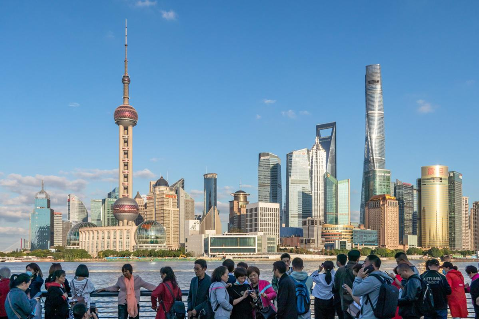
SHANGHAI — Shanghai has set a GDP growth target of around 5 percent for 2026, Mayor Gong Zheng said on Tuesday while delivering a government work report.

 The target follows better-than-expected economic expansion in 2025. Shanghai’s GDP grew 5.4 percent year-on-year to 5.67 trillion yuan ($814.6 billion) last year, according to the report.

 Lu Ming, director of the Shanghai Institute for National Economy at Shanghai Jiao Tong University, said that setting the growth target at around 5 percent reflects Shanghai’s strategic resolve and pragmatic approach. He noted that this target supports sustained growth while addressing a new stage of development and adapting to evolving external conditions.

 Domestic demand will play a more prominent role in Shanghai’s economic growth in 2026, the report said. The megacity plans to vigorously boost consumption by developing the debut economy, nighttime economy, livestreaming economy and silver economy, while promoting deeper integration of culture, tourism, commerce, sports and exhibitions.

 The report added that Shanghai will also enhance facilitation for inbound tourism, departure tax refunds and cross-border payments to further boost inbound consumption.

 Shanghai recorded a remarkable 9.36 million inbound visits last year, up nearly 40 percent year-on-year and setting a new record for annual inbound tourism.

 In addition, the major Chinese financial hub will do its utmost to stabilize foreign trade and foreign investment, encouraging more foreign investment in sectors such as advanced manufacturing, modern services, high-tech, and energy conservation and environmental protection industries.

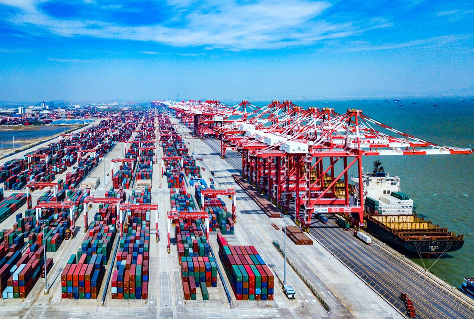
 In 2025, Shanghai’s total imports and exports reached 4.51 trillion yuan, up 5.6 percent year-on-year, with exports rising 10.8 percent. Actual utilization of foreign investment totaled $16.06 billion, while more multinational companies established regional headquarters or research and development centers in the city.

 Technological innovation and emerging industries remain key drivers of Shanghai’s high-quality development. The report said the metropolis will further strengthen its role as an international science and technology innovation center, promote deeper integration of technological and industrial innovation, and foster new quality productive forces.

 In 2025, R&D expenditure accounted for about 4.5 percent of Shanghai’s GDP, according to official data.

 Xinhua – China Daily


Article inline ad

HK’s IPO Market Starts Year On Strong Note

0

By WANG ZHEN in Hong Kong | China Daily | Updated: 2026-02-05

The Hong Kong initial public offering market opened the year on a strong note, as January has been a very robust month for debuts, with the momentum stemming from positive market sentiment and a strong pipeline following stellar results in 2025.

 By the end of January, 13 new IPOs had listed on the Hong Kong bourse, representing a year-on-year increase of 62.5 percent, said Hong Kong Exchanges and Clearing Ltd (HKEX). Total proceeds reached approximately HK $39.3 billion ($5.03 billion), up 556.2 percent from a year earlier and marking the strongest January fundraising performance on record.

 Artificial intelligence tech companies led the way. Two of the Chinese mainland’s largest generative AI startups, MiniMax and Zhipu, coupled with AI chipmakers Biren and Iluvatar CoreX, made dazzling debuts in January, collectively raising nearly HK $20 billion.

 Ning Bo, director of the equity research department at China Merchants Securities (HK), said the city has built a complete AI industry chain ecosystem, spanning underlying computing hardware, foundation models and vertical applications.

 This ecosystem can generate new markets through technological innovation, creating a supply-led demand dynamic that is expected to attract sustained medium-to-long-term capital inflows and support valuation re-rating, Ning said.

 He pointed out that the benchmark Hang Seng Index is currently trading at a price-to-earnings ratio of a multiple of 12, with a return on equity of about 10.7 percent, indicating clear undervaluation. With continued southbound and overseas capital inflows, Ning expects the index to rise roughly 15 percent in 2026.

 According to HKEX, 440 companies were in the listing pipeline as of end-January, of which 26 have been approved and are awaiting listing, while the remaining 414 are still under review.

 Amid the IPO boom, regulators have intensified scrutiny to ensure listing quality and safeguard Hong Kong’s status as an international financial hub.

 On Jan 30, the Securities and Futures Commission (SFC) of Hong Kong highlighted in a circular serious deficiencies in the preparation of some listing documents, sponsors’ potential misconduct and significant mismanagement of resources amidst a surge in new listing applications in 2025.

 The circular also found that some sponsors were unfamiliar with regulatory requirements and lack experience and resources to handle applications. By the end of 2025, the SFC had required 13 sponsors to conduct comprehensive reviews within three months.

 According to SFC CEO Julia Leung Fung-yee, 13 sponsors accounted for approximately 70 percent of the market’s IPO projects, involving 433 IPO applications.

 “The gatekeeping role of sponsors in the listing process is critical to maintaining the quality of Hong Kong’s capital market and sustaining investor confidence in new listings that will hold up through all market cycles,” Leung said.

 She urged all sponsors and external professional parties involved in the listing application process to uphold the quality of their work in order to maintain Hong Kong as a leading international fundraising center.

 Ning said such regulatory measures should help moderate the pace of IPOs and alleviate liquidity pressures more effectively. He expects the tighter oversight will also prompt mainland regulators to raise the bar on financial and market-capitalization thresholds for companies seeking to list in Hong Kong, ultimately drawing more high-quality issuers to the city.

 Hong Kong reclaimed the world’s top spot for IPOs in 2025 after a slump since its 2021 peak.

 akirawang@chinadailyhk.com

Article inline ad

China, APEC Up Cooperation Packages

0

Total trade with partners hit 26.29 trillion yuan in 2025, 57.82% of nation’s overall

By ZHONG NAN in Guangzhou | China Daily | Updated: 2026-02-05

China stands ready to deepen cooperation with other APEC economies on cross-border e-commerce, green trade and agricultural product market access to expand opportunities through inclusive opening and pragmatic collaboration, said a senior customs official on Wednesday.

 Speaking at a meeting during the First Senior Officials’ Meeting and Related Meetings of APEC China 2026 in Guangzhou, capital of South China’s Guangdong province, Zhao Zenglian, vice-minister of the General Administration of Customs, highlighted growing pressures on global and regional supply chains.

 Zhao said that in response to common challenges, customs authorities of all APEC economies should enhance regulatory transparency, strengthen policy communication, optimize customs procedures and foster a more stable, fair, transparent and predictable business environment.

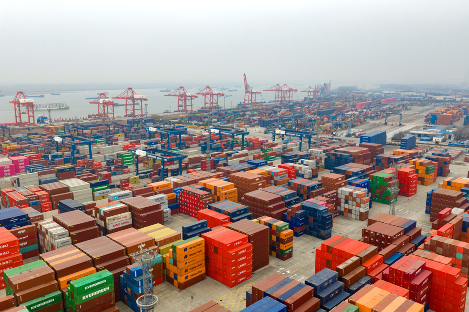
 Customs data showed that China’s total trade with other APEC economies reached 26.29 trillion yuan ($3.79 trillion) in 2025, accounting for 57.82 percent of the nation’s overall foreign trade for the year. Over the 14th Five-Year Plan period (2021-25), China’s cumulative trade with other APEC economies amounted to 125.49 trillion yuan, up 39.4 percent from the previous five-year period.

 This expanding trade footprint has been accompanied by shifting transport patterns and a more diversified market structure. China’s foreign trade with emerging economies such as members of the Association of Southeast Asian Nations, Peru and Mexico maintained robust growth last year, said the administration.

 Zhao said APEC economies should enhance the interoperability of digital infrastructure, and promote cross-border system connectivity and data exchanges to achieve wider and deeper interconnectivity.

 Officials from other APEC economies echoed the need for closer, practical customs cooperation, emphasizing information sharing, digital connectivity and risk management to keep trade flowing.

 Scott Butters, senior representative of the Australian Border Force, said stronger information sharing between Australia and China would facilitate faster and more efficient two-way trade while jointly identifying and managing risks so that both sides can respond promptly to potential concerns.

 Brendan Pearce, counselor for customs affairs at the New Zealand embassy in Beijing, said that with rising trade and limited customs resources, the key question is how to use artificial intelligence to process more information efficiently so legitimate goods can move across borders more quickly and seamlessly.

 Underpinning these trends, China’s continued shift toward high-end manufacturing and modern services in 2025 pushed its exports of high-tech products to other APEC economies to 4.63 trillion yuan, up 8.1 percent year-on-year, led by electric vehicles, lithium-ion batteries and photovoltaic equipment, the GAC said.

 The trend is also visible at the firm level. LM Wind Power Blades (Fujian) Co, a large-scale wind turbine blade manufacturer in Fuzhou, Fujian province, exported 17 batches of high-end wind turbine blades, with a total value of 650 million yuan in 2025, representing a year-on-year increase of 88.9 percent in volume and 82.3 percent in value, maintaining strong growth momentum in other APEC markets, said Fuzhou Customs.

 Feng Zili, the company’s plant general manager in Fuzhou, said that as the global offshore wind power sector continues to expand rapidly — especially in many APEC economies — large, lightweight and highly reliable wind turbine blades are emerging as the industry mainstream.

 CJ (Shenyang) Biotech Co Ltd, a feed supplier based in Shenyang, Liaoning province, and a subsidiary of South Korean conglomerate CJ Group, has seen market demand for feed additives in many APEC economies such as Australia, Mexico and Thailand continue rising in recent years.

 Its exports of feed additives to other APEC economies reached 630 million yuan in 2025, soaring 45.4 percent year-on-year, Shenyang Customs said.

 “We will further tailor our products and services to APEC markets to better tap their growth potential and build more stable, long-term partnerships with local customers,” said Xiao Chuanhong, head of CJ (Shenyang) Biotech’s export unit.

 zhongnan@chinadaily.com.cn


Article inline ad

World’s Fastest Humanoid Robot Unveiled, Given Usain Bolt Namesake

0

By CHENG YU | chinadaily.com.cn | Updated: 2026-02-04

Zhejiang University and Shanghai robotics company JingShi Technology announced the launch of Bolt, a full-size humanoid robot that reached a peak running speed of 10 meters per second, which they said is the fastest full-size running robot in the world.

 At 175 centimeters tall and weighing 75 kilograms, Bolt clocked speeds that outpace any previously recorded full-size humanoid robot, the developers said. The robot’s name was inspired by sprint legend Usain Bolt.

 The achievement builds on the team’s earlier work — a quadruped robot unveiled in January — that exceeded 10 meters per second and set the world record for four-legged running machines.


Article inline ad

Medical Experts: Accelerate Clinical Use Of Brain-Computer Interface To Benefit Public Health

0

By Yin Mingyue | chinadaily.com.cn | Updated: 2026-02-04

As China released a high-tech medical device to help some 23 million children suffering from attention deficit hyperactivity disorder (ADHD), scientists and medical experts have called for the accelerated clinical translation of brain-computer interface (BCI) to benefit mankind.

 Tan Weihong, an academician from the Chinese Academy of Sciences, said BCI can establish an integrated system of “diagnosis-treatment-rehabilitation” and its clinical translation should be accelerated to serve human health.

 Following official approval, Zhejiang Qiangnao Technology Co Ltd (BrainCo) released the ADHD intervention product “FocusXin” Medical Edition on Jan 31 in Beijing during the Brain-Computer Interface Diagnosis and Treatment Innovation Academic Exchange Meeting and Technology Launch.

 “Whether BCI can really bring good news to patients is our most fundamental purpose,” Tan said.

 The product has taken the lead globally in achieving the joint use of software and hardware medical devices for children’s attention training, opening up a new path for the rehabilitation of tens of millions of ADHD children. This marked a new stage in the standardized clinical application of BCI technology in the field of pediatric neurorehabilitation.

 ADHD is considered one of the common psychological and behavioral disorders in children. The first epidemiological report on mental disorders among children and adolescents in China showed that the total prevalence of mental disorders among students aged 6-16 in China is 17.5 percent, of which ADHD accounts for about 6.4 percent — affecting about 23 million children.

 During the event’s academic exchange session, Zhang Guojun, former Party secretary of Beijing Children’s Hospital affiliated to Capital Medical University, said that new technologies such as BCI have opened up new avenues for surgery and can provide a new intervention path for problems difficult to solve with drugs. Several pediatric experts agreed that BCI has great potential in the field of pediatric medicine and needs to be unleashed through multidisciplinary collaboration.

 The “FocusXin” Medical Edition includes rehabilitation training software and a prefrontal lobe single-channel electroencephalogram (EEG) collector — both of which have obtained medical device registration certificates — achieving full-chain medical device certification for both software and hardware.

 The product is lightweight and easy to operate — breaking the complex wiring and high threshold of traditional EEG equipment — and achieving an important breakthrough in BCI technology from the laboratory to clinical application.

 Han Bicheng, founder and CEO of BrainCo, said the company is committed to helping millions of disabled people improve their lives in the next decade and helping tens of millions of patients with neuropsychiatric diseases recover.

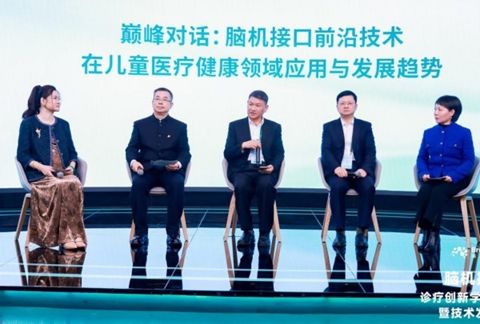
 During a round-table dialogue session, experts exchanged views on the multi-party collaboration mechanism for ADHD treatment, unanimously agreeing that it is necessary to promote collaboration among hospitals, enterprises, schools, and other parties, to optimize clinical pathways, cultivate professional talents, and build a benign application ecosystem so that technology can truly benefit more children with ADHD.

 Please contact the writer at yinmingyue@chinadaily.com.cn

Article inline ad

Shanghai Seeks Balanced Development Of Housing Ownership, Leasing Biz

0

By WANG YING in Shanghai | China Daily | Updated: 2026-02-04

Shanghai’s latest initiative to ensure the supply of government-subsidized rental housing through acquiring pre-owned homes is expected to better address diverse leasing demand in the market and effectively support the balanced development of housing ownership and leasing, said experts in response to the move.

 On Monday, the first batch of such projects was officially launched at a signing ceremony in Shanghai, with local governments of Jing’an district, Xuhui district and Pudong New Area piloting the initiative separately, reported local news portal Shanghai Observer.

 “By bridging pre-owned homes and rental housing, the policy can effectively help reduce the stock of existing homes that are less competitive due to age, size and condition,” said Yan Yuejin, deputy head of the Shanghai-based E-House China R&D Institute.

 “In addition, transactions of existing homes will speed up these owners’ moves to buy new apartments. As a result, the inventory of new homes in the market can also see easing,” Yan said.

 According to the plan, apartments of a suitable size with reasonable designs in established communities — and enjoying convenient transportation resources — will be purchased by district governments. These flats will then accurately match the leasing needs of new residents, young people and university graduates, among other demographics, Securities Times reported.

 Pudong New Area, for example, looks to focus on acquiring privately owned flats located within the Inner Ring Road area, built before 2000, under 70 square meters and priced below 4 million yuan ($580,000). As for Jing’an district, secondhand apartments with moderate prices will be preferred. Meanwhile, Xuhui district is exploring small apartments on the market via the district’s affordable housing developers, and the flats will be decorated and equipped using unified standards after acquisition.

 “China Construction Bank’s financial support in the first batch of government subsidized housing purchases would effectively ensure the supply of such rental housing, lowering young people’s living costs, in a bid to attract more talent to settle down,” said Zhang Wenjing, general manager of the Shanghai data division with the China Index Academy.

 “In the meantime, government purchases of existing homes would help stabilize pre-owned housing market transactions and prices, and better balance supply and demand. Furthermore, the new measures are expected to ease inventory pressure, drive new home sales, and support the balanced development of ownership and rental housing,” Zhang said.

 The municipal government of Shanghai announced on Friday it would extend the trial measures of collecting property taxes from eligible individuals, according to a notice published on the official website of the Shanghai Municipal Bureau of Finance.

 “After assessing the city’s trial policies on levying real estate taxes, the municipal government has decided to continue to execute the policy until Jan 27, 2031,” said the notice.

 Shanghai and Chongqing became the only two cities on the Chinese mainland to levy property taxes in 2011.

 In Shanghai, such taxes are only collected from families having housing areas of more than 60 square meters per person, which will be taxed at a rate of 0.4 percent or 0.6 percent of the total property price annually, depending on the apartment’s price per square meter.

 wang_ying@chinadaily.com.cn

Article inline ad