DALIAN, Sept. 15 (Xinhua) — Iron ore futures closed higher on Friday in daytime trading at the Dalian Commodity Exchange (DCE).
The most active iron ore contract for January 2024 delivery gained 20 yuan (about 2.79 U.S. dollars) to close at 879 yuan per tonne.
On Friday, the total trading volume of 12 listed iron ore futures contracts on the exchange was 688,729 lots, with a turnover of about 60.13 billion yuan.
As the world’s largest importer of iron ore, China opened the DCE iron ore futures to international investors in May 2018.
BEIJING, Sept. 15 (Xinhua) — China’s retail sales of consumer goods, a major indicator of consumption strength, registered faster growth in August after a slowdown lasting three consecutive months, official data showed Friday.
Retail sales went up 4.6 percent year on year to 3.79 trillion yuan (about 527.96 billion U.S. dollars) last month, according to the National Bureau of Statistics (NBS). The growth rate was higher than the 2.5-percent expansion recorded in July.
The recovery of the consumer market picked up pace with rapid growth in service consumption, the NBS said in a statement.
Service consumption, which surged 19.4 percent in the first eight months of 2023, emerged as a major growth driver, and online sales registered vibrant year-on-year growth of 12.1 percent in the same period. In August, the catering sector maintained its momentum with combined revenue up 12.4 percent.
In the January-August period, retail sales of consumer goods rose 7 percent from a year earlier, the NBS data revealed.
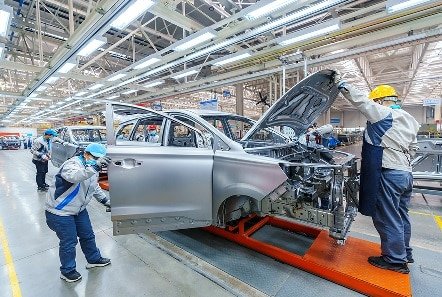
BEIJING, Sept. 15 (Xinhua) — China’s value-added industrial output, an important economic indicator, went up 4.5 percent year on year in August, data from the National Bureau of Statistics (NBS) showed Friday.
From January to August, industrial output rose 3.9 percent year on year, according to the NBS.
Among the three major sectors, the mining sector and the manufacturing sector expanded by 2.3 percent and 5.4 percent, respectively, in August, while the production and supply of electricity, heat, gas and water rose 0.2 percent.
In a breakdown by ownership, the output of state-controlled companies, joint-equity firms, and private enterprises went up 5.2 percent, 5.7 percent and 3.4 percent year on year, respectively, last month.
In terms of products, the output of solar cells surged by 77.8 percent, while that of power units rose 32.4 percent.
The industrial output is used to measure the activity of enterprises each with an annual main business turnover of at least 20 million yuan (about 2.79 million U.S. dollars).
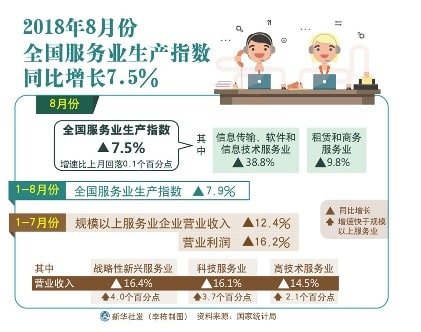
BEIJING, Sept. 15 (Xinhua) — China’s service production index went up 6.8 percent year on year in August, data from the National Bureau of Statistics (NBS) showed Friday.
The growth rate was 1.1 percentage points faster than the previous month, it added.
The sub-reading for accommodation and catering surged by 16.1 percent year on year.
The sub-index tracking the output of the information transmission, software and IT services climbed 11.5 percent, while that for financial services expanded 7.2 percent, according to the NBS.
The index measuring business activity in the service sector stood at 50.5 percent in August, above the 50-percent boom-bust line.
The service production index increased by 8.1 percent year on year in the first eight months of 2023, and the combined revenues of major service enterprises rose 7.2 percent year on year in the first seven months of the year.
Spending in the service sector expanded significantly, providing strong support for consumption growth, said NBS spokesperson Fu Linghui, adding that the trend of sustained growth of consumption will be generally stable in the next stage, which will be conducive to economic recovery
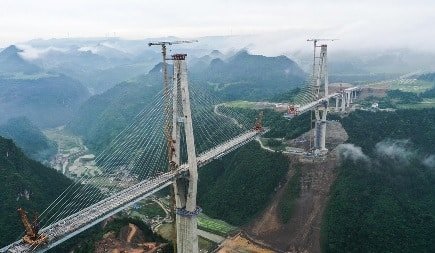
BEIJING, Sept. 15 (Xinhua) — China’s fixed-asset investment went up 3.2 percent year on year in the first eight months of 2023, data from the National Bureau of Statistics showed Friday.
Total investment stood at 32.7 trillion yuan (about 4.56 trillion U.S. dollars) in the period, the bureau said in a statement.
Investment in infrastructure construction increased 6.4 percent from the same period last year, and manufacturing investment rose 5.9 percent. Capital flowing into property development fell 8.8 percent, while investment from the private sector inched down 0.7 percent.
High-tech industries saw rapid growth, with investment up 11.3 percent year on year. Specifically, investment in the high-tech manufacturing and high-tech services sectors expanded 11.2 percent and 11.5 percent, respectively.
BEIJING, Sept. 14 (Xinhua) — The following are the central parity rates of the Chinese currency renminbi, or the yuan, against 24 major currencies announced on Thursday by the China Foreign Exchange Trade System:
Currency Unit Central parity rate in yuan
U.S. dollar 100 718.74
Euro 100 776.11
Japanese yen 100 4.9174
Hong Kong dollar 100 91.807
British pound 100 903.23
Australian dollar 100 465.19
New Zealand dollar 100 429.02
Singapore dollar 100 531.57
Swiss franc 100 809.38
Canadian dollar 100 534.36
Malaysian ringgit 65.084 100
Ruble 1,331.06 100
Rand 260.59 100
Korean won 18,312 100
UAE dirham 50.829 100
Saudi riyal 51.906 100
Hungarian forint 4,967.95 100
Polish zloty 59.846 100
Danish krone 96.14 100
Swedish krona 153.89 100
Norwegian krone 148.01 100
Turkish lira 372.886 100
Mexican peso 238.35 100
Thai baht 492.54 100
The central parity rate of the yuan against the U.S. dollar is based on a weighted average of prices offered by market makers before the opening of the interbank market each business day.
The central parity rate of the yuan against the Hong Kong dollar is based on the central parity rate of the yuan against the U.S. dollar and the exchange rate of the Hong Kong dollar against the U.S. dollar at 9 a.m. in international foreign exchange markets on the same business day.
The central parity rates of the yuan against the other 22 currencies are based on the average prices offered by market makers before the opening of the interbank foreign exchange market.
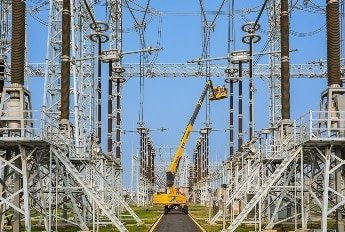
BEIJING, Sept. 14 (Xinhua) — China’s electricity consumption, a key barometer of economic activity, continued stable expansion in August, official data said Thursday.
The power use climbed 3.9 percent from a year ago to 886.1 billion kilowatt-hours last month, driven by robust industrial power demand, according to the National Energy Administration.
Power consumed by primary industries went up 8.6 percent year on year, and power used by secondary and tertiary sectors gained 7.6 percent and 6.6 percent, respectively. However, residential power use registered a 9.9 percent decline.
In the first eight months combined, the country’s electricity consumption rose 5 percent from a year earlier to 6.08 trillion kilowatt-hours.
BEIJING, Sept. 13 (Xinhua) — New flexible employment has seen strong expansion in China in recent years amid the development of the digital and platform economy, according to a report.
The number of employees in new flexible employment accounted for 19.1 percent of all employees in the first quarter of 2023, up from 13.8 percent in the same period of 2020, said the report jointly released by Jinan University and online recruitment platform Zhaopin.
In the first quarter of 2023, 23.2 percent of all jobseekers desired to have new flexible employment. The figure went up from 18.6 percent in the first quarter of 2020, said the report.
New flexible employment posts are categorized in eight fields, including platform e-commerce, delivery, life service, knowledge service, platform livestreaming and ride-sharing drivers, said Guo Sheng, president of Zhaopin.
Such job opportunities are mainly found in sectors such as transport, logistics, warehousing, culture, media, entertainment and sports. Women, young people and those lacking work experience prefer new flexible employment positions, said the report.
It also revealed that new flexible jobs offer better payment compared with traditional employment, but the welfare level is lower
YINCHUAN, Sept. 13 (Xinhua) — The upcoming China-Arab States Expo will, for the first time, include a conference on meteorological collaboration, the event’s organizers said Wednesday.
The sixth China-Arab States Expo is scheduled from Sept. 21 to 24 in Yinchuan, the capital of northwest China’s Ningxia Hui Autonomous Region.
The meteorological conference will include a main forum on meteorological development and cooperation. It will also include a round-table meeting on natural disasters and climate change and a parallel forum on providing meteorological services for countries and regions along the Belt and Road.
It will hold an exhibition for advanced meteorological equipment and technologies as well.
The conference will invite experts from the World Meteorological Organization, the China Meteorological Administration, and officials from 12 Arab states.
Xu Xianghua with China Meteorological Administration said China and the United Arab Emirates would conduct further meteorological cooperation on various fronts, including climate monitor and AI meteorological technologies after the two sides signed a Memorandum of Cooperation earlier this year.
Xu also said China’s nine Fengyun meteorological satellites have been providing all-day monitoring for Arab states. Ten Arab countries have become users of Fengyun satellites’s data
BEIJING, Sept. 14 (Xinhua) — Chinese stocks opened mixed on Thursday, with the benchmark Shanghai Composite Index up 0.06 percent to open at 3,124.85 points.
The Shenzhen Component Index opened 0.12 percent lower at 10,243.24 points.