BEIJING, Sept. 14 (Xinhua) — The ChiNext Index, tracking China’s Nasdaq-style board of growth enterprises, was down 0.3 percent to open at 2,021.6 points Thursday.
The ChiNext Index, together with the Shenzhen Component Index and other indices, reflects the performance of stocks listed on the Shenzhen Stock Exchange.
BEIJING, Sept. 14 (Xinhua) — The central parity rate of the Chinese currency renminbi, or the yuan, strengthened 20 pips to 7.1874 against the U.S. dollar Thursday, according to the China Foreign Exchange Trade System.
In China’s spot foreign exchange market, the yuan is allowed to rise or fall by 2 percent from the central parity rate each trading day.
The central parity rate of the yuan against the U.S. dollar is based on a weighted average of prices offered by market makers before the opening of the interbank market each business day.
GUANGZHOU, Sept. 13 (Xinhua) — A car-shipping vessel dual-powered by liquefied natural gas (LNG) and fuels, manufactured by Chinese shipyards, was delivered to Norwegian company SFL Corporation Ltd. on Tuesday.
The ship with 13 decks measures 200 meters in length and 38 meters in width. It boasts a speed of 19 knots, a maximum cruising range of 15,000 nautical miles and can transport a maximum of 7,000 vehicles. Its two decks can accommodate hydrogen-powered vehicles.
The ship, named “EMDEN,” was jointly manufactured by Guangzhou Shipyard International Company Limited and China Shipbuilding Trading Co., Ltd.
The past two years have witnessed a surge in market demand for car-shipping vessels, partly due to insufficient shipping capacity, and partly due to failures of veteran ships to meet the current emission requirements.
BEIJING, Sept. 13 (Xinhua) — China invested a record 985.6 billion yuan (about 137.09 billion U.S. dollars) in the construction of water conservancy facilities during the first eight months of the year, an official said Wednesday.
A total of 23,600 water conservancy projects were launched during this period, also a historical high, said Minister of Water Resources Li Guoying at a press conference.
The construction of water conservancy projects created more than 1.97 million jobs from January to August, and provided “strong support for the recovery of the country’s economy,” Li said.
In addition to advancing the construction of water conservancy projects, China also intensified its efforts to protect and restore freshwater ecosystems.
Nearly 7 billion cubic meters of water were injected into 48 rivers and lakes in the Haihe River Basin in 2022 and most rivers in north China have had flowing and clean water, while more and more rivers have come back to life, Li said.
BEIJING, Sept. 13 (Xinhua) — China’s Ministry of Finance has rolled out policies to boost inclusive finance in the next five years. These policies will take effect on Oct. 1.
The central government will arrange funds for inclusive finance to support discounts in start-up loan interest rates, construction of demonstration-zone for inclusive finance, and subsidies for rural financial institutions.
Eligible start-ups can apply for a discount of 50 percent of the actual loan interest rate or other subsidies amid the country’s efforts to create jobs, according to the policies.
China has been facilitating financing for small businesses. The outstanding inclusive finance lending to small and micro-sized companies reached 27.7 trillion yuan (3.85 trillion U.S. dollars) at the end of June, up 26.1 percent year on year, according to the Ministry of Industry and Information Technology.
BELGRADE, Sept. 13 (Xinhua) — The leading Chinese electronics manufacturer Hisense inaugurated a new refrigerator plant in the city of Valjevo, central Serbia on Wednesday, at a ceremony attended by Serbian Prime Minister Ana Brnabic.
Hisense acquired the Slovenian brand Gorenje in 2018, and this week opened its third factory in Valjevo. The 40-million-euro plant will manufacture side-by-side refrigerators for the European market. Its expected annual output is 750,000 refrigerators.
Hisense’s Europe CEO Hanson Han said: “People are the ones who will translate our great vision into reality. That is why I am proud to announce that here in Valjevo, as many as 1,000 new employees will soon become part of our Hisense family.”
This brings the total number of Hisense employees in Valjevo to 2,750; over 10,000 in Europe, and over 100,000 worldwide, Han added.
Calling this day “extremely important” for both Valjevo and Serbia, the prime minister said: “We struggled for a long time to ensure a good economic climate in Valjevo to enable people to stay here.”
The Serbian government said in a press release that the new 35,000-square-meter factory makes Valjevo a global production center for refrigerators. The overall output of the three factories in Valjevo will reach 1.7 million devices by 2025
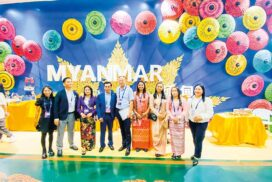
YANGON, Sept. 13 (Xinhua) — Myanmar will exhibit its products at the 20th China-ASEAN Expo with 80 booths, Htein Lin, deputy director-general of Myanmar Trade Promotion Organization under the Ministry of Commerce, told Xinhua on Wednesday.
Myanmar’s entrepreneurs from 75 companies will showcase agricultural products, food products, aquatic products and gems and jewelry during the four-day trade fair.
“By exhibiting our country’s products at the trade fair, other countries will learn about Myanmar products and buy the sample products, from which we can proceed with sales and purchase agreement,” he said.
Entrepreneurs can gain opportunities to tap overseas markets, he said.
The 20th China-ASEAN Expo will be held in Nanning, south China’s Guangxi Zhuang Autonomous Region from Sept. 16 to 19.
GENEVA, Sept. 13 (Xinhua) — “Re-globalization is in our common interest,” Ralph Ossa, chief economist of the World Trade Organization (WTO), told Xinhua in a recent interview.
According to Ossa, re-globalization means increased international cooperation and broader integration and is key to addressing the pressing challenges of our time and to building a secure, inclusive and sustainable future.
On Tuesday, the WTO published the 2023 edition of the World Trade Report. This flagship document presents new evidence of the benefits of broader, more inclusive economic integration as early indications of trade fragmentation threaten to unwind growth and development.
The report aims at challenging the rising trade-skeptic narrative, which suggests that international trade is an obstacle to building a more secure, inclusive and sustainable world, he said. Such narrative is “fundamentally different from the narrative that has been guiding trade policymaking since 1947.”
“Globalization is really at a crossroads,” as the tide is turning against it, but there’s still time to act, he said.
Trade policy tensions are on the rise and the first signs of fragmentation along geopolitical lines are already visible, but overall trade is holding up strong, hence the talk of de-globalization is certainly exaggerated, he noted.
“The economic costs of fragmentation are going to be large,” Ossa said. A simulation made by WTO economists suggests that in the worst-case scenario of full geopolitical rivalry, global incomes on average will fall by 5 percent, and trade flows on average will fall by 13 percent, he added.
To maintain peace and security, to reduce poverty and inequality, and also to achieve a sustainable economy, “we need to embrace trade and not reject it … we also need a multilateral trading system,” he stressed.
According to the chief economist, the WTO’s Trade Facilitation Agreement, which entered into force on Feb. 22, 2017, has increased trade by 231 billion U.S. dollars. These gains have particularly accrued to developing countries, indicating that the agreement takes important steps towards re-globalization, he said.
Speaking of China’s role in the re-globalization process, Ossa said that China is a supporter of the multilateral trading system and also of globalization.
China has benefited from participating in the multilateral trading system and has achieved spectacular economic growth, lifting millions of people out of poverty, thereby giving hope to developing countries around the world, he added
Roundup: Chinese companies expand opportunities at North America’s leading clean energy expo
by Xinhua writers Tan Jingjing, Gao Shan, Huang Heng
LAS VEGAS, Sept. 13 (Xinhua) — Chinese companies took the spotlight at North America’s leading clean energy expo held in Las Vegas, U.S. state of Nevada, this week, expanding their influence and opportunities on the global market.
The expo, named “RE+ 2023,” draws over 30,000 attendees and more than 1,300 exhibitors around the globe, showcasing the latest equipment, technologies and best practices in clean energy sectors.
Over 300 Chinese companies are participating in the four-day expo, ranging from solar, energy storage, hydrogen, to EV infrastructure, microgrids, wind and more, the expo organizer told Xinhua.
Many well-known Chinese new energy technology companies were on the show floor, including CATL, BYD, CALB, Gotion and DESAY, together with lots of startups.
Chinese companies have been taking the lead in offering clean energy solutions globally. Their innovative solar generators, appliances and clean energy solutions got full recognition from their overseas counterparts, and attracted lots of visitors and other exhibitors at the expo.
Gotion, a leading power battery technology company, joined “RE+ 2023” with an array of clean energy solutions, including residential, commercial and industrial, as well as utility scale energy storage systems.
“RE+ offers a good opportunity to boost our brand awareness in the clean energy field in North America, and also helps us to strengthen connections with our North American and global customers,” Jason Hao, director of market and business development of Gotion, told Xinhua.
He said Gotion attaches great importance to the development of overseas markets, and has been adopting different strategies in response to industry policies in different regions.
Earlier this month, Gotion and the U.S. state of Illinois jointly announced a new 2 billion U.S. dollars electric vehicle lithium battery manufacturing plant in Manteno, Illinois. The plant is expected to begin production in 2024.
Hao told Xinhua that Gotion expects to expand its market share on the North America market through localized production and supply chain strategies.
For Xiamen Ampace Technology Limited, this is the company’s first time to participate in the “RE+” expo with its own brand. The company showcased an array of innovative energy storage solutions at “RE+ 2023,” including commercial and industrial energy storage solutions, residential energy storage solution and uninterruptible power supply systems.
Ampace’s residential energy storage solution products have accounted for about 30 percent of the global market share, encompassing safety, reliability, operational costs, flexibility, energy density, and intelligent integration, Ethan Wei, director of business development of Ampace’s Energy Storage System, told Xinhua.
With Europe, Japan and North America as Ampace’s three main overseas markets, the company is also expanding businesses on emerging developing markets, such as South Africa, according to Wei.
“We hope to take the opportunity of RE+, the largest exhibition in the new energy industry, to better contact with our customers from all over the world, and reach out to more potential partners,” he told Xinhua.
“We hope to combine our company’s advantages in product manufacturing, product research and development, and quality control, with our overseas customers’ brands and their sales channels, to offer more China-made high-quality products globally, to contribute to the global clean energy industry,” Wei said.
Bluetti Power Inc., a clean energy startup, showcased their all-in-one home backup solution, energy storage system, and expandable portable power stations at the expo, with its 9000w energy storage system, named EP900, as a highlight.
EP900 features 9000w output, 9000w input and a maximum capacity of 19.8kwh. With an intelligent battery management system and reliable lithium iron phosphate battery pack, the equipment gives its optimal performance regardless of weather conditions, according to the company.
Chunjun Wang, vice president of business development of Bluetti, told Xinhua that China enjoys advantages in the clean energy sector both in terms of technologies and production capacities. “We should maintain our advantage through sustainable development.”
“We need to better understand our customers, their habits, needs, different application scenarios. Based on that information, we should upgrade our products with more advanced technologies, and offer customers with safer, more convenient and more environmentally friendly products,” Wang said.
In an interview with Xinhua, Xiang Zheng, vice president of CALB, stressed the importance of innovation.
Innovation-driven development has helped to lay a solid foundation for Chinese companies to stay ahead in the global clean energy market, he said.
Chinese exhibitors always bring the latest technology to North America’s leading clean energy expo, the expo’s organizer told Xinhua.
“RE+ 2023,” running from Monday to Thursday, offers a platform for companies, professionals and educators from around the world to share best practices in clean energy solutions and expand business prospects.
THE HAGUE/BERLIN, Sept. 13 (Xinhua) — Eight months ago, Ben Malawau, a Dutchman with more than 30 years of experience behind the wheel, decided to change his car. He then went out to test-drive a few new electric vehicles (EVs).
During a mere 30 minutes into his fifth test drive — this time of Chinese EV maker BYD’s Atto 3 — a decision solidified for the 59-year-old “seasoned driver,” concluding weeks of contemplation and selection.
Malawau said his first visit to BYD’s showroom in Rotterdam was the result of a recommendation from his Chinese colleague and his prior knowledge of BYD’s advanced battery technology. The Atto 3 made a compelling impression on Malawau in terms of its performance, features and value for money, leaving him with no hesitation to take it as his 10th car.
“We enjoy the car because of the large screen on the dashboard … All the things are in place, it’s very easy, very comfortable to drive,” said Malawau, describing the model as offering “better quality and functionality” at a “cheaper price,” loved by the whole family.
The Atto 3 exemplifies the burgeoning trend in Chinese new energy vehicle (NEV) design, characterized by the integration of advanced driver-assistance systems and digital features like entertainment and information systems. Such enhancements notably elevate the driving experience, making them a crucial factor in attracting European consumers.
In January, Malawau launched a Facebook group for Atto 3 owners, which has since expanded to over 300 members. “Every day we share our experiences with that car. And we are all very positive about it,” he said.
Malawau and his online friends have a front-row seat to witness the growth of Chinese NEV sales in international markets, particularly in Europe.
Data from the China Association of Automobile Manufacturers revealed that from January to July this year, China exported 636,000 NEVs, a 150 percent increase compared to the previous year.
According to France’s auto consultancy Inovev, Chinese EVs account for 8 percent of all new EVs sold in Europe this year, marking a steady increase from 6 percent in the previous year and 4 percent in 2021.
Recognizing the advantages of Chinese automakers, such as their rapid tech innovation and software development, as well as their early entry in the EV sector, Ferdinand Dudenhoeffer, director of the Germany-based CAR Center Automotive Research Duisburg, reckoned “in the next five to ten years, a lot of Chinese electric vehicles and new energy vehicles will populate Europe’s roads.”
While gradually gaining consumer recognition in Europe, Chinese EV makers are crafting their very own approaches to establishing local partnerships and business networks.
Since October 2022, BYD has partnered with the Dutch firm Louwman Group to launch dealerships in the Netherlands. Up to now, they have effectively delivered more than 700 BYD electric cars, with two showrooms operating in the country’s two largest cities, Amsterdam and Rotterdam, and an additional one under construction in Eindhoven, a hi-tech and design hub.
For Louwman’s President Eric Louwman, BYD should be defined not merely as a Chinese brand but as a global player with a high technological level, good quality and the service backing of a local partner.
Another Chinese EV startup, NIO, has taken a different, direct-to-customer strategy, bypassing middleman retailers. Naturally, sparking customer interest and creating sellable features is of special relevance for this newcomer.
“If you want to become a great car company, the European market is a challenge that you can’t evade,” Chen Chen, managing director of NIO’s European business development, told Xinhua. “But the market in Europe is very different from that in China.”
Situated on Berlin’s Kurfurstendamm Boulevard — an iconic location where locals and visitors flock to discover the latest in fashion and designer items — NIO’s inaugural showroom in Germany could easily be confused with a co-working space, an art gallery or a cafe.
Serving as the essential first point of contact with customers, the showroom, from location to design, is carefully tailored to the local market. “We want local people to visit our place as a leisure destination.”
Committed to effective localization and exploring innovative business models, NIO launched an initiative called “Battery as a Service,” which is supported by its expanding network of battery swap stations. The brand allows consumers to buy a car separately from the battery with a more flexible payment structure. Simultaneously, users can subscribe to “battery packs” to enjoy access to NIO’s power swap station and battery upgrade services.
For the interview with Xinhua, Chen drove from Amsterdam to Duesseldorf in a NIO EL7, a compact electric sports utility vehicle. Thanks to NIO’s battery swap service, he could complete the 500-km round trip in a day without the need to stop for a recharge.
Currently, 98 percent of NIO’s European customers opt to lease batteries and take advantage of the fast battery swapping service, Chen said.
While NIO has made a rapid entry into the German, Dutch, Swedish and Danish markets since its debut in the European market via Norway in 2021, its models are still relatively scarce on the streets. However, Chen emphasized, “We are not in a hurry.”
“People in Europe have been buying cars for generations. We need to be patient to become their new choice,” he said.
The confidence of Chinese EV manufacturers in their prospects is bolstered by a community of European car owners and industry insiders, who envisage further growth in the European market for Chinese EV brands, including BYD, NIO, Xpeng, Hongqi or Lynk & Co.
“In the next few years, I will still be driving the BYD, and I’m very confident and satisfied with it,” Malawau said
The national independent innovation demonstration zone in Lanzhou and Baiyin cities of Gansu province, in northwest China, serves as a trial area for sci-tech innovation and reform. Over the years, it has successfully nurtured specialized enterprises and accumulated a pool of experts, making significant contributions to the high-quality development of the province.
“When I first arrived in Gansu to start my business, my factory was poor, our products were unknown, and our market share was less than 10 percent of what it is today,” said Xia Xiang, chairman of Lanzhou Holyshine Pharmaceutical Company.
Fortunately, the establishment of the demonstration zone provided Xia’s company with opportunities for rapid development.
“By establishing collaborative partnerships with universities like Gansu University of Political Science and Law, Gansu University of Traditional Chinese Medicine, and Harbin Medical University, my company set up a scientist partner mechanism to facilitate new product research and development using various approaches,” said Xia. He further added that his company has successfully developed several well-known brands of proprietary Chinese medicine as a result.
The rapid development of the demonstration zone has been made possible through substantial investment support.
As early as 2015, Gansu allocated a 2.3 billion RMB fund to support technological innovation among enterprises operating within the zone. Concurrently, it encouraged financial institutions and venture capital firms to establish branches and devise innovative financial products and service models tailored for these enterprises.
In recent years, the province has concentrated its efforts on leveraging its advantages in biomedicine, new energy, new materials and other sectors. According to Gansu Provincial Science and Technology Department, more than 1,100 sci-tech projects have been supported with an investment exceeding 1.1 billion RMB.
Thanks to financial backing, several research projects focusing on key core technologies have witnessed accelerated progress. Significant achievements, including the ion electric propulsion system, carbon ion therapy, and ultra-high temperature thorium-based molten salt pump, have successfully transitioned into industrial-scale production.
Furthermore, the demonstration zone has attracted experienced experts to form “think tanks” and establish major innovation platforms such as the Gansu Provincial Isotope Laboratory. Collaborative efforts in sci-tech research and industrialization have been implemented with institutions like the Ningbo Institute of Materials, under the Chinese Academy of Sciences.
Currently, the zone is home to nearly 41 percent of the province’s high-tech enterprises, 29 percent of its promising backbone enterprises, and 41 percent of the listed companies, demonstrating its pivotal role in boosting sci-tech innovation across various sectors.