Wednesday, November 25, 2026

Home Blog Page 92

Bank of China Flags a Slow-Burning Bull Market for China Equities

0

A-shares and Hong Kong stocks seen benefiting from reforms, earnings recovery, and global portfolio rebalancing

China’s equity markets are entering the early phase of a gradual but potentially long-lasting bull cycle, according to Bank of China (BOC), as structural reforms, improving corporate earnings, and shifting global capital flows converge.

In a newly released outlook, the state-owned lender said it is overweight on mainland A-shares and Hong Kong equities in 2026, arguing that China’s markets combine relatively attractive valuations with policy support and a more favorable global liquidity backdrop.

BOC expects the global financial environment to remain broadly accommodative this year, while China’s economy continues to expand at a pace above most major economies. The bank forecasts GDP growth of 4.7% to 5% in 2026, supported by proactive macro policies and a gradual recovery in domestic demand.

From Valuation Rebound to Earnings-Led Growth

2026 marks the first year of China’s 15th Five-Year Plan (2026–2030), a policy cycle that BOC believes will emphasize structural support and long-term economic resilience rather than short-term stimulus.

Senior executives at the bank said corporate profitability has reached an inflection point, a shift that could alter the character of China’s equity rally. While the market rebound in 2025 was largely driven by valuation repair, BOC expects earnings growth to play a more central role in 2026.

Citing projections from international institutions, the bank noted that non-financial Chinese listed companies are expected to post revenue growth of about 2.2% and profit growth of 5–8% this year.

If realized, this would mark a transition toward a more sustainable, “dual-engine” market expansion supported by both earnings growth and valuation re-rating.

Structural Forces Supporting a Re-rating

BOC International highlighted several longer-term forces that could underpin a re-assessment of Chinese equities:

Capital market reforms aimed at improving governance, disclosure, and long-term investment mechanisms

Economic transformation, including the shift toward advanced manufacturing and high-tech supply chains

Improved market infrastructure, enhancing the role of equities in capital allocation

Global asset diversification, as investors reassess exposure amid rising geopolitical and currency risks

The bank also pointed to expectations of gradual RMB appreciation, which could reinforce inbound capital flows and support equity valuations.

“Chinese assets are increasingly viewed not as conventional emerging market exposure, but as an integral part of global portfolios,” the report said, citing China’s role in high-tech supply chains and the broader global diversification away from US dollar–centric assets.

Wealth Management and Financial Opening

The outlook also touched on China’s efforts to expand household wealth and deepen financial opening. Policy discussions tied to the new Five-Year Plan include measures to raise household property income and promote the development of a more mature wealth management industry.

Reflecting this trend, Bank of China this week launched a new cross-border personal financial services platform, allowing clients to manage accounts across the Chinese mainland and Hong Kong through a unified interface.

What it means for global investors

For international investors, BOC’s outlook reinforces a growing narrative that China’s equity market is shifting from a tactical rebound story to a strategic allocation case.

If earnings growth continues to recover and capital market reforms gain traction, China could attract incremental long-term capital, particularly from investors seeking diversification, valuation discounts, and exposure to non-dollar assets. The implication is less about a sharp cyclical rally, and more about a slow re-entry of global capital into Chinese equities after several years of underweight positioning.

Article inline ad

Wenzhou’s GDP Surpasses 1 Trln Yuan

0

By CHEN YE in Hangzhou | CHINA DAILY | Updated: 2026-01-24

Wenzhou has officially joined the ranks of China’s top economic performers, with its GDP surpassing 1 trillion yuan ($143.6 billion) in 2025, thanks to its dynamic private sector, robust industrial economy and technological innovation.

 The announcement was made on Jan 20 at the 6th Session of the 14th Wenzhou Municipal People’s Congress, making Wenzhou the third city in Zhejiang province to reach this milestone after Hangzhou and Ningbo.

 Lyu Miao, an expert from the Yangtze Delta Region Institute of Tsinghua University, emphasized that this achievement is more than just a statistical breakthrough, “it represents a comprehensive leap forward in the city’s stature, industrial structure and ecosystem for innovation ecosystem.”

 The milestone solidifies Wenzhou’s role as the third pillar of Zhejiang’s economy and aligns with Zhejiang’s policy, initiated in 2022 and reaffirmed in 2024, to support the city’s faster rise as a key hub for high-quality growth.

 At the national level, Wenzhou is now one of 28 mainland cities that have reached the 1-trillion-yuan milestone, validating its successful evolution from a grassroots manufacturing hub to a sophisticated center of high-quality development.

 “Wenzhou is now more resilient and ambitious, firmly shouldering its responsibility as Zhejiang’s third economic powerhouse,” said Lyu.

 The private sector remains the defining feature and core competence of Wenzhou’s economy. By November 2025, the city recorded a total of 1.564 million market entities, ranking top in Zhejiang. Private enterprises accounted for 90.8 percent of the value-added of regular industrial enterprises. This vibrant expansion of market players has provided the strongest momentum in the surge of the city’s GDP.

 A robust industrial economy serves as the stabilizer of Wenzhou’s economic growth, supported by record-breaking resource supply. In 2025, Wenzhou supplied a record 15,200 mu (1,013 hectares) of industrial land. As resources flowed toward new quality productive forces, the industrial structure transformed. Last year, value-added output in the city’s five traditional advantageous industries grew by 11.4 percent, while that of its five leading emerging industries rose by 12.6 percent. Meanwhile, Wenzhou’s overall industrial output increased by 10.3 percent, ranking first in Zhejiang, and has outpaced national growth rates for 33 consecutive months.

 Technological innovation is a crucial factor of Wenzhou’s economic breakthrough. For five consecutive years, the municipal government has dedicated its first official meeting of the year to innovation. In 2025, government investment in science and technology rose by 10.4 percent. This funding supported Wenzhou’s “eight major innovation projects”, a comprehensive plan designed to streamline the path from laboratory research to market application. The city’s “one port and five valleys” cluster of specialized high-tech zones also provides chances for technological innovation.

 chenye@chinadaily.com.cn

Article inline ad

BOC: Long-Term Bull Run In Offing

0

Lender ‘overweight’ on A shares and Hong Kong stocks this year

By JIANG XUEQING | CHINA DAILY | Updated: 2026-01-24

A slow bull run has largely been established in the Chinese mainland’s A shares and is poised to benefit from capital market reforms and economic recovery, potentially evolving into a long-term bull market, according to the Bank of China.

 At the same time, Hong Kong stocks are gaining from the internationalization of Chinese assets and easing external liquidity, it added, recommending an “overweight” position in both A shares as well as Hong Kong stocks this year.

 “We believe that in 2026, the world will continue to benefit from a liquidity-loose environment. With China’s robust economic growth and valuation advantages in the stock market, combined with the ongoing global ‘de-dollarization’ trend, China’s stock market should become the first choice for global capital rebalancing,” said a report released by BOC’s personal banking department on Wednesday.

 This is the first year of the country’s 15th Five-Year Plan (2026-30) period, and BOC expects policies to continue supporting the economy structurally, aiming for a strong start to economic growth this year.

 With more proactive macroeconomic policy support, domestic demand is expected to stabilize and recover. The bank has projected China’s economic growth to range between 4.7 percent and 5 percent this year.

 “Looking ahead, the global economy will continue its weak recovery amid multiple overlapping uncertainties. However, under the country’s more proactive policies, China’s internal economic momentum will continue to solidify, and the long-term allocation value of Chinese assets will become even more prominent,” said Cai Zhao, executive vice-president of BOC.

 Wen Xiaobo, senior manager of the personal banking department of BOC, believes the profit inflection point for Chinese enterprises has already appeared this year.

 “Many foreign institutions project that, excluding financial institutions, Chinese listed companies will see revenue growth of 2.2 percent and profit growth of 5-8 percent. If this holds true, China’s stock market should transition from a valuation-driven rally in 2025 to a dual-engine growth model fueled by both valuation and earnings in 2026,” said Wen.

 Guan Tao, global chief economist at BOC International (China) Co Ltd, highlighted four key opportunities for China’s capital market, which holds strong long-term prospects.

 The first is comprehensive reform, which aims to unlock potential by addressing institutional barriers that hinder high-quality development. The second opportunity lies in China’s economic transformation, driving new avenues for growth. The third is the ongoing improvement in China’s capital market system, enhancing investment and financing functions to foster a more favorable environment for long-term investments. Last, the diversification of Chinese assets and the global asset rebalancing process will lead to value reassessment, injecting renewed vitality into the capital market.

 “The expectations of a slow bull and long-term bull market are continually strengthening, and with growing expectations of the appreciation of the RMB, global capital is likely to flow into China faster, participating in the process of revaluation of Chinese assets,” the report said.

 It emphasized that Chinese assets are no longer ordinary emerging market assets, but high-quality assets deeply integrated into the global high-tech industrial chain and an essential part of the global “de-dollarization” trend.

 The recommendations for formulating the 15th Five-Year Plan suggest leveraging multiple channels to increase the property income of both urban and rural residents, laying out a blueprint for the high-quality development of the wealth management industry.

 Cai said that China is actively advancing its high-level opening-up, with cross-border financial demand becoming increasingly diversified. Wealth management has entered a new era of global allocation and cross-border collaboration.

 On Wednesday, BOC launched its personal financial global service solution, built around the global account functionality.

 Cai described it as a practical implementation of the national strategy and an innovative approach to addressing clients’ cross-border financial challenges. By signing up for the service via the BOC or Bank of China Hong Kong mobile banking app, customers can manage and display their accounts in both the Chinese mainland and Hong Kong in a unified manner.

 jiangxueqing@chinadaily.com.cn

Article inline ad

China Spurs Africa’s Leap In AI Technology

0

Chinese firms promoting open-source AI models, targeting startups

By Cheng Yu | China Daily | Updated: 2026-01-23

At a converted warehouse on the outskirts of Nairobi, Kenya, a dozen young programmers gather around used laptops to develop an application. The artificial intelligence model they are using is trained to spot crop disease from a single smartphone photo. Interestingly, their small business is increasingly tied to China.

 Chinese firms such as Alibaba Group and Huawei Technologies have been promoting open-source AI models across Africa, targeting startups and innovation hubs. Freely available and modifiable, these models allow developers to build products without paying high licensing fees.

 This approach contrasts sharply with that of most companies in the United States including OpenAI whose AI ecosystems are largely proprietary, with software, training data and algorithms tightly controlled by parent firms and monetized through paid access.

 While global attention has focused on Western technology companies competing for lucrative enterprise contracts in the United States and the Middle East, the scene in Nairobi highlights a different strategy adopted by their Chinese counterparts.

 In many African countries, computing power remains costly and scarce. Making AI cheaper and more energy-efficient could allow the world’s most coveted technology to reach millions of new users, enabling local startups to design products tailored to African realities rather than external markets, industry experts said.

 Wei Kai, head of the artificial intelligence research institute at the China Academy of Information and Communications Technology, said that the shift reflects a deeper rollout of China’s AI Plus initiative.

 “China’s AI companies going global have moved beyond the simple export of products or services. Instead, they are enabling the intelligent upgrading of local industrial chains through technology empowerment,” Wei said.

 Wei said that the overseas growth of Chinese AI technologies is not only about broadening application scenarios, but also about addressing concrete challenges in production and daily life.

 “Chinese companies are exporting models, platforms and increasingly entire industrial solutions, helping other countries in how AI is built, deployed and governed worldwide,” he added.

 Africa’s digital economy is estimated at about $180 billion — as compared to Open AI’s roughly $500 billion valuation in recent equity deals.

 In such an emerging market, Huawei and ZTE have supplied much of Africa’s data centers, 5G and fiber-optic network equipment. Further down the technology stack, Transsion Holdings accounts for much of Africa’s smartphone market, with Xiaomi and Honor gaining ground, while TikTok ranks among the continent’s most downloaded apps.

 China’s “AI Plus” initiative sits at the center of this expansion. The State Council, China’s Cabinet, has issued guidelines calling for deeper integration of AI across science and technology, industry, consumption, public services, governance and international cooperation.

 China’s AI sector has seen robust growth.

 The World Intellectual Property Organization reported that between 2014 and 2023, China filed more than 38,000 generative AI patents — six times the number filed by the United States.

 According to the China Academy of Information and Communications Technology, China’s AI sector now counts more than 5,300 enterprises, accounting for about 15 percent of the global total.

 The industry exceeded 900 billion yuan ($126.7 billion) in 2024, up 24 percent year-on-year. Revenues from foundational infrastructure, model architecture and industry applications rose 54 percent, 18 percent and 13 percent, respectively.

 In the Middle East, Chinese companies are integrating AI with the internet of things in national projects such as Saudi Arabia’s NEOM city and the UAE’s Smart Dubai initiative, helping build efficient resource management and urban security systems in desert environments.

 In Southeast Asia, industrial vision inspection and predictive maintenance solutions provided by Chinese AI firms are already being deployed in electronics and auto-parts factories in Vietnam and Thailand.

 “These practices create commercial value, but more importantly, they improve quality of life, enhance social resilience and push inclusive technology adoption on a global scale,” Wei said.

 China’s AI rise comes amid intensifying competition with the United States over AI chips and algorithms. Washington has expanded export controls, adding dozens of Chinese AI entities, including the Beijing Academy of Artificial Intelligence, to restriction lists.

 The measures have constrained China’s access to advanced chips, but industry experts said that they have also accelerated domestic innovation and encouraged efficiency-driven approaches such as model compression and edge computing.

 Zheng Yongnian, dean of the School of Public Policy at the Chinese University of Hong Kong (Shenzhen), criticized as “unwise” the inclusion of Chinese companies in restrictive measures aimed at hindering China’s AI progress.

 “China possesses significant advantages in application scenarios, with the government actively promoting the AI Plus initiative to expedite technological implementation. US sanctions on technologies have, paradoxically, spurred China in intensifying investments in these areas and fostering indigenous innovation,” Zheng said.

 “If China’s AI technologies continue to evolve at the current pace, the United States might find itself relying on China’s original innovations in certain sectors within 10 to 15 years,” he added.

 Kai-Fu Lee, renowned AI expert and chairman of investment firm Sinovation Ventures, said China has already reached its “DeepSeek moment” and its success has awakened the Chinese market and ushered in a new AI era.

 “DeepSeek’s rise proves that closed-source AI has no future, and only open-source development will drive greater progress,” said Lee, calling for global cooperation in AI.

 One of the clearest signals of that shift lies in open-source AI.

 According to a joint report by Massachusetts Institute of Technology and Hugging Face, Chinese-developed open-source large language models accounted for 17.1 percent of global downloads over the past year, surpassing the United States’ 15.8 percent for the first time.

 Models such as DeepSeek’s V3 and Moonshot AI’s Kimi K2 have driven a surge in adoption, together representing nearly 30 percent of global usage of open-source large language models last year, the report said.

 As Chinese AI spreads, so does Beijing’s engagement in global governance. China has promoted principles of people-centered development, inclusive access and collaborative governance in international forums.

 At the 78th United Nations General Assembly, a China-proposed resolution on strengthening international cooperation in AI capacity building was adopted by consensus, a move Beijing said reflected broad recognition of its approach to bridging the digital divide.

 Zeng Yi, a member of the United Nations’ high-level advisory body on AI and a researcher at the Chinese Academy of Sciences’ Institute of Automation, said: “The future of AI is not decided by a handful of countries, but by nearly 200 countries and regions. The world is big enough to embrace both the US and China to codevelop AI.”


Article inline ad

District In Xingtai, Hebei, Finds Niche In Pet Food Industry

0

By Zhang Yu in Shijiazhuang | chinadaily.com.cn | Updated: 2026-01-23

Nanhe district in Xingtai, Hebei province, has solidified its position as a major pet food production base in China, driven by a well-developed industrial ecosystem and complete supply chain.

 According to the local government, the district now hosts 938 pet industry businesses. This includes 55 dry pet food producers, 48 snack manufacturers, and 61 pet supplies firms.

 It added that local sales channels have combined online and offline models, with 725 e-commerce retailers and 42 physical stores. Supported by seven upstream raw material suppliers, the local sector achieves integrated production from ingredients to finished goods.

 The industry employs over 33,000 people, with annual production reaching 420,000 metric tons of dry food and 100,000 tons of snacks, leading the industry in the country.

 Moving forward, Nanhe district aims to become “China’s Pet Industry Center” through technological innovation and enhanced branding, authorities said.

Article inline ad

South China’s Shenzhen Tops Chinese Cities In Foreign Trade For 2025

0

Xinhua | Updated: 2026-01-23

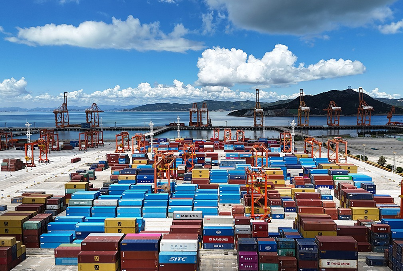
SHENZHEN – Shenzhen, a major city in South China’s Guangdong province, recorded a 1.4 percent year-on-year rise in foreign trade to 4.55 trillion yuan ($649.8 billion) in 2025, securing the top rank among all Chinese mainland cities, Shenzhen Customs and the city’s department of commerce said on Thursday.

 Shenzhen’s exports hit 2.74 trillion yuan in 2025, while its imports climbed 8 percent year-on-year to 1.81 trillion yuan over the same period.

 Shenzhen was home to 62,300 enterprises with actual import and export operations in 2025, marking a 16 percent year-on-year increase. This figure included more than 8,600 new market entrants, reflecting steady expansion in the scale of its trade entities.

 Private enterprises powered Shenzhen’s trade growth, contributing nearly 70 percent of the city’s total foreign trade value.

 In 2025, Shenzhen’s combined import and export value regarding high-tech products reached 2.6 trillion yuan, up 10.6 percent compared with 2024, accounting for 57.1 percent of the city’s total.

 Shenzhen’s trade with countries participating in the Belt and Road Initiative stood at 1.57 trillion yuan last year, making up 34.5 percent of Shenzhen’s total foreign trade during this period.


Article inline ad

China An Essential Actor In Global Sustainability Transition, Says WBCSD Head

0

chinadaily.com.cn | Updated: 2026-01-23

DAVOS, Switzerland – China has emerged as an essential actor in the global sustainability transition and is poised to play an important role in the next phase of sustainable development, according to Peter Bakker, President and CEO of the World Business Council for Sustainable Development (WBCSD).

 In a written interview with Xinhua on the sidelines of the World Economic Forum annual meeting in Davos, Switzerland, Bakker identified three converging global risks: physical climate impacts disrupting productivity and investment, geopolitical fragmentation straining trade and value chains, and rapid technological change like artificial intelligence (AI) outpacing governance and workforce adaptation.

 He said that the priority for the global economic community is to align capital, policy, and business action to accelerate low-carbon transitions, integrate nature-positive strategies, and mainstream circular business models.

 China is the representative economy currently undergoing a successful transformation, Bakker said. He highlighted its triple role as a major manufacturing hub, a fast-growing innovation ecosystem, and a leader in scaling clean technologies, noting that “these capabilities are shaping global decarbonization pathways.”

 The WBCSD was established in 1995 and comprises over 200 multinational companies. Bakker emphasized China’s growing engagement in international collaboration, such as through the “Two Lakes Dialogue,” where Chinese companies show strong commitment to sharing best practices, co-developing solutions and connecting innovation with global markets.

 Bakker expressed confidence that China will play an important role in the next phase of sustainable development, not only in delivering its own transition, but in enabling global implementation at scale.

 Commenting on the World Economic Forum’s theme, “A Spirit of Dialogue,” Bakker said, “The spirit of dialogue is most lacking where trust has eroded – between geopolitics and markets, between short-term pressures and long-term priorities, and between ambition and implementation.”

 Bakker called on all countries to strengthen dialogue through clearer policy signals and investing in cooperation, even in a more contested world, stressing that “sustained dialogue is not optional – it is an economic necessity.”

Article inline ad

China’s Efforts In Climate Response, Renewable Energy Widely Recognized : FM Spokesperson

0

Xinhua | Updated: 2026-01-23

BEIJING – As a responsible major developing country, China’s endeavors in climate response and promoting global development and application of renewable energy are widely recognized, Chinese foreign ministry spokesperson Guo Jiakun said on Thursday.

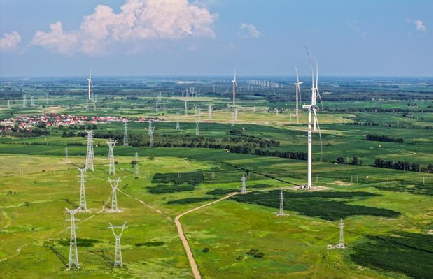
 Guo made the remarks at a news briefing in response to US President Donald Trump, who reportedly said on Wednesday at Davos that China made lots of wind turbines but he had not “been able to find any wind farms in China.” He also said China has been selling wind turbines to “stupid” people.

 China has developed the world’s most complete policy system on reducing carbon emissions, as well as the world’s largest renewable energy system, and actively shares its achievements in green development, Guo said.

 He stressed that China’s installed capacity of wind power had ranked the first in the world for 15 consecutive years. Up till the end of November 2025, China’s installed capacity of wind power had exceeded 600 million kw.

 During the 2021-2025 period, the wind power and photovoltaic products China exported helped reduce around 4.1 billion tons of carbon emission in other countries in total, the spokesperson said.

 China stands ready to work with all sides to continue to promote global green and low-carbon transition, and jointly build a clean and beautiful world, he added.

Article inline ad

Critical Year Ahead For China’s Smartphone Manufacturers

0

By Ma Si | chinadaily.com.cn | Updated: 2026-01-23

China’s smartphone market is expected to see shipments of around 278 million units in 2026, a year-on-year decrease of 2.2 percent, according to a forecast by market research company International Data Corp.

 Guo Tianxiang, research manager at IDC China, said 2026 will be a critical year for the industry to respond to challenges and reshape its value proposition.

 “Success will no longer rely solely on supply chain control or competing on specifications, but on whether brands can accurately position themselves amid cost pressures, build competitive barriers in the ‘AI and ecosystem’ race, and ultimately establish deep emotional resonance with users in an era of ’emotional consumption’,” Guo said.

 Globally, uncertainties remain. Persistent inflation continues to disrupt consumer markets, while memory prices have entered a strong upward cycle, leading to higher device costs and ultimately driving up retail prices, further impacting demand, according to industry analysts.

 Another market research company TrendForce has revised its 2026 global smartphone production forecast from a previously estimated 0.1 percent year-on-year growth to a 2 percent decline.

 Amid these headwinds, manufacturers are accelerating innovation to capture demand. iQOO, a Chinese smartphone brand, has launched the Z11 Turbo, a mid-range device packed with high-end features, challenging the industry norm that mid-tier phones must compromise on performance, imaging, design or battery life.

 The Z11 Turbo is equipped with the Snapdragon 8 Gen 5 flagship chipset and iQOO’s self-developed Q2 gaming chip. It features a 200-megapixel main camera, a 7600mAh slim battery, a metal frame, glass or fiberglass back panel, IP68/69 water and dust resistance, and an ultrasonic 3D fingerprint sensor.

 As cost pressures and AI-driven transformation reshape the landscape, Chinese smartphone brands are steering investments toward differentiated user experiences and ecosystem integration to sustain growth in an increasingly competitive and sentiment-driven market, experts say.


Article inline ad

Honor Launches New Smartphone As It Eyes Expansion In Local Market

0

By Cheng Yu | chinadaily.com.cn | Updated: 2026-01-23

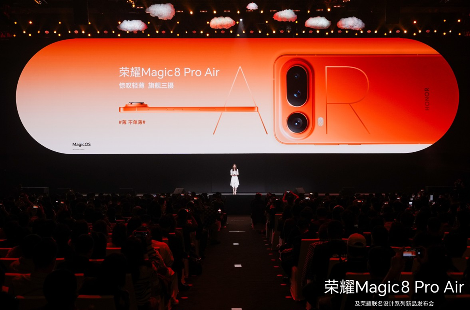
Chinese tech company Honor unveiled its latest smartphone, Magic 8 Pro Air, in its latest push to expand its presence in the home market despite intensified competition.

 The move came after Honor recorded fast growth in overseas markets in 2025.

 Measuring 6.1 millimeters and weighing only 155 grams, Magic 8 Pro Air features strong performance in photography and battery, the company said.

 Honor said its annual global smartphone shipments surpassed 710 million units in 2025, marking a year-on-year increase of 9 percent. The company highlighted a particularly strong performance in overseas markets, where shipments jumped by 47 percent, accounting for over half of its total sales for the first time.

 Overall, the Chinese smartphone market saw a slight contraction in 2025, with total shipments declining by 0.6 percent year-on-year to about 285 million units, according to the latest report from the market research company International Data Corp.

 Looking ahead, IDC anticipates a more pronounced decline in China’s smartphone shipments for 2026, driven by escalating cost pressures, market saturation, and extended replacement cycles.

Article inline ad