Wednesday, November 25, 2026

Home Blog Page 91

HSR Expansion Makes Steady Progress In Western China

0

By Han Jingyan | chinadaily.com.cn | Updated: 2026-01-24

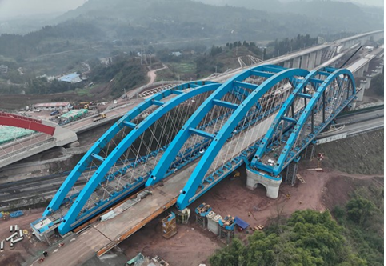
 Constructors from State-builder China Railway No 4 Engineering Group complete building a 443.1-meter railway bridge, traversing the Yingshan-Dazhou Expressway and located in Dazhou, Sichuan province, on Jan 22, helping facilitate the development of China’s western region. [Photo provided to chinadaily.com.cn]

Amid the country’s new push to increase the operating mileage of railways, constructors from China Railway No 4 Engineering Group (CREC4) have completed the nation’s first large-span rod-tied arch bridge with cable suspension on a high-speed railway.

 The 443.1-meter railway bridge, traversing the Yingshan-Dazhou Expressway and located in the prefecture-level city of Dazhou in Sichuan province, was completed on Jan 22, consisting of three parallel bridges — a main bridge on the Xi’an-Chongqing High-Speed Railway, along with left and right connecting bridges.

 The bridge was built in three stages: The first was the completion of the main arch bridge on July 11, 2025, weighing 2,600 metric tons and measuring 147 meters long and 17 meters wide. The second was the completion of the left link bridge on Dec 17, 2025, boasting a weight of 1,531 tons and measuring 136 meters long length and 11.4 meters wide. The third was the completion of the right link bridge on Jan 22, weighing 1,531 tons and measuring 136 meters long length and 11.4 meters wide.

 Part of the larger Xi’an-Chongqing HSR, which is part of the Beijing-Kunming HSR — a key component of China’s “Eight Vertical and Eight Horizontal” HSR network — the new arch bridge sits on the 478-kilometer Ankang-Chongqing section and links the municipalities and provinces of Beijing, Hebei, Shanxi, Shaanxi, Sichuan, Chongqing and Yunnan.

 Wang Junlou, chief engineer of the Dazhou Command of the Beijing-Kunming HSR Xi’an-Kunming Co, said the CREC4 builders have adhered to “precision control” and “process coordination” to systematically control the installation of tie-rod arch supports, suspension cables, steel structure docking and welding, and multi-process connections of beams and arches.

 He noted that at present, the Ankang-Chongqing section is progressing steadily, with 45 tunnels and 63 bridges completed. The project has now entered a critical stage involving beam erection, station building, and power engineering.

 On Jan 4, during the working conference for the country’s railway sector, China Railway promised to expand the country’s railway network from the current 165,000 kilometers to 180,000 kilometers by the end of 2030. As part of the effort, the country’s high-speed railway will grow from the current 50,000 kilometers to 60,000 kilometers during the same period.

 Zeng Yan, a bridge specialist for the Xi’an-Chongqing HSR project at China Railway Eryuan Engineering Group Co Ltd, said the innovative arch bridge employs a grid-type hanger structure, making it the country’s largest grid-type hanger cable-stayed arch bridge on a high-speed railway.

 Yan Mingsai, manager of the Xi’an-Chongqing HSR project department from CREC4, mentioned the application of “four new” technologies that effectively guaranteed the project’s engineering quality and construction safety.

 It has been learned that the Ankang-Chongqing section starts from Ankang West Station and passes through Ankang, Chengkou county under Chongqing, Dazhou and Guang’an, Hechuan district and Beibei district in Chongqing, before joining Chongqing West Station.

 Upon completion, the Xi’an-Chongqing HSR will link such lines as Chengdu-Chongqing HSR, Xi’an-Yan’an HSR, Zhengzhou-Chongqing HSR, as well as the Chongqing-Kunming HSR, improving transportation connectivity across the central and western regions, and facilitating the development of China’s western region.

 Please contact the writer at hanjingyan@chinadaily.com.cn
Article inline ad

Zhongshan Gamder Powers Up With New UNI Socket Series

0

By Qiu Quanlin in Guangzhou | chinadaily.com.cn | Updated: 2026-01-24

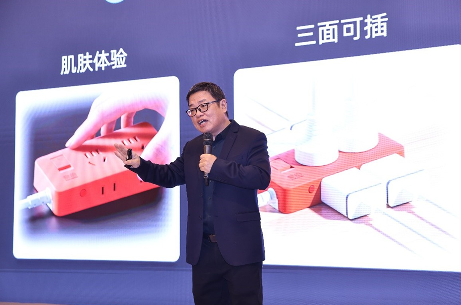
Zhongshan Gamder Electric Appliance Co Ltd, based in Zhongshan, Guangdong province, announced its entry into the power strip market by launching a new socket series on Wednesday, after experiencing sluggish sales in its traditional wall switch business in 2025.

 The move marks the company’s transition from its established focus on wall switches to taking on the market as a challenger, aiming to break through in the power strip market by emphasizing product innovation, according to Kuang Jian, general manager of the company.

 “We have decided to enter a broader consumer sector that is closely connected to our technological foundations,” said Kuang.

 The transition reflects the company’s confidence in its accumulated expertise in electrical and electronic technologies, as well as its assessment of innovation opportunities within the power strip market.

 “Although existing industry brands have established strong market shares, we believe that there are still user pain points and opportunities for product upgrades in the existing market,” he said.

 The company’s sales revenue dropped significantly in 2025, partly due to a continuous decline in transactions in the domestic housing market, according to Kuang.

 According to ChinaIRN, an industry research company, the global switch and socket market sales are projected to reach 157.2 billion yuan ($22.57 billion) by 2030, with a compound annual growth rate of 4.2 percent.

 “With the changing environment of the home furnishings and building materials market, finding new growth curves has become a necessity,” Kuang added.

 The newly launched UNI socket series is not merely a superficial upgrade in appearance. Instead, it represents a comprehensive overhaul, with improvements in product standards, material craftsmanship and usage scenarios.

 “We hope to attract consumers who value quality and price transparency by defining new standards of product value,” said Kuang.

Article inline ad

Deal To Lift CTG Duty-Free’s Luxury Brand Portfolio

0

By WANG ZHUOQIONG | CHINA DAILY | Updated: 2026-01-24

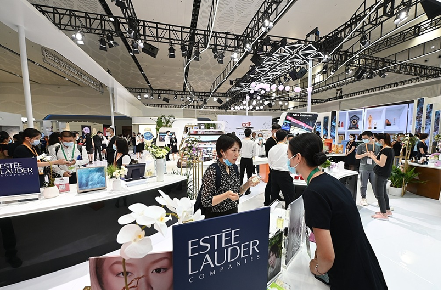
China Tourism Group Duty Free, or CTG Duty-Free, a leading Chinese retail travel operator, has reached an agreement to acquire DFS Group’s travel retail business in Hong Kong and Macao, along with associated intangible assets on the Chinese mainland, for up to $395 million.

 The transaction, which will be conducted through CTG Duty-Free’s wholly owned subsidiary China Duty Free International Ltd, marks a significant step in the company’s expansion within the Greater Bay Area.

 The move is also expected to further accelerate CTG’s efforts to promote Chinese brands globally, establishing itself as a key player in the luxury retail market.

 As part of the transaction, LVMH, which owns a majority stake in DFS, and Robert Miller, DFS’ cofounder and shareholder, will participate in a capital increase by subscribing to newly issued H shares listed in Hong Kong.

 CTG Duty-Free and LVMH have signed a memorandum of understanding to explore future collaborations, particularly in retail, including product sales, brand promotion, and customer experience in China, according to the company.

 Luke Chang, executive director and president of CTG Duty-Free, said that the acquisition is in line with the company’s ambitions to establish a global platform promoting China-chic brands and expand its international business presence.

 “This move will further expand our service network across the Greater Bay Area,” said Chang. “It also positions us to actively implement the Greater Bay Area strategy and promote Chinese brands globally.”

 CTG Duty-Free has developed more than 200 stores in more than 100 cities at home and abroad.

 Although its third quarter revenue for the 2025 fiscal year showed a 7 percent decline year-on-year to 39.86 billion yuan ($5.72 billion), with net profit dropping 22 percent to 3.05 billion yuan, the company reported strong performance in Hainan province, boosted by the zero-tariff policy for offshore duty-free shopping.

 On Dec 18, its business in Hainan recorded a sales surge of 90 percent, reaching over 250 million yuan on the first day of island-wide special customs operations. Sales on Jan 1 surpassed 300 million yuan.

 Meanwhile, DFS saw a modest improvement in its sales trend in the third quarter of 2025, particularly in Hong Kong and Macao, driven by a series of operational optimizations.

 According to LVMH’s third quarter results, the luxury retail giant’s specialty retail division recorded a 7 percent increase in revenue year-on-year.

 Michael Schriver, president of LVMH for North Asia, said of the agreement with CTG, “This operation underscores our confidence in the long-term potential of the Chinese market.”

 wangzhuoqiong@chinadaily.com.cn


Article inline ad

Tiktok Inks Joint Venture Deal For US Operations

0

By LI JIAYING | CHINA DAILY | Updated: 2026-01-24

In a bid to avert a potential US ban over so-called security concerns, popular social media platform TikTok announced on Friday that it had closed a deal to establish a majority United States-owned joint venture to run its US operations.

 Under the agreement, US and global investors — including cloud computing giant Oracle, US private equity firm Silver Lake and Abu Dhabi, United Arab Emirates-based investment company MGX — will collectively hold 80.1 percent stake in the new entity.

 TikTok’s parent company ByteDance will retain the remaining 19.9 percent, keeping its ownership below the 20 percent threshold stipulated by US law.

 As part of the arrangement, the JV will assume responsibility for safeguarding both US user data and TikTok’s content recommendation algorithm.

 According to the statement, US user data and content recommendation algorithm will both be secured in Oracle’s US cloud environment, where the new JV will retrain, test and update the algorithms and run audited, third-party-certified data privacy and cybersecurity programs aligned with US regulations.

 The deal marks a major milestone for the short-video app after years of regulatory and legal battles dating back to August 2020, when Washington first sought to ban TikTok over what it claimed were national security concerns.

 Against this backdrop, Chinese authorities have repeatedly emphasized the importance of a balanced and lawful resolution.

 At a news conference in Beijing in late December, a spokesperson for the Ministry of Commerce said the Chinese government hopes that relevant parties can reach a resolution regarding Tik-Tok that complies with Chinese laws and regulations and achieves a balance of interests, urging the US to provide a fair, open, transparent and nondiscriminatory business environment for the continuous and stable operation of Chinese enterprises.

 “A viable path has ultimately been found by joint efforts to achieve data and algorithm compliance,” said Pan Helin, a member of the Expert Committee for Information and Communication Economy, which is part of the Ministry of Industry and Information Technology. While TikTok’s enhanced compliance framework in the US will allow its operations to continue and help stabilize its business model, the move is also expected to support the building of long-term trust with local users, laying the groundwork for future ecosystem expansion, Pan said.

 As a BBC report also noted, “it made sense for Washington to strike a deal rather than ban TikTok”, given the app’s popularity among some 200 million American users.

 However, Pan cautioned that challenges still remain. “On one hand, stringent compliance oversight could add operational pressure. On the other, regulatory constraints may slow the pace of TikTok’s algorithm iteration, forcing innovation to give way to compliance,” he added.

 According to the statement, the JV will be led by Chief Executive Officer Adam Presser, who previously headed TikTok’s US user data-related work, and Chief Security Officer Will Farrell, who oversaw privacy and security initiatives related to the project.

 It will also be overseen by a majority-American board of directors that includes TikTok CEO Shou Zi Chew, who will continue running ByteDance’s global business.

 lijiaying@chinadaily.com.cn


Article inline ad

Nvidia CEO Visiting Shanghai As US Eases Curbs On H200 Chips

0

By Ma Si | chinadaily.com.cn | Updated: 2026-01-23

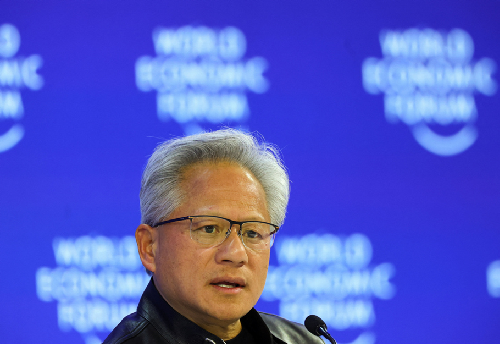
 President and CEO of NVIDIA, Jensen Huang attends the 56th annual World Economic Forum (WEF) meeting in Davos, Switzerland, January 21, 2026. [REUTERS/Denis Balibouse]

Jensen Huang, CEO of Nvidia, visited Shanghai on Friday, underscoring the importance of the Chinese market to the US semiconductor company, which has been subject to a series of US export controls on its most advanced AI chips to China, sources told China Daily.

 Huang is scheduled to visit Beijing following his Shanghai trip. He is in China to attend Nvidia’s New Year gathering with employees and to meet key Chinese clients, the sources said.

 The visit follows a decision by the US government allowing Nvidia to sell its H200 chips to approved customers in China. The H200 is one generation behind Nvidia’s latest Blackwell chips.

Article inline ad

China Approves Pioneering Treatment For Hepatitis D

0

By Li Jing | chinadaily.com.cn | Updated: 2026-01-23

China’s drug regulator has granted conditional approval to Huahui Health’s Libevitug injection for the treatment of the chronic hepatitis D virus infection in adults, the company said on Friday.

 The drug, which could fill a long-standing treatment gap for one of the most severe forms of viral hepatitis, has been approved for patients with or without compensated cirrhosis. Libevitug is a monoclonal antibody that works by blocking hepatitis B and D viruses from entering liver cells, targeting the PreS1 domain of the viral envelope.

 The World Health Organization estimates that nearly 5 percent, or approximately 12 million people, of the 254 million people living with chronic Hepatitis B worldwide are also infected with Hepatitis D.

 HDV is a “defective” virus that requires HBV to replicate, making chronic HDV only occur in HBV carriers. This co-infection significantly accelerates liver disease, increasing the risk of cirrhosis and liver cancer.

 Huahui Health said clinical trial data showed Libevitug significantly outperformed a control group across key indicators, including viral response, normalization of liver enzymes and improvement in liver stiffness. At 48 weeks, the combined response rate reached 44.1 percent, with a virological response rate of 60 percent. The results were presented at the 2025 annual meeting of the American Association for the Study of Liver Diseases.

 The drug had previously received breakthrough therapy designation from both China’s National Medical Products Administration and the US Food and Drug Administration, the company said, underscoring its potential role in improving hepatitis diagnosis and treatment and supporting broader efforts to reduce liver disease and related deaths.

Article inline ad

China Not About To Approve Tesla Self-Driving Tech Soon: Source

0

By Ma Si | chinadaily.com.cn | Updated: 2026-01-23

Recent foreign media reports touting imminent approval for Tesla’s Full Self-Driving (FSD) technology in China are inaccurate, a Chinese source has said.

 The denial came after Reuters reported that Tesla CEO Elon Musk said on Thursday that “we hope to get Supervised Full Self-Driving approval in Europe, hopefully next month, and then maybe a similar timing for China”.

 However, a source familiar with the matter said on Friday that “this is not true”. The source did not provide further details regarding the current status or timeline for any potential review of the FSD system by Chinese regulators.

 There has been keen interest in Tesla’s push to introduce its more advanced driver-assistance software to China, the world’s largest auto market, where the company currently offers a less-capable autopilot system.

Article inline ad

China’S Securities Regulator Hits Private Fund Sector With Record Penalty

0

CSRC fines Zhejiang Ruifengda and affiliates over 41 million yuan; signals stronger enforcement for private asset managers

 China’s securities regulator has imposed its largest-ever penalty on privately offered asset management firms, reflecting Beijing’s ongoing push to tighten oversight of the private fund sector and safeguard investor interests.

 The China Securities Regulatory Commission (CSRC) said on Friday that Zhejiang Ruifengda Asset Management Co Ltd, several affiliated private funds, and their ultimate controller Sun Wei were fined and had illegal gains confiscated, totaling more than 41 million yuan ($5.9 million). Investigations found serious violations including false or misleading disclosures and other breaches of laws governing privately offered funds. Sun has been barred for life from participating in China’s securities market.

 The penalties exceed previous records, underscoring the regulator’s zero-tolerance stance. The CSRC also referred case details to police authorities and revoked registrations of the private fund managers involved.

 “This sends a clear signal that the private fund sector is no longer a regulatory blind spot,” said sources familiar with the matter. “Any serious misconduct will face comprehensive enforcement.”

 Intensified Oversight

 The record fine comes amid a broader crackdown on misconduct in the private fund industry. According to CSRC data for 2025:

 Over 600 entities and individuals underwent administrative inspections

 Around 30 investigations were launched

 Approximately 40 cases were referred to police

 Regulators have emphasized that violations such as illegal fundraising, misappropriation, embezzlement, and self-dealing will not be tolerated.

 Market observers say this enforcement surge reflects China’s effort to professionalize and normalize the private fund sector, aligning it more closely with global market standards.

 Why It Matters for Investors

 For international investors, the ruling highlights a more predictable and disciplined regulatory environment in China’s private fund sector. While heightened enforcement may introduce short-term volatility for some private fund operators, the move reduces systemic risk and reinforces market credibility, signaling that China is serious about investor protection and transparency in asset management.

Article inline ad

CSRC Steps Up Enforcement On Private Fund Sector With Record Penalty

0

By Zhou Lanxu | chinadaily.com.cn | Updated: 2026-01-24

China’s securities regulator has imposed its heaviest penalty yet on illegal behaviors involving privately offered asset management firms, underscoring its ongoing efforts to intensify crackdown on illicit activities in the private fund sector to better protect investor interests.

 The China Securities Regulatory Commission said on Friday that Zhejiang Ruifengda Asset Management Co Ltd, several affiliated private fund institutions, and their actual controller Sun Wei, have been fined and had illegal gains confiscated, totaling more than 41 million yuan ($5.9 million) after investigations found serious violations of laws and regulations governing privately offered funds.

 The Shanghai office of the CSRC ordered the confiscation of illegal gains and imposed fines totaling more than 28 million yuan ($3.9 million) on Ruifengda and its affiliated institutions, which were involved in false or misleading disclosures and other serious violations. Five responsible individuals were fined a combined total of more than 13 million yuan, and Sun was banned for life from China’s securities market.

 The penalty surpasses a previous record, highlighting the regulator’s zero-tolerance stance, with the CSRC vowing to continue its crackdown on severe violations in the private fund sector.

 Informed sources told China Daily that this move is part of the authorities’ broader efforts to step up enforcement against private fund misconduct that breaches regulatory “bottom lines” and “red lines” — including illegal fundraising, embezzlement and misappropriation, raising funds for self-use and interest transfers.

 “This sends a clear message that the private fund sector is not a regulatory blind spot, and any serious misconduct will face multidimensional and comprehensive enforcement action,” sources said, urging institutions to rectify irregular practices and promote the sector’s sound development.

 Meanwhile, the Asset Management Association of China has revoked the registration of the private fund managers involved. The securities regulator said it will refer relevant case details to police authorities in accordance with the law.

 In 2025, the commission conducted administrative inspections on more than 600 entities and individuals in the privately-offered fund sector, launched around 30 investigations and transferred about 40 case clues to the police — indicating stronger enforcement efforts than in previous years.


Article inline ad

Wenzhou Joins China’s Trillion-Yuan City Club, Highlighting The Rise Of Private-Led Growth

0

Zhejiang manufacturing hub crosses a symbolic milestone as innovation and industrial upgrading reshape local economies

Wenzhou, long known as a cradle of China’s private entrepreneurship, has joined the ranks of the country’s trillion-yuan cities after its gross domestic product surpassed 1 trillion yuan ($144 billion) in 2025, underscoring the growing role of private-sector–driven regional growth in China’s economy.

The milestone was announced on Jan 20 during the annual session of the Wenzhou Municipal People’s Congress, making Wenzhou the third city in Zhejiang province—after Hangzhou and Ningbo—to reach the threshold.

Economists say the achievement reflects more than headline growth.

“This is not just a statistical milestone,” said Lyu Miao, an expert at Tsinghua University’s Yangtze Delta Region Institute. “It represents a broader upgrade in Wenzhou’s economic structure, industrial ecosystem, and capacity for innovation.”

A Private-Sector Powerhouse

Wenzhou’s rise is closely tied to its exceptionally strong private economy, a distinguishing feature that sets it apart from many other large Chinese cities.

By November 2025, the city hosted 1.56 million market entities, the highest number in Zhejiang province. Private firms accounted for more than 90% of the value-added output of large industrial enterprises, providing a key engine for sustained growth.

At the national level, Wenzhou is now one of 28 mainland cities with GDP exceeding 1 trillion yuan—a group increasingly seen as the backbone of China’s economic resilience as growth becomes more regionally differentiated.

Manufacturing Upgrade and Industrial Momentum

A robust industrial base continues to anchor Wenzhou’s economy. In 2025, the city supplied a record 15,200 mu (about 1,013 hectares) of industrial land, channeling resources toward advanced manufacturing and emerging industries.

Output in Wenzhou’s five traditional pillar industries rose 11.4%, while its five leading emerging industries expanded 12.6% year-on-year. Overall industrial output grew 10.3%, ranking first in Zhejiang and outperforming the national average for 33 consecutive months.

The data highlight how parts of China’s manufacturing heartland are shifting from low-cost production toward higher-value, more technology-intensive activity.

Innovation as a Policy Anchor

Local authorities have increasingly framed innovation as a central growth strategy. For five consecutive years, Wenzhou’s municipal government has devoted its first official meeting of the year to science and technology development.

In 2025, government spending on research and innovation rose 10.4%, supporting a package of initiatives designed to accelerate commercialization and strengthen links between laboratories and industry. The city’s network of high-tech zones—described locally as “one port and five valleys”—has become a focal point for this push.

A Regional Signal, Not Just a Local Story

The trillion-yuan milestone reinforces Wenzhou’s role as the third pillar of Zhejiang’s economy, aligning with provincial policies introduced in 2022 and reaffirmed in 2024 to support the city’s rise as a hub for high-quality growth.

More broadly, analysts see Wenzhou as a case study in how private enterprise, manufacturing depth, and policy-driven innovation are reshaping China’s regional growth model—often away from the country’s largest metropolitan centers.

Why it matters

For international observers, Wenzhou’s ascent illustrates how China’s next phase of growth is increasingly being driven by mid-sized industrial cities with strong private sectors, rather than solely by megacities or state-led investment. As China’s economy becomes more fragmented and regionally diverse, these local success stories offer clues about where sustainable growth and industrial upgrading are still taking place.

Article inline ad