Wednesday, November 25, 2026

Home Blog Page 90

China Energy Giant Reports Breakthrough In Solar, EV Material Production

0

By Zheng Xin | chinadaily.com.cn | Updated: 2026-01-26

A subsidiary of the State-owned energy giant China National Petroleum Corporation (CNPC) has achieved industrial-scale production of a critical material used in solar panels and electric vehicles, marking a significant breakthrough in China’s efforts to reduce its reliance on high-tech imports.

 The Dushanzi petrochemical plant located in China’s Xinjiang Uygur autonomous region produced nearly 60,000 metric tons of polyolefin elastomer (POE) in 2025 using a domestically developed gas-phase polymerization process, the company announced on Monday.

 The production signals the first successful industrialization of the technology in China, addressing a long-standing “chokehold” in the supply chain for strategic emerging industries.

 Often referred to as “industrial gold”, POE is a high-performance material that combines the processability of plastic with the high elasticity of rubber. It is an essential component in the manufacturing of photovoltaic (PV) modules, lightweight automotive parts and high-end packaging.

 China previously faced high technical barriers and rigorous process controls, leaving the market heavily dependent on foreign suppliers, with import dependency for POE remaining as high as 95 percent through the first three quarters of 2025.

 With the technology now verified, CNPC is accelerating the formation of industrial clusters. Several other POE projects are currently under construction, with the company’s total annual capacity expected to exceed 300,000 tons by the end of 2026, it said.


Article inline ad

Spring Festival Celebrations To Amplify Consumption

0

Extended break this year seen reshaping travel and spending plans, unlocking consumer potential, particularly in services, travel and experience-driven expenditure

By Li Jing | China Daily | Updated: 2026-01-26

As China heads into the Year of the Horse, consumer demand is being released earlier than usual, propelled by the country’s longest Spring Festival holiday on record and a coordinated policy push aimed at turning seasonal spending into sustained economic momentum.

 The 2026 Spring Festival holiday will run from Feb 15 to 23, spanning nine consecutive days. The extended break — longer than in previous years — is not only reshaping travel and spending plans, but also amplifying the effects of policies designed to unlock consumption potential, particularly in services, travel and experience-driven spending.

 From bustling shopping streets in Beijing to small factories in Zhejiang’s Yiwu operating extra production lines, and from reunion dinners booked weeks ahead of Chinese New Year’s Eve to a sharp rise in two-way travel, signs of renewed consumption activity are emerging well before the holiday officially begins.

On Beijing’s Wangfujing pedestrian street, winter temperatures have done little to slow foot traffic. Flagship stores are drawing a steady stream of overseas visitors, many taking advantage of expanded visa-free access and increasingly seamless digital payment options.

 Daniel Chan, a tourist from Los Angeles, stepped out of an electronics store with a newly purchased DJI Osmo Nano camera.

 “I’ve wanted this model for months. It’s almost impossible to find stock back home, yet here it was available, and the price was very friendly,”Chan said. “It’s not just a souvenir — it’s cutting-edge technology.”

 He said he had already started using the camera on the day of purchase. “I haven’t explored all its functions yet, but the magnetic design and image quality are quite good,” he added.

 What impressed him most during his China trip, Chan said, was the speed and convenience of food delivery services. “It’s incredibly fast and efficient — almost unbelievable,” he said. Dining in restaurants was equally striking, with some offering dish countdown timers and guaranteed serving speeds. “I’ve hardly ever experienced service like this in the United States.”

 Such experiences are precisely what policymakers hope to encourage.

 The “Shopping in China” campaign, first launched in April 2025, aims to create a more internationally friendly consumption ecosystem while stimulating domestic demand through higher-quality supply.

 At the launch of the 2026 “Shopping in China” and New Year Consumption Season in Shanghai on Jan 3, Commerce Minister Wang Wentao said the initiative would focus on goods consumption, services consumption and the development of new consumption scenarios. A series of nationwide events, including a premium consumption month and an international consumption season, will be rolled out, alongside locally tailored programs in 15 pilot cities.

 With the nine-day Spring Festival approaching, Wang said the Ministry of Commerce, together with other central departments and local governments, will host a “happy shopping for the Spring Festival” campaign as a flagship component of the “Shopping in China” series. The campaign will span food, accommodation, transport, travel, shopping and entertainment, aiming to create an inclusive, festive consumption experience for families at home and travelers on the move.

 More than 1,200 kilometers south of Beijing, Yiwu — the world’s largest small-commodities hub — offers a ground-level view of how festive demand is being converted into real orders.

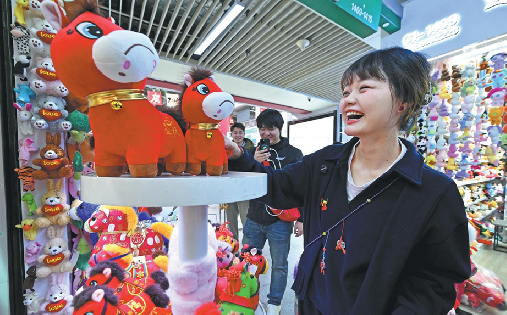
 In the plush toy section of Yiwu International Trade Market, one horse-themed product has become an unexpected viral hit. Originally launched in mid-October under the name “Mashang Youqian”, meaning “immediate prosperity”, the toy initially sold about 400 units a day — steady but far from a bestseller.

 Its breakout moment came in January, after a minor production-line error resulted in the toy’s mouth being stitched incorrectly, giving it a seemingly “tearful” expression. Buyers who received the flawed version posted photos and chat records online while requesting exchanges. The images struck a chord with netizens, who found humor and resonance in the toy’s “wronged” look, quickly propelling it to the top of social media trending lists.

 Dubbed the “crying horse”, the toy was soon labeled the first cultural “dark horse” of the New Year. As demand surged, the factory expanded production lines from two to more than a dozen, lifting daily output to around 15,000 units. The merchant has since applied for a design patent.

 Behind the viral moment, the success mirrors quality and Yiwu merchants’ deeply ingrained ability to respond quickly to market signals, from identifying trends to making swift decisions and scaling production with minimal delay.

 Across the toy sector, creative interpretations of the Year of the Horse are proliferating. Products range from zodiac photo frames to blind boxes and decorative figurines.

 Some bestselling items now sell between 40,000 and 60,000 units a day. For popular designs, factories are producing between 50,000 and 100,000 units daily. To maintain speed and creativity, some merchants require their design teams to develop as many as five new styles each day.

 Merchants say interest from foreign buyers has risen, particularly after Spring Festival was added to UNESCO’s Representative List of the Intangible Cultural Heritage of Humanity in December 2024.

 Consumption momentum is also visible in the catering sector, where Chinese New Year’s Eve reunion dinners — a core element of Spring Festival culture — are being booked out well in advance.

 In Beijing, several restaurant chains report that all private rooms across multiple branches are already fully booked, with only limited lunchtime slots remaining. Prices largely match regular menus, though advance reservations and deposits are typically required.

 To cope with demand, many restaurants have introduced staggered dining slots on Chinese New Year’s Eve, offering discounts for later sittings. Others have expanded takeaway services, allowing families to enjoy freshly prepared reunion meals at home.

 One restaurant in Beijing’s Guomao area has launched two takeaway packages priced at 1,988 yuan ($286) for eight to 10 people and 999 yuan for four to six people, with free delivery within the city’s Fifth Ring Road. Customers can also order a la carte, providing greater flexibility.

 An emerging trend is the shift toward county towns and rural venues. In Yinjiang town of Ningbo, Zhejiang province, a countryside resort that opened reservations three months ago, has already sold out large private rooms for the first two days of the holiday, attracting families traveling from neighboring Shanghai, and Jiangsu province.

 Traditional restaurant brands are also moving into rural markets. Managers say demand for reunion dinners and banquets in these areas remains strong, while the supply of mid — to high-end dining options is relatively limited — creating new opportunities for expansion.

 The nine-day break is also reshaping travel patterns, triggering a surge in both outbound and inbound tourism.

 Major travel platforms report that Spring Festival bookings for 2026 have surpassed last year’s levels across the board. According to data from Flight Master, as of Jan 16, bookings for domestic flights during the holiday exceeded 4.13 million, up about 21 percent year-on-year. Outbound and inbound flight bookings both climbed to around 700,000.

 Airbnb data show searches by Chinese travelers for overseas accommodation around the Spring Festival period have roughly doubled year-on-year. Many travelers are choosing to stagger trips before or after the official holiday to secure better prices and less crowded itineraries.

 Travel agencies are embedding New Year elements into overseas tour products, allowing travelers to retain a sense of festivity even while abroad.

 Li Mengran, marketing manager of Beijing-based travel agency Utour, said the company has continued its long-standing practices in European tour products. These include customized reunion dinners and dumpling-making activities, alongside wine tastings and interactive prize draws.

 “For family travelers, we also prepare red-envelope gifts for children under 16 to enhance the sense of ritual and warmth during the journey,”Li said.

 Domestically, culturally rich “intangible heritage towns” are emerging as popular destinations. Data from Qunar show that cities such as Huangshan in Anhui, Jingdezhen in Jiangxi, Quanzhou in Fujian, Foshan in Guangdong and Zigong in Sichuan — all offering immersive intangible cultural heritage experiences — have seen particularly strong hotel booking growth during the winter holiday and Spring Festival period.

 Inbound tourism is also gaining momentum.

 Qunar data show that bookings for domestic flights made using non-Chinese passports during the Spring Festival holiday are up more than 20 percent year-on-year, underscoring the holiday’s growing role as a window for international visitors to experience Chinese culture.

 This rebound reflects sustained policy support. By the first three quarters of 2025, visa-free inbound visits reached 20.89 million, up more than 50 percent year-on-year. Since the introduction of the 240-hour transit visa-free policy, inbound arrivals across ports have risen 27.2 percent.

 The World Travel & Tourism Council forecasts that China’s tourism sector will grow at an average annual rate of 7 percent over the next decade, with the country on track to become the world’s largest tourism market by 2031, surpassing the United States.

Economists say the early consumption surge reflects the combined effects of policy support, longer holidays and evolving consumer preferences.

 The Central Economic Work Conference held in December placed expanding domestic demand as the top priority of China’s economic policy in 2026, with multiple consumption-supporting policies already rolled out or in the pipeline.

 Su Jian, a professor at Peking University’s School of Economics, said consumption growth has been most visible in services and fast-evolving consumer electronics, including tourism, cultural products, sports and entertainment. Rapid upgrade cycles, he added, continue to support demand for electronics.

 Since last year, targeted consumption-boosting campaigns have delivered tangible results. In 2025, trade-in-related sales exceeded 2.6 trillion yuan, benefiting more than 360 million consumer transactions. Optimized trade-in programs introduced in 2026 are now translating into concrete market activity across regions.

 International observers have also noted structural changes underway. In its latest flagship annual report, global consultancy Roland Berger said China has entered the “consumption 4.0” era, characterized by resilience.

 China’s consumption structure is shifting rapidly from survival-oriented spending toward development — and experience-oriented demand, the report noted. By elevating domestic demand expansion to a strategic priority, and encouraging a move from quantitative satisfaction to qualitative enrichment, policymakers are using consumption upgrading to drive supply-side innovation and support high-quality growth.

 Boosting consumption, policymakers emphasize, is not a short-term fix, but a long-term strategy.

 A State Council executive meeting held on Jan 16 reviewed progress in the consumption-boosting campaign and outlined further steps to cultivate new growth points in service consumption.

 The meeting called for improving long-term mechanisms for promoting consumption, raising urban and rural household incomes, implementing the paid leave system and removing unreasonable restrictive measures for consumption.


Article inline ad

Covestro Strengthens China Presence With New TPU Facility

0

By Zhong Nan | chinadaily.com.cn | Updated: 2026-01-26

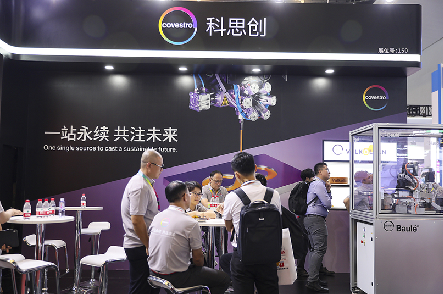
Covestro AG, the German manufacturer of polymers and high-performance plastics, is increasing its investment in China as part of its strategy to strengthen local production, innovation and market responsiveness, with thermoplastic polyurethane (TPU) identified as a key growth segment amid strong demand across Asia, said senior executives.

 The Leverkusen, Germany-headquartered group began operations at its new TPU manufacturing facility in Zhuhai, South China’s Guangdong province, last week. The facility, backed by a multi-phase expansion plan, is expected to evolve into Covestro’s largest TPU production base worldwide, with potential for future exports.

 TPU is a highly versatile material used across various industries, including footwear, consumer electronics, functional films, and seating and cushioning systems in automotives.

 Monique Buch, chief commercial officer of Covestro, emphasized that Guangdong’s well-established electronics and footwear industries are major end markets for TPU, with fast-growing sectors such as the low-altitude economy, drones and flying vehicles generating new demand for advanced materials.

 “Covestro will also produce more recyclable TPU at the Zhuhai site, with at least 25 percent of the input materials coming from bio-based or recycled sources, in line with its circular economy strategy and China’s dual carbon goals,” she said.

 The first phase of the Zhuhai facility will produce 30,000 metric tons of TPU annually, meeting growing demand for this versatile material across industries such as information technology, automotive and footwear.

 The Zhuhai site will be developed in three phases across a 45,000-square-meter area, with maximum production capacity estimated to reach 120,000 tons per year upon completion of the final phase, expected in the 2030s, making it Covestro’s largest TPU production facility globally.

 Highlighting China’s vast, high-quality and steadily growing market, Buch said the country’s strong emphasis on sustainability aligns closely with the company’s corporate philosophy.

 “More importantly, the speed of market development and the ability to scale in China are rare globally, which is why we believe it is essential to stay close to customers and remain deeply rooted in the Chinese market,” she added.

 As the Chinese market accounts for more than 20 percent of Covestro’s global sales, the German company has invested more than 4 billion euros ($4.73 billion) in the country since 2001, and plans to continue its close collaboration with its partners in China.

 Against this backdrop, Andrea Maier-Richter, head of TPU at Covestro, said the group has established an integrated regional setup in China that brings together production, fundamental research and customer-focused application development.

 She said the integrated approach positions Covestro well to drive innovation and deliver tailored solutions that meet the specific needs of diverse industries in South China, ranging from footwear to automotive and consumer electronics.

 With 3,300 employees in China, Covestro currently operates 10 production sites and several innovation centers in the country.


Article inline ad

Beijing Sees 19.5% Rise In New Overseas-Funded Businesses

0

Xinhua | Updated: 2026-01-26

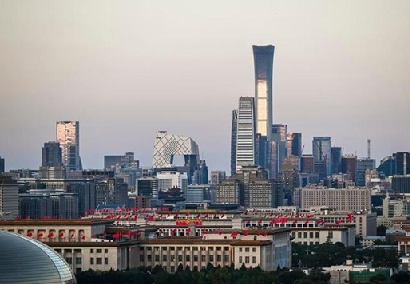
BEIJING – Beijing saw over 2,400 new registrations of overseas-funded businesses in 2025, marking an increase of 19.5 percent year-on-year, according to local authorities.

 Last year, the national capital recognized 20 newly registered foreign-invested enterprises as multinational regional headquarters, and attracted 121 overseas-funded projects, each with an investment exceeding $10 million, Beijing mayor Yin Yong said on Sunday while delivering a government work report at the annual session of the Beijing Municipal People’s Congress.

 In 2026, the city will further expand its opening up, aiming to improve the quality of overseas investment and attract more high-quality overseas-funded projects, the mayor said.

 Strong foreign trade performance has also supported the city’s opening-up drive. Beijing’s total foreign trade volume reached 2.93 trillion yuan ($421 billion) in the first 11 months of 2025, with exports hitting a record high of 568.35 billion yuan in the same period, up 3 percent year-on-year, according to data from the Beijing Customs.


Article inline ad

Electricity Powers Major Projects In East China

0

By Han Jingyan | China Daily | Updated: 2026-01-26

State Grid, the world’s largest utility enterprise which is crucial to China’s energy security and economic lifeline, is making innovative moves to power the country’s economic growth.

 In Nanjing, capital of East China’s Jiangsu province, the local State Grid unit has taken major projects as the “ballast” of local economic development, introducing innovative measures — ranging from a green push and tailored services, to smart and precise aid — to facilitate their growth.

 In March 2025, Gree Electric Appliances (Nanjing) Co Ltd urgently needed accurate carbon footprint certification for its “Tianli Variable Frequency 3 Home Air Conditioner Set” to overcome difficulties with exports, as green trade in the international market was becoming increasingly stringent.

 It reached State Grid Nanjing, which sent a service team to its workshop to check electricity consumption and provide energy efficiency advice, ensuring that data in a carbon-factor database — pioneered by State Grid Jiangsu — were authentic and traceable.

 Its carbon footprint factor of the product fell by 13.8 percent, successfully winning a third-party authoritative certification.

 Fang Jing, in charge of its electrical affairs of Gree Electric Appliances (Nanjing) Co Ltd, said: “In 2025, we successfully obtained 11,733 green certificates through such consultation services, and even sold 133 of them. This has given us more confidence in exporting our products.”

 This is a microcosm of the innovative services offered by State Grid Nanjing in meeting clients’ growing needs.

 Partnering with Jiangbei New Area and Jiangning development zone, it set up green electricity and green certificate service stations to facilitate the green move, building a three-dimensional network to achieve full coverage of services.

 A municipal virtual power plant management center was also established to promote a “photovoltaic +energy storage” solution, providing assistance to enterprises in cost reduction and green development.

 Tailored service — akin to offering an “electric engine” — was also a marked feature of State Grid Nanjing in providing high-quality power services throughout the entire lifecycle of various major projects.

 Li Xiaoliang from State Grid Nanjing said they want to realize a situation of “electricity waiting for enterprises” to reduce clients’ worries.

 At the phase-II project of Nanjing riverside headquarters base of China Huaneng Group — a key project with large power consumption and a long construction period, a service team from State Grid Nanjing talked with company employees in June 2025, planning power delivery nodes and grasping the status of surrounding power facilities.

 Drafting a targeted service list, State Grid Nanjing made early preparations for the project’s needs, Li said.

 Song Huanbao, who is in charge of the phase-II project, said State Grid Nanjing has offered precise services for them, noting that any electricity-related problems were resolved in a timely manner in order to safeguard the project’s advancement.

 Smart and precise aid was also an innovative drive of State Grid Nanjing, which aims to translate its commitment into tangible services.

 In April 2025, construction of the Baiyun Electric Glass Insulator Green Digitalization Project began, urgently needing stable and reliable power support.

 Learning of the need, a customer manager of State Grid Nanjing rushed to the site for immediate inspection, finding that the nearby electricity transmission line was under heavy load and a direct connection might affect the stability of power supply.

 In order to enable Baiyun to link with the nearby grid and start construction as soon as possible, the power supplier adopted a method of capacity expansion to help it.

 Its service teams worked overtime to build two new ring main units, replace an existing one, and lay 966 meters of new cables to enable power transmission one month ahead of schedule.


Article inline ad

Michelin Launches First Global ‘Future Factory’ In Shanghai

0

Xinhua | Updated: 2026-01-24

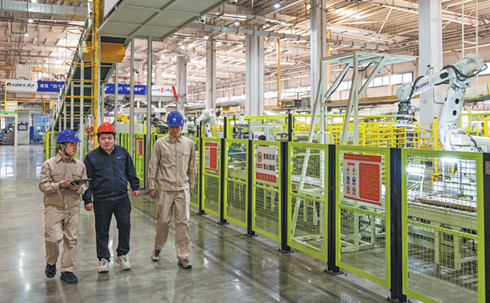
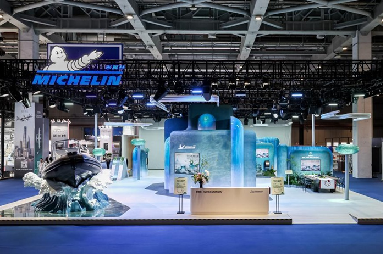
SHANGHAI — The Michelin Group inaugurated its first global “future factory” in Shanghai on Friday, with a total project investment of 3 billion yuan ($425 million). The new plant features advanced, flexible production systems designed to serve China’s expanding new energy vehicle market.

 The global tire giant first entered Chinese market in the 1980s and has since witnessed the rapid growth of the country’s automotive sector and advances in NEV technology. Today, Michelin holds over 30 percent of China’s high-end NEV tire market and supplies numerous domestic automakers.

 Equipped with Michelin’s latest machinery, the “future factory” can produce one tire every 36 seconds and accommodates orders as small as 100 tires. Approximately 70 percent of its output will be dedicated to NEVs, while the order-to-delivery cycle has been reduced from 10 days to five. The expansion is set to add 1 million tires to the plant’s annual capacity, increasing total output from 8.5 million to 9.5 million tires per year.

 The facility aims to integrate leading manufacturing capabilities with a core commitment to sustainability. According to the company, it uses artificial intelligence to optimize production management and operates entirely on renewable energy, implementing green practices across its production chain.

 The future factory marks a key step in Michelin’s long-term commitment to China, supporting high-quality growth and green transition, said Matthew Ye, president and CEO of Michelin Greater China & Mongolia, at the launch ceremony.


Article inline ad

Financial Sector Reforms Key To Growth

0

By Jiang Xiaojuan | China Daily | Updated: 2026-01-26

China’s financial sector must develop a stronger sense of urgency, accelerate its transition toward greater market orientation, digital and intelligent transformation, and internationalization, and enhance its competitiveness. It needs to allocate vast pools of capital more effectively, seize opportunities arising from the rapid emergence of technology-driven enterprises, deliver solid returns to capital providers and create broader room for its own development.

 During the 15th Five-Year Plan period (2026-30), the financial sector will face both challenges and opportunities. The main challenges stem from the already large scale of financial assets, narrowing interest margins at some financial institutions and the diminishing sustainability of traditional profit models.

 At the same time, significant opportunities lie in the broad prospects of tech-innovation finance, which open up new space for the transformation and upgrading of financial institutions. Only by continuously advancing market-oriented reforms, digital and intelligent transformation, and international development can financial institutions effectively respond to current challenges and seize strategic opportunities.

 At present, China’s total financial assets are already substantial, and production capacity in most sectors is also large. Compared with the sheer volume of capital, investment opportunities are relatively limited. Against this backdrop, it has become an inevitable trend for capital to seek higher-return investment destinations overseas. Such a shift helps curb the continued decline in domestic investment yields and stabilize return on capital.

 Looking ahead, China will not only remain a major destination for capital inflows, but will also inevitably become a major exporter of capital. It can be expected that during the 15th Five-Year Plan period, China’s outbound investment will exceed foreign capital inflows, resulting in net capital outflows. Returns from overseas investments will become an important component of China’s economic growth.

 From a practical perspective, exports are currently under considerable pressure, while many countries and regions welcome Chinese investment. China’s industries and technologies are also highly competitive, making it possible to pursue a coordinated “going global” strategy that integrates industrial expansion with overseas investment.

 After years of accumulation, China has built a solid foundation in technological innovation. During the 15th Five-Year Plan period, industry and technology are expected to enter a phase of concentrated breakthroughs. As a result, the emergence of large numbers of new technologies during this period is a certainty. Only with the vigorous growth of tech-driven enterprises will innovation-focused finance have viable investment targets.

 However, these opportunities will not automatically flow to traditional financial institutions. In recent years, both in China and in the United States, activities in traditional venture capital and private equity have declined. The underlying reason is that today’s investment landscape requires far more complex capabilities, including the use of massive datasets and extensive analysis and computation powered by artificial intelligence to assess the probability of investment success — capabilities that do not fully align with those traditionally possessed by financial institutions engaged in tech-innovation investments.

 At present, a large amount of corporate venture capital is entering the market and has become a major force in venture investment. In China, those at the forefront of investment are often companies such as Alibaba, Ant Group and Tencent. In other words, CVC firms are actively investing in startups, rather than investment activities being led by the financial sector in the traditional sense. Today, even if the banking sector can mobilize hundreds of billions of yuan for equity investment to support technological innovation, it remains extremely difficult to accurately identify high-quality targets from among a large number of projects.

 CVC firms typically deploy capital in areas closely aligned with their own development strategies in order to support research and development. Many cutting-edge R&D efforts are currently driven by industry itself. For example, in areas such as large-scale AI models, the most critical research is no longer confined to traditional universities or research institutes, but is increasingly advanced by enterprises.

 More and more companies possess capital, algorithms, computing power, AI models and the ability to attract large pools of talent, enabling them to conduct R&D more quickly and efficiently. As a result, they are often more confident when investing in their own most advanced technological directions.

 CVC firms also play the role of strategic investors and long-term patient capital. Their investment objectives are usually centered on strengthening a company’s tech innovation capabilities and building out a complete value chain. Of course, achieving profits through eventual exits is also desirable. From this perspective, CVC firms truly embody patient capital with a strategic, long-term vision.

 In China, government VC is also entering the market. It competes with traditional financial institutions by rushing into startup projects, but this gives rise to key questions: with the government already having invested heavily in industrial funds, how can projects be accurately selected? Have longstanding challenges in project screening been resolved? These issues remain to be suitably addressed.

 Beyond these emerging investment forces, tech-innovation enterprises also have access to solid global financing channels. Against the backdrop of complex China-US relations last year, around one-quarter of companies listed on China’s STAR Market still chose to go public in the US, indicating that overseas investors remain fundamentally optimistic about the development prospects of China’s tech sector.

 In summary, domestic industrial innovation will continue to surge, and high-quality projects still enjoy diversified and well-functioning financing channels. They can obtain funding from traditional financial institutions, seek support from the investment arms of large platform companies, or raise capital in overseas markets.

 Good projects do not lack sources of funding, which is undoubtedly positive for the tech-innovation sector. However, for the traditional financial sector, this represents a significant challenge, particularly for China’s domestic capital markets and tech-innovation finance system.

 To address the above challenges, China should accelerate market-oriented reform, digital and intelligent transformation, and internationalization in order to expand its development space.

 First involves market orientation.

 The core of market-oriented reform lies in continuously improving the efficiency of financial resource allocation and ensuring systemic safety. Ultimately, a healthy market is one that is attractive — allowing participants to earn reasonable returns while operating in a secure and reliable environment. Achieving this goal can, to a large extent, be supported and safeguarded by digital technologies.

 Second involves digital and intelligent transformation.

 China’s financial sector has achieved a high level of overall development in digital and intelligent transformation.

 Today, we have entered the era of AI. Generative AI is profoundly reshaping the landscape of financial services, and we must strive to become strong players in the AI era. In the past, only a small number of large banks in China were able to develop large models with limited practical applications. Since the emergence of open-source models such as DeepSeek, banks of all sizes are now able to leverage these models — an encouraging development. At present, there are many opportunities to be harnessed, particularly in empowering financial services with AI technologies.

 Third involves internationalization.

 At present, capital is relatively abundant in China, while many developing countries remain capital-scarce. In addition to capital, China also possesses strong industrial and technological competitiveness.

 China’s industrial “going global” strategy has viable commercial models. As domestic financial services follow industries overseas, opportunities to generate returns abroad are quite clear. Therefore, the internationalization of the financial sector is indeed an urgent, necessary and highly promising path for development.

 The writer is a professor at the University of Chinese Academy of Social Sciences, chairperson of the National Data Expert Committee, and former deputy secretary-general of the State Council.

 The views do not necessarily reflect those of China Daily.


Article inline ad

Investment In People A Key Policy Imperative

0

By Cai Fang | China Daily | Updated: 2026-01-26

CAI MENG/CHINA DAILY

China is placing greater emphasis on optimizing the investment structure, especially investment in people. The fourth plenary session of the 20th Central Committee of the Communist Party of China adopted the recommendations for the 15th Five-Year Plan (2026–30), underscoring the coordinated push to improve people’s livelihoods and boost consumption, while strengthening the integration of investment in physical assets and investment in people.

Moreover, the Central Economic Work Conference in December emphasized the need to continue expanding domestic demand and improving investment efficiency, while further strengthening the integration of investment in physical assets with investment in human capital as part of the overall strategy for economic work in 2026.

From a socioeconomic perspective, shared development and common prosperity depend on reaching a certain level of per capita gross domestic product, but rising incomes alone do not guarantee either goal. Experience suggests that countries with narrower income gaps tend to pursue stronger redistribution policies.

 Expanding social spending, increasing the supply of public goods, and promoting more equal access to basic public services through redistribution are essential to advancing common prosperity and form the core focus of investment in people.

 In this context, stepping up investment in people does not mean weakening the principle of doing the best within its means in improving people’s livelihoods. Rather, it represents an effort to apply this principle at a higher level and in a more dynamic manner.

 As the economy enters a more advanced stage, breakthroughs led by artificial intelligence are expected to significantly boost labor productivity, highlighting the growing need to ensure that productivity gains are more widely shared. Meanwhile, the main constraint on economic growth has shifted from the supply side to the demand side, with consumption becoming an increasingly important driver. Unlocking momentum on both sides therefore requires greater investment in people to strengthen human capital and advance all-round human development.

 In parallel, such people-centered investment should follow a family-centered approach, as childbirth, human capital development, consumption and eldercare all take place mainly at the household level. This makes the family a natural focus for investment in human capital, basic public services and other livelihood areas.

 Targeting families directly helps ensure that investment not only improves human capital and living standards, but also achieves a better balance between fairness and efficiency. Accordingly, government measures that promote family development should be included in the scope of investment in people and supported with greater public spending.

 As human capital development and improvements in people’s wellbeing involve a wide range of areas, including childbirth, education, employment, training and eldercare, advancing investment in people through the provision of public goods should extend across public services and livelihood sectors, benefit all population groups, and span the full life cycle.

 First, building a fertility-friendly society requires stronger and more sustained policy support to stem the decline in births and gradually lift the fertility rate. Data from the seventh national population census show that China’s total fertility rate — the average number of children a woman is expected to have over her lifetime — fell to 1.3 in 2020 and has continued to edge lower since then. This places the country below the 1.5 threshold that demographers often describe as the “low-fertility trap”, where a rebound becomes increasingly difficult.

 At the same time, China’s declining fertility reflects both broader socioeconomic change and the legacy of earlier birth-control policies, suggesting that some families still have unrealized childbearing intentions. Translating this latent demand into actual births, however, requires policy support to reach a critical scale — sufficient to ease real-life constraints on households and create meaningful incentives for childbearing.

 Second, the demographic transition presents an opportunity to better align and pool resources for human capital development, thereby lifting overall levels of human development. Smaller cohorts naturally ease pressure on education systems, while the uneven timing of population decline across age groups creates scope for more strategic reallocation of resources.

 For instance, shrinking kindergarten enrollment frees up capacity that can be redirected toward expanding childcare services, helping ease the burden on families. Moreover, underutilized capacity in primary and junior secondary schools can support efforts to extend compulsory education. At the same time, fewer secondary vocational schools and students make it easier to shift resources toward vocational training, supporting a gradual increase in the statutory retirement age.

 Making such resource rebalancing effective, however, requires reforms toward more integrated management, breaking down institutional barriers that impede cross-sector coordination in funding and resource allocation.

 Third, addressing structural employment imbalances affecting key groups — especially young people and older workers — requires the creation of more high-quality jobs. The widening urban income gap is also a reflection of the latest shifts in labor market conditions. Such structural mismatches tend to push up the natural rate of unemployment, reduce labor force participation, and make gig employment more prevalent.

 These pressures fall disproportionately on young people and older workers, whose employment rates remain well below the overall average. Among young people, the challenge is persistently high unemployment; among older workers, it is declining participation. As artificial intelligence reshapes labor demand at an accelerating pace, these mismatches are likely to become even more pronounced. Accordingly, more resources should be directed toward public employment services, ensuring that workers receive continuous support throughout their working lives.

 Finally, greater emphasis should be placed on leveraging redistribution tools, including taxation, transfer payments and social security, to meaningfully narrow income gaps and promote more equal access to basic public services. Experience at home and abroad suggests that bringing income disparities within a reasonable range — for example, keeping the Gini coefficient, an important indicator reflecting the degree of income inequality, below 0.4, and the urban-rural income ratio below 2.0 — requires robust redistribution on top of primary income distribution.

 Progress in expanding equitable access to basic public services also hinges heavily on well-designed transfer payment mechanisms.

 In practice, taxation and transfer payments constitute the core instruments of redistribution. The strength of redistribution can therefore be assessed using two key indicators. One is the share of redistributive taxes — including personal income tax, corporate income tax and capital gains tax — in total tax revenue, referred to here as the tax share. The other is the ratio of government expenditure to GDP, referred to as the government spending ratio.

 To conclude, during the 15th Five-Year Plan period, China should better understand the stage-specific characteristics of its economic development and fully recognize the necessity and urgency of investment in people, in order to promote adjustments in development concepts and policy approaches. Placing investment in people as a key policy priority will help unlock consumption potential, guide effective investment, consolidate the foundation of domestic demand, and further strengthen endogenous growth drivers.

 The writer is chief expert at the National High-end Think Tank under the Chinese Academy of Social Sciences. This article was originally published in the China Party and Government Cadres Forum, a theoretical monthly journal published by the Party School of the Central Committee of the Communist Party of China.

 The views do not necessarily reflect those of China Daily.


Article inline ad

Distinct Chinese Pathway For AI Growth Highlighted

0

By WANG MINGJIE in Davos | CHINA DAILY | Updated: 2026-01-24

With 87 percent of Chinese companies planning to increase investment in artificial intelligence in 2025, and more than half reporting faster-than-expected progress, China’s AI momentum is accelerating. At the same time, the AI+ Action Plan of the State Council, China’s Cabinet, is pushing adoption across priority sectors, from manufacturing and energy to healthcare, finance and retail. Yet, many companies still face a common bottleneck: moving from promising pilot projects to scalable, measurable productivity gains.

 At the World Economic Forum in Davos, Switzerland, business leaders and technology executives pointed to a distinctly Chinese pathway for AI development, one that emphasizes applications, industrial integration and cost-effective deployment, rather than a narrow focus on frontier models alone.

 Dora Liu, CEO of Deloitte China, described the global AI race as a long-term competition shaped by infrastructure and real-world demand. “The AI race is definitely not a sprint. It is a marathon,” she said, adding that over time, competition will hinge on energy, data centers and electricity supply, areas where China has strong foundations.

 While acknowledging that China still trails the United States in advanced chips, Liu stressed that AI competitiveness ultimately depends on where and how technology is applied. China’s economy provides abundant scenarios, ranging from manufacturing all the way to new medicine development and the service industry, she said.

 That application-first approach was echoed by Joe Ngai, chairman of McKinsey Greater China, who said Chinese companies are focusing less on debating model architectures and more on improving productivity. “Chinese companies are actually very practical, they’re using AI to think about applications,” he said, from helping employees “do more with less” to deploying what he called “embodied AI”.

 Ngai highlighted the combination of AI with China’s manufacturing and supply-chain ecosystems, which enables smarter automation across factories and logistics networks. “When you combine the supply chain with AI, then you have all these automations that happen that are very smart,” he said, describing China’s trajectory as one of “applied AI or physical AI”, where software intelligence is tightly coupled with hardware systems.

 On the consumer side, AI is increasingly shaping purchasing behavior and product design. Xu Ran, CEO of JD.com, said 2025 marked a turning point for AI-related consumption on the platform, which now serves around 700 million annual active customers. “2025 was a breakout year for AI products,” she said, noting that sales of products labeled as “smart” doubled year-on-year, while devices with stronger AI capabilities, such as robots and smart glasses, saw sales grow by three times and 10 times, respectively.

 Search behavior revealed even stronger signals of interest. Xu said search volume for AI-related products “skyrocketed by 100 times” in 2025, and customer surveys showed that nearly half of users now consider AI a “must-have function” rather than a premium add-on.

 “AI function is no longer a nice-to-have feature; it’s a must-have core product value to drive consumption and growth in the retail industry,” she said, adding that JD is working with business partners to codevelop products that better match evolving demand.

 For AI developers, China’s industrial breadth offers fertile ground for scaling technologies beyond laboratory settings. Zhang Yutong, president of startup Moonshot AI, said the country’s vast manufacturing and retail sectors create an environment where AI systems can be tested and deployed at a real scale. “There will be much data, many use cases that people can try, use AI to couple with,” she said, calling this one of the market’s major advantages.

 Zhang also pointed to China’s openness to new technologies, citing electric vehicles, solar energy, smartphones and autonomous driving as examples of rapid consumer acceptance. She said she was personally surprised that about 85 percent of Chinese respondents consider autonomous driving safe and beneficial for productivity, helping explain why thousands of robotaxis are already operating in dozens of cities.

 Enterprise deployment, however, still hinges on cost and return on investment. Dowson Tong, CEO of Tencent Cloud and Smart Industries Group, emphasized that AI in practice consists of many specialized models serving different business functions, rather than a single monolithic system. Across industries, he said, companies are using AI “in every single function within their operation”.

 Tong said retailers are using generative photo and 3D modeling tools to shorten design cycles, while marketing teams rely on AI for better targeting and personalization to improve conversion rates.

 wangmingjie@mail.chinadailyuk.com

Article inline ad

Xinjiang Reports Highest Foreign Trade Growth In China

0

By Fang Aiqing and Mao Weihua in Urumqi | chinadaily.com.cn | Updated: 2026-01-23

Xinjiang Uygur autonomous region recorded robust foreign trade growth in 2025, with total import and export value hitting a record 520.4 billion yuan ($74.7 billion), a year-on-year increase of 19.9 percent — the highest growth rate in China, according to Urumqi Customs District.

 Exports rose 25 percent to 460.7 billion yuan, while imports fell 8.9 percent to 59.6 billion yuan. During the 14th Five-Year Plan period (2021-25), the region’s total foreign trade value exceeded 1.71 trillion yuan, up 144.3 percent from the previous five years.

 Li Qinghua, deputy director of Urumqi Customs District, highlighted at a news conference in Urumqi on Friday that Xinjiang introduced policies in 2025 to boost port development and the China (Xinjiang) Pilot Free Trade Zone, alongside measures to promote smart port construction. These initiatives optimized foreign trade structures and strengthened support for trade development.

 She stated that Xinjiang has diversified its connections with overseas markets, maintaining close economic and trade collaborations with countries involved in the Belt and Road Initiative. The import and export value with these countries reached 458.4 billion yuan, accounting for 88.1 percent of Xinjiang’s total foreign trade volume.

 Trade with Central Asian countries made up over half of the region’s total, while that with ASEAN markets surged 98.3 percent to 67.4 billion yuan, representing 12.9 percent of Xinjiang’s foreign trade and crossing the 10 percent threshold for the first time. Xinjiang also achieved double-digit or higher trade growth with Africa, West Asia, the Middle East and Latin America.

 Exports of high-tech and high-value-added products expanded rapidly. Shipments of mechanical and electrical products reached 186.5 billion yuan, with notable growth in automobiles and parts, electrical equipment and electronic components. High-end equipment related to new quality productive forces and green products such as new energy vehicles and lithium batteries grew by around 70 percent.

 Agricultural exports rose 25.4 percent, boosted by overseas demand for dried and fresh products like walnuts and grapes.

 According to Huang Qun, chief inspector of Urumqi Customs District, private enterprises contributed 92.8 percent of Xinjiang’s total foreign trade volume in 2025. Their imports and exports reached 482.7 billion yuan, growing by 20.1 percent year-on-year, with self-branded goods worth 52.11 billion yuan, a rise of 40.3 percent.

 Among key export categories, self-branded items made up 33 percent of electrical equipment, 81.1 percent of lithium batteries, and 25 percent of textile machinery shipments.

 Huang said Urumqi Customs District will continue to respond to the needs and concerns of private businesses through company visits, policy guidance and improved regulatory efficiency and services.


Article inline ad