Wednesday, November 25, 2026

Home Blog Page 94

Baidu Releases Latest Version Of Its Ernie Chatbot

0

By Zheng Yiran in Shanghai | chinadaily.com.cn | Updated: 2026-01-22

Chinese tech giant Baidu released the latest version of its native artificial intelligence chatbot, Ernie Bot (Wenxin Yiyan) 5.0, on Thursday.

 According to the company, the latest model boasts 2.4 trillion parameters and employs native full-modality unified modeling technology, enabling full-modality understanding and generation capabilities. It is designed to support the input and output of various information types, including text, images, audio and video.

 Currently, individual users can download Ernie Bot through its official app and website, while enterprises and developers can utilize it through Baidu’s Qianfan platform.

 Wu Tian, vice-president of Baidu and deputy director of the National Engineering Research Center of Deep Learning Technology and Application, said that “unlike the majority of the industry’s multi-modal solutions that adopt ‘late fusion’, the technical approach of Wenxin 5.0 utilizes a unified autoregressive architecture for native full-modal modeling.

 “It jointly trains multi-source data such as text, images, videos and audio within the same model framework, enabling the full integration and collaborative optimization of multi-modal features under a unified architecture, thus achieving native full-modal unified understanding and generation.”

 Wu added that Wenxin 5.0 adopts a super-large-scale hybrid expert structure with ultra-sparse activation parameters, achieving an activation parameter ratio of less than 3 percent. While maintaining the model’s powerful capabilities, it effectively enhances inference efficiency, she said.

 According to Baidu, thanks to its native full-modality modeling, Wenxin 5.0 has achieved breakthroughs in multimodal understanding, coding and creative writing, enabling it to simulate the language style of the classic Dream of the Red Chamber novel. This has been described as generating a “Grand View Garden asset restructuring plan” that integrates classical context with modern business logic, demonstrating strong situational understanding and creative capabilities.

 In the development of the latest Wenxin model, 835 experts from industries including technology, finance, culture, education, healthcare and energy, and disciplines such as mathematics, physics, chemistry, biology, literature, history and philosophy were employed. The experts provided guidance on knowledge impartation, appreciation and evaluation, and professional calibration, aiding the development of logical rigor, professional depth, creative quality and alignment of values.

 Industry figures have said that the launch of Wenxin 5.0 signifies the maturation of the native full-modality technology approach, reflecting the underlying independent innovation capabilities of Chinese model manufacturers in multi-modality large models, which will further enhance China’s technological influence on the global AI industry.

Article inline ad

AI Powers China’s Intelligent Driving

0

By Zhang Chenxu | chinadaily.com.cn | Updated: 2026-01-22

Amid the deep integration of artificial intelligence, China’s intelligent driving industry maintained steady growth in 2025, with leading suppliers making faster progress in commercialization and competition across the sector intensifying.

 According to a white paper recently released by the China Automotive New Supply Chain Research Institute, Momenta, DeepRoute.ai and Huawei HI ranked as the top three third-party providers by cumulative urban autonomous driving system (NOA) deployments between January and October 2025.

 In terms of growth, DeepRoute.ai and Huawei HI posted faster expansion during the period, with deployment volumes increasing by 2.7 times and 1.6 times, respectively, the white paper said.

 Such performance of leading suppliers such as Huawei, DeepRoute.ai and Momenta shows that technological maturity and commercialization capacity are playing a growing role in shaping competition in the urban NOA market, alongside shifting demand.

 A breakdown of the October figures showed that DeepRoute.ai and Momenta each logged about 30,000 to 35,000 urban NOA installations, accounting for roughly 38 percent of total deployments among third-party suppliers and tying for the top spot.

 Experts said the trends point to rising demand for stronger commercialization and expansion capabilities alongside continued technological advances. Steady industry growth will hinge on innovation-driven companies sustaining momentum in product development and technology iteration, supporting broader application and industry upgrading.


Article inline ad

Chinese Private Firms Embed Themselves In Southeast Asia

0

By Li Jing | China Daily | Updated: 2026-01-22

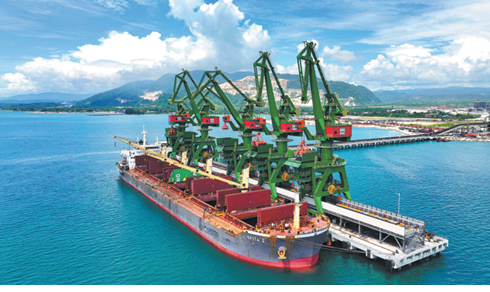
When Chen Deyun arrived on a remote Indonesian island a decade ago, stable electricity and phone signals were hard to come by. Today, he starts his mornings in an industrial complex of furnaces, docks and dormitories built by China’s Zhenshi Holding Group.

 Chen, now a senior manager at one of the park’s operating companies, has spent nearly 10 years working in Indonesia.

 The Indonesia Huabao Industrial Park in Morowali, Central Sulawesi province, has become a focal point of Zhenshi’s overseas expansion and a case study in how Chinese private manufacturers are embedding themselves in Southeast Asia through jobs, training and infrastructure investment.

 Zhenshi’s overseas push mirrors the broader rise of China’s private sector in foreign trade.

 According to the General Administration of Customs, China now has more than 780,000 business entities with import and export records, with private enterprises continuing to serve as the main engine of foreign trade. In 2025, private firms recorded total imports and exports of 26.04 trillion yuan ($3.73 trillion), up 7.1 percent year-on-year, accounting for 57.3 percent of the country’s total trade value.

 Zhenshi, founded in 1969 as a textile factory in eastern China’s Zhejiang province, has grown into a diversified industrial group spanning special steel, nickel-iron manufacturing, wind power materials and new composite materials. In 2025, it ranked 191st on China’s list of the top 500 private enterprises, rising 12 places from a year earlier and marking its 13th consecutive year on the list.

 Indonesia has emerged as a core pillar of that growth. In 2022, Zhenshi began developing Huabao, its first overseas self-built industrial park, as part of a strategy to integrate nickel resources into its broader materials supply chain.

 Nickel-iron smelting projects anchor the park, supplying downstream industries such as stainless steel and new energy materials. Around them, Zhenshi has built power facilities, roads, housing, logistics systems and port infrastructure, turning what was once largely undeveloped land into a functioning industrial hub.

 Local employment has been central to the project. Indonesian workers account for 91.45 percent of Huabao’s on-site workforce, or 2,555 people. Including affiliated projects, local employees total 8,217, representing 84.47 percent of staff members across operations, according to park data.

 Indonesian workers now fill roles across production, equipment maintenance, logistics and support services, forming the backbone of daily operations.

 Since 2022, Huabao has expanded training programs to support workforce development, including vocational skills, leadership, digital training and Mandarin-language courses tailored to workplace needs. In 2025, the park delivered more than 72,000 training hours, averaging nearly 25 hours per employee.

 More than 800 local youths have taken part in over 25 skills training sessions, while free courses in areas such as driving and welding have helped nearly 900 trainees secure jobs. In recognition of these efforts, Morowali’s local government awarded Huabao a certificate in 2025 for contributions to employment and human resource development.

 Zhenshi’s investments have also supported broader industrial development. Nickel-iron operations have stimulated demand for local suppliers in raw materials, logistics and equipment services. An upcoming coconut-based integrated processing project is expected to extend agricultural value chains from raw material sourcing to processing and exports.

 Infrastructure investment has gone beyond the park itself. Huabao has invested about $10 million to expand Morowali’s airport, improving regional transport capacity and supporting the area’s growing industrial activity.

 The park has developed 308 suppliers, including 132 Indonesian firms, helping local companies improve quality, safety and production standards through unified procurement and inspection systems. In agriculture, nearby villages now supply more than 94 percent of the park’s vegetable purchases, creating a stable income source for surrounding communities.

 Since 2022, Huabao has carried out more than 100 social responsibility projects covering infrastructure, education, healthcare, environmental protection and community support. These initiatives earned the park special recognition from Indonesian business associations in 2025.

 Zhou Mi, a senior researcher at the Chinese Academy of International Trade and Economic Cooperation, said such projects reflect a broader shift in China’s overseas investment approach.

 “Chinese manufacturing investment is moving up the value chain,”Zhou said. “Beyond labor, companies are helping improve technical and management capabilities, generating clear spillover effects that support industrial upgrading in host countries.”

 Southeast Asia has become a priority destination for Chinese firms seeking to diversify supply chains and markets. Analysts from China Galaxy Securities said that large-scale overseas investments by Chinese companies have increasingly been directed to the Association of Southeast Asian Nations in recent years, with Indonesia, Singapore and Malaysia emerging as the main destinations.

 Industry data show that more than 6,500 Chinese companies have invested directly in ASEAN, with most planning to expand further. Indonesia, with its large market and rich nickel reserves, has drawn particular interest as it promotes electric vehicle and materials industries.

 Cooperation between China and ASEAN is becoming more institutionalized. China and ASEAN have been each other’s largest trading partners for five consecutive years, with bilateral economic and trade relations continuing to deepen. The China-ASEAN Free Trade Area 3.0 Upgrade Protocol further underscores China’s commitment to deepening regional integration and sustainable development.

 For Zhenshi, the experience in Indonesia has reshaped its overseas model from stand-alone projects to integrated industrial platforms.

 “An industrial park is not just about production,” a senior executive based in Indonesia said. “It is about long-term development alongside the local economy.”

 As operations expand in Morowali, Huabao underscores how Chinese private enterprises are positioning themselves as long-term participants in regional growt


Article inline ad

From Overseas Expansion To Higher-Quality Integration

0

Experts say future growth will depend on enabling ‘Made in China’ to evolve into ‘Brands from China’ that find niche in local economies, societies worldwide

By Li Jing | China Daily | Updated: 2026-01-22     

Chinese companies are shifting from a traditional overseas expansion model built on exporting products and chasing scale, toward one defined by deep localization, digital integration and service differentiation, moving beyond merely “going out” to truly “going in”, said analysts and business leaders.

 The strategic evolution coincides with a steady rise in China’s outbound direct investment. According to the Ministry of Commerce, in the first 11 months of 2025, China’s total outbound direct investment rose 6.9 percent year-on-year to $158.21 billion. Non-financial outbound direct investment reached $132.09 billion, spanning 153 countries and regions.

 Beyond the headline figures, they say the profound change lies not in where Chinese firms invest, but in how they operate abroad.

 Roland Berger, a global consulting firm, describes this transition as a move toward “high-quality globalization”. In its latest flagship annual report, the consultancy noted that the era of relying primarily on capacity exports and cost advantages is giving way to a phase that demands stronger operational depth, governance capability and local integration.

 For consumer-facing sectors, experience accumulated in China’s highly competitive domestic market is increasingly becoming an advantage overseas — particularly in digital execution and user engagement.

 Trip.com Group, China’s largest online travel agency, has made service differentiation a core pillar when it expands internationally. The company operates 24-hour, human-staffed customer service globally, covering 35 languages with more than 20,000 agents — a scale rarely seen in the global travel industry.

 “When that level of service goes overseas and local customers experience it, user stickiness is naturally higher,” said Qin Jing, vice-president at Trip.com Group, at a forum hosted by China News Service in December. She added that China-based companies now have a clear advantage in service execution, which has become “basic infrastructure” at home, but remains uneven globally.

 Success often hinges on granular localization. In Japan, Qin said, travelers frequently filter hotels based on whether they offer smart toilets — a feature used by about 90 percent of Japanese users searching on the platform.

 “When other platforms didn’t build these differentiated labels and products, we did,” Qin said, adding that the company’s overseas business has posted triple-digit annual growth rates in recent years as a result.

 Beyond service, Chinese brands are leveraging digital technology to embed themselves into the daily lives of overseas consumers.

 Ashley Wu, senior director of business development of The Trade Desk in China, a global advertising technology firm, said the challenge is no longer simply gaining exposure, but embedding brands into overseas consumers’ daily media environments.

 “The key change we see in Chinese brands is not just ‘going out’, but ‘going in’ — truly entering overseas consumers’ everyday language and cultural context,” Wu said. That requires coordination between data, technology and content, rather than reliance on single platforms, she added.

 She cited the strategy of Govee, a Chinese smart home brand, which used programmatic advertising across connected TV and other digital formats in the United States. By controlling exposure frequency and targeting younger demographics, Govee saw purchase intent increase 3.5 percent, with conversion rates significantly outperforming social media advertising alone.

 Despite such successes, challenges in brand recognition persist. Beijing Ultrapower Software, a major mobile game developer, derives more than 90 percent of its mobile game revenue from overseas markets including the United States, Japan and South Korea. Yet, Zhang Kaiyan, the company’s secretary of the board and chief brand officer, admits there is a gap between product popularity and brand awareness.

 “Our competitiveness still lies mainly in product strength, not brand recognition,” Zhang said.”A US player may not know who made the game, or even which country it comes from — they stay simply because the product is good.”

Zhang noted that Chinese developers often expand as individual players rather than as part of an integrated industry ecosystem, limiting their collective branding power.

 For industrial and cultural enterprises, localization is increasingly defined by risk control and cultural management.

 Zhang Wei, CEO of CNAUTO, an automotive industry platform under Beijing United Information Technology, said overseas expansion in traditional sectors such as automotive equipment and chemicals requires tight control over logistics and compliance before marketing or sales can scale.

 “In our industry, safety and risk control come first. Otherwise, everything is just on paper, and all the risk sits with you,” Zhang said. He advocated for digital, flexible supply chains and vertically specialized warehouses to ensure compliance, particularly in markets with complex regulatory environments.

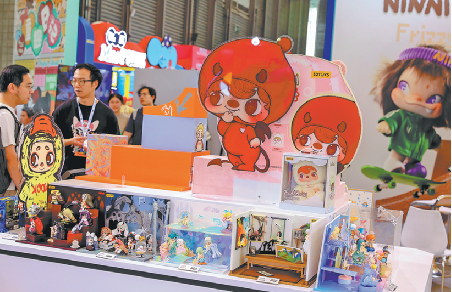
 Cultural integration is also emerging as a decisive factor for consumer and creative industries. Jin Xun, vice-president of the International Division at 52TOYS, a Beijing-based pop-culture toy company, said the key is an inclusive corporate culture.

 “Cultural conflicts are often less about religion or language than about work habits and communication styles,” said Jin, whose company now operates in more than 30 countries. “A lot of things aren’t managed into existence — they are built together through respect.”

 As Chinese companies deepen their global presence, compliance pressures are also becoming more complex, said Zhou Mi, a senior researcher at the Chinese Academy of International Trade and Economic Cooperation.

 “On the one hand, companies must comply with long-established international norms, such as respecting local cultures, protecting the environment and fulfilling corporate social responsibility,”Zhou said. “On the other hand, they are facing new and rapidly evolving requirements, including green trade barriers, cross-border data rules, foreign investment reviews and country-specific restrictions.”

 Chinese companies, he said, must not only understand existing global rules and adjust their behavior accordingly, but also develop the capacity to respond effectively to new regulatory demands — a challenge that is becoming increasingly significant.

 Looking ahead, Zhou said Chinese companies should not be subjected to differential treatment simply because of their country of origin, but as long-term contributors to global development.

 “Chinese companies have a cultural DNA of working hard, creating value, using resources efficiently and continuously innovating,” he said. “That should not be a reason for special treatment, but a basis for deeper cooperation.”

 Roland Berger said 2026 represents a critical juncture rather than a starting or ending point for Chinese companies’ global expansion. Entire industries, it said, are shifting from large-scale overseas expansion toward higher-quality global integration.

 Executives and analysts agreed that future growth will depend on combining product strength with brand resilience, enabling “Made in China” to evolve into “Brands from China” that are genuinely embedded in local economies and societies worldwide.

 lijing2009@chinadaily.com.cn


Article inline ad

‘Fresh Vitality’ Eyed In Beijing Retail Property Market

0

By Ouyang Shijia | China Daily | Updated: 2026-01-22

Beijing’s retail property market showed clear signs of renewal in 2025, as renovation-led urban regeneration and upgraded shopping malls helped stimulate consumption and drive down vacancy rates, according to a new report by CBRE, a commercial real estate services and investment company.

 In its 2025 Beijing Real Estate Market Review, CBRE said total new retail property supply in Beijing reached 534,000 square meters in 2025, with the addition coming from urban renewal projects, underscoring renovation-led development as the dominant market theme. In the fourth quarter alone, two revamped projects in secondary business districts, Zhongguancun Art Park and Longfu Temple, delivered a combined 294,000 square meters of new space.

 Looking ahead, Christina Liu, regional managing director of CBRE Northern China, said Beijing is expected to see more than 500,000 square meters of new retail supply in 2026. “In mature shopping districts, most of the new supply will continue to come from renovation projects, while large newly built projects will be launched in peripheral areas such as the city’s sub-center.”

 She added that those projects are likely to adopt more diversified positioning, focusing on themes such as “emotional value”, “heritage plus commerce”, non-standard retail formats and immersive experiences to attract footfall.

 “These developments are expected to inject differentiated content and fresh vitality into markets, helping Beijing’s retail landscape evolve toward a more multi-centered, networked and differentiated structure,” Liu said, while cautioning that a broad-based consumption recovery will take time and that rents — particularly in secondary locations — will remain under downward pressure in the near term.

 Data from the Beijing Municipal Bureau of Statistics showed Beijing’s retail sales fell 3.1 percent year-on-year in the first 11 months of 2025, narrowing by 0.1 percentage point from the first 10 months of the year, pointing to gradual stabilization in the market.

 CBRE highlighted in the report a continued rise in the “first-store economy”, which has become a key driver in blending traditional culture with modern trends and local indigenous with global perspectives. However, CBRE said the benefits are increasingly concentrated in a limited number of projects with strong operational capabilities or deep repositioning, accentuating market polarization.

 Liu noted that Beijing’s recent measures — including consumption credit support and improved payment convenience — aim to boost spending, while authorities are promoting high-quality development in catering, culture, tourism, and creative industries.

 “Projects with strong intellectual property appeal, outstanding operational capabilities and innovative content are expected to receive greater policy backing and market favor, while poorly positioned and aging projects face further consolidation or redevelopment pressure,” she said.

 According to CBRE, the citywide vacancy rate declined in the fourth quarter to the previous year’s level, aided by landlords’ rent concessions, a shift toward footfall-driven tenants such as dining and lifestyle services, and the gradual effectiveness of government-led initiatives to upgrade commercial districts and attract first stores.

 Data from the Beijing Municipal Commerce Bureau show that more than 960 first stores opened in the city in the first 11 months of 2025. Since 2019, Beijing has attracted over 5,000 first stores, with 12 global debut centers — including Sanlitun Taikoo Li — emerging as new landmarks for fashion consumption.

 Wang Wei, a senior researcher and former director of the Institute of Market Economy at the Development Research Center of the State Council, said special initiatives to boost consumption should be further implemented, with strengthened policies directly benefiting consumers.

 “While maintaining the subsidy funds for the trade-in policy, efforts should also be made on multiple fronts to boost service consumption,” she added. “We should also capitalize on the debut economy to strengthen backing for consumption innovation. Efforts should be made to back localities in developing new consumption scenarios, business formats, and models, promoting innovation in services and brands, and further enhancing the integrated innovation capabilities across commerce, tourism, culture, and sports.”

 ouyangshijia@chinadaily.com.cn

Article inline ad

Gold Prices Hit Record On Safe-Haven Play

0

By WANG ZHUOQIONG | CHINA DAILY | Updated: 2026-01-22

Gold continued its upward trajectory on Wednesday, with spot prices soaring above the $4,800-per-ounce mark for the first time in history.

 The precious metal has gained more than 10 percent so far this month, rising by over $480, as geopolitical risks and tariff threats by the United States spur heightened demand for safe-haven investments.

 The domestic gold jewelry market has also seen price increases, with several brands pushing rates to near-record highs.

 As of Wednesday, the price of 24k gold jewelry reached 1,495 yuan per gram at Chow Sangsang, up from 1,454 yuan per gram the previous day. Lao Miao Gold prices increased to 1,493 yuan ($215) per gram, from 1,455 yuan the day before.

 Many financial institutions remain bullish on gold.

 Citigroup has forecast that gold could challenge the $5,000-per-ounce mark in the next three months, assuming a bullish market scenario. This continued optimism comes as central banks around the world maintain an aggressive stance on gold purchases.

 China’s gold reserves have also showed a notable increase.

 As of December, China’s gold reserves stood at 74.15 million ounces, up 30,000 ounces from the previous month, marking the 14th consecutive month of accumulation by the People’s Bank of China, the country’s central bank.

 Guan Tao, chief economist at Bank of China International, told the National Business Daily, that driven by both volume and price factors, the proportion of Chinese central bank’s gold share in foreign exchange reserves during the same period reached 9.51 percent, an increase of 3.54 percentage points from the end of the previous year, setting a record high.

 Li Yuefeng, a researcher at the Beijing Gold Economy Development Research Center, said: “The recent surge in gold prices can largely be attributed to increasing geopolitical risks and domestic political uncertainty in the United States. The threat of tariffs over Greenland and the ongoing concerns over the US Federal Reserve’s role have created a strong tailwind for gold.”

 With gold now within $200 of the $5,000-per-ounce level, Li said that a break above this threshold could open the door for a broader rally.

 He forecast that by the end of 2026, gold could reach levels between $6,000 and $8,000 per ounce, driven by a combination of inflation concerns, political risks, and the ongoing shift in global monetary policy.

 wangzhuoqiong@chinadaily.com.cn

Article inline ad
Cutting Edge Of Manufacturing Boosts Resilience

0

Growth: Humanoid robots, 6G are key focus

By YIN MINGYUE, ZHANG CHENXU, CHENG YU and LI JIAYING | chinadaily.com.cn | Updated: 2026-01-22

China’s industrial sector posted solid year-on-year growth in 2025, the country’s top industry regulator said on Wednesday, reinforcing experts’ assessment that advanced manufacturing, artificial intelligence-enabled industries and emerging sectors have strengthened the economic resilience underpinning last year’s 5 percent GDP expansion.

 “In 2025, the value added by major industrial enterprises grew 5.9 percent year-on-year, while the share of manufacturing value added in GDP remained stable, with the manufacturing sector expected to remain the largest globally for a 16th consecutive year,” said Zhang Yunming, vice-minister of industry and information technology.

 Speaking at a news conference, Zhang said the total telecommunications business volume increased 9.1 percent year-on-year, and the industrial and information sectors accounted for more than 40 percent of economic growth.

 China’s industrial and information sector has shown notable resilience and vitality over the past year, with growth momentum continuing to build, delivering both qualitative improvements and sound quantitative expansion, Zhang said.

 Zhu Keli, founding director of the China Institute of New Economy, said China’s manufacturing sector delivered a strong overall performance in 2025, reflecting strengthening internal momentum and laying a firmer industrial foundation for high-quality economic development.

 “AI-enabled industries, emerging industries and advanced manufacturing have become the main engines of the economy, powering growth while reshaping the industrial structure,” he added.

 Zhu noted that these sectors have continued to generate growth momentum, pushing equipment manufacturing and high-tech manufacturing to expand significantly faster than major industrial enterprises overall, providing strong support for economic growth while helping offset pressures from slower expansion in traditional industries.

 In 2025, value added by major equipment manufacturing and high-tech manufacturing enterprises rose 9.2 percent and 9.4 percent year-on-year, respectively, exceeding the growth rate of major industrial enterprises by 3.3 and 3.5 percentage points, according to the Ministry of Industry and Information Technology.

 Notably, Vice-Minister Zhang said that AI is emerging as a powerful engine of industrial growth. “Industry estimates suggest that the number of AI enterprises in China surpassed 6,000 in 2025, with the core sector expected to exceed 1.2 trillion yuan ($172.32 billion) in size.”

 He pointed to a series of concrete advances, including the rollout of a wave of AI chips, a rise in computing capacity to 1,590 EFLOPS, the rapid expansion of high-quality industry datasets, and the emergence of homegrown foundation models as leaders in the global open-source ecosystem.

 Meanwhile, the range of AI-powered products is expanding rapidly. Sandy Xu Ran, chief executive officer of Chinese e-commerce giant JD.com, said products with real AI capabilities — such as robots and smart glasses — are emerging as major new engines of consumption, with sales in the two categories tripling and rising tenfold year-on-year in 2025, respectively.

 “Sales of robots were constrained by supply. Otherwise, growth would have been even stronger,” Xu said on Wednesday at the World Economic Forum annual meeting in Davos, Switzerland.

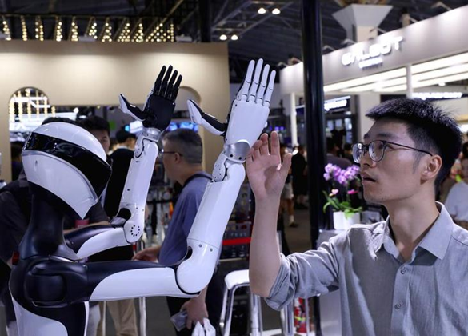
 To sustain this momentum, “we will also step up State-backed investment and fast-track key technologies to accelerate the development of humanoid robots”, Zhang said.

 The Ministry of Industry and Information Technology said it would strengthen support from the national AI industry investment fund for humanoid robotics, focusing on core technologies through competitive task bidding and major national science projects.

 Such efforts will prioritize breakthroughs in large AI models, integrated joints and computing chips, the regulator said.

 Samuel Li Xiangming, a professor at Northeastern University, said: “Humanoid robots could reshape global supply chains. While United States AI giants are still locked in fierce competition at the frontier, China should move quickly to refine the humanoid robot supply chain, make it more precise and efficient, and build advantages that are hard to replace.”

 The move also came as China presses ahead with 6G. Xie Cun, head of the information and communication development department at the ministry, said that “China has already kicked off the second phase of 6G technology trials”.

 “Moderately advancing ahead of demand has been one of our key practices in building information infrastructure,” Xie said.

 Huang Yuhong, general manager of the China Mobile Research Institute, said, “With continued breakthroughs in core technologies such as the integration of 6G networks and AI, commercial 6G services are expected to be started around 2030.”

 Looking ahead, Zhang said he remains confident that the industrial economy will remain on a steady upward path in 2026.

 This optimism also carried into equity markets on Wednesday morning, as tech shares staged a broad-based rebound led by gains in the semiconductor and computing power supply chains. Hygon Information Technology, for instance, surged more than 12 percent to a record high, lifting its market capitalization to 664.16 billion yuan, while turnover hit 13.851 billion yuan.


Article inline ad

China’s Tax Data Reveals Accelerated Transformation In Manufacturing Sector

0

Xinhua | Updated: 2026-01-21

BEIJING — China’s manufacturing sector saw its transformation toward intelligent and green development accelerate in 2025, with its role as the “ballast stone” of the national economy becoming more prominent, according to tax data released by the State Taxation Administration on Wednesday.

 In 2025, the growth of sales revenue of China’s manufacturing sector outpaced the national overall sales by 1.7 percentage points, accounting for 29.7 percent of the country’s total sales revenue, a 0.5-percentage-point increase from the previous year.

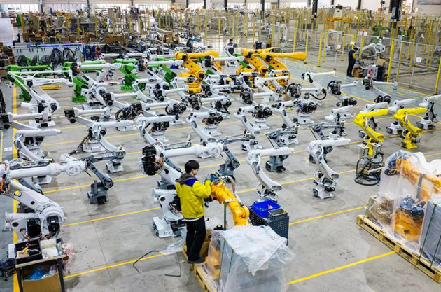
 Value-added tax (VAT) invoice data indicated that in 2025, the procurement value of automated and digital equipment by manufacturing enterprises nationwide rose by 11.3 percent and 10 percent year-on-year, respectively, marking faster progress in the intelligent transformation and digital upgrading of the manufacturing sector.

 Meanwhile, the sales revenue of the intelligent equipment manufacturing industry surged 28.1 percent from the previous year, with the output of industrial robots and special operation robots jumping 17.4 percent and 42.1 percent, respectively.

 The share of sales revenue of high-energy-consuming manufacturing enterprises in the entire manufacturing sector dropped by 1.1 percentage points in 2025, reflecting continuous optimization of the industrial structure. Manufacturing enterprises also saw their spending on environmental governance services climb steadily year-on-year, the data showed.

 Meanwhile, the deepening integration of the digital and real economies was evident, with manufacturing enterprises’ procurement of digital technologies surging 10.4 percent year-on-year in value, a 3.5-percentage-point acceleration from the previous year.

 Looking ahead, China’s tax authorities will effectively implement preferential tax and fee policies for advancing the manufacturing sector’s transformation and upgrading, continue to optimize tax and fee services, and contribute to advancing the high-quality development of the manufacturing industry, according to the State Taxation Administration.


Article inline ad

Saint Deem Debuts Vein-Recognition Production Line

0

By Cheng Yu | China Daily | Updated: 2026-01-22

Chinese biometric technology firm Saint Deem has launched its first dedicated vein-recognition manufacturing line, marking a step toward large-scale commercialization of a technology that industry experts said could reshape the digital identity verification industry.

 The production line, located in Huainan in East China’s Anhui province, is designed to produce up to 2 million vein-recognition modules and authentication devices annually, targeting applications ranging from consumer electronics and payments to vehicles and smart infrastructure, the company said.

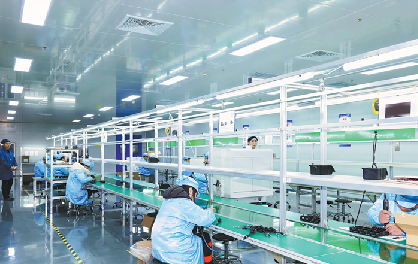
 The new factory spans more than 10,000 square meters and includes clean-room SMT (surface mount technology) production, assembly and packaging lines. It is the first specialized manufacturing line in China dedicated solely to vein-recognition products, filling a gap in the country’s biometric supply chain, the company said.

 Vein recognition — which identifies individuals by analyzing patterns of veins beneath the skin — is gaining attention as governments and companies seek more secure alternatives to passwords, fingerprints and facial recognition, which have become increasingly vulnerable to spoofing and AI-generated forgeries.

 “Vein recognition offers what other biometric technologies struggle to guarantee: it is internal, live and extremely difficult to replicate,” said Qian Haomin, co-CEO of Saint Deem. “With this production line, the company is shifting from an R&D-driven model to a new stage driven by the dual engines of R&D and manufacturing.”

 For Saint Deem, which has spent 15 years developing vein-recognition algorithms, hardware and software platforms, the Huainan plant is intended as a springboard for wider global adoption.

 He emphasized: “Our goal is not just to sell devices. It is to make vein recognition a trusted, universal key — connecting people securely to both the digital and physical worlds.”

 Zhang Zhiqiang, mayor of Huainan, said that vein recognition is not just another biometric tool, it is a strategic technology for future digital infrastructure that will help develop emerging industries while helping traditional sectors upgrade through secure digitalization.

 At a parallel industry forum on standards and applications, Zheng Zhiming, an academician of the Chinese Academy of Sciences and a leading expert on AI and data systems, said that conventional identity systems are struggling to keep pace with increasingly sophisticated attacks.

 “Passwords are one-dimensional, QR codes are two-dimensional,”Zheng said. “Vein recognition operates in three dimensions. Higher dimensionality means greater randomness and fundamentally stronger security.”

 He added that as AI-generated deepfakes and synthetic identities proliferate, vein-based authentication could become a critical security anchor in complex digital systems.

 Saint Deem’s technology has already been deployed in palm-vein payment systems, smart locks, public transport and high-security environments, according to the company and its partners.

 In one example, Chengde Public Transport Group in Hebei province has rolled out palm-vein payments for bus passengers, reducing reliance on cards and QR codes.

 Industry experts said that consumer markets could provide the next growth engine. China sold about 17.5 million smart locks in 2024, but penetration remains relatively low, leaving room for higher-security solutions.

 As the technology moves toward mass adoption, experts stressed the need for unified technical and security standards to prevent fragmentation and ensure trust.

 Zheng Yinfei, a professor at Zhejiang University and an expert on IT standardization, said, “Establishing evaluation and security benchmarks is essential to protect users and unlock the industry’s full value.”

Article inline ad

New Down Jacket Factory To Open Soon

0

By YANG JUN and LIU BOQIAN in Bijie | China Daily | Updated: 2026-01-22

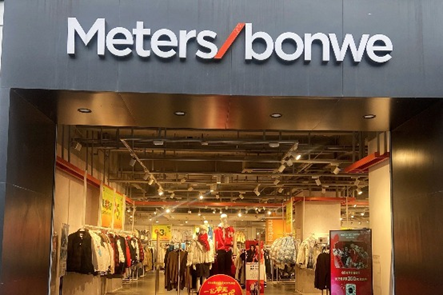
A new production line for down jackets operated by China’s fast-fashion label Metersbonwe will begin trial operations at the end of March in Bijie, Guizhou province in Southwest China.

 As part of local efforts to attract the relocation of the light-textile sector from China’s eastern provinces, the project is expected to generate employment for a large migrant-worker population.

 The line is a 1 billion yuan ($143.6 million) joint investment by Metersbonwe and local firms. With an annual capacity of 20 million pieces, organizers say the project will tap Bijie’s abundant labor pool and allow more local residents to earn income without leaving home.

 “We will introduce the advanced production model of an intelligent factory to Guizhou. We expect to employ 4,000 people in the first year and, as capacity rises, exceed 10,000,”Metersbonwe Chairman Zhou Chengjian said at a meeting in Bijie on Monday.

 Metersbonwe is not the first apparel brand to move production inland. China’s textile industry was once concentrated in coastal provinces such as Zhejiang and Guangdong. Rising labor costs and worker shortages have pushed many companies to consider relocating.

 Bijie’s large population gives the city an advantage. Local media report the city is one of Guizhou’s most populous areas, with more than 1.8 million residents who work away from home year-round. Some 53,800 people from Bijie are employed in the textile sector outside the region.

 An average resident age of 32.9 and a stable labor force of more than 2 million people aged 16 to 40 are Bijie’s demographic strengths.

 “The relative ease of recruiting labor was the main reason we chose Bijie,” said Pang Yonggui, general manager of Bijie Jingwong Garment Co. The company is a subsidiary of Crystal International Group, one of the world’s largest garment contractors.

 The group’s client list on its website includes international brands such as Uniqlo and H&M.

 Pang said the firm, after surveying locations nationwide, established operations in Nayong county of Bijie in 2022. Last year the unit’s output reached about 840 million yuan and is expected to reach 1 billion yuan this year.

 Bijie is now one of six branches of the company in China and produces casual wear for internationally known brands. Roughly 30 percent of its output is exported to Southeast Asia, Japan and other markets, according to Pang.

 As hometown employment opportunities expand, many migrant workers are returning and applying skills they learned elsewhere.

 Wu Changlun, who worked outside the province for many years and returned to Bijie last year, was appointed production workshop supervisor at a local textile firm. He has more than a decade of industry experience.

 “Many of our fellow townspeople used to work away. Now that factories are at our doorstep, many have come back,” Wu said.

 Local government data show the city’s textile and apparel industry achieved an industrial output value of 1.987 billion yuan in 2025, a year-on-year increase of 47.72 percent.

 Authorities are accelerating construction of supporting infrastructure, including combined heat and power plants, industrial wastewater treatment facilities, water supply plants, and transmission lines.

 Contact the writers at liuboqian@chinadaily.com.cn

Article inline ad