Wednesday, November 25, 2026

Home Blog Page 95

Shipbuilder Develops Generators For Remote Operations

0

By ZHAO LEI | China Daily | Updated: 2026-01-22

Engineers at China State Shipbuilding Corporation, the world’s largest shipbuilder, have used their expertise in ship propulsion systems to develop a portfolio of portable power generators suitable for emergency response and field operations in remote areas.

 Luan Yongjun, a project manager at Harbin Marine Boiler and Turbine Research Institute, a CSSC subsidiary based in the capital of Heilongjiang province, said that engineers have used their knowledge and experience in marine gas turbines to advance the research and development of mobile power stations.

 A gas turbine is a type of internal combustion engine that uses compressed gas to generate mechanical energy. An internal generator connected to the shaft of the turbine converts that energy into electrical power.

 Luan said the Harbin institute started developing mobile gas turbine generators, especially high-capacity ones, several years ago in an attempt to end the absolute dominance of foreign manufacturers in the domestic market.

 “These machines were needed for fieldwork and emergency response operations. At that time, only a handful of enterprises in the United States and Germany were able to build them,” he said.

 After years of effort, engineers at the institute overcame a host of technical difficulties to build high-performance mobile gas turbine generators with a wide range of power outputs.

 One of the institute’s gas turbine generator models, with a power output of 25 megawatts, has been sold to a foreign country and has accumulated about 80,000 operational hours, according to the project manager.

 “Our mobile power stations can be transported by road, rail, air and sea, and can be deployed in plateaus, mountainous areas and islands, promising users exceptional operational flexibility,”Luan said.

 Engineers conducted a full-system trial run of the 25 MW machine in Harbin before delivering it to the foreign client, and the results show that it works very well even in extremely cold conditions.

 “These portable machines feature modular designs and compact structures, occupying on average less than 20 percent of the floor space taken by conventional fixed power stations. They also have the advantage of rapid start and load adjustment, which allows operators to deliver power to users within a short time once the demand arises,”Luan said.

 He pointed out that these mobile power stations can be used for many purposes such as emergency rescue and disaster relief, resource exploration, building construction and power grid peak regulation.

 “A 25 MW machine is capable of powering about 50,000 households in a township for a certain period of time,” Luan said.

 This range of machines can also provide emergency backup power for data centers in various industries, including telecommunications and banking, or give backup power support to large-scale conferences and sports events, he said.

 In case of emergencies, such as a sudden power outage or an electrical failure, the mobile gas turbine generators can respond quickly to ensure uninterrupted electricity supply for critical equipment and premises, effectively avoiding negative impacts and heavy losses, Luan said.

 For areas with unstable power supply or significant power shortages, the machines can serve as a supplementary source of electricity to buffer local power supply pressures, he added.

 zhaolei@chinadaily.com.cn
Article inline ad

China’s UBTECH Expands Overseas Reach With Airbus Robot Deal

0

Xinhua | Updated: 2026-01-21

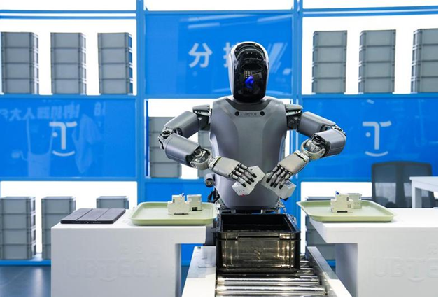
GUANGZHOU — Chinese humanoid robot developer UBTECH has struck a deal to supply robots to European aviation giant Airbus for use in its manufacturing facilities, the tech firm, located in Shenzhen in South China’s Guangdong province, said on Wednesday.

 Airbus has purchased UBTECH’s industrial humanoid robot, the Walker S2, as part of a joint effort to explore the application of humanoid robots in aviation manufacturing, UBTECH said.

 This cooperation endeavor follows a similar partnership UBTECH formed last year with US semiconductor maker Texas Instruments, highlighting the Chinese firm’s accelerating overseas expansion as it seeks to deploy humanoid robots across a range of industrial sectors, including aviation and automotive manufacturing, consumer electronics, smart logistics and semiconductor production.

 UBTECH said total orders for its humanoid robots hit 1.4 billion yuan (about $200 million) in 2025, while production capacity for its industrial humanoid robots is expected to exceed 10,000 units in 2026.

 Beyond the domestic market, the company said it is stepping up efforts to enter overseas manufacturing markets, including Europe and the United States.

 UBTECH began mass production of its full-size industrial humanoid robot model, the Walker S2, in November last year. The robot stands 1.76 meters tall and is capable of autonomous battery-swapping.

 An industry report revealed that Chinese robotics firms had emerged as the largest producers of humanoid robots worldwide in 2025, highlighting the country’s rapid rise in this emerging manufacturing sector.

 Shanghai-based AgiBot achieved an annual shipment volume of over 5,100 units last year, securing a 39-percent share of the global humanoid robot market and ranking first in the world for both shipment volume and market share. It was followed by Unitree and UBTECH, which recorded shipment volumes of 4,200 and 1,000 units, respectively, according to the report released by Omdia, a tech consultancy based in London.

Article inline ad

China Allocates New Batch Of Ultra-Long Special Treasury Bonds For Equipment Upgrades

0

Xinhua | Updated: 2026-01-22

BEIJING — China has allocated 93.6 billion yuan ($13.37 billion) in ultra-long special treasury bonds to fund equipment renewal projects across key sectors, the National Development and Reform Commission (NDRC) said Thursday.

 The funds will support some 4,500 projects across industry, energy and power, education, healthcare, and upgrades to old residential elevators, and are expected to drive total investment exceeding 460 billion yuan.

 In addition, direct funding has been allocated to local governments to continue supporting the replacement of outdated commercial trucks, the renewal of new-energy buses in urban public transport, and the retirement and replacement of old agricultural machinery.

 The move follows the Ministry of Finance’s recent announcement that the government will continue to issue ultra-long special treasury bonds in 2026 to advance national strategies, bolster security capacity in key sectors, and promote large-scale equipment renewal and consumer goods trade-in programs.

 The NDRC said it will strengthen coordination and tracking with relevant authorities, enhance whole-process management of projects and funds, and ensure effective implementation of the policies.

Article inline ad

Shanghai’s Lin-Gang Charts Course To Become World-Class Innovation Hub

0

chinadaily.com.cn | Updated: 2026-01-22

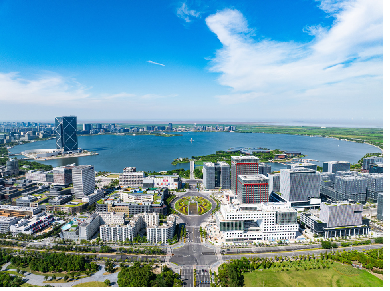
Shanghai’s Lin-gang Special Area unveiled its development plan for the Lin-gang Sci-tech Innovation City at a news conference on Jan 21.

 The plan serves as a roadmap for advancing the next phase of development through 2035, with the aim of transforming Lin-gang into a world-class sci-tech innovation hub.

 The goal is to develop Lin-gang into a hub for technology commercialization, a key cluster for emerging industries, a testing ground for new business models, and a preferred destination for young entrepreneurs.

 Through differentiated development alongside Zhangjiang Science City, the Lin-gang Sci-tech Innovation City will jointly support Shanghai’s ambition of becoming a global science and technology innovation center.

 Focusing on sectors such as integrated circuits and commercial aviation, Lin-gang will deepen the integration of technological and industrial innovation, and establish industry clusters with competitive advantages.

 In addition, the plan highlights the development of emerging sectors to drive economic momentum. Lin-gang will promote new business models such as the global expansion of digital cultural content, explore new economies integrating culture, tourism, commerce, sports and exhibitions, and become a hub for innovative creators and one-person companies.

 By 2027, Lin-gang plans to host at least seven world-class research institutions, have more than 2,000 high-tech enterprises, establish four sci-tech innovation communities, and attract over 40,000 innovative and entrepreneurial talent.

 By 2030, Lin-gang’s science and technology innovation capabilities and ability to commercialize new technologies are expected to be further strengthened.

 The four sci-tech innovation communities include the Dishui Lake AI Innovation Harbor, focusing on sectors such as digital culture and automotive electronics; the Dishui Lake IC Innovation Harbor, covering fields like integrated circuits and brain-computer science; the Dishui Lake Financial Bay, oriented toward cross-border services and international finance; and the Dishui Lake International Data Harbor, centered on digital services, e-commerce livestreaming and other sectors.

Article inline ad

Authorities Unveil Policies To Boost Consumption And Innovation

0

By Zhang Chenxu | chinadaily.com.cn | Updated: 2026-01-22

Chinese mainland authorities unveiled new policies on Wednesday to stimulate consumption and promote innovation-driven development.

 Fourty-one new duty-free shops, each at one of the 41 listed ports of entry to the mainland, will be set up, including at Wuhan Tianhe International Airport, said a joint announcement by the Ministry of Finance, the Ministry of Commerce, the Ministry of Culture and Tourism, and two other mainland government departments.

 Notably, the announcement stated that the duty-free shop at Hengqin port in Guangdong province will allow residents entering from Macao to purchase duty-free goods worth up to 15,000 yuan ($2,100).

 On the same day, the Ministry of Finance, the State Taxation Administration, and the China Securities Regulatory Commission jointly announced the extension of tax preferential policies for the pilot program supporting innovative companies issuing Chinese Depositary Receipts (CDRs) through the end of 2027.

 According to a statement issued by the authorities, from January 1, 2026, to December 31, 2027, individual investors will be exempt from personal income tax on capital gains from the transfer of CDRs issued by innovative companies.

 In addition, a differentiated personal income tax policy will remain in place for dividend income earned by individuals holding such CDRs, the statement said.

Article inline ad

Bank Of China Predicts Long, Gradual Bull Market For A-Shares Amid Reforms And Recovery

0

By Jiang Xueqing | chinadaily.com.cn | Updated: 2026-01-22

China’s A-share market has established a steady upward trend and is expected to benefit from capital market reforms and economic recovery, paving the way for a long and slow-bull market, Bank of China said on Wednesday.

 The year 2026 marks the first year of China’s 15th Five-Year Plan (2026–30) period. Macroeconomic policies are expected to continue applying targeted support to ensure a strong start to economic growth. With more proactive policy backing, domestic demand is likely to stabilize and rebound, according to a global asset allocation strategy report released by the bank on Wednesday.

 Bank of China’s personal banking department expects China’s economic growth to range between 4.7 percent and 5 percent in 2026, while global liquidity conditions are expected to remain accommodative. Steady economic growth, combined with relatively attractive stock market valuations and the ongoing global “de-dollarization” trend, is likely to make Chinese equities a preferred destination for global fund rebalancing, the report said.

 “Expectations of a steady and long bull market are growing stronger, and the anticipation of a stronger renminbi will accelerate global funds flowing into China, participating in the revaluation of Chinese assets,” the report said.

 It noted that Chinese assets are no longer merely typical emerging market assets, but high-quality assets deeply embedded in the global high-tech industrial chain.

 “They are also crucial to the global ‘de-dollarization’ trend and serve as an essential international emerging safe asset,” the report added.

 Meanwhile, the Hong Kong stock market is benefiting from the internationalization of Chinese assets and easing external liquidity conditions. Bank of China recommends overweighting both A-shares and Hong Kong equities.

 Guan Tao, global chief economist at BOC International (China) Co Ltd, said China’s capital markets are facing four major opportunities: comprehensive reforms that will unlock policy dividends; economic transformation that is fostering new growth drivers; continuous improvements in the capital market system; and diversification of household asset allocation, which will drive global portfolio rebalancing and asset revaluation.

 He added that core equity allocation should focus on autonomous and controllable technologies, emerging consumption trends, mergers and acquisitions among leading enterprises, innovative upgrading of traditional industries, and the industrial relocation of leading companies.

Article inline ad

Firms Going Global To Get Quick Support

0

Service system to facilitate high-quality expansion, lift supply chain stability

By Li Jing | China Daily | Updated: 2026-01-22

China is optimizing the framework for helping companies go abroad, shifting toward a more sophisticated, service-oriented support system aimed at facilitating their high-quality overseas expansion and enhancing global supply chain stability, officials said.

 The updated framework was outlined by the Investment Promotion Agency of the Ministry of Commerce on Monday, as the agency moves to professionalize the support mechanisms for enterprises going global, placing greater emphasis on resilience, compliance, and industrial integration rather than simple scale expansion.

 The shift comes as China’s outbound direct investment has seen a steady rise. According to data from the Ministry of Commerce, China’s total outbound direct investment increased 6.9 percent year-on-year to $158.21 billion in the first 11 months of 2025, cementing its position as the world’s leading source of outbound investment.

 During the same period, Chinese companies made nonfinancial direct investments in 10,165 overseas businesses in 153 countries and regions, with total investment reaching $132.09 billion, up 2.7 percent year-on-year, the data showed.

 Yu Zirong, deputy director of the Investment Promotion Agency, said that amid new global developments, the agency will strengthen cross-border investment service platforms to provide end-to-end, targeted and efficient support for companies going global.

 By innovating and improving full-chain services for outbound investment, Yu said, the agency aims to encourage upstream and downstream firms to expand overseas together, supporting the orderly cross-border deployment of industrial and supply chains.

 As part of this effort, the agency has introduced a “five-sphere” service matrix, designed to act as a comprehensive navigator for outbound businesses. The framework covers brand cultivation to enhance corporate identity, platform support to aggregate resources, and project-level services that provide lifecycle assistance.

 Additionally, the strategy prioritizes “park empowerment” to upgrade overseas industrial cooperation zones and the establishment of long-term mechanisms to ensure sustainable dialogue and support.

 The ultimate goal for 2026, the agency said, is to assist “chain-master” enterprises — leading firms that anchor supply chains — in coordinating efficiently with upstream and downstream partners, fostering self-sustaining industrial ecosystems abroad.

 The emphasis on higher-quality outbound direct investment reflects China’s long-term trajectory. According to the 2024 statistical bulletin of outward foreign direct investment, China has ranked among the world’s top three sources of ODI for 13 consecutive years, underscoring its position as a major global investor.

 By the end of 2024, Chinese investors had established around 52,000 overseas enterprises across 190 countries and regions, with 70 percent of them reporting profits or break-even performance.

 In 2024, China’s outward FDI spanned 18 industry sectors, with investments in five sectors, namely wholesale and retail, leasing and business services, manufacturing, finance, and mining; each exceeded $10 billion and collectively accounted for over 80 percent of the total. Investment in the construction sector and the information transmission/software and IT services sector recorded substantial growth, rising 80.5 percent and 205.5 percent year-on-year, respectively.

 A significant evolution in the 2026 strategy is the expanded role of professional services as “soft infrastructure” for outbound firms. The reliance on capital alone is being replaced by a holistic support network comprising legal, financial, and digital services, reflecting China’s ongoing reforms to improve the public service system for companies “going global” and to strengthen support for high-quality international cooperation.

 The Hong Kong Special Administrative Region is also strengthening its role as a “super-connector”. Wang Qing from Invest Hong Kong revealed that the city’s 2025 policy address announced the establishment of a specialized outbound team to help Chinese mainland firms navigate complex legal and financial landscapes.

 On the mainland, technology and finance are being further integrated into the outbound support system. The Shanghai CIPA Overseas Service Platform has introduced “AURA”, an AI-driven agent designed to digitize global resource matching, helping reduce information asymmetry that often plagues manufacturing firms.

 Financial institutions are also stepping up support. Banks like China Merchants Bank are rolling out cross-border financial systems capable of handling complex financing in 140 currencies, addressing the liquidity and financing challenges commonly faced by overseas subsidiaries, particularly in emerging markets.

 lijing2009@chinadaily.com.cn

Article inline ad

China’s Message In Davos Draws Praise

0

By XU WEIWEI,YANG HAN in Hong Kong and YANG RAN in Beijing | CHINA DAILY/XINHUA | Updated: 2026-01-22

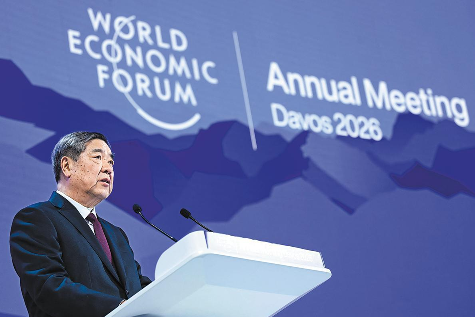
Chinese Vice-Premier He Lifeng’s speech in Davos, Switzerland, on Tuesday drew international praise as a timely reaffirmation of China’s role as a stabilizing force in an increasingly volatile world and a defender of free trade and globalization amid rising protectionism.

 He, also a member of the Political Bureau of the Communist Party of China Central Committee, delivered a speech at the World Economic Forum Annual Meeting 2026 in the Swiss Alps town, calling on the international community to firmly support multilateralism and free trade, and stay committed to win-win cooperation.

 Recalling President Xi Jinping’s speech delivered at the WEF in January 2017, He said China has since walked the talk and firmly upheld multilateralism and free trade. In recent years, Xi has successively proposed four global initiatives, providing Chinese solutions to collective problems facing the world.

 He urged the international community to firmly support free trade and promote universally beneficial and inclusive economic globalization. The world should also adhere to win-win cooperation, be committed to maximizing the fruits of cooperation, and jointly solve development problems, he added.

 Maarij Farooq, deputy editor-in-chief at Pakistan Economic Net and Daily Ittehad Media Group, said Chinese vice-premier’s address at the WEF was both timely and strategically significant, as it powerfully reinforced President Xi’s long-standing vision for a more cooperative and inclusive global order.

 “By recalling President Xi’s landmark 2017 Davos speech, He effectively demonstrated how China has not only articulated but consistently implemented its commitment to multilateralism and free trade, turning vision into action,” Farooq said.”He’s reference to the four global initiatives proposed by President Xi highlighted how China continues to offer practical solutions to shared global challenges, positioning itself as a responsible and proactive stakeholder in international affairs.”

 At a time when geopolitical tensions and economic uncertainties dominate the global landscape, He’s speech serves as a reminder that the world’s major economies must work together rather than drift apart, he said.

 Fundamental position

 Park Soong-chan, chairman of Korea China Association and a professor of Chinese studies at Yong In University in South Korea, said: “In Vice-Premier He Lifeng’s special address at the WEF, he mentioned China’s fundamental position (on multilateralism and free trade). This is not only China’s stance but also represents the position of the majority of countries in the world.

 “Historically, the world has developed against the backdrop of free trade and multilateralism. However, since 2017, the United States has started a wave of deglobalization that has disrupted the overall global economic growth trajectory, causing significant crises for the entire world, including South Korea,” Park said.

 “The global economy is interdependent; no single country possesses everything. Therefore, it is important to uphold the spirit and rules of the World Trade Organization,” Park said. “It is necessary for countries to promote universally beneficial and inclusive policies to maintain the development of the global economy.”

 Speaking at the forum, the Chinese vice-premier said multilateralism should be firmly upheld, and it’s necessary to make the international economic and trade order more just and reasonable. He also highlighted mutual respect and equal consultation, and called on all countries to make good use of dialogue to properly manage differences and resolve issues.

 Khalid Taimur Akram, executive director of Pakistan Research Center for a Community with Shared Future in Islamabad, said Chinese leadership repeatedly conveys a clear message that the world is interconnected, all countries are interdependent, and share a common destiny, just like passengers on one large ship.

 “Attempts to reverse globalization through tariffs and trade wars only harmed the global economy, supply chains got disrupted, demand-supply balance got disturbed, which then led to inflation in various parts of the world, and as a result, the common masses suffered,” he said.”Therefore, we all should work together so that we can cope with the challenges the world is facing today.”

 “Overall, the speech reflected that China is a stabilizing force in this dynamic world. It supports free trade, advocates mutual trust, and promotes inclusive development so that all nations can benefit,” Akram said.

 Xinhua contributed to this story.

 Contact the writers at vivienxu@chinadailyapac.com.

Article inline ad

China Reports Policy-Led Record Highs In Sales Of Home Appliances, Communication Devices In 2025

0

Xinhua | Updated: 2026-01-21

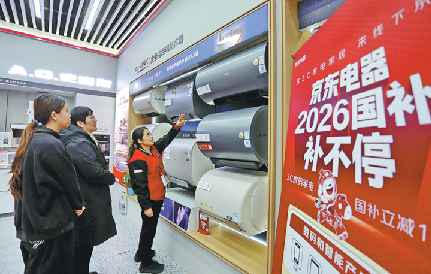
BEIJING — Driven by China’s consumer goods trade-in policy, domestic retail sales of home appliances and communication equipment both surpassed 1 trillion yuan (about $142.84 billion) to reach historic highs last year, official data showed on Tuesday.

 In 2025, retail sales of home appliances neared 1.17 trillion yuan, and those of communication devices approached 1.01 trillion yuan, according to the National Bureau of Statistics.

 A total of 91 million digital products and over 129 million home appliances across 12 categories were purchased through the trade-in program in 2025, data from the commerce ministry has revealed. Retail sales of home appliances and audio devices rose 11 percent, and those of communication equipment increased 20.9 percent.

 The trade-in initiative has facilitated China’s industrial upgrading and green transition. Of all home appliances traded in last year, products with top-tier energy or water efficiency ratings accounted for over 90 percent of total sales.

 Over 177,800 new types of home appliance products across 12 categories were introduced in 2025 as enterprises leveraged advanced technologies, up 28.89 percent year-on-year, according to the ministry.

 The policy has also significantly optimized the domestic consumption structure. Mid-to-high-end smartphones accounted for 72.5 percent of all digital products purchased through the program last year, and AI-equipped phones made up 83 percent of all mobile phone sales. The program reached more than 15 million consumers aged over 60, fostering the “silver economy.”

 China began implementing the consumer goods trade-in program in 2024. In 2025, over 360 million applications were filed for consumer goods trade-in subsidies, driving sales of related products to exceed 2.6 trillion yuan, which lifted China’s annual retail sales of consumer goods by 0.6 percentage points, official data shows.

Article inline ad

China’s AI Chip Firms Lead 2025 Top 50 Ranking: Report

0

Xinhua | Updated: 2026-01-20

BEIJING – A report ranking the top 50 Chinese AI companies has shown that enterprises specializing in AI chips emerged as the most notable performers in 2025, taking seven of the top ten spots.

 All three companies at the top of the list – Cambricon, Moore Threads and MetaX – are AI chip-related firms, while among the 18 newly ranked ones, 10 are engaged in AI chip businesses, according to the Hurun China AI Top 50 released on Monday.

 Rupert Hoogewerf, chairman and chief researcher of the Hurun Report, attributed this corporate prominence partly to the tightening of US export restrictions on high-end AI chips, which has in turn accelerated China’s push for self-reliance in computing power.

 China’s position in AI has strengthened significantly in 2025, according to the report. Citing usage data of 100 trillion tokens from a third-party platform, it reveals that the market share of Chinese open-source models, which stood at just 1.2 percent by the end of 2024, has since grown significantly, at times approaching 30 percent.

 AI companies on the list are remarkably young, having been founded an average of 12 years ago. The youngest ranked enterprises – Moonshot AI, Baichuan AI and StepFun – were established in 2023, and are all focused on AIGC large models.

 The list also includes companies specializing in emerging AI application areas – such as AI-driven drug discovery, autonomous driving technology and enterprise decision-making – highlighting the rapid real-world adoption of AI technologies in China.

 The report indicates that the listed AI companies are increasingly serving as “enablers” to empower Chinese sectors like consumer electronics and new energy vehicles to compete globally.

 Beijing leads the list as the home to 19 ranked companies, followed by Shanghai with 14 and Shenzhen with 6, according to the report. Collectively, China’s first-tier cities account for more than 80 percent of the enterprises on the ranking, underscoring a clustering effect in the country’s AI sector.

 The list ranks companies based on corporate value. For listed companies, market capitalization is calculated based on closing stock prices as of Jan. 9. Valuations for unlisted companies are determined with reference to comparable listed firms in the same sector or their latest financing rounds.

 Notably, robotics firms like UBTECH, companies whose core business is not primarily AI, including ByteDance and DeepSeek, which focuses on fundamental AI research, were not included in the ranking.


Article inline ad