Wednesday, November 25, 2026

Home Blog Page 96

Nation Widens Edge In Advanced Manufacturing

0

Lighthouse factories hit 101, buoyed by AI, big data and automation prowess

By Cheng Yu | China Daily | Updated: 2026-01-20

China has further cemented its lead in global advanced manufacturing by hosting 101 of the world’s 224 lighthouse factories, which are widely seen as the benchmark for the most advanced factories globally.

 The lead was widened after the World Economic Forum named 16 Chinese sites, more than any other country, among a new batch of 23 Global Lighthouse Network last week.

 These factories were recognized for applying advanced technologies such as artificial intelligence, big data and automation at scale, delivering measurable gains in efficiency, flexibility and sustainability.

 Hou Wenhao, partner at market consultancy McKinsey & Company, said, “As of this round, the number of such factories in China has surpassed 100, a major milestone for intelligent manufacturing.”

 “This achievement reflects not only the broad adoption of smart manufacturing technologies in China, but also the strong capabilities in large-scale implementation, technological innovation, scenario expansion and efficient commercialization,” he said.

 “China’s manufacturing sector is moving from exploration to maturity, injecting new momentum into the high-quality development of global industry,” he added.

 Kiva Allgood, managing director at the World Economic Forum, said,”Competitiveness today is no longer defined by efficiency alone, but by the ability to sense, adapt and respond at speed.”

 “This year’s industrial transformation sites show how intelligence-led operations are being scaled to place resilience and sustainability at the core of how industry operates.”

 China’s lighthouse factories span a wide range of industries, including steel, new energy, automobiles, electronics and telecommunications. Among the newly recognized sites is Hisense Visual Technology’s Qingdao factory, which has become the only lighthouse factory in the global television manufacturing industry.

 The plant, located in Qingdao, Shandong province, covers 310,000 square meters and produces, on average, one television set every 20 seconds.

 Operating in the mature TV market, the company faced rapidly evolving consumer demand alongside growing cost competition. In this environment, Hisense Qingdao faced challenges in its product development, processes, cost control and manufacturing, WEF said in a note.

 To address these, the site adopted AI, big data, simulation and large-scale virtual reality throughout its new product R&D and manufacturing. Its digital transformation resulted in Hisense Qingdao reducing R&D cycles by 34 percent and lowering material costs by 18 percent, and new employee training time by 60 percent, the WEF said.

 Yuan Haidong, general manager of the intelligent manufacturing department at Hisense Visual Technology, said the lighthouse factory represents a stepping stone toward an even more advanced model he described as a “factory brain.”

 “In the future, our factory will evolve into a higher form — a ‘factory brain’,” Yuan said.

 “Like a human brain, it will coordinate people, machines and materials across multiple factories, using AI to support unified management, scheduling and decision-making,” he said.

Article inline ad

China Completes First Phase Of 6G Technology Trials

0

By Zhang Chenxu | chinadaily.com.cn | Updated: 2026-01-21

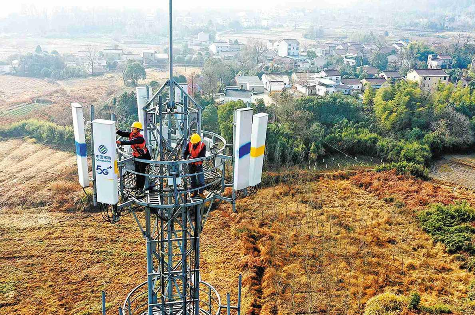
China has completed the first phase of its 6G technology trials and accumulated a reserve of more than 300 key technologies, the Ministry of Industry and Information Technology said on Wednesday, underscoring policymakers’ efforts to steadily enhance the country’s information and communications technology capabilities.

 Xie Cun, head of the information and communication development department at the ministry, said at a news conference in Beijing that the second phase of 6G technology trials has recently been launched.

 “China has put in place 4.838 million 5G base stations, with the number of 5G users exceeding 1.2 billion, and accounting for 42 percent of global declarations of standard-essential 5G patents,” Xie said, noting that the country has built the world’s largest and most technologically advanced information infrastructure.

 Going forward, the ministry will further accelerate 6G research and development while stepping up forward-looking planning and fostering an application-oriented industrial ecosystem for 6G, Xie added.


Article inline ad

Nation Clears Key Hurdle In Its Chip Manufacturing Push

0

By ZHENG XIN | China Daily | Updated: 2026-01-21

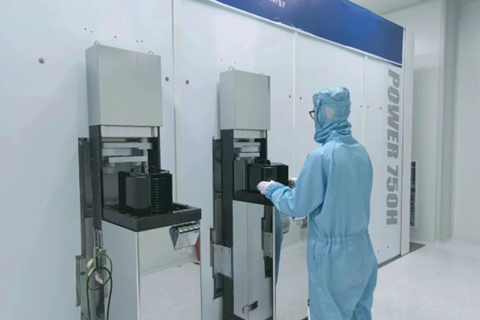
China has taken a pivotal step toward semiconductor self-reliance with the successful development of its first domestically produced tandem-type high-energy hydrogen ion implanter — a breakthrough that directly addresses a critical vulnerability in its chip manufacturing supply chain, said industry experts.

 The new system, named POWER-750H and developed by the China Institute of Atomic Energy under the China National Nuclear Corp, ends China’s long-standing reliance on foreign equipment for high-energy ion implantation, a key process in fabricating advanced power semiconductors, they said.

 This milestone not only fills a major technological gap but also strengthens China’s resilience against external tech restrictions, accelerating the nation’s push to localize core semiconductor manufacturing capabilities, said the institute.

 The development of the POWER-750H signifies that China has mastered the full-link R&D technology for tandem-type high-energy hydrogen ion implanters, it said.

 The ion implanter is considered one of the four major essential tools in semiconductor manufacturing, alongside photolithography machines, etching equipment, and thin-film deposition systems.

 While China has made strides in the latter categories, high-energy ion implantation has remained a persistent bottleneck, with domestic manufacturers historically relying almost entirely on imports.

 Pan Helin, a member of the Expert Committee for Information and Communication Economy, which is part of the Ministry of Industry and Information Technology, said he believes the development of the tandem-type high-energy hydrogen ion implanter has filled a critical technological gap in China, significantly reducing the country’s reliance on foreign equipment for manufacturing high-voltage power chips such as the IGBT (insulated gate bipolar transistor), a power semiconductor device.

 This will further enhance domestic self-sufficiency in semiconductor production equipment while accelerating the replacement of imported tools with domestically produced alternatives, he said.

 The global semiconductor industry is currently navigating a period of unprecedented expansion and structural transformation, driven primarily by the artificial intelligence revolution and deepening geopolitical divisions.

 As of the start of 2026, the market is approaching a historic $1 trillion valuation, with AI chips emerging as the dominant revenue driver, according to market forecasts by International Data Corp.

 Global semiconductor revenue surged by 21 percent in 2025 to reach $793 billion, with AI processors, high-bandwidth memory, and networking chips accounting for nearly one-third of total sales in 2025, according to a Gartner market report.

 “China already possesses significant scale advantages in IGBT semiconductor manufacturing. With the successful localization of this advanced equipment technology, China’s technological autonomy in IGBT production is further strengthened,” said Pan.

 “A more stable and secure domestic equipment supply chain will undoubtedly enable China to further leverage and expand its existing scale advantages in the IGBT sector.”

 Lin Boqiang, director of the China Center for Energy Economics Research at Xiamen University, concurred, saying that the success represents a watershed moment for the domestic semiconductor industry.

 This achievement is not merely an incremental upgrade in manufacturing capability, but more of a strategic decoupling from foreign dependency in a critical “chokepoint” technology, he said.

 Lin said by securing autonomous control over this “must-have” equipment — ranked among the four core chip manufacturing tools — China’s supply chain security has been significantly fortified.

 This is especially urgent as governments worldwide are now investing big to localize manufacturing, as export controls on critical materials, such as gallium and germanium, and sensitive technologies are creating structural shortages, he said.

 “This is particularly crucial for the burgeoning new energy vehicle and smart grid sectors, where devices like IGBT chips rely heavily on deep-level ion doping,” said Lin.

 “The domestication of this tool is expected to reduce manufacturing costs and drastically cut maintenance downtime, thereby accelerating the rollout of more efficient, higher-performance power modules essential for achieving dual carbon goals.”

 He added that the successful development of the POWER-750H tandem-type high-energy hydrogen ion implanter will also further strengthen the security of the global semiconductor production and supply chains.

 This localized production is expected to further insulate strategic industries from the volatility of global trade policies and tariffs, which leaders currently rank as a top operational concern, he said.

 zhengxin@chinadaily.com.cn

Article inline ad

Xpeng On Path To Mass-Producing Humanoid Robots

0

By Li Jiaying | chinadaily.com.cn | Updated: 2026-01-20

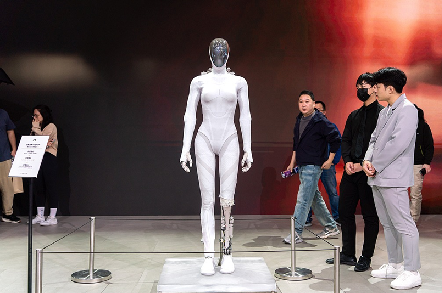
Chinese new energy vehicle maker, XPeng Motors, has taken a key step toward the large-scale production of advanced humanoid robots, as its first ET1 robot developed to automotive standards has been successfully completed, the company’s chairman and CEO, He Xiaopeng, said in a social media post on Monday.

 He described the milestone as a crucial breakthrough on XPeng’s path toward mass-producing high-level humanoid robots later this year.

 The development aligns with the company’s broader roadmap that was unveiled at its annual launch event. He said that 2026 will mark a pivotal year for the commercialization of physical artificial intelligence, signaling XPeng’s transition from technological exploration to real-world applications.

 According to the plan, XPeng aims to deploy the second-generation VLA system in vehicles in the first quarter of 2026, launch Robotaxi operations the same year, begin the mass production of humanoid robots, and roll out its flying car into large-scale manufacturing.

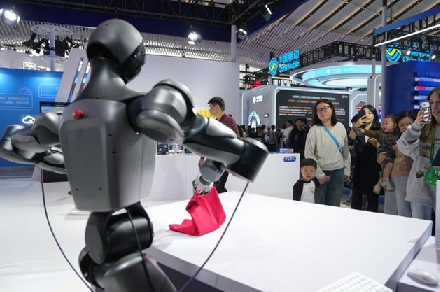
 XPeng’s progress in humanoid robotics first drew widespread attention in November, when the company unveiled IRON, its new-generation humanoid robot. Featuring movements that closely mimic a human “catwalk-style” gait, IRON sparked online debate, with some netizens questioning whether it was a real person.

 The robot also gained international attention after a post featuring IRON on X received a “like” from Tesla CEO Elon Musk, who commented that “Tesla and Chinese companies will dominate the market.”

Article inline ad

Consumers Showing Tilt Toward Private Labels

0

Small retailers using high-quality products to overcome pricing challenges and compete with large, established brands

By WANG ZHUOQIONG | CHINA DAILY | Updated: 2026-01-21

The Spring Festival product landscape in China is undergoing a major shift, with consumers placing increasing emphasis on health, innovation, and personalization in their holiday shopping.

 Traditionally dominated by red-themed goods symbolizing prosperity and good fortune, this year’s offerings have diversified toward more youthful and vibrant designs, reflecting the evolving tastes of younger, trend-savvy consumers.

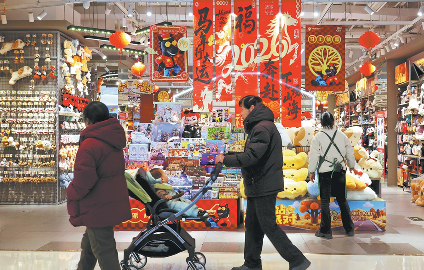
 At a Walmart store in Shenzhen, Guangdong province, for example, the shelves are adorned with colorful hues and playful, eye-catching designs — an obvious appeal to small families and younger shoppers.

 In addition to these fresh aesthetics, popular brand collaborations and viral cultural elements have made their way into limited-edition gift sets in an effort to stimulate demand.

 Walmart’s shelves now feature products including Zootopia 2 IP licensed items, countdown calendar chocolates and candy blind box sets in collaboration with leading confectionery producer Hsu Fu Chi, as well as cilantro-flavored yogurt, and “Mahjong Tile” biscuits symbolizing “a great start”.

 Zhu Jun, senior vice-president of Walmart China, said that Spring Festival celebrations are diversifying.

 “Whether it’s family reunions, travel, or self-care relaxation — they all reflect today’s customers’ pursuit of a better life,” he said.

 Jason Yu, general manager of CTR Market Research, said today’s consumers are placing greater value on individuality, emotional connection, and design appeal. “By incorporating popular trends — vibrant colors, modern designs, and new intellectual properties — brands can break free from the homogeneity of traditional Spring Festival offerings and create products that resonate with younger consumers,” he said.

 This evolution is not only aesthetic, but also represents new opportunities for innovation, particularly within the growing private-label sector.

 Private-label products are now central to the fast moving consumer goods market in China. According to the 14th China Shopper Report 2025, jointly released by Worldpanel and Bain & Company, private-label goods accounted for 2 percent of FMCG sales in the third quarter of 2025, reflecting a 44 percent growth over the prior two years.

 Retailers are moving quickly to tap into this demand, expanding their private-label portfolios by leveraging shopper insights and integrated supply chains. Retailers such as Walmart, or Wumart, no longer just keep pace with consumer trends, they are proactively meeting them by developing exclusive products tailored to these new preferences.

 For example, Walmart China, in particular, has embraced this trend with its “Marketside” line, which focuses on fresh ingredients, health-conscious options, and simple formulations. The company has developed nearly 1,000 stock-keeping units under its private label, a segment that, while still in its early stages, has already become a key component of Walmart’s overall strategy, said Zhu.

 Zhu said that the company is expanding its private-label offerings as part of a larger format shift, which emphasizes meeting the evolving needs and preferences of consumers. By prioritizing partnerships with leading brands and cocreating products with suppliers, Walmart is positioning itself for long-term growth, he added.

This trend is part of a broader shift within the retail industry.

 Yu said that the rise of private labels is not isolated to one retailer, but is indicative of a larger market shift. Small retailers, in particular, are using private labels to overcome pricing challenges and compete with larger, established brands.

 As China’s manufacturing sector matures, e-commerce platforms have enabled small manufacturers to deliver high-quality products at lower costs. Consumers, in turn, are increasingly looking for “comparable quality at lower prices”, alongside fresh, innovative experiences that offer convenience, Yu added.

 The holiday season also sees more demand for retailers and products that provide convenience.

 Walmart is expanding its community stores, designed to meet the fast-paced needs of urban families. With four new locations opening in Shenzhen in December 2025, Walmart continues to scale its “small, refined, and nearby” store model, offering a range of products catering to busy shoppers. These stores focus on fresh produce, bakery items, ready-to-eat meals, and snacks, all with an emphasis on value and quality.

 Walmart’s community stores underscore the growing importance of convenience and value. Offering around 2,000 SKUs across multiple categories, these stores have received positive customer feedback, with increased foot traffic and repeat purchases reflecting the appeal of their “10-minute walkable living circle” concept, said the company.

 The company’s most recent financial results highlight the significance of optimizing its supermarket format.

 For the third quarter, the company reported net sales of $6.1 billion, a 21.8 percent increase year-on-year, with comparable sales up 13.8 percent, largely driven by its membership store (Sam’s Club) growth and strong e-commerce performance.

 Meanwhile, the broader retail landscape is experiencing rapid growth across new channels.

 Membership-based retailers, snack chains, and discount formats have seen year-on-year expansions of 40 percent, 51 percent, and 92 percent, respectively, according to Kantar. This reflects a deeper consumer trend toward value, convenience, and experience, with shoppers increasingly prioritizing affordability without sacrificing quality, said Kantar.


“Channels have become active demand generators rather than passive sales endpoints. Brands need to rethink how they partner with retailers and platforms — treating each channel as an ecosystem for innovation, engagement, and value creation,” according to Derek Deng, head of Bain & Company, in China Shopper Report 2025.


Retailers and brands that can successfully integrate these insights into their product offerings and go-to-market strategies will be the ones to lead the next phase of FMCG growth in China, said Deng.

Article inline ad

Xinjiang Surpasses 43 Billion Kwh Green Energy Usage In 2025

0

By Zheng Xin | chinadaily.com.cn | Updated: 2026-01-20

The Xinjiang Uygur autonomous region saw its green electricity consumption reach a historic 43.43 billion kilowatt-hours (kWh) in 2025, a staggering 230 percent increase over the previous year that underscores the region’s rapidly expanding role as a cornerstone of China’s renewable energy strategy.

 Figures released by State Grid Xinjiang Electric Power Company revealed a significant optimization of the region’s energy consumption structure.

 Of the total volume, approximately 3.17 billion kWh was utilized through direct green power trading, while a dominant 40.26 billion kWh was accounted for through the transaction of over 40 million Green Electricity Certificates (GECs), it said.

 This surge highlights the broadening channels available for green energy utilization in the Xinjiang Uygur autonomous region, one of the nation’s most resource-rich areas.

 As a primary clean energy base under national planning, the Xinjiang Uygur autonomous region has leveraged its unique geographical advantages to build a massive renewable energy footprint.

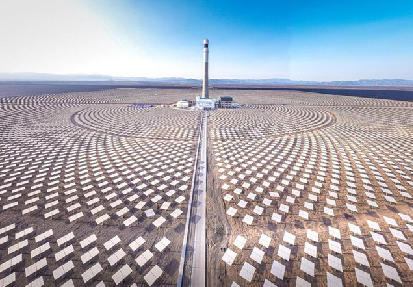
 By the end of 2025, the region’s installed new energy capacity surpassed 161 million kilowatts, now accounting for more than 60 percent of its total power generation capacity. This robust infrastructure has provided the essential foundation for the record-breaking levels of green power absorption recorded this year.


Article inline ad

China To Advance Zero-Carbon Factory Development

0

Xinhua | Updated: 2026-01-20

BEIJING – China has pledged to advance zero-carbon factory development to further tap the potential for energy conservation and carbon reduction in the industrial and information sectors, and to drive emissions cuts, efficiency gains, and green, low-carbon transition in key industries.

 According to a guideline issued by five government departments including the Ministry of Industry and Information Technology (MIIT), China will begin selecting a group of zero-carbon factories from 2026 to set benchmarks for wider replication.

 Zero-carbon factory development refers to a process in which factories continuously reduce carbon dioxide emissions within their premises and gradually move toward near-zero levels through emissions-cutting measures such as technological innovation, structural adjustment and management optimization.

 Guiding industrial enterprises to pilot zero-carbon factory development is crucial for fostering new, high-quality productive forces tailored to local conditions. This approach will better align high-quality economic development with high-level environmental protection, supporting China’s goals of peaking carbon dioxide emissions before 2030 and achieving carbon neutrality before 2060.

 The guideline outlined a phased, tiered approach. By 2027, China will foster and build a number of zero-carbon factories in sectors including automobiles, lithium batteries, photovoltaics, electronics and electrical appliances, light industry, machinery and computing power facilities.

 By 2030, the initiative will be gradually expanded to industries such as steel, nonferrous metals, petrochemicals, building materials and textiles, exploring new pathways for decarbonizing traditional energy-intensive sectors, according to the guideline.

 The guideline also detailed key implementation routes, including establishing a carbon dioxide emissions accounting system to identify and quantify emissions and removals, encouraging eligible factories to build industrial green microgrids, and promoting the application of next-generation information technologies.

 An MIIT official said the ministry will step up coordination and policy support, advance standards and sector-specific guidance for zero-carbon factories, gradually improve market-based mechanisms for green, low-carbon transition, and promote the application of zero-carbon factory development in areas including green consumption, green trade and green finance.

Article inline ad

China’s Commercial Satellite Sector Prepares For Takeoff

0

Key industry leaders say focus has shifted toward mass production, specialized application ecosystems and urgent development of heavy-lift launch capabilities

By Ren Qi and Cheng Yu | China Daily | Updated: 2026-01-20

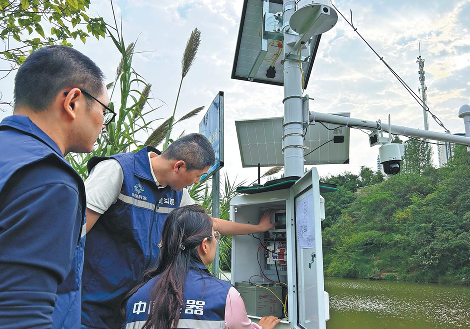
Technicians from BeiDou Satellite Communication Co Ltd conduct on-site equipment debugging at the Longjianxi Hydrological Monitoring Station in Luzhou, Sichuan province, in July. CHINA DAILY

A record-breaking filing for orbital resources has signaled a pivotal shift in China’s space ambitions, moving the industry from a phase of technical verification to aggressive commercial scaling.

 In late December, China submitted applications to the International Telecommunication Union for frequency and orbital resources for an additional 203,000 satellites. The move would drastically expand the global population of spacecraft and reshape the competitive landscape of low-Earth orbit.

 While the sheer magnitude of the applications garnered international headlines, the practical execution of this strategy relies heavily on a rapidly maturing domestic supply chain that is fundamentally different from its Western counterparts.

 Key industry leaders say the focus has shifted toward mass production, specialized application ecosystems and the urgent development of heavy-lift launch capabilities to meet international deployment deadlines.

 The acceleration comes as Chinese enterprises seek to secure finite resources in space, a domain that experts warn is becoming increasingly crowded with commercial hardware.

 Lin Guangrong, a constellation communication system architect at GalaxySpace, said the company has successfully transitioned from a “custom workshop” model to a “digital factory” approach to meet this demand.

 GalaxySpace, recognized as China’s first unicorn company in the commercial aerospace and satellite internet sector, has spent seven years building a full-chain capability for satellite development.

 Lin noted that unlike the standardized production of automobiles or computers, satellite mass production faces unique hurdles regarding reliability in the vacuum of space. It requires a delicate balance between speed and rigorous quality control.

Through a process of agile development and rapid iteration, Galaxy-Space has established a manufacturing chain for satellites ranging from 100 to 2,000 kilograms in weight. The company’s annual production capacity for medium-sized satellites has stabilized between 100 and 150 units.

 Lin explained that the manufacturing cycle has been shortened by 80 percent compared to traditional models. This efficiency is driven by a “smart brain” within the factory, where algorithms continuously optimize industrial processes based on data from frontline engineers.

 This shift allows the company to move away from “hand-crafted” prototypes to a streamlined industrial output capable of supporting large-scale constellations.

 Technological innovation remains the primary driver for this efficiency, particularly in the development of payloads using the Q/V band.

 To understand the significance of this technology, Lin compared satellite communication frequencies to highways in the sky. Traditional frequency bands are like congested city streets, limited in how much traffic they can handle.

 The Q/V band represents a new, wider superhighway that allows for significantly more data traffic and higher bandwidth, which is essential for a high-speed satellite internet experience.

 However, utilizing this “superhighway” requires overcoming substantial technical difficulties, as higher frequencies are more sensitive to atmospheric interference and require precise hardware.

 Lin said GalaxySpace has successfully developed its fourth-generation Q/V antenna, reducing the weight from over 7 kg to just 3.2 kg while lowering the profile to 0.265 meters.

 This size reduction is critical. It allows engineers to stack more satellites inside a single rocket fairing, thereby reducing the cost per unit launched. The company is now producing 300 of these advanced antennas annually.

 These technical breakthroughs are being tested in the “Little Spider Web”, China’s first low-Earth orbit broadband trial constellation.

 Comprising eight independently developed satellites, this network has verified the ability to provide continuous broadband communications for 30 minutes at a time, a key metric for proving the viability of the system.

 The system has successfully conducted tests in diverse environments, from verifying power grid connectivity in Yunnan province to enabling maritime emergency communications.

 Lin highlighted the company’s ambitious timeline, noting that in September, it launched the world’s first satellite equipped with large-scale flexible solar wings, further pushing the boundaries of power generation in orbit.

 While GalaxySpace focuses on the infrastructure of satellite internet, other industry giants are concentrating on the downstream ecosystem and how these signals reach the average consumer.

 Wang Hui, general manager of BeiDou Satellite Communication Co Ltd, a subsidiary of China North Industries Group (Norinco Group), highlighted this rapid evolution in the application sector.

 “The application potential of China’s commercial satellites is accelerating from technical verification to large-scale implementation, demonstrating broad market prospects and innovative vitality across multiple fields,” Wang said.

 He emphasized that these applications “are no longer confined to professional sectors, but are deeply integrating into consumer life and every link of the national economy, showing immense potential and rapid growth.”

 Pan Ying, deputy chief engineer at the same company, offered a distinct perspective on how Chinese companies are carving out a unique market position compared to Western competitors like SpaceX.

 Pan argued that the two markets operate on fundamentally different structural logics.

 SpaceX employs a “vertical integration” model, controlling the entire chain from chip manufacturing to rocket launches and terminal sales. In contrast, the Chinese ecosystem is defined by specialization, which Pan described as a “letting a hundred flowers bloom” approach.

 In China, rocket manufacturers focus on launch vehicles, satellite makers focus on spacecraft, and chipmakers focus on semiconductors. Each entity dedicates its resources to its core competency.

 While acknowledging that the fully integrated model allows for tighter feedback loops, Pan argued that the Chinese model excels in concentrating resources during the system construction phase.

 He cited the development of the BeiDou navigation system as proof that concentrating superior resources — often under the “national team” framework — can lead to high-quality system completion in a short timeframe.

 Still, he admitted that this segmentation can sometimes slow the transmission of market demands from downstream users back to upstream designers, as there is no single entity overseeing the entire loop.

 To bridge this gap, Pan’s company is focusing heavily on integrating satellite services into mass-market consumer devices to create a sustainable business loop.

 The company is leveraging the BeiDou short message service, a unique feature of the Chinese navigation system that allows satellites to send text messages. Unlike standard GPS, which only tells users where they are, BeiDou allows users to tell others their location and status, even without ground-based mobile signals.

 Pan said this feature is rarely used in daily life, but will play a crucial role in emergency scenarios.

 By forming joint ventures to develop new chips, the company has successfully integrated this capability into standard smartphones without requiring bulky external antennas.

 Since 2022, hundreds of millions of mobile phones equipped with BeiDou short message capabilities have been shipped, significantly driving down the cost of core components.

 Pan noted that numerous news reports have already confirmed cases where users in areas without cellular coverage used the feature to send distress signals and receive rescue, validating the social and commercial value of the technology.

 Beyond phones, BeiDou Satellite Communication Co Ltd is innovating through cross-industry partnerships. Pan revealed collaborations with outdoor apparel brands like Bosideng and Phoenix to embed satellite communication modules directly into outdoor gear. This strategy aims to empower traditional products with satellite capabilities, expanding the market beyond dedicated tech enthusiasts to the general public.

Looking forward, Pan predicted that over the next three to five years, the market will feature multiple coexisting systems, including BeiDou, the Tiantong satellite system, and emerging low-Earth orbit internet constellations.

 He emphasized that future terminals will likely be compatible with multiple systems, allowing seamless switching based on user needs.

 However, the realization of these commercial ambitions depends heavily on the availability of orbital slots and the physical capacity to launch hardware into space.

 The recent applications for 203,000 satellites by China highlight the intensifying competition for near-Earth orbit resources.

 Zhang Zhilong, an associate professor at Beijing University of Posts and Telecommunications, compared the current constellation boom to a game of musical chairs.

 Low-Earth orbit is a limited resource, constrained by the physical need for safe spacing between objects to prevent collisions.

 According to a white paper by CCID Consulting and other industry analyses cited by Science and Technology Daily, the estimated safe capacity of low-Earth orbit satellites ranges from 60,000 to 175,000 — a threshold global filings have already exceeded.

 Under International Telecommunication Union rules, the “first come, first served” principle applies to these resources, but it comes with strict “use it or lose it” deadlines.

 Once a frequency and orbit are filed, the applicant must launch the first satellite within seven years and deploy 10 percent of the total constellation within nine years.

 Failure to meet these milestones results in the loss of priority rights. This regulatory clock is placing immense pressure on China to increase its launch capacity and reduce costs immediately.

 China’s current launch capabilities are racing to catch up with the manufacturing output of satellite factories like GalaxySpace.

 In 2025, China conducted 92 launches, deploying just over 300 commercial satellites. This figure must grow exponentially to meet the targets implied by the new filings. The industry is looking toward a new generation of liquid-fueled, reusable rockets to bridge this gap and lower the price of access to space.

 Several commercial rocket companies are preparing for orbital launches in 2026, including the highly anticipated Tianlong-3 developed by Space Pioneer.

 Designed specifically to address the need for large-scale constellation deployment, the Tianlong-3 features a diameter of 3.8 meters and a total thrust of 840 metric tons, benchmarking it against the performance of the Falcon 9. Its first stage is powered by nine “Tianhuo-12” engines, providing the thrust-to-weight ratio necessary for heavy payloads.

 Crucially, its large composite fairing is capable of carrying dozens of satellites in a single mission. Ground tests in late 2025 verified a “one rocket, 36 satellites” configuration, a capability essential for the economic viability of mega-constellations.

 Lin from GalaxySpace emphasized that the global market is large enough to accommodate alternative solutions to Starlink. He noted that more than 2.5 billion people worldwide still lack internet access, representing a massive untapped economy.

 GalaxySpace is actively expanding its international footprint, particularly in Southeast Asia and countries involved in the Belt and Road Initiative.

 In Thailand, the company has partnered with local operators and universities to build ground stations and test satellite internet applications. These trials include remote medical consultations and connecting vehicles to the satellite network.

 These trials marked the first time low-Earth orbit broadband has been utilized in Thailand. Similar agreements have been signed in Hong Kong to explore applications in the Middle East and Africa.

 Lin argued that China’s strong industrial base and the integration of internet technology with aerospace give it a distinct advantage in manufacturing. He expressed confidence that the global market needs diverse options that are inclusive, flexible and widely applicable.

 Pan from Norinco also stressed the importance of international compliance and clear guidelines for overseas operations.

 He noted that while Chinese satellite systems have high potential abroad, the lack of clear regulatory frameworks has hindered the establishment of robust business models.

 Pan called for government departments to provide clearer guidance to help companies navigate the complex legal landscapes of international operations. He suggested that with proper support, services like the BeiDou short message could find widespread use in global search and rescue.

 The convergence of policy support, technological maturation and capital investment suggests 2026 could be a watershed year for the sector.

 The establishment of the Radio Innovation Institute in Xiong’an New Area, which spearheaded the massive satellite filings, indicates a coordinated national strategy bringing together regulators and enterprises.

 As the seven-year countdown for the new satellite filings begins, the industry faces a clear mandate: build fast, launch faster and prove commercial viability.

 For engineers like Lin and Pan, the era of theoretical planning has ended, replaced by the relentless pace of industrial execution.


Article inline ad

First Iron Ore Shipment From Simandou Arrives In China

0

By Zheng Xin | chinadaily.com.cn | Updated: 2026-01-21

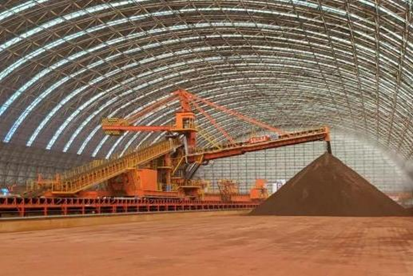
The first shipment of high-grade iron ore from the world-class Simandou deposit in Guinea arrived at Rizhao Port in East China’s Shandong province on Wednesday, marking a transformative milestone for the global steel industry’s transition toward low-carbon production.

 The shipment was delivered by SimFer, a joint venture between the government of the Republic of Guinea, Rio Tinto and Chalco Iron Ore Holdings — a Chinalco-led joint venture of leading Chinese SOEs including China Baowu Steel Group Corp.

 The arrival represents the first time high-grade ore from Simandou’s blocks 3 and 4 has entered the Chinese market, providing a critical new source of raw material for the world’s largest steel producer as it seeks to reduce industrial emissions.

 Located in southeastern Guinea, Simandou is home to one of the world’s largest untapped reserves of high-grade iron ore. The project is being developed through a complex international partnership involving the Guinean government, SimFer, the Winning Consortium Simandou, and China’s Baowu.

 Upon arrival in Shandong, the iron ore will undergo processing at a dedicated tertiary crushing facility located within the port. This localized processing model, developed in collaboration with Chinese port authorities, is designed to enhance operational efficiency and market competitiveness before the ore is sold to domestic steelmakers.

 “We are encouraged to see the first shipment of Simandou iron ore arrival in Chinese port,” Xu Feng, Rio Tinto China CEO, said.

 “Rio Tinto’s long-standing partnership with Chinese stakeholders is crucial to the successful delivery of Simandou project. This premium product will play an increasingly important role in enabling lower-emissions steelmaking and supporting the industry’s journey towards net zero, further strengthening our world-class iron ore portfolio in the Pilbara and Canada,” Xu said.

Article inline ad

China Eximbank Issues Over 730b Yuan In Technology Loans In 2025

0

Xinhua | Updated: 2026-01-21

BEIJING — The Export-Import Bank of China (China EximBank) has issued over 730 billion yuan (about $104 billion) in technology-related loans in 2025, with funds flowing into sectors including artificial intelligence, brain-computer interfaces, humanoid robots and high-end instruments.

 By the end of 2025, the bank’s outstanding technology loans stood at 1.54 trillion yuan, accounting for nearly half of its total corporate lending, according to the bank.

 To address tech companies’ typical characteristics, such as light assets and high investment, it has adopted differentiated measures to enhance the accessibility and stability of financial support. Notably, 66 percent of its tech loans were credit loans, helping to ease financing difficulties for enterprises.

 The lender has also actively explored new models to support innovation platforms such as national laboratories and key regional laboratories, promoting scientific research and the commercialization of results.

 Leveraging its expertise in international business, the bank has backed sci-tech and digital cooperation under the Belt and Road Initiative, as well as the global layout of industrial chains.

 The China Eximbank is a State-funded and State-owned policy bank dedicated to supporting China’s foreign trade, investment and international economic cooperation.


Article inline ad