Wednesday, November 25, 2026

Home Blog Page 97

China’s Fast-Growing Firms Make Up One-Third Of Global Gazelle Ranking

0

Xinhua | Updated: 2026-01-21 11:08

BEIJING — A global ranking of fast-growing startups in 2025 showed that companies headquartered in China accounted for over one-third of the list, underscoring the country’s strong potential in emerging technology sectors such as biotechnology and semiconductors.

 Of the 819 global gazelle companies, unlisted firms most likely to reach a valuation of $1 billion within three years, 278 are from China, marking an 8 percent year-on-year increase and placing the country second only to the United States, which saw an 8 percent decline, according to Hurun Future Unicorns: Global Gazelles Index 2025 released on Tuesday.

 Since 2019, the number of gazelle firms in China has nearly quadrupled, rising from 70 to the current count. In the past year alone, 55 new Chinese companies were added to the list, with biotechnology and semiconductors standing out as the sectors hosting the largest number of future unicorns, said Rupert Hoogewerf, chairman and chief researcher of the Hurun Report.

 “Innovations in medical devices, biotech and digital health are transforming disease treatment, diagnostics and patient care. China and the US are leading this healthcare revolution,” added Hoogewerf, also known by his Chinese name, Hu Run.

 Headquartered in East China’s Nanjing, TransThera Sciences is recognized as one of China’s most successful transitions from a gazelle company to a publicly listed firm. The biotech firm pioneered a “resistance-breaking” precision medicine platform by engineering smart small-molecule drugs.

 Meanwhile, another report released on Monday ranking Chinese AI companies shows that enterprises specializing in AI chips were the most notable performers in 2025, taking seven of the top ten spots.

 Last year, 146 gazelle companies achieved “graduation” by becoming unicorns, going public, or being acquired. Among them, 82 were from the United States and 26 from China, according to the gazelle ranking.

 Notably, five Chinese companies, including biotech firm Shanghai Cell Therapy, alongside robot makers Mech Mind and AgiBot, have each surpassed a valuation of $1 billion and are set to join the Hurun Unicorn List in 2026, despite still being categorized as gazelles.

 The ranking of cities with the most gazelle companies is led by San Francisco, followed by Shanghai, Beijing, New York and Shenzhen in the top five. The United States and China together account for 71 percent of the global gazelle companies, according to the ranking.

 The companies on the list have an average valuation of $700 million, with the majority growing at an annual rate of around 20 percent.
Article inline ad

Competition In Ice Cream Sector Heating Up

0

By WANG ZHUOQIONG | China Daily | Updated: 2026-01-21

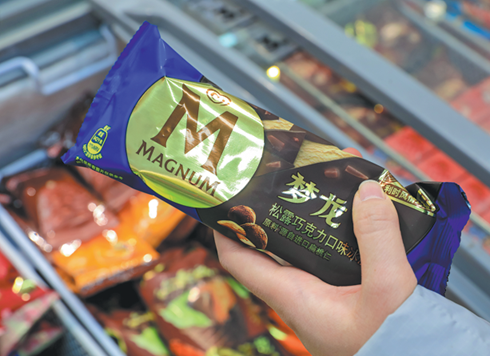
The world’s largest ice cream maker, The Magnum Ice Cream Company, has rolled out its 2026 product portfolio in China, marking its first major market move since completing its independent listing in Amsterdam, London and New York in December 2025.

 The launch covers nearly 30 new products across four core brands — Magnum, Cornetto, Wall’s and Layers. The new lineup shows the company’s aim to reinforce its position in one of its most strategically important markets.

 “China is not only one of our top 10 global markets, but also a key engine for innovation and growth,” said Wai-Fung Loh, Asia president, The Magnum Ice Cream Company. The company is combining global expertise with insights accumulated over three decades of operating in China to accelerate local research, development and marketing, she said.

 The company said this year they have implemented multiple initiatives to drive business growth, including increasing freezer placements to enhance market coverage, accelerating the localization of innovations through its China R&D center, boosting investments in social media and digital marketing campaigns, and advancing the intelligence and digitalization of its supply chain.

 The 2026 lineup reflects a broader push toward personalization and scenario-based consumption, trends that have been reshaping China’s ice cream market in recent years.

 As the company’s premium flagship, the Magnum brand continues to emphasize its use of imported Belgian chocolate while expanding flavor combinations and product formats. New offerings include pistachio and dark chocolate mint variants aimed at younger consumers seeking bolder tastes, said the company.

 Magnum has also upgraded its signature chocolate coating, introducing a dual-layer structure designed to deliver a more complex texture — an example of how product engineering is being used to differentiate in an increasingly competitive premium segment.

 Building on strong demand for fruit-based ice cream, the company is further investing in fruit ingredients, texture innovation and products suited for multiple consumption occasions, following the introduction of several fruit-focused items in China in 2025.

 At the mass-market end, Wall’s is broadening ice cream’s role in everyday life.

 Beyond new bar products, the brand is reviving Calippo — long associated with childhood memories for many Chinese consumers — through a renewed push in the popsicle format. Its Snow Slush Cup, featuring a 230-gram large-size format, is positioned as an afternoon snack alternative.

 With health awareness rising, demand for smaller portions and “lighter” indulgence is gaining traction. The company is expanding its mini product lines to offer lower-burden treats without sacrificing enjoyment, said the company.

 Mini Cornetto has partnered with NetEase’s popular mobile game Eggy Party, an online gaming community popular among younger consumers, incorporating playful, social-oriented design elements into its packaging to boost shareability while controlling portion size.

 The Magnum Ice Cream Company is also exploring new growth avenues, including China’s foodservice sector. Products targeting business-to-business customers have already entered the market, with distributors on social media highlighting Wall’s new bulk ice cream tubs for commercial use, according to media reports.

 The company’s primary brands, Cornetto and Magnum, ranked as the fourth and fifth-largest ice cream brands in the Chinese market by retail sales in 2024.

 The company generated 317 million euros ($368.4 million) in China revenue in fiscal year 2024 and 270 million euros in the first half of 2025, driven mainly by impulse consumption and a distribution network that reaches a broad spectrum of channels.

 This means the first half revenue had already reached 85 percent of the previous year’s total revenue. The growth came from increased investment in distribution, freezer deployment and innovation and early marketing of the new products, according to the company.

 According to Euromonitor International, China’s ice cream market recovered in 2025 after a sharp downturn in 2024, offering renewed opportunities for global and domestic players alike. Based on retail value, in 2025, Yili ranked first in China’s ice cream market, followed by Magnum in second place. Mengniu, General Mills, and Shenyang Deshi Group also secured positions within the top five.


Article inline ad

Southeast Asia Key To H World’s Expansion Plans

0

By ZHONG NAN | China Daily | Updated: 2026-01-21

H World Group, a Shanghai-headquartered hospitality group operating more than 12,700 hotels across 20 countries, will accelerate its global expansion, with Southeast Asia emerging as a key strategic pillar as it pursues scalable growth beyond its home market, said a senior executive.

 Most of the Chinese hotel operator’s projects in Southeast Asia, either already launched or in the pipeline, follow an asset-light model proven in China. The approach emphasizes standardized operations, brand replication and scalable expansion through franchise and management contracts.

 The company opened its first Hanting Hotel outside China in Ho Chi Minh City, Vietnam, in December, applying its domestic operating experience to overseas markets.

 Zhu Xiaogang, president of H World Asia-Pacific, said the company will continue to work with both Chinese investors and local owners to seek opportunities in the Asian market.

 “We have established Singapore as our regional management hub, gradually extending our footprint to neighboring countries,” said Zhu.

 He said H World will explore growth opportunities in emerging markets, where rapid urbanization and economic growth are creating demand for credible management with track records, strong branding and integrated supply chains.

 Multiple new projects are set to open across Southeast Asia in the coming months, including in downtown Kuala Lumpur, Malaysia.

 The group has also signed agreements to open a Maxx Hotel in Pattaya, Thailand, and four projects in Laos spanning Vientiane and Luang Prabang. In Cambodia, H World signed a contract in 2025 to open a Steigenberger Hotel in Phnom Penh, marking the luxury brand’s first entry into the Cambodian market and underscoring the group’s multi-brand approach to regional expansion.

 “As Southeast Asia represents a critical move in our overall global expansion, we have already begun exploring organic growth in the region by opening hotels and developing a regional network. Our goal is to make the region a key pillar of H World’s international development,” Zhu added.

 Since the Chinese hospitality group opened Ji Hotel Orchard in Singapore in 2019, it has gradually built a local and international guest base.

 Meanwhile, the group’s overseas expansion is being reinforced by a steady recovery in cross-border travel, strengthening links between its international ambitions and domestic operations.

 For example, hotels operated by H World in China, including Hanting Hotel, Ji Hotel and Orange Hotel, recorded 86,401 room nights from overseas travelers during the recent New Year holiday period, jumping 60 percent from the same period last year.

 The Chinese company found that international visitors tend to stay longer in China, travel more frequently and visit a wider range of cities.

 Jiang Yiyi, dean of the School of Leisure Sports and Tourism at Beijing Sport University, said the expansion of Chinese hotel brands and the rebound of inbound travel are reinforcing each other, supporting the recovery of tourism-related services and contributing to the steady growth of China’s trade in services.

 Established in 2005, H World’s loyalty program surpassed 300 million members by the third quarter of 2025. It also partners with Chinese companies like Bank of China, Juneyao Air and Didi to offer cross-brand service packages.

 The Chinese company currently manages more than 30 hotel and serviced apartment brands across China, and aims to run 20,000 properties in around 2,000 cities and counties by 2030.

 To enhance its competitiveness, H World plans to increase the use of artificial intelligence in its hotels, including robotic item delivery and personalized services to improve the guest experience.

 zhongnan@chinadaily.com.cn

Article inline ad

Zeiss Guangzhou Factory Secures Global 1st

0

By ZHENG CAIXIONG in Guangzhou | China Daily | Updated: 2026-01-21

Zeiss Vision Care’s manufacturing base in Guangzhou, Guangdong province, is an outcome of the deep synergy between Chinese intelligent manufacturing efficiency and German precision engineering, company executives said.

 Located in the Huangpu district of the provincial capital, the base was added to the World Economic Forum’s Global Lighthouse Network last Thursday, showcasing its leading global standards in digitalization, intelligent transformation and green development, according to a statement released by the district government.

 Previously, the base had been certified as a national-level Green Factory.

 As the highest honor for intelligent and digital transformation in global manufacturing, Lighthouse factories represent the pinnacle of industrial excellence. As of January, the number of Lighthouse factories has reached 224 worldwide.

 “The achievement marks Zeiss Vision’s dual leap in technological breakthroughs and management model export, achieved by deeply integrating 180 years of profound optical heritage with Industry 4.0 technologies,” it added.

 Benjamin Viering, chief operating officer and chief technology officer of Zeiss Vision Care, said: “For us, it is an honor to receive formal recognition as a Lighthouse for customer centricity at our manufacturing site in Guangzhou.”

 With 10 years of Industry 4.0 exploration, Zeiss Vision Care, by now, fully utilizes most of the cutting-edge tools and ideas to help build effective and efficient production lines, which in turn help Zeiss serve individual consumers all around the world, said Viering.

 Through full-link digital innovation and technological implementation in high-precision optical manufacturing, the manufacturing base has incorporated core capabilities ranging from customer demand insight to final value delivery, successfully joining the global first echelon of customer-centric intelligent manufacturing.

 The base will shoulder production of precision optical lenses, mainly for vision care, using advanced digital manufacturing systems to improve efficiency, quality control, and customization for different customer needs, the statement said.

 Zeiss Vision Care China has released an annual sustainable development report, integrating the concept of green manufacturing into the entire value chain, setting clear quantitative targets for emission reduction and resource conservation, and fulfilling its global climate responsibility commitments, it added.

 Winston Yang, president and CEO of Zeiss Vision Care China, said,”Zeiss Vision is committed to protecting and improving the vision and lifetime visual health of the world’s consumers.”

 “Since establishing its presence in Guangzhou, we have adhered to the principles of ‘innovation-driven development’ and ‘deep local roots’, promoting the deep integration of digital technology and precision manufacturing,” said Yang.

 Coinciding with the 180th anniversary of the Zeiss Group, the selection as a Global Lighthouse factory marks a brand-new starting point, he said.

 “Going forward, Zeiss Vision will take the Guangzhou Lighthouse factory as a benchmark, implement the development path of ‘In China, beyond China’, support the high-quality development of China’s optical lens industry, and drive the coordinated digital and green upgrading of the regional high-end manufacturing cluster,” Yang said.

 zhengcaixiong@chinadaily.com.cn

Article inline ad

China To Strengthen Emerging, Future Industries In 2026-2030: Official

0

Xinhua | Updated: 2026-01-21 15:57

BEIJING — China will implement a series of initiatives and actions aimed at further developing and strengthening emerging and future industries during the 15th Five-Year Plan period (2026-30), an official with the Ministry of Industry and Information Technology (MIIT) said on Wednesday.

 Efforts will be deepened in seeking to foster new growth drivers of emerging sectors, boost the application of new manufacturing technologies and products in new scenarios, and establish national demonstration bases for emerging industries, Zhang Yunming, vice-minister of the MIIT, said at a press conference.

 In terms of future industries, China will advance the implementation of guidelines on promoting the sectors’ innovative development, carry out a slew of forward-looking sci-tech projects of strategic significance, and support local authorities in developing future industries in line with local conditions, Zhang noted, adding that authorities will further leverage government investment funds.


Article inline ad

Shanghai Records 5.4% GDP Growth In 2025

0

By SHI JING in Shanghai | chinadaily.com.cn | Updated: 2026-01-21

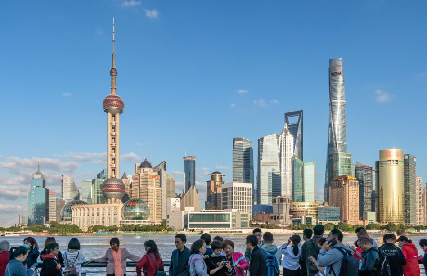
Driven by the development of new-quality productive forces and the advancement of deepened opening-up, Shanghai managed to register 5.4 percent GDP growth in 2025, the local bureau of statistics said on Wednesday.

 Among Shanghai’s GDP of 5.67 trillion yuan ($810 billion) last year, the tertiary industry contributed an added value of nearly 4.5 trillion yuan, up 6 percent from a year earlier, while the contribution from the secondary industry rose by 3.5 percent year-on-year to about 1.17 trillion yuan.

 New growth drivers demonstrated strong momentum. The combined manufacturing output value of Shanghai’s three pioneering industries—integrated circuits, biomedicine, and artificial intelligence—surged by 9.6 percent year-on-year, which was 5 percentage points higher than the average growth rate reported by the city’s industrial companies with a minimum annual sales revenue of 20 million yuan.

 Notably, IC and AI manufacturing recorded robust growth of 15.1 percent and 13.6 percent, respectively. Emerging service sectors also expanded rapidly, with software and IT services revenue rising by 24.2 percent in the first eleven months, supported by growing computing power services and accelerated IC design projects.

 Technology contract turnover also surged 24.9 percent to nearly 650 billion yuan, reflecting the city’s enhanced innovation capacity.

 Shanghai’s role as a global hub was further consolidated across key functional areas. As an international financial center, the city was home to 1,813 licensed financial institutions. Total financial market turnover jumped 11.2 percent year-on-year to 4,058.95 trillion yuan.

 Propelled by a 10.8 percent spike in exports, Shanghai’s foreign trade reached a record high of 4.51 trillion yuan in 2025, up 5.6 percent year-on-year.

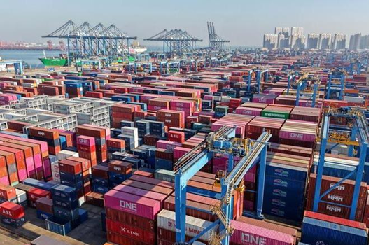
 The Shanghai Port handled 55.06 million TEUs in 2025, maintaining its position as the world’s busiest container port for the 16th consecutive year. Airport passenger throughput exceeded 135 million, with the number of international travelers up by 20.6 percent from a year earlier.

 Driven by strong demand in the construction of power supply and transportation projects, infrastructure investment rose 11.2 percent in 2025. The introduction of major semiconductor and shipbuilding projects drove the city’s manufacturing investment up by 22.8 percent year-on-year.

 Consumer sentiment gradually recovered, with retail sales up 4.6 percent, which was also boosted by policy-led trade-in programs for home appliances, furniture, and electronics.

 The surveyed urban unemployment rate averaged 4.2 percent in Shanghai last year. Disposable income per capita grew by 4.1 percent, with rural residents seeing a higher increase of 5.4 percent.

 Shanghai 2025 Economic & Social Development Highlights

 Economic Performance

 GDP: 5.67 trillion yuan, up 5.4% y/y

 – Secondary industry: 1.17 trillion yuan, +3.5%

 – Tertiary industry: 4.50 trillion yuan, +6.0%

 Industrial & Service Growth

 -Three pioneering industries (IC, biomedicine, AI) manufacturing output: +9.6% y/y

 – IC manufacturing: +15.1%

 – AI manufacturing: +13.6%

 – Strategic emerging industries output: +6.5%

 – Software & IT services revenue (Jan–Nov): +24.2%

 – R&D services revenue (Jan–Nov): +15.1%

 III. Core Urban Functions Strengthened

 Financial Center:

 – Licensed financial institutions: 1,813

 – Financial market turnover: 4,058.95 trillion yuan, +11.2%

 Trade & Shipping Center:

 – Total trade: 4.51 trillion yuan (record high), +5.6%

 – Exports: +10.8%

 – Imports: +1.8%

 – Port container throughput: 55.06 million TEUs, +6.9% (world’s No. 1 for 16th year)

 – Airport passenger traffic: 135 million plus, +8.3%

 – International passengers: +20.6%

 Innovation Center:

 – Technology contract turnover: 649.68 billion yuan, +24.9%

 – High-value invention patents per 10,000 people: 65

 Investment & Consumption

 – Infrastructure investment: +11.2%

 – Manufacturing investment: +22.8%

 – Retail sales: +4.6%

 – culture/office supplies: +30.4%

 – furniture: +22.0%

 – home appliances: +24.3%

 – communications devices: +16.4%

 Social Development

 – CPI: +0.1% y/y (core CPI: +0.7%)

 – Urban surveyed unemployment rate: 4.2%

 – Per capita disposable income: +4.1%

 – Urban residents: +4.0%

 – Rural residents: +5.4%


Article inline ad

China’s Guangdong Reports Record Foreign Trade Of $1.36t In 2025

0

Xinhua | Updated: 2026-01-21

GUANGZHOU — South China’s Guangdong province saw its foreign trade hit a record high of 9.49 trillion yuan (about $1.36 trillion) in 2025, rising 4.4 percent year-on-year, local authorities have said.

 This has secured Guangdong’s position as China’s leading provincial-level region in terms of total trade volume for a 40th consecutive year, according to the provincial branch of the General Administration of Customs of China.

 Guangdong’s exports rose 2.5 percent to 6.03 trillion yuan last year, while its imports increased 7.8 percent to 3.46 trillion yuan.

 Guangdong’s foreign trade accounted for approximately one-fifth of the national total, contributing 24.1 percent to the growth of China’s overall foreign trade.

 Zhang Ke, deputy director of the provincial customs branch, said that Guangdong’s export structure has optimized, gearing toward higher-end, smarter and greener products.

 In 2025, its exports of electromechanical products totaled 4.15 trillion yuan, which was up 7.3 percent. Such products accounted for 68.7 percent of the province’s total export value, an increase of 3.1 percentage points compared to the previous year.

 Notably, exports of green and intelligent products such as drones, 3D printers and industrial robots surged 40.9 percent, 37.1 percent and 33.9 percent, respectively, and agricultural machinery exports doubled.

 Zhang noted that Guangdong’s import demand continued to expand last year, with the province importing integrated circuits worth a cumulative 1.3 trillion yuan — up 15.5 percent year-on-year and accounting for 37.5 percent of its total import value.

 Imports of essential consumer goods such as grain, dairy products, aquatic products and edible oil all achieved double-digit growth.

 In 2025, the number of companies in Guangdong that reported on import and export performance climbed 17.6 percent year-on-year to 172,000.

 Of these firms, private enterprises numbered 148,000, which was a rise of 20 percent, with their combined import and export value growing 4.9 percent year-on-year to 6.07 trillion yuan.

 Meanwhile, the import and export volumes of foreign-invested enterprises came in at 3.03 trillion yuan, rising 6.5 percent and indicating a sustained, positive recovery trend.

Article inline ad

China Extends Tax Incentives For Community-Focused Services Sectors

0

Xinhua | Updated: 2026-01-21

BEIJING — Chinese authorities on Tuesday announced an extension of tax and fee incentives for entities that provide community-focused or family-oriented services such as elderly care, child care and domestic services.

 Key support measures, which will be extended to the end of 2027, include a value-added tax exemption for income from elderly care, childcare and domestic services, as well as a 10 percent reduction to the taxable income rate for entities engaged in these services sectors, according to a joint statement issued by six government departments, including the Ministry of Finance and the State Taxation Administration.

 Other support measures include a deed tax exemption for properties or land used for such services, and waivers for fees such as those associated with property registration.

 The continued support for these sectors, which is expected to lower the operational costs of enterprises engaged in community-focused care industries, is in line with the government’s broad efforts to respond actively to population aging, and to refine its policies and mechanisms to coordinate the development of elderly care programs and industries.

Article inline ad

Export Tax Rebate Adjustment For Photovoltaic, Battery Products To Help Curb Involution-Style Competition: Finance Ministry

0

Xinhua | Updated: 2026-01-21

BEIJING — China’s Ministry of Finance on Tuesday said that changing export tax rebates for a range of products, including photovoltaic and battery products, will help comprehensively curb involution-style competition as the country moves to steer industries toward green, high-quality growth.

 The ministry, together with the State Taxation Administration, issued an announcement earlier this month saying that export tax rebates for value-added tax on photovoltaic products will be canceled from April 1, 2026.

 The export tax rebate rate for value-added tax on battery products will be reduced from 9 percent to 6 percent from the same date, and will be eliminated on Jan 1, 2027, according to the announcement.

 This adjustment to export tax rebate policies will help promote the more efficient use of resources, reduce environmental pollution and carbon emissions, and support a comprehensive green transition in economic and social development, ministry official Li Xianzhong said at a press conference.

 The move will also encourage a more rational adjustment to the industrial structure, facilitate industrial transformation and upgrading, and promote high-quality economic development, Li noted.

Article inline ad

Beijing’s GDP Surpasses 5 Trillion Yuan Mark

0

Xinhua | Updated: 2026-01-21

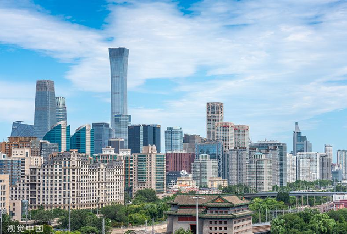
BEIJING — Chinese capital Beijing’s GDP exceeded 5.207 trillion yuan (about $743.79 billion) in 2025, up 5.4 percent year-on-year, surpassing the 5 trillion yuan mark for the first time, according to the municipal statistics bureau.

Article inline ad