Wednesday, November 25, 2026

Home Blog Page 98

Extensive ‘Invest In China’ Plan In ’26

0

By LI JING | China Daily | Updated: 2026-01-21

China will continue to expand high-level opening-up and steadily advance institutional opening-up, officials said on Monday, as the Investment Promotion Agency of the Ministry of Commerce unveiled an extensive program of domestic and overseas promotion activities for 2026.

 The Chinese and Foreign Investment Promotion Agencies Conference, hosted by Investment Promotion Agency in Beijing, is part of China’s effort to enhance the global profile of the “Invest in China” through a mix of high-profile exhibitions and targeted industry dialogues.

 At the 2026 Foreign Investment Promotion Exchange Meeting, a parallel meeting of the event, Zhu Wenlong, director of the Department of Domestic Relations at Investment Promotion Agency, said the agency organized more than 100 investment promotion activities in 2025, serving more than 80 localities and facilitating exchanges among hundreds of enterprises, chambers of commerce and institutions.

During the 14th Five-Year Plan period (2021-25), a group of emerging industries, including new energy vehicles (NEVs), photovoltaics as well as low-altitude, shipbuilding and marine engineering equipment, achieved fast expansion, further enhancing the reputation of “Made in China,” Zhang said.

 The official also highlighted the record highs of China’s NEVs output and sales, the steady growth of the photovoltaic industry, increases in varieties and quantities of civil drones, as well as progress made in both quantity and quality in the shipbuilding industry in 2025.

For 2026 — the first year of China’s 15th Five-Year Plan (2026-30) period — Zhu said the agency has preliminarily planned around 80 promotion activities, designed to bridge global investors with local Chinese markets.

 Exhibitions will play a leading role in 2026, Zhu said, adding that the centerpiece of this effort will be the 26th China International Fair for Investment and Trade, a landmark expo for “Invest in China”.

 To better coordinate cross-border resources, the agency established a new overseas business department. Key engagements in its 2026 calendar include the Hannover Messe and the 10th Sino-German Automotive Conference.

 The renewed push for investment comes as China continues to streamline market access. Data from the National Bureau of Statistics show that China’s total import and export volume of goods grew by 3.8 percent in 2025.

 China has also removed all foreign-investment access restrictions in the manufacturing sector and shortened the negative list for foreign investment, making the market more accessible to overseas companies.

 Despite a complex global environment, multinational corporations at the meeting reaffirmed their commitment to the Chinese market, citing the stability of the supply chain and improved government services.

 Consumer health giant Haleon highlighted its deepening localization strategy. “Our confidence in the Chinese market has never wavered,” said Fu Yue, head of corporate affairs for the Chinese mainland and Hong Kong at Haleon. Fu pointed to the company’s full acquisition of its Tianjin joint venture and an agreement to expand production in Suzhou. He credited the “service-oriented government” and a transparent regulatory environment as key drivers for their continued reinvestment.

 International business chambers acknowledged the improvements in the business environment while outlining evolving strategies.

 The US-China Business Council welcomed the clear policy signals on market access. The council’s vice-president Zhang Lipei noted that the domestic product standard guidelines, issued in September 2025, have bolstered confidence among foreign firms with significant local manufacturing footprints. Zhang expressed hope for continued transparency in public procurement and export control mechanisms to ensure a predictable operating environment.
 lijing2009@chinadaily.com.cn

Article inline ad

Nation To Follow ‘More Proactive’ Fiscal Policy

0

China Daily | Updated: 2026-01-21

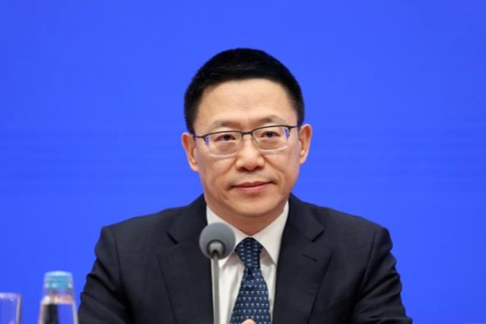
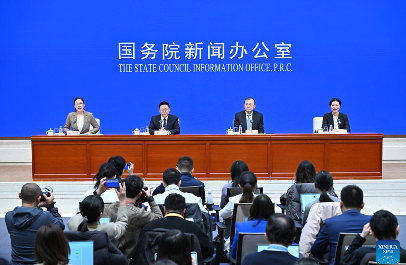
 Liao Min, vice-minister of finance, Li Xianzhong, director general of the Comprehensive Department of the Ministry of Finance (MOF), and Yu Hong, director general of the Department of Finance of the MOF, attend a press conference held by the State Council Information Office (SCIO) on implementing a proactive fiscal policy for high-quality economic and social development, in Beijing, capital of China, Jan 20, 2026. [Photo/Xinhua]

China will continue to pursue a “more proactive” fiscal policy this year with increased government spending and more supportive policy measures of greater intensity to sustain economic growth, Vice-Minister of Finance Liao Min said.

 “For 2026, the fiscal deficit, total government debt and overall spending will be maintained at necessary levels, ensuring increased overall spending and stronger support for key areas,” Liao said at a news conference on Tuesday.

 Full consideration has been given to medium — and long-term fiscal sustainability and to building up development momentum, Liao added.

 Experts said a more proactive fiscal policy, underpinned by a larger fiscal spending scale, will strongly boost economic growth and domestic demand, echoing the top economic priority for 2026 highlighted at the recent Central Economic Work Conference.

 Highlighting fiscal-financial coordination, Liao said China will explore innovative policy tools to better leverage public funds and amplify the spillover effects of policy measures.

 Earlier in the day, the Ministry of Finance rolled out a package of measures to spur private investment and consumption, including loan interest subsidies for micro, small and medium-sized enterprises and a special guarantee program for corporate lending, with Liao saying the measures “feature broad coverage, strong policy support and a diverse policy toolkit.”

 “The loan interest subsidy policy for micro, small and medium-sized enterprises is a new measure introduced to support the development of private MSMEs,” Liao said, adding that the subsidy will be set at 1.5 percentage points of the loan amount per year, with a maximum subsidy period of two years.

 The policy will target 14 key industrial chains and their upstream and downstream segments, covering sectors such as new energy vehicles, industrial robots, medical equipment and mobile communications, as well as producer services including technology, logistics, information and software, and agriculture-related industries, according to Liao.

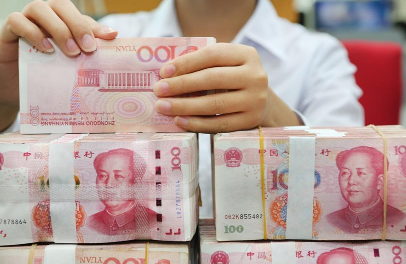
 Moreover, the special guarantee program, with a total scale of 500 billion yuan ($71.42 billion), is aimed at backing loans to micro, small and medium-sized private enterprises, supporting medium — and long-term financing needs for their business expansion, upgrading and operational improvements, Liao said.

 Lou Feipeng, a researcher at the Postal Savings Bank of China, said the measures will help lower financing costs for consumption and investment, and guide credit toward key areas of domestic demand to support stable growth and domestic demand expansion.

 Zhang Chenxu contributed to this story.

Article inline ad

Step Aimed At Completing Presold Homes, Preventing Systemic Financial Risk

0

By WANG KEJU | China Daily | Updated: 2026-01-21 09:16

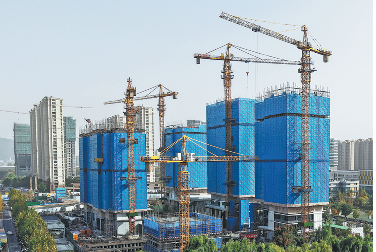
Real estate development projects that have been placed on a “white list” under China’s financing coordination mechanism are expected to secure extensions on their existing loans, provided they meet specific conditions and standards, said industry insiders.

 The new move will provide breathing room for fundamentally sound projects caught in the market downturn. The central aim is to strike a balance between ensuring the completion of presold homes and preventing systemic financial risk, experts added.

 Even as official announcements from regulators are pending, the new policy — which enables loan extensions for eligible property projects — has been confirmed by multiple sources within financial institutions as well as property developers.

 Meanwhile, the municipal housing authority in Guangzhou, Guangdong province, convened a meeting with financial regulators and several major real estate developers earlier this month to discuss project financing, according to a report by Southern Metropolis Daily.

 China launched the “white list” mechanism in January 2024, where financial institutions have been encouraged to provide financial support to eligible real estate projects to ensure their normal construction funding needs and expedite completion and delivery.

 Approved loans for real estate projects under the “white list” mechanism have surpassed 7 trillion yuan ($1 trillion), according to data released by the Ministry of Housing and Urban-Rural Development in October.

 A year-end 2025 survey by the China Index Academy found that approximately 60 percent of participating institutions reported “providing adequate collateral” as the most difficult condition to meet for entry into the crucial financing “white list”.

 The survey also identified other key friction points in the process.

 Nearly 60 percent of respondents indicated that the final loan amount approved is closely tied to a project’s sales and cash flow, while close to half pointed to complex approval procedures and slow fund disbursement as major impediments.

 Currently, securing a loan extension depends heavily on the value of the collateral and additional credit enhancement arrangements, sources said.

 The loan extension policy aligns with the central government’s clear directive to “focus on stabilizing the real estate market”. The tone was set at the Central Economic Work Conference in December, which outlined China’s economic priorities for 2026.

 Following the tone-setting meeting, the National Financial Regulatory Administration convened a meeting later in December, pledging to enhance the role of the financing coordination mechanism to help build a new model for property development.

 Concurrently, the adjustment responds directly to the industry’s debt maturity profile, analysts said.

 Medium — to long-term bank loans maturing between 2024 and 2026 account for over 40 percent of developers’ existing debt, said Yan Yuejin, deputy head of Shanghai-based E-House China R&D Institute.

 Under previous policies, most loans could only be deferred until the end of 2026, creating a mismatch with the sector’s longer adjustment cycle. The extended grace period helps smooth repayment pressures beyond 2028, Yan added.

 Extending loans to projects on the real estate financing “white list” is helping commercial banks stabilize their asset quality by preventing a surge in nonperforming loans, according to an analysis by the China Index Academy.

 Li Yujia, chief researcher at the residential policy research center of the Guangdong Planning Institute, said that projects admitted to the financing coordination mechanism have already passed stringent vetting.

 “It means the project is compliant, has all required permits, is free of legal or debt disputes, maintains a balance sheet, and has proper capital supervision,” he said. If such projects still face repayment difficulties, the root cause lies in market conditions such as sales slumps or regional oversupply — rather than fundamental flaws, he added.

 In this context, Li described granting loan extensions as a “smart solution”. “The core of an extension under the ‘white list’ mechanism isn’t about forcing banks to make concessions,” he said. “It is the optimal path to protect the rights and interests of both sides and achieve a win-win outcome during market pressure.”

 Forcing immediate repayment could trigger distress sales, destabilizing local housing prices and ultimately undermining the security of banks’ claims, while a reasonable extension provides crucial breathing space, Li said.

 This approach helps developers maintain operations while maximizing the bank’s chances of full loan recovery in the future, Li added.

 wangkeju@chinadaily.com.cn

Article inline ad

Nation Ramping Up Policies To Spur Consumption

0

By OUYANG SHIJIA | CHINA DAILY | Updated: 2026-01-21

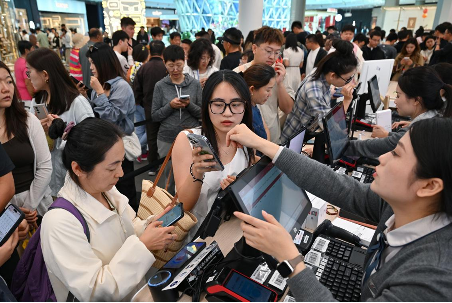
China is stepping up efforts to boost domestic demand by placing greater emphasis on raising people’s incomes, expanding consumption capacity and fostering stronger internal economic circulation, in a bid to address persistent demand shortfalls and support more sustainable growth, the country’s top economic regulator said on Tuesday.

 Analysts said the latest signals underscore the resolve of policymakers to shift the next stage of economic development toward demand-driven growth, while pressing ahead with deeper income distribution reforms to rebalance growth drivers amid still-weak domestic demand and rising external uncertainties.

 According to the National Development and Reform Commission, authorities are studying measures to stabilize employment and create more jobs while improving employment quality, alongside pushing initiatives to advance urban-rural income growth plans. The goal is to enhance the spending power of consumers while better aligning the supply of goods and services with evolving demand.

 Zhou Chen, director of the NDRC’s Department of National Economy, told a news conference in Beijing on Tuesday that domestic demand has already become the economy’s “stable anchor”.

 In 2025, China’s per capita disposable income rose 5 percent in real terms, in line with overall economic growth, providing a key underpinning for domestic demand expansion. Domestic demand contributed more than 67 percent of overall economic growth last year, with consumption accounting for 52 percent, official data showed.

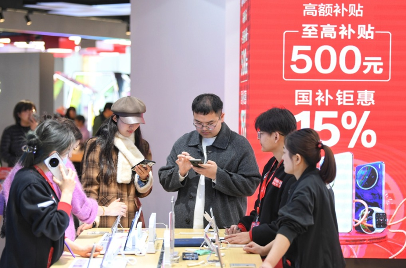
 Zhou said that China will continue implementing its consumer goods trade-in program this year while advancing a broader campaign to boost consumption by fostering high-impact, highly visible new consumption scenarios.

 He highlighted the services sector as a key focus area for expanding domestic demand, saying that the country will roll out an action plan to expand capacity and upgrade quality in the services sector, supported by a package of high-value policy measures aimed at promoting more efficient and higher-quality development.

 The latest economic data has already shown the official snapshots of the persistent pressures from still-weak domestic demand, as retail sales, a key indicator of consumer spending, increased by 0.9 percent in December, compared with 1.3 percent growth a month earlier.

 Wang Changlin, deputy head of the NDRC, said, “China’s economy is indeed facing a situation where supply is relatively strong while demand remains weak.”

 To address this imbalance, Wang said macroeconomic policy will continue to prioritize strengthening the domestic economic cycle and fully expanding domestic demand. Authorities are preparing a strategic plan for expanding domestic demand for the period 2026 to 2030, designed to align with consumption upgrades and the new round of technological and industrial transformation.

 According to the Recommendations of the Central Committee of the Communist Party of China for Formulating the 15th Five-Year Plan for National Economic and Social Development, China should, over the next five years, create more models of economic growth that are led by domestic demand, driven by consumption, and sustained by self-generating momentum.

 Wen Bin, chief economist at China Minsheng Bank, said that despite downward pressures ahead, he believes retail sales growth could rebound to around 5 percent in 2026, as consumer confidence gradually recovers, the drag from the property market eases, and policy support intensifies across consumption and services.

 Huang Hanquan, head of the Chinese Academy of Macroeconomic Research, said that over the short term, the priority should be stabilizing expectations and incomes to support consumption, including refining existing policies to better support services consumption and removing unreasonable restrictions, which could quickly unlock demand.

 In the long run, he said, China needs to strengthen its underlying capacity by improving institutional arrangements and building an endogenous growth model led by domestic demand and consumption.

 “This requires optimizing income distribution and improving social security systems — including pensions, healthcare and unemployment insurance — to reduce precautionary savings and encourage households to spend,” he said.

 Citing China’s vast consumer base, expanding domestic demand and clear policy direction, Mexican multinational food company Grupo Bimbo said it is doubling down on its long-term commitment to China.

 “We are full of confidence in the long-term potential of China’s consumer market,” said Kelly Zhang, general manager of Bimbo China.

 “Grupo Bimbo will continue to leverage its global leading research and development capabilities and localized operations to deliver higher-quality products and services, and to honor our commitment to consumers.”

Loan extensions for projects in ‘white list’

Article inline ad

China To Sustain Growth In Fiscal Spending For 2026: Vice-Minister Of Finance

0

Xinhua | Updated: 2026-01-20

BEIJING — China will continue to implement a more proactive fiscal policy in 2026, summarized as expanding total volume, optimizing structure, enhancing efficiency, and strengthening momentum, Vice-Minister of Finance Liao Min said Tuesday.


Speaking at a press conference held by the State Council Information Office, Liao emphasized that China’s fiscal deficit, total debt, and overall expenditure for 2026 will be maintained at necessary levels, so as to ensure that the intensity of total fiscal spending only increases and guarantee for key sectors remains consistently strong.

Article inline ad

China’s Economy, Trade Remain Resilient Amid Global Headwinds

0

Xinhua | Updated: 2026-01-20

BEIJING – China announced on Monday that its economy posted a 5 percent increase in 2025 amid domestic and external challenges, showing a trajectory of resilient and stable growth and remaining a powerhouse of the world economy.

 Analysts believe the number is impressive given the US tariff war, highlighting the flexibility and resilience of the Chinese market.

 STABLE GROWTH

 China’s GDP reached a record 140.1879 trillion yuan (about $20.01 trillion) last year, data from the National Bureau of Statistics (NBS) revealed.

 “For a super-large economy like China, achieving such stable development is by no means easy amid intertwined risks and challenges,” Kang Yi, head of the NBS, told a press conference.

 Facing abrupt changes in the external environment and mounting domestic difficulties and challenges, China adopted more proactive and effective macro policies, which helped offset adverse external shocks and stabilize the foundation for development amid headwinds, he added.

 “The description of China’s economic growth performance in 2025, in one word, is resilience,” Sandile Swana, a South African governance and political analyst, told Xinhua.

 John Bryson, expert in economic geography and professor at the University of Birmingham, said: “Some commentators might be surprised with this outcome given that this occurred during (US President) Donald Trump’s tariff war. However, this 5 percent demonstrates that Chinese politicians, policymakers and companies were able to adjust.”

 “China has been extremely effective in pivoting rapidly in response to Trump by searching out alternative markets for its products,” he told Xinhua. “There were short-term negative impacts, but the search for alternative markets by Chinese firms has led to a positive overall outcome.”

 The International Monetary Fund (IMF) on Monday upgraded its projections for China’s growth to 5 percent in 2025 and 4.5 percent in 2026, up by 0.2 and 0.3 percentage points from its October forecast, respectively, according to its latest World Economic Outlook report.

 “China’s economy has shown notable resilience despite facing multiple shocks in recent years,” said Sonali Jain-Chandra, who led an IMF team that visited Beijing and Shanghai in December. She said the revised outlook partly reflects recent macroeconomic policy stimulus measures.

 The IMF recognized China’s recent moves to bolster consumption-led growth, including expansionary fiscal policies, monetary easing, and targeted steps to support consumption and the property sector.

 RESILIENT TRADE AMID HEADWINDS

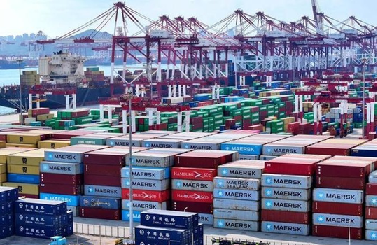
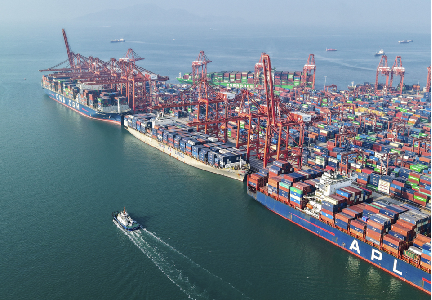
 Last year, China’s foreign trade hit a new high despite global headwinds, retaining its position as the world’s largest goods trading nation. According to data released by the General Administration of Customs last week, China’s foreign trade value hit 45.47 trillion yuan ($6.48 trillion), up 3.8 percent year-on-year, marking the ninth consecutive year of growth since 2017.

 Wang Jun, deputy head of the General Administration of Customs, said that the achievements are “truly remarkable and hard-won” amid global economic challenges.

 Wang attributed the steady growth of China’s foreign trade to three major drivers: the country’s pro-trade stabilization policies, the sustained release of import demand from its vast domestic market, and a sophisticated industrial system that continuously adapts to evolving overseas needs.

 While the external environment facing China’s foreign trade this year remains severe and complex, the fundamentals of the country’s foreign trade remain solid, which will inject more certainty into global economic and trade development, he said.

 Liao Wei, senior economist for China at Standard Chartered, attributed the resilience of China’s foreign trade to an expanding trade network and the ever-strengthening competitive edge of Chinese goods exports.

 She said that China’s total factor productivity has been rising since 2021 on the back of continued sci-tech breakthroughs, which could lower costs for exports enough to absorb impacts from tariffs.

 Looking into 2026, Liao believes that trade will continue to shore up China’s economic growth while cooperation between emerging markets will maintain steam as global economies diversify trade partners and the country’s total factor productivity is still climbing.

 “External demand is unlikely to add headwinds in 2026 because major economies showed no sign of a significant downturn. The global AI frenzy as well as market expectations of major economies gravitating toward fiscal stimulus will bolster China’s export outlook, particularly for tech-intensive products,” she said.

 INNOVATION-DRIVEN GROWTH

 China will remain an engine of the world economy, driven by innovation that fosters high-quality development and empowers developing countries to achieve sustainable growth. China has entered the top 10 of the Global Innovation Index for the first time, according to the 2025 report released by the World Intellectual Property Organization.

 “By the end of 2025, China remained a primary engine for the global economy, though the nature of its contribution was shifting from being just the world’s factory to a leader in advanced technology and green energy,” said Joseph Matthews, a senior professor at the BELTEI International University in Cambodia.

 “By opening its markets at a time when the United States was disrupting access, China has saved many nations from economic disaster,” Swana said. He noted that the country is pivoting towards high-tech and more technology-intensive jobs across its production sectors and playing a major role in supporting developing countries in innovation, science and technology.

 “By prioritizing infrastructure development and technological innovation, China offers developing countries practical means to build sustainable growth and achieve genuine economic autonomy,” said Herman Tiu Laurel, president of the Asian Century Philippines Strategic Studies Institute, a Manila-based think tank.

 “China has helped reframe the global agenda around high-quality development and win-win cooperation,” he added.

 Echoing the view, Ismael Buchanan, senior lecturer in the Department of Political Science at the University of Rwanda, said, “China’s approach emphasizes mutual benefit, respect for national sovereignty, and practical cooperation.”

 “By sharing development experience, expanding South-South cooperation, and supporting multilateral development mechanisms, China has offered additional development options for Global South countries,” Buchanan added.

Article inline ad

China’s Finance Ministry Unveils Policy Package To Encourag

0

Xinhua | Updated: 2026-01-20

BEIJING — China’s Ministry of Finance (MOF) on Tuesday released a package of measures to spur private investment and consumption, including a special guarantee program for corporate lending and interest subsidies for personal consumption loans.

 This special guarantee program, with a total scale of 500 billion yuan (about $71.42 billion), is aimed at supporting private investment by micro, small and medium-sized enterprises, according to official documents jointly released by the MOF and several other departments.

 Implemented through the National Financing Guarantee Fund over a two-year period, the program will cover not only medium- and long-term loans, but also financing needs related to daily operations, such as factory expansion, shop renovations and working capital.

 Meanwhile, the ministry will roll out a loan interest subsidy policy for micro, small and medium-sized enterprises, covering newly issued fixed-asset loans and funds provided by the government’s new policy-based financial instruments from Jan 1.

 The policy will focus on key industrial chains and their upstream and downstream sectors, as well as producer services.

 Interest subsidies will be set at 1.5 percentage points per year, with a maximum subsidy period of two years. The loan amount eligible for subsidies will be capped at 50 million yuan per borrower, with the maximum interest subsidy per borrower set at 1.5 million yuan.

 The policy will initially be implemented for one year, with the possibility of extension based on actual conditions.

 In a move to bolster consumption, the MOF on Tuesday also optimized and extended existing interest subsidy policies for loans to business entities in the service sector and for personal consumption loans to the end of 2026.

 The service-sector loan subsidy policy, notably, has expanded coverage to digital, green and retail sectors, with the maximum loan amount eligible for subsidies per borrower raised from 1 million yuan to 10 million yuan and the subsidy cap increased to 100,000 yuan.

 The personal consumption loan subsidy policy will include credit card installment services, removing sectoral restrictions.

 In addition, the MOF has improved its loan interest subsidy policy for equipment upgrades. The updated policy expands support from loans used solely for equipment purchases to equipment upgrades, and incorporates eligible technology innovation loans newly issued from 2026.

Article inline ad

China Accelerates Frontier Tech Deployment From Lab To Market

0

Policy measures, capital investment, scenario development drive progress

China Daily | Updated: 2026-01-19

HEFEI — From robots deployed at airports and hotels to autonomous vehicles navigating city roads and quantum computing tackling complex industrial calculations, innovations in China are moving rapidly from laboratories into real-world applications.

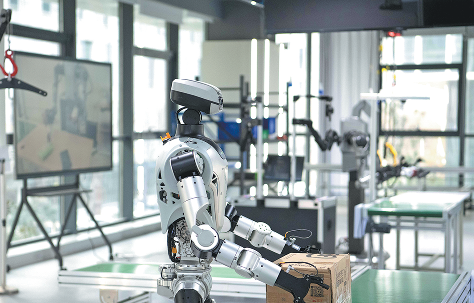
 At Hefei Xinqiao International Airport in Hefei, capital of East China’s Anhui province, a wheeled humanoid robot named Zerith H1 glides through the restrooms, automatically adjusting its height to collect trash, wipe stains from countertops, and mop the floor.

 Developed by Hefei-based robotics company Zerith, the intelligent cleaning robot has been deployed at more than 20 venues in major Chinese cities, including Beijing, Shanghai, Guangzhou and Shenzhen. It serves shopping malls, airports and hotels by sorting goods and cleaning.

 Founded by a team of post-2000s graduates from Tsinghua University, Zerith moved from a laboratory prototype to mass production within a year, securing orders totaling more than 100 million yuan ($14.34 million).

 “Based on our self-developed, scenario-specific large model, we continuously train robots, collect data and optimize algorithms in simulated real-world environments, laying the groundwork for practical deployment,” said Yang Wei, Zerith’s chief brand officer.

 Yang noted that households represent the ultimate application scenario for general-purpose robots. The startup planned to begin with business-to-business deployments in high-end hotels and laundries that closely resemble household environments, enabling it to validate technology and gather real-world data before eventually bringing products to average homes.

 Beyond robotics, China is accelerating the commercialization of other cutting-edge technologies as the country pushes for breakthroughs in high-tech industries.

 On the western outskirts of Hefei, researchers are advancing the development of fusion power generation. Using technologies originating from China’s “artificial sun” project, scientists have developed security checkup equipment for subways and proton therapy systems for treating multiple cancers.

 Quantum mechanics, which marked its centennial in 2025, is also fueling industrial innovations.

 In healthcare, Origin Quantum has partnered with a medical university in Anhui to develop molybdenum-target breast cancer screening equipment, improving image analysis accuracy.

 In manufacturing, quantum-precision measurement instruments developed by CIQTEK can detect faint signals from magnetic impurities in raw materials for new-energy batteries, thereby boosting inspection efficiency and improving battery safety.

 Chinese innovations are increasingly expanding abroad. At a Chery car dealership in Kuala Lumpur, Malaysia, the AiMOGA humanoid robot acts as an intelligent sales consultant. Speaking fluent English, it greets customers, guides visitors through showrooms, introduces product features and even serves beverages, all with minimal human intervention.

 Zhang Guibing, general manager of Chery International and AiMOGA Robotics, said the robots are already deployed in over 30 countries. The team is exploring applications in high-speed rail stations, museums, hospitals and government service centers.

 “Next, we will focus on standardizing mature scenarios for rapid global replication,” Zhang said. “We aim to turn practical demand into modular capabilities that can be continuously applied to our second — and third-generation robots.”

 China’s progress in commercializing frontier technologies has been supported by coordinated policy measures, capital investment and scenario deployment.

 Recommendations from China’s top leadership for formulating the country’s 15th Five-Year Plan (2026-30) call for significantly strengthening capacity for basic research and original innovation, and for achieving faster progress toward breakthroughs in core technologies across key fields.

 Local governments across China have rolled out policies to support technological innovations and future industries.

 In October, Shanghai released a set of measures to accelerate frontier technology innovation and foster future industries, aiming to nurture around 20 leading future industry enterprises by 2027. Shenzhen has established three investment funds totaling 22 billion yuan to support tech startups.

 From government procurement to diverse application scenarios such as elderly care, logistics, and urban transportation, China is providing a wide range of “real-world training grounds” for technological innovation.

 Xinhua


Article inline ad

Nation’s Annual Power Use Hits New Milestone

0

By ZHENG XIN | chinadaily.com.cn | Updated: 2026-01-20

China’s annual electricity consumption surpassed 10 trillion kilowatt-hours for the first time in 2025, a milestone highlighting the country’s accelerating shift toward high-tech manufacturing and broad-based electrification, industry experts said.

 Total power usage reached around 10.4 trillion kWh last year, up 5 percent year-on-year, reinforcing China’s position as the world’s largest energy consumer, according to data from the National Energy Administration.

 “Total power consumption, widely regarded as the ‘barometer’ of economic performance, is now more than double that of the United States and exceeds the combined annual power usage of the European Union, Russia, India and Japan,” said Yang Kun, executive vice-chairman of the China Electricity Council.

 The surge in demand is largely driven by China’s concentrated push into high-end manufacturing and the rapid adoption of electric vehicles and artificial intelligence infrastructure, the energy administration’s data said.

 “The fact that power consumption has exceeded 10 trillion kWh reflects China’s foundation as a manufacturing superpower and its comprehensive improvement in energy security,” said Yang.

 Yang noted that the dominance of “new manufacturing” in industrial power use is intensifying, with high-value-added and technology-intensive industries accounting for the additional demand.

 Power demand for wind equipment jumped 30 percent, and that for electric vehicle production increased 20 percent, while traditional heavy industries saw growth slow to just 1.8 percent, he said.

 According to forecasts by the International Energy Agency, global data center electricity consumption is projected to more than double by 2030, with China’s domestic power demand expected to grow at a compound annual rate of 8 to 9 percent through the end of the decade as AI infrastructure matures.

 According to the China Electricity Council, the rapid development of the digital economy and emerging technologies has further catalyzed the growth in energy demand, with the accelerated roll-out of “new infrastructure”, such as 5G base stations and electric vehicle charging piles, increasing power consumption in the internet and related service sector by more than 30 percent.

 During the same period, power usage within the electric vehicle charging and battery-swapping industries surged by nearly 50 percent, it said.

 To support this record-breaking demand, China has vigorously expanded its power infrastructure to accelerate the development of a high-quality supply chain for its new power system.

 The State Grid Corporation of China, for example, expects to invest 4 trillion yuan ($574 billion) in fixed assets during the 15th Five-Year Plan (2026-30) period, up 40 percent compared with the previous cycle.

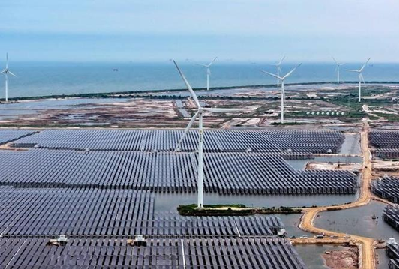
 Targeting an annual increase of around 200 gigawatts in wind and solar capacity within its operating zones, the utility giant expects nonfossil energy to account for 25 percent of total consumption by 2030, while electricity is projected to reach 35 percent of terminal energy consumption.

 China is looking to substantially expand its cross-country power transmission capacity to 420 gigawatts by 2030, as the world’s second-largest economy advances the strategic modernization of its electrical grid to ensure energy security.

 The nation aims to have nonfossil fuel sources account for roughly 30 percent of its total electricity generation before 2030, supported by a grid capable of integrating 900 GW of distributed solar and wind power, the National Energy Administration said.

 China’s power grid has already evolved into the world’s largest and most advanced network in terms of transmission capacity, voltage levels and renewable integration, it said.

 On the other hand, China has significantly deepened its power market reforms. Market-traded electricity has more than doubled since the 13th Five-Year Plan (2016-20) period and now accounts for over 60 percent of total consumption, up from 40 percent in 2020, according to the China Electricity Council.

 Yang, the council’s executive vice-chairman, said, “Over the past decade, China’s power consumption has doubled from 5 trillion to 10 trillion kWh, a growth rate unparalleled among the world’s major economies.”


Article inline ad

Guangdong’s Trade Volume Reached New Heights In 2025, Data Shows

0

By Zheng Caixiong in Guangzhou | chinadaily.com.cn | Updated: 2026-01-19

Guangdong, China’s largest trading province, recorded steady growth in foreign trade throughout last year, with imports and exports rising in every quarter, customs authorities said on Monday.

 According to a statement from Guangdong Customs, the province’s total trade volume reached 9.49 trillion yuan ($304.29 billion) in 2025, a year-on-year increase of 4.4 percent, hitting a new annual record high. Exports rose 2.5 percent to 6.03 trillion yuan, while imports grew faster, increasing 7.8 percent to 3.46 trillion yuan.

 Quarterly data showed consistent momentum. Trade grew 4.1 percent year-on-year in the first quarter, 3.8 percent in the second, 3.5 percent in the third, and accelerated to 6.1 percent in the final quarter, demonstrating the province’s strong trade resilience and potential.

 Guangdong accounted for 20.9 percent of China’s total foreign trade last year, slightly higher than in 2024. The province has remained China’s top trading region for 40 consecutive years and contributed 24.1 percent of the country’s overall trade growth, customs data showed.

 Trade with Guangdong’s three largest partners — the Association of Southeast Asian Nations (ASEAN), Hong Kong Special Administrative Region, and the European Union — each exceeded 1 trillion yuan. Trade with ASEAN reached 1.53 trillion yuan, up 5.8 percent.

 Growth was even stronger in emerging markets. Trade with the five Central Asian countries surged 23.6 percent, while trade with Africa and the Middle East rose 10.7 percent and 8.5 percent, respectively, all outpacing the province’s overall growth rate.

Article inline ad