Wednesday, November 25, 2026

Home Blog Page 99

First Batch Of Simandou Iron Ore Arrives In China

0

By WANG YING in Shanghai | chinadaily.com.cn | Updated: 2026-01-19

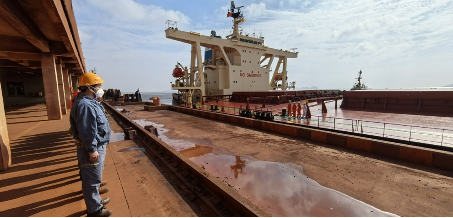
The Winning Youth cargo ship arrived at Majishan port in Zhejiang province on Saturday, carrying with it nearly 200,000 tons of iron ore produced in Guinea, West Africa, according to China Baowu Steel Group Corp Ltd.

 The ship departed from the Port of Morebaya in Guinea and successfully docked at Majishan port after a 46-day, 10,958-nautical-mile journey. The delivery marked a key milestone in the global steel industry, said China Baowu.

The completion of this voyage marks the full operational status of the Simandou iron ore project, an integrated supply chain that spans mining, railways, ports (both domestic and international), and shipping. As a new and significant source of global iron ore supply, the project is expected to greatly enhance global iron ore production capacity, which is of immense importance Chinese steel manufacturers in need of raw materials.

 Once fully operational, the project is expected to produce 120 million tons of high-quality iron ore annually. The Simandou iron ore project — whose production officially began in November 2025 — is one of the world’s largest and highest-grade deposits.

The project, with an investment exceeding $20 billion, involves the development of a mine, railway, and port infrastructure. It is divided into northern and southern blocks, with construction of the northern section having begun in June 2024.

 With the project now entering stable operations and gradually ramping up to full capacity, it is expected to provide a solid and sustainable raw material base for the steel industry in China and around the world. Additionally, it will serve as a long-term driver for Guinea’s economic and social development.

 According to Baowu Resources Co Ltd, the second shipment of Simandou iron ore was dispatched to China at the end of last year. Baowu Resources aims to leverage the Simandou iron ore as a leading source and contribute to the creation of greater value for its steel industry and ecological partners.

Article inline ad

Jingdezhen Ceramics Industry Embraces Tech Empowerment, Innovation

0

By Zhang Jie | chinadaily.com.cn | Updated: 2026-01-19    

The World Internet Conference organized an event themed “Journey into Outstanding Cases – Journey into the Digital Porcelain Capital” in Jingdezhen, East China’s Jiangxi province, on Jan 15.

 It brought together over 30 participants, including embassy representatives from Morocco and Lesotho, members of the WIC Specialized Committee on Cultural Heritage Digitization, delegates from member organizations, and media professionals.

 The event served as a valuable platform for international exchange, building a bridge for integrating digital technology with ceramic culture.

In Jingdezhen, many workshops still uphold the tradition of handcrafted ceramics. Artisans gather around pottery wheels, using skills honed over years to knead, shape, trim, glaze, and fire the clay. Each step is filled with focus and passion, making every piece unique. This handmade model is the core of Jingdezhen’s thousand-year ceramic culture. Its personalized value remains irreplaceable. The rapid development of digital technology is now injecting new vitality into this tradition.

 Digital innovation is revolutionizing the design process, shattering creative constraints. In Taoyuan Valley, an “AI-powered pottery painting assistant” tool, draws upon a digitized archive of over a thousand traditional ceramic patterns. Requiring no professional design expertise, it can generate patterns that blend classical motifs with contemporary aesthetics in seconds. This tool provides creators with diverse inspirations, allows ordinary people to participate in ceramic design, and helps makers significantly shorten design cycles. It transforms thousand-year-old ceramic patterns from traditional limitations into cultural resources that everyone can create and enjoy.

Yishan Ceramics Co is deepening its digital transformation on the production front, boosting both efficiency and quality. Within its facilities, industrial assembly lines hum with precision, powered by digital systems overseeing every phase — a testament to technology’s transformative role in traditional porcelain-making.

 The company operates a fully automated cup production line that integrates forming, handle attachment, drying and demolding. With an hourly output of 1,200 pieces — roughly three to four times more efficient than manual crafting — it dramatically enhances mass-production capacity.

 Digital upgrades extend to glazing and firing. Automated glazing equipment handles bisque-fired items, processing up to 1,400 pieces hourly while precisely controlling glaze thickness to prevent defects. A high-temperature tunnel kiln, operating continuously at 1,380°C, ensures consistent product quality through accurate temperature control, achieving a daily output of 30,000 pieces.

 Digital management safeguards the entire workflow. Real-time data on output, yield rates and equipment performance are displayed on workshop screens, informing capacity planning, process refinement and maintenance — steadily steering ceramic production toward greater scale and standardization.

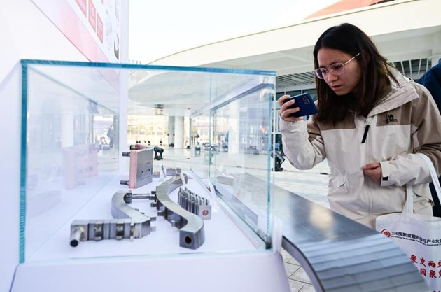
Micro Porcelain Technology Co focuses on pioneering ceramic 3D printing. By innovating core materials to overcome traditional limitations, it provides fresh impetus for the sector’s evolution. The company’s novel materials can accurately render intricate hollow structures and seamless joins, addressing industry challenges like deformation and collapse. Utilizing this material and its self-developed 3D printers, the production process bypasses steps like molding and trimming. Prototypes can be completed in as little as three days, drastically shortening development cycles while reducing reliance on manual skill — empowering designers to experiment and create differentiated products.

Taoxichuan Cultural and Creative Block has transformed old porcelain factory buildings into a digital platform integrating creativity, entrepreneurship, and sales. Its “Yi Space” public innovation platform gathers over 25,000 entrepreneurial youths, often called “Jing Piao” (Jingdezhen drifters). They inherit the craftsmanship spirit of handmade porcelain while leveraging a live-streaming base and platforms like Douyin and Kuaishou to build a global digital sales network. This allows both handmade treasures and mass-produced quality porcelain to reach more consumers.

 A supporting intellectual property protection center safeguards original designs, forming a complete entrepreneurial chain of “creative market + Yi Space + live-streaming base + smart workshop”. This chain drives employment for 110,000 people upstream and downstream, with over 30,000 registered copyrights, making the ceramic industry ecosystem more prosperous and diverse.

 Digital technology is reshaping Jingdezhen’s ceramics industry by blending traditional craftsmanship with modern innovation. It preserves the unique value of handmade porcelain while improving quality and efficiency in mass production. This approach allows the ancient porcelain capital to maintain its cultural roots while exploring new growth through technology. Jingdezhen’s transformation showcases a path for traditional sectors to evolve, promising a forward-looking future.

Article inline ad

Fusion Energy Drive Entering A Decisive Phase

0

By CHENG YU in Beijing and ZHU LIXIN in Hefei | chinadaily.com.cn | Updated: 2026-01-18

China’s drive to develop controllable nuclear fusion is nearing a historic turning point, with related procurements totaling 10 billion yuan ($1.37 billion) set to be completed this year and early demonstrations of fusion-generated electricity likely to be seen around 2030, industry experts and company executives said on Sunday.

 Their comments were made at the Fusion Energy Technology and Industry Conference 2026, which was hosted by the Anhui Province Fusion Industry Federation and Fusion Energy Technology, among others, and which ended on Saturday in Hefei, Anhui pro­vince. The presence of over 1,500 industry participants highlighted the growing convergence of science, manufacturing and capital in the area of fusion development.

 Fusion occurs when two nuclei combine to form a new nucleus. Fusion energy seeks to replicate the sun’s nuclear reactions to produce carbon-free electricity, effectively creating a safe, controllable “artificial sun” on Earth.

 If successful, it could provide a near-limitless source of clean energy without carbon emissions while significantly lowering safety risks associated with conventional nuclear power.

 A report presented by experts at the conference said that China’s fusion energy development is entering a decisive phase, shifting from scientific experimentation to practical energy systems.

 It emphasized that the Burning Plasma Experimental Superconducting Tokamak, or BEST, a major fusion device, aims to achieve net fusion power gain and demonstrate electricity generation by around 2030.

 Song Yuntao, head of the Chinese Academy of Sciences’ Institute of Plasma Physics, said: “Fusion is no longer just a physics experiment. It is becoming an energy engineering project. The key question now is how to build it, operate it and make it economically viable.”

 Currently, skepticism prevails over whether fusion can be commercialized at scale, particularly given its history of long development timelines.

 Xu Qiang, chief analyst for power and environmental sectors at Guotai Haitong Securities, said: “China’s advantage in fusion deve­lopment is that it combines State-led research facilities with growing participation from private companies. That significantly improves the speed of technology iteration and commercialization.”

 In addition, China is advancing multiple fusion pathways at the same time, Xu emphasized.

 Flagship facilities such as the Experimental Advanced Superconducting Tokamak, or EAST, in Hefei, have set world records by sustaining plasma temperatures above 100 million C for more than 1,000 seconds. Meanwhile, BEST is under construction in Hefei, to bridge the gap between laboratory experiments and future power plants, he said.

 Rising confidence is reflected in capital flows. Guotai Haitong Securities estimated that fusion-related exchange-traded funds launched in 2025 brought 70 billion yuan of new capital into related sectors, reflecting rising expectations that fusion-related projects could translate into equipment orders in coming years.

 Notably, a 2026 procurement plan released by the fusion industry alliance showed that more than 120 procurement projects are scheduled for this year, centered on tasks including the upgrade of EAST and BEST, with total funding approaching 10 billion yuan.

 At the conference, Hefei Industry Investment Group unveiled a future fusion energy venture capital fund, with an initial size of 1 billion yuan. The fund will focus on key fusion technologies and core industrial segments, with a maximum lifespan of 15 years.

 Jiang Xin, chairman of Hefei Industry Investment Group, said: “We are clearly prepared to invest with long-term patience. Based on technological progress and industry outcomes, we will launch follow-up funds to meet the phased investment needs of the fusion industry.”


Article inline ad

IMF Lifts China 2026 Growth Forecast To 4.5%

0

By Zhao Huanxin in Washington | chinadaily.com.cn | Updated: 2026-01-20

The International Monetary Fund raised its 2026 growth projection for China to 4.5 percent, up by 0.3 percentage points from its October forecast, primarily due to a combination of eased trade tensions and sustained domestic policy support, according to IMF’s World Economic Outlook update released on Monday.

 The improvement reflects the impact of lower effective US tariff rates on Chinese goods — resulting from a yearlong trade truce agreed upon by the two sides in November, and the continued implementation of stimulus measures over a two-year period, according to the IMF.

 The economy’s growth rate is expected to decelerate to 4 percent in 2027 as “structural headwinds assert themselves”, the IMF said.

 The IMF also said that relative to the October projection, growth in 2025 for China was revised upward by 0.2 percentage points to 5 percent.

 “The revision reflects stimulus measures and additional policy bank lending for investment,” it said.

 Also on Monday, China’s National Bureau of Statistics announced that the country’s gross domestic product reached a record $20.01 trillion last year, growing by 5 percent in 2025.

 Kang Yi, head of the NBS, said China has rolled out more proactive and effective macro policies as it confronts sudden shifts in the external environment and growing domestic difficulties, helping to cushion external shocks and stabilize the foundations for development despite headwinds.

 Kang also said that China has sustained one of the fastest growth rates among major economies and remains among the world’s most stable and reliable engines of global expansion, with its contribution to global growth expected to be about 30 percent.

 That resilience is mirrored in the broader picture: Despite US-led trade disruptions and lingering uncertainty, new projections show global growth at 3.3 percent this year, slightly higher than the forecast in October, with much of the upgrade driven by the United States and China.

 That growth rate is the same as in 2025, but up from the 3.1 percent the IMF forecast for 2026 back in October.

 The IMF estimated US growth at 2.4 percent this year, 0.3 percentage points higher than predicted in October, citing fiscal policy support, lower interest rates, as well as the diminishing effects of higher trade barriers.

 The resilience of global growth suggested the world has “largely shaken off the immediate impact of the tariff shock,” IMF chief economist Pierre-Olivier Gourinchas and his colleague Tobias Adrian wrote in a blog post accompanying the latest update to the fund’s World Economic Outlook.

 They attribute the better-than-expected performance to a mix of easing trade tensions, bigger-than-expected fiscal support, supportive financial conditions and “the agility of the private sector” in working around disrupted trade flows.

 They also point to stronger policy frameworks, particularly in emerging markets, as a buffer against shocks.

 “Another key driver of this resilience is the continued surge in investment in the information technology sector, especially in artificial intelligence,” they wrote.

 The blog notes that IT investment in the US as a share of economic output has climbed to “the highest level since 2001”, lifting business spending even as manufacturing remains subdued.

 While the boom is concentrated in the US, it is spilling across borders through demand for components and equipment, benefiting “Asia’s technology exports”, according to the analysis.

 Looking ahead, they outlined both upside and downside scenarios: AI could lift activity by about 0.3 percent relative to baseline if productivity gains materialize, but a moderate valuation correction paired with tighter financial conditions could cut global growth by about 0.4 percent, with larger losses possible if investment falls harder.

Article inline ad

‘Hard-Won’ 5% GDP Rise Shows Firm Footing

0

Strong resilience seen as China moves toward innovation-driven development

By Ouyang Shijia, Zhou Lanxu and Wang Keju | chinadaily.com.cn | Updated: 2026-01-20

China’s economy demonstrated strong resilience in 2025, with growth holding firm despite mounting external pressures and internal structural adjustments, while new growth drivers are taking shape to support sustainable expansion going forward, said officials and experts.

 Official data released on Monday showed that China’s gross domestic product grew 5 percent last year, meeting the country’s annual target of around 5 percent. The hard-won performance, achieved amid heightened tariff pressures, has laid a solid foundation for a steady start to economic growth in 2026, reinforcing confidence that the world’s second-largest economy remains on a stable trajectory.

 As China enters the opening year of its 15th Five-Year Plan (2026-30) period, economists said policymakers are set to press ahead with front-loaded fiscal support to boost domestic demand, alongside a moderately accommodative monetary stance aimed at lifting prices and easing financing costs.

 The country’s annual GDP came in at 140.19 trillion yuan ($20.13 trillion) in 2025, according to the National Bureau of Statistics. In the fourth quarter of 2025, the Chinese economy grew 4.5 percent year-on-year, following 4.8 percent growth in the third quarter.

 Kang Yi, head of the NBS, said that the latest indicators fully demonstrate the Chinese economy’s steady progress, resilience under pressure, and vitality in moving toward higher-quality and innovation-driven development.

 “China’s average annual contribution to global economic growth stood at around 30 percent throughout the 14th Five-Year Plan (2021-25) period. With a complete industrial system, China has played a stabilizing role in global supply chains and injected much-needed stability into a world economy undergoing turbulence and transformation,” he said.

 Guan Tao, global chief economist at BOCI China, said that China’s economy has delivered “hard-won” results in 2025, featuring breakthroughs in technological advances and emerging consumption phenomena, setting the stage for a 2026 GDP growth target possibly at 4.5 percent to 5 percent.

 “In 2025, when people talked about China, things like DeepSeek, Ne Zha 2, Unitree humanoid robots, the overseas expansion of innovative pharmaceuticals, and Jiangsu Football City League, or Suchao, all showed that China’s economy has been full of highlights, whether in consumption recovery or technological innovation,” Guan said.

 Citing the latest indicators, Sheana Yue, a senior economist at British think tank Oxford Economics, said that the fourth quarter’s continued momentum appeared to be driven by stronger industrial activity and exports in December, which offset still weak domestic demand.

 NBS data showed that China’s value-added industrial output rose 5.2 percent in December, following 4.8 percent growth in November.

 “Our estimates suggested high-tech manufacturing, including transport equipment, electrical machinery and electronics manufacturing, continued to outperform at the end of 2025,” Yue said.

 According to the NBS, retail sales, a key indicator of consumer spending, increased 0.9 percent in December, while China’s fixed-asset investment decreased 3.8 percent in 2025.

 Wang Qing, chief macroeconomic analyst at Golden Credit Rating International, said that looking ahead to 2026, the impact of high tariffs imposed by the United States on global trade and China’s exports is expected to become more pronounced, weakening the contribution of external demand to economic growth and requiring domestic demand to step in more decisively.

 “We expect that, with more proactive and effective macroeconomic policies continuing to gain strength, consumption will accelerate further in 2026, and investment will stabilize after bottoming out,” he said.

 With 2026 marking the opening year of China’s 15th Five-Year Plan, Xu Hongcai, deputy director of the economic policy committee of the China Association of Policy Science, said that ensuring a smooth economic start will be critical, and called for stable, consistent and moderately forceful macro policies.

 Fiscal policy should remain proactive, he said, suggesting that the fiscal deficit ratio remain at around 4 percent, supported by the continued issuance of long-term treasuries to boost consumption, improve public well-being and mitigate local government debt risks. He added that monetary policy should stay moderately accommodative, with room for further cuts to interest rates and the reserve requirement ratio.

 Going forward, Xu said that China’s economic growth in 2026 is expected to remain within a reasonable range, with improving quality, a more optimized structure and steady progress toward high-quality development.

 Choi Yong-ho, chief executive officer and chief happiness officer of South Korean entertainment technology company Galaxy Corp, said China’s market holds virtually unlimited development potential. “It is creative, innovative and dynamic, and it is already at the global forefront in multiple industries.”

 “China’s strong capabilities in robotics and artificial intelligence are leading industrial development, and its younger generation represents a highly capable and promising talent base. With these advantages, I believe the Chinese market will continue to grow, with a very optimistic outlook,” he said.

Article inline ad

Commercial Prospects For AI Healthcare To Expand

0

China Daily | Updated: 2026-01-17

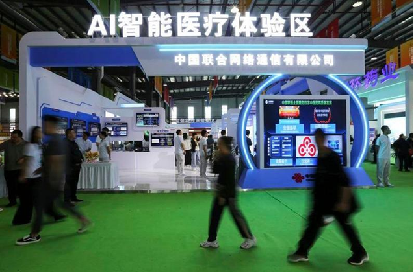
China’s artificial intelligence healthcare sector is set for a year of stronger commercial prospects as AI accelerates the reshaping of the healthcare market with its applications in diversified scenarios that span clinical applications, patient services, medical research and operation management, according to market research.

 Analysys, a Beijing-based data analytics firm, noted in a recent research paper that the industrialization of China’s AI healthcare market is speeding up. The firm said that the value of the AI healthcare market reached about 106 billion yuan ($15.21 billion) in 2024, with this growth having been driven by transformative advancements in AI technologies and intelligent hardware.

 According to its analysis, AI applications in high-value scenarios, such as tumor screening and chronic disease management, are expected to become a growth engine for the industry over the next three years.

 China Securities, a leading securities company, has also highlighted a promising market and investment outlook for AI healthcare in a series of recently published market analyses.

 In one research note, China Securities particularly attributed the development momentum of the AI healthcare sector to policy support, citing a national goal announced in April 2025 by the government to develop over 100 typical scenarios where digital intelligence technologies will be applied in the pharmaceutical industry by 2027.

 A notable case in point is a plan released last month by Beijing’s municipal health commission, which aims for the widespread adoption of AI in medical institutions by 2027, a move expected to be emulated by other regions, according to the China Securities research.

 In a January research report, CITIC Securities, another securities company, highlighted a fundamental shift in the commercialization of China’s AI healthcare, which is showing a more defined pathway this year as payment mechanisms for AI medical solutions strengthen and payers are more clearly identified.

 Government policies are fueling market demand, according to the report.

 A guideline released by the National Healthcare Security Administration last year incorporated AI-assisted diagnostics into the national pricing framework for pathology, allowing public medical insurance to directly reimburse AI-assisted medical solutions. This move, the report stated, has unlocked substantial commercial potential for AI pathology.

 The report noted that many regions in China, including the municipalities of Beijing and Shanghai as well as Zhejiang and Guangdong provinces, are speeding up the application of AI healthcare, with government-supported pilot bases already established.

 Moreover, CITIC Securities highlighted five potential investment frontiers, including AI-driven medicine development, AI solutions for grassroots healthcare, medical data circulation and transaction, AI-assisted pathology diagnostics, and the expansion of AI healthcare models into consumer markets.

 Investment by big firms in healthcare AI models, such as PANDA, an AI platform developed by Alibaba’s Damo Academy, and Ant Afu, an AI health management app for users, is strengthening the capacity of these models and pushing AI healthcare’s deepened commercialization.

 Xinhua – China Daily

Article inline ad

Kuaishou Seeks $2b In Offshore Bond Sale To Fund AI Push

0

By Li Jiaying | chinadaily.com.cn | Updated: 2026-01-16

Chinese technology heavyweight Kuaishou Technology is raising about $2 billion through its first offshore dual-currency bond issuance, as it looks to tap overseas capital markets to support its intensified artificial intelligence development.

 The company announced on Friday that it will issue $600 million of 4.125 percent senior notes due in 2031, $900 million of 4.75 percent senior notes due in 2036, and 3.5 billion yuan ($490 million) of 2.450 percent senior notes due in 2031.

 Proceeds from the proposed bond issuance will be mainly used for general corporate purposes and to increase offshore cash reserves, a company representative said during an investor conference call on Wednesday.

 The company has previously disclosed that its total capital expenditure in 2025 is expected to exceed 14 billion yuan, with a significant portion designated for its artificial intelligence platform, Kling.

 Kuaishou said it plans to maintain a similar capital expenditure allocation structure this year, underscoring its continued focus on AI-driven growth.


Article inline ad

Domestic Demand Forecast To Be Main Growth Driver In 2026

0

By Li Jing | China Daily | Updated: 2026-01-17

China’s consumption-boosting measures are showing encouraging results this year, particularly in consumer electronics and services, a leading Chinese economist said, as policymakers pay vital attention to domestic demand amid property sector adjustment and rising external uncertainty.

 Su Jian, a professor at the School of Economics at Peking University made the remarks on Thursday at a media briefing hosted by the All-China Journalists Association, responding to a question from China Daily on the effectiveness of policy packages rolled out by central and local authorities to stimulate consumption.

 Su said consumption growth has been most visible in services and fast-evolving electronic products. “As the economy develops, people’s consumption of services will definitely continue to increase,” he said, citing tourism, cultural products, sports activities and concerts. Consumer electronics also retain potential, he added, due to rapid product upgrades and replacement cycles.

 Su noted that the Ministry of Commerce and local governments have introduced a range of supportive measures, including the “Shopping in China” initiative, to extend a long-standing policy approach. “Since 1997, China has continuously worked to expand consumption,” Su said, adding that measures introduced over the past two years have delivered “relatively good results”.

 Consumption will remain central as domestic demand becomes the main growth driver this year, Su said, describing macroeconomic regulation as an incremental process. “Macroeconomic policy works by first introducing measures and then seeing whether they are sufficient,” he said. “If they are not enough, more policies will be added.”

 At the macro level, Su said China continues to face a structural imbalance of strong supply and weak demand, a condition he described as common across market economies rather than unique to China. He noted that China has addressed this imbalance repeatedly through demand-expanding policies over the past two decades.

 Citing rising global uncertainty and weaker external demand, Su said reliance on domestic demand — with consumption at its core — has become increasingly important.

 Turning to growth expectations, Su said China’s 2026 economic growth target is likely to remain around 5 percent, based on the logic used in recent government work reports, though no official figure has been announced. The final target is expected to be confirmed at the two sessions in March — the annual meetings of China’s top legislature and political advisory body.

 He said recent target-setting has balanced three considerations: stabilizing employment and incomes, respecting the economy’s growth potential and support conditions, and aligning short-term performance with longer-term goals of basically achieving socialist modernization by 2035.

 On real estate, Su said China’s property sector is undergoing structural adjustment rather than a cyclical downturn after decades of rapid expansion driven by development and construction. With per-capita housing conditions having improved significantly, he said there is limited room for further volume growth.

 “Even in developed economies, real estate remains a pillar industry,” Su said. “After adjustment, China’s property sector will still be an important driver, but its structure will be different.”

 Future momentum is likely to come from renovation, urban renewal and related services rather than large-scale new development, he said, adding that no single emerging industry will fully replace the role which real estate once played.

 Looking ahead, Su said China’s economic strategy at the start of the 15th Five-Year Plan (2026-30) period is shifting toward greater emphasis on “investment in people”, as returns on traditional infrastructure-led growth fall.

 “China’s infrastructure is already quite sound,” Su said. “Under these conditions, continued investment in physical assets will naturally see declining marginal returns.”

 Sustaining growth, he said, will increasingly depend on technological progress, which in turn relies on human capital. “What can offset diminishing marginal returns is technological progress,” Su said. “And technological progress is created by people.”

 The Central Economic Work Conference in December called for better coordinating investments in physical assets with investments in people.

 The meeting emphasized “investing in people” as a key economic strategy for 2026, shifting focus from just physical assets to human capital, meaning greater spending on healthcare, education, childcare and social services to boost consumption, improve livelihoods and foster innovation-driven growth, aligning with building a strong domestic market and upgrading economic structure.

 lijing2009@chinadaily.com.cn

Article inline ad

China, Canada Reach Specific Arrangements To Address Trade Issues: Commerce Ministry

0

Xinhua | Updated: 2026-01-17

BEIJING — China and Canada have reached specific arrangements to properly address trade issues related to electric vehicles, steel and aluminum products, canola, and agricultural and aquatic product, China’s Commerce Ministry said on Friday.

 To implement the important consensus reached by the leaders of China and Canada, both sides have recently conducted multiple rounds of intensive consultations at various levels, focusing on key economic and trade issues of mutual concern, the ministry said in a statement.

 The two sides have reached positive consensus on increasing direct flights, improving the business environment, and inspection and quarantine of agricultural products, it said.

 This marks an important step in resolving bilateral trade concerns and represents a new starting point for deepening economic and trade cooperation.

 Looking ahead, both sides will jointly implement the hard-won outcomes of these consultations, accelerate finalizing details, clarify timelines, develop action plans, expedite the completion of their respective domestic procedures and promote early implementation of the outcomes, the ministry said.

 The two sides will fully leverage the China-Canada Joint Economic and Trade Commission mechanism to continue expanding cooperation, resolving issues, managing differences, and promoting the healthy, stable, and sustainable development of China-Canada economic and trade relations, it said.

Article inline ad

Oz Comic Con 2026

0

Venue address

Melbourne Convention and Exhibition Centre

1 Convention Centre Place

South Wharf, Melbourne VIC Australia 3006

Sat 6 June – Sun 7 June, 9:00am – 5:00pm

 Step into the extraordinary world of Oz Comic-Con, where creativity thrives and passion unites fans of every generation! Embark on a thrilling journey across two action-packed days filled with adventure, laughter, and all things pop culture.

 Whether you’re a seasoned convention-goer or attending for the first time, Oz Comic-Con promises an immersive and enjoyable experience for all. Join us as we ignite the spark of excitement and celebrate the diverse tapestry of pop culture that unites us all. At Oz Comic-Con, the adventure begins the moment you walk through the doors – don’t miss out on the fun!

Tickets

General Admission

$51.00

Article inline ad