Wednesday, November 25, 2026

Home Blog Page 100

Digital Health Festival

0

Venue address

Melbourne Convention and Exhibition Centre

 1 Convention Centre Place

 South Wharf, Melbourne VIC Australia 3006

Wed 20 May – Tue 20 May, 8:30am – 5:00pm

 Thu 21 May – Thu 21 May, 8:30am – 4:00pm

 Digital Health Festival is Australia’s leading event for health innovation.

 It brings together more than 8000 leaders across clinical tech and policy to explore AI virtual care EMR prevention and digital transformation. With 400 speakers 11 theatres and over 300 exhibitors the festival offers insight into the tools ideas and collaboration shaping the future of healthcare in Australia. Attendees discover solutions and gain insight. It is for those seeking clarity on trends in healthcare.

Tickets

2 Day Festival Pass (early bird)

$795.00

 2 Day Festival + After Dark Party Pass (early bird)

$845.00

Public Health VIP Pass


Article inline ad

VCE and Careers Expo 2026

0

Venue address

Melbourne Convention and Exhibition Centre

1 Convention Centre Place

South Wharf, Melbourne VIC Australia 3006

Thu 30 April – Sat 2 May, 9:00am – 3:00pm

 Experience Victoria’s largest careers and education event — the VCE and Careers Expo 2026. Discover a world of opportunity under one roof, with a dynamic showcase of leading universities, TAFEs, training providers, employers, and industry organisations. Get hands-on with interactive displays, gain valuable insights into study and career pathways, and connect directly with experts ready to help shape your future.

 Across three action-packed days, explore 100+ free seminars led by education and industry leaders, covering everything from VCE subject selection, study tips, and university entry pathways to career exploration, apprenticeships, and gap year programs. Whether you’re a student, teacher, job seeker or parent, this is your chance to gather the tools, knowledge, and inspiration to plan your next steps with confidence.

Tickets

General Admission: $15.00

Family Registration (up to 4 family members including at least one parent)


Article inline ad

Melbourne Ageing Well Expo

0

Venue address

Exhibition Centre

1 Convention Centre Place, South Wharf

Melbourne VIC, Australia 3006

Fri 20 March – Sat 21 March, 9:30am – 4:00pm

The Ageing Well Expo returns to Melbourne in March 2026, offering individuals and families the tools and insights they need to make informed choices for the future – on their terms.

Designed to empower attendees to live well at every stage of life, the Expo showcases the latest innovations in health, aged care, lifestyle, and wellbeing. With a diverse range of products, services, and resources on display, visitors will gain access to practical information and expert advice to help navigate the journey of ageing with clarity and confidence.

Don’t miss the opportunity to hear from leading professionals at the Uniting AgeWell Central Stage and the Mercy Health Ageing Well Stage, where sessions will cover key topics including financial planning, home care, cyber safety, nutrition, senior activities, and more.

With over 80 exhibitors spanning residential care, home support, retirement living, medical services, equipment providers, legal and financial support, and more, the Expo offers a complete picture of what it means to age well today.

Free to attend – register now and start planning for tomorrow, today.


Article inline ad

New BCG Report Shows Companies Plan To Double Their Spending On AI In 2026

0

chinadaily.com.cn | Updated: 2026-01-16

Companies’ investment in artificial intelligence is growing significantly and that trend will continue as they plan to double their spending on the cutting-edge technology in 2026, accounting for about 1.7 percent of revenues, according to a report from Boston Consulting Group.

 CEOs are rolling up their sleeves and taking the lead as their companies’ main AI decision makers, with trailblazing chief executives spending more than eight hours per week on their own AI upskilling, the report said, investing twice as much as their counterparts in upskilling and capability-building across their organizations.

 “Despite economic uncertainty, this anticipated surge in spending reflects how much of a priority AI has become in the business world,” Christoph Schweizer, BCG’s CEO and coauthor of the report, said.

 “AI is no longer confined to IT or innovation teams — it’s reshaping strategy and operations from the top down with CEOs taking a leading role,” the report said. “Nearly three quarters of CEOs say they are now the main decision makers on AI, and half believe their jobs depend on it.”

 The report is based on a survey of 2,360 executives across 16 markets and nine industries, including 640 CEOs.

 In doubling their investment this year, companies are drawing from budgets beyond the tech pool and CEOs have committed more than 30 percent of their organizations’ AI investments on agentic AI. Ninety-four percent of chief executives say they will continue investing in AI at current or higher levels even if the investments do not pay off in the next year.

 The report also noted that 94 percent of Chinese CEOs say they will continue to increase AI investment even if it does not generate immediate returns, while 89 percent of them are more optimistic about returns on AI investment compared with last year. Moreover, 91 percent say they lead their companies’ AI strategy, and about 60 percent believe their career stability depends on the success of that strategy.

 Nearly three quarters of chief executives say that they are now the main decision makers on AI. And while half of CEOs believe their jobs are on the line if AI does not pay off, four out of five of them are more optimistic about AI’s return on investment (ROI) potential than they were a year ago.

 The rapid maturity of AI agents is one of the main reasons, with about 90 percent of chief executives believing that agents will enable their companies to see measurable ROI in 2026. As a result, CEOs have committed more than 30 percent of their organization’s AI investment for this year into agentic AI, the report said.

Article inline ad

Shanghai To Further Boost Advanced Manufacturing

0

By Wang Ying in Shanghai | China Daily | Updated: 2026-01-16

Shanghai’s efforts to transform and upgrade its advanced manufacturing over the coming three years are expected to consolidate the city’s manufacturing capabilities, enhance industrial chain stability, and further catapult the East China cosmopolis into a global high-end manufacturing center, experts said on Wednesday while digesting the Chinese economic hub’s latest action plan to support advanced manufacturing.

 Unveiled by the municipal government of Shanghai on Jan 9, the three-year action plan is designed to support the transformation and upgrade of Shanghai’s advanced manufacturing sector in the coming three years and charts ambitious goals including nurturing 100 manufacturing enterprises each with an annual output of above 1 billion yuan ($143.49 million) and raising the city’s robot density to 600 robots per 10,000 employees by 2028.

 “By achieving such goals, there would be no doubt that Shanghai would, on the one hand, generate vitality among various enterprises, especially privately owned companies, and, on the other hand, its manufacturing sector would reach a new level, featuring unique strengths and a well-developed and complete industrial chain with a stable, reliable and promising outlook,” said Shen Nanyan, director of the Shanghai Key Laboratory of Intelligent Manufacturing and Robotics.

 “Many of the 1-billion-yuan-scale enterprises would have their respective areas of focus, and they would work together to better facilitate a complete and stable industrial chain in Shanghai, particularly in key strategic industries,” Shen said.

 “From a long-term perspective, leading companies in many key strategic industries will drive Shanghai’s overall manufacturing sector to develop rapidly, while ensuring the safety of the entire industrial chain.”

 Consisting of 17 detailed measures, the action plan is designed to accelerate the formation of a modern industry system centering around advanced manufacturing, therefore fully driving companies of various sizes to develop in a coordinated and integrated manner.

 “Shanghai has already obtained many mature technologies, and the action plan is tasked with introducing these existing technologies into manufacturing, thereby enabling traditional industries to add value and increase competitiveness,” said Cao Qixin, a professor specializing in robot research at Shanghai Jiao Tong University.

 “Transformation in manufacturing has already taken place in many benchmark companies in Shanghai, but with regard to the city’s ambition to become a global benchmark in advanced technology and innovation, more parallel advancement across the broad manufacturing sector is required,” Cao said, adding that Shanghai’s outstanding pool of global talent will further give the city an edge in popularizing cutting-edge technologies in manufacturing.

 In terms of advancing AI in manufacturing, large enterprises are expected to achieve full digital and intelligent applications by 2027.

 Robot density, a key gauge to measure the adoption of automation in manufacturing, is the number of robots per 10,000 people in the manufacturing industry. Currently, Shanghai’s robot density is above 500 robots per 10,000 employees, up from 260 in 2023, according to Xinhua News Agency.

 Shanghai’s robot density reached a level on par with the world’s top countries, including South Korea, Japan and Singapore, during the 14th Five-Year Plan (2021-25) period, said Shen.

 “It is worth mentioning that robot density is uneven across different industries. Taking the automotive sector as an example, a vehicle manufacturing line can operate automatically with about two dozen robots collaborating with each other. But in other sectors, such as textiles, the automation rate remains extremely low,” Shen said.

 “Under the guidance of the action plan, we can expect the application of robots to expand into many industries that currently have very low robot density,” Shen added.

 Effective from Jan 1 through Dec 31, 2028, the plan aims to add 100 new manufacturing enterprises each with an annual output value exceeding 1 billion yuan, bringing the total to over 600. This initiative also seeks to drive the industrial chain to create 500 new industrial enterprises above the designated size, or those with an annual revenue of 20 million yuan or above.

 wang_ying@chinadaily.com.cn

Article inline ad

China’s Forestry And Grassland Sector Hits Nearly 11 Trillion Yuan In 2025

0

By Hou Liqiang | chinadaily.com.cn | Updated: 2026-01-15

China’s forestry and grassland sector achieved a total output value of nearly 11 trillion yuan ($1.58 trillion) in 2025, according to a media release from the National Forestry and Grassland Administration.

 The sector’s four pillar industries — timber and bamboo processing, economic forests, under-forest non-timber economy, and ecotourism — have all demonstrated consistent growth, the release disclosed as the administration’s annual work conference continues.

 The country’s timber output reached 140 million cubic meters last year, with the manufacturing value of timber, bamboo, and related products hitting 3.4 trillion yuan.

 In 2025, central authorities allocated 4.8 billion yuan of subsidies to encourage the development of the camellia oil industry. While planting 188,000 hectares of tea-oil camellia, the country also managed to transform 170,670 hectares of specialized forests with low yield.

 Ecotourism attracted almost 3 billion visits over the past year, the administration added, underscoring the increasingly pronounced role of the forestry and grassland sector in increasing people’s incomes and stabilizing employment.

 The sector directly provided over 60 million jobs, the administration revealed. It also said that the total output value of the country’s forestry and grassland sector stood at almost 10.2 trillion yuan in 2024.

Article inline ad

Bid To Strengthen Financial Collaboration By Bank Of Montreal

0

By Yuan Shenggao | China Daily | Updated: 2026-01-16

Bank of Montreal, or BMO, Canada’s oldest and one of North America’s leading financial institutions, has pledged to leverage its unique historical ties and cross-border expertise to solidify its role as a key financial bridge between China and North America, according to Lisa Xia, president and CEO of Bank of Montreal (China).

 Founded in 1817, BMO is Canada’s first bank and has grown into a diversified financial services powerhouse, ranking as the seventh-largest bank in North America by assets. With a rich history spanning over two centuries, BMO has built a reputation for stability, innovation and a deep commitment to fostering international trade. The bank operates across Canadian personal and commercial banking, United States banking, wealth management and capital markets, serving millions of customers globally.

 “BMO’s enduring presence, diversified footprint and cross-border capabilities provide a reliable partner to generate long-term opportunities,” Xia said.

 BMO’s relationship with China dates back to its early history. “In 1818, just months after our founding, we executed a foreign-exchange transaction to facilitate trade with China,” Xia said.

 This long-term perspective has been matched by sustained physical investment. BMO established its first representative office in Beijing in 1983, strategically positioning itself as China’s economy began its historic acceleration.

 A major milestone was reached in 2010 when BMO became the first — and remains the only — Canadian bank to locally incorporate into the Chinese mainland. Today, with a network spanning Beijing, Shanghai and Guangzhou in Guangdong province, BMO provides a comprehensive suite of services including corporate banking, trade finance, treasury and payments, and private banking services.

 Beyond traditional banking services, BMO has deepened its integration into China’s financial ecosystem through strategic minority investments. The bank holds approximately a 28 percent equity stake in Shanghai-based Fullgoal Fund Management, one of China’s prominent public fund managers. Additionally, BMO owns approximately a 16 percent equity stake in Beijing-headquartered COFCO Trust, a subsidiary of the State-owned COFCO Group.

 These strategic investments underscore BMO’s long-term strategy to broaden access to China’s asset management and trust sectors, Xia said.

“BMO will continue to partner with strong local companies such as COFCO Trust and Fullgoal Fund Management in order to better serve our clients,” she added.

 The executive emphasized that BMO’s strength lies in its ability to act as a trusted connector between the two structurally complementary economies.

 “As a North American bank rooted in Canada, BMO is viewed as a trusted connector between China and Canada,” Xia noted. “Canada’s strengths in energy, agriculture and natural resources align with China’s manufacturing scale and consumer demand.”

 “BMO acts as a financial conduit for these flows: through corporate banking, trade finance, and treasury and payments solutions, we provide the liquidity and risk management necessary for international commerce,” Xia said.

 The bank delivers critical market insights and tailored financial solutions across both regions. Specifically, the bank leverages its expertise in both geographies to support Chinese manufacturers’ “going out” strategies. This includes providing loans, working capital financing and syndication services for their subsidiaries in Canada and the United States to fund expansion. Simultaneously, BMO assists global corporate clients with cash management, trade finance, and strategic advice when establishing operations in China.

 China is Canada’s second-largest trading partner, with the total value of goods trade reaching 117.44 billion Canadian dollars ($84.52 billion) in 2024. Data from the General Administration of Customs of China showed that from January to August 2025, the bilateral trade volume reached $61.74 billion, marking a year-on-year increase of 7.1 percent.

 “BMO will continue to build on its strength as a connector between China and North America to enable Chinese companies to go abroad and North American companies to come to China,” Xia said.

 For high-net-worth individuals and newcomers, BMO offers a “One-Bank experience”, connecting clients with Mandarin-speaking advisers and cross-border solutions. Over the past 10 years, BMO has supported more than 50,000 newly arrived Chinese families in establishing their banking relationships in Canada.

 “We invest in client education, explaining how the Canadian banking system works to help clients feel confident as they begin a new chapter,” Xia said.

 The bank also fosters future ties through targeted educational initiatives. Every year, BMO hosts the Future Elite Challenge, a business-plan competition that attracts students from across China, giving them a platform to showcase business talent, interact with senior leaders and strengthen academic and career development.

 Furthermore, BMO offers the international student Guaranteed Investment Certificate program in China, which helps students provide the Canadian government proof of their funds when applying for a visa to study in Canada.

 As of Oct 31, 2025, BMO had approximately 55,234 employees and around 1,832 branches globally. With total assets amounting to approximately 1.5 trillion Canadian dollars, it serves about 13 million clients across North America and globally with a range of financial products and services including retail, wholesale, wealth management and investment banking.

 “BMO will continue to operate in China with prudence, consistency and a long-term view to boldly grow the good in business and life,” Xia said.

Article inline ad

State Grid Plans Massive Investments For 15th Five-Year Plan

0

By Zheng Xin | chinadaily.com.cn | Updated: 2026-01-16

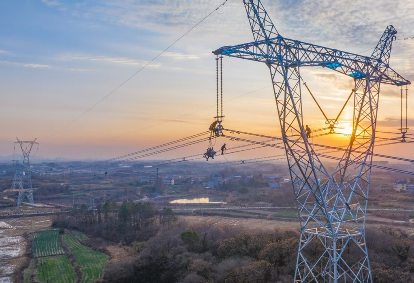
State Grid Corporation of China expects to invest 4 trillion yuan ($553 billion) in fixed assets during the 15th Five-Year Plan period (2026–2030), a 40 percent increase over the previous cycle, in order to accelerate the development of a high-quality supply chain for its new power system.

 The massive capital expenditure aims to align with China’s national climate goals, with the utility giant targeting an annual increase of around 200 gigawatts (GW) in wind and solar capacity within its operating zones.

 By 2030, the company expects non-fossil energy to account for 25 percent of total consumption, while electricity is projected to reach 35 percent of terminal energy consumption, it said.

 To support this influx of intermittent renewable energy, State Grid plans to optimize the layout of pumped-storage hydropower sites and support the large-scale development of new energy storage technologies. These measures are designed to enhance grid stability and improve the integration and consumption of green power, it said.

 The utility also intends to consolidate its west-to-east energy transmission networks.

 By accelerating the construction of Ultra-High-Voltage (UHV) direct current export channels, the company aims to boost cross-regional and cross-provincial power transmission capacity by more than 30 percent compared to levels at the end of 2025.


Article inline ad

SAMR Launches Probe Into Trip.Com Over Suspected Market Dominance Abuse

0

By Li Jiaying | China Daily | Updated: 2026-01-16

China is intensifying efforts to ensure fair competition in the platform economy and guide it toward healthy growth, as the country’s top market regulator launches an antitrust probe into a leading online travel agency.

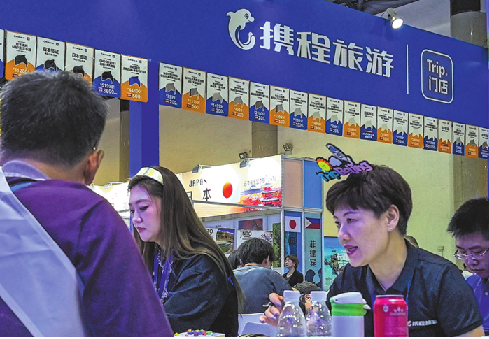
 The State Administration for Market Regulation said on Wednesday that, based on preliminary findings and in accordance with the Anti-Monopoly Law, it has opened a case to investigate suspected monopolistic conduct involving abuse of market dominance by Trip.com Group.

 “This move is a positive step to implement the Anti-Monopoly Law and safeguard fair market competition, demonstrating the country’s firm commitment to promoting the healthy development of the digital economy,” Chen Liteng, a senior analyst at the Internet Economy Institute, a domestic consultancy, told China Daily.

 The investigation is aimed at guiding platform companies toward a path of sustainable development centered on compliant operations and service innovation, Chen said.

 This, he added, helps better protect consumer rights while enabling small and medium-sized businesses to participate in market competition on a more level playing field, thereby fostering a more transparent and dynamic industry ecosystem.

 “This will not only help Trip.com improve its own governance, but also accelerate the platform economy’s shift from scale-driven expansion toward quality-oriented growth, injecting sustained momentum into high-quality development,” he said.

 In response, Trip.com Group said that it will actively cooperate with the investigation, fully implement regulatory requirements and work with industry participants to build a sustainable and well-regulated market environment.

 The group also emphasized that its businesses are operating normally and that it will continue to provide quality services to users and partners.

 The probe is in line with broader regulatory efforts targeting monopolistic practices by online platforms and strengthening the protection of legitimate market rights.

 In November, drawing on enforcement experience and sector-specific characteristics, the SAMR released a draft guideline on antitrust compliance for internet platforms. The document highlighted a slew of emerging monopoly risks in online platforms, including unfair pricing, below-cost sales, platform blocking, “either-or” arrangements, “lowest price across all platforms” requirements and discriminatory treatment.

 Following the move, three central departments jointly issued rules governing price-related conduct on internet platforms in December, prohibiting platform operators from imposing unreasonable restrictions or conditions on pricing behavior by merchants. The rules are set to take effect on April 10 this year.

 As a leading player in China’s online travel sector, Trip.com Group’s businesses span hotel bookings, air ticketing, leisure travel and corporate travel services. The group operates several well-known brands, including Ctrip, Qunar and Skyscanner, with services covering more than 200 countries and regions worldwide and over 600 cities across China.

 According to estimates by BOCOM International, the group accounted for 56 percent of gross merchandise value in China’s accommodation and travel market in 2024, far surpassing other online travel agencies such as Meituan at 13 percent, Fliggy at 8 percent and Douyin at 3 percent.

 If the alleged monopolistic conduct is confirmed, the group could face hefty fines. According to the Anti-Monopoly Law, firms found to have abused a dominant market position may be fined between 1 percent and 10 percent of their sales revenue from the previous year.

 In this regard, potential penalties could range from several hundred million yuan to several billion yuan, as Trip.com reported annual revenue of about 53.3 billion yuan ($7.65 billion) in 2024 and approximately 47 billion yuan in the first three quarters of 2025.

 The move also weighed heavily on the company’s share price. Trip.com Group’s Hong Kong-listed shares plunged 6.49 percent in late trading on Wednesday and extended losses to around 20 percent on Thursday. In the United States, the company’s shares also plummeted by more than 17 percent at Wednesday’s close.

 lijiaying@chinadaily.com.cn

Article inline ad

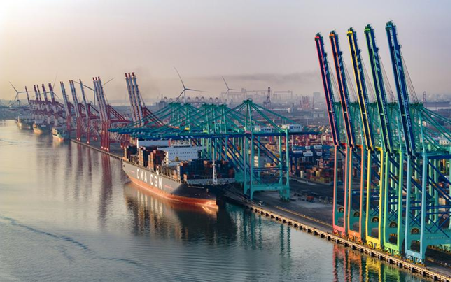
Tianjin Container Terminal Embraces AI, Green Tech

0

By YAN DONGJIE in Tianjin | China Daily | Updated: 2026-01-16

Tianjin Port’s intelligent container terminal has recently achieved fully automated and unmanned loading/unloading operations, integrating cutting-edge technologies such as Beidou navigation, 5G communications and artificial intelligence-powered transport robots.

 On Dec 25, the patented technology “alongshore fully automated container terminal handling system and its process” won the 13th Tianjin Patent Gold Award.

 Unmanned quay cranes precisely grasp containers, while AI transport robots seamlessly shuttle back and forth.

 “The digital system provides real-time mapping of production operations, making the entire process resemble a meticulously choreographed ‘digital ballet’,” said Qu Ming, deputy director of the digital transformation office and director of the big data center at Tianjin Port Group.

 “Autonomous control of core technologies is the key to Tianjin Port’s smart transformation, and we hope to leverage digital transformation as a new driver for high-quality port development,” Qu said.

 On Jan 17, 2023, Tianjin Port Group announced the completion of the world’s first fully internet of things container terminal, marking significant progress in the deep application and integration of high-tech technologies such as IoT, big data and AI at Tianjin Port.

 Yang Rong, general manager of Tianjin Port second container terminal company, said Tianjin Port runs a fully IoT-enabled container terminal which was upgraded from the previously established global first “smart zero-carbon” terminal.

 “On the wharf, wind turbines and photovoltaic panels are used to generate electricity. The wharf has truly achieved 100 percent reliance on electricity, with 100 percent of the electricity being green power, and 100 percent of the green power being self-produced and self-sufficient. This also indicates that our wharf is a green, low-carbon and energy-efficient wharf,” said Yang Jiemin, vice-president of Tianjin Port Group.

 In addition to ships docking at the port, heavy trucks for port freight transportation have also adopted new energy reliance.

 “In June 2024, the new energy heavy truck charging base jointly established by us and Tianjin Port Bulk Logistics Co was put into operation,” said He Rui, a comprehensive energy technician in the marketing department of Tianjin Binhai Electric Power Co. “With 35 high-power charging piles of 300 kilowatts each, the base can meet the daily charging needs of approximately 250 new energy heavy trucks.”

 Currently, Tianjin Port’s installed capacity of wind power, photovoltaic and other new energy sources exceeds 150 megawatts, with an annual power generation capacity of 350 million kilowatt-hours, meeting over 70 percent of Tianjin Port Group’s power production needs.

 Last year, during the hosting of the Shanghai Cooperation Organization summit, Tianjin Port efficiently completed the transshipment of trains traveling from Korgos, Xinjiang Uygur autonomous region, to Uzbekistan. The goods were transported directly to Tashkent within two weeks via containers, further facilitating the international logistics channels between Tianjin and other member states of the SCO, and injecting new impetus into the economic and trade cooperation of the SCO.

 Zhang Kan, head of Mongolia Project Business at Tianjin Port Logistics Development Co, said: “We will continue to leverage Tianjin Port’s geographical advantages to further broaden port functions and port area development, as well as to further facilitate international logistics channels between Tianjin and Central Asia.”

 Chen Yijun contributed to this story.

 yandongjie@chinadaily.com.cn

Article inline ad