Wednesday, November 25, 2026

Home Blog Page 181

China’s Finance Ministry To Issue 12.5b Yuan Of Treasury Bonds In HK

0

Xinhua | Updated: 2025-08-21

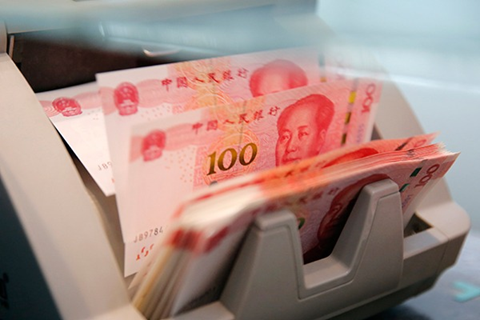
BEIJING — The Ministry of Finance on Wednesday said that it will issue 12.5 billion yuan ($1.75 billion) of renminbi-denominated treasury bonds in the Hong Kong Special Administrative Region on Aug 27.

 Specific issuance arrangements will be announced on the website of the Hong Kong Monetary Authority’s Central Moneymarkets Unit, the ministry said.

 It will be the fourth batch of such bonds issued this year. The first two batches, totaling 25 billion yuan, were issued in February and April, respectively. The third batch of 12.5 billion yuan was issued via tender in June.

Article inline ad

Country’s Green Drive Offers Lessons For Urbanization Globally

0

By ZHENG XIN | China Daily Global | Updated: 2025-08-21

China’s rapid advancements in sustainable urban development offer valuable lessons for other rapidly urbanizing regions, particularly Southeast Asia and Africa, and even developed countries seeking to enhance their green building practices, according to the World Resources Institute.

 “One key strength lies in China’s ability to implement nationwide initiatives at scale,” said Roxana Slavcheva, global lead for built environment at the WRI Ross Center for Sustainable Cities, during an exclusive interview with China Daily.

 Programs in China have accelerated the deployment of rooftop solar panels across residential and public buildings. This centralized planning approach — characterized by bulk procurement, standardized system designs, streamlined permissions, and State-led financing mechanisms — significantly lowers the cost and complexity of clean energy adoption, she said.

 This model, according to Slavcheva, is particularly valuable for countries in Africa or Southeast Asia, where public utilities have strong influence and infrastructure investment is centrally managed.

 “Countries such as Vietnam, Kenya and Indonesia could benefit from adapting China’s strategy to expand access to solar energy and energy-efficient technologies at scale,” she said.

 According to a work plan released by the government for accelerating energy conservation and carbon reduction in the buildings sector, all new buildings in Chinese cities will fully comply with green building standards by 2025, which the World Resources Institute believes is a significant milestone in the nation’s commitment to reducing carbon emissions and promoting sustainable urban development.

 This achievement is the result of two decades of continuous refinement and upgrading of green building standards, with a focus on full life-cycle management, including requirements for green building materials, it said.

 Cities like Shenzhen, Guangdong province, and Shanghai are at the forefront of this movement. Shenzhen began enforcing green building standards in 2022, while Shanghai implemented its own green building regulations in January 2025, requiring all new large public buildings to comply with the most climate-friendly three-star grade of the green building certification regime.

 According to Slavcheva, China has also made significant strides in the development and deployment of building-integrated photovoltaics.

 Beijing’s green building standards, for example, mandate BIPV for new public buildings and industrial parks. Pilot projects have showcased integrated solar facades and roofing solutions developed by Chinese companies innovating in BIPV glass, solar curtain walls and roof tiles.

 These Chinese BIPV products are increasingly entering global markets, including Europe, the Middle East and Southeast Asia, she said.

 BIPV, which makes up a major part of China’s rooftop solar power market, will have a market size of up to 40 billion yuan ($5.55 billion) this year, according to the China BIPV Association.

 China aims to equip half of its new public institutional buildings with rooftop solar panels by 2025, the National Development and Reform Commission and the National Energy Administration said in a joint statement recently. They also indicated a push to expand rooftop solar installations in rural areas and industrial parks.

 Zhong Baoshen, chairman of Longi Green Energy Technology Co, also emphasized the importance of scaling up the use of BIPV, saying it is a key approach alongside building-attached photovoltaics for expanding rooftop solar power generation.

 This integration not only generates clean energy, but also enhances the building’s design and functionality, said Zhong.

 While currently costlier than rooftop solar due to their integration into the building envelope, BIPV solutions offer versatility and durability, presenting a significant opportunity for Chinese manufacturers to expand their exports as manufacturing scales and costs decrease, he said.

 Looking ahead to China’s 2030 carbon peaking and 2060 carbon neutrality goals, Slavcheva emphasized the need for a life-cycle approach to managing carbon emissions from buildings.

 This includes focusing not only on operational energy efficiency, but also on addressing upstream emissions embedded in construction materials and the building processes, she said.

 “International collaboration will play a vital role in accelerating this transformation and a two-way exchange of experience and innovation will be especially valuable,” she said.

 “Europe offers mature experiences in integrating energy and climate goals into urban regeneration, building codes and financing models that China can adapt to its context. Conversely, China’s large-scale implementation capabilities and urbanization strategies offer valuable lessons for countries in Southeast Asia and Africa, many of which face similar urban development pressures.”

Article inline ad

China-SCO Trade Hits Record High As Cooperation Deepens

0

Xinhua | Updated: 2025-08-21

BEIJING — China’s trade volume with fellow Shanghai Cooperation Organization (SCO) members reached a record high in the first seven months of this year, data from the General Administration of Customs (GAC) showed on Wednesday.

 From January to July, China’s total imports and exports with other SCO members reached 2.11 trillion yuan ($295.58 billion), marking a 3-percent increase year-on-year, according to GAC.

 Notably, China’s trade with fellow SCO members surged 8.5 percent to 326.05 billion yuan in July, marking the highest monthly value and growth rate so far this year.

 Agricultural trade has been a bright spot. China’s exports of agricultural machinery and pesticide formulations to SCO partners jumped 47.8 percent and 30.3 percent, respectively, while its imports of their agricultural products rose 6.2 percent during the seven-month period.

 The SCO has steadily expanded and deepened cooperation across all sectors since its founding in 2001, driving intra-regional trade to successive record highs.

 In 2024 alone, China’s trade with other SCO members hit 3.65 trillion yuan, 36.3 times the level recorded when the organization was established, according to GAC data.

Article inline ad

AI Integration, Innovative Add-Ons Brighten Smart Glasses Outlook

0

By Li Jiaying | China Daily | Updated: 2025-08-20

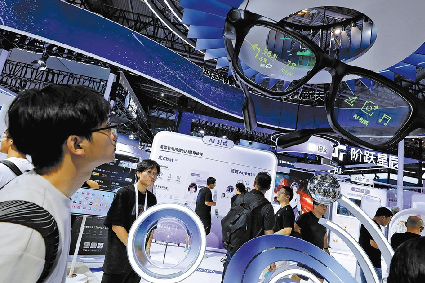
China’s smart glasses market is believed to be experiencing a breakout this year, driven by rapid adoption of artificial intelligence-powered devices and surging consumer interest, said industry experts.

 Hangzhou, Zhejiang province-based smart eyewear manufacturer Rokid announced earlier last month that the company’s star product, Rokid Glasses, has already sold 300,000 units. “Sales are no longer a concern this year — our primary focus is now on ramping up production,” said Zhu Mingming, founder and CEO of the company.

 Yang Kexiao, head of innovative hardware at Shenzhen, Guangdong province-based smart glasses producer Rayneo, also noted a strong uptick in first-half product shipments. First-time buyers accounted for 81 percent of purchases, while the company also saw a 314 percent year-on-year increase in monthly active users, Yang said.

 Elsewhere, according to activation data from tech heavyweight Xiaomi, its newly launched AI glasses, released in late June, had surpassed 30,000 active users by July 2.

 Data from market consultancy IDC revealed that 494,000 smart glasses units were shipped in China during the first quarter of 2025, a 116.1 percent year-on-year increase.

 Globally, IDC forecasts that smart glasses shipments will reach 14.52 million units this year, up 42.5 percent year-on-year. The Chinese market alone is expected to account for 2.91 million units, up 121.1 percent year-on-year.

 As a major emerging sub-sector, AI glasses now dominate the smart glasses market, with shipments of AI-powered models surging to 78 percent of total sales in the first half — a sharp rise from just 46 percent a year earlier and from 66 percent in the latter half of 2024, according to data from research company Counterpoint.

 “The most significant highlight of the smart glasses industry’s development this year lies in the deep integration of large AI models and AR (augmented reality) technology,” said Wang Liansheng, an expert at the China Electronics Standardization Association, in an earlier interview with Securities Daily.

 Wang added that the next two years will be a critical period for the commercialization of smart glasses, where ecosystem development capabilities will be a key factor determining whether companies can achieve scalable growth.

 A research note from Founder Securities also pointed out that the combination of lightweight design and multimodal interaction capabilities is making AI glasses an ideal form factor for AI integration.

 “This momentum, coupled with advancements in lens technologies, is driving simultaneous growth in both sales volume and product pricing,” it said.

 On the AI front, major players are incorporating proprietary large language models into their devices.

 For example, Xiaomi AI Glasses feature an in-house XiaoAi assistant; Huawei’s Eyewear 2 is powered by its LLM Pangu; while Rayneo’s X3 Pro has partnered with Alibaba’s Qwen for a custom multimodal AI solution.

 Others are leveraging a combination of major LLMs. Rokid Glasses currently integrate multiple models, such as Qwen, DeepSeek, Doubao and ChatGLM. And Skyworth’s first full-scenario AI smart glasses similarly support several mainstream models such as DeepSeek, Doubao and Qwen.

 Enabled by AI integration, the growing sophistication in voice and image recognition is creating richer human-machine interaction for smart glasses, said Ye Qingqing, an analyst at IDC China.

 “Going forward, AI-powered smart glasses are expected to unlock more practical and cost-effective applications,” Ye said. “For the AI ecosystem, these glasses represent a highly efficient hardware endpoint, and both industries will mutually reinforce each other’s growth.”

Article inline ad

Chinese Games Bring Culture To Global Market

0

Nation continues to hold position as world’s largest video games exporter

By WANG XIN in Shanghai | China Daily | Updated: 2025-08-20     

Chinese electronic games are continuously thriving in global markets, and are increasingly becoming carriers of culture to promote cross-cultural understanding and exchanges as a new universal language, said industry experts during the recent 22nd China Digital Entertainment Expo & Conference, better known as ChinaJoy, in Shanghai.

 By the end of June, China had a record 679 million gamers. In the first half, actual sales revenue of the domestic game market totaled 168 billion yuan ($23.3 billion), up 14.08 percent year-on-year, according to a report released on July 31 by Zhang Yijun, first vice-chairman of the China Audio-Video and Digital Publishing Association.

 Overseas sales of Chinese games exceeded $9.5 billion in the first half, growing 11.07 percent year-on-year. The United States, Japan and South Korea continued to be the main overseas markets for Chinese games, accounting for 55.63 percent of total sales. European nations such as Germany, the United Kingdom and France are becoming emerging destinations for more Chinese games, said the report.

 From a global perspective, China continued to hold the position as the world’s largest game exporter in the first half, ranking first with a share of 32.6 percent of global total, according to a report released by mobile analytics firm AppsFlyer.

 Over the past five years, Chinese games have entered the markets of more than 100 countries and regions around the world. In particular, games such as Honor of Kings and Genshin Impact have accumulated hundreds of millions of users globally, said Ao Ran, executive vice-chairman of the China Audio-Video and Digital Publishing Association.

 “China’s gaming industry has shown a positive trend toward high-quality and sustainable development in recent years, since a large number of Chinese enterprises are collaboratively creating world-class innovative video games within the global supply chain. Notably, the fine traditional Chinese culture is becoming the unique source of innovation and a differentiating advantage for Chinese games,” said Richard Yu, vice-president and editor-in-chief at Tencent Interactive Entertainment Group.

 The hit title Black Myth: Wukong, an action role-playing video game rooted in Chinese mythology, is a prime example of the worldwide appeal of Chinese video games with a strong cultural identity. Industry experts agree that games are rapidly developing beyond products for entertainment, and becoming a new cultural form integrating with advanced technologies and an important carrier of Chinese cultural aspects that keep expanding globally.

 Yu pointed out that more Chinese game producers are ramping up efforts to make high-quality original games that draw both domestic and international players. Instead of simply putting cultural elements together, they explore deep into Chinese cultural connotations and strive to interpret them in innovative, globalized and modern ways.

 “As a composite cultural carrier that integrates various art forms such as literature, music, film and fine arts, games naturally possess the potential to promote cross-cultural understanding and boast the advantage of crossing cultural boundaries. Their interactivity turns the players into ‘interpreters’ of different cultures,” Yu added.

Not only Chinese producers, but also foreign companies are eyeing opportunities in the global collaboration and cultural integration with games as a bond. Representatives of over 200 companies from nations such as Japan, South Korea, the UK, France and Finland gathered for potential partnerships at the China International Game Developers Conference, which was held on July 31 as part of this year’s ChinaJoy.

 “There were barely no really successful Chinese console and PC games 10 years ago, but recently we have seen game studios and producers instilling Chinese culture to create something different. China has a wonderful historical culture and that’s part of the creativity. In France, we are very much into culture in general, and Chinese culture is no exception — it is something that resonates a lot with us,” said Yves Blehaut, senior vice-president of strategic partnerships at Microids, a French video game publisher and developer.

 Sony Interactive Entertainment (Shanghai) Ltd and its PlayStation gaming platform are also actively looking to contribute to China’s console game ecosystems. Following the success of Black Myth: Wukong on its platform, the company is expecting to cultivate more local game developers in China and better connect the nation’s gaming industry and culture with the world. In 2016, the company established the “China Hero Project” to support Chinese console game developers, connect with global counterparts, and help them grow globally with games featuring Chinese culture.

 “China has the world’s most game users and is one of the most critical and potential markets for PlayStation. We have noticed very early the potential and passion of Chinese game developers. Collaborating with over 400 Chinese game developers and publishers, we aim to introduce good Chinese games to the world,” said Tatsuo Eguchi, chairman and president of Sony Interactive Entertainment, at the conference.

 To better navigate Chinese game developers in overseas markets, the Research and Service Center for Game Globalization was inaugurated in Shanghai at the conference. It aims to provide one-stop services such as overseas market analysis, compliance guidance, financial services, legal protection and copyright protection.

 Moreover, a first batch of guidelines targeting the Japanese, South Korean, British and French markets were also released at the event to support Chinese games’ global expansion, comprehensively covering sectors including policies, regulations, market environment, culture, customs and user preferences. More guidelines on other countries in regions such as North America, Europe, Southeast Asia and the Middle East will also be released this and next year.

 “The globalization of games ultimately involves a two-way cultural exchange. Games themselves are self-contained digital worlds where different cultures meet and spark inspiration. So while publishing Chinese games overseas, we also help introduce global cultures into China,” said Yu of Tencent Interactive Entertainment.

 “We obviously see more foreign friends and international participation at ChinaJoy this year. With games building a globalized platform, we expect to enhance exchanges, reduce barriers and accelerate integration, which will carry us all farther,” he added.

 Running from Aug 1 to 4, this year’s ChinaJoy attracted over 790 business exhibitors from 37 countries and regions including the US, Canada, UK, Germany, Japan and South Korea.

Article inline ad

From AI To Drones, Firms Deliver Industry Of Future

0

After decade of rapid growth, express courier services look to more advances, expansion

By ZHOU WENTING in Shanghai | China Daily Global | Updated: 2025-08-20     

Each day, more than 500 million parcels are collected nationwide, meaning that every second, nearly 6,000 items are shuttled into the express delivery process.

 These statistics, showing average daily operations, were released by the State Post Bureau in July, and reflect the staggering size and progress of the industry in China.

 The sector, which has maintained its position as the world’s largest express delivery market for 11 consecutive years, is another hallmark of the country’s efficiency and technological innovation, experts said.

 From 2014 to 2024, China’s express delivery volume leaped from 14 billion to a whopping 174.5 billion parcels, accompanied by a significant drop in the average delivery price from over 14 yuan ($1.95) to 8 yuan per parcel.

 Behind such colossal volume is efficient resource allocation and technological prowess, with the industry evolving from labor-intensive operations to technology-driven processes.

 “The moment a user places an order to send a parcel on his or her mobile phone, the smart system of a courier company activates a chain of automated responses, including which courier will be assigned to pick up the parcel, which outlet the parcel will go to, which vehicle it will be on, and its scheduled arrival time at various points along the route,” said Yang Qingyue, a public relations manager for delivery company ZTO Express.

 “The entire process is automated, with heavy human intervention only required at the sending and receiving ends, including interactions with the clients,” Yang said.

 Zhao Chongjiu, director of the State Post Bureau, attributed the acceleration of express deliveries in the first half of this year to the expanded use of air services and high-speed rail, and a wider application of unmanned vehicles and stations, together with artificial intelligence technologies.

 “All of this resulted in more areas being included in service circles, where customers can receive their parcels the next day,” said Zhao.

 The bureau aims to further improve the industry through intelligent sorting, encrypted transportation, real-time tracking, AI-powered anomaly detection, and the expansion of unmanned delivery stations, industry experts said.

Automated, intelligent

 At the Shanghai sorting center of YTO Express in Qingpu district on the municipality’s outskirt, Qian Yi and his colleagues deal with parcels arriving from outside the city.

 Under the scorching summer sun, conveyor belts that are part of the smart sorting system are extended into delivery trucks.

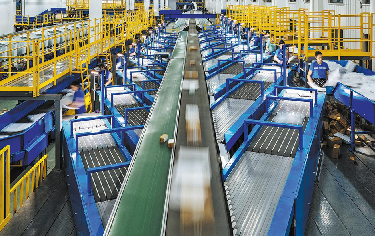
 Workers place parcels on the conveyor belts one after another, ensuring that the electronic waybills face upward. This allows the automated sorting system to scan the barcode, identify the parcel’s destination, and direct it to the correct location after it runs through a complex network of conveyor belts.

 The cross-belt sorter consists of interconnected sections, akin to train compartments, with each section processing a single parcel. As a parcel reaches its correct position, the belt shifts and guides it into a collection bag below.

 When the bags are full, workers seal them and place them on conveyor belts that carry them to trucks bound for distribution outlets.

 “The conveyor belts move at a speed that can carry 240 packages per minute, which is a dizzying speed but accurate, and requires no human intervention or secondary verification,” said Qian, the 29-year-old leader of the parcel-sorting team at the center.

 “Sorting centers were not like this a decade ago. Manual sorting used to be labor-intensive. Workers were stationed on either side of straight conveyor belts, with each person responsible for parcels destined for a district of Shanghai. They had to be swift in both their mind and hand movements,” said Qian.

Manual operations sometimes collapsed if the workload was too heavy during periods such as the “Double 11” shopping festival. “However, with the current system, the center can process up to 5 million parcels a day,” he said.

 Covering an area of roughly 2.5 standard soccer fields and equipped with five cross-belt sorters, the sorting center epitomizes the evolution of China’s express delivery industry. “Today, most industry players headquartered in Qingpu boast an average delivery time within 45 hours nationwide at a cost of just a little more than 3 yuan per parcel. There is a saying among us: ‘It costs only half a dollar to deliver a parcel nationwide’,” Qian said.

 Qingpu, the only Shanghai district connecting to both Jiangsu and Zhejiang provinces and adjacent to the Shanghai Hongqiao international transportation hub, has become home to the national and regional headquarters of many courier companies. Of every 10 courier parcels delivered nationwide, seven are handled by Qingpu-headquartered express delivery companies.

 Major players have established large technology divisions to serve as the brain of their operations. Most have automated sorting lines and remote visual management systems that connect their headquarters with business outlets nationwide.

 At the big data center of YTO Express’ national headquarters in Qingpu, a huge screen shows busy scenes at parcel-sorting centers nationwide, the status of thousands of moving trucks, as well as real-time tracking of the entire delivery process of all parcels from collection to dispatch.

Unmanned vehicles

 The integration of new technologies, such as unmanned vehicles and drones, is reshaping courier services.

 In March, a drone carrying imported goods took off from a bonded zone in Qingbaijiang district, Chengdu, Sichuan province, and landed at a ZTO Express’ parcel-sorting center in the city’s Xindu district after a 20-minute flight.

 Unmanned vehicles then took over to deliver the parcels to an outlet. ZTO Express has reported a 50 percent increase in delivery efficiency and a nearly one-third reduction in operating costs since adopting a transportation model combining drones and unmanned vehicles.

 “The use of unmanned equipment is also intended to complete the last mile of express transportation in complex road conditions, such as mountainous and rural regions. So far, about 1,000 unmanned vehicles have been put into operation across the ZTO Express network, covering more than 180 cities,” said Yang, the manager.

 Yunda Express is also rapidly introducing unmanned vehicles, with over 2,000 operating in urban communities and rural areas. In Tongxiang, Zhejiang province, the company’s local branch has deployed 30 unmanned vehicles, with each able to send up to 2,000 parcels per day, enhancing logistics efficiency and reducing costs by 30 percent compared with traditional methods.

 In Baoji, Shaanxi province, a Yunda outlet uses 10 unmanned vehicles for short distance transportation between its warehouse and a district branch. The daily delivery volume of the outlet has reached 70,000, with around 50,000 done by the unmanned vehicles.

 Yunda is also expanding its use of drones, with five drone routes already in operation. The drones are used for high-value deliveries — such as fresh food and medical supplies — in cities including Hangzhou and Jiaxing, significantly reducing delivery times and labor costs.

 The rapid progress in high-tech applications has been continuously supported by local governments eager to encourage digital technologies, such as intelligent warehousing, scheduling based on big data, and route optimization.

 Around a decade ago, when the industry faced large-scale equipment upgrades and transformation, the Qingpu district authority established a special fund to subsidize intelligent technological improvements and construction of digital platforms. It also facilitated green channels for banks and other investment and financing platforms.

 Data from the district authority showed that last year, the transportation cost of express delivery companies headquartered in Qingpu dropped to around 0.41 yuan, a year-on-year fall of 10 to 30 percent.

 “Only with such affordable logistics costs can the rise of numerous ‘Taobao villages’ in China be possible,” said Yang from ZTO.

 In 2016, Qingpu was designated as the sole national demonstration zone for the transformation and development of the express delivery industry. Three years later, the modern logistics industry became the first 100-billion-yuan industrial cluster in the district.

 However, Liu Jingjun, deputy head of Chonggu town in Qingpu, said that the volume of express deliveries is already at a high level and is unlikely to further rise significantly. The focus, therefore, will be on high-quality development and seeking productivity from technology, he said.

 “For example, technology can play a part in further reducing deliveries that go missing and increasing loading efficiency. If a vehicle can carry 10 boxes, it shouldn’t drive off with nine boxes loaded,” said Liu.

Overseas expansion

 In recent years, many leading domestic express delivery companies have decided to expand overseas. Part of the objective was to replicate China’s successful experience in developing countries.

 ZTO Express’ Yang said his company had transplanted a model similar to the one in China in some African nations and Cambodia. “Having the electronic delivery waybills with a barcode was a major shift for them. Machine recognition and the corresponding automated sorting only become possible when handwritten waybills are not in use anymore,” he said.

 Courier company J&T Express has also been pushing its presence in Southeast Asia, the Middle East, North Africa, and Latin America. Its express network now covers 13 countries.

 In Southeast Asia, the company has maintained the top market share in the express delivery sector for five consecutive years. In the second quarter of this year, it reported year-on-year growth of nearly 66 percent in parcel volume, with a daily average parcel volume of 18.5 million. In emerging markets, including the Middle East, North Africa, and South America, parcel volume increased by 23.7 percent year-on-year to 89.4 million daily.

 Meanwhile, YTO Express has opened more than 150 airfreight routes worldwide, and established overseas end-to-end delivery capabilities in more than 10 countries and regions.

 In June 2024, the company joined hands with Kazakhstan’s national postal service to launch cross-border express services between the countries. They also established a joint venture to start building a parcel-sorting center in Almaty.

 This facility will not only serve as an overseas warehouse for YTO to launch into the Central Asian market, but also develop into a trade center integrating functions, such as bonded warehousing, exhibitions, and commodity trading, said the company.

 Another landmark for YTO is a cargo airport in Jiaxing city, Zhejiang province, positioned as a global aviation logistics hub, which will begin operations this year.


Jiang Ze, director of media affairs at the company, said the project covers 1 square kilometers, and will integrate airfreight and intelligent warehousing. “The airport will make sure that Chinese goods reach Europe and the United States in a little more than 10 hours, supporting the realization of YTO’s vision of buying and selling globally,” Jiang said.

 Yunda Express is also helping cross-border e-commerce enterprises establish international logistics in important overseas markets, providing services such as warehouse management and system development.

 Yunda, for example, has achieved a single express waybill from China to South Korea. The company has also established direct service networks in Seoul, Incheon, and Busan, capable of stocking and moving 300,000 parcels a day, said Guo Pengcheng, the company’s head of media affairs.

 “Chinese products enter Yunda’s overseas warehouse in South Korea in advance, which allows buyers to get their parcels within two to three days after they place orders,” Guo said.

 The courier industry sees the upgrade from express operators to supply chain integrators as the next major growth point.

 In June, YTO’s international supply chain reached a cooperation agreement on cross-border supply chain service with Chinese tech company Xiaomi Group, becoming its supply chain logistics service provider.

 Under the agreement, YTO will provide one-stop, end-to-end logistics supply chain services for Xiaomi electronic components exported to the South Asian market.

 zhouwenting@chinadaily.com.cn

Article inline ad

White House Launches Official Tiktok Account

0

Updated: 2025-08-20

The White House launched an official TikTok account on Tuesday, taking advantage of the short video app’s more than 170 million US users to spread the messages of President Donald Trump.

 The new account, @whitehouse, went live on Tuesday evening.

 Trump has a soft spot for the popular app, crediting it with helping him gain support among young voters when he defeated Democrat Kamala Harris in the November 2024 presidential election.

 The TikTok account Trump used for his presidential campaign last year, @realdonaldtrump, has more than 15 million followers.

Article inline ad

Hexagon To Build Smart Park In Shenzhen

0

By Fan Feifei | China Daily | Updated: 2025-08-20

Swedish technology company Hexagon will continue to step up investment in China and seize the immense opportunities presented by the country’s sharpened focus on bolstering digital transformation and industrial innovation, said a senior executive of the company.

 The company has complete research and development, manufacturing and supply chain systems in the Chinese market, said Li Hongquan, vice-president of Hexagon global and president of Hexagon China, adding that the country is the company’s biggest single market, with revenue accounting for about 20 percent of its global total.

 Li Hongquan

As a leading global provider of information technology solutions, the company has contributed to China’s industrialization and the high-quality development of its manufacturing sector, while integrating sensors, digital twin and virtual simulation technologies with artificial intelligence, Li said.

 According to Li, the company will build an intelligent industrial park covering the R&D of humanoid robots, AI and manufacturing in Shenzhen, Guangdong province, with construction expected to begin in the third quarter of this year.

 It will invest more in localized R&D, accelerate the localization of high-end measurement equipment and industrial software in China and provide tailor-made solutions in accordance with the demands of Chinese clients.

 According to him, China’s emphasis on the development of new quality productive forces and digital transformation, as well as technological revolution brought about by AI and the pursuit of green and sustainable development offer the company many new opportunities.

 Li said that currently the company serves more than 40,000 Chinese enterprises in fields such as aerospace, shipbuilding and high-end equipment. It has established an intelligent manufacturing research institute and five R&D centers nationwide, and invested heavily in the R&D of innovative technologies.

 China is at the global forefront of manufacturing, new electric vehicles and humanoid robots, with a solid manufacturing foundation and well-educated engineers, Li said, adding he is bullish on the prospects of the growth potential from the Chinese market.

 Hexagon has launched its first humanoid robot, which could be applied into a wide range of industrial scenarios, such as automotive, aerospace, transportation, warehousing and logistics.

 “China boasts the world’s most complete industrial chain and is the largest application market, which is crucial for the development and implementation of humanoid robots.” Li said the company will increase inputs in the humanoid robots field and seek more cooperation opportunities with local partners.

 China ranked as the world’s largest manufacturer for the 15th consecutive year in 2024, and its manufacturing output accounted for about 30 percent of the global total, according to the Ministry of Industry and Information Technology.

 Zhou Mi, a senior researcher at the Chinese Academy of International Trade and Economic Cooperation, said that China has not only lowered the threshold for foreign investment, but also introduced favorable policies for key industries as well as R&D and innovation, in order to guide and support foreign capital to flow into the high-tech sector.

 Chinese enterprises could learn advanced technologies and management experience from their foreign counterparts and improve innovation capacity and competitiveness, thereby injecting impetus into economic transformation and upgrading, Zhou said, adding that the increase in foreign investment in China’s high-tech industry will yield positive returns for both sides.

 A total of 30,014 foreign-invested enterprises were newly established in the Chinese mainland in the first six months this year, representing a year-on-year growth of 11.7 percent, according to the Ministry of Commerce.

 The actual use of foreign direct investment in high-tech sectors reached 127.87 billion yuan ($17.8 billion), with FDI in the aerospace equipment manufacturing sector and medical instrument manufacturing sector growing by 36.2 percent and 17.7 percent, respectively.

 “Foreign enterprises have been, and will hopefully remain, a key contributor to the Chinese industrial modernization drive,” said Denis Depoux, global managing director at management consultancy Roland Berger.

 China is committed to further opening up its services sector. Along with this transformation, there are plenty of opportunities for international collaboration, investment and joint development, he added.

Article inline ad

Resilient Economy Key To Stable RMB

0

US market weighed down by rates, trade frictions; policies helping at home

By Jiang Xueqing | China Daily | Updated: 2025-08-20

The Chinese yuan has strengthened steadily against the US dollar this year, with the offshore yuan gaining over 2 percent year-to-date.

 Economists attribute the increase to both external and domestic drivers. Globally, the US economy has been weighed down by high interest rates and trade policy uncertainties, weakening the dollar index. Meanwhile, domestically, China’s resilient economic fundamentals, continued policy support, and more flexible exchange rate management have bolstered the renminbi.

 As of 4:30 pm on Tuesday, the offshore yuan, according to Wind Info, stood at 7.1857 per US dollar, up more than 2 percent since the start of the year.

 Wen Bin, chief economist at China Minsheng Bank, said, “Washington’s new tax cuts and spending law, coupled with a downgrade of US sovereign credit rating, have heightened concerns over the sustainability of US fiscal policy, lending support to the yuan’s appreciation against the dollar.”

 At home, China has continued to roll out countercyclical, growth-stabilizing measures. With relatively steady economic data, advances in technological innovation and industrial upgrading, steps to curb “involution-style” competition that help stabilize prices, and recovering risk appetite in financial markets have all provided a firmer footing for the currency, Wen said.

 Duan Chao, chief macro analyst at Industrial Securities, said China’s economy has shown notable resilience this year. Despite tariff-related headwinds from the United States, exports grew 7.2 percent year-on-year in the first half. He argued that China’s commitment to high-quality development helps counter external uncertainties and contributes stability to global growth — a foundation for a stable yuan that is likely to persist.

 Duan added that China’s economic resilience has kept the yuan steadier than the dollar, while policies introduced after US President Donald Trump’s return to the White House have created major uncertainties, denting confidence in holding US assets over the long term.

 The US dollar closed the first half of 2025 with its steepest drop since 1973, as the dollar index, which measures the greenback against a basket of currencies of the US’s key trading partners, slid about 11 percent during the first six months.

 While the currency rebounded 3.2 percent in July, recovering part of its losses, Morgan Stanley Research forecast further weakness, warning of an additional 10 percent decline by the end of 2026.

 The downturn was fueled by April’s tariff announcements and the resulting policy and economic uncertainties, compounded by mounting concerns over growth, inflation and public debt.

 With the delayed effects of tariffs on growth and jobs, coupled with ongoing policy risks, downward pressure on the dollar is expected to persist. Foreign investors have also increased hedging on currency exposure to US assets, a move Morgan Stanley said will likely deepen the dollar’s slide.

 In contrast, during this period, the steady performance of China’s economy provided strong support for the yuan exchange rate. Accelerated cross-border capital inflows and increased holdings of yuan assets also boosted the currency, said Wang Youxin, a senior researcher at a research institute backed by Bank of China.

 China’s central bank released its monetary policy implementation report for the second quarter of 2025 on Friday.

 The report reaffirmed the need to pursue a managed floating exchange rate regime based on market supply and demand with reference to a basket of currencies. It stressed upholding the decisive role of the market in the formation of the exchange rate, enhancing the resilience of the foreign exchange market, stabilizing expectations, firmly correcting pro-cyclical behavior, addressing any conduct that disrupts market order, and guarding against the risk of exchange rate overshooting, so as to keep the yuan exchange rate basically stable at an adaptive and equilibrium level.

 A research note from China Galaxy Securities pointed out that the central bank’s remarks once again sent a policy signal of its commitment to maintaining basic stability in the currency market, helping guide market expectations and providing a proactive response to the potential rise in global financial market uncertainties.

Article inline ad

New Frontier Projects Landed In Shanghai’s Lin-Gang

0

By SHI JING in Shanghai | chinadaily.com.cn | Updated: 2025-08-19

Six major frontier projects were newly landed in Shanghai’s Lin-gang New Area on Tuesday, when this part of the China (Shanghai) Pilot Free Trade Zone celebrated its sixth anniversary.

 With combined investment value exceeding 40 billion yuan ($5.57 billion), the six projects included the three-dimensional chip integration project of SJ Semiconductor (Jiangyin) Corp, the heavy gas turbine project of China United Gas Turbine Technology Ltd (CUGT), a brain-computer interface verification platform project, an underwater robot project, and the integrated circuit equipment research and development production base of Leuven Instruments.

 As local officials explained, SJ Semiconductor’s project can strengthen Lin-gang’s competitiveness in high-end advanced IC packaging. Leuven’s project is of much significance in terms of promoting the strategic positioning of Lin-gang, and Shanghai in general, in terms of IC equipment, as it can improve the independence and self-control regarding photolithography auxiliary devices.

 CUGT, with its headquarters located in Lin-gang, has expanded its presence in the area via the new project, which is inseparable from the facilitation services provided by the local government to key companies, according to local officials.

 In the first half of this year, Lin-gang attracted 85 billion yuan of investment for frontier industries, among which 90 percent was directed to the area’s key industry pillars. The majority, 61.2 billion yuan of investment, was contributed by the 56 newly attracted projects. Companies already operating in Lin-gang made 29 re-investment projects in the area in the first six months, with the total investment value approaching 23.9 billion yuan.

 IC, civil aviation, high-end equipment, smart vehicles, and digital economy will be the major areas where Lin-gang will devote more efforts to complete the industrial ecosystem and attract more industry big players, said local officials at the new project launching ceremony on Tuesday.

Article inline ad