Wednesday, November 25, 2026

Home Blog Page 182

Cathay Group Vows More Investment On Mainland; To Expand Staff Group

0

By ZHU WENQIAN | China Daily | Updated: 2025-08-19

Hong Kong-based Cathay Group said it would continue to increase investment in the Chinese mainland, a highly important market, and hire more flight attendants and pilots from the Chinese mainland to meet growing travel demand.

By the end of this year, Cathay Pacific Airways plans to raise the total number of staff members in the Chinese mainland to 4,000 from more than 3,000 currently. In Shenzhen and Guangzhou of Guangdong province, the company has two offices that focus on the technology side of the business and it hopes to soon expand these teams to about 200 people in total.

So far this year, Cathay Group has launched 19 new stops globally from Hong Kong, including four operated by Cathay Pacific in Chinese mainland cities, such as Urumqi in the Xinjiang Uygur autonomous region. In addition, the group’s low-cost carrier HK Express launched flights connecting Hong Kong with Yiwu, Zhejiang province; Changzhou, Jiangsu province; and Guiyang, Guizhou province.

Cathay Pacific currently operates four round-trip flights per week connecting Hong Kong with Urumqi, and it hopes to lift the frequency to daily flights if the schedule permits. The business performance in both directions has been good, and many world travelers transfer in Hong Kong before they arrive in Urumqi.

Ronald Lam, chief executive officer of Cathay Group, said the group will consider launching more flights connecting Hong Kong with major cities, and second- and third-tier cities in the Chinese mainland.

Meanwhile, as part of its continued investment in the Chinese mainland, Cathay Pacific officially launched its redesigned flagship lounge at Beijing Capital International Airport on Friday.

This comes as part of the group’s over HK$100 billion ($12.79 billion) investment plan into fleet, cabin products, lounges and digital innovations. The investment is for the seven-year period since last year, it said.

Beijing’s air travel market has seen rapid growth so far this year, thanks to multiple favorable policies that facilitate personnel exchanges. On Aug 6, the number of international and regional passenger trips handled at Beijing Capital International Airport exceeded 10 million, with the milestone being reached 30 days earlier than last year. The airport is expected to handle 17 million international and regional visits throughout the year, it projected.

“We are incredibly excited to reopen the doors of our latest flagship Beijing lounge. The redesigned lounge complements Cathay Pacific’s seven daily return flights between Hong Kong and Beijing this summer,” Lam said.

“As a group, we continue to expand our network in the Chinese mainland, operating more than 300 return flights per week to 23 destinations during the summer peak. We remain committed to providing customers with a seamless travel experience through our Hong Kong hub,” he said.

Besides Beijing, Cathay Pacific also operates two other lounges in the Chinese mainland — an airport lounge at Shanghai Pudong International Airport, and its first ferry port lounge at the Shekou Cruise Homeport in Shenzhen for intermodal travelers. Next, the airline plans to launch new flagship lounges in Hong Kong and for the first time in New York in the first quarter of next year.

The group recently posted solid interim results. In the first half of this year, it netted a profit of HK$3.7 billion, similar to the same period of last year. The group also announced plans to order 14 new Boeing 777-9 aircraft to support the expansion of its flight network.

Chinese mainland travelers have shown a growing interest in visiting Hong Kong. In the first seven months of this year, Hong Kong received a total of more than 28 million passenger trips. Among which, over 21.3 million visits came from the Chinese mainland, up 10 percent year-on-year, according to the Hong Kong Tourism Board.

zhuwenqian@chinadaily.com.cn


Article inline ad

CSSC To Boost Shipbuilding Clout With A Mega Merger

0

Shipbuilder to be world’s largest by assets following union with CSIC

By ZHONG NAN | China Daily | Updated: 2025-08-19

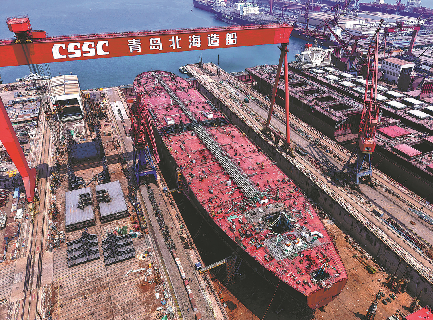
The long-anticipated share-swap merger between China CSSC Holdings Ltd (CSSC) and China Shipbuilding Industry Co (CSIC) will make CSSC the world’s largest listed shipbuilder by assets and revenue, said market watchers on Monday.

CSSC and CSIC, both State-owned enterprises, were merged into China State Shipbuilding Corp Ltd in 2019. The two firms halted trading of their A-shares last week, a further step of integration following their joint restructuring.

Approved by the China Securities Regulatory Commission, the country’s stock market regulator, CSSC will issue new A shares to all CSIC shareholders in exchange for their existing stakes, making it the largest absorption merger in the history of China’s A-share market.

Based on 2024 financial data estimates, CSSC will have total assets exceeding 400 billion yuan ($55.7 billion) and revenue surpassing 130 billion yuan, after this share-swap merger, ranking the largest of its kind globally in terms of asset size, revenue scale and order backlog.

Once the deal is completed, CSSC’s operating costs are expected to fall by 8 to 10 percent, while its market share in high-end ship types such as liquefied natural gas carriers and mega container ships is likely to increase further, with its valuation expected to rise, said a study released by CITIC Securities.

China’s shipbuilding industry, after this share-swap merger, will see an optimized industrial layout, with unified coordination and management of shipyards and more rational allocation of resources, said Ding Rijia, a professor of industrial economy at China University of Mining and Technology-Beijing.

Even though CSSC and CSIC merged into one group in 2019, their subsidiaries still have overlapping businesses in areas such as building commercial vessels, ship repair and conversion, and the issue of intra-industry competition has yet to be fully resolved.

“This move will help their shipyards develop competitive advantages in building various ship types, while enhancing overall capabilities in high-end vessel manufacturing,” said Ding.

Xu Kai, a researcher specializing in shipping operations at Shanghai Maritime University, said that in the future, CSSC will be able to integrate high-quality assets from CSIC, including Dalian Shipbuilding Industry Co and Wuchang Shipbuilding Industry Group Co, and combine their strengths in research, design and manufacturing to drive synergies and optimization in shipbuilding, repair and support businesses.

Xu said that China’s shipbuilding industry has steadily advanced the development of green and high value-added vessels, strengthened the resilience of its internal supply chains, and leveraged mergers to create synergistic growth in recent years.

In the first half, China’s shipbuilding completions, new orders and order backlog accounted for 51.7 percent, 68.3 percent and 64.9 percent of the global market share, respectively, said the Beijing-based China Association of the National Shipbuilding Industry.

From January to June, Chinese shipyards exported $24.5 billion worth of vessels, including container ships, bulk carriers, chemical and oil tankers, heavy-lift vessels and vehicle carriers, surging 18.6 percent year-on-year, said the General Administration of Customs.

CSSC Chengxi Shipyard Co, a subsidiary of China State Shipbuilding Corp Ltd, is ramping up production as it works through orders booked until 2029 amid growing demand for high-tech vessels.

The Jiangyin, Jiangsu province-based shipyard saw its export value jump more than 20 percent on a yearly basis to $704 million in the first six months, said Nanjing Customs.

Wang Qing, the company’s deputy operations director, said the company has delivered seven bulk carriers with greener, smarter in-house solutions this year, highlighting advanced environmental technologies, high performance, large capacity and strong adaptability. These ships have gained strong recognition in international markets.

“Both the main and auxiliary engines are equipped with denitrification systems, enabling them to meet the latest emission requirements set by the International Maritime Organization, making them highly popular in European markets and Australia,” said Wang.

Article inline ad

Monetary Easing To Persist In Near Term

0

Analysts: PBOC move on idle capital to ensure funds flow into real economy

By ZHOU LANXU | CHINA DAILY | Updated: 2025-08-19

China’s monetary conditions are likely to remain reasonably accommodative in the coming months, continuing to support credit expansion while contributing to steadier capital market expectations, analysts said on Monday.

They said that the focus of the People’s Bank of China, the country’s central bank, on preventing idle capital circulation should not be seen as an effort to cool the recent stock market rally, but rather as a move to ensure funds flow into the real economy instead of idling within the banking system.

Nevertheless, they noted that near-term cuts in the reserve requirement ratio — the proportion of deposits banks must keep as reserves — or interest rates appear unlikely given the recent pickup in China’s core inflation, with any new significant easing moves likely to depend on economic data and may potentially occur in the fourth quarter.

Li Chao, chief economist at Zheshang Securities, said monetary policy is likely to remain moderately accommodative rather than shift toward tightening in the coming months.

Li said that as external shocks linger and domestic structural challenges persist — including insufficient demand and excessive competition on the supply side — a moderately accommodative policy is needed to offset the downward economic pressures, with further cuts in the RRR and interest rates possible this year.

The PBOC pledged in its second-quarter monetary policy report on Friday that it will strive for better implementation of the moderately loose monetary policy, maintain abundant liquidity, help maintain price levels at a reasonable range and promote a decline in overall social financing costs.

Meanwhile, the report pointed to the need to enhance the efficiency of fund utilization, prevent idle capital circulation and strike a proper balance between supporting the real economy and maintaining the financial sector’s own soundness.

Yang Fan, chief macro and policy analyst at CITIC Securities, said the central bank’s emphasis on preventing the circulation of idle capital highlights its focus on curbing the use of low-interest loans for nonproductive purposes such as redepositing into higher-yield deposits or buying wealth management products, rather than tightening credit to reduce leverage in the financial system.

A report from Chasing International Economic Institute said the sign that some households have reallocated funds from deposits into stocks — shifting away some wealth management products that idle capital may circulate in — is something policymakers would likely welcome as it channels capital more directly into the real economy.

Data from the central bank showed that deposits at nonbank financial institutions — such as securities firms and insurance companies — rose by 2.14 trillion yuan ($298.17 billion) in July. The increment was 1.39 trillion yuan higher than the same period last year, which experts said pointed to an accelerated flow of money into the stock market.

The report added that the possibility of the PBOC cutting the RRR and interest rates later this year cannot be ruled out amid the rising likelihood of the US Federal Reserve restarting rate cuts.

Markets are awaiting US Fed Chair Jerome Powell’s monetary policy outlook message this week at the Jackson Hole Economic Policy Symposium, especially on whether the Fed is poised to cut interest rates in September.

Wang Qing, chief macroeconomic analyst at Golden Credit Rating International, however, said the near-term probability of an RRR cut is low, given that the economy has performed well in the first half.

“The central bank is more likely to rely on tools such as the medium-term lending facility and outright repos to keep market liquidity ample,” Wang said.

Article inline ad

A-Share Market Surges Past 100 Trillion Yuan Milestone

0

By  SHI JING in Shanghai and  ZHOU LANXU in Beijing | chinadaily.com.cn | Updated: 2025-08-18

China’s A-share market surged to a fresh milestone on Monday, with total market capitalization exceeding 100 trillion yuan ($14 trillion), buoyed by robust trading activity, improving investor sentiment and sustained capital inflows.

Analysts said that the rally may extend further amid accelerating reform measures by policymakers to improve returns to investors, the country’s accelerated economic transformation and a more favorable external environment.

While the benchmark Shanghai Composite Index closed 0.85 percent higher on Monday, at one point in early trading hours it stood at 3,741.29 points, the highest level in 10 years. The BSE 50, which tracks innovative small and medium-sized enterprises at the Beijing Stock Exchange, jumped 6.79 percent to close at a historical high.

According to experts at Guotai Haitong Securities, A-share indexes are likely to refresh the current records amid institutional changes taking place in the Chinese capital market, which should not be overlooked.

Regulators’ emphasis on improving returns to investors has changed people’s understanding of Chinese assets and lowered their risk appraisal for the stock market. China’s accelerated economic transformation, the lowered risk-free interest rates and the capital market reform will serve as the cornerstones of a bullish Chinese stock market, they said.

Data from the People’s Bank of China, the country’s central bank, showed that China has made progress in improving the capital market’s function in facilitating financing to the real economy.

The proportion of direct financing — including corporate bonds, government bonds and domestic stocks of nonfinancial enterprises — in the country’s outstanding aggregate social financing has increased from 26.7 percent at the end of 2018 to 31.1 percent by the end of June this year, the PBOC said.

The continued flow of active capital from individuals, margin trading and equity is another driving force of the slow bull recently seen in the A-share market, said Chen Gang, chief strategist at Soochow Securities.

This trend is likely to carry on as long-term investors such as insurance companies and foreign institutions will increase their A-share market exposure in the following months, he said.

Qin Peijing, chief strategist at CITIC Securities, said that A-share listed companies in the resource sector, as well as innovative drugs, artificial intelligence, games and defense, may benefit the most in anticipation of more capital inflows. Market expectations are high that the US Federal Reserve will adopt a 25-basis-point rate cut in September, directing more capital to Asia.

More individuals have entered the A-share market. The 71-percent year-on-year spike in the number of newly opened A-share accounts in July, and the 39-percent monthly increase in capital inflows contributed by individual investors, have shown individuals’ strong willingness to be part of the A-share market, said Song Xuetao, chief economist at Sinolink Securities.

He Kang, chief strategy analyst at Huatai Securities, said that households’ demand deposits will serve as one major source of capital flowing into the A-share market if continued wealth can be created by the stock market.

He also highlighted the greater importance that foreign investors attach to Chinese assets. Trading made by foreign investors via the stock connect program linking the Shanghai, Shenzhen and Hong Kong bourses accounted for 12.9 percent of all the A-share trading during the week ending on Friday.

Experts from JP Morgan Asset Management said this is mainly because of the strong performance of Chinese equities from a global perspective. The MSCI China Index has gained 26.9 percent so far this year, while the Hang Seng China Enterprises Index was up 25.2 percent, both overtaking the S&P 500. The profitability of MSCI China constituents may approach 12 percent in 2026, they said.

Contact the writers at shijing@chinadaily.com.cn

Article inline ad

Global Buyers Flock To South China’s Dongguan For Creative Manufacturing

0

GUANGZHOU – Under the scorching sun of summer, a group of international buyers from over 20 countries, including Denmark, Germany, the United States, Japan and Australia, recently gathered in Dongguan, South China’s Guangdong province.

These representatives, selected by the China Foreign Trade Center from among the leading buyers at the Canton Fair, came for a special tour of Dongguan’s upgraded export bases, which feature trendy toys, designer furniture and next-generation electronics.

Michael Jensen, buyer from Denmark’s F&H Group, was on a mission to find a toy factory with ample production capacity to manufacture products under his company’s IP.

China is one of the world’s largest markets and production bases for trendy toys, so it hopes to find potential suppliers to expand its production capacity and tap into more markets.

Dongguan stands out for its large-scale production and high-quality products. Moreover, a single company here can cover most product categories in the industry, which is truly impressive, according to Jensen.

In Dongguan’s “trendy-toy town” of Shipai that they toured, the entire value chain – from sketching and prototyping to mass production, logistics and sales – is all accessible within a 15-minute car ride.

Clustered here are some 4,000 toy makers and 1,500 supporting firms, a concentration that gives Dongguan one quarter of the world’s anime-derivative output and 85 percent of China’s designer-toy market share.

Phone raised and back bent, Colombian buyer Gamboa Alejandro leaned in to film the production details, exchanging halting Mandarin phrases while jotting down specifications. A thick stack of product brochures already filled his arms, and with links to several factories now in place, he plans to firm up purchase orders within the next few weeks in Shipai township and lock in deals as soon as possible.

“My clients want a complete set of Sonic the Hedgehog figurines, as well as a factory that can produce large-scale robot sculptures. I’ve traveled to many cities and finally found promising companies here in Dongguan,” Alejandro said.

Dongguan has evolved from simple contract manufacturing to a hub of end-to-end creativity. AI-powered pattern centers sketch new characters, smart factories 3D-print prototypes, and logistics corridors swiftly ship finished products to global shelves.

As a traditional manufacturing powerhouse in south China, Dongguan is now firmly shifting towards creative manufacturing.

The 15th China International Animation Copyright Fair held in the city from Aug 8 to 11 drew close to 100,000 visitors and generated intended contracts worth 1.56 billion yuan ($220 million), including multiple large-amount export deals.

Among the headline signings, Russian firm Fenix Limited Liability Company placed a 108-million-yuan order for AI-enabled toys that can “walk, talk and accompany” children. At the same time, a Japanese distributor sealed a near-100-million-yuan agreement with Guangdong Weisi Trendy Toy Intelligent Manufacturing Co Ltd after touring the local industry chains.

“This is our eighth fair, but the most rewarding yet,” said Li Wenbo, general manager of Guangdong Weisi Trendy Toy Intelligent Manufacturing Co Ltd. “The client arrived skeptical. One look at the integrated chain and product quality, and the client signed on the spot. Chinese trendy toys have become international top-tier products.”

The recent Dongguan tour is only the opening act of the city’s foreign trade promotion season. Between August and October, the city will host no fewer than 30 match-making events to connect global buyers with local suppliers.

Zhang Sihong, deputy director of the China Foreign Trade Center, said that despite the current complex and changing foreign trade environment, this event aims to bring real purchasing needs directly to the doorstep of enterprises, creating a “fast lane” for precise supply and demand matching.

“All the suppliers are also package users of the Canton Fair online platform, enjoying services such as precise matching, information display and data reports, making it easier to seize global orders,” Zhang added.


Article inline ad

Guangzhou Signals Strong Business Confidence With Over 4m Market Entities

0

By Zheng Caixiong in Guangzhou | chinadaily.com.cn | Updated: 2025-08-18

The number of market entities in Guangzhou, the capital of Guangdong province, exceeded four million by the end of Friday, ranking third among Chinese cities.

It is not only a digital leap, but also a “vote of confidence” cast by domestic and foreign investors on the business environment and market prospects in the province, according to a statement released by the Guangzhou Administration for Market Regulation on Monday.

“It marks a new stage in the development of market entities in the southern metropolis,” said the statement.

With the continuous optimization of the investment environment and the improvement of services, foreign-funded companies have continued to settle down in Guangzhou in recent years, according to the statement.

Foreign-funded enterprises have maintained a steady growth rate of 15 percent, with capital from the United States, Japan, South Korea, Hong Kong, and Macao accelerating their layout in the city, it said.

High-quality global factor resources continue to favor and invest in Guangzhou, the statement said.

Meanwhile, Guangzhou’s emerging strategic industry market entities are flourishing, enhancing the city’s new quality productive forces. Among them, the biopharmaceutical and health industry market entities reached 503,500, a year-on-year increase of 10.05 percent.

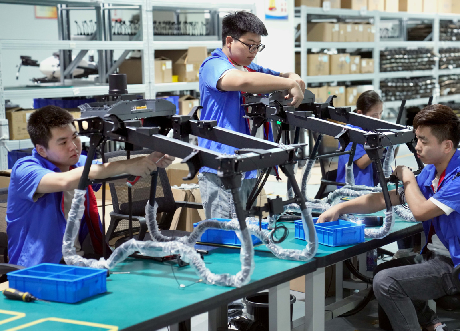
Market entities involving intelligent equipment and the robot industry hit 392,700, a year-on-year increase of 15.3 percent, while the figure in the software and internet industries came to 343,600, up 16.38 percent year-on-year.

The growth rates of newly registered market entities in the low altitude economy and aerospace industry, along with the artificial intelligence industry, reached 156.48 percent and 89.82 percent, respectively, said the statement.

The growth rates of newly registered market entities in the future industries of future networks and quantum technology, as well as deep sea and deep space industries, reached 179.10 percent and 143.01 percent, respectively, it added.

Article inline ad

China Showcases Robotics Might At Robot Conference

0

Event attended by 50 humanoid robot manufacturers to unveil latest models

By MA SI | China Daily | Updated: 2025-08-18

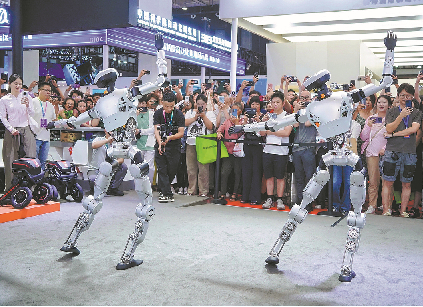
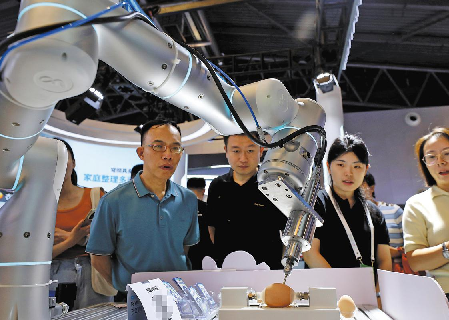
Forget static displays. At the 2025 World Robot Conference held in Beijing earlier this month, robots traded blows in boxing rings, strategized over games of Gomoku, and meticulously demonstrated intangible cultural heritage crafts. These weren’t distant concepts, but dynamic, interactive machines accelerating their integration into the fabric of daily life.

The event served as a powerful testament to China’s surging robotics prowess, showcasing a future where humanoids play an increasingly important role in daily life and work.

The scale was staggering — a record-breaking 50 humanoid robot manufacturers unveiled their latest models and solutions at the conference.

China’s ambition is underpinned by solid progress. A KPMG report revealed that China leads the world with nearly 6,000 humanoid robot patent filings in the past five years.

Investment has skyrocketed, with industry financing soaring to 7.23 billion yuan ($1 billion) in 2024 from 1.58 billion yuan in 2020 — a blistering 35.6 percent compound annual growth rate.

The growth has just begun and exponential growth is yet to come, experts said, emphasizing a pivotal shift: advanced technologies like high-precision force control sensing are no longer optional luxuries, but essential foundations.

“This sense of touch is fundamental,” said Liu Wuyue, founder of Link-touch, a Chinese startup, underscoring the critical role of force sensors. “Without them, delicate operations are nearly impossible and physical interaction is core.”

His company is breaking barriers in specialized six-dimensional force sensors for humanoids through innovations in elastomer design, high-response embedded circuits and advanced algorithms. “This technology fundamentally determines whether a robot remains a crude machine or becomes capable of performing truly ‘fine work’,” he explained, highlighting the quest for human-like dexterity.

Liu sees China as being uniquely positioned to lead in component development, citing massive customer demand, unparalleled supply chain advantages and fertile innovation ecosystems. The astonishing pace — “send drawings in the morning, receive parts by evening” — drastically lowers development costs, accelerating breakthroughs, Liu said.

Beyond mechanics, the emotional connection emerges as the next frontier. “In high-interaction scenarios like elderly care, education and reception, robots with superior emotional expression offer warmer, personalized and more acceptable services,” said Cao Rongyun, founder of AnyWit Robotics, a startup based in Hefei, Anhui province. He sees expressive interaction as key to boosting maturity and adoption. “Integrating facial expressions and micro-expressions will revolutionize human-robot interaction.”

Meanwhile, AgiBot, China’s most-valued embodied intelligence startup, is ramping up efforts to explore overseas markets, according to Yao Maoqing, a partner at AgiBot and president of its embodied intelligence business unit.

AgiBot is valued at 15 billion yuan and operates Shanghai’s first dedicated mass-production facility for humanoid robots.

“We are now deploying strategically in North America, Europe, the Middle East, Japan, South Korea and Southeast Asia,” Yao said. “Our strategy relies on localization through deep partnerships with local players, enabling us to achieve genuine globalization.”

Yao said AgiBot began product deliveries to overseas customers earlier this year.

Drawing a parallel with historical industry trends, he said: “We’ve consistently observed across numerous sectors that products, which successfully emerge from China’s intensely competitive domestic environment, often achieve rapid expansion internationally. This proven dynamic is a key strategic focus area for AgiBot.”

masi@chinadaily.com.cn


Article inline ad

Robot Form Not Key For Cost-Effective Business Solutions

0

By Ma Si | China Daily | Updated: 2025-08-18

The dazzling acrobatics of humanoid robots racing, kicking footballs and sparring dominated the recent World Robot Conference. Over 50 companies showcased their bipedal marvels, transforming the event into a veritable “World Humanoid Robot Carnival”.

Yet, amid this sensory overload, a crucial reality check emerged: the relentless focus on humanlike form risks overshadowing a fundamental question — do these robots deliver genuine, cost-effective solutions for business?

Jeff Burnstein, president of the Association for Advancing Automation in the United States, said during a forum at the conference: “Commercial users only care about solutions. They don’t care if it’s a humanoid, a mobile robot, a collaborative robot, an industrial robot, or even if it’s a robot at all. They need a tool that gets the job done quickly, efficiently, accurately and affordably.”

This cuts to the core of the industry’s current dilemma. While the spectacle of humanoids captures headlines and public imagination, their path to widespread commercial adoption remains fraught with uncertainty.

Burnstein’s caution extends beyond production numbers to the very concept’s practicality: “Is a general-purpose humanoid the best solution? The industry hasn’t reached a consensus.” He argued that dedicated, task-specific robots — perhaps with multiple arms or fixed-base mobility — often prove more efficient and economical than a complex bipedal machine mimicking human locomotion, especially in structured environments like warehouses.

The shadow of unfulfilled promises looms large.

Burnstein drew a sobering parallel to autonomous vehicles, where initial predictions of rapid adoption vastly underestimated the technical hurdles, leading to significant delays. He forecasts a similar timeline for viable, widespread humanoid solutions.

“It might happen, but it’s unlikely in North America within the next three to five years.”

While acknowledging China’s investment and innovation push in the sector, he reiterated his core message: “Shape is irrelevant”.

The relentless focus on bipedal form risks diverting resources from solving the actual, often less glamorous problems businesses face.

Amid this caution, however, a significant development emerged, suggesting a potential shift from spectacle to substance.

Chinese company AgiBot announced a landmark deal with Mianyang Fulin Precision Machining Co Ltd on Aug 11, involving the deployment of nearly 100 of its wheel-based “Expedition A2-W “robots.

Dubbed by the company the world’s first large-scale commercial implementation of embodied robots in smart manufacturing, this isn’t about running marathons. These robots are tackling the gritty, essential work of materials handling — moving thousands of boxes daily, performing palletizing, de-palletizing, and feeding production lines across multiple factory zones. They are demonstrably boosting efficiency and shouldering significant logistical burdens within a real-world automotive parts manufacturing environment.

The deal offers a crucial blueprint. It moves decisively beyond pilot projects and technical demonstrations to production-critical deployment.

The Expedition A2-W, while possessing an upper torso akin to a humanoid for manipulation, utilizes wheels for mobility — a pragmatic design choice prioritizing function over the pure bipedal aesthetic for its target industrial tasks. This is the essence we should champion: solving the problem efficiently, not conforming to a specific shape.

The World Robot Conference’s humanoid circus is undeniably entertaining and serves as a powerful showcase for technological ambition. However, the true measure of success for this burgeoning field lies not in winning a robot soccer match or captivating social media, but in replicating the tangible, bottom-line impact seen in commercial deployment.

For humanoid robots — or any robot — to transcend the hype, the industry must relentlessly focus on the imperative: Deliver the solution the business needs, in the most effective form possible, at a compelling cost.

The applause of the crowd is fleeting; the sustained hum of robots reliably solving real industrial problems is the sound of true commercial arrival. The race for relevance is won by utility, not just upright mobility.

Article inline ad

AI Powering China’s Industrial Evolution

0

‘Industry plus artificial intelligence’ cresting across Chinese manufacturing landscape, driven by tech companies scrambling to develop AI agents to solve tasks

By MA SI | CHINA DAILY | Updated: 2025-08-18

At a textile mill in Suzhou, Jiangsu province, the rhythmic clatter of looms is now harmonized with a new sound: the silent, rapid-fire calculations of artificial intelligence.

China Telecom’s “StarWeave Textile AI Agent” is relentlessly at work here — adjusting thread tension in real-time and scrutinizing fabric for flaws as it emerges, transforming an age-old craft in the process.

The results speak volumes: 99 percent on-time delivery, a 20 percent surge in productivity and near-perfect defect detection, China Telecom said.

This is not an isolated experiment, but a glimpse into a sweeping transformation where AI is rapidly becoming the indispensable engine powering China’s industrial evolution.

Across the vast landscape of Chinese manufacturing, a wave of “Industry plus AI” is cresting, driven by the nation’s tech companies, which are scrambling to develop AI agents to solve tasks.

AI agents are software systems that use AI to pursue goals and complete tasks on behalf of users. Unlike traditional AI, which may simply assist or provide recommendations, AI agents are capable of executing complex workflows without continuous human input. These agents are purpose-built to perform specialized roles within a company, such as customer support, data analysis, compliance checking or even performing financial tasks, experts said.

Li Lecheng, minister of industry and information technology, chaired a meeting in Beijing in June, outlining a comprehensive strategy to accelerate AI technological innovation and integrated application, thereby positioning AI as a core driver of China’s new industrialization.

Xie Shaofeng, chief engineer at the Ministry of Industry and Information Technology, the country’s top industry regulator, said at a news conference that the ministry has also coordinated with provincial governments to develop 11 national AI innovation pilot zones.

Meanwhile, central and local authorities have jointly built specialized manufacturing innovation centers for embodied AI robots, humanoid robots and other next-generation technologies to drive the development of industrial clusters, Xie said.

Hong Qunlian, a researcher at the National Development and Reform Commission’s Chinese Academy of Macroeconomic Research, said: “Manufacturing is the focal point of competition among major powers and technological supremacy. Nurturing strategic advantages for the future fundamentally relies on the high-quality development of our manufacturing industry.

“Promoting AI-driven industrial upgrading is paramount for China’s real economy over the next five years. And, achieving breakthroughs in critical technologies is not optional, it is essential, as we still face challenges in these areas.”

Ryoji Sekido, co-CEO of Accenture Asia Pacific, said: “China stands at the forefront of global AI innovation and deployment, serving as an unparalleled benchmark for enterprise transformation.

“There is no better place to witness AI progress than right here in China and Shanghai. The ecosystem’s rapid evolution is impressive.”

Sekido highlighted how Chinese companies are transitioning from isolated AI experiments to comprehensive, enterprise-wide reinvention. He pointed to electric vehicle giant BYD as a paradigm-shifting case.

“This isn’t about simple AI use cases. BYD harnessed AI end-to-end — from battery R&D and design automation to manufacturing and autonomous driving systems — fundamentally reinventing operations to accelerate time-to-market and capture dominant market share,” Sekido said.

This approach, he stressed, represents “corporate reinvention”, where AI becomes a strategic engine rather than a productivity tool.

The statistics also confirm the surge.

Market research company International Data Corp revealed a seismic shift: the proportion of Chinese industrial enterprises deploying large models and intelligent agents has skyrocketed from 9.6 percent in 2024 to 47.5 percent in 2025.

Crucially, those implementing these technologies across multiple operational areas have exploded from 1.7 percent to 35 percent.

“We’re moving rapidly beyond isolated pilots,” said Cui Can, senior research manager of IDC China. “High-value intelligent agent applications are landing and scaling.”

IDC forecasts China’s industrial AI spending to reach 90 billion yuan ($12.53 billion) by 2028, fueled by this accelerating adoption.

This is far more than mere automation.

AI is enabling a fundamental evolution in how Chinese industry operates, moving from fragmented point solutions toward interconnected, increasingly autonomous systems. “Industrial AI agents represent a critical lever,” Cui said. “They drive the innovation cycle for essential industrial assets — datasets and large language models — creating a self-reinforcing ecosystem for advancement.”

The applications are diversifying rapidly across the industrial landscape.

In May, Lenovo unveiled its manufacturing-focused AI agents, designed to fuse AI capabilities with decades of industrial know-how. Its “Supply Chain Control Tower” agent delivers staggering efficiency: decision-making accelerated by 50-60 percent, order fulfillment rates boosted by 5 percent, and a 20 percent reduction in manufacturing and logistics costs, Lenovo said.

The momentum is palpable.

Huawei entered the fray in June with FusionPlant 3.0, a strategic platform explicitly designed to accelerate the creation and deployment of industrial AI agents and smart applications.

The message from these companies is unequivocal: industrial AI is no longer speculative; it’s operational, delivering concrete value.

Concurrently, companies like Shanghai Wisdom Information Technology Co Ltd are pioneering “industrial AI agents codriven by large language models”, creating novel digital applications and multimodal AI cooperation specifically designed for manufacturing environments, focusing on end-to-end optimization.

Sector-specific revolutions are also unfolding, exemplified by Dongfang Precision Group’s subsidiary, which is laser-focused on AI-driven transformation for the packaging industry, offering tailor-made industrial internet platforms and digital upgrade solutions.

Despite the impressive strides, the path forward demands more than isolated technological triumphs. Industry leaders and analysts alike stress that the next phase of industrial AI maturity hinges on robust ecosystem collaboration to overcome persistent hurdles.

The challenges, however, are multifaceted and deeply interconnected. Data fragmentation remains a major barrier, with inconsistent data hindering AI’s full potential, and breaking down these walls necessitates industry-wide standards and cooperation, experts said.

Meanwhile, significant technological hurdles persist, including the limited generalization capabilities of large models while tackling highly specific, complex industrial tasks, and the critical bottleneck of computational power. “Computing power scarcity fundamentally constrains development. Yet utilization efficiency in training and inference is often paradoxically low,” said Cao Kai, director of Smart Industrial Solutions at Baidu Smart Cloud.

The transformation is undeniable. From Lenovo’s streamlined global supply chain to the flawless fabric rolling off AI-monitored looms, intelligent agents are demonstrably enhancing productivity, slashing costs, and enabling unprecedented precision.

As these agents proliferate, learning and adapting within complex industrial ecosystems, they are evolving from sophisticated tools into the very central nervous system of modern Chinese manufacturing, experts added.

“Innovation stands as a pivotal force propelling the high-quality advancement of the manufacturing sector, and companies are increasingly assuming central roles in driving innovation,” said Li Jinghong, an academician at the Chinese Academy of Sciences and a professor at Tsinghua University.

Ma Jun, senior vice-president of Volvo Group and president of Volvo (China) Investment, said: “We see great potential in China’s AI growth. With its vast market and diverse application scenarios, China provides a unique space for AI innovation. I look forward to seeing more creative AI solutions in the transportation and infrastructure sectors, to help reduce logistics costs further and support sustainable development in China and globally.”

masi@chinadaily.com.cn


Article inline ad

Policy Moves To Guide Nation’s Economy In H2

0

By Lian Ping | China Daily Global | Updated: 2025-08-18

On July 30, the Political Bureau of the Communist Party of China Central Committee held a meeting to analyze and assess the current economic situation and to set out the economic agenda for the second half.

Given the considerable external pressures and numerous unpredictable uncertainties since the start of the year, the meeting underscored the top leadership’s high level of attention given to a series of urgent tasks, including stabilizing employment, enterprises, markets and expectations.

Eight major policy signals released at the meeting merit close attention.

To start with, recognizing China’s composite economic advantages is critical. The meeting began by noting that China’s economic fundamentals remain unchanged despite near-term headwinds. The country continues to possess multiple advantages that ensure resilience and long-term potential.

Four advantages were emphasized. First is the institutional strength of socialism with Chinese characteristics, enabling both decisive action in critical moments and sustained policy consistency.

Second is the vast domestic market, which offers space for industrial upgrading and consumption diversification. Third is the complete industrial system, capable of producing almost every type of product and providing strong supply chain support.

And last is the abundance of human resources, forming a solid base for innovation and productivity growth.

The meeting stressed that these “four-in-one” advantages form the backbone of China’s development strategy. They provide the conditions for integrating domestic and international markets, which prioritize internal economic drivers while engaging in mutually beneficial global cooperation.

Second, strengthening countercyclical and cross-cyclical adjustments is key. Economic recovery remains at a delicate stage, with insufficient internal growth drivers and weak demand in the real economy, while market expectations have yet to improve.

The meeting called for stronger countercyclical measures, including policies aimed at offsetting short-term economic fluctuations and cross-cyclical measures, which seek to maintain stability over a longer horizon and prepare for future growth.

Fiscal policy should also focus on accelerating the issuance and use of special local government bonds, and channeling funds toward infrastructure and public service projects that deliver both immediate stimulus and long-term returns. The structure of central budget investments will be optimized to support innovation and industrial upgrading.

Monetary policy will remain flexible, targeted and effective. Liquidity will be kept reasonably ample, and comprehensive financing costs will be guided downward. Priority will be given to sectors such as technological innovation, green transformation and the development of micro, small and medium-sized enterprises, which are vital for employment and structural transformation.

These combined approaches aim to avoid both excessive short-term stimulus and passive reliance on market self-adjustments — striking a balance between stabilizing growth and controlling risks.

Third, expanding domestic demand and improving supply quality were prioritized. Boosting effective demand is seen as essential for sustaining recovery. The meeting stressed that expanding domestic demand must go hand-in-hand with improving supply quality, ensuring that production matches the evolving needs of households and industries.

Consumption will be supported through measures to raise household incomes and encourage spending on upgraded goods and services. Policies will promote consumption in key areas such as green products, cultural and tourism services, as well as healthcare.

Investment will focus on advanced manufacturing, strategic emerging industries and modern services, alongside the construction of new infrastructure such as 5G networks, artificial intelligence platforms and industrial internet systems. Traditional industries will be upgraded to improve efficiency and environmental protection.

The meeting also highlighted the importance of creating a unified national market by removing regional and institutional barriers, thus allowing capital, talent and technology to flow more efficiently.

This integration of demand expansion with supply-side structural reform aims to generate a virtuous cycle between demand upgrades and innovation-driven supply improvements.

Fourth, supporting the private economy was highlighted. The meeting reiterated that the private sector is an indispensable force in promoting growth, creating jobs and driving innovation. It called for a business environment that is market-oriented, law-based and international. Property rights and the legitimate interests of entrepreneurs will be protected according to the law.

Hidden market barriers will be dismantled to ensure fair competition. Private firms will be encouraged to participate in major national strategies and strengthen their roles in key industrial and supply chains. Financial institutions will be guided to develop products and services tailored to the needs of private enterprises, improving access to financing through diverse channels.

Policy guidance will support private enterprises in moving toward high-end, intelligent and green production, thereby enhancing their resilience and competitiveness in global markets.

Fifth, preventing and defusing major risks were discussed. While promoting growth, the meeting emphasized the need to prevent and manage risk in key sectors.

In real estate, policies will be refined to meet both rigid and improved housing demand while promoting the stable and healthy market development.

Local government debt risk will be addressed through comprehensive measures, including stricter budget constraints, better oversight and improved efficiency in the use of funds. In the financial sector, governance structure of small and medium-sized institutions will be strengthened, risk disposal mechanisms improved and systemic risk prevented.

Sixth, ensuring food, energy, and industrial chain security was discussed. The meeting reaffirmed that security in key areas is fundamental to stable economic performance. Food security will be ensured by protecting farmland, enhancing grain production capacity, and advancing agricultural science and technology.

Energy security will be pursued through the coordinated development of traditional and new energy sources, accelerating the construction of a new power system, and improving energy storage and peak-load regulation.

Industrial and supply chains will be reinforced by enhancing resilience, promoting domestic substitution in critical areas and preventing large-scale supply disruptions.

Seventh, advancing reform and opening-up was prioritized. Reform and opening-up remain key to China’s modernization drive. In the second half, reforms will focus on fiscal and taxation systems, State-owned enterprises and the digital economy.

Opening-up efforts will deepen institutional integration in rules, regulations and standards, while strengthening connections between domestic and international markets. China will actively participate in high-standard trade agreements, shorten the negative list for foreign investment and enhance the business environment for foreign enterprises.

In addition, the Belt and Road Initiative will be advanced in synergy with domestic regional development strategies to achieve mutually reinforcing benefits.

Eighth, improving people’s livelihoods and promoting common prosperity are keys. The meeting stressed that development should be people-centered, with its benefits widely shared. Efforts will focus on making public services more inclusive and balanced, particularly in education, healthcare, eldercare, housing and childcare.

Employment-first policies will expand job opportunities and improve vocational training to enhance the skills and adaptability of the workforce. Income distribution reforms will adjust excessive incomes, expand the middle-income group and improve redistribution mechanisms to narrow gaps between regions and between urban and rural areas.

The ultimate goal is to continuously enhance the sense of well-being and security among the people, and to make steady progress toward common prosperity.

The writer is a council member of the China Chief Economist Forum and head of the Guangkai Chief Industry Research Institute.

The views do not necessarily reflect those of China Daily.

Article inline ad