Tuesday, November 24, 2026

Home Blog Page 20

China Pilots “Computing Power Banks” to Expand AI Access for Small Businesses

0

By ZH sailing

China is piloting initiatives to make artificial intelligence more accessible to small and medium-sized enterprises (SMEs), a move that could reshape the country’s tech landscape and boost innovation among startups and smaller firms.

The Ministry of Industry and Information Technology (MIIT) announced a nationwide push to establish a flexible, affordable, and high-quality computing service system for SMEs. Authorities aim to tackle one of AI adoption’s biggest bottlenecks: access to computing resources.

Central to this effort are “computing power banks” and “computing power supermarkets”:

  • Computing power banks allow companies to deposit unused computing capacity and retrieve it later, turning idle resources into a tradable asset.
  • Computing power supermarkets operate as marketplaces, offering on-demand access to pooled computing resources.

By 2028, the plan seeks to provide broad industry coverage, lower costs, and simplify computing deployment for SMEs, helping them scale and move up the value chain.

this is standard content, view need get membership

Article inline ad

Digital Yuan Set to Reshape Global Payments? — Signals Preview

0

ZH Sailing Signals : 2026-04-03

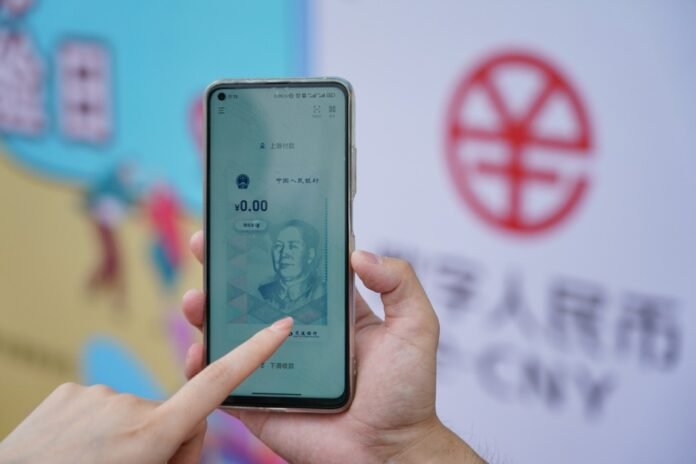
China is accelerating the adoption of its central bank digital currency (CBDC), the digital yuan (e-CNY), in a move that could influence global payment systems and challenge long-standing financial hierarchies. The People’s Bank of China (PBoC) recently authorized 12 additional commercial banks to operate digital yuan services, expanding the operator network from 10 to 22.

The newly added institutions, including China CITIC Bank, China Everbright Bank, and Huaxia Bank, will link directly to the PBoC’s digital yuan system and begin offering retail and institutional services once operational.

While this may initially seem like a domestic fintech expansion, analysts see broader implications for cross-border payments and financial infrastructure.

  • Domestic impact: Wider accessibility for retail and corporate users, more real-time payment options, and improved financial inclusion.
  • Systemic potential: A scalable infrastructure capable of supporting future cross-border settlements.

These developments signal China’s ambition to make the digital yuan a core component of both domestic and international financial flows.


🔒 Unlock Full Signals Analysis (Paid 70%)

The paid section dives deeper into:

  1. Strategic internationalization – How pilot projects in ASEAN, Hong Kong, and Europe could reduce reliance on the U.S. dollar and reshape trade settlements.
  2. Global financial architecture implications – Potential pressure on SWIFT, correspondent banking, and the rise of China-led fintech standards.
  3. Capital market and investment insights – How multinational corporations, investors, and central banks should respond to CBDC-driven shifts.
  4. Operator network expansion and cross-border scaling – Technical and policy signals from PBoC for future growth.
  5. Long-term trends and risks – Adoption curves, policy alignment, and implications for FX flows and banking revenue models.

This is a Signals-level analysis for overseas financial professionals, policymakers, and investors who need to anticipate structural shifts in global payments.

Digital Yuan: Global Payment System in Transition — Full Signals Analysis 

Article inline ad

China’s NPL Surge: Controlled Risk Release or Early Warning Sign?

0

By ZH Sailing

China’s banking system is quietly entering a new phase.

In the first quarter of 2026, nearly 30 banks listed more than 390 nonperforming loan (NPL) packages for transfer, with activity accelerating sharply in March alone. On the surface, this looks like a routine clean-up of bad assets.

But the scale and timing tell a different story.

This is not just about banks reducing bad loans — it is about how China is choosing to manage financial risk in a slower-growth environment.

Over the past decade, China’s credit expansion has been one of the key drivers of economic growth. Now, as lending shifts toward consumers, small businesses, and lower-tier markets, a new type of risk is emerging — one that is more dispersed, less collateralized, and harder to manage.

At the same time, banks are facing a structural squeeze:

  • Net interest margins are narrowing
  • Profit buffers are weakening
  • Traditional risk absorption mechanisms are losing effectiveness

This combination is forcing a change in behavior.

Instead of delaying recognition of bad assets, banks are now accelerating disposal — often through market-based transfers.

And this shift is not happening in isolation.

Recent policy moves — including extending the NPL transfer pilot program and reducing transaction costs — suggest that regulators are actively encouraging this process.

The key question is no longer whether risks exist —
but how they are being released.

this is pro content, view need get menbership


Article inline ad

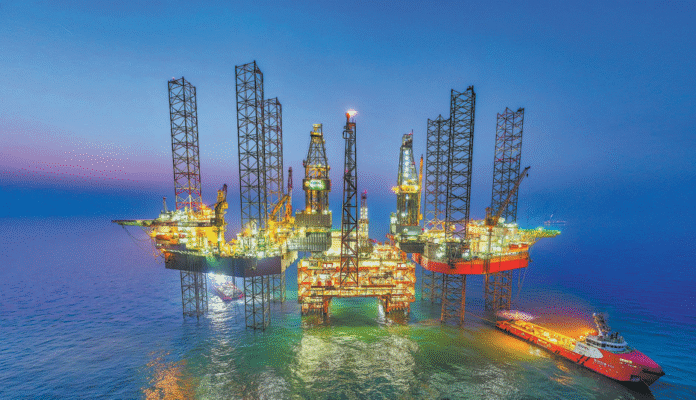
AI Powers China’s Energy Sector Toward Smart Transition

0

According to a report by China Daily on April 2nd…

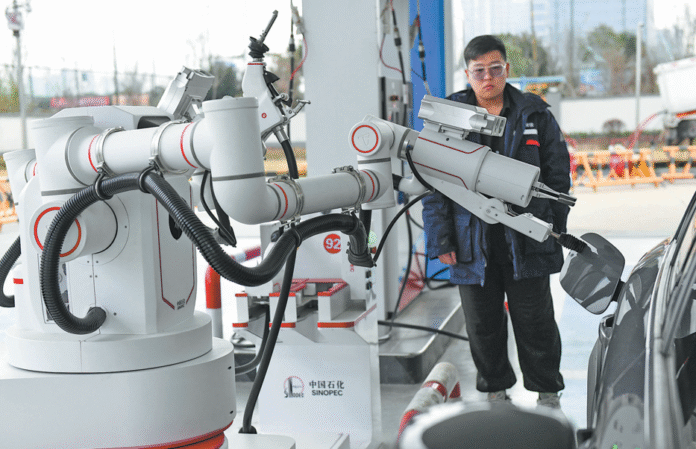
China is rapidly integrating artificial intelligence into its energy industry, turning technological innovation into a cornerstone of operational efficiency and energy security. Leading national oil and gas companies are leveraging AI to transform exploration, production, refining, and maintenance, positioning themselves at the forefront of a global digital energy revolution.

this is pro content,view need get membership

Article inline ad

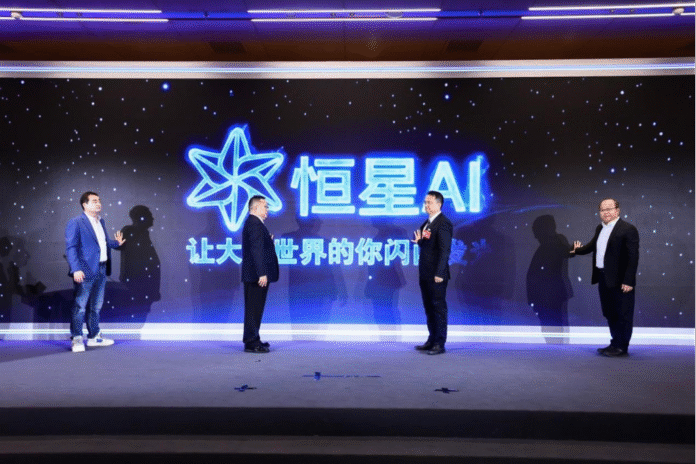
Star AI Launches Global Version of Starfilm, Targets International Expansion

0

According to a report by China Daily on April 2nd…

Beijing, China – Chinese artificial intelligence company Star AI has unveiled the global version of its AI-driven video platform, Starfilm, as it sets its sights on expanding in Southeast Asia and other international markets. The move reflects growing global demand for AI-powered content production and industrial applications.

Speaking at the 2026 ASEAN Innovation Cooperation and Development Forum in Beijing, Zhang Wei, CEO of Star AI, emphasized the transformative impact of AI-generated content (AIGC) on the global media landscape.

“AIGC is rapidly redefining how content is created and distributed worldwide,” Zhang said. “AI video should go beyond social media entertainment or simple creation tools. It has the potential to become an industrial-grade production system, supporting scaled, standardized workflows across film, television, gaming, e-commerce, and industrial sectors.”

The new Starfilm global version is designed as a comprehensive AI production assistant. It integrates scriptwriting, character and scene generation, storyboarding, video editing, and rendering into a unified workflow, streamlining production processes for studios and content creators alike.

Star AI also announced a strategic partnership with Shanghai Suihong Huachuang Technology and Hobby, an AI-powered social and mental health platform. The collaboration includes computing power support and strategic investment, aimed at building a robust AI video ecosystem that can serve both creative and industrial applications.

“The goal is to turn advanced AI video capabilities into tangible productivity gains,” Zhang said. “This platform will not only support industrial upgrades in China but also enable global expansion of digital cultural content, particularly in ASEAN markets.”

As AIGC technologies continue to evolve, companies like Star AI are positioning themselves at the forefront of a rapidly growing global content industry, demonstrating how artificial intelligence can reshape production processes and open new business opportunities worldwide.

Article inline ad

China’s Unified Market Spurs Opportunities for Multinational Firms

0

According to a report by China Daily on April 2nd…

China’s ongoing push to unify its national market and upgrade its business environment is attracting renewed interest from multinational corporations, offering a clearer path for investment, production, and innovation in the world’s second-largest economy.

Under the 15th Five-Year Plan (2026–2030), policymakers are strengthening coordination between initiatives to boost imports and domestic consumption, signaling a long-term commitment to high-quality growth. Analysts and corporate executives agree that China’s economic stability and market scale provide significant advantages for global companies navigating an uncertain international landscape.

In 2025, China’s GDP grew 5 percent, reaching 140.19 trillion yuan ($20.29 trillion), and the government has set a 4.5–5 percent growth target for 2026. Multinational firms see this as a sign of policy credibility and a stabilizing factor for global capital allocation. Executives from companies such as Schneider Electric, Citi, Corning, and CBRE highlight China’s vast industrial base, innovation capacity, and resilient supply chains as key drivers for both investment and operational planning.

China’s role is expanding beyond a consumer market to become a global hub for production and innovation. Schneider Electric has established multiple R&D centers and an AI innovation lab in China, integrating research, production, and sales to support global competitiveness. Corning operates all five of its business segments in China, supplying advanced materials for sectors such as information technology, optics, and energy. Citi emphasizes its long-term commitment to connecting international investors and corporate clients to strategic opportunities within China, while CBRE highlights infrastructure, logistics, and real estate as vital enablers of cross-border business.

The unification of China’s market is reducing operational fragmentation and compliance costs, allowing companies to reach both top-tier cities and fast-growing lower-tier markets more efficiently. This trend enhances market predictability, supports supply chain integration, and expands opportunities for domestic and international collaboration.

China’s “dual circulation” strategy—promoting domestic consumption while supporting export-led growth—offers companies a dual avenue for expansion. Firms can leverage China’s technological and industrial strengths to produce goods locally and export globally, while simultaneously capturing growing domestic demand for high-quality products and services.

Green transition and digitalization are emerging as central pillars of China’s industrial strategy. Last year, China reduced energy intensity by 5.1 percent, increased nonfossil energy use to 21.7 percent, and expanded new-type energy storage capacity beyond 130 gigawatts. Corporations are responding with investments in renewable energy, smart manufacturing, AI-driven industrial upgrades, and carbon management solutions.

Executives emphasize that China is becoming a global leader in both green technology and AI applications. Schneider Electric integrates digitalization, electrification, and automation across industries to boost efficiency and sustainability. Corning supports AI data centers, advanced chip manufacturing, and intelligent vehicle technologies. CBRE is helping landlords retrofit properties with green features and implement sustainable operations in line with China’s 2060 carbon neutrality target.

Overall, China’s unified market, coupled with proactive policy measures and infrastructure investments, positions the country as a strategic growth hub for multinational enterprises. As global economic volatility persists, companies increasingly view China as a stable base for production, innovation, and market expansion, while simultaneously contributing to the global technology and sustainability ecosystem.

Article inline ad

How China Is Protecting Its Energy Supply From Global Shocks

0

As geopolitical tensions rise and critical shipping routes face increasing risks, China is quietly reinforcing one of its most vital systems:

👉 its energy supply.

State-owned giants like China National Petroleum Corp and Sinopec are taking coordinated steps to ensure oil and gas continue flowing — even under worst-case scenarios.


⚠️ The vulnerability: global chokepoints

One of the biggest risks lies in maritime bottlenecks like the Strait of Hormuz.

But here’s the shift:

  • Only about 10% of CNPC’s supply now depends on that route
  • Around 90% is secured through diversified sources

👉 Including:

  • Domestic production
  • Pipeline imports
  • Non-Middle East suppliers

🔄 A system built for disruption

China isn’t relying on a single solution.

Instead, it is building a layered system:

  • Rerouting tankers to avoid high-risk regions
  • Expanding land-based energy imports
  • Increasing domestic output
  • Scaling alternative fuels like coal-to-liquids

👉 The goal is simple:

Keep supply stable — no matter what happens globally


🛢️ A strategic запас (buffer)

China has also accumulated massive reserves:

  • Estimated 1.4 billion barrels in storage
  • Enough to sustain the country for months in a crisis

At first glance, this looks like routine energy management.

It’s not.

👉 It reflects a deeper shift in how China is preparing for a more unstable world.


👉 Continue reading to understand the system China has built to withstand a global energy shock — and why it matters far beyond oil.

The Quiet System China Built to Survive an Oil Shock

What China is building is not just energy security.

It is a resilience architecture designed for an era of disruption.


1️⃣ From efficiency to resilience

For decades, global energy systems optimized for:

  • Cost efficiency
  • Just-in-time supply
  • Open trade routes

China is now optimizing for something else:

👉 resilience under extreme scenarios

This means:

  • Redundancy over efficiency
  • Diversification over concentration
  • Security over cost

2️⃣ De-risking from chokepoints

Maritime routes — especially the Strait of Hormuz — remain high-risk.

China’s response:

  • Reduce dependence
  • Build alternative pathways
  • Strengthen inland supply routes

👉 Including deeper cooperation with:

  • Central Asia
  • Russia

This marks a structural shift:

From sea-based vulnerability to land-based security


3️⃣ Strategic reserves as a shock absorber

China’s petroleum reserves are not just запас.

They are:

👉 a macroeconomic stabilization tool

In a disruption scenario, they allow:

  • Continued industrial activity
  • Stable domestic pricing
  • Time to reconfigure supply chains

4️⃣ The rise of a dual-track energy system

Companies like Sinopec are developing:

  • Conventional oil supply chains
  • Alternative production (coal-to-liquids, domestic output)

👉 This creates a system that can:

switch modes depending on external conditions


5️⃣ Domestic production as strategic anchor

China continues to expand:

  • Offshore drilling (Bohai Sea, South China Sea)
  • Oil and gas output growth

This ensures:

👉 A baseline level of supply independence

Even if imports are disrupted


6️⃣ A broader pattern: system-level preparation

Energy is just one part of a larger trend.

China is applying similar logic to:

  • Food security
  • Supply chains
  • Critical minerals

👉 The pattern is clear:

Prepare for instability before it arrives


⚠️ What this means globally

This shift has wider implications:

  • Global energy markets may become more fragmented
  • Strategic reserves will play a bigger role
  • Countries may prioritize security over efficiency

👉 In other words:

The era of frictionless globalization is fading


🧩 Bottom Line

This is not just about oil.

It is about preparedness.

China is building a system designed not for stability — but for uncertainty.

And that may define how major economies operate in the next decade.

Article inline ad

China Is Building Robotic Wolves for the Battlefield

0

The next phase of artificial intelligence isn’t happening on screens.

It’s happening on the ground.

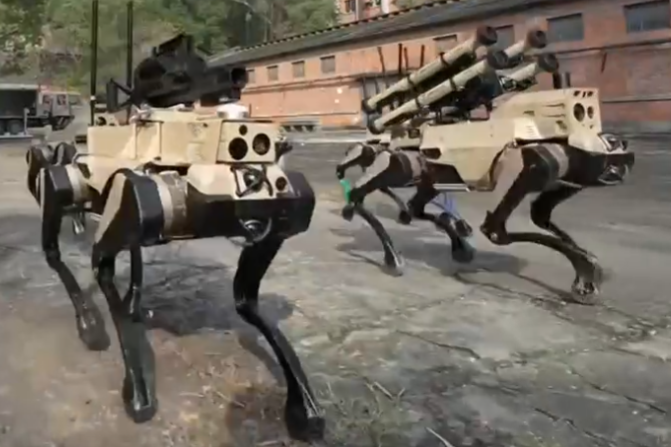
China has developed a new generation of quadruped combat robots — described by engineers as “robotic wolves” — capable of navigating complex terrain, carrying weapons, and operating in coordinated teams.

Developed by China North Industries Group Corp, the machines are designed for real-world combat environments — from urban battlefields to high-altitude terrain.


⚙️ What these robots can do

The robots are built for mobility and adaptability:

  • Climb stairs and traverse uneven terrain
  • Operate at altitudes up to 5,000 meters
  • Run at speeds of up to 15 km/h
  • Carry loads of up to 25 kg

They can also:

  • Map battlefield environments
  • Plan routes autonomously
  • Avoid obstacles in real time

And when deployed in groups:

👉 They can share data and coordinate actions as a unit


🎯 From sensing to striking

These machines are not just mobile platforms.

They can be equipped with:

  • Automatic rifles
  • Micro-missiles
  • Grenade launchers

Once a target is identified:

  • The system locks on
  • Sends data to human operators
  • Waits for final authorization

👉 Humans remain in control — but the machines do the work


At first glance, this may look like another military hardware story.

It’s not.

👉 It represents a major shift in how AI is entering the physical world.


👉 Continue reading to understand why embodied AI — not chatbots — may define the next phase of technological competition.

From Code to Combat: China’s Leap Into Embodied AI

What these “robotic wolves” represent goes far beyond military hardware.

They are part of a much larger transition:

The shift from digital AI to embodied AI


1️⃣ AI is leaving the screen

For the past decade, AI has been largely digital:

  • Search
  • Recommendation systems
  • Language models

Now, it is moving into:

👉 Machines that interact with the real world

This requires a completely different capability set:

  • Real-time perception
  • Physical coordination
  • Environmental adaptation

The robotic wolves demonstrate that shift clearly.


2️⃣ The rise of “embodied AI”

Embodied AI combines:

  • Software intelligence
  • Sensors and perception
  • Mechanical systems

Into a single platform that can:

👉 act, not just compute

In this model:

  • AI doesn’t just analyze data
  • It moves through space, makes decisions, and executes tasks

3️⃣ Why legged robots matter

Unlike wheeled or tracked systems, quadruped robots:

  • Handle unstructured terrain
  • Navigate stairs, rubble, and narrow spaces
  • Maintain balance in dynamic environments

👉 This makes them especially suited for:

  • Urban warfare
  • Disaster response
  • Extreme environments

4️⃣ Human-machine teaming, not full autonomy

One critical detail:

👉 Humans still make the final firing decision

This reflects a broader global trend:

  • AI handles execution and efficiency
  • Humans retain control over lethal decisions

This model:

Enhances capability without fully relinquishing control


5️⃣ A new layer of warfare

These systems are not standalone.

They are designed to work with:

  • Drones (air)
  • Ground vehicles
  • Command systems

👉 Forming a multi-layered, networked battlefield

This creates:

3D reconnaissance and strike capability


6️⃣ Why this matters beyond the military

The implications go far beyond defense.

The same technologies can be applied to:

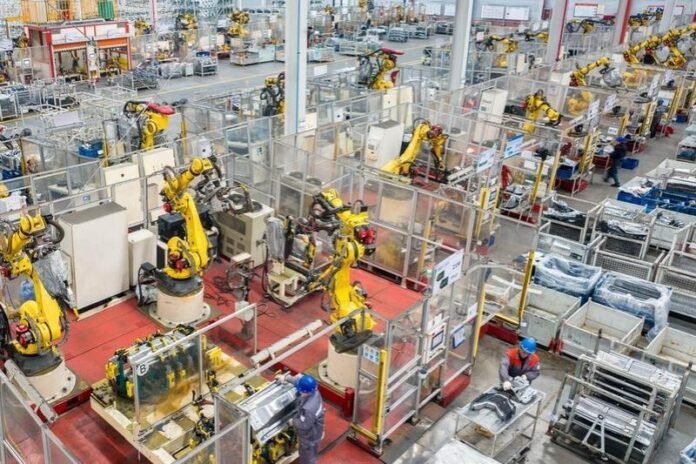
  • Industrial automation
  • Logistics and delivery
  • Hazardous environment operations
  • Search and rescue

👉 Military deployment often accelerates civilian adoption


⚠️ Strategic implications

This shift raises deeper questions:

  • Which countries will lead in embodied AI?
  • How fast can these systems scale?
  • Where is the line between automation and autonomy?

But one thing is clear:

👉 The competition is no longer just about algorithms


🧩 Bottom Line

This is not just a new type of robot.

It is a new phase of AI.

The future of artificial intelligence will not just think — it will move, act, and operate in the real world.

And systems like these are an early glimpse of that future.

Article inline ad

Tencent to regulate financial content

0
By Cheng Yu | chinadaily.com.cn | Updated: 2026-04-01 

Tencent has introduced new rules for financial content creators on its short-video platform WeChat Channels, tightening oversight of investment-related posts as regulators and platforms move to rein in risks to users.

The financial industry convention, released by WeChat Channels and effective on Wednesday, sets out rules aimed at fostering what the platform described as a more “authoritative and reliable” ecosystem for financial knowledge, while reducing risks tied to retail investing and protecting users’ assets.

Under the new guidelines, owners of accounts presenting themselves as professionals — using titles such as “fund manager,” “fund company”, or “securities firm” in videos, usernames or profiles — must complete formal verification. This includes either professional certification or institutional authentication, with supporting documentation submitted through the platform.

For creators already certified with personal professional credentials, the rules require that the individual appearing in investment-related content matches the verified identity.

The convention also targets the misuse of qualifications, explicitly banning the buying, selling, lending or unauthorized affiliation of professional credentials.

Creators are prohibited from bypassing platform checks by renting licenses, falsifying documents or using third-party certifications. Account owners must promptly update or revoke their verification if their employment status changes, or if their credentials expire or are removed.

On content standards, the platform is encouraging creators to produce neutral, professional and evidence-based financial information, with clear risk disclosures and standardized terminology. It is also promoting macroeconomic analysis and industry-level insights over speculative tips.

The rules draw a red line under eight categories of prohibited content – stock-picking recommendations, guaranteed-return claims, market manipulation narratives, promotion of unlicensed financial services, fabricated endorsements, low-quality repetitive content, marketing of high-risk products such as non-fungible tokens (NFTs), and attempts to divert users off-platform for transactions.

Article inline ad

Why Global Companies Are Rebuilding Around China

0

For years, the global business playbook was simple:

  • Design in the West
  • Manufacture in Asia
  • Sell to the world

China was part of that system — but not its center.

That is no longer true.


Today, some of the world’s largest multinational companies — from Agilent Technologies to Astellas Pharma, from Henkel to Infineon Technologies — are all signaling the same shift:

👉 China is becoming a core node in their global architecture


📊 Not just a growth story

Yes, China still delivers scale:

  • World’s second-largest economy
  • Expanding consumer market
  • Strong demand in healthcare, semiconductors, advanced manufacturing

But scale alone doesn’t explain what’s happening.

Because these companies are not just investing more.

👉 They are restructuring how they operate globally — around China


🧠 A quiet but critical shift

Across industries, a new pattern is emerging:

  • China is no longer just a sales market
  • It is not just a manufacturing base
  • It is no longer just an R&D extension

👉 It is becoming all three — simultaneously


⚙️ A full-stack role

Executives are increasingly describing China as:

  • A core supply chain hub
  • A primary innovation center
  • A critical demand engine

And more importantly:

👉 These roles are no longer separated — they are integrated


At first glance, this may look like normal globalization.

It’s not.

👉 It marks a structural shift in how global business is organized.


👉 Continue reading to understand how China is moving from being part of the global system — to reshaping it from within.

From Market to System: How China Is Rewiring Global Business

What we are witnessing is not incremental change.

It is a reconfiguration of global corporate architecture.


1️⃣ China as a “full-stack operating platform”

The old model treated countries as specialized nodes:

  • One country for manufacturing
  • Another for R&D
  • Another for consumption

China is breaking that model.

Today, it offers:

  • End-to-end industrial supply chains
  • Rapid innovation cycles
  • Massive and evolving demand

👉 The result:

China is becoming a full-stack operating platform for multinationals


2️⃣ Integration replaces fragmentation

Previously, global companies optimized for efficiency:

  • Fragmented supply chains
  • Distributed capabilities
  • Cost arbitrage

Now, the priority is shifting toward:

👉 integration and resilience

China enables this by combining:

  • Manufacturing depth
  • Innovation capacity
  • Market scale

In one ecosystem


3️⃣ “In China for Global” is no longer a slogan

One of the most important signals in this shift:

👉 China is increasingly shaping global outcomes

For example:

  • Clinical trials with significant China participation
  • Products developed in China entering global pipelines
  • Manufacturing in China serving worldwide demand

This marks the rise of:

Reverse globalization

Where innovation flows outward from China


4️⃣ Local ecosystems as strategic assets

Multinationals are no longer operating independently in China.

They are embedding into:

  • Local supply chains
  • Research ecosystems
  • Digital platforms
  • Distribution networks

This creates a new model:

👉 Embedded globalization

Where success depends on how deeply a company integrates locally


5️⃣ Policy + market = dual engine

China offers something unique:

  • Strong policy direction (industrial, technological, green transition)
  • Massive and evolving market demand

For companies like Infineon Technologies and Henkel:

👉 This alignment reduces uncertainty and enhances long-term planning


6️⃣ Why this is happening now

This shift is driven by multiple forces:

  • Slowing global growth
  • Supply chain reconfiguration
  • Technological competition
  • Demand for resilience

China, despite geopolitical complexity, still offers:

  • Scale
  • Speed
  • System-level capabilities

👉 Making it difficult to replace


⚠️ Strategic implications

This transformation raises critical questions:

  • Will global firms become structurally dependent on China?
  • Can China-based innovation fully globalize?
  • How will geopolitical tensions reshape this integration?

But one conclusion is already clear:

👉 Globalization is not ending — it is being reorganized


🧩 Bottom Line

This is not about expansion.

It is about redefinition.

China is no longer just participating in global business — it is becoming the system through which global business operates.

Article inline ad