Tuesday, November 24, 2026

Home Blog Page 21

Why a French Pharma Giant Is Doubling Down on China

0

For decades, multinational companies came to China for one reason: the market.

That logic is now changing.

French pharmaceutical and dermo-cosmetics group Pierre Fabre Laboratories is expanding its investment in China — not just to sell more, but to build deeper capabilities inside the country.

China is now one of the company’s top global priorities, and a key pillar of its long-term growth strategy.


📊 More than just growth

The company’s China business has been growing steadily:

  • Strong momentum in oncology treatments, especially in lung and breast cancer
  • Continued expansion of dermo-cosmetics brands like Avène
  • E-commerce now accounts for two-thirds of its cosmetics sales in China

But the real story isn’t growth.

👉 It’s transformation.


🧪 A shift toward local innovation

In 2023, the company launched a China Innovation Center — one of only three globally.

This marks a critical shift:

  • From importing global products
  • To developing products inside China, for Chinese consumers

Some of these locally developed products are now expected to contribute a growing share of sales.


🤝 Deepening local partnerships

The company is also strengthening ties with Chinese players, including a strategic cooperation with Sinopharm.

The goal:

  • Combine global R&D
  • With China’s distribution, clinical, and regulatory capabilities

At first glance, this looks like a typical multinational expansion story.

It’s not.

👉 It reflects a much bigger shift in how global companies are repositioning themselves inside China.


👉 Continue reading to see why China is no longer just a market — and how multinationals are quietly rebuilding their global strategies around it.

From Market to Engine: How Multinationals Are Rebuilding Inside China

What Pierre Fabre Laboratories is doing in China is part of a broader structural shift.

Multinationals are no longer treating China as an endpoint for sales.

They are turning it into a core part of how they operate globally.


1️⃣ From “selling in China” to “building in China”

The traditional model was simple:

  • Develop products in Europe or the US
  • Manufacture at scale
  • Sell into China

That model is being replaced by something more complex:

👉 Build, test, and refine inside China itself

This includes:

  • Local R&D centers
  • China-specific product development
  • Integration with local clinical data and consumer behavior

2️⃣ China as an innovation laboratory

China offers something few markets can:

  • Large, fast-moving consumer base
  • Advanced digital platforms
  • Rapid feedback cycles

For companies like Pierre Fabre:

👉 China becomes a real-time testing ground

In dermo-cosmetics, for example:

  • Sensitive-skin solutions are tailored specifically for Chinese consumers
  • E-commerce strategies are refined on platforms like Tmall and Douyin
  • Successful models are later exported globally

3️⃣ The rise of “reverse globalization”

One of the most important shifts:

👉 Innovation is no longer flowing only into China —
it is increasingly flowing out of China.

Examples in this case:

  • China-developed products entering global pipelines
  • E-commerce playbooks being replicated in other markets

This creates a new pattern:

Global strategy is being shaped inside China


4️⃣ Embedded partnerships with local players

Multinationals are no longer operating independently.

They are becoming deeply embedded in China’s ecosystem.

The partnership with Sinopharm reflects this:

  • Global innovation meets local execution
  • Regulatory navigation becomes localized
  • Market access is co-built, not outsourced

👉 This is not outsourcing — it is structural integration


5️⃣ Why China still matters — despite global uncertainty

At a time when geopolitical tensions are rising, this trend may seem counterintuitive.

But for many companies, China still offers:

  • Scale
  • Infrastructure
  • Policy support in strategic sectors like biotech
  • A pathway to long-term growth

👉 The result is not decoupling, but reconfiguration


⚠️ What this means going forward

This shift raises important strategic questions:

  • Will global companies become more dependent on China-based capabilities?
  • Can innovations developed in China be fully globalized?
  • How will regulatory and geopolitical risks reshape these strategies?

But one direction is clear:

👉 China is no longer optional in global strategy design.


🧩 Bottom Line

This is not just an investment story.

It is a structural shift in globalization.

China is evolving from a sales market into a core engine of innovation, execution, and growth for multinational companies.

And companies that adapt to this shift early may define the next phase of global competition.
Article inline ad

China Life sees sharp jump in earnings

0
By Li Jing | China Daily | Updated: 2026-04-01 

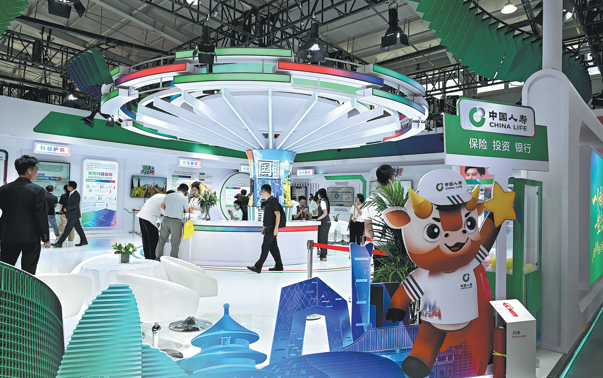
China Life Insurance Co Ltd, the country’s largest life insurer, reported a sharp jump in annual profit for 2025, fueled by strong investment returns and a shift toward higher-value products, although premium growth slowed amid an industry-wide transition.

Net profit attributable to shareholders rose 44.1 percent year-on-year to 154.08 billion yuan ($21.2 billion) in 2025, while total premium income rose 8.7 percent to 729.9 billion yuan, the company said in its annual results.

The insurer’s total investment income climbed 25.8 percent to 387.7 billion yuan, with the overall investment yield rising to 6.09 percent, one of its strongest performances in recent years.

“As one of the world’s largest life insurers, China Life achieved a ‘full harvest’ in 2025 with stronger growth momentum, improved resilience and expanded customer protection,” Cai Xiliang, the company’s chairman, said during the earnings briefing.

China Life remained the dominant player in China’s life insurance market. Total assets rose to 7.59 trillion yuan, while investment assets reached 7.42 trillion yuan. Embedded value — a key measure of long-term profitability for insurers — climbed to 1.47 trillion yuan.

The company also maintained solid capital buffers, with its core solvency ratio at 128.77 percent and its comprehensive solvency ratio at 174.01 percent, comfortably above regulatory requirements.

However, the company reported a net loss of 13.73 billion yuan in the fourth quarter, mainly due to short-term volatility in stock and bond markets, which executives said reflected market swings rather than a structural shift.

Investment performance was the main driver of the profit surge as the insurer increased its exposure to equities and captured market opportunities during the year.

Liu Hui, vice-president of the company, said China Life raised its equity allocation by nearly 5 percentage points in 2025, bringing publicly traded equity investments to more than 1.2 trillion yuan.

China Life also expanded holdings in technology-related stocks tied to China’s emerging industries while maintaining large allocations to long-term bonds to match its long-duration liabilities, she said.

The company currently holds around 3 trillion yuan of long-dated bonds, which helps stabilize returns amid declining interest rates.

At the same time, overseas exposure remains limited. Liu said China Life’s offshore investments account for less than 0.9 percent of total assets, helping shield the firm from global geopolitical volatility.

China Life also accelerated a shift toward participating and market-linked insurance products, which tie policyholder returns partly to investment performance.

The transition helped lift its new business value by 35.7 percent to 45.75 billion yuan, the fastest pace since 2017, outperforming most peers in China’s life insurance sector.

Executives said the company is also expanding equity investments in emerging industries as part of its long-term strategy.

Through direct investments and private equity funds, China Life has backed companies in sectors including artificial intelligence, semiconductors and healthcare, as well as renewable energy projects.

The insurer said earlier this year it committed 4 billion yuan to a technology innovation fund, targeting advanced manufacturing, semiconductors and AI.

Going forward, the company said it plans to push ahead with digital transformation, asset-liability management reforms and expansion of healthcare and eldercare services, as China’s aging population drives demand for insurance and retirement products.

China Life has already participated in more than 70 pilot programs for long-term care insurance across China and plans to deepen its presence in the sector.

Its push in the sector comes as China issued guidelines on Wednesday to build a nationwide long-term care insurance system, aiming to meet basic care needs for people with limited ability to care for themselves.

Executives said the insurer expects steady growth in 2026 as it launches a series of reforms tied to the outline of China’s 15th Five-Year Plan (2026-30).

Article inline ad

Home appliance giant reports net profit increase

0
China Daily | Updated: 2026-04-01 

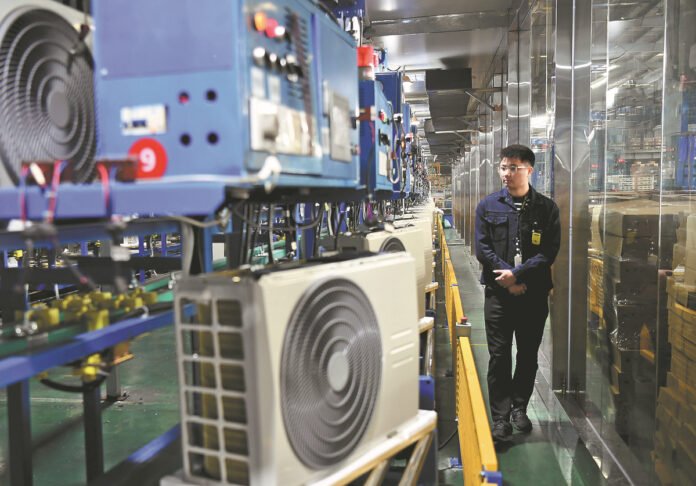
GUANGZHOU — China’s home appliance giant Midea Group posted a 14 percent year-on-year increase in net profit attributable to shareholders, reaching 43.95 billion yuan ($6.4 billion) in 2025, according to the company’s annual financial report.

The group achieved total revenue of 458.5 billion yuan over the same period, up 12.1 percent from a year earlier, according to the report to the Shenzhen Stock Exchange on Tuesday.

Its overseas revenue reached 195.9 billion yuan, up 15.9 percent year-on-year, the report said.

It said that in 2025, Midea held the world’s largest market share in unit sales of household air conditioner compressors, household air conditioner motors and washing machine motors.

It also ranked first in domestic market share in the central air conditioning sector.

Empowered by AI, the company improved efficiency by more than 15 million hours and cut costs by 700 million yuan in 2025. The group plans to invest over 60 billion yuan in cutting-edge research over the next three years to strengthen its global competitiveness.

In addition, the company has unveiled five humanoid robot models, which are gradually being deployed in factories for quality inspection, equipment patrols and other tasks, marking a key step from laboratory research to industrial application.

Xinhua – China Daily

Article inline ad

China Is Taking More Profits From Its State Giants — Here’s Why It Matters

0

China is quietly pulling more cash out of its biggest state-owned enterprises (SOEs) — and the shift is bigger than it looks.

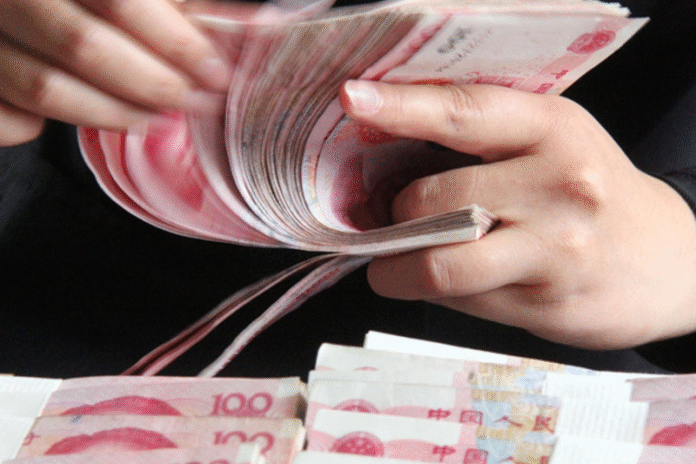
In 2025, central SOEs handed over 375 billion yuan ($54 billion) in after-tax profits to the government — a nearly 79% jump from the previous year.

At first glance, this may look like a routine fiscal adjustment.
In reality, it signals something deeper:

👉 China is redesigning how state capital feeds into the national system.


📊 What changed?

Under a revised remittance system:

  • Resource and tobacco SOEs now pay up to 35% of profits (up sharply from previous levels)
  • Competitive-sector SOEs remit 30%
  • Strategic and public-service entities contribute 20%
  • Policy financial institutions remain exempt

The biggest contributors?
Energy, telecom, tobacco — sectors that dominate state profits.


💰 Why now?

Because the fiscal picture is tightening:

  • Government revenue ↓
  • Land-sale income ↓
  • Spending on infrastructure & welfare ↑

Put simply:

👉 China needs cash — and SOEs are the most reliable source.

But this is not just about plugging a budget gap.

It’s about something much more structural.


👉 Continue reading to understand what this policy really means for China’s economic model, state power, and capital allocation.

this is pro content, view need get membership

Article inline ad

China-US economic and trade ties based on win-win cooperation, ministry says

0


By Zhang Chenxu | chinadaily.com.cn | Updated: 2026-04-02 

The essence of China-US economic and trade relations lies in mutual benefit and win-win cooperation, with the two sides sharing extensive common interests and vast potential for cooperation, the Ministry of Commerce said on Thursday.

He Yadong, a spokesman for the ministry, told a news conference that stable Sino-US economic and trade ties serve the fundamental interests of both countries and their peoples and meet the expectations of the international community.

The comments came after China and the United States held six rounds of economic and trade consultations since last year and achieved a series of outcomes that have brought greater stability and certainty to bilateral economic ties and the global economy.

“Facts have fully demonstrated that mutual respect and equal dialogue are the best way to bridge differences and resolve problems,” He said.

The two sides should act on the consensus reached by the two heads of state and the outcomes of previous economic and trade consultations, and further leverage the China-US economic and trade consultation mechanism, He added.

The spokesman also called on both sides to strengthen dialogue and communication, properly manage differences, expand practical cooperation, and promote the healthy, stable and sustainable development of bilateral economic and trade relations.

Article inline ad

China’s commerce ministry calls for further leveraging China-US economic, trade consultation mechanism

0
Xinhua | Updated: 2026-04-02 

BEIJING — China’s Ministry of Commerce on Thursday called for further leveraging the China-US economic and trade consultation mechanism and strengthening dialogue and communication so as to promote the healthy, stable and sustainable development of bilateral economic and trade relations.

The two sides should implement the important consensus reached by the two heads of state and the outcomes of previous economic and trade consultations, ministry spokesperson He Yadong said at a regular press briefing in response to a question on China-US economic and trade ties.

Guided by the important consensus reached by the two heads of state, China and the United States have conducted six rounds of economic and trade consultations since last year, achieving a series of outcomes that have injected greater stability and certainty into bilateral economic and trade relations as well as the global economy, He said.

Facts have clearly proven that it is the best approach to bridging differences and resolving issues by upholding mutual respect and engaging in equal dialogue and consultation, the spokesperson added.

Article inline ad

Big Banks Keep Bad Loans in Check

0

China’s largest state-owned banks are showing resilience, with nonperforming loan (NPL) ratios edging lower at the end of 2025 despite mounting pressures from property market adjustments and rising risks in consumer lending.

According to their latest annual results:

  • Industrial and Commercial Bank of China (ICBC): NPL ratio at 1.31% (down year-on-year)
  • China Construction Bank (CCB): 1.31%
  • Bank of China (BOC): 1.23%
  • Agricultural Bank of China (ABC): 1.27% (fifth consecutive year of decline)

The data suggests that major lenders are maintaining stable asset quality while continuing to support the real economy.

At the same time, banks acknowledged increasing pressure in areas such as:

  • Consumer lending
  • Inclusive finance
  • Real estate exposure

In response, institutions have strengthened risk controls, improved provisioning, and accelerated the disposal of nonperforming assets.

🔓 Why This Matters (Preview)

At first glance, the message is reassuring:

China’s banking system appears stable.

But stability does not mean risk is gone.

It means risk is being actively managed — and redistributed.

👉 In the full analysis, we explain:

  • Why China’s financial system isn’t cracking — yet
  • Where risks are actually moving inside the system
  • What could trigger the next phase of stress

👉 [Unlock Full Analysis →]

this is pro content, view need get menbership


Article inline ad

Shanghai Tests a New Housing Supply Mechanism

0

Shanghai has launched a pilot program to expand the supply of government-subsidized rental housing by acquiring pre-owned homes — marking a new step in the city’s efforts to stabilize its property market.

The first transaction under the scheme was completed this week in Jing’an district, where a homeowner sold a 40-square-meter apartment to the government and simultaneously purchased a newly built unit.

The mechanism allows local authorities to purchase eligible second-hand homes and convert them into subsidized rental housing, while enabling sellers to upgrade into new properties.

The program is currently being piloted in districts including Jing’an, Xuhui, and Pudong, with specific criteria on location, size, and pricing for eligible properties.

The move comes as Shanghai seeks to address a shortage of high-quality rental housing, with around 13,000 new subsidized rental units planned during the 2026–2030 period.

🔓 Why This Matters (Preview)

At first glance, this appears to be a localized housing policy experiment.

But the structure reveals something much bigger:

China is beginning to redesign how its property market functions — not just how it is regulated.

👉 In the full analysis, we break down:

  • Why this is more than a supply-side policy
  • What we call the “China Property 2.0 Model”
  • How it could reshape the housing market nationwide

👉 [Unlock Full Analysis →]

Premium Analysis | China Property 2.0 Begins in Shanghai

Executive Take

Shanghai’s new housing mechanism is not just a pilot program.

It represents an early version of what we call the “China Property 2.0 Model.”

This model is designed to:

  • Stabilize the housing market
  • Reduce inventory pressure
  • Expand affordable rental supply

👉 Without relying on traditional stimulus tools

What Is “China Property 2.0”?

The traditional model (Property 1.0) relied on:

  • Land sales
  • Developer leverage
  • Pre-sales model
  • Price-driven growth

That model is no longer sustainable.

Property 2.0 introduces a new structure:

State-coordinated housing circulation

Core mechanism:

  1. Government acquires existing homes
  2. Converts them into subsidized rental housing
  3. Enables households to upgrade into new homes

This creates a closed loop:

  • Old housing → absorbed
  • New housing → supported
  • Rental supply → expanded

👉 Three problems solved in one system

Why This Model Matters

1️⃣ From Demand Stimulus → Supply Engineering

China is shifting away from:

  • Lowering mortgage rates
  • Relaxing purchase restrictions

Toward:

👉 direct intervention in housing supply structure

2️⃣ From Market Cycle → Managed System

The property market is no longer fully market-driven.

Instead:

It is becoming a semi-managed system with government as allocator

This includes:

  • Targeted acquisitions
  • Asset reallocation
  • Long-term rental planning

3️⃣ From Investment Asset → Public Utility

Housing is gradually being repositioned:

  • Less as a speculative asset
  • More as a quasi-public good

👉 This is a fundamental shift in policy philosophy

Why Shanghai Is the Testing Ground

Shanghai is uniquely suited for this model:

  • High property prices
  • Strong fiscal capacity
  • Mature housing market
  • Large rental demand

👉 If it works here, it can scale nationally

What Happens Next

If the pilot succeeds, expect:

Phase 1 (Current)

Pilot programs in Tier-1 cities

Phase 2

Expansion to more districts and cities

Phase 3

Institutionalization into national housing policy

Market Impact

Short-Term

  • Improved liquidity in secondary housing market
  • Stabilization of new home sales
  • Increased rental housing supply

Medium-Term

  • Reduced inventory pressure
  • Slower price volatility
  • Shift in developer business models

Long-Term

China’s property market becomes more stable — but less speculative

Opportunities & Risks

Opportunities

  • Rental housing operators
  • State-backed developers
  • Urban renewal projects
  • Asset management platforms

Risks

  • Fiscal burden on local governments
  • Execution complexity
  • Mispricing in asset acquisition
  • Reduced market efficiency

Key Indicator to Watch

Whether more cities adopt similar “closed-loop housing systems”

If yes:

👉 Property 2.0 is becoming national policy

If not:

👉 This remains a localized experiment

Bottom Line

This is not just a housing pilot.

It is a blueprint for the next phase of China’s property market.

China is no longer trying to “revive” the old system.

👉 It is building a new one.


Article inline ad

QDII Expansion Signals Continued Financial Opening

0

China has expanded quotas under the Qualified Domestic Institutional Investor (QDII) program, in a move that reflects rising demand for overseas asset allocation — and signals continued progress in financial opening-up.

According to data from the State Administration of Foreign Exchange (SAFE), 78 financial institutions were granted a combined $5.3 billion in new QDII quotas, marking the first expansion since mid-2025.

The QDII scheme allows Chinese investors to access overseas markets within a quota framework, serving as a key channel for outbound investment under China’s still partially controlled capital account.

The latest increase follows a period of strong demand for global assets, during which several QDII-linked funds hit quota limits and traded at premiums in the secondary market.

Market participants expect the new quota injection to ease these distortions and improve pricing efficiency.

🔓 Why This Matters (Preview)

At first glance, this looks like a technical adjustment to ease market pressure.

But the timing — amid global volatility — suggests something more important:

China is quietly expanding outbound capital channels without destabilizing its currency.

👉 In the full analysis, we explain:

  • Why China is allowing more capital to flow out now
  • How this fits into its long-term capital account strategy
  • What it signals about the future of the RMB globally

👉 [Unlock Full Analysis →]

this is pro content,view need get membership


Article inline ad

Shanghai Launches Ambitious Plan to Build Global Embodied Intelligence Ecosystem

0

According to a report by China Daily on March 31…
Shanghai has unveiled an ambitious roadmap to develop a comprehensive ecosystem for embodied intelligence—advanced AI systems integrated with physical bodies—positioning the city at the forefront of next-generation robotics and intelligent hardware.

this is pro content,view need get membership


Article inline ad