Tuesday, November 24, 2026

Home Blog Page 22

Zhengzhou Leverages AI and Robotics to Build Smarter, Safer Cities

0

According to a report by China Daily on March 31…

In the Zhengzhou Airport Economy Zone of Central China’s Henan province, a futuristic vision of urban safety is coming to life. Unmanned patrol vehicles and robot dogs are already on duty, forming an integrated “air-ground” security team that redefines how cities monitor and protect their communities.

The unmanned vehicles patrol main roads, scanning open areas for potential issues, while agile robot dogs handle areas inaccessible to vehicles, such as steep slopes, narrow alleys, and staircases. Together, they ensure no corner of the city goes unchecked.

“Traditional inspection vehicles are limited to standard roads. They simply cannot navigate steps, slopes, or tight spaces,” said Li Zhiqiang, general manager of Jinghai Shengda Technology Cable Co. “Robot dogs fill that gap, complementing vehicles and sharing real-time data to provide full coverage.”

The plan is ambitious: by the end of 2026, 100 “air-ground integrated” patrol vehicles will be deployed across the airport zone, covering residential communities, shopping districts, and key infrastructure.

This push is supported by the Artificial Intelligence (Robotics) Industrial Park, which began operations in January 2025. The park, managed by Henan Airport Digital City Development and Construction Co., hosts over 100 upstream and downstream AI enterprises, forming a central hub for developing Zhengzhou as a computing power center in Central China.

The zone boasts three intelligent computing centers, with a planned total capacity exceeding 100,000 petaflops. Currently, nodes with 10,000 petaflops are operational, fueling AI applications from city monitoring to industrial automation, said Zhang Yang, deputy general manager of the company.

Beyond hardware, the zone emphasizes cultivating human talent. The AI Plus intelligent talent public training base offers a one-stop program in AI, big data, and cloud computing—from courses to certification to job placement. Trainees gain experience tailored to the technical needs of local enterprises, including BYD, Raycus, and companies involved in unmanned vehicles and robotics.

“As a national-level pilot zone, Zhengzhou leverages its strategic location and infrastructure to drive innovation, attract talent, and enhance urban management,” said Sun Xike, an official of the Airport Economy Zone.

By combining advanced robotics, AI-powered monitoring, and talent development, Zhengzhou is positioning itself as a model for smart, resilient, and safer cities—an example that may inspire urban planners around the world looking to integrate technology into public safety.

Article inline ad

China Advances World-Class High-Speed Rail Network

0

According to a report by China Daily on March 31…

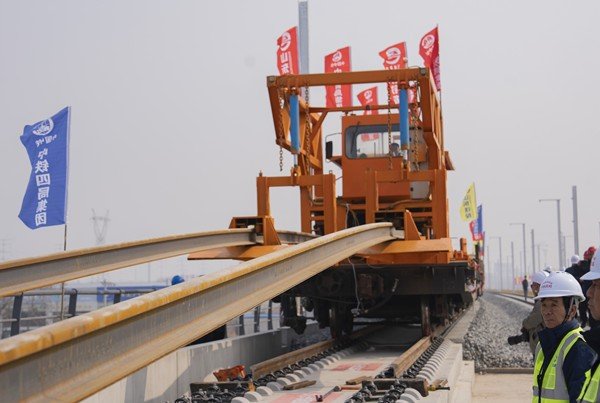
China’s drive to build a world-class modern railway network is gathering pace, with the Jinan-Binzhou High-speed Railway (HSR) in Shandong province reaching a major construction milestone. Track-laying for the 145.2-kilometer line is expected to be completed by mid-June, marking a critical step in enhancing regional connectivity and supporting high-quality economic development along the corridor.

The Jinan-Binzhou HSR, designed for speeds up to 350 km/h, will link Jinan—a semi-provincial city and Shandong’s capital—with the prefecture-level city of Binzhou, featuring six strategically placed stations: Jinan East, Yaoqiang Airport, Jiyang, Shanghe, Huimin, and Binzhou. The line is a key segment of China’s ambitious “Eight Verticals and Eight Horizontals” high-speed railway framework, which aims to integrate northern Shandong into the national HSR network.

State builder China Railway No. 4 Engineering Group (CREC4) has mobilized more than 100 sets of specialized machinery for track-laying, working in close coordination with Lunan High-speed Railway Co under Shandong Railway Investment Holding Group. Total investment for the project stands at 34.36 billion yuan ($4.97 billion), with construction spanning four years and commercial operations projected to start by the end of 2026.

The project exemplifies China’s broader strategy to expand its high-speed rail footprint. According to China Railway, the total operational railway network is targeted to reach approximately 180,000 km by 2030, including 60,000 km of high-speed lines—positioning China at the forefront of global rail infrastructure.

Analysts note that the Jinan-Binzhou line not only boosts domestic mobility but also signals China’s capacity for rapid, large-scale infrastructure deployment. By linking industrial hubs, airports, and urban centers, the project supports regional economic integration, urbanization, and domestic consumption, while also serving as a benchmark for large-scale railway projects worldwide.

“This HSR is more than a transport link; it is a strategic lever for northern Shandong’s economic development and a showcase of China’s modern railway engineering capabilities,” said Wu Qiufeng, a CREC4 engineer involved in track-laying operations.

As China continues to pursue a world-class modern railway network, projects like the Jinan-Binzhou HSR highlight the country’s ability to combine technological expertise, logistical coordination, and policy alignment—a model with lessons for nations looking to modernize infrastructure while stimulating regional growth.

Article inline ad

China’s Energy Construction Firms Drive Green Transformation, Setting Global Benchmarks

0

According to a report by China Daily on March 31…

China’s state-owned energy construction companies are spearheading a nationwide green transition, aligning with the Government Work Report’s directive to accelerate ecological and low-carbon development across industries. From mountains and deserts to urban centers, these firms are translating policy ambitions into practical, scalable solutions.

Strategic Policy Context

The 2026 Government Work Report emphasizes comprehensive ecological governance, a green, low-carbon economy, and sustainable urban-industrial integration. Energy construction firms are taking these directives seriously, embedding environmental objectives into large-scale infrastructure projects and industrial operations. Energy consumption per unit of GDP fell 5.1 percent in 2025, demonstrating measurable improvements in ecological efficiency while maintaining steady economic growth.

Industrial Innovation Meets Ecology

In the Qinling Mountains, China National Chemical Engineering Group (CNCEC) leads a landmark project integrating forests, rivers, wetlands, and soil restoration across 5,285 hectares. “Chemical engineering today extends beyond construction — ecological protection is now a core responsibility,” said CNCEC Chairman Mo Dingge. The project exemplifies how heavy industry can harmonize with nature, yielding tangible environmental benefits.

Nuclear power operations also illustrate unexpected synergies. Pearl mussels thriving near warm water outlets have produced high-quality pearls, reflecting careful thermal management. “Our plants function like well-tended gardens,” said Lu Tiezhong, chairman of China National Nuclear Power. “No resource is wasted — everything can have value if managed properly.”

Construction is evolving as well. Feng Yuan, chief engineer at China Southwest Architectural Design and Research Institute, highlighted “smart green buildings” using sustainable materials and adaptive design. These structures aim not only for energy efficiency but also for responsiveness to user needs, marking a shift from traditional construction to eco-intelligent infrastructure.

Pioneering Green Energy Models

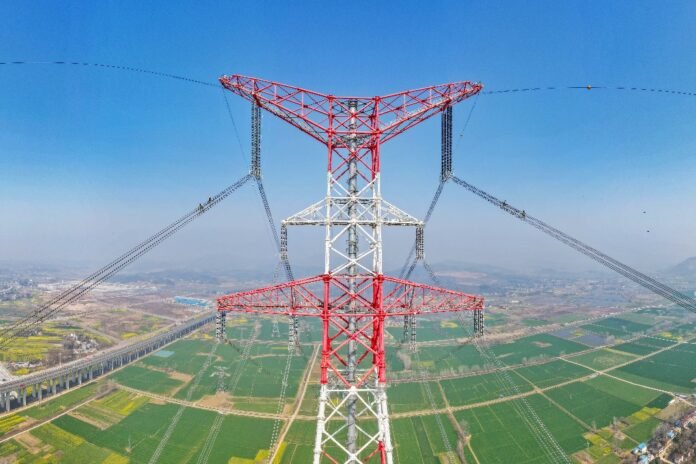
China’s energy leaders are adopting a “stereoscopic” approach to decarbonization. Jiang Yi, chairman of China Huadian Corp, promotes integration of green hydrogen and next-generation nuclear power to ensure sustainable energy security. Yang Changli, chairman of China General Nuclear Power Corp, has implemented “photovoltaics plus agriculture” and “offshore wind plus marine ranching” models, converting barren lands and ocean spaces into productive, renewable energy ecosystems.

Projects across Xinjiang and Jilin provinces illustrate this vision. In Hotan, a 1,467-hectare desert project combines biological and photovoltaic technologies to stabilize sand while generating electricity. In Jilin, wind-solar-hydrogen production achieves a full-cycle green energy system, setting benchmarks for industrial decarbonization.

Global Significance

China’s energy construction sector demonstrates that industrial growth and environmental stewardship can advance simultaneously. By integrating ecological governance into energy and infrastructure projects, state-owned enterprises provide models for sustainable development. The strategic application of green hydrogen, renewable energy, and ecosystem-based approaches offers a roadmap for other countries facing similar climate and energy challenges.

As China deepens its green transition, these initiatives highlight the potential of combining policy guidance, industrial innovation, and ecological management. For international investors and policymakers, the country’s experience offers valuable insights into scaling sustainable energy systems while maintaining economic resilience.

Article inline ad

Jinjiang Leverages Manufacturing Strengths to Drive Domestic Consumption

0

According to a report by China Daily on March 31…

Jinjiang, a coastal city in Fujian province, is demonstrating how China’s industrial hubs are adapting to meet rising domestic consumption, using its robust manufacturing ecosystem to cultivate new growth drivers.

The city, known as a major center for sportswear and consumer-brand production, recently launched the month-long “Super Jinjiang, Happy Shopping in Beijing” campaign, which began on March 15. The initiative brought together 12 prominent Chinese brands, including sportswear giants Anta, Xtep and Kelme, menswear brand Lilanz, and fitness equipment supplier SHUA Fitness.

More than 200 stores across Beijing offered synchronized discounts, covering a wide spectrum of products from professional sports apparel and high-end business clothing to casual wear and fitness equipment.

“The campaign is Jinjiang’s effort to transform its manufacturing strengths into new consumption momentum,” said Lin Qi, director of the Jinjiang Commerce Bureau. “For brands from Jinjiang, this marks a decisive shift from selling products to building internationally recognized brands.”

The initiative is aligned with broader national policies aimed at expanding China’s domestic market. This year’s Government Work Report emphasized the importance of a robust domestic consumption ecosystem, including special initiatives for consumer goods trade-in programs, supported by 250 billion yuan ($36.36 billion) in ultra-long special treasury bonds.

Beyond short-term stimulus, Jinjiang’s strategy focuses on industrial upgrading, stabilizing employment, raising incomes, and strengthening social support systems to sustain consumer confidence in the long term.

The city’s industrial heritage and private-sector vitality—often referred to as the “Jinjiang Experience”—have been key to its success. Once a poor county with limited resources, Jinjiang has transformed into a leading county-level economy through effective government-enterprise collaboration, innovation, and a focus on the real economy.

“In 2025, Jinjiang’s GDP reached 386.18 billion yuan, ranking among the top three counties nationwide,” said Wang Mingyuan, secretary of the CPC Jinjiang Municipal Committee.

Industry experts say Jinjiang’s approach exemplifies China’s strategy of linking manufacturing upgrades to domestic consumption growth. Bai Wenxi, vice-chairman of the China Enterprise Capital Union, noted, “Supply upgrading is fundamental to expanding domestic demand. Sustained investment in research and development, along with continuous improvements in product quality, is essential to generate real and lasting consumer demand.”

For international observers, Jinjiang offers a window into China’s evolving economic model: a place where industrial heritage, private entrepreneurship, and strategic government policy converge to drive domestic consumption, brand development, and sustainable local growth.

Article inline ad

China’s Geothermal Surge: Industrial Scale, Innovation, and Carbon Impact

0

By ZH Sailing

China’s geothermal sector is entering a new phase of industrial and technological maturity, consolidating the country’s position as the global leader in geothermal power and heating. Beyond energy production, this sector plays a crucial role in carbon reduction, energy security, and urban heating solutions, sending clear signals for investors and industrial planners alike.


Industrial Scale and Growth Trajectory

China has firmly established a global leadership position in geothermal energy, with applications spanning heating, cooling, and industrial power generation.

  • By 2025, total geothermal heating and cooling coverage reached 1.65 billion square meters, growing at an annualized 6.5% during the 14th Five-Year Plan (2020-25).
  • Sinopec alone has developed an industrial-scale capacity of 137 million square meters, reducing annual CO₂ emissions by nearly 6.7 million metric tons.

The scale of deployment signals that geothermal energy is no longer niche—it is a pillar of China’s new energy industrial system, integrating clean energy into urban, industrial, and residential applications.


Technological Breakthroughs and Resource Innovation

Deep geothermal exploration has unlocked major resource potential, providing both energy and heat solutions:

  • In Dongying, Shandong province, researchers drilled a 4,002-meter geothermal well, discovering underground boiling water at 162°C, the hottest hydrothermal well in East China to date.
  • The well provides 21.57 MW of stable thermal power, sufficient for the daily needs of nearly 10,000 residents or for generating industrial steam, replacing 18,800 tons of coal annually, cutting 48,900 tons of CO₂ emissions.
  • Remaining geothermal water can supply centralized urban heating for ~2 million square meters of residential space, demonstrating integrated energy utilization.

These breakthroughs indicate that China’s geothermal innovation is moving from exploratory to scalable industrial deployment, a signal of strong technical and commercial viability.


Energy Security and Carbon Transition Signals

Geothermal energy strengthens China’s energy security and decarbonization objectives:

  1. Diversified energy portfolio: Reduces reliance on fossil fuels, especially coal for heating and industrial steam.
  2. Carbon reduction impact: Industrial-scale geothermal adoption directly lowers CO₂ emissions, aligning with national carbon neutrality goals.
  3. Urban heating resilience: Offers stable, local, and low-carbon heating options for cities, supporting climate adaptation policies.

For investors and policymakers, geothermal development is a leading indicator of China’s broader energy transition trajectory.


Policy and Market Implications

The government’s renewable energy and industrial policies underpin geothermal growth:

  • Continuous support for heating/cooling expansion projects and deep geothermal exploration.
  • Forecasted 7% annual growth in heating/cooling deployment, projected to reach 3 billion square meters by 2035.
  • Expected 500 MW of installed geothermal power capacity by 2035, reinforcing China’s position as a global geothermal hub.

Policy signals suggest that geothermal is a high-priority sector for public investment, technology commercialization, and private-sector participation.


Strategic Insights for Investors and Industrial Players

  1. Industrial opportunity: Large-scale geothermal projects offer returns not only from power generation but also urban heating and industrial steam supply.
  2. Technology leverage: Deep geothermal drilling and thermal management innovations create opportunities for equipment providers, engineering firms, and energy service companies.
  3. Carbon-linked investment: CO₂ reduction potential makes geothermal projects eligible for carbon credits and ESG-aligned funding, appealing to international investors.
  4. Regional development signal: Provinces like Shandong illustrate how local innovation and resource endowment can be translated into scalable, profitable industrial deployments.

Conclusion

China’s geothermal surge is a signal-rich story at the intersection of industrial growth, technological innovation, and green energy transition.

  • Industrial scale confirms long-term market viability.
  • Technological breakthroughs unlock high-value geothermal resources.
  • Energy security and carbon reduction align with national priorities and global climate commitments.
  • Policy support and projected growth create attractive opportunities for investors, developers, and technology providers.

For the international energy community, China’s geothermal development offers a blueprint for scalable, low-carbon energy solutions, and positions the country as a global leader in next-generation renewable energy deployment.

Article inline ad

China Signals|China’s Concert Economy: Policy, Consumption, and Investment Signals

0

By ZH Sailing

China’s live performance market is catching fire, driven by policy support, Gen Z consumption patterns, and the increasing recognition of concerts as engines of broader economic activity. While ticket sales generate headline revenue, the real value lies in the ripple effects spanning hospitality, retail, transportation, and tourism.


Concerts as Economic Catalysts

Recent data and case studies reveal the magnitude of this “multiplier effect”:

  • Large-scale performances generate an average 1:6.85 consumption multiplier — meaning every 1 yuan spent on a ticket creates nearly 7 yuan in related spending.
  • In 2025, concerts with audiences exceeding 5,000 contributed over 220 billion yuan in ancillary spending beyond ticket sales.

A vivid example: Jay Chou’s three-night concerts in Nanning in April 2025 drew 141,800 ticketed attendees and 28,000 fans outside the venue, generating 1.26 billion yuan in citywide consumption, from hotels and restaurants to transportation and retail.

These figures underscore that concerts are not mere entertainment—they are integrated urban economic engines, particularly in cities leveraging tourism and cultural policies effectively.


Policy as a Signal for Market Opportunity

The 15th Five-Year Plan (2026-30) identifies the expansion of culture, sports, and tourism consumption as a strategic priority, calling for streamlined approval processes for commercial performances and sports events.

  • Zhejiang Province: Introduced tiered rewards for large-scale performances based on ticket sales, revenue, and percentage of attendees traveling from outside the province. Exclusive national tour stops or starting points in Zhejiang qualify for higher incentives.
  • Guangdong Province: Integrates ticketing with tourism experiences, offering discounts or free access to museums, scenic areas, and hotels.

These policy signals indicate a government-backed acceleration of the concert economy, designed to maximize consumption spillovers and promote regional economic development.


Gen Z: Driving Consumption Patterns

Generation Z is emerging as a key driver of China’s concert economy, with nearly 60% willing to pay for emotional value.

  • Spending is no longer limited to tickets; fans invest in travel, dining, merchandise, and local tourism, reshaping urban economic flows.
  • Concert organizers are responding with tiered ticketing, integrated packages, and multi-city tours, signaling that entertainment consumption is increasingly experience-driven and socially mediated.

The preferences of Gen Z provide a clear market signal: cultural and experiential consumption is a key lever for urban economic growth.


Investment and Financing Trends

The market’s financial momentum mirrors its consumption growth:

  • According to Tsinghua University’s PBC School of Finance, cultural sector financing surged in H1 2025, with deal volume up 63.2% YoY and total financing up 88.9% YoY.
  • Listed companies are accelerating entry into live performance markets, signaling institutional confidence in the sector.

The strong influx of capital not only supports content production and event management but also upgrades the broader performing arts value chain, from ticketing platforms to integrated tourism experiences.


Strategic Implications for Cities and Investors

  1. Urban development signal: Cities that strategically integrate concerts with tourism, retail, and hospitality can capture outsized economic multipliers.
  2. Consumer insight signal: Gen Z’s willingness to pay for experiences signals future consumption patterns for cultural and lifestyle sectors.
  3. Investment signal: The surge in financing and IPO activity highlights high growth potential in live performance and cultural consumption industries.
  4. Policy signal: Tiered incentives and streamlined approvals indicate government prioritization, reducing risk for private investment.

Concerts are no longer just cultural events—they are data-rich indicators of urban economic vitality, consumer trends, and investment opportunity.


Conclusion

China’s concert economy exemplifies the convergence of policy, consumption, and investment signals.

  • Policy-driven growth: 15th Five-Year Plan and provincial incentives accelerate expansion.
  • Consumption-driven spillovers: Ticket sales catalyze citywide spending far exceeding direct revenues.
  • Capital engagement: Financing activity and corporate entries signal confidence and scalability.

For investors and urban planners, the concert market is both a lucrative sector and a leading indicator of broader cultural, economic, and policy trends in China.

As China’s live performance ecosystem matures, it provides a replicable blueprint for experience-driven consumption and multi-sectoral economic spillovers across other cities and industries.

Article inline ad

iQIYI’s Hong Kong Listing: Implications for China’s Digital Entertainment and Global Expansion

0

By ZH Sailing

Chinese online video platform iQIYI, long known as a pioneer in subscription-based streaming, has taken a decisive step to strengthen its financial and strategic footprint: filing for a Hong Kong listing while launching a $100 million share repurchase program.

At first glance, this appears to be a standard corporate finance move. A closer look, however, reveals broader signals about China’s digital content ecosystem, global expansion strategy, and investor sentiment toward tech platforms.


A New Chapter in China’s Streaming Wars

iQIYI, often compared to Netflix in the Chinese market, has matured into a multi-dimensional platform:

  • Membership services remain its core revenue engine, generating 16.81 billion yuan in 2025.
  • Advertising contributed 5.19 billion yuan, while content distribution added 2.5 billion yuan.
  • International markets have become key growth drivers, with revenue surging over 30% in 2025, and fourth-quarter growth exceeding 40%.

The firm’s expansion into countries like Brazil, Mexico, and Indonesia — with over 80% membership growth in these markets — signals a digital content globalization strategy that complements China’s domestic market ambitions.


Hong Kong Listing: More Than a Capital Move

The decision to seek approval for listing Class A ordinary shares in Hong Kong is not just a financial maneuver:

  1. Diversification of investor base
    • Access to institutional and retail investors in Asia
    • Strengthens credibility and visibility in the international capital markets
  2. Strategic signaling
    • Shows confidence in ongoing profitability (four consecutive years of operating profit)
    • Positions iQIYI as a mature, resilient tech platform capable of navigating regulatory and market cycles
  3. Shareholder alignment
    • The $100 million buyback program reflects management’s commitment to long-term value creation
    • May boost investor confidence amid global market volatility

Overseas Expansion as a Growth Signal

iQIYI’s international performance offers important insights:

  • Membership revenue growth in emerging markets indicates high adoption of Chinese streaming content abroad.
  • The platform’s ability to adapt content and subscription models to local markets demonstrates flexibility and scalability.
  • This expansion may also set benchmarks for other Chinese tech firms seeking overseas growth, particularly in regions with similar media consumption patterns.

For investors, the international trajectory of iQIYI signals the potential for Chinese digital platforms to earn sustained revenue beyond domestic market constraints.


Implications for China’s Digital Content Ecosystem

iQIYI’s Hong Kong listing and international growth reflect broader trends:

  1. Digital entertainment is maturing into a global export sector
    • Chinese streaming platforms are not only serving domestic users but increasingly competing in global markets.
  2. Subscription-based revenue models are proving sustainable
    • The platform’s consistent operating profitability suggests that monetization strategies are robust, even in the face of rising content costs.
  3. Market validation of regulatory stability
    • iQIYI’s decision to raise capital and repurchase shares shows confidence in China’s evolving regulatory environment for tech companies, particularly post-reforms in digital content governance.

Strategic Takeaways for Investors and Tech Observers

  • Signals of resilience: Sustained profitability and global expansion highlight iQIYI as a benchmark for other Chinese tech platforms.
  • Signals of growth opportunities: Emerging markets are increasingly receptive to Chinese digital content, suggesting fertile ground for revenue diversification.
  • Signals for global tech ecosystem: Chinese platforms like iQIYI are becoming serious competitors in content streaming, providing insights for global investors and media companies.

Conclusion

iQIYI’s move to list in Hong Kong is more than a financial milestone — it is a strategic signal:

  • To the market: Chinese digital platforms can achieve profitability while scaling internationally.
  • To investors: Capital markets are becoming more receptive to mature Chinese tech companies with strong overseas growth.
  • To competitors and collaborators: The global content ecosystem is opening to new entrants from China, with lessons in adaptability, monetization, and international market strategy.

In essence, iQIYI’s next chapter is a bellwether for China’s digital entertainment globalization — and for the evolution of technology-driven media investment signals worldwide.

Article inline ad

China Signals|Arm AGI CPU Debuts: Implications for China’s AI and Data Center Ecosystem

0

By ZH Sailing

In a milestone for the global semiconductor industry, UK-based Arm Holdings has unveiled its first in-house processor, the Arm AGI CPU, and announced plans to sell it in China.

At first glance, it is a product launch. But beneath the surface, it signals a deeper shift in AI infrastructure, global chip strategy, and the evolution of China’s data center ecosystem.


From Licensing Giant to Silicon Manufacturer

For over 35 years, Arm has been a design powerhouse — licensing its instruction sets to the world’s largest chipmakers and collecting royalties from billions of processors.

The Arm AGI CPU changes that dynamic:

  • It is Arm’s first physical silicon, marking a move from pure IP provider to chipmaker.
  • It is tailored for AI data center workloads, capable of up to 136 cores and consuming approximately 300 watts.
  • Manufacturing is entrusted to Taiwan Semiconductor Manufacturing Company (TSMC), highlighting continued integration across global semiconductor supply chains.

This move positions Arm not merely as a design authority but as a direct player in AI hardware markets, a sector increasingly central to both technological and economic competitiveness.


Strategic Significance for China

China represents one of the world’s largest AI and cloud computing markets. The announcement that Arm intends to sell the AGI CPU in China carries multiple strategic implications:

1️⃣ AI Infrastructure Expansion

  • China’s cloud providers and data centers are rapidly scaling to support AI workloads, including large language models, computer vision, and generative AI applications.
  • The arrival of Arm’s high-core-count processor provides an alternative architecture for Chinese data centers beyond x86 or domestically designed chips.
  • This could influence performance-per-watt efficiency in AI workloads, a critical metric as energy costs rise for hyperscale operations.

2️⃣ Supply Chain Diversification

  • Historically, Arm designs have been licensed widely, but the physical chip is now entering China, potentially creating a new source of high-performance AI silicon.
  • Chinese AI cloud operators may gain direct access to cutting-edge hardware without relying solely on domestic foundries or foreign licensees.
  • This aligns with broader trends of reducing dependency on single-vendor hardware in AI infrastructure, enhancing resilience for critical computing workloads.

3️⃣ Global Semiconductor Competitive Dynamics

  • Arm’s shift from licensing to chip production also reshapes the competitive landscape:
    • Meta Platforms is confirmed as the first major customer, signaling high-profile adoption.
    • Estimated revenue over the next five years could reach $15 billion, suggesting strong commercial traction.
  • China’s participation in this rollout introduces new market pressures and collaboration opportunities for domestic chip developers, potentially accelerating innovation cycles.

Implications for AI Data Centers

The Arm AGI CPU is specifically designed for AI-centric data centers, emphasizing:

  • Massive parallel processing (136 cores) for model training and inference
  • Energy efficiency, balancing computational density with power consumption
  • Compatibility with AI frameworks, enabling adoption in diverse computing environments

This means Chinese cloud providers may now integrate heterogeneous architectures, combining Arm, x86, and domestic chips for optimized performance.

Over time, this could create a more competitive and diversified AI ecosystem, potentially lowering costs and improving access to high-performance infrastructure.


Signals Beyond China

Arm’s move is not only about hardware sales — it is a signal to global AI and semiconductor markets:

  1. Western chipmakers are entering China earlier in product lifecycles.
  2. China is increasingly seen as a primary market, not just a peripheral one.
  3. AI infrastructure is a global battleground, and China’s adoption pace can influence standards and architectures worldwide.

Arm’s AGI CPU thus acts as both a technological product and a market signal, hinting at shifts in supply chain, R&D localization, and AI adoption strategies.


Conclusion: A New Phase for AI and Semiconductor Strategy

Arm’s first in-house processor and its entry into the Chinese market encapsulate several key trends:

  • From licensing to manufacturing — signaling new strategic ambitions.
  • China as a priority market — reflecting its growing influence in AI infrastructure.
  • Global AI ecosystem diversification — supporting resilience and technological competition.

For policymakers, cloud operators, and chip designers, the implications are clear:

China’s AI and data center landscape is evolving rapidly, and access to global silicon innovation will shape both domestic capacity and global competitive positioning.

Arm’s AGI CPU is more than a chip — it is a strategic marker of the next generation of AI infrastructure in China and beyond.

Article inline ad

Beyond the Strait of Hormuz: How China Is Rebuilding Its Energy Security

0

By ZH Sailing

In a world where a single chokepoint can disrupt global energy flows, resilience is no longer a strategic advantage — it is a necessity.

A recent disclosure by China National Petroleum Corp (CNPC) offers a rare glimpse into how China is preparing for that reality.

Only around 10 percent of CNPC’s oil and gas supply now passes through the Strait of Hormuz — one of the most geopolitically sensitive maritime corridors in the world.

The remaining 90 percent is secured through a combination of domestic production, pipeline imports, and diversified global sourcing.

At first glance, this appears to be an operational detail.

In reality, it signals something far more significant:

China’s energy security strategy is moving from risk exposure to structural resilience.


The End of Single-Route Dependence

For decades, global energy systems have been shaped by geography.

Oil flows through narrow maritime chokepoints — none more critical than the Strait of Hormuz, through which a substantial portion of the world’s oil supply transits.

This concentration creates vulnerability:

  • Political instability
  • Military conflict
  • Shipping disruptions

Any of these can trigger cascading effects across global markets.

China, as the world’s largest energy importer, has long been exposed to these risks.

What CNPC’s data now suggests is a decisive shift:

Dependence on a single region or route is no longer acceptable.


Building a Multi-Layered Supply System

China’s response has not been reactive.
It has been systematic — and years in the making.

A new energy architecture is emerging, built on three core pillars:

1️⃣ Domestic Production as a Stability Anchor

While not sufficient to meet total demand, domestic output provides:

  • Baseline supply security
  • Reduced exposure to external shocks

2️⃣ Pipeline Networks as Strategic Arteries

Overland pipelines from:

  • Central Asia
  • Russia
  • Other neighboring regions

allow energy to bypass maritime chokepoints entirely.

These routes are:

  • Less vulnerable to naval disruptions
  • More predictable in times of geopolitical tension

3️⃣ Diversified Global Sourcing

Rather than relying heavily on any single region, China has expanded procurement across:

  • Africa
  • Latin America
  • Multiple parts of Asia

This creates:

  • Flexibility
  • Redundancy
  • Negotiating leverage

From Efficiency to Resilience

Traditional supply chains are designed for efficiency.

But in an era defined by geopolitical uncertainty, efficiency alone is no longer sufficient.

China’s evolving strategy reflects a broader shift:

Old logic:

  • Lowest cost
  • Fastest delivery

New logic:

  • Maximum resilience
  • Risk distribution

This transformation mirrors changes across multiple sectors — from manufacturing to technology.

Energy, however, is where the stakes are highest.


The Geopolitical Layer

This restructuring carries significant geopolitical implications.

By reducing reliance on Middle Eastern transit routes, China is:

  • Lowering exposure to regional conflicts
  • Increasing strategic autonomy
  • Enhancing its ability to navigate global uncertainties

Importantly, this does not mean disengagement from the Middle East.

Rather, it signals a repositioning:

From dependence to optionality.

China remains engaged — but no longer constrained.


A Signal to Global Markets

CNPC’s positioning sends a broader message beyond China.

To global energy markets, it suggests:

  • Supply shocks may have more contained impacts
  • Demand patterns could become more diversified
  • Trade flows may gradually reconfigure

To other major economies, it highlights a growing reality:

Energy security is no longer just about access — but about architecture.


Supply Chains as Strategic Infrastructure

What is happening in energy is part of a wider pattern.

Across industries, supply chains are being redefined as:

  • Strategic assets
  • National security priorities
  • Instruments of geopolitical stability

China’s approach to energy exemplifies this shift.

Instead of relying on global systems built for efficiency, it is constructing:

parallel layers of redundancy and control.


The Cost of Resilience

This transformation is not without trade-offs.

Building diversified supply systems requires:

  • Significant capital investment
  • Long development timelines
  • Complex international coordination

It may also result in:

  • Higher operational costs
  • Reduced short-term efficiency

But in the current global environment, the calculation has changed.

The cost of vulnerability is now higher than the cost of redundancy.


The Bigger Picture

China’s energy strategy reflects a broader evolution in how major economies think about globalization.

The era of:

  • Single-source dependence
  • Hyper-optimized supply chains

is giving way to:

  • Multi-source resilience
  • Strategic buffering
  • Regional diversification

Energy is simply the most visible front of this transformation.


Final Thought

The significance of CNPC’s disclosure is not in the percentage figures themselves.

It lies in what they represent:

A system that has been quietly redesigned to withstand disruption.

In a fragmented world, resilience is becoming the new foundation of power.

And in the domain of energy — where shocks can reshape entire economies —
China is signaling that it intends not just to adapt to that reality,

but to engineer around it.

Article inline ad

China Signals|China’s Healthcare Shift Is Becoming a Global Model

0

By ZH Sailing

A quiet but profound transformation is unfolding in China’s healthcare system — one that may ultimately reshape how care is delivered far beyond its borders.

What appears on the surface as incremental policy adjustment and technological adoption is, in fact, something more structural:

A transition from treatment-based healthcare to system-wide health management — powered by scale, policy coordination, and artificial intelligence.

For global med-tech companies, this shift is no longer theoretical.
It is becoming operational.


From Catch-Up to System Leadership

For years, China’s healthcare system was viewed through a familiar lens:
rapid expansion, uneven quality, and a need to catch up with advanced economies.

That narrative is now outdated.

Today, China is moving into a different phase — not just improving access, but redefining how healthcare systems function at scale.

Key signals are emerging:

  • Innovation capabilities reaching — and in some areas exceeding — global frontiers
  • Integration of AI, imaging, and robotics into real clinical environments
  • Policy-driven alignment across prevention, diagnosis, and treatment

This is not simply technological progress.

It is the emergence of a coordinated healthcare model, where policy, infrastructure, and innovation evolve together.


The Structural Shift: From Hospitals to Lifecycles

At the core of this transformation is a fundamental redefinition of healthcare delivery.

The old model:

  • Hospital-centered
  • Focused on acute treatment
  • Reactive in nature

The new model:

  • Continuous care across the patient lifecycle
  • Emphasis on prevention and early detection
  • Long-term management of chronic diseases

This shift is being driven by unavoidable realities:

  • Rapid population aging
  • Rising prevalence of chronic conditions
  • Increasing pressure on healthcare resources

China’s response is not incremental reform —
but a system redesign.


AI Moves From Tool to Infrastructure

Artificial intelligence is often discussed as a breakthrough technology.

In China’s healthcare system, it is becoming something more important:

Infrastructure.

The real question is no longer:

  • Can AI diagnose diseases?

But:

  • Can AI be embedded into everyday clinical workflows?
  • Can it scale across thousands of hospitals and millions of patients?

Applications already point in that direction:

  • Faster and more accurate medical imaging
  • AI-assisted diagnostics
  • Workflow optimization in hospitals
  • Remote monitoring and chronic disease management

The objective is not isolated innovation.

It is system-wide efficiency.

And in a country with:

  • Massive patient volumes
  • Strong digital adoption

China may be uniquely positioned to operationalize AI at scale.


The Missing Link: From Innovation to Scalable Business

Despite rapid progress, one key challenge remains — and it is not technological.

It is commercial.

There is a growing recognition that:

Innovation alone does not create impact — scalable business models do.

Many startups and emerging players face hurdles in:

  • Commercialization
  • Integration into healthcare systems
  • Sustainable financing

This creates a critical transition point:

Phase 1:

Breakthrough innovation

Phase 2 (current):

Industrialization of innovation

The companies that succeed will not necessarily be those with the most advanced technology —
but those that can:

  • Integrate into clinical systems
  • Align with policy frameworks
  • Deliver scalable, cost-effective solutions

China as a System-Level Test Case

Perhaps the most significant implication lies beyond China itself.

As countries around the world confront:

  • Aging populations
  • Rising healthcare costs
  • Workforce shortages

they face a common challenge:

How to deliver more healthcare with limited resources.

China is attempting to answer that question at scale.

Through:

  • Policy coordination
  • Tiered healthcare systems
  • Rapid technology adoption

it is effectively becoming a live laboratory for large-scale healthcare reform.

If successful, the implications are global:

  • New care delivery models could be replicated elsewhere
  • AI-driven healthcare systems could become standardized
  • Cost-efficiency frameworks could influence policy worldwide

The Competitive Landscape: A Level Playing Field

Another notable shift is the changing competitive dynamic.

China’s healthcare sector is entering a phase that could be described as:

“innovation on a level playing field.”

Domestic companies are:

  • Advancing rapidly in imaging and AI diagnostics
  • Competing directly with global leaders

Meanwhile, multinational companies are:

  • Deepening localization
  • Expanding R&D and manufacturing footprints
  • Integrating China into global innovation networks

The result is a more balanced — and more intense — competitive environment.


Beyond Market: China as a Source of Innovation

For multinational companies, this transformation requires a fundamental reassessment.

China is no longer simply:

  • A large market
  • A manufacturing base

It is increasingly:

  • A source of innovation
  • A partner in development
  • A reference model for system design

This shift changes how global strategies are built.

Instead of asking:
“How do we enter China?”

Companies must now consider:
“How do we integrate China into our global innovation and delivery systems?”


The Bigger Signal

What is unfolding in China’s healthcare sector reflects a broader pattern across the economy:

  • Policy-led structural transformation
  • Technology embedded at system level
  • Scale used as a strategic advantage

Healthcare, however, makes this pattern particularly visible —
because it sits at the intersection of:

technology, public policy, and human need.


Final Thought

China’s healthcare transformation is not defined by a single breakthrough.

It is defined by integration:

  • Integration of technology into care delivery
  • Integration of policy with innovation
  • Integration of scale with efficiency

If this model proves successful, its impact will extend far beyond national borders.

The future of healthcare may not be invented in isolation —
but built at scale.

And China is positioning itself as the place where that future is being tested.

Article inline ad