Tuesday, November 24, 2026

Home Blog Page 23

China Signals|Why Global Pharma Is Repositioning China as a Core Market

0

By ZH Sailing

For decades, China was often treated as a late-stage market in the global pharmaceutical industry — a place where products were introduced after approvals in the United States or Europe.

That model is now quietly changing.

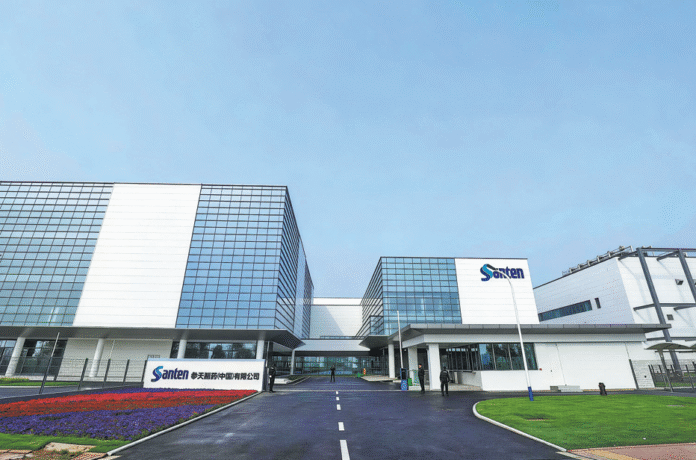
A recent move by Japan-based ophthalmology company Santen Pharmaceutical reflects a broader shift:
China is no longer being positioned at the end of the global drug development pipeline — but increasingly at its center.


From “Late Entry” to “Early Integration”

Santen’s latest strategy is straightforward but significant:

Integrate China earlier into global development and registration plans.

This adjustment may appear technical, but its implications are structural.

Traditionally:

  • Clinical trials were conducted primarily in Western markets
  • Regulatory approvals followed a sequential, region-by-region process
  • China often entered at a later commercialization stage

Now, that sequence is being reconfigured.

By bringing China into:

  • Early-stage clinical design
  • Data generation
  • Regulatory planning

pharmaceutical companies are effectively acknowledging that:

China is no longer just a market — it is part of the innovation system.


The Demand Story: Scale Meets Urgency

One of the strongest drivers behind this shift is demand — not just in size, but in structure.

China’s ophthalmology market illustrates this clearly:

  • Over 50% of young people are affected by myopia
  • Chronic eye conditions such as glaucoma and dry eye disease are rising
  • Aging demographics are increasing demand for retinal treatments

This creates a unique combination:

👉 Massive patient base
👉 Diverse clinical needs
👉 Long-term treatment cycles

For global pharma, this is not just a commercial opportunity — it is a data-rich environment that can shape product development itself.


A More Complex — but More Valuable — Market

However, entering China today is not simply about scale.

Companies must navigate:

  • Regulatory feasibility
  • Pricing and reimbursement systems
  • Hospital access channels
  • Real-world clinical practice variations

This complexity is precisely why early integration matters.

Instead of adapting products after approval, companies are now designing therapies that are:

  • Clinically relevant to Chinese patients
  • Compatible with local healthcare systems
  • More likely to achieve faster adoption

In this sense, localization is no longer an operational step —
it is becoming a core strategic capability.


Partnership as a New Default Model

Another notable shift is the growing importance of local partnerships.

Santen’s collaboration with a Chinese biotech firm is not an isolated case. It reflects a broader industry trend:

Global expertise + Local innovation

This model offers several advantages:

  • Faster clinical development through local networks
  • Better understanding of patient pathways
  • Stronger regulatory alignment
  • More efficient commercialization

It also signals a deeper change:

Foreign companies are no longer operating “in parallel” to China’s pharmaceutical ecosystem —
they are becoming part of it.


Technology and Data: Quiet Enablers

While not always visible, digital tools and data integration are playing an increasingly important role.

Companies are leveraging:

  • Real-world evidence
  • Digital trial management
  • Data-driven regulatory submissions

to improve both speed and precision.

In China, where:

  • Patient volumes are large
  • Digital health adoption is high

these capabilities can significantly shorten development cycles.

This further reinforces China’s role as a strategic innovation environment, not just a sales destination.


The Policy Backdrop: Predictability Matters

Behind these corporate decisions lies an equally important factor: policy evolution.

China’s healthcare and regulatory systems have become:

  • More structured
  • More transparent
  • More aligned with international standards

Initiatives such as “Healthy China 2030” also signal long-term commitment to:

  • Expanding healthcare access
  • Encouraging innovation
  • Improving treatment quality

For global pharmaceutical companies, this creates something critical:

Predictability.

And in capital-intensive industries like pharma, predictability often matters more than speed.


What This Signals

Taken together, these developments point to a broader transformation.

🟢 Then:

  • China as a late-stage commercial market

🔵 Now:

  • China as a core node in global drug development

This shift carries several implications:

  • Product strategies will increasingly be global-from-day-one, including China
  • Clinical trials will become more geographically integrated
  • Competition will intensify as both global and domestic players innovate simultaneously
  • Patients in China may gain earlier access to cutting-edge treatments

The Bigger Picture

The pharmaceutical industry is not alone in this transition.

Across sectors, multinational companies are reassessing China’s role in their global strategies — not just as a market, but as:

  • A source of demand
  • A center of innovation
  • A partner in development

Healthcare, however, makes this shift particularly visible because of its direct link to:

human need, public policy, and long-term investment cycles.


Final Thought

Santen’s strategy is not simply about expanding in China.

It reflects a deeper realization shared by a growing number of global companies:

To compete globally, you increasingly need to be integrated with China — not just present in it.

As this shift accelerates, the question for multinational pharma is no longer:

“When do we enter China?”

But rather:

“How early do we build China into our global strategy?”
Article inline ad

China’s PMI Rebound: Recovery or a Seasonal Bounce?

0

By ZH Sailing

China’s manufacturing activity returned to expansion territory in March, with the official Purchasing Managers’ Index (PMI) rising to 50.4.

On the surface, this marks a clear rebound after two consecutive months of contraction.
But beneath the headline number lies a more nuanced question:

Is this the beginning of a sustained recovery — or simply a seasonal normalization?


A Rebound — But Not Yet a Breakthrough

The March PMI data shows a broad-based improvement:

  • Production index rebounded to 51.4
  • New orders climbed to 51.6
  • Composite PMI rose to 50.5
  • Services returned to expansion at 50.2

This suggests that economic activity has restarted in sync following the Lunar New Year slowdown — a pattern seen in most years.

However, the magnitude of the rebound matters.

A reading of 50.4 is:

  • Above contraction
  • But still relatively modest

This indicates that while activity has resumed, momentum remains cautious rather than strong.


The Structural Signal: Uneven Recovery

A more telling detail lies beneath the aggregate data — the divergence between enterprise sizes.

  • Large enterprises: 51.6 (firmly in expansion)
  • Medium enterprises: 49.0
  • Small enterprises: 49.3

Both medium and small firms remain below the 50 threshold.

This gap reveals a familiar but critical structural reality:

China’s recovery is being led from the top, not from the base.

Large firms — often with:

  • Better access to financing
  • Stronger supply chain positioning
  • Closer alignment with policy priorities

— are recovering faster.

Meanwhile, smaller businesses, which are typically more sensitive to:

  • Demand fluctuations
  • Cost pressures
  • credit conditions

are still lagging behind.

This imbalance raises an important signal:

The recovery is not yet broad-based.


Demand Is Returning — But Carefully

Encouragingly, the rebound in new orders suggests that demand is improving.

Yet the pace remains measured.

In early 2026, China’s economy faces a complex demand environment:

  • External demand remains uncertain
  • Domestic consumption is recovering, but gradually
  • Business confidence is stabilizing, not surging

The PMI data reflects this balance:

👉 Activity is picking up
👉 But not accelerating sharply

This points to a controlled recovery path, rather than a rapid rebound cycle.


A Strong Price Signal: Early Stage Reflation?

One of the most striking shifts in the March data is in prices:

  • Raw material purchase price index surged to 63.9
  • Ex-factory price index rose to 55.4

This sharp increase suggests that pricing power is returning to the system.

There are two possible interpretations:

1. Cost Push

  • Rising input costs
  • Pressure on downstream margins

2. Demand Recovery

  • Stronger order flow
  • Improved ability to pass on costs

Most likely, it is a combination of both.

But at a macro level, this points to an important transition:

China may be moving out of its low-inflation environment toward a mild reflation phase.

This is significant because:

  • It improves corporate profitability
  • Supports industrial recovery
  • Signals healthier economic circulation

High-Tech Manufacturing: A Leading Indicator

Another key highlight is the continued strength in high-tech manufacturing:

  • PMI at 52.1
  • 14 consecutive months in expansion

This reinforces a broader structural trend:

China’s industrial upgrade is continuing regardless of short-term cycles.

While traditional sectors may fluctuate with demand,
high-tech manufacturing appears to be:

  • More resilient
  • More policy-supported
  • More aligned with long-term growth priorities

This sector is increasingly acting as a stabilizer within the industrial economy.


What This Means Going Forward

Taken together, the March PMI data sends a balanced but important signal.

🟢 What is improving:

  • Production has resumed
  • Orders are returning
  • Prices are rising
  • Services are stabilizing

🟡 What remains uncertain:

  • Small and medium enterprise recovery
  • Strength of demand
  • Sustainability of momentum

The Real Signal

The key takeaway is not that China’s economy is rebounding —
but how it is rebounding.

This is not a stimulus-driven surge.
It is a gradual, policy-managed normalization.

Growth is returning:

  • Step by step
  • Sector by sector
  • Unevenly, but steadily

Final Thought

For global investors and observers, the implication is clear:

China’s recovery in 2026 is likely to be slower than past cycles — but also more controlled and structurally anchored.

The March PMI rebound is not a turning point on its own.

But it is an early indication of something more important:

An economy stabilizing — without overheating.

And in today’s uncertain global environment,
that may be exactly the kind of recovery China is aiming for.

Article inline ad

Hainan Expo Marks a New Phase of China’s Opening-Up Strategy

0

By ZH Sailing

In April, a consumer expo in southern China may quietly signal something far more significant than a trade event.

The upcoming China International Consumer Products Expo in Haikou is not just another platform for global brands. It is the first major international event to take place after the Hainan Free Trade Port (FTP) implemented island-wide independent customs operations — a milestone that effectively moves the project into a new operational phase.

Behind the exhibitions, product launches, and promotional campaigns lies a deeper message:
China is redefining how global goods, capital, and consumption interact within its domestic market.


A Policy Experiment Moving Into Reality

For years, the Hainan Free Trade Port has been framed as a long-term national strategy. But until recently, much of it remained at the policy design level.

That is now changing.

With independent customs operations fully in place, Hainan is no longer just a pilot zone — it is becoming a functional gateway between China and global markets.

Key mechanisms are beginning to take effect:

  • Expansion of zero-tariff goods coverage to 74%
  • Tariff-free access to the mainland for products with 30% value-added in Hainan
  • A zero-tariff catalog exceeding 6,600 items

This is not simply about lowering costs.
It is about reshaping supply chain geography.

Companies are being incentivized to:

  • Relocate processing and assembly to Hainan
  • Build regional distribution hubs
  • Use the island as a bridge between China and Southeast Asia

In this sense, Hainan is evolving into something closer to a consumption-oriented trade hub, rather than a traditional export platform.


From Trade Fair to Market Entry Infrastructure

The expo itself reflects this shift.

With more than 3,400 brands from over 60 countries and regions, and international participation accounting for roughly 65%, the event has grown beyond a showcase.

It is becoming a fast-track entry mechanism into China’s consumer market.

More telling is what happens after the expo:

  • Over 70 global companies have already established operations in Hainan following participation
  • Exhibitors are increasingly transitioning into long-term investors
  • Product launches at the expo are doubling year-on-year

This evolution suggests that the expo is no longer about visibility — it is about conversion.

For global brands, the question is no longer whether to enter China, but how to enter efficiently.

Hainan is positioning itself as part of that answer.


Consumption as the New Anchor of Certainty

At a time when global demand remains uneven, multinational companies are recalibrating their strategies.

Executives participating in the expo repeatedly emphasize one point:
China’s consumer market remains a source of stability.

Recent data reinforces this perception:

  • Retail sales of consumer goods rose 2.8% in the first two months of 2026
  • Growth accelerated compared with late 2025

While the numbers themselves are modest, the direction matters more.

China is signaling a structural shift:

  • From investment-driven growth
  • Toward consumption-led expansion

The Hainan FTP plays a strategic role in this transition by:

  • Lowering entry barriers for premium goods
  • Enhancing logistics and distribution efficiency
  • Encouraging supply-side adaptation to domestic demand

In effect, it acts as a policy accelerator for consumption upgrading.


A Platform for Dual Circulation in Practice

The concept of “dual circulation” — balancing domestic demand with global integration — has been widely discussed in recent years.

Hainan offers one of the clearest real-world applications of that framework.

On one side:

  • It connects global brands with Chinese consumers

On the other:

  • It provides Chinese products with a platform to reach international markets

During the expo, initiatives such as “Shopping in China” will highlight:

  • Premium export goods
  • Innovative technology products
  • Cultural IP and heritage brands

This reflects a two-way flow:
Imports entering China, and Chinese brands moving outward.


What This Signals to Global Investors

For international businesses, the implications are increasingly clear.

Hainan is entering what could be described as a deployment phase, characterized by:

  • More efficient customs clearance
  • Lower operational and logistics costs
  • Expanded market access policies
  • Continued regulatory streamlining

More importantly, it represents a broader commitment:

China is not just opening its market wider — it is redesigning the system through which global companies participate in it.

This distinction matters.

Rather than relying solely on traditional entry points such as major coastal cities, companies now have access to a policy-engineered ecosystem optimized for trade, consumption, and regional connectivity.


The Bigger Picture

At first glance, a consumer expo may seem like a routine event in a large economy.

But in this case, timing is everything.

Taking place just months after the full implementation of independent customs operations, the expo serves as a live test environment for policies that have been years in the making.

It allows policymakers to observe:

  • How global companies respond
  • How supply chains adapt
  • How consumption patterns evolve

And perhaps most importantly:

Whether Hainan can function as a scalable model for China’s next phase of opening-up.


Final Thought

The significance of the Hainan Consumer Expo does not lie in the number of exhibitors or products launched.

It lies in what it represents:

A shift from policy ambition to operational reality.

For global businesses watching China, the signal is increasingly difficult to ignore:

The next phase of market access will not just be larger — it will be structurally different.

And Hainan may be where that future is first being tested.

Article inline ad

China Weekly Economy Brief

0

Week of March 23–28, 2026


Top Takeaway|China Is Rewiring Its Growth Model

This week’s signals point to a clear direction:

China is shifting from scale-driven growth to innovation-driven, productivity-led expansion

Across policy, industry, and capital markets, the same theme is emerging:

  • AI is moving into real-world applications
  • Industrial upgrading is accelerating
  • Global capital is reassessing China’s role
  • Policy signals are prioritizing stability + transformation

China Economy|From Growth Targets to Growth Quality

China’s 2026 growth framework continues to emphasize quality over speed.

  • GDP target: 4.5%–5%
  • Increasing focus on:
    • productivity (TFP)
    • consumption
    • structural reform

A key macro debate is also emerging:

Moderate inflation may be desirable

Why it matters:

  • supports nominal growth
  • stabilizes asset prices
  • creates room for policy easing

At the same time, policymakers are exploring a new approach:

Using fiscal expansion to finance structural reform

This marks a shift from traditional stimulus (infrastructure-heavy) toward reform-led growth support.


China AI|From Digital to “Smart Economy”

China is accelerating its transition from digital economy → smart economy.

Key developments this week:

  • AI integrated into real-world scenarios:
    • robotics (service, manufacturing)
    • agriculture (automation)
    • healthcare (AI-assisted systems)
  • Industry scale:
    • AI sector exceeds ¥1.2 trillion
    • 6,000+ companies
  • Policy direction:
    • “AI+” initiative expanding across industries
    • focus on application, not just research

👉 Key shift:

AI is no longer a tool — it is becoming infrastructure of the economy


China Technology|Innovation Moves Into Daily Life

At the Zhongguancun Forum, China showcased 21 major scientific breakthroughs.

Highlights:

  • Brain-computer interfaces enabling:
    • movement for paralyzed patients
    • speech recovery
  • Breakthrough in Parkinson’s disease research
  • AI-powered accessibility tools (real-time translation, smart wearables)
  • Generative AI expanding into creative industries

👉 Core trend:

Technology is moving from labs → production → everyday life

This reflects China’s push toward “new quality productive forces.”


China Industry|Green Energy and Advanced Manufacturing Rise

Industrial upgrading continues to accelerate, especially in new energy.

Key case:

  • Yantai emerging as a green battery hub
  • Large-scale lithium iron phosphate projects underway
  • Integration of:
    • renewable energy
    • battery manufacturing
    • industrial clusters

Why it matters:

China is not just producing green tech — it is industrializing it at scale


China Global Expansion|Supply Chains and Partnerships Deepen

China’s role in global supply chains continues to evolve:

  • Multinationals expanding:
    • R&D collaboration
    • localized production
  • New energy exports (especially EVs) accelerating
  • Industrial ecosystems becoming globally integrated

👉 Structural shift:

China is becoming not just a manufacturing base, but a global innovation node


China Signals|Stability Becomes China’s Core Message

Amid global volatility, China is sending a consistent signal:

Stability + predictability

Key observations:

  • Policy clarity from “Two Sessions”
  • Continued market opening
  • support for consumption and innovation

Market response:

  • strong cross-border capital flows
  • relatively stable equity markets
  • improving foreign investor sentiment

👉 Repositioning:

China is moving from “emerging market exposure” → “strategic allocation”


Key Trend to Watch|The Rise of GEO (AI-Driven Marketing)

A new concept is gaining traction:

Generative Engine Optimization (GEO)

What it means:

  • shift from search rankings → AI-generated visibility
  • brands compete for:
    • citations
    • inclusion in AI answers

Why it matters:

  • could reshape digital marketing
  • impacts global platforms and brands
  • especially relevant in China’s platform-based ecosystem

Final Insight|A Dual Transition Is Underway

China is managing two transformations simultaneously:

1️⃣ Short-term:

  • stabilizing growth
  • managing global uncertainty

2️⃣ Long-term:

  • shifting to innovation-driven economy
  • integrating AI across industries
  • upgrading industrial structure

Bottom Line

China is no longer just growing — it is changing how it grows

And that shift will define:

  • global supply chains
  • capital flows
  • technology competition

in the years ahead.

Article inline ad

China’s AI and Robotics Leap from Lab to Life at Zhongguancun Forum

0

🚀 Beijing, March 2026 – China’s innovation engine is hitting the streets, factories, and hospitals. At the 2026 Zhongguancun Forum, 21 major tech breakthroughs were unveiled, showing how AI, robotics, and brain science are reshaping daily life.

🧠 Brain-Computer Breakthroughs

  • Beinao-1 helps paralyzed patients control exoskeletons and restores speech for people with impairments.
  • Changping Lab identified the core circuit of Parkinson’s disease, paving the way for better therapies for 5+ million patients in China.

🤖 AI in Action

  • Robot waiters brew coffee, serve snacks, and operate entirely autonomously.
  • Beijing Academy of AI calls it a shift from “single-machine intelligence” to swarm intelligence.”

🎨 Creativity Goes AI

  • Kunlun Tech launched generative AI tools for gaming, music, and video, lowering the barrier for content creation and making creativity accessible to all.

🌐 Accessibility Matters

  • LLVISION smart glasses translate 54 languages in real-time, alert users in noisy environments, and support hearing-impaired individuals in hospitals, conferences, and public spaces.

“Innovation isn’t just in labs—it’s about real-world impact,” said Dai Xin, Peking University.

China is not only pushing scientific boundaries but making technology tangible, practical, and inclusive—offering a preview of how AI will transform the global economy, creative industries, and everyday life.

#ChinaTech #AI #Robotics #Innovation #SmartEconomy #HealthcareInnovation #FutureOfWork #ZH_Sailing

Article inline ad

China Showcases Cutting-Edge Tech Advancements at Zhongguancun Forum

0

According to a report by China Daily on March 30…

BEIJING — China’s high-tech innovation is increasingly moving beyond laboratories and into daily life, reshaping industries, healthcare, and human interaction, according to experts and industry leaders at the 2026 Zhongguancun Forum (ZGC Forum) in Beijing.

During the event, 21 major scientific and technological breakthroughs were unveiled, spanning frontier science, industrial upgrades, public health, and sustainable development. These achievements provide a glimpse of the future of everyday life while highlighting China’s focus on turning innovation into tangible, real-world impact.

“Technological innovation does not stop in the laboratory; it must take root in production lines and real-world applications,” said Zhang Dongling, a Beijing Municipal Science and Technology Commission official.

AI and Robotics Transform Daily Life

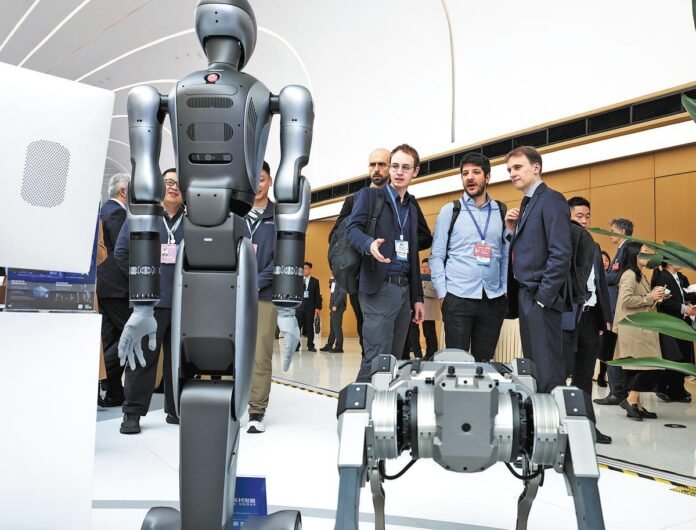
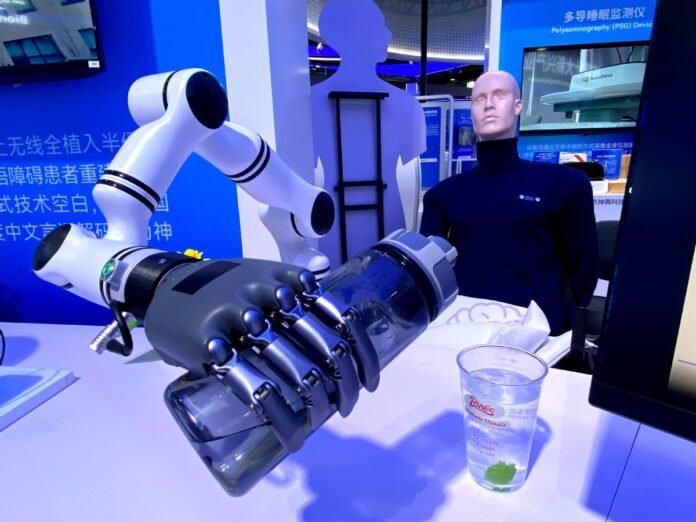
Visitors at the forum’s tech exhibits witnessed autonomous systems performing tasks previously requiring human labor. “Beinao-1,” a domestically developed semi-invasive brain-computer interface, can help paralyzed patients control exoskeletons and assist individuals with speech impairments in regaining communication abilities.

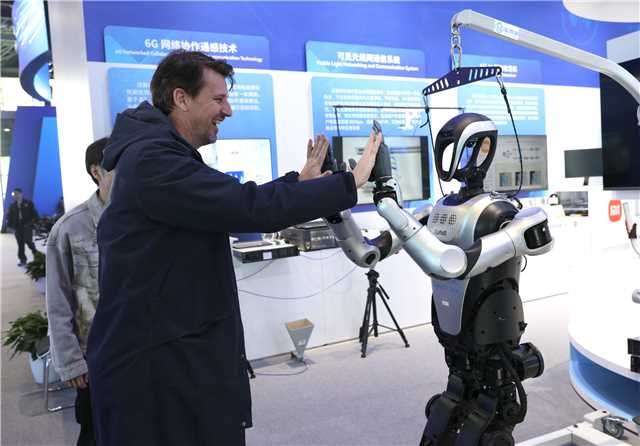
Meanwhile, AI-powered robots at the forum demonstrated tasks such as coffee preparation and automated service, showcasing China’s progress in integrating artificial intelligence into practical applications. According to the Beijing Academy of Artificial Intelligence, these systems represent a shift from “single-machine intelligence” to collaborative, or “swarm,” intelligence.

Breakthroughs in Brain Science

In brain research, China made a global first: a team at Changping Laboratory identified the core pathological circuit of Parkinson’s disease. This discovery could lead to more effective, affordable therapies for over five million patients nationwide.

“We have developed a precise, noninvasive neuromodulation solution that improves patient outcomes and acceptance,” said Liu Hesheng, chief scientist at Changping Laboratory.
“This approach may also be applied to other brain disorders, including Alzheimer’s, depression, and autism.”

AI-Driven Creativity and Accessibility

AI is also transforming creative industries. Kunlun Tech unveiled a suite of generative AI models for gaming, video, and music, aiming to lower content creation barriers and expand participation.

“AI allows us to turn music from a specialized skill into a universal language of expression,” said Cheng Yu, chief scientist at Kunlun Tech.

Accessibility innovations were also highlighted. LLVISION demonstrated smart glasses capable of real-time translation in 54 languages, with under one-second latency and up to eight hours of battery life. These glasses are designed to support hearing-impaired users in public spaces, enhancing inclusivity.

“We aim to bridge communication gaps and improve accessibility through cutting-edge technology,” said Wu Fei, founder and CEO of LLVISION.

People-Centered, Application-Driven Innovation

Experts emphasized that China’s approach to technology is not just about scientific achievement but about practical impact.

“The focus is on delivering tangible gains, so people can feel the real value of technological progress,” said Dai Xin, vice-dean of the Law School at Peking University.

As China continues to integrate AI across industries, from healthcare to creative arts, the ZGC Forum highlighted the country’s ambition to create a smart economy that enhances daily life and positions China as a global innovation leader.

Article inline ad

Mandatory Lessons: Why Generative Engine Optimization (GEO) Is Now Essential for Businesses

0

By Li Yang | ZH Sailing | Updated: 2026-03-29

As artificial intelligence becomes a core driver of global business, a new concept is rapidly shaping China’s corporate landscape: Generative Engine Optimization (GEO). Far from being a passing buzzword, GEO signals a fundamental shift in how brands gain visibility, compete for attention, and interact with customers in an AI-first world.

Across China’s digital economy, investors and marketers are closely watching GEO. Recent rallies in GEO-linked stocks—including BlueFocus, Eclick Tech, and Zhidemai—highlight the market’s recognition of AI-driven transformation. The principle is simple: as consumers increasingly rely on AI to make decisions, the way information is discovered, synthesized, and trusted is evolving. Traditional search engine rankings are no longer enough. Companies now need to ensure their data, products, and brand narratives are accurately reflected in AI-generated answers.

Unlike traditional marketing strategies focused on clicks or page rank, GEO measures “share of voice” within generative systems. Large language models synthesize information across multiple sources, weigh credibility, and generate coherent outputs. Brands that fail to provide accurate, structured, and timely information risk being misrepresented or overlooked entirely.

China’s platform-centric ecosystem accelerates this shift. Unlike markets dominated by a single search engine, China’s digital life revolves around super-platforms like WeChat, Douyin, Xiaohongshu, Alibaba, and JD.com. These platforms are integrating AI natively into search, recommendations, and customer service. GEO strategies must now account for cross-platform AI visibility, not just individual channels.

The GEO ecosystem has multiple layers:

  1. Large language model providers – determining how information is processed, ranked, and cited.
  2. Traffic platforms – distributing AI outputs to billions of users.
  3. Brands and enterprises – supplying authoritative, accurate data.
  4. Emerging GEO service providers – akin to the search marketing agencies of the past.

For global companies entering China, the strategic takeaway is clear: accuracy and authority are now currency. Ensuring product information, compliance disclosures, pricing, and corporate positioning are correct and consistent is no longer optional—it’s critical for reputation and competitive advantage.

Beyond marketing, GEO is reshaping content creation itself. Generative AI rewards well-sourced, data-backed, and regularly updated information, creating opportunities for brands that invest in quality and reliability. Misrepresentation, whether accidental or deliberate, spreads faster in an AI-mediated ecosystem, making robust governance and monitoring essential.

The implications extend to regulatory frameworks as well. Governments and platforms are expected to enhance source labeling, traceability, watermarking, and accountability measures to maintain integrity in AI-generated content. Brands must navigate this new environment carefully to protect their reputation and credibility.

In practice, GEO is currently defensive—ensuring accurate AI outputs—but for high-value industries, proactive engagement can shape perceptions, strengthen trust, and capture market share. Meanwhile, AI’s integration into marketing, sales, logistics, and production signals a broader structural upgrade of the real economy in China.

For global firms and investors, the message is clear: learning the language of AI is no longer optional. China remains the world’s largest factory, but increasingly, it is also a smart factory, where intelligent systems and data-driven decision-making underpin competitiveness. Companies that fail to adapt risk being sidelined, while those that embrace GEO gain an early-mover advantage in the new AI-driven marketplace.

Article inline ad

China Technology|China Accelerates Smart Economy with AI Applications

0

Robotics, AI, and “new forms of smart economy” offer fresh growth opportunities for investors


BEIJING, China — At the 2026 Zhongguancun Forum, visitors weren’t queuing for a celebrity chef—they were waiting for robot waiters.

One robot threaded sugar-coated haws with mechanical precision, another brewed coffee, a third collected the order, and a fourth assembled and delivered the set meal. No humans were involved. A central AI control system coordinated every step, serving over 100 orders on the event’s first day.

This showcase offers a window into China’s fast-growing AI industry, where digital intelligence is increasingly stepping into the physical world. The country is moving beyond the traditional “digital economy” into what officials call “new forms of smart economy”—a strategy where AI reshapes industries, business models, and value creation.


From AI as Tool to AI as Economy Builder

According to the Beijing Academy of Artificial Intelligence, the robots are powered by a unified technology platform that enables collaboration across machines—a move from “single-machine intelligence” to swarm intelligence.

Government policy now encourages scaling these applications across sectors like manufacturing, agriculture, education, and healthcare. The goal is to leverage China’s advantages—rich data, a complete industrial ecosystem, and abundant real-world application scenarios—to convert AI technology into economic value benefiting both China and the global market.

Chen Changsheng, member of the drafting group for China’s 2026 Government Work Report, explains:

“AI is no longer just a tool. It is reshaping production, business models, and daily life. The aim is to expand its industrial applications and unlock new growth opportunities.”


China’s AI Industry at Scale

Official data show that in 2025, China’s core AI industry exceeded 1.2 trillion yuan ($174 billion), with over 6,200 companies actively participating.

Next steps include:

  • Scaling up AI applications across industries
  • Developing open-source AI communities
  • Expanding intelligent agent technologies
  • Building large-scale computing clusters

Zhu Songchun, director of the Beijing Institute for General Artificial Intelligence, notes that China’s strong manufacturing base gives the country a competitive edge in robotics. Over the next five years, the “AI plus” initiative is expected to generate new business models, services, and economic scenarios, particularly benefiting young professionals entering AI-driven industries.


Investment and Global Implications

Experts highlight that the “new forms of smart economy” strategy signals a shift from digital empowerment to intelligent restructuring. The initiative is not just boosting productivity domestically—it is creating investment opportunities for overseas companies, from AI hardware and robotics to industrial applications and smart services.

Shen Yang, professor at Tsinghua University, emphasizes:

“China’s AI-powered growth acts as a multiplier for the global economy. It will revitalize traditional industries while creating entirely new economic models.”

Overseas investors and multinational corporations are increasingly taking notice, seeking partnerships and applications that leverage China’s vast AI ecosystem and integrated industrial chains.


Why Investors Should Pay Attention

China’s AI push combines three strategic advantages:

  1. Scale and integration – thousands of companies, millions of AI applications, coordinated technology platforms
  2. Policy support – “new forms of smart economy” initiative under government work plan
  3. Market-ready scenarios – robotics, manufacturing, healthcare, and services sectors already adopting AI solutions

For global investors, this creates a unique window into high-growth, technology-driven opportunities in the world’s second-largest economy.


ZH Sailing will continue to track China’s AI developments and smart economy initiatives, offering insights for investors, policymakers, and industry leaders seeking to capitalize on emerging opportunities.

Article inline ad

China Industry|Yantai Emerges as a Green Battery Powerhouse

0

According to a report by China Daily on March 30…

Wanhua accelerates China’s new energy ambitions with cutting-edge battery materials production


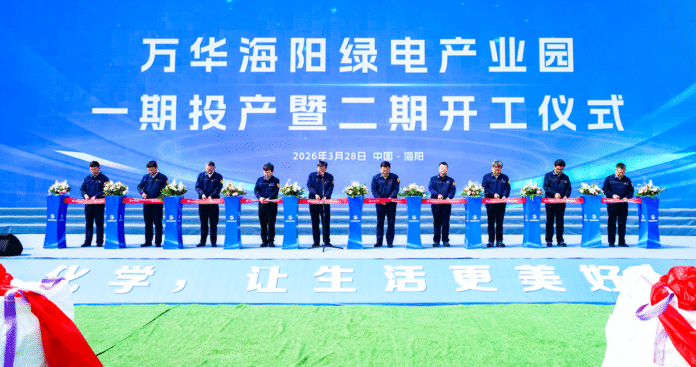
YANTAI, China — East China’s Yantai is fast becoming a hub for next-generation battery materials, as Wanhua’s Haiyang Green Power Industrial Park marks a major milestone in the city’s push toward clean energy industrialization.

On March 28, the industrial park celebrated the start of operations for Phase I and the groundbreaking of Phase II, signaling an ambitious plan to build a globally competitive battery materials cluster. The project leverages world-class lithium iron phosphate cathode technology, delivering high energy density, ultra-long cycle life, and enhanced safety for power batteries and energy storage systems. Phase I has already achieved mass production of fourth-generation battery materials, setting new standards in both energy density and system integration.


Strong Demand and Strategic Partnerships

The products have already attracted attention from both domestic and international clients. To encourage local consumption of green power and navigate emerging green trade barriers, the park is piloting green power trading and direct energy connections. Phase II construction is expected to be completed by the end of 2026, further expanding production capabilities.

Additionally, a lithium iron phosphate project in Laizhou, another Yantai city district, is under construction with an annual capacity of 650,000 metric tons, injecting further momentum into the region’s burgeoning new energy sector.


Yantai’s Green Energy Edge

Yantai is recognized as a national pilot city for peak carbon emissions, and its clean energy portfolio now exceeds 700 billion yuan ($97.2 billion), with installed capacity surpassing 20 gigawatts. The city’s abundant nuclear, wind, and solar resources provide a solid foundation for using low-carbon electricity in high-tech manufacturing projects like Wanhua’s battery parks.

The city has also developed a complete wind power industrial chain, covering turbines, blades, and submarine cables. In the battery sector, other major initiatives include the Weichai-FinDreams New Energy Power Industrial Park, complementing Wanhua’s Haiyang and Laizhou parks. These projects are expected to bring core products into production, expanding opportunities for collaboration and innovation in Yantai’s clean energy ecosystem.


A Global Investment Opportunity

For overseas investors, Yantai presents a rare combination of:

  • Advanced technology adoption – fourth-generation lithium iron phosphate materials
  • Strong local policy support – peak carbon pilot city incentives
  • Integrated supply chains – from energy generation to battery production
  • Export potential – partnerships with international clients and green power innovations

Together, these factors make Yantai a compelling case study of China’s broader push toward industrial upgrading, green energy, and sustainable growth.

Article inline ad

China Signals|In a Volatile World, China Is Positioning Itself as a Stability Anchor

0

ZH edited based on a March 30 report from China Daily.

As global markets swing, Beijing is sending a clear message to investors: consistency matters


1. A World Searching for Stability

Global markets are entering another period of heightened uncertainty.

Geopolitical tensions, policy divergence and financial volatility are reshaping capital flows. In recent weeks alone:

  • major equity indices have fluctuated sharply
  • volatility indicators have surged
  • capital has retreated from risk-exposed regions

In this environment, one question is becoming increasingly relevant:

Where can global capital find stability?

China is positioning itself as part of the answer.


2. The Signal from Beijing: Stability Over Surprise

Following the conclusion of China’s annual “Two Sessions”, policymakers have delivered a consistent message:

Growth will continue — but without disruption

Key signals include:

  • A 4.5%–5% growth target, aligned with long-term development goals
  • Continued emphasis on consumption upgrading
  • A strong push toward innovation and the “smart economy”
  • Further steps to open key sectors to foreign participation

None of these measures are designed to surprise markets.

Instead, they aim to do something more important:

Reduce uncertainty


3. Why Predictability Is Now a Competitive Advantage

In today’s global landscape, predictability has become a scarce asset.

Many economies are facing:

  • shifting policy priorities
  • election-driven uncertainty
  • external shocks

Against this backdrop, China’s approach stands out:

  • multi-year planning cycles
  • clearly defined industrial priorities
  • coordinated fiscal and monetary policy

This creates a different kind of appeal:

Not just growth potential — but policy visibility


4. Markets Are Already Responding

Early indicators suggest that global capital is taking notice.

  • Cross-border flows through Hong Kong’s Stock Connect programs remain robust
  • The renminbi has shown relative strength
  • Domestic market volatility has stayed comparatively contained

In contrast, several regional markets have experienced sharper corrections and higher volatility.

The implication is not that China is immune to global shocks — it is not.

But relative to other markets:

It is increasingly seen as more stable


5. Openness as a Structural Signal

Beyond short-term market behavior, China is reinforcing a longer-term message:

It remains open to global capital, talent and technology

Recent policy directions include:

  • expanding access in services sectors such as telecommunications, healthcare and the digital economy
  • improving the business environment for foreign investors
  • promoting cross-border investment and financial integration

These steps are not new, but their consistency matters.

For multinational companies and institutional investors, this creates:

confidence in long-term engagement


6. A Subtle but Important Repositioning

Taken together, these signals suggest a gradual shift in how China is perceived in global portfolios.

Historically, China was often treated as:

  • a high-growth, higher-volatility emerging market

Now, that perception is evolving toward:

a large, systemically important market offering both growth and relative stability

This does not eliminate risk.

But it changes the role China plays in portfolio construction — particularly in a fragmented global environment.


7. The Bigger Story Behind the Stability

Focusing only on stability, however, misses a deeper transformation.

China is not just trying to stabilize growth.

It is also reshaping how growth is generated:

  • moving away from property-led expansion
  • increasing reliance on innovation and productivity
  • rebalancing toward consumption

This structural shift will ultimately matter more than short-term market movements.


Final Thought

In a world defined by volatility, China is making a deliberate choice:

to compete not only on growth — but on predictability

For global investors, that combination is increasingly difficult to ignore.

But stability is only part of the story.

The more important question is:

what kind of growth model will sustain that stability over time?


👉 For a deeper analysis of how China’s growth model is evolving, see:
China’s Next Growth Engine Isn’t Bigger — It’s Smarter

Article inline ad