Tuesday, November 24, 2026

Home Blog Page 25

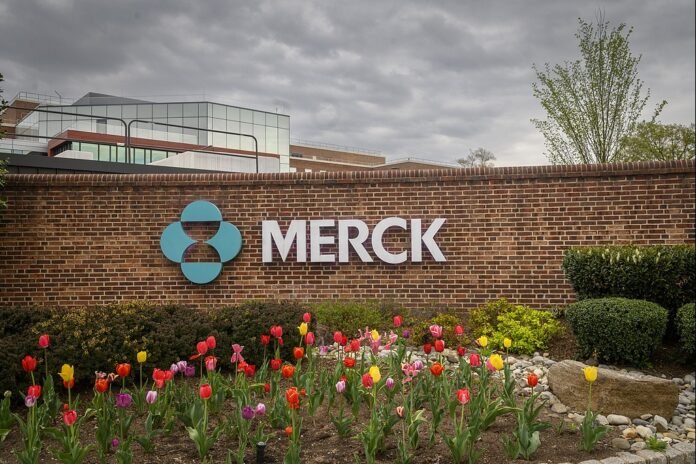
Merck views country as vital base in global biz

0
By WANG KEJU | CHINA DAILY | Updated: 2026-03-28 

China serves not only as a rewarding market for multinational companies, but also increasingly as a reliable and vital production base and innovation hub amid the fast-evolving global economic landscape, a senior executive from Merck, one of the world’s leading research-intensive biopharmaceutical companies, told China Daily.

“Speed does matter when talking about global supply chains these days,” said Rogier Janssens, president of Merck China. “You see what’s happening in the world today, not everything is predictable, so we need to be agile when we go forward.”

69c722c1a310d68600fa9544
Rogier Janssens

China’s integrated advantages — manufacturing depth, innovation capacity, infrastructure and market scale — have helped support global businesses like Merck in enhancing production and supply resilience, according to Janssens.

“We look at China not just as a market; we see China as a production base and, in particular, a base for innovation,” said Janssens while speaking to China Daily during the China Development Forum 2026 in Beijing.

China’s innovation ranking has broken into the global top 10 for the first time, according to the Global Innovation Index 2025 released by the World Intellectual Property Organization last September.

“We need Chinese talent to drive innovation, enhance supply chain efficiency, optimize production systems and find market opportunities,” Janssens added.

In the medical field, Merck’s partnership efforts with local firms are currently concentrated on fertility, oncology and rare diseases, according to Janssens.

Meanwhile, in its push to integrate with the digital environment, Janssens noted that Merck is working with Tencent to manage healthcare data and is collaborating with JD to enhance product availability and delivery speed for patients.

Dilma Rousseff, president of the New Development Bank, said at a symposium during the forum that China serves as a core engine for global stability, growth, trade and technological transformation — a role rooted in a structural shift from scale-driven growth to one powered by productivity, innovation, sustainability and resilience.

“We at Merck are helped by stability,” Janssens said, noting that this year’s annual growth target is a “realistic” goal supported by policies focused on resilience and innovation.

China is targeting an economic growth of 4.5 percent to 5 percent this year and will strive for better in practice, according to a Government Work Report released earlier this month.

Meanwhile, China’s continuous commitment to opening-up in the Government Work Report also provides multinational companies with a predictable business environment to drive their long-term strategy forward, Janssens said.

“China has already moved to the 2.0 version of its opening-up policy, as it’s not just about enabling multinational companies to access the Chinese market, it’s about empowering them to collaborate in innovation,” he added.

During the forum, Vice-Minister of Commerce Yan Dong said that China in recent years has become a testing ground, application field and profit center for global innovation, and that the country will support international joint research and application, and promote the construction of an open innovation ecosystem.
Article inline ad

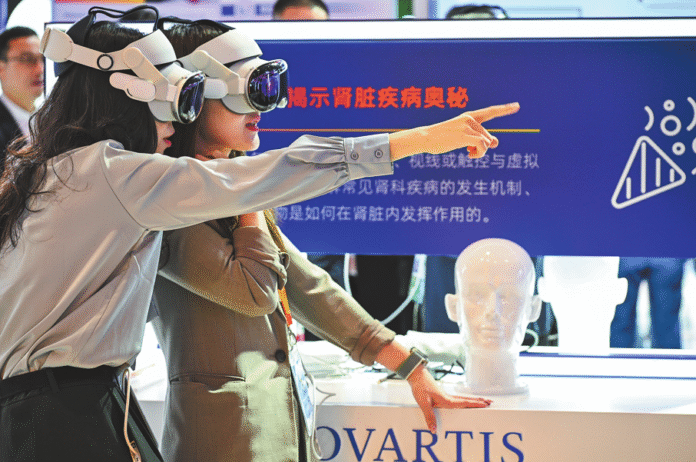
Novartis Accelerates China Expansion, Cementing Role in Global Biopharma Innovation

0

Swiss pharmaceutical giant Novartis is stepping up its China presence with a planned investment exceeding 3.3 billion yuan ($460 million), signaling the country’s central role in its long-term global strategy. The announcement came during the 2026 China Development Forum in Beijing, marking the company’s eighth consecutive attendance.

“China is critical to Novartis’ long-term development and innovation,” said CEO Vas Narasimhan. “We aim to be a trusted healthcare partner and bring transformative medicines to Chinese patients.”

Strategic Expansion Across R&D and Manufacturing

Novartis plans a multi-pronged investment approach this year:

  • Changping Plant (Beijing): The facility, operational since 1987, will undergo a 1.5 billion yuan upgrade, adding advanced sterile preparation, liquid filling, and packaging capabilities.
  • Shanghai Campus: Marking its 10th anniversary, the campus will expand with a 1.8 billion yuan investment alongside partners, reinforcing its role as Novartis’ China headquarters.
  • Radioligand Therapy Facility (Haiyan, Zhejiang): The first of its kind in China, this 600 million yuan site positions Novartis to meet growing domestic demand for innovative cancer therapies.

The expansions underline China’s evolution from a high-growth consumer market to a global innovation hub within Novartis’ corporate architecture.

China: A Growing Hub for Global Pharma Innovation

Novartis’ move reflects broader trends among multinational pharmaceutical companies:

  • Eli Lilly announced a $3 billion, 10-year investment plan in China to localize production of oral solid drugs and next-generation GLP-1 therapies.
  • AstraZeneca plans to invest over 100 billion yuan by 2030 to expand drug manufacturing and R&D footprint.

Executives note that China now accounts for around 30% of global novel drug development, second only to the U.S. In 2025, China approved 76 innovative drugs, up from 48 in 2024, underscoring the accelerating pace of innovation and regulatory efficiency.

Policy Tailwinds and Emerging Opportunities

Commerce Minister Wang Wentao highlighted that foreign firms have deepened their presence over the years, turning China into a strategic R&D hub. The 15th Five-Year Plan (2026-30) reinforces a health-first strategy, positioning biopharmaceuticals as an emerging pillar industry and pledging stronger IP protection, greater policy transparency, and faster regulatory approvals.

These measures create fertile ground for multinational firms to capture new opportunities in Healthy China 2030, while scaling production and accelerating delivery of innovative therapies to patients.

Implications for Global Biopharma

Novartis’ China strategy exemplifies a shift in multinational pharma operations: integrating local production, R&D, and innovation into global pipelines. By leveraging China’s regulatory reforms, skilled workforce, and expanding patient base, companies can accelerate global drug development while anchoring their presence in one of the world’s largest healthcare markets.

For investors and industry watchers, the message is clear: China is no longer just a market—it is a strategic engine for global pharmaceutical innovation, with multinationals increasingly treating their China operations as critical to long-term competitiveness.

Article inline ad

China approves innovative breast cancer therapy by Daiichi Sankyo, AstraZeneca

0
By Zhou Wenting in Shanghai | chinadaily.com.cn | Updated: 2026-03-27 

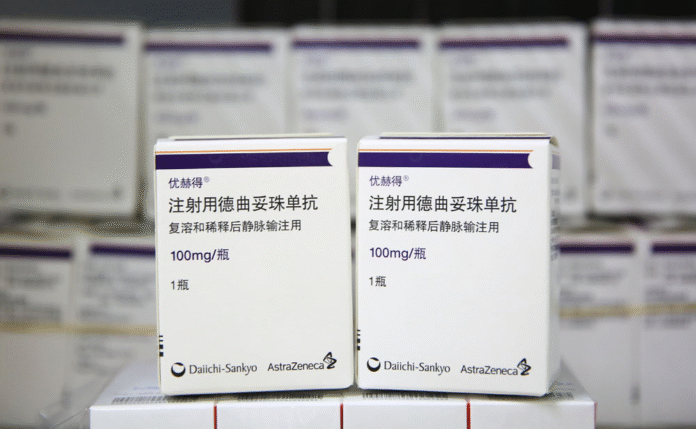
Japan’s Daiichi Sankyo and the United Kingdom’s AstraZeneca announced on Friday that their co-developed innovative medicine, Enhertu, has been approved for use in China as a neoadjuvant treatment for early-stage breast cancer.

This marks China as the first country globally to have this indication approved. Such development underscores the multinational pharmaceutical companies’ focus on the China market and highlights the acceleration of China’s drug approval reforms.

This approval, which signifies the entry of antibody-drug conjugates (ADC) into the treatment of early-stage breast cancer, serves as the latest example that China is increasingly becoming a crucial launch market for global pharmaceutical innovations, said industry experts.

Wu Jiong, Party secretary of Fudan University Shanghai Cancer Center and the lead researcher for relevant clinical studies related to this drug in China, emphasized the importance of effective preoperative neoadjuvant treatment in reducing the risk of disease recurrence, maximizing the chances of cure, and helping to reduce the intensity of surgery.

“The approval of this innovative injection offers a new treatment option and hope for clinical cure to more early-stage breast cancer patients in the country,” he said.

Article inline ad

UBR offers a sip of Tang Dynasty’s poetic culture

0
By REN QI | China Daily | Updated: 2026-03-27 

Imagine sitting down for lunch when a boisterous figure in flowing robes raises a cup to toast you. It is Li Bai, China’s “rock-star” poet from the Tang Dynasty (618-907), but he isn’t on a movie screen or in a textbook — he is standing right next to your table, reciting verses with the fervor of a lead singer.

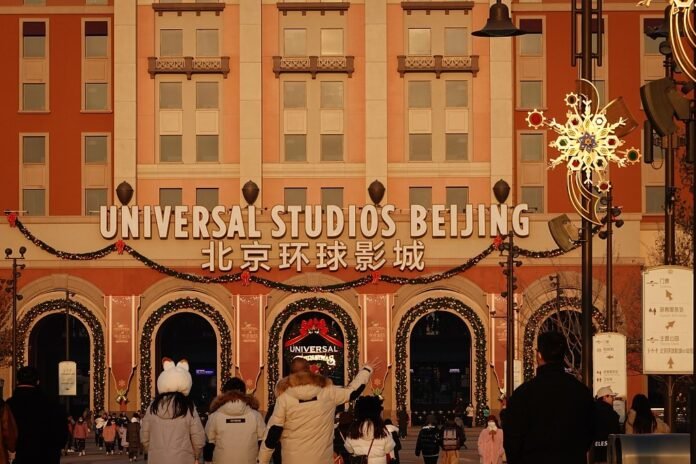
This surreal and high-energy encounter is the heartbeat of the new “Chang’an” immersive dining experience at Universal Beijing Resort. Running through May 31 as part of the “Infinite Spring” celebration, it marks a bold experiment: taking a homegrown cultural phenomenon — the hit animation Chang An — and giving it world-class theme park treatment.

For foreign visitors, a show anchored in classical poetry might sound like a daunting language exam. Yet, the vibe here is less “study session” and more “Broadway musical”. John Rowe, associate creative director, entertainment at UBR, admits that despite the language barrier, the performance moved him to tears during rehearsals.

“When the music comes on, when the characters come to life, I feel really emotional,” Rowe said. He emphasized that the show is designed to be funny, lively and exciting rather than academic. It turns out, the “spirit” of the Tang Dynasty — friendship, ambition and the sheer joy of living — transcends language. “While children in the audience might excitedly recite poems along with the actors, adults can appreciate the nuanced humor and sophisticated stagecraft.”

This is a prime example of “Chinamaxxing” — reimagining traditional culture for modern enjoyment. Visitors do not merely observe history; they experience it through a carefully curated menu that recreates the culinary aesthetics of the Tang Dynasty.

Sharp-eyed viewers have spotted a striking, deliberate omission in the production: Li Bai never recites his most iconic masterpiece, Qiang Jin Jiu (Invitation to Wine). Far from an oversight, the show’s directors explain, the choice is a conscious commitment to historical fidelity. The series centers on a young, aspirational Li Bai in the formative years of his life — long before he penned that magnum opus in his middle age, when his life and worldview had shifted irrevocably. It is precisely this refusal to oversimplify history, or twist the timeline to pander to fan expectations, that anchors the grand, visually sweeping spectacle in unshakable authenticity.

“We don’t need to force a blend,” film director Zou Jing said when discussing the introduction of Chinese IP into Western theme parks. He drew an analogy to how hip-hop culture resonates with young people worldwide. “You don’t need to change who you are; you simply present the most beautiful, authentic parts of your culture. If the poetic realm is deep enough, it naturally sparks curiosity.”

The collaboration represents a “mutual rush” between the theme park and the animation studio.

The “Infinite Spring” season isn’t stuck in the past, either. It reflects a diverse, modern pop-culture landscape. Just a short walk from the Tang poets, visitors can encounter characters from the global gaming phenomenon Genshin Impact.

Ba Gena, UBR’s consumer communications manager, said: “The connecting thread isn’t the era, but the spirit of ‘setting out’. Whether it is roaming a digital fantasy world, sailing the high seas or wandering 30,000 miles across ancient China, the message is the same — spring is the time to step out the door and start an adventure.”

Article inline ad

BASF Launches World-Scale Sustainable Site in Zhanjiang, Signaling Confidence in China’s Industrial Future

0

According to a report by China Daily on March 27…

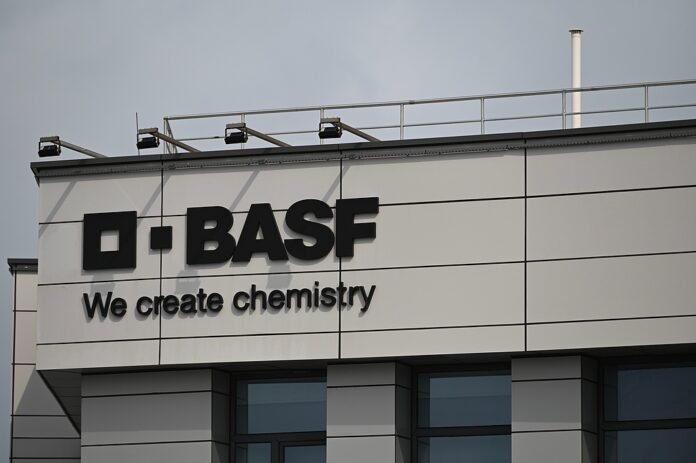
Zhanjiang, Guangdong – BASF, the German chemical powerhouse, officially inaugurated its largest-ever global investment—a world-scale Verbund chemical site in Zhanjiang, Guangdong province—marking a new benchmark in sustainable and integrated chemical production. The move underscores both the company’s confidence in China’s long-term industrial growth and the expanding opportunities in green and high-tech manufacturing.

Spanning roughly 4 square kilometers on Donghai Island, the Zhanjiang site is now one of the largest foreign-invested enterprises in China’s chemical sector. According to Wang Wentao, China’s Minister of Commerce, the project “represents a milestone in Sino-German economic and trade cooperation, setting a new standard for industrial collaboration in China and beyond.”

Strategic Significance for China and BASF
For BASF, the site is central to its “Winning Ways” strategy, combining scale, sustainability, and technological innovation. Markus Kamieth, CEO of BASF, noted: “This is the most integrated and sustainable chemical site in the world. It reflects the future of chemicals—efficient, digital, and environmentally responsible—while showcasing China’s ability to support cutting-edge industrial projects.”

The site employs over 2,000 staff and produces a diversified portfolio including basic chemicals, intermediates, and specialty products for sectors ranging from transportation and electronics to home and personal care. Most products are intended for the Chinese market, aligning with BASF’s global “local-for-local” strategy.

Green Innovation at Industrial Scale
The Zhanjiang site sets new standards for industrial sustainability:

  • CO₂ emissions are projected to be up to 50% lower than a conventional petrochemical site through process innovations, renewable energy use, and the Verbund integration model.
  • A world-first e-drive steam cracker, powered entirely by renewable energy, can process multiple feedstocks, including naphtha and butane, producing high-quality, low-carbon chemicals.
  • Long-term green power agreements and offshore wind investments secure 100% renewable electricity for the site’s operations.

Stephan Kothrade, BASF’s Chief Technology Officer for Asia-Pacific, emphasized that “these innovations demonstrate how large-scale chemical production can simultaneously achieve industrial efficiency, environmental responsibility, and resilience.”

Implications for Global Industrial Investment
The project signals broader trends for multinational corporations: China is increasingly viewed as a strategic hub for high-tech, low-carbon manufacturing, where large-scale industrial investment can align with both market growth and ESG goals. The Zhanjiang Verbund site demonstrates the viability of globally competitive green industrial clusters in China, offering lessons for cross-border investors seeking scale, sustainability, and technological edge.

Officials including Huang Kunming, Guangdong Party Secretary, and Governor Meng Fanli attended the inauguration, highlighting the alignment between local governments and foreign investors to facilitate high-value industrial projects.

Market Takeaways for Investors

  1. China as a strategic industrial hub – The government’s support for integrated, sustainable manufacturing is creating opportunities for foreign companies with advanced technology and scale.
  2. Sustainability as a competitive edge – Large-scale renewable-powered operations are becoming a standard expectation for global chemical players.
  3. Localization and resilience – “Local-for-local” production reduces supply chain vulnerability while capturing China’s growing domestic demand.

BASF’s Zhanjiang site is a case study of how multinational corporations can integrate environmental responsibility, industrial scale, and innovation to drive growth in China’s evolving industrial landscape.

Article inline ad

Probes launched over rising US scrutiny

0
By Wang Keju | China Daily | Updated: 2026-03-28 

China has launched two trade barrier investigations targeting US practices disrupting global industrial and supply chains and impeding trade in green products, in a calibrated response to Washington’s new trade probes targeting China and other economies, officials and analysts said.

The pair of trade barrier investigations, announced separately by the Ministry of Commerce on Friday, are “reciprocal countermeasures” to the two Section 301 probes launched by the United States against China, a spokesperson for the ministry said.

Washington’s two new probes came on the heels of the US Supreme Court’s ruling that curtailed a broader tariff program last month.

The Commerce Ministry will proceed with its investigations pursuant to competent laws and regulations, and will “take corresponding measures” based on the findings to resolutely safeguard its legitimate rights and interests, the spokesperson said.

In accordance with the Foreign Trade Law and the Rules on Foreign Trade Barrier Investigations, the ministry may, in order to safeguard the order of foreign trade, “initiate investigations into trade barriers imposed by relevant countries and regions on its own initiative”, according to the ministry’s announcements.

These trade barrier investigations shall be concluded within six months, with a possible three-month extension under exceptional circumstances.

A day before the announcements, Commerce Minister Wang Wentao had raised “serious concerns” over recent US Section 301 investigations during his meeting with US Trade Representative Jamieson Greer, on the sidelines of the 14th Ministerial Conference of the World Trade Organization in Yaounde, the capital of Cameroon.

Wang said the two nations should “strengthen mutually beneficial collaboration, avoid destructive competition, maintain close communication, and adopt a future-oriented mindset” to promote the healthy, stable and sustainable development of bilateral economic and trade ties.

Despite the tensions between the world’s two largest economies, business communities on both sides of the Pacific hope that the two countries can find ways to manage differences and seek cooperation based on talks.

Sean Stein, president of the US-China Business Council, said: “If you just say they’re the two largest economies, you’re missing the most important part. They’re also the two most dynamic and most innovative economies.”

“And it is when you add the innovation and dynamism pieces that you truly recognize the need for the two countries to find ways to work together more effectively,” Stein said.

According to a survey released last October by the Chicago Council on Global Affairs — a US think tank — a majority of US residents support a policy of friendly cooperation and engagement with China while opposing higher tariffs and cuts to trade.

China and the US discussed the possible extension of existing bilateral tariff and nontariff measures, and floated the idea of establishing a working mechanism to promote bilateral trade and investment cooperation during their latest round of trade talks in Paris earlier this month.

“When the countries find common ground and act on it, the benefits extend far beyond bilateral ties, particularly at a time when frequent geopolitical conflicts are severely affecting worldwide growth,” said Liao Fan, director of the Chinese Academy of Social Sciences’ Institute of World Economics and Politics.

However, Liao cautioned that the greatest concern lies in the erratic nature of US policies, with certain US politicians adhering to a zero-sum mindset that frequently leads to new restrictions on tariffs, investment and technology — actions that undermine the hard-won stability of bilateral trade.

“The US should abandon protectionism and unilateralism. Only equal-footed dialogue offers the best solution for finding a way forward to resolve respective concerns,” Liao said, warning that Beijing’s arsenal of countermeasures is fully stocked should Washington persist on its wrong course.

Article inline ad

China’s Industrial Recovery Signals Strong Start to 15th Five-Year Plan

0

According to a report by China Daily on March 27…

China’s industrial sector has kicked off 2026 on solid footing, with profits of major industrial enterprises accelerating sharply in the first two months of the year, signaling improving business conditions and the growing strength of high-tech sectors. Analysts say this momentum sets a positive tone for the early stages of China’s 15th Five-Year Plan (2026–30).

Data from the National Bureau of Statistics show that industrial enterprises with annual revenue exceeding 20 million yuan ($2.89 million) reported total profits of 1.02 trillion yuan, up 15.2% year-on-year in January–February. This marks a strong acceleration from 2025, when annual profits rose just 0.6%.

High-tech and equipment manufacturing leading the recovery

  • Equipment manufacturing profits surged 23.5%, up 15.8 percentage points from 2025.
  • High-tech manufacturing profits jumped 58.7%, accelerating 45.4 points compared with the previous year.

“These gains indicate a structural shift in China’s industrial sector,” said Tang Guanghua, analyst at Shenyin & Wanguo Futures. “Innovation is driving enterprises toward higher value-added segments, supporting sustainable growth rather than just short-term output.”

Wen Bin, chief economist at China Minsheng Bank, noted that while external uncertainties—such as geopolitical tensions—could affect global demand, pro-growth policies will continue to bolster industrial production and corporate revenues, providing a solid foundation for profit expansion.

Policy support and new growth drivers
Experts say that the start of 2026 reflects the effective implementation of policy measures aimed at:

  • Expanding domestic demand
  • Stabilizing investment
  • Accelerating structural upgrading and innovation

Pan Jiaofeng, president of the Institutes of Science and Development at the Chinese Academy of Sciences, emphasized that “2026 will see a series of rapid policy measures translated into tangible outcomes,” underscoring the country’s strong positioning to deliver a robust economic start.

Global confidence in China’s economic resilience
Foreign executives also express optimism about China’s growth trajectory:

  • Tetsuro Homma, executive vice-president of Panasonic Holdings Corp, highlighted China’s advantages in innovation speed, intelligent transformation, talent, and supply chain capacity, saying, “Panasonic will continue to deepen its presence in China.”
  • Cui Jingyi, vice-president of UK-based industrial software firm Aveva, added, “We believe the structural dividends of China’s long-term development will continue to unfold and benefit global markets.”

Signal takeaway
China’s industrial profit rebound, led by high-tech and advanced manufacturing, points to a more resilient, innovation-driven economy. The combination of strong policy support, structural upgrading, and global confidence signals that China is off to a solid start for the 15th Five-Year Plan, offering stable conditions for both domestic and international investors.

Article inline ad

China-ASEAN agriculture trade reach $1 trillion milestone

0
By Zhao Ruixue | chinadaily.com.cn | Updated: 2026-03-27 

A conference on agricultural industry cooperation between China and ASEAN was held in Weifang, Shandong province on Thursday, aiming to promote complementary resources and build a platform for agricultural exchanges between the two sides.

The conference is part of the 2026 China (Shandong)-ASEAN Exchange Series activities.

China-ASEAN trade exceeded $1 trillion for the first time in 2025, up 7.4 percent year-on-year. ASEAN has remained China’s largest trading partner for agricultural products for eight consecutive years.

Zhao Hong, director of the trade and investment division at the ASEAN-China Centre, said that China will make full use of RCEP rules of origin and customs facilitation to enable high-quality fresh products, such as tropical fruits from ASEAN and vegetables from Weifang to reach each other’s markets more efficiently.

She encouraged enterprises on both sides to strengthen cooperation in areas such as germplasm innovation, smart agricultural equipment and deep processing, with the goal of building a complete cross-border agricultural industry chain.

Sata Arayakul, consul general of Thailand in Qingdao, Shandong province, noted that Thailand’s agricultural policies align closely with China’s, with both sides committed to enhancing the quality and value of agricultural products and services. He highlighted that Thailand and Shandong can deepen cooperation in modern agriculture, high-value food processing, and agricultural trade and logistics.

Vei Samnang, governor of Takeo province in Cambodia, said investors can enjoy corporate income tax exemptions or reductions for three to nine years depending on the scale and type of investment. The provincial government will also simplify administrative procedures and investment project registration processes.

ASEAN has remained Shandong’s largest trading partner for seven consecutive years, with trade volume reaching 663.15 billion yuan ($95.92 billion) in 2025.

Chen Baiwei, director of the Foreign Affairs Office of Shandong, unveiled the key projects for the 2026 exchange series, covering economic and trade cooperation, cultural tourism and education.

Several agreements were signed on site, including initiatives to establish a global digital trade center for the agricultural industry and a global center for agricultural service trade.

Article inline ad

A New Model of Global Growth Is Emerging — And Asia Is Defining It

0

Green, digital, and built on cooperation rather than confrontation

For decades, global economic growth followed a familiar model:

  • Industrialization led by the West
  • Globalization driven by trade
  • Development financed through traditional institutions

That model is now under strain.

At the Boao Forum for Asia Annual Conference 2026, a different vision quietly took shape — one that places Asia at the center of a new global growth paradigm.

And at the heart of that vision is a simple but powerful idea:

👉 Cooperation, not confrontation, will define the next phase of global development


1. Two Forces Are Reshaping the Global Economy

According to Asian Infrastructure Investment Bank President Zou Jiayi, two structural forces are driving change:

1️⃣ The Climate Transition

  • Decarbonization
  • Renewable energy expansion
  • Sustainable infrastructure

2️⃣ The Digital Revolution

  • Artificial intelligence
  • Smart infrastructure
  • Data-driven economies

These are not separate trends.

👉 They are becoming deeply interconnected systems


2. The Key Insight: Green and Digital Are Converging

One of the most important — and underappreciated — points:

👉 Green transition and digital transformation reinforce each other

Examples:

  • AI optimizes energy systems and industrial efficiency
  • Digital economies increase electricity demand
  • Clean energy becomes foundational to digital growth

This creates a new requirement:

👉 Energy systems must become both cleaner and smarter


3. Asia’s Strategic Position

Asia is uniquely positioned in this transition:

  • Largest population base
  • Core of global manufacturing
  • Rapidly expanding digital economies
  • Accelerating renewable energy deployment

This combination makes Asia not just a participant — but:

👉 a primary driver of global transformation


4. The Missing Ingredient: Cooperation

This is where the real signal lies.

The transition to a green and digital economy requires:

  • Cross-border infrastructure
  • Shared standards
  • Integrated supply chains
  • Capital mobilization at scale

None of this can happen in isolation.

👉 It requires coordinated international cooperation

This stands in contrast to current global trends of:

  • Fragmentation
  • Protectionism
  • Geopolitical competition

5. The Role of Multilateral Institutions

Institutions like Asian Infrastructure Investment Bank are positioning themselves as:

👉 bridges between capital, policy, and development

Key functions include:

  • Financing green infrastructure
  • Supporting digital connectivity
  • Mobilizing private capital
  • Structuring cross-border investment

Notably:

👉 Over half of AIIB’s financing is already climate-related

This signals a reallocation of global capital priorities


6. Capital Is the Constraint — Not Vision

The scale of transformation required is massive:

  • Trillions of dollars in infrastructure investment
  • Long-term financing structures
  • Public-private coordination

This highlights a critical point:

👉 The challenge is not lack of ideas
👉 It is mobilizing capital at scale


7. ZH Sailing Insight

Here is the deeper shift:

👉 Globalization is not ending
👉 It is being rewired

The old model:

  • Trade-driven
  • Efficiency-focused
  • West-led

The emerging model:

  • Infrastructure-driven
  • Sustainability-focused
  • Multi-polar

And importantly:

👉 More state-guided and institutionally coordinated


8. China’s Role in This Transition

China’s role is not just domestic.

Through platforms like:

  • Asian Infrastructure Investment Bank
  • Belt and Road cooperation

China is helping shape:

👉 The rules, financing structures, and priorities of this new system

This includes:

  • Promoting green infrastructure
  • Supporting digital connectivity
  • Encouraging cross-border collaboration

Article inline ad

China, US trade chiefs meet in Cameroon to stabilize economic ties

0
By Wang Keju | chinadaily.com.cn | Updated: 2026-03-27 

China and the United States should “enhance mutually beneficial cooperation, avoid vicious competition and maintain close communication,” Commerce Minister Wang Wentao said on Thursday.

Wang made the remarks during a meeting with US Trade Representative Jamieson Greer on the sidelines of the 14th WTO Ministerial Conference in Yaoundé, Cameroon.

The two sides held in-depth exchanges on China-US economic and trade relations, as well as multilateral and regional economic and trade cooperation, according to a statement from the ministry.

Wang stated that both sides must properly handle the relationship between competition and cooperation, as well as between past issues and future engagement, to promote the healthy, stable, and sustainable development of bilateral economic and trade relations.

Wang also raised serious concerns over recent US Section 301 investigations launched against multiple economies, including China, under the so-called pretext of “overcapacity” and “failure to prevent imports of goods produced with forced labor.”

Greer noted that over the past year, the US and China have conducted constructive economic and trade consultations and maintained close communication and cooperation. He expressed the US’ readiness to work with China, strengthen dialogue, and promote sustained stability and mutual benefit in bilateral economic and trade relations.

Greer also expressed the US’ willingness to enhance communication and exchanges with China within the WTO and regional frameworks.

wangkeju@chinadaily.com.cn

Article inline ad