Tuesday, November 24, 2026

Home Blog Page 26

Why Global Companies Are Doubling Down on China’s Consumer Market

0

Consumption, not exports, is becoming the real battleground

For years, the global narrative around China has been dominated by exports, manufacturing, and supply chains.

But that story is changing.

Quietly — but decisively — multinational companies are shifting their focus:

👉 From “Made in China”
👉 To “Sold in China”

And increasingly:

👉 “Innovated in China, for the world”


1. The Shift Is Real: Consumption Is Now Strategic

China’s policymakers are making a clear pivot:

  • “Shopping in China”
  • “Export to China”
  • Expansion of imports
  • стимулиating domestic demand

This is not short-term stimulus.

It is a structural transition:

👉 From external demand dependence
👉 To internal demand resilience

And global companies are responding.


2. Multinationals Are Not Pulling Back — They Are Repositioning

Despite global uncertainty, major multinational players are doubling down:

  • Zespri plans to double its China footprint
  • Grupo Bimbo is building China into a global innovation hub
  • DBS Bank is expanding wealth and cross-border finance capabilities
  • Roland Berger sees China as a source of global competitiveness

👉 This is not defensive positioning.

👉 It is offensive investment


3. China Is No Longer Just a Market

One of the most important structural changes:

China is evolving into a three-in-one system for global companies:

1️⃣ Market

  • 50+ trillion yuan retail sales
  • Rapid consumption upgrading
  • Expanding middle class

2️⃣ Innovation Hub

  • Faster product cycles
  • Localized R&D centers
  • Consumer-driven innovation

3️⃣ Production Base

  • Deep supply chains
  • Advanced infrastructure
  • Manufacturing scale

👉 Increasingly, companies are treating China as:

a self-contained growth engine


4. The Untapped Variable: Household Savings

One of the most under-discussed factors:

👉 China’s household savings exceed 160 trillion yuan

That is:

  • Massive latent consumption power
  • A buffer against economic volatility
  • A long-term demand reservoir

As consumer confidence stabilizes:

👉 Even a small release of this savings pool
can generate outsized economic impact


5. A More Sophisticated Consumer Is Emerging

China’s consumption story is no longer about volume.

It is about:

  • Health-conscious choices
  • Premiumization
  • Brand differentiation
  • Digital-first purchasing behavior

For example:

  • Zespri is positioning around nutrition and lifestyle
  • Grupo Bimbo is focusing on localized innovation and product segmentation

👉 Competing in China now means:

understanding consumers — not just selling to them


6. The Infrastructure Advantage: A Unified National Market

Another major shift:

👉 China is reducing internal fragmentation

This creates:

  • Lower distribution costs
  • More efficient logistics
  • Easier nationwide scaling
  • Stronger penetration into lower-tier cities

For companies, this means:

👉 China is becoming easier to operate at scale


7. Consumption + Global Strategy = New Growth Model

Perhaps the most important shift:

Consumption in China is no longer isolated from global strategy.

It is integrated with:

  • Global product development
  • Supply chain optimization
  • Cross-border expansion

Example:

  • DBS Bank linking China demand with cross-border financial flows
  • Roland Berger helping firms turn China operations into global competitive advantage

👉 China is no longer just a destination market.

👉 It is a strategic platform


8. ZH Sailing Insight

Here is the key shift most analysts underestimate:

👉 China’s consumption growth is not just about demand.

It is about:

👉 system-level transformation

  • Policy support (domestic demand expansion)
  • Market scale (population + savings)
  • Infrastructure (unified market)
  • Innovation (consumer-driven R&D)

Together, they create:

👉 A closed-loop growth system


9. Connecting the Full Picture

Now place this alongside the other pieces:

  • Beijing → policy signals (opening-up)
  • Hong Kong → capital inflows
  • Shanghai → global expansion infrastructure
  • China domestic market → consumption engine

👉 What emerges is a complete architecture:

Capital → Market → Companies → Global Expansion


Conclusion

The next phase of China’s economic story will not be written in factories alone.

It will be written in:

  • Shopping carts
  • Digital platforms
  • Consumer preferences
  • Localized innovation

For global companies, the implication is clear:

👉 China is no longer just part of the global economy

👉 It is becoming one of its central demand engines
Article inline ad

China Is Doubling Down on Openness — But on Its Own Terms

0

In a fragmented world, Beijing is redefining what “opening-up” really means

Opening Hook

At a time when much of the world is turning inward, China is signaling the opposite.

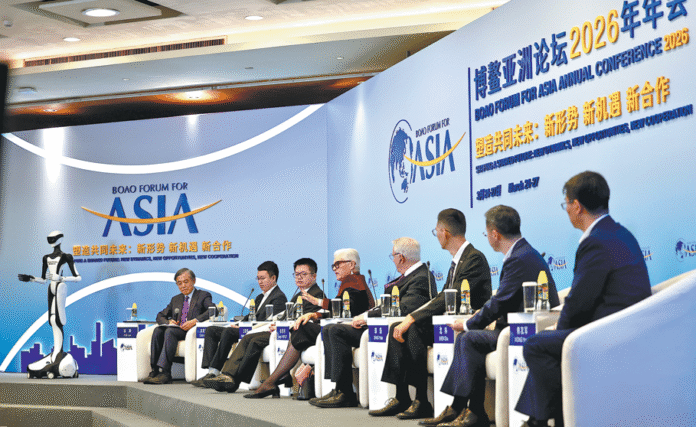
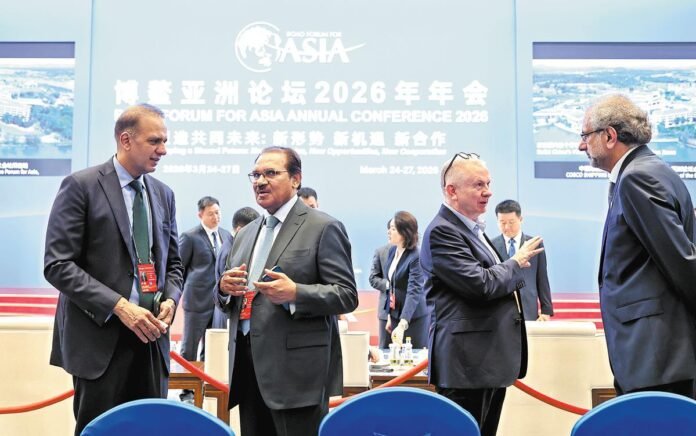
At the Boao Forum for Asia Annual Conference 2026, Beijing delivered a clear message to global markets:

China will continue to open up.

But this is not the same “opening-up” the world became familiar with over the past four decades.

This is something more calibrated — and more strategic.


1. The Global Backdrop: Why This Signal Matters Now

China’s message comes at a moment of rising global instability:

  • Geopolitical conflicts are intensifying
  • Protectionism is resurging
  • Supply chains are fragmenting
  • Cross-border capital is becoming more cautious

In this context, “opening-up” is no longer a default trend.

It is a policy choice.

And China is choosing to lean into it — deliberately.


2. Not Just Openness — “High-Standard Opening-Up”

The language used at Boao is important.

China is not simply expanding access.

It is emphasizing:

👉 “high-standard” and “institutional” opening-up

This includes:

  • Stronger legal protections for foreign investors
  • More transparent regulatory frameworks
  • Expansion in key service sectors:
    • Telecommunications
    • Healthcare
    • Education
    • Elderly care

This reflects a shift from:

👉 Market access (who can enter)
➡️ toward:
👉 System design (how the system operates)


3. The Domestic Anchor: Opening-Up Is Tied to Internal Growth

Another key signal:

Opening-up is now closely linked to domestic demand expansion.

China is positioning its:

  • 1.4 billion population
  • Expanding middle class
  • Growing service sector

as a core engine of global growth

As Lawrence Wong noted, China’s domestic market will remain a major driver not just for itself — but for the broader region.

👉 This is a subtle but important shift:

China is no longer just “the world’s factory”

It is increasingly:

👉 a demand center


4. External Validation Still Matters

Despite geopolitical tensions, global actors are not disengaging.

Signals from international participants reinforce this:

  • PayPal continues expanding its China presence
  • AstraZeneca sees growth opportunities in biotech
  • Regional leaders signal continued cooperation interest

Even amid political fluctuations, economic incentives remain intact.


5. Opening-Up — With Boundaries

This is the most important — and often overlooked — point.

China’s new phase of opening-up is not unconditional.

It is:

  • Selective
  • Structured
  • Policy-driven

Key pillars include:

  • Innovation-led development
  • National security considerations
  • Strategic industry prioritization
  • Belt and Road cooperation

👉 In other words:

China is not stepping back from globalization —
it is reshaping how it participates in it


6. ZH Sailing Insight

Here is the critical shift:

👉 The old model of opening-up was:

  • Broad
  • Rapid
  • Access-focused

👉 The new model is:

  • Targeted
  • Institutional
  • Strategy-driven

This means:

Openness is no longer just about lowering barriers

It is about:

👉 designing the rules of engagement

Article inline ad

China Is Rebuilding Its Global Expansion Engine — Starting in Shanghai

0

From opportunistic expansion to system-driven globalization

Opening Hook

For years, the story of Chinese companies going global was defined by speed.

Now, it is being redefined by structure.

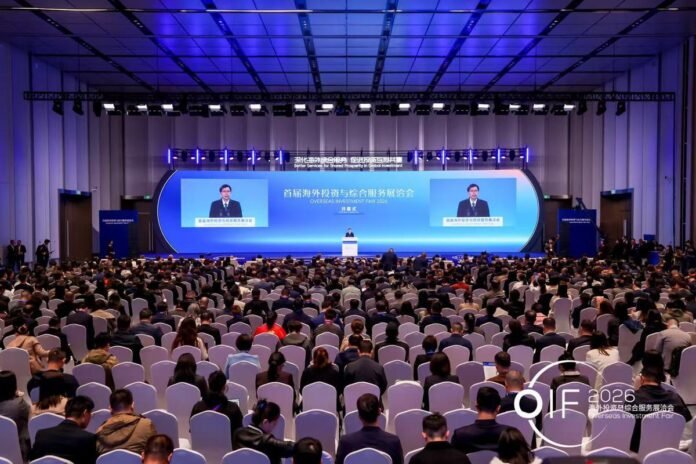
At the 2026 Overseas Investment Fair in Shanghai, the message was clear:
China is no longer just encouraging companies to expand abroad — it is building the system that makes expansion sustainable.

This marks a critical shift.

Because in today’s fragmented global landscape, going global is no longer the hard part.

Going global successfully is.


1. The Real Shift: From “Going Out” to “Going Well”

China’s outbound investment is entering a new phase.

Previously, expansion was often:

  • Opportunity-driven
  • Market-seeking
  • Sometimes fragmented

Now, the emphasis is on:

  • Coordinated supply chain deployment
  • Risk-managed international operations
  • Long-term ecosystem building

The key phrase emerging from the summit:

“high-quality, specialized overseas comprehensive services”

This is policy language — but it signals something deeper:

👉 China is standardizing how companies globalize


2. Shanghai’s New Role: Command Center for Globalization

Shanghai is positioning itself not just as a financial hub, but as:

👉 China’s global expansion infrastructure node

Its role now includes:

  • Connecting domestic firms with global markets
  • Coordinating cross-border regulatory frameworks
  • Integrating capital, production, and logistics networks

Officials described Shanghai as a “bridgehead” — a telling choice of words.

This is not passive connectivity.

This is active outward coordination.


3. Building the Missing Layer: Overseas Service Ecosystems

One of the biggest historical gaps in Chinese outbound expansion has been:

👉 Lack of integrated overseas support systems

This includes:

  • Legal and compliance guidance
  • Local market intelligence
  • Political and regulatory navigation
  • Partnership building

The fair directly addresses this gap by promoting:

  • Global service networks
  • Government-business coordination
  • Local-to-global resource integration

In simple terms:

👉 China is building the “operating system” for going global


4. International Participation Signals Continued Demand

Despite geopolitical tensions, the turnout tells its own story:

  • Participants from 58 countries and regions
  • Senior political and business figures from Europe
  • Continued interest in China-Europe SME cooperation

Voices like Christian Wulff and Gerry Grimstone reinforce a key point:

👉 Global engagement with China is not disappearing — it is evolving

Even as political narratives fluctuate, economic incentives remain strong.


5. A More Realistic View of Globalization

One of the more candid observations came from Grimstone:

International expansion is not straightforward.

This reflects a broader recognition:

Chinese companies today face:

  • Regulatory complexity
  • Political scrutiny
  • Cultural barriers
  • Supply chain restructuring pressures

Which is exactly why:

👉 System-level support is becoming essential


6. ZH Sailing Insight

This is the key structural shift:

👉 China is industrializing globalization itself

In the past:

  • Global expansion = individual company strategy

Now:

  • Global expansion = national-level capability building

This includes:

  • Policy frameworks
  • Institutional support
  • Service ecosystems
  • Strategic coordination

That changes the game entirely.

Article inline ad

Why Global Wealth Is Flowing Back to Hong Kong

0

Amid rising geopolitical uncertainty, family offices are quietly repositioning

Opening Hook

In a world increasingly defined by fragmentation — from Middle East tensions to shifting capital controls — global wealth is not retreating.

It is relocating.

And increasingly, it is choosing Hong Kong.

At the latest Wealth for Good in Hong Kong Summit, nearly 400 family office decision-makers from across five continents gathered — not just to discuss preservation of wealth, but to answer a more urgent question:

Where is capital safest — and most effective — in the next decade?

Hong Kong is making a strong case that it is both.


1. This Is Not About Finance — It’s About Trust

Safe-haven status is often misunderstood.

It is not simply about low taxes or high returns.

It is about institutional credibility.

Hong Kong’s pitch to global wealth is built on a familiar but powerful foundation:

  • Common law system
  • Independent judiciary
  • Free flow of capital
  • Freely convertible currency
  • Simple tax regime

In an era where capital controls, sanctions risks, and political uncertainty are rising globally, these features are no longer “standard” — they are strategic assets.

As Financial Secretary Paul Chan put it, families today are not just looking for a place to park money, but:

“a place with legal clarity and credible commitments.”


2. Family Offices Are the Real Story

The most important signal in this story is not total assets — it is who is moving.

Family offices represent:

  • Ultra-high-net-worth capital
  • Long-term investment horizons
  • High sensitivity to geopolitical risk

And they are coming.

  • 242 family offices already established or expanded in Hong Kong
  • 156 more preparing to enter
  • Strong inflows from Europe, the US, and the Middle East

This is not passive capital.

This is strategic capital choosing jurisdiction.


3. The Policy Shift: From Financial Hub to Wealth Hub

Hong Kong is no longer positioning itself purely as a trading or IPO center.

It is evolving into a full-spectrum wealth management hub.

Recent policy signals include:

  • Expansion of tax concessions for family office structures
  • Inclusion of new asset classes:
    • Private credit
    • Carbon markets
    • Digital assets
    • Insurance-linked securities
  • No capital gains tax, no dividend tax, no estate duty

This is a deliberate shift.

👉 From market infrastructure
👉 To capital lifecycle management

In other words:

Hong Kong doesn’t just want transactions.
It wants multi-generational capital.


4. The Numbers Confirm the Trend

The scale is already significant:

  • Assets under management: $4.5 trillion+
  • Equivalent to 11x GDP
  • Net inflows in 2025: $45.8 billion
  • Among the top global hubs for ultra-wealthy individuals

These are not early-stage signals.

They indicate that momentum is already established.


5. The Bigger Picture: A Rewiring of Global Capital

What is happening in Hong Kong reflects a broader shift:

Global capital is being reallocated along three axes:

1️⃣ Geopolitical Risk

Capital is moving away from uncertainty — but not necessarily toward the West.

2️⃣ Regulatory Predictability

Wealth increasingly values jurisdictions with clear, stable frameworks.

3️⃣ Asia Exposure

Investors still want access to China and Asia — but with intermediary structures.

Hong Kong sits precisely at the intersection of all three.


6. ZH Sailing Insight

This is the key point many observers miss:

👉 Hong Kong is not just “recovering”
👉 It is repositioning in a new global system

In the previous era, Hong Kong was:

  • A gateway into China

In the emerging era, it is becoming:

  • A platform for global capital navigating China + geopolitical complexity

That is a much more durable role.


Conclusion

The return of capital to Hong Kong is not a short-term rebound.

It is part of a deeper structural shift:

Wealth is becoming more mobile, more cautious — and more strategic.

And in that environment, jurisdictions that combine:

  • legal certainty
  • financial openness
  • geopolitical positioning

will capture disproportionate influence.

Right now, Hong Kong is one of them.

Article inline ad

China’s Humanoid Robots Shift From Showpieces to Real-World Applications

0

According to a report by China Daily on March 26…

China is rapidly transforming its humanoid robotics industry, moving beyond stage performances and demos toward practical, scalable solutions for manufacturing, logistics, and eventually households. Industry leaders speaking at the Boao Forum for Asia Annual Conference 2026 highlighted how technical advances and China’s unique industrial ecosystem are fueling this shift.

Xiong Youjun, CEO of the Beijing Humanoid Robot Innovation Center, described humanoid robots in three dimensions: the physical body (hardware), the cerebellum (movement control), and the brain (cognition and decision-making). While hardware designs are converging, Xiong emphasized progress in coordinating movement and intelligence, powered by large language and multi-modal AI models. Robots from his center have already achieved feats such as completing a half-marathon autonomously. Crucially, the technology is being shared with universities and industry partners to accelerate development.

The industry is moving away from “performance-style showboating” toward applications that serve real economic needs. Early adoption is focused on structured environments, including automotive assembly, appliance manufacturing, and logistics. Shao Hao, chief scientist at Vivo’s robotics lab, noted that robotics data is high-dimensional and difficult to scale, but existing human video datasets could help train smarter AI. Safety and regulatory compliance remain key considerations, particularly for household deployment.

Experts argue that the humanoid form’s advantage lies in versatility. While specialized robots like vacuum cleaners excel at single tasks, humanoid robots can operate in spaces designed for humans, from factories to homes. Shen Dou, executive vice-president of Baidu AI Cloud Group, highlighted three ongoing bottlenecks: hardware, data, and models. Yet, China’s complete supply chain, large engineering talent pool, and manufacturing efficiency are expected to turn humanoid robotics into standardized industrial products, reducing costs significantly.

Looking ahead, experts project humanoid robots will become integral to industry within two to three years, taking on repetitive, heavy, or hazardous work. Household-ready humanoid assistants are likely a decade or more away, but the pace of China’s industrial innovation and full-stack development — spanning brains, cerebella, and bodies — positions the country as a global leader in the emerging market.

As cost declines and AI integration improves, humanoid robots may eventually become commonplace in both industry and daily life, marking a critical shift from technological showcase to practical tool, and underscoring China’s growing influence in the global robotics ecosystem.

Article inline ad

Pinduoduo unveils in-house brand with 100b yuan investment plan

0
By Li Jiaying | chinadaily.com.cn | Updated: 2026-03-26 

China’s major e-commerce platform Pinduoduo said on Wednesday that it will invest 100 billion yuan ($13.9 billion) over the next three years to build a new self-operated brand initiative, as part of a broader push to upgrade China’s supply chains and expand globally.

The company announced during its latest earnings call that it has established a new in-house brand, “Xinpinmu”, with an initial cash injection of 15 billion yuan. The initiative will integrate supply chain resources from both Pinduoduo and its overseas platform Temu.

According to Zhao Jiazhen, co-chairman and co-CEO of Pinduoduo, the group will “concentrate its resources” to advance the high-quality development of Xinpinmu over the next three years, with setting up a dedicated entity in Shanghai.

Under the plan, Xinpinmu will adopt a self-operated model targeting global markets, aiming to incubate and develop brands across different categories while promoting higher manufacturing standards, Zhao said.

Pinduoduo also said it will roll out a series of measures to support the initiative, including customized manufacturing solutions for industrial clusters, integrated services covering product development, technology and marketing, and comprehensive support for global expansion such as logistics, intellectual property protection and compliance services.

The strategy builds on Temu’s rapid international expansion. Temu has entered more than 90 countries in the past three years and grown into a major global e-commerce platform, the company said.

“China’s industrial clusters are entering a new stage where brand development is becoming a key growth driver,” Zhao said.

“Through Xinpinmu, we will continue to invest heavily in the supply chain and support more Chinese brands in reaching global markets.”

Article inline ad

China’s Moonshot AI Seeks to Redefine Global AI Ecosystem

0

According to a report by China Daily on March 25…

China’s artificial intelligence industry is entering a new stage, with leading companies not just competing globally, but reshaping how AI models are built, shared, and monetized.

Yang Zhilin, founder of Beijing-based Moonshot AI, revealed in an exclusive interview at the Zhongguancun Forum that his company is exploring a major overhaul of large model architecture, including a novel technique called “attention residuals”, praised by Elon Musk earlier this month.

“China’s willingness to openly share models and technical breakthroughs could accelerate global innovation while giving it an edge over more closed ecosystems,” Yang said.

From Algorithms to Infrastructure

Yang predicts that as AI models achieve similar performance levels, competitive advantage will shift from algorithms to infrastructure — especially the ability to process vast volumes of “tokens”, the basic units of AI computation.

“In the long run, the bottleneck may no longer be model capability, but how quickly you can build large-scale ‘token factories’,” he explained, noting energy costs and computing infrastructure as decisive factors.

He also suggested that AI-generated tokens could eventually become a proxy for economic activity, potentially reshaping traditional metrics such as GDP.

Open Systems and Economic Value

According to Yang, open-source AI systems may ultimately dominate by enabling a broader ecosystem of developers, applications, and distribution channels. While closed models retain market share, open platforms could generate greater total token output and therefore higher economic value.

The attention residuals innovation reconfigures how information flows through model layers, improving training efficiency and performance, though Yang did not disclose detailed benchmarks.

“Standards have formed, but within those standards, there is still a lot that can be overturned. I think there are still many possibilities,” he said.

China’s Talent Pipeline

Yang highlighted China’s decades-long investment in education, from primary to doctoral levels, as a key strength. The large pool of technically skilled talent enables companies to accelerate machine intelligence development efficiently and cost-effectively.

As China positions itself as a driver of structural change in the AI ecosystem, Yang believes the combination of open innovation, advanced infrastructure, and human expertise will define the next phase of global AI development.

Article inline ad

China Accelerates Humanoid Robot Development for Industry and Homes

0

According to a report by China Daily on March 26…

China is rapidly advancing humanoid robot technology, training robots for industrial operations while laying the groundwork for future home applications, positioning the country as a global leader in robotics.

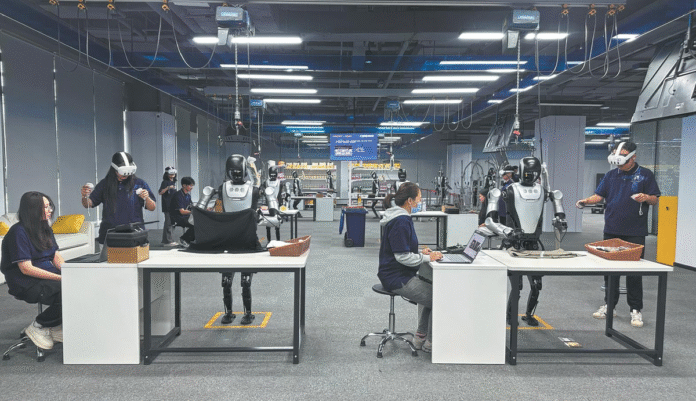
At Beijing’s Shijingshan humanoid training center, nearly 200 instructors guide 100 humanoid robots through realistic industrial and domestic scenarios. Robots repeatedly perform tasks such as sorting parcels, handling factory materials, and simulating household chores. This trial-and-error approach ensures they can navigate human-designed environments safely and efficiently.

“Teaching humanoid robots is like guiding a toddler: repetition, demonstration, and correction are essential,” said Zhang Yusong, a trainer at the center.

Humanoid robots combine a “brain” for decision-making, a “cerebellum” for motion coordination, and a physical body with sensors and actuators. While robots have impressed the public with acrobatic performances, practical deployment in homes is still years away due to challenges in safety and adaptability.

Currently, robots are focused on industrial applications, taking on heavy, repetitive, or dangerous tasks. The first cohort trained at Shijingshan has entered automotive factories, achieving roughly 70% of a skilled worker’s efficiency. These machines operate continuously, filling gaps in physically demanding or monotonous jobs.

China’s advantage lies in its complete humanoid robotics ecosystem, covering brains, cerebella, and bodies, supported by government policies. In 2023, the Ministry of Industry and Information Technology recognized humanoid robots as a “groundbreaking product after computers, smartphones, and new energy vehicles”, with mass production targets set for 2025 and international competitiveness by 2027.

Market growth is accelerating. In 2025, about 13,000 humanoid robots were shipped globally, with China producing 90%. Morgan Stanley projects shipments will double to 28,000 units in 2026. Among the top 100 global robotics companies, China leads with 37%, followed by the U.S. (35%) and Japan (10%).

Beyond industry, China is exploring AI-powered humanoid assistants for healthcare, eldercare, and hospitality. These robots, paired with large AI models, could interact naturally with humans and handle repetitive tasks, freeing human workers for higher-value roles. Experts predict that functional household humanoid assistants may arrive in 10–20 years, once safety, decision-making, and environmental adaptability reach maturity.

“The key advantage of humanoid robots is their ability to operate in human environments without redesigning spaces or tools,” said Chang Ning of Feijie Kesi Intelligent Technology.

China’s humanoid robotics strategy emphasizes technological innovation, industrial scale, and market readiness. With specialized training centers, robust AI integration, and supportive policies, the country is setting the stage for large-scale adoption both in factories and, eventually, in everyday life.

Humanoid robots today exemplify a careful balance: pushing technological boundaries while meeting practical business and safety needs, signaling a decade of transformation in industrial labor and a glimpse of the future for home automation.


Placement recommendation: Technology & Innovation / Robotics & AI / Industry and Smart Living
Key takeaways for international readers: China leads humanoid robotics globally, AI integration is central, industrial deployment is accelerating, home use is a 10–20 year horizon.

Article inline ad

China’s Banks Accelerate AI Integration to Boost Efficiency and Risk Management

0

China’s banking sector is rapidly embracing artificial intelligence (AI), embedding the technology across operations, risk management, customer engagement, and lending, in a bid to build smarter, more responsive financial services.

The push is being supported at the policy level, with China’s central bank advocating for secure and orderly AI deployment, ensuring that innovation is balanced with risk control and regulatory compliance.


AI Applications Driving Operational Efficiency

At Jiangsu Su Merchants Bank, over 90 AI applications, powered by both self-developed and external large models, are already deployed across multiple business scenarios. Key outcomes include:

  • Smart lending: multimodal large models achieve 97% accuracy in identifying nonstandard credit documents, while approval efficiency improves by 20%
  • Risk management: AI-driven decision systems deliver millisecond-level responses across the full loan lifecycle, improving fraud risk labeling by 35%
  • Integration into 60+ business scenarios, serving 4,000+ tech enterprises and 17 million retail customers

MYbank, in collaboration with Zhejiang University, has developed a laboratory focused on intelligent micro and small business finance, using generative and discriminative models to optimize credit risk assessment for small and micro enterprises.

“The consistency rate between AI-driven credit decisions and human judgment has jumped from 39% to 90%, significantly enhancing efficiency while freeing up human resources,” said the bank’s team.


Full-Chain AI Platforms

The Bank of Beijing has launched an intelligent computing platform in partnership with the Mentougou district government. The platform embeds AI capabilities across:

  • Marketing
  • Risk control
  • Operations
  • Lending

It allows unified management of enterprise AI computing resources, improving efficiency and reducing hardware costs, while maintaining careful oversight to prevent AI errors, data security issues, and other risks.


Strategic and Market Impact

A recent PwC report shows that financial institutions view AI as a strategic engine, not just a tool for efficiency. Early AI investments have yielded 10–15% returns, while banks increasingly focus on long-term value: enhancing market positioning, exploring new growth avenues, and strengthening strategic development.

Xiao Yuanqi, vice-minister of the National Financial Regulatory Administration, emphasized that AI applications in finance are primarily supportive, spanning:

  1. Mid- and back-office intelligentization
  2. Customer engagement
  3. Financial product delivery

AI provides dual benefits — reducing costs and increasing efficiency, while enabling more customized and targeted financial services.

Article inline ad

Zhuhai port processes 2 million daily e-commerce packages for export

0
By Qiu Quanlin in Guangzhou | chinadaily.com.cn | Updated: 2026-03-25 

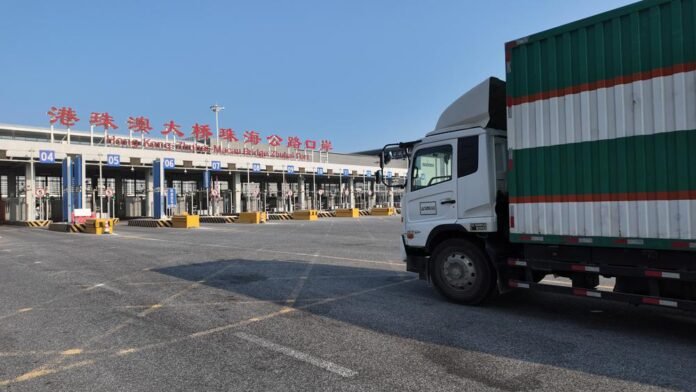
At the Zhuhai port inspection site of the Hong Kong-Zhuhai-Macao Bridge, trucks loaded with e-commerce packages from all over the country arrive each day to be inspected via X-ray machines.

As a new form of foreign trade, cross-border e-commerce has performed remarkably well since the opening of the mega cross-sea bridge in the Guangdong-Hong Kong-Macao Greater Bay Area.

Each package completes a non-intrusive inspection in an average of six seconds. Over 2 million packages depart from the port daily to be shipped to more than 140 countries and regions.

In the first two months of this year, exports through the customs cross-border e-commerce management platform reached 21.29 billion yuan ($3.09 billion), representing a year-on-year increase of 123 percent.

The total import and export value reached 58.28 billion yuan in the first two months of the year, marking a year-on-year increase of 55.8 percent.

Since the bridge opened in October 2018, cumulative cross-border e-commerce exports have surpassed 300 billion yuan, according to statistics from Gongbei Customs, which administers the port.

While cross-border e-commerce continues to grow rapidly, the port’s import and export commodity structure has also improved, with high-value-added, high-tech electromechanical products becoming new product varieties of customs clearance.

According to customs data, the import and export of electronic components through the port reached 8.49 billion yuan in the first two months of this year, marking a year-on-year increase of 38.2 percent.

Article inline ad