Tuesday, November 24, 2026

Home Blog Page 27

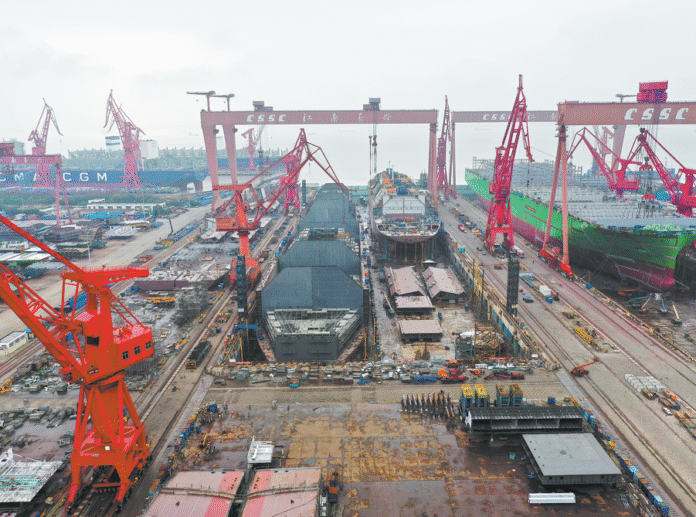
Hudong-Zhonghua Anchors China’s High-End Shipbuilding Ambitions

0

China is consolidating its position as a global leader in shipbuilding, with Hudong-Zhonghua Shipbuilding (Group) Co Ltd spearheading the country’s push into high-end maritime manufacturing.

The Shanghai-based shipyard currently holds the world’s largest liquefied natural gas (LNG) carrier order book, with 57 vessels on order, representing 21.89% of the global market in terms of capacity. Total orders in hand surpassed 150 billion yuan ($21.76 billion) as of the end of 2025, underscoring its role as a key anchor in China’s industrial strategy during the 15th Five-Year Plan (2026–2030).


Strong Performance and Growth Trajectory

In 2025, Hudong-Zhonghua posted:

  • 20% year-on-year revenue growth
  • 380% surge in operating profit
  • Delivery of 11 LNG ships, completing construction of 13 vessels

Despite this momentum, the company aims to further expand capacity and focus on high-end shipbuilding, including ultra-large container vessels and LNG carriers.

“While China has led global shipbuilding in terms of tonnage for over 15 years, high-end segments such as cruise ships and advanced LNG carriers are still dominated by South Korea and Western Europe,” said Chen Jianliang, chairman of Hudong-Zhonghua.


China’s Shipbuilding Edge

According to the Ministry of Industry and Information Technology, Chinese shipyards in 2025:

  • Completed 56.1% of global orders
  • Received 69% of new orders
  • Accounted for 66.8% of vessels in hand globally

Li Yanqing, secretary-general of the China Association of the National Shipbuilding Industry, told China Central Television that Chinese shipbuilders are integrating into the global industrial value chain, promoting a green and intelligent industrial pattern.


High-End LNG Carrier Development

Developing LNG carriers is technically demanding. Hudong-Zhonghua delivered its first LNG vessel in 2008, four years after receiving its first six orders. Construction efficiency has dramatically improved:

  • Initial LNG ship construction: 38 months
  • Current construction period: minimum 16 months

Each LNG carrier can transport 174,000 cubic meters of liquefied natural gas, equivalent to about 105 million cubic meters of gas after regasification, enough to supply a city of 3–4 million people for a month.


Strategic Significance

Hudong-Zhonghua’s success demonstrates China’s move toward high-quality industrial development, combining:

  • R&D in ultra-large container ships and LNG carriers
  • Integration into global shipping markets
  • Efficiency gains and technological innovation

“It has taken decades to reach this position, but today Chinese shipbuilders hold 80% of the global market by LNG order volume,” Chen said.
Article inline ad

Canton Fair to debut eight new exhibition zones for green, smart products

0
By Qiu Quanlin in Guangzhou | chinadaily.com.cn | Updated: 2026-03-26

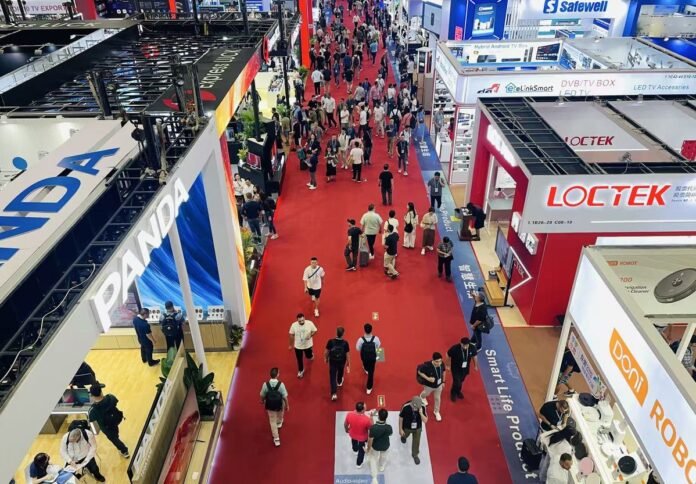
With the China Import and Export Fair just around the corner, organizers have announced eight new exhibition zones to be dedicated to displaying green and smart products and technologies from Chinese companies.

The event, often known as the Canton Fair, is scheduled to kick off its 139th session on April 15 in Guangzhou, the capital of Guangdong province. More than 30,000 companies have confirmed their participation in the fair, the organizers said.

Four of the new zones will be designed for smart wearables, display technology, consumer drones, and agricultural drones during the fair’s first phase. Three zones will roll out in the second phase, featuring bamboo and wooden tableware, bamboo and wooden home products, and integrated housing and garden facilities. The final zone will appear in the third phase and feature functional and technological fabrics.

The fair will also feature various forums focusing on hot topics, such as diverse markets and green trade. Products debuting during the fair will bring together cutting-edge fields like service robots, green energy storage, smart home appliances, and smart healthcare.

The Canton Fair is widely recognized as a barometer of China’s foreign trade. It is held twice a year in the spring and autumn, respectively.

Article inline ad

China Pushes Open Science and AI Leadership at Global Technology Forum

0

China is taking steps to open its major scientific projects to the world, signaling a strategic push to integrate its technological advances into a global innovation ecosystem.

At the opening of the Zhongguancun Forum 2026, Vice-Premier Ding Xuexiang highlighted China’s commitment to building a “global technology community” and fostering an inclusive innovation network.

China plans to broaden international cooperation in fundamental and frontier research, ensuring that emerging technologies can support economic and social development worldwide. Ding also emphasized the need for countries to address regulatory conflicts, social risks, and ethical challenges to achieve responsible governance of technology.


Open Science in Practice

As part of the forum, China released an action plan for international collaboration in open science, pledging to make ten large-scale projects and facilities accessible to global researchers.

Among these is the Chinese Meridian Project, a national facility for space environment monitoring, which has already served 267 organizations across 18 countries, including Germany and Brazil. Other facilities include particle observatories, fusion devices, and deep-space monitoring systems.

By opening access to such large-scale infrastructure, China aims to accelerate cross-border innovation while shaping global standards for emerging technologies, including artificial intelligence.


AI Leadership and Global Impact

China’s AI ecosystem is rapidly expanding. According to data from OpenRouter, Chinese AI models have led global usage for three consecutive weeks, with 7.359 trillion tokens processed last week — a 56.9% increase from the previous week. In contrast, US models recorded 3.536 trillion tokens.

Experts at the forum highlighted that China is not only applying AI at scale but is also positioning its enterprises to drive structural change in the global AI ecosystem.

A “token factory” — large-scale infrastructure including data centers, chips, and optimized AI models — is increasingly critical in determining competitive advantage. Energy efficiency and computational capacity may soon define which nations lead in AI development.


Innovation, Patents, and Standards

China has also become a global innovation powerhouse:

  • Over 5 million granted domestic invention patents
  • More than 40% of global generative AI patent filings
  • Rapid growth in applied AI research and cross-border collaborations

According to Wang Binying, deputy director-general of the World Intellectual Property Organization, China’s patent output and technological advancements position it as a major influencer in global innovation governance.


Why This Matters for the World

China’s strategy signals a dual objective:

  1. Accelerate global innovation through openness and collaboration
  2. Strengthen China’s leadership in AI, space science, and frontier technologies

For international researchers, investors, and technology partners, the message is clear:

China is creating an open yet strategically aligned technology ecosystem, offering access to world-class facilities while shaping the rules and standards for future innovation.

Article inline ad

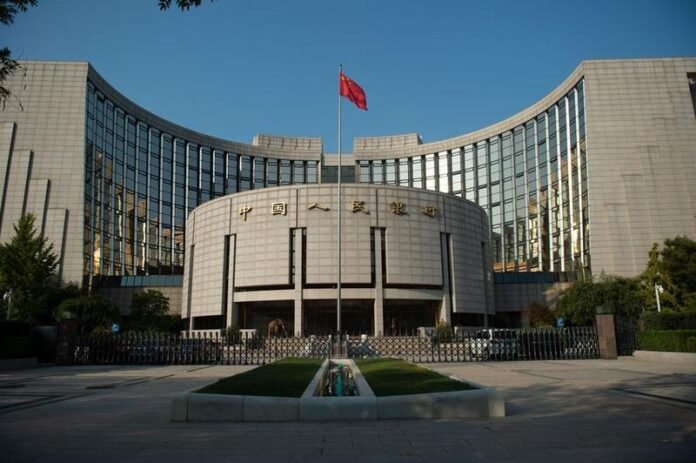
PBOC Signals Continued Liquidity Support with New MLF Injection

0

China’s central bank is signaling continued monetary support for the economy as it moves to sustain liquidity in the financial system.

The People’s Bank of China (PBOC) announced it will conduct a 500 billion yuan ($72.5 billion) one-year medium-term lending facility (MLF) operation, a key policy tool used to manage liquidity in the banking sector.

With 450 billion yuan in MLF funds maturing this month, the move will result in a net injection of 50 billion yuan, marking the 13th consecutive month of net liquidity addition.

A Continued Policy Signal

While the size of the operation is modest, the consistency is notable.

👉 The extension of net injections for over a year suggests that policymakers remain focused on maintaining stable financial conditions amid ongoing economic adjustments.

The MLF, introduced in 2014, allows banks to borrow from the central bank using collateral, helping ensure adequate liquidity and supporting credit flows to the real economy.

What It Means for Markets

The latest operation reinforces several key signals:

  • No abrupt tightening: Liquidity conditions are expected to remain accommodative
  • Policy continuity: Authorities are prioritizing stability over aggressive stimulus shifts
  • Support for growth: Monetary tools continue to underpin economic recovery

For investors and market participants, the message is clear:

👉 China is maintaining a measured, steady approach to monetary policy —
aimed at balancing growth support with financial stability.

A Gradual Approach to Stabilization

Rather than large-scale stimulus, China’s policy stance reflects a preference for targeted and incremental adjustments.

This approach aligns with broader economic goals, including:

  • Managing financial risks
  • Supporting structural transformation
  • Maintaining confidence in the banking system
Article inline ad

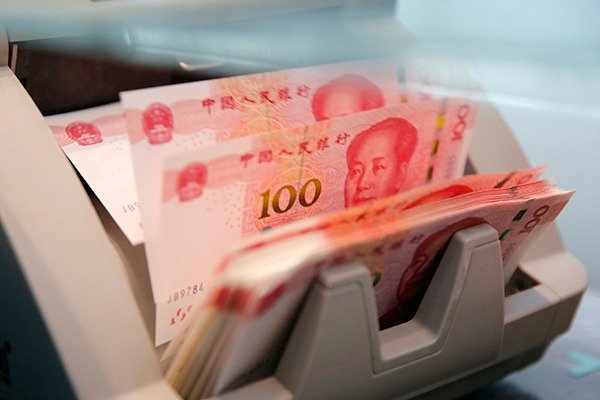
Is the Global Monetary System Entering a Post-Dollar Phase?

0

The global monetary system may be approaching a structural turning point.

At the China Development Forum 2026, policymakers and financial leaders pointed to a growing trend:
👉 the gradual rise of the renminbi (RMB) as both a reflection of China’s economic transformation and a response to mounting strains in the US dollar-dominated system.

The Cracks in a Dollar-Centric System

For decades, the US dollar has served as the anchor of the global financial system.

But that foundation is showing signs of stress.

According to International Monetary Fund data and expert analysis:

  • The US share of global output has declined significantly
  • Its role in global trade has also diminished
  • Financial sanctions and policy tools have increasingly “weaponized” the dollar

👉 The implication is not an immediate collapse —
but a gradual erosion of trust and neutrality.

This shift is already visible in global markets:

  • Rising gold reserves
  • Diversification into non-traditional currencies
  • Increasing use of alternatives in cross-border transactions

👉 In short:
the world is not abandoning the dollar —
but it is hedging against it.


The Quiet Rise of the RMB

Against this backdrop, the renminbi is gaining traction.

Data presented at the forum show:

  • RMB share in cross-border financial activities rising sharply
  • Trade settlement in RMB expanding significantly
  • Continued policy support from China’s long-term planning framework

Speakers such as Zhu Min emphasized that RMB internationalization is no longer optional —
it is becoming a structural necessity.

👉 Not just for China’s development,
but for global financial stability.


The Structural Gap

Despite this progress, a major imbalance remains:

  • China accounts for ~16% of global GDP
  • But the RMB represents only a small share of:
    • Global reserves
    • International payments

👉 This mismatch is critical.

It suggests that:

China’s economic weight has outpaced its financial influence

— a gap that policy is now actively trying to close.


Policy Direction: Building a Financial System to Match Economic Power

China’s 15th Five-Year Plan (2026–2030) makes this direction explicit:

  • Expanding RMB use in trade and investment
  • Developing cross-border payment infrastructure
  • Opening financial markets to global investors

This is not just currency promotion.

👉 It is the construction of a parallel layer of financial infrastructure.


What Businesses and Markets Are Watching

Executives from global financial institutions highlighted three key dynamics:

  • Greater RMB usage improves liquidity in cross-border transactions
  • Diversified capital sources reduce systemic risk
  • Increased access to China’s financial markets attracts global investors

👉 In practical terms:

The RMB is evolving from a trade settlement currency
into a capital and investment currency


A Multipolar Currency Future?

The most likely outcome is not a replacement of the dollar —
but a more fragmented, multipolar system.

Where:

  • The dollar remains dominant
  • But alternative currencies gain regional and functional roles
  • Financial flows become more diversified

👉 In this system, the RMB’s role will expand —
particularly across Asia and emerging markets.


🔍 What This Means

For investors, policymakers, and global businesses:

1. Currency Risk Is Becoming Structural

Not cyclical.

👉 Diversification is no longer optional.


2. RMB Usage Will Expand Gradually — But Irreversibly

Driven by:

  • Trade flows
  • Policy support
  • Financial infrastructure

3. Asia May Lead Financial Rebalancing

With China at its core:

👉 The region could become a dual-currency zone
(dollar + RMB)

Article inline ad

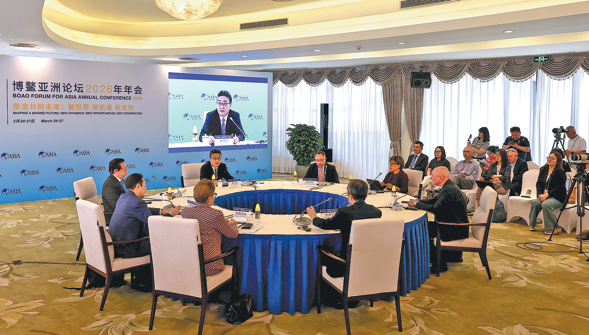
Asia Is Rewiring Its Economic Order — And China Sits at the Center

0

While much of the world is focused on fragmentation, Asia is quietly moving in the opposite direction.

At the Boao Forum for Asia Annual Conference 2026, policymakers and regional leaders delivered a consistent message:
👉 the future of growth in Asia will depend less on new agreements — and more on how existing systems are connected, coordinated, and scaled.

From Fragmentation to Interoperability

Asia does not lack cooperation frameworks.

It has:

  • Trade agreements
  • Regional forums
  • Multilateral institutions

What it lacks, as noted by policy experts, is interoperability — the ability of these systems to work together efficiently.

👉 This is a critical shift in thinking:

The next phase of regional integration is not about creating more structures,
but about making them function as a unified system.


The Rise of a “System-Level Asia”

Several major platforms are already forming the backbone of this integration:

  • Asia-Pacific Economic Cooperation (APEC)
  • Regional Comprehensive Economic Partnership (RCEP)
  • ASEAN+3 cooperation frameworks

Together, they are creating:

  • Policy coordination
  • Trade standardization
  • Investment alignment

👉 In effect, Asia is evolving toward a system-level economy, rather than a collection of loosely connected markets.


China’s Position: Connector, Not Just Participant

In this emerging structure, China is not just another player.

It is increasingly acting as a:

  • Connector of supply chains
  • Driver of regional demand
  • Stabilizer of economic expectations

This is not only due to China’s size, but also its:

  • Industrial depth
  • Infrastructure networks
  • Policy continuity

👉 The implication is clear:

China is helping transform Asia from a trade network
into a coordinated economic system.


Integration in New Domains: AI, Energy, and Digital Economy

What makes this phase of integration different is its forward-looking nature.

Regional cooperation is expanding into:

  • Artificial intelligence
  • Digital infrastructure
  • New energy systems

These are not traditional trade sectors —
they are future-defining industries.

👉 This suggests Asia is not just integrating economically,
but also aligning technologically.


Trust as the New Currency

In a world marked by geopolitical tension and supply chain disruption, one theme stood out:

👉 The global economy is searching for “anchors of trust.”

Asia is positioning itself as one of those anchors —
through:

  • Institutional cooperation
  • Policy coordination
  • Long-term development alignment

China’s role in this process is central.

Not because it dominates the system,
but because it connects and sustains it.


🔍 What This Means

For global investors and decision-makers, three structural shifts are emerging:

1. Asia Is Becoming a Unified Economic Zone

Not formally, but functionally.

👉 Integration is happening through coordination, not treaties alone.


2. China Is the System Integrator

Beyond manufacturing and trade:

👉 China is shaping how regional economies interact and align


3. The Next Competition Is System vs System

Not just country vs country.

👉 The real competition is between:

  • Integrated regional systems (Asia)
  • Fragmented global structures
Article inline ad

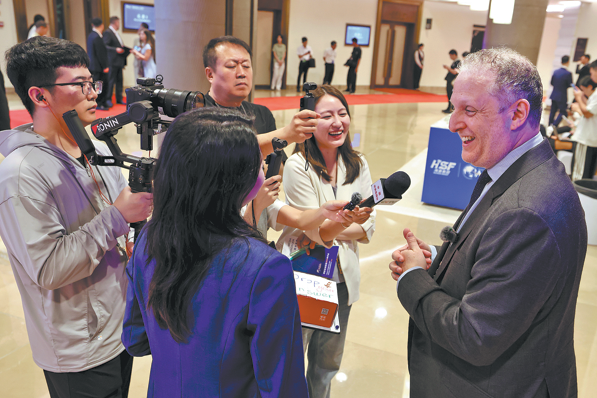
How China Is Powering Global Growth in an Uncertain World

0

China’s role in the global economy is no longer just significant — it is becoming indispensable.

At the Boao Forum for Asia Annual Conference 2026, economists and policymakers delivered a consistent message:
👉 in a world defined by geopolitical tension, energy shocks, and slowing globalization, China remains one of the few reliable engines of growth.

The 30% Reality

China is expected to contribute around 30% of global economic growth in 2026.

That number matters more than it seems.

At a time when:

  • Advanced economies are slowing
  • Supply chains are fragmenting
  • Investment flows are becoming politicized

👉 China’s growth is acting as a stabilizer of last resort.

According to Justin Yifu Lin, the country is on track to achieve its 4.5–5% GDP target, with upside potential if policy execution strengthens.

This signals something deeper:

👉 China is not entering a slowdown cycle — it is entering a controlled, policy-driven growth phase.

Why China’s Growth Is Holding

Three structural forces are sustaining China’s economic momentum:

1. Policy Predictability

Unlike many major economies facing political cycles and policy reversals, China’s long-term planning framework — especially the 15th Five-Year Plan (2026–2030) — is providing rare visibility.

For global investors and businesses, predictability is now as valuable as growth itself.


2. Technology as a Growth Multiplier

China’s next phase of growth is increasingly driven by:

  • Artificial intelligence
  • Quantum computing
  • Advanced manufacturing

Backed by:

  • A massive talent pool
  • Real-world application scenarios
  • State-market coordination

👉 This is not just innovation — it is scaled industrial deployment.


3. The Domestic Market Advantage

China’s large and diverse domestic market allows new technologies to be:

  • Tested
  • Scaled
  • Commercialized rapidly

This creates a feedback loop that few economies can replicate.

👉 In effect, China is turning its domestic market into a global innovation engine.


🌏 The Regional Multiplier Effect

China’s impact is not confined within its borders.

A report from the Boao Forum for Asia highlights that:

  • ASEAN, Japan, and South Korea each maintain over 20% value-chain dependence on China
  • ASEAN’s reliance on China is increasing
  • China and ASEAN remain the most attractive investment destinations in Asia

👉 This reveals a critical shift:

China is no longer just part of Asia’s supply chains —
it is structuring them.


⚖️ Competition Is Rising — But So Is Interdependence

As China moves up the value chain, the nature of global competition is changing.

According to Jiang Xiaojuan:

  • China and advanced economies are shifting
    from complementary roles → direct competition

But this does not mean decoupling.

👉 Instead, it signals a new phase:
competition within interdependence

Where:

  • Supply chains remain connected
  • But technological rivalry intensifies

🤖 The AI Question No One Can Ignore

One of the most under-discussed risks raised at the forum is the impact of AI on employment.

Jiang warned:

  • AI may no longer create jobs at the pace seen in previous technological revolutions
  • Applications that replace labor without improving productivity or sustainability could become problematic

👉 This is a crucial signal:

China is not just accelerating AI adoption —
it is also starting to regulate its economic consequences.


🔍 What This Means

For global investors, executives, and policymakers, three takeaways stand out:

1. China = Stability Anchor

In an unstable world, China offers:

  • Predictable policy
  • Consistent growth
  • Long-term planning

2. Asia = The Center of Gravity

With China + ASEAN integration deepening:

👉 The global growth center is shifting toward Asia


3. Technology = The Next Battleground

China’s push into:

  • AI
  • Advanced industry

means competition with developed economies will intensify — not fade.

Article inline ad

China Signals: What ASEAN Is Learning from China’s New Five-Year Plan

0

China is not just releasing a new development blueprint — it is actively shaping how its closest regional partners understand that future.

At a recent policy dialogue hosted at Xiaomi Corporation headquarters in Beijing, diplomats from Southeast Asia gathered to decode the implications of China’s 15th Five-Year Plan (2026–2030). What emerged was not only a clearer picture of China’s domestic priorities, but also a deeper alignment between China and ASEAN economies at a time of rising global uncertainty.

A Strategic Moment for China–ASEAN Alignment

The timing is critical.

2026 marks:

  • The first year of China’s 15th Five-Year Plan
  • The launch of the ASEAN–China Comprehensive Strategic Partnership Action Plan (2026–2030)
  • And a new phase in regional economic coordination

This convergence signals something larger:
👉 China is synchronizing its domestic development cycle with regional cooperation frameworks.

For ASEAN countries, understanding China’s policy direction is no longer optional — it is essential for economic positioning.

What China Is Signaling

According to policy experts at the event, China’s new five-year blueprint emphasizes five core systems:

  • Economic development resilience
  • Innovation-driven growth
  • Social well-being
  • Green and low-carbon transition
  • Security and risk management

But beyond the structure, the signal is clear:

👉 China is doubling down on high-quality growth, not just speed.

Key priorities include:

  • Technological self-reliance
  • Industrial upgrading
  • Expansion of digital and green economies

These priorities increasingly overlap with ASEAN’s own development ambitions.

Why ASEAN Is Paying Attention

ASEAN is already China’s largest trading partner. But the relationship is evolving from trade-driven to strategy-driven.

Diplomats at the dialogue highlighted strong resonance between China’s policy direction and ASEAN’s priorities, particularly in:

  • Industrial modernization
  • Digital transformation
  • Economic resilience

As noted by representatives from the Philippines, ASEAN countries are not just observing China’s development model — they are actively seeking alignment.

👉 This marks a shift from “China as a market” to “China as a reference system.”

From Policy to Business Reality

The presence of Xiaomi Corporation at the dialogue underscores a key point:

China’s policy signals are increasingly reflected in corporate strategy.

Companies like Xiaomi are:

  • Expanding globally
  • Investing in innovation ecosystems
  • Integrating into regional value chains

This creates tangible entry points for ASEAN economies in:

  • Supply chain integration
  • Technology collaboration
  • Consumer market expansion

The Bigger Picture: Regional Stability Through Economic Integration

Amid global fragmentation, China is positioning regional cooperation — particularly with ASEAN — as a stabilizing force.

The alignment of:

  • Policy cycles
  • Industrial priorities
  • Investment flows

suggests a deeper level of economic integration is underway.

👉 Not just connectivity, but co-development.

Article inline ad

Explosive Token Growth Signals Rapid Commercialization of Chinese AI

0

China’s ambitious push to build high-quality data infrastructure is driving the fast commercialization of artificial intelligence, with daily token usage soaring over 1,000-fold in just two years, government officials report.

At a State Council press briefing, Liu Liehong, head of the National Data Administration, highlighted the country’s strategy of pairing AI development with robust data resources: “Wherever AI develops, high-quality data sets will follow.”

To address fragmentation in the nation’s data ecosystem, 26 government departments have coordinated 104 pilot projects, creating a collaborative framework led by key industry players and supported by multi-stakeholder participation, joint research, and shared access.

By the end of 2025, China had built more than 100,000 high-quality data sets, forming the backbone of its rapidly growing AI sector.

The growth in token usage — the smallest unit of data processed by large AI models — indicates a tipping point for commercial applications. Daily token consumption skyrocketed from 100 billion at the start of 2024 to 100 trillion by the end of 2025, and has now surpassed 140 trillion as of March 2026.

Liu described tokens as a quantifiable bridge between technological supply and commercial demand, serving as the foundation for emerging AI business models and enabling precise measurement, pricing, and trading of computing and data usage.

The surge in token usage also reflects the rapid monetization of AI services. Some AI model companies reportedly generated more revenue in just 20 days than in the entirety of 2025, underscoring the unprecedented speed at which AI commercial ecosystems are evolving in China.

Insight for global readers: China’s AI market is transitioning from innovation to commercialization at an extraordinary pace. With massive data infrastructure, token-based pricing mechanisms, and an expanding ecosystem of AI services, the country is positioning itself as a global leader in AI-driven industries and digital economy innovation.

Article inline ad

Oppo Find N6: Breakthrough Foldable Screen Technology Sets New Industry Standard

0

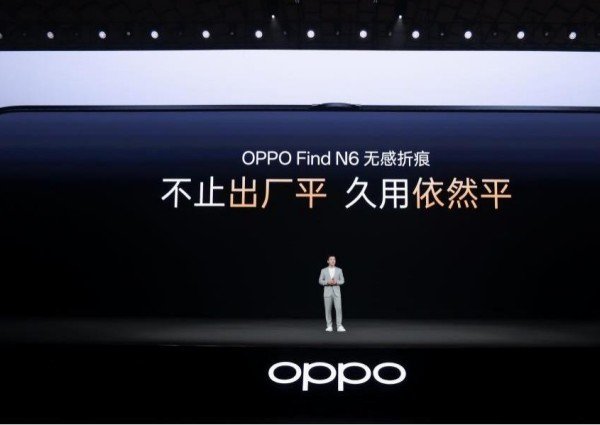
China’s leading smartphone maker Oppo has unveiled a major breakthrough in foldable screen technology with its latest flagship, the Oppo Find N6, addressing a longstanding challenge of deepening creases after prolonged use.

The Find N6 is the first foldable phone globally certified by TUV Rheinland in Germany for long-term flatness, having passed 600,000 folding cycles. The device promises a new era of “no creases, long-lasting flatness”, setting a high bar for foldable displays worldwide.

At the launch event in Dongguan, Guangdong province, Oppo’s Chief Product Officer Liu Zuohu said, “The Find N6 breaks industrial stereotypes — it remains flat even after long-term use.”

Experts note that the traditional issue of crease formation stems from both hinge design limitations and the irreversible deformation of display materials. Oppo tackled these challenges by developing two proprietary technologies: the Tianqiong titanium-alloy hinge and Tianqiong memory glass, achieving a structural and material-level breakthrough in screen flatness.

Beyond the display, the Find N6 emphasizes premium design, imaging, performance, and connectivity:

  • Photography: Only foldable phone featuring a Hasselblad 200MP ultra-clear quad-camera system
  • Performance: Powered by the 5th generation Snapdragon 8 Ultimate platform with super energy-efficient 6,000 mAh glacier batteries
  • Connectivity: Equipped with a China-developed Shanhai Communication Enhancement Chip, supporting 66 frequency bands across 1,700+ operators worldwide

Oppo also announced it is taking a cautious approach with its upcoming Xiaobu Claw AI execution engine, prioritizing compatibility and security before commercial release.

Pricing for the Find N6 starts at RMB 9,999 (~$1,449) for the 12+256GB version, rising to RMB 11,999 (~$1,740) for the 16+1TB model.

Insight for global readers: Oppo’s Find N6 demonstrates China’s rapid advancement in mobile technology, particularly in foldable displays, combining innovative materials, engineering precision, and AI integration — a signal that Chinese smartphone makers are now setting international standards for design, durability, and performance.

Article inline ad