Tuesday, November 24, 2026

Home Blog Page 28

Sodium-Ion Batteries: Fast Charging, Cold-Weather Edge, and the Next Energy Option

0

China is accelerating the commercial deployment of sodium-ion batteries, complementing lithium-ion technology in EVs, commercial vehicles, and utility-scale energy storage


Sodium-Ion Batteries: A Strategic Energy Option

As China pushes for a more diversified battery ecosystem, sodium-ion batteries are gaining traction as a complement rather than a replacement for lithium-ion batteries.

  • Abundant raw material: Sodium is widely available domestically, unlike lithium, whose imports reached 7.75 million metric tons in 2025.
  • Unique performance edge: Superior low-temperature behavior and fast charging, making it ideal for commercial vehicles and harsh climates.

Commercialization Moves Ahead

Chinese companies are leading global deployment:

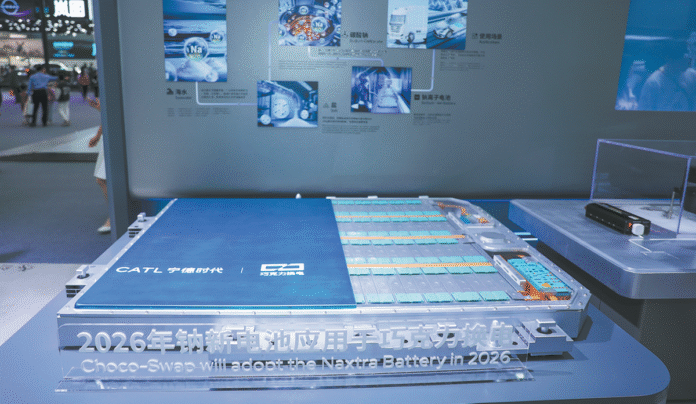
  • CATL: Launched the Naxtra sodium-ion battery in 2025; powering passenger EVs with 400+ km range and integrating into 1,000+ battery-swap stations across 45 cities.
  • BYD: Expanding sodium battery production, targeting 50 GWh annual capacity.
  • HiNa Battery: Deployed sodium-ion batteries for EVs, scooters, heavy trucks, and China’s first 50 MWh large-scale storage station in Guangxi.

Insight: Sodium-ion batteries excel in applications where energy density is less critical but reliability, low-temperature performance, and fast charging are essential.


Cost and Technology Considerations

  • Current price: ~0.6 yuan/Wh, higher than lithium-ion (~0.4 yuan/Wh) due to nascent supply chains.
  • Energy density is lower, requiring larger, heavier packs for equivalent capacity.
  • Hybrid solutions combining sodium and lithium could balance range, performance, and stability, pointing to co-development rather than replacement.

Takeaway: As production scales and supply chains mature, cost gaps will shrink, enabling broader adoption in commercial vehicles and large-scale energy storage.


Applications Beyond Passenger Vehicles

  1. Commercial Trucks:
    • HiNa’s sodium-ion truck battery can fully charge in ~20 minutes
    • Performs in temperatures as low as –40°C
  2. Utility-Scale Energy Storage:
    • Larger, heavier batteries are less of a constraint
    • Supports China’s 2025–27 energy storage plan for grid stability and renewable integration
  3. Hybrid & Future Scenarios:
    • Sodium-lithium hybrid packs can balance cold performance, range, and efficiency
    • Opens opportunities in industrial, commercial, and remote-area energy solutions

ZH Sailing Insight

China is establishing technological and market leadership in sodium-ion batteries, creating a new frontier for:

  • Energy security via abundant domestic resources
  • EV industry diversification, complementing lithium-ion
  • Grid-scale energy storage, especially in remote or extreme environments

For investors and industrial players: Monitoring sodium-ion technology adoption and hybrid solutions will be key to capturing the next wave of energy innovation in China.

Article inline ad

AI Plus Drive Fuels Market Expansion and Enterprise Transformation

0

China’s AI market is set to surpass $200 billion by 2029, driven by intelligent agents, AI-enabled SaaS, and enterprise digitalization


China’s AI Market on a Fast Track

With the national “AI Plus” initiative accelerating, China’s artificial intelligence market is expected to exceed $200 billion by 2029, up from $63.1 billion at the end of 2025, according to IDC China.

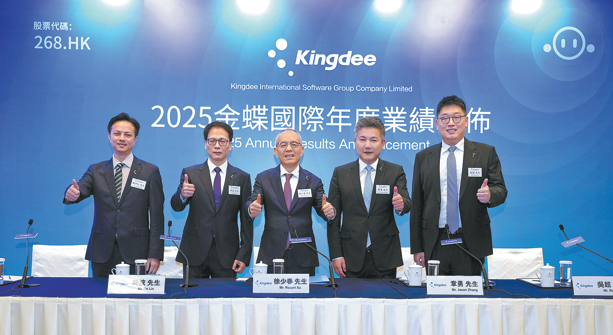
“The essence of AI lies not in advanced technologies, but in how people use them,” said Robert Xu, Chairman and CEO of Kingdee International.

The expansion is underpinned by growing hardware infrastructure, including cloud computing, intelligent agents, servers, and storage networks, which could reach nearly $300 billion by 2029, representing 15.1% of China’s ICT market.


Intelligent Agents Transform Enterprises

Intelligent agents are emerging as the core of enterprise AI applications:

  • Automating routine tasks with greater speed and precision
  • Supporting decision-making and corporate governance
  • Enabling AI-enabled SaaS transformation across industries

Insight: These agents not only streamline operations but also open doors for software firms to expand globally.

Kingdee has leveraged this ecosystem, signing contracts with 463 overseas enterprises in 2025, establishing local service networks in Qatar, Vietnam, Thailand, Indonesia, and Malaysia. Key clients include Chin Hin Group Berhad, Skywin Energy, and PT Merdeka.


SaaS Evolution in the AI Era

The global SaaS market is projected to surpass $700 billion by 2029, growing at an average annual rate of 14.6%. China’s SaaS sector is expected to grow even faster at 17.3% per year, driven by the integration of AI technologies.

Kingdee’s AI Suite, released on March 11 in Shenzhen, provides large enterprises with:

  1. Comprehensive coverage across all domains and scenarios
  2. Live AI capabilities
  3. Globalization support for international operations

Takeaway: AI adoption is transforming enterprise software, making intelligent, scalable, and globally deployable systems the new standard.


ZH Sailing Insight

China’s AI ecosystem demonstrates three key trends:

  1. Rapid market expansion — projected growth to $200B+ by 2029
  2. Enterprise transformation — intelligent agents and AI-driven SaaS redefine business operations
  3. Global opportunity — local AI firms like Kingdee are leveraging technology and policy to expand internationally

For investors and tech observers: Understanding the AI market’s growth trajectory and enterprise adoption is critical to identifying opportunities in China’s fast-evolving digital economy.

Article inline ad

Market Forces to Drive China’s Green and Reliable Energy Transition

0

China accelerates energy market reforms to enhance security and support the green transition


Energy Security at the Core

China is advancing toward becoming a global energy powerhouse, with the National Energy Administration emphasizing market-oriented reforms to secure reliable energy supplies.

“We aim to build a unified national energy market and use price signals to guide the green transition,” said Wang Hongzhi, head of the NEA.

The reforms focus on leveraging market forces to manage the volatility of renewables and ensure the stability of the energy grid.


Market Mechanisms for Green Transition

Key initiatives include:

  • Establishing a value transmission chain to reflect real supply and demand
  • Incentivizing baseload and flexible regulation resources
  • Using market-driven pricing to direct capital toward technological innovation
  • Promoting AI-integrated energy systems, smart microgrids, and green hydrogen

Insight: Price signals and institutional reforms are used not only for trading but to reshape energy production, consumption, and technological evolution.


Progress and Outlook

  • Domestic energy production has grown 3.6% annually over the past decade
  • Energy self-sufficiency rate expected to reach 83.1% by end-2025
  • Wind and solar capacity exceeded 100 million kilowatts for six consecutive years, representing over half of the global total

Takeaway: China is combining policy reform, market incentives, and technological innovation to secure energy supplies while leading the global green transition.


ZH Sailing Insight

China’s energy strategy illustrates three trends for industrial observers:

  1. Market-oriented governance — using prices and institutional tools to optimize investment and consumption
  2. Green industrial upgrading — integrating renewables and new energy technologies into the national energy system
  3. Technological leverage — AI, smart grids, and green hydrogen are central to future energy competitiveness

For investors and industry stakeholders: Understanding China’s market-driven energy reforms is essential to anticipate shifts in energy production, technology adoption, and investment opportunities.

Article inline ad

Scaling Up: Unitree Robotics Pushes Smart Manufacturing for Global Market

0

Unitree Robotics accelerates production and leverages intelligent manufacturing to meet surging global demand


China’s Robotics Star on the Global Stage

Unitree Robotics is rapidly expanding production to capture the fast-growing global robotics market.

“By scaling up production and improving efficiency, we aim to meet increasing orders, shorten delivery cycles, and enhance price competitiveness,” the company said.

With IPO financing accepted by the Shanghai Stock Exchange, Unitree plans to raise 4.2 billion yuan ($580 million) to accelerate R&D, core component development, new product innovation, and construct an intelligent manufacturing base.


Smart Manufacturing and Automated Production

Key initiatives include:

  • 624 million yuan investment in a new automated facility
  • Annual output target: 75,000 humanoid robots and 115,000 quadruped robots
  • Transition from labor-intensive assembly to standardized large-scale production

Insight: Automation and scale not only lower costs but also strengthen Unitree’s competitive positioning in a global market projected to exceed $23 billion by 2030.


Global Market Potential

Industry forecasts from GGII highlight robust growth:

  • Humanoid robots: ~605,700 units shipped by 2030, market size ~$15 billion
  • Quadruped robots: >560,000 units, market size >8 billion yuan

Unitree’s expansion aims to consolidate market share, meet surging orders, and maintain delivery efficiency, positioning China at the forefront of high-end robotics innovation.


ZH Sailing Insight

Unitree Robotics exemplifies a broader trend in China’s tech sector:

  1. High-tech manufacturing as a growth driver — scaling production to global standards
  2. Capital + technology synergy — using IPO funds to fund R&D and intelligent facilities
  3. Global competitiveness rooted in domestic innovation — leveraging China’s supply chain, engineering talent, and market scale

For investors and tech observers: China’s robotics ecosystem is evolving from niche R&D clusters to large-scale industrial production with global impact.

Article inline ad

How Roche Leverages China’s Life Sciences Ecosystem

0

Roche positions China as a global hub for innovation and life sciences development


China: A Strategic Center for Life Sciences

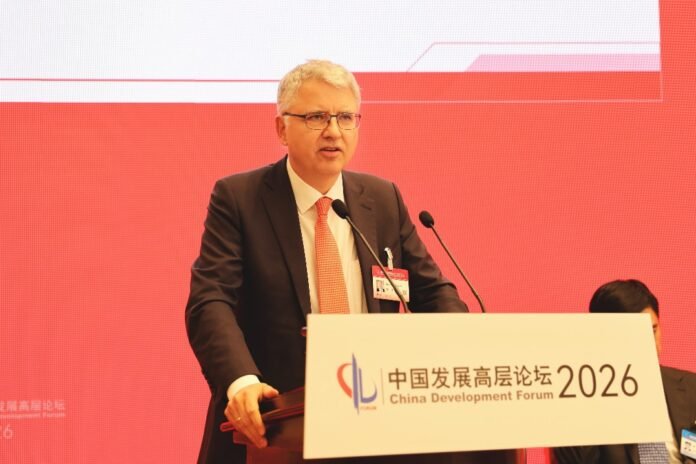
Roche, the Swiss healthcare giant celebrating 100 years in China, sees the country as a rising global life sciences hub.

“China has made enormous progress in healthcare access and building a vibrant life sciences ecosystem,” said Severin Schwan, Roche chairman.

With decades of experience in China, Roche emphasizes that innovation and collaboration are inseparable, relying on strong universities, hospitals, and research institutions to drive breakthroughs.


Policy and Ecosystem Alignment

China’s high-quality development agenda provides a fertile ground for life sciences growth:

  • Innovation ecosystems: Continuous investment in basic science, education, and research infrastructure
  • Regulatory reforms: Stronger IP protection, streamlined approval processes
  • Commercial health insurance: Potential to complement public funding, sustain innovative therapies

Insight: Policy clarity and infrastructure enable foreign firms like Roche to accelerate R&D and expand market reach.


Collaboration as a Growth Engine

Roche’s approach in China highlights three strategic pillars:

  1. Research & Development: Early establishment of a Chinese research center; partnerships with universities and hospitals
  2. Market Engagement: Leveraging China’s expanding healthcare access to test and scale innovative therapies
  3. Regulatory Navigation: Adapting to evolving IP and approval frameworks to ensure timely product rollout

Takeaway: Multinationals can thrive by embedding themselves in China’s innovation ecosystem, aligning with both policy and commercial opportunities.


ZH Sailing Insight

Roche’s experience illustrates a broader trend:

  • China is no longer just a market — it is an innovation platform.
  • Cross-border collaboration and local partnerships are essential to compete in regulated, high-value sectors.
  • Strategic alignment with national development plans ensures long-term sustainability and influence.

For investors and life sciences stakeholders: Understanding China’s policy-driven ecosystem is key to identifying growth opportunities for multinational companies.

Article inline ad

How ABB Leverages China’s Green and Smart Manufacturing Shift

0

ABB Group positions China as both a market and innovation hub amid the country’s industrial and green transformation


China: Strategic Anchor for High-Tech Growth

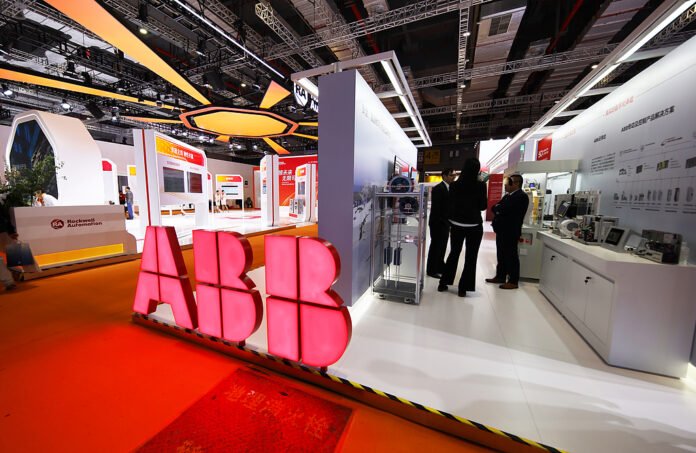
ABB, the Swiss technology leader, views China not just as a major market but as a hub for innovation, smart manufacturing, and global exports.

“China is a strong market for our products and an innovation hub where we develop solutions for domestic and international markets,” said CEO Morten Wierod.

With over 14,000 employees in China and more than 2,000 engineers in R&D, ABB is deeply embedding itself in the country’s industrial ecosystem.


Aligning with National Development Goals

China’s 15th Five-Year Plan (2026–30) emphasizes:

  • Green and low-carbon growth
  • Upgrading traditional sectors to mid-to-high value
  • Nurturing emerging industries
  • Planning for future-oriented industries

ABB’s core priorities—electrification, automation, AI, and smart manufacturing—resonate strongly with these policy directions.

Insight: Multinational firms that align strategy with China’s industrial and green transition gain both market access and competitive advantage.


Industrial Applications and Innovation

ABB is applying its technologies to sectors undergoing structural transformation:

  • Steel: Transition from coal-based to electric-arc furnaces and green hydrogen
  • Smart Manufacturing: Intelligent solutions integrating digital technologies, AI, and data analytics
  • Example: Qingdao Special Iron and Steel Co Ltd—centralized control, real-time monitoring, energy optimization, predictive AI for efficiency and cost reduction

Result: China becomes both a laboratory for innovation and a launchpad for solutions exported globally.


Local Manufacturing with Global Reach

  • 85% of ABB’s China products are manufactured locally
  • ~25% of output exported to Southeast Asia, Europe, South America
  • Strong domestic supply chain supports both local and global operations

Takeaway: ABB demonstrates a model where local production, innovation, and export capabilities are integrated to maximize strategic impact.


ZH Sailing Insight

ABB’s China strategy highlights three critical lessons for multinational corporations:

  1. Strategic Alignment: Align corporate priorities with China’s industrial and green policies
  2. Local Capability Building: Invest in local R&D, manufacturing, and partnerships
  3. Global Leverage: Use China as a hub for solutions applied both domestically and internationally

For global investors and industrial partners: China is not just a consumption market—it is a strategic innovation and manufacturing engine that can drive international competitiveness.

Article inline ad

China’s Youth Market: The New Battleground for Global Luxury

0

How Tapestry Inc is reshaping its China strategy to capture Gen Z consumers


China as the Growth Engine for Global Luxury

Tapestry, the parent company of Coach and Kate Spade, is doubling down on China’s young consumers, seeing the country not just as a sales market, but as a strategic arena for innovation and brand positioning.

“We see significant potential ahead,” said CEO Joanne Crevoiserat.
China’s large, evolving consumer base, combined with supportive policies, makes it a long-term growth priority for Tapestry.


Targeting Generation Z: Beyond Products, Into Life Moments

The strategy focuses on:

  1. Emotional connections at key life stages
    • Graduation, first jobs, major life milestones
    • Products as tools for self-expression and personal style
  2. Localization of brand experience
    • Collaborations with local artists
    • Integration of Chinese festivals like New Year and Qixi
    • City-specific store designs
  3. Expansion into smaller urban markets
    • 350+ stores across 90 cities
    • Capitalizing on rising incomes and evolving consumption patterns

The goal: Make Tapestry brands the “first luxury purchase” for young Chinese consumers.


Policy Tailwinds and Consumption Upgrades

China’s domestic demand is accelerating:

  • 15th Five-Year Plan (2026–2030): Increased household consumption as a share of GDP
  • “Shopping in China” initiative: More international-friendly, higher-quality goods and services

These policies lower barriers and amplify opportunities for foreign luxury brands.

Insight: External conditions are favorable; companies that localize effectively will gain disproportionate advantages.


Innovation Meets Retail

Tapestry isn’t just selling products:

  • China workshop in Dongguan upgraded for product development and innovation
  • Combines global brand identity with local insights
  • Enables faster adaptation to trends and consumer preferences

Result: Revenue in China grew 34% YoY in Q2 2026, a clear signal of strategy effectiveness.


ZH Sailing Insight

Tapestry’s approach illustrates a broader trend for foreign luxury brands:

  1. China is the testbed for next-gen brand strategy
    • Small cities, younger consumers, lifestyle-centric marketing
  2. Localization is non-negotiable
    • Cultural integration, city-specific experiences, local collaborations
  3. Consumption upgrades create new avenues
    • From functional products → emotional, aspirational purchases

For foreign investors and brand managers: China is no longer just a revenue source — it is a strategic lab shaping global luxury positioning.


For Subscribers: Watch These Signals

  1. Which luxury brands are pivoting to Gen Z-first strategies in China?
  2. How will city-tier expansion influence long-term market share?
  3. Which consumption trends signal broader opportunities for international brands?
Article inline ad

From Intermediates to APIs: China Climbs the Pharma Value Chain

0

How Ningxia Jiafeng Chemicals Co Ltd is transforming from a raw material supplier into a global pharmaceutical player


A Supply Chain Shift with Global Implications

Ningxia Jiafeng Chemicals Co Ltd now produces half of China’s metformin hydrochloride and over 30% of global supply, a scale that underscores China’s growing leverage in essential pharmaceutical inputs.

This is not just a corporate success story — it is a reflection of China’s rising influence in the global pharma supply chain.


From Domestic Substitution to Global Competition

Jiafeng’s transformation highlights three key trends:

  1. Technological Upgrade
    • Early batches didn’t meet top-client impurity standards
    • 16 months of process refinement brought impurity levels near zero
    • Investment of ¥150 million built the world’s largest single metformin line (10,000 tons/year)
  2. Regulatory Compliance
    • Approvals secured in China, Japan, Europe, and the U.S.
    • Now competes directly in tightly regulated markets
  3. Strategic Diversification
    • Beyond metformin: creatine (nutrition supplement)
    • Battery materials for EVs and energy storage
    • Expanding into multiple high-value sectors

From intermediates to active pharmaceutical ingredients, Jiafeng exemplifies how Chinese companies are moving up the value chain.


Why Location Matters

Shizuishan, Ningxia:

  • Known as the “cyanamide capital”
  • Upstream chemical concentration → rapid scaling
  • Enables integration from raw materials to high-end pharmaceuticals

Clustered industrial ecosystems are creating China’s next generation of globally competitive producers.


Global Context

Two decades ago:

  • Jiafeng exported raw materials to India
  • Reprocessed products then sold to Western markets at higher margins

Now:

  • The company directly produces APIs
  • Competes in global, regulated markets
  • Targets revenue of ¥5–10 billion

China is no longer just a supplier — it is shaping global pharmaceutical supply chains.


Beyond Pharmaceuticals: Future Growth

Jiafeng is expanding into:

  • Creatine: 6× surge in global demand
  • Battery materials: for EV and energy storage markets
  • Target: meaningful revenue in 3–5 years

This multi-pronged strategy illustrates a shift from scale to quality, and from domestic substitution to global competition.


ZH Sailing Insight

Jiafeng’s rise signals a larger trend:

  • Chinese industrial clusters are turning niche dominance into global power.
  • Companies are no longer content to supply raw materials — they aim to own the high-value segment.
  • Vertical integration + regulatory compliance = strategic global competitiveness.

For global investors and partners, understanding these moves is crucial: China’s industrial players are quietly reshaping supply chains that the world relies on.


For Subscribers

Watch for three forward signals:

  1. Which other chemical or pharmaceutical companies are upgrading to API and regulated market status?
  2. How will China’s industrial clusters influence global pricing and supply security?
  3. Will multi-sector expansion (nutrition, energy, pharma) become the norm for top Chinese industrial firms?
Article inline ad

China Is No Longer Just a Market — It’s the Main Arena

0

Why multinationals like Panasonic Holdings Corp are doubling down on China despite global uncertainty


A Strategic Shift — Not Just Continued Investment

For years, multinational companies viewed China as two things:

  • A manufacturing base
  • A large consumer market

That era is ending.

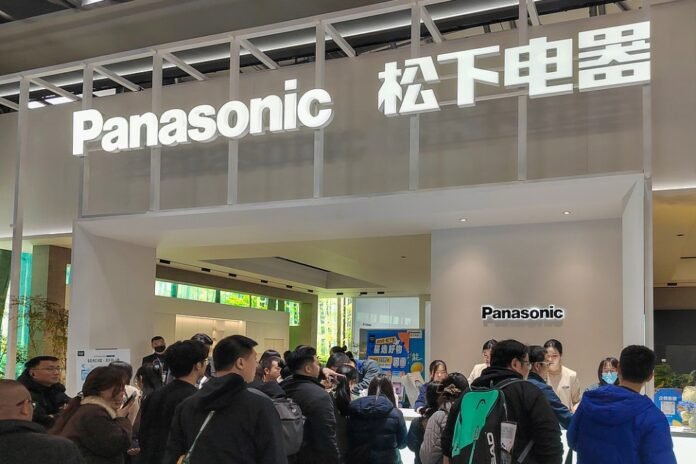
Today, companies like Panasonic are redefining China as something far more important:

A core arena for innovation, competition, and long-term growth.

This is not about maintaining presence.
It is about repositioning at the center of global strategy.


From Factory Floor to Innovation Engine

According to Panasonic’s leadership, China has evolved into:

  • A global innovation hub
  • A rapid testing ground for new technologies
  • A high-intensity competitive environment

What makes China different is not just scale — but speed:

  • Faster product iteration
  • Faster digital adoption
  • Faster commercialization cycles

China is where products are no longer just made — but refined, tested, and scaled.


Why China Still Matters — Even Now

Despite:

  • Slower consumer growth
  • Rising global uncertainty
  • Supply chain diversification

Multinationals are not pulling back.

They are doubling down.

Panasonic’s China business already accounts for:

  • ~25% of global revenue
  • ~30% of total profits

This is not marginal exposure.

China remains one of the few markets capable of driving both scale and profitability.


Where the Opportunities Are Shifting

The next phase of investment is not in traditional consumer sectors.

It is aligned with China’s structural transformation:

1. AI and Industrial Upgrading

  • Demand for components and infrastructure tied to AI
  • Growth in smart manufacturing systems

2. Demographics-Driven Sectors

  • Elderly care
  • Healthcare
  • Assisted living solutions

3. Smart Consumption

  • Smart homes
  • Integrated digital lifestyles
  • “Healthy living” ecosystems

The opportunity is no longer just selling products — but embedding into evolving systems.


China as a “Training Ground” for Global Competition

One of the most revealing insights:

China is becoming a “training ground” for multinationals.

Why?

Because competition in China forces companies to:

  • Innovate faster
  • Localize deeper
  • Operate more efficiently

Success in China increasingly means:

Global competitiveness.

Failure, on the other hand, exposes structural weaknesses.


The Bigger Shift: From Optional to Essential

In previous decades:

  • Being in China was an advantage

Now:

Not being competitive in China is a disadvantage.

This marks a fundamental shift:

  • China is no longer a “growth option”
  • It is becoming a strategic necessity

ZH Sailing Insight

The global narrative often focuses on “decoupling” and “diversification”.

But on the ground, a different reality is unfolding:

Multinationals are not exiting China — they are upgrading their role within it.

What is changing is not presence, but positioning:

  • From cost efficiency → innovation capability
  • From export base → ecosystem integration
  • From market entry → strategic dependence

Why This Matters

For global investors and business leaders:

  • China remains one of the most complex but most rewarding markets
  • The bar for success is rising — but so is the upside

For China:

  • Continued foreign investment is shifting toward
    higher-value, innovation-driven sectors
Article inline ad

China’s Credit Is Shifting — and Banks Are Rewiring Their Growth Model

0

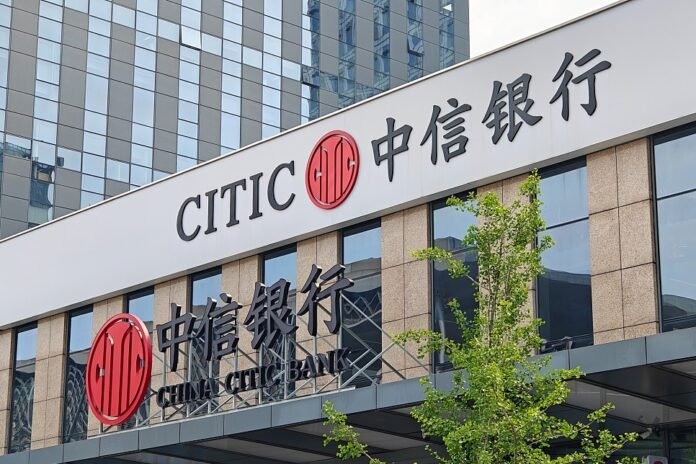
CITIC Bank’s steady profit growth masks a deeper transition in how China allocates capital.


The Headline Looks Stable — But the Story Isn’t

China CITIC Bank reported a 2.98% increase in net profit for 2025, with total assets surpassing ¥10 trillion.

At first glance, this looks like a typical “stable earnings” story.

It’s not.

Behind modest profit growth lies a structural shift in China’s financial system.


From Profit Growth to Balance Sheet Strategy

The bank’s performance reflects a broader trend across China’s banking sector:

  • Income stabilizing
  • Costs under tighter control
  • Profit growth becoming more disciplined, not aggressive

At the same time:

  • Non-performing loan (NPL) ratio fell to 1.15%
  • Marking seven consecutive years of decline

This signals something important:

China’s financial system is prioritizing risk control over rapid expansion.


The Real Shift: Where the Money Is Going

The most important signal is not profits — it’s credit allocation.

In 2025, CITIC Bank significantly increased lending to:

1. Technology

  • Tech-related loans: ¥1.07 trillion (+14.75%)

2. Green Economy

  • Green loans: +24.83%
  • Green bond underwriting: +60%+

3. Small & Micro Businesses

  • Inclusive finance: ¥644 billion (+7.42%)

4. Digital Economy

  • Loans to digital sectors: +18.92%

A Clear Direction: Away From Property, Toward New Growth

Just as notable is where the bank is pulling back:

  • Reduced exposure to high-risk real estate
  • Accelerated exit from problematic projects
  • Lowered client concentration risks

This is not just risk management — it is a reallocation of capital across the economy.


A New Banking Model Is Emerging

CITIC Bank’s forward strategy reveals how Chinese banks are repositioning themselves:

  • Corporate banking → core pillar
  • Retail banking → stable income base
  • Financial markets → profit enhancer
  • Risk control → value creator

At the same time, digitalization and integrated financial services are becoming central.

Banks are evolving from lenders into multi-functional financial platforms.


Why This Matters

This is bigger than one bank.

It reflects a systemic transition:

1. Credit Is Being Redirected

From:

  • Real estate
    To:
  • Technology
  • Green energy
  • Digital infrastructure

2. Financial Risk Is Being Gradually Contained

  • Falling NPLs
  • Lower credit costs
  • More disciplined balance sheets

3. Banks Are Aligning With National Strategy

Capital is increasingly flowing into sectors tied to:

  • Industrial upgrading
  • Technological self-reliance
  • Long-term productivity growth

ZH Sailing Insight

China’s economic transition is not just happening in factories or tech labs.

It is happening inside bank balance sheets.

Where credit flows today will define where growth comes from tomorrow.

The takeaway:

  • Growth may look moderate on the surface
  • But beneath it, capital is being restructured at scale

And that shift will shape:

  • China’s next generation of industries
  • The pace of innovation
  • The stability of the financial system
Article inline ad