Tuesday, November 24, 2026

Home Blog Page 29

Beijing Moves to Cap Fuel Price Surge

0

A rare intervention highlights rising policy priority: stabilizing costs amid global volatility.


What Happened

China has stepped in to limit the rise in domestic gasoline and diesel prices, after a sharp surge in global crude oil.

  • Gasoline: +¥1,160/ton
  • Diesel: +¥1,115/ton

Under the normal pricing mechanism, increases would have been nearly double.


What’s Different

This is not a routine adjustment.

Beijing chose to partially override market-driven pricing to soften the shock.

Authorities framed the move as a temporary control measure within the existing system, aimed at:

  • Reducing cost pressure on businesses
  • Protecting household spending
  • Maintaining macroeconomic stability

Why It Matters

1. Stability Is Taking Priority Over Pass-Through Pricing

China’s fuel pricing system is designed to reflect global oil movements.

But this move shows:

When volatility becomes extreme, stability overrides full market transmission.


2. A Direct Response to External Risk

The trigger — rising oil prices driven by geopolitical tensions — is external.

The response is internal:

Absorb part of the shock domestically to avoid broader economic spillovers.


3. Cost Control Is Now a Macro Policy Tool

Fuel prices feed directly into:

  • Logistics
  • Manufacturing
  • Consumer inflation

By capping the increase, policymakers are effectively:

Containing upstream cost inflation before it spreads across the economy.


Behind the Move

Authorities also signaled tighter coordination:

  • Ensuring fuel supply stability
  • Strengthening transport and distribution
  • Increasing market supervision
  • Cracking down on price violations

This suggests a broader objective:

Prevent short-term shocks from turning into systemic instability.


ZH Sailing Insight

This is a small policy move with larger implications.

It shows that China’s macro framework is becoming more pragmatic:

  • Market-based in normal times
  • Intervention-ready in periods of stress

The goal is no longer pure efficiency — but controlled stability.


Article inline ad

China Signals|Policy Shift: Beijing Moves to Tackle Structural Challenges Head-On

0

A more flexible growth target, stronger demand-side tools, and the rise of an AI-driven economic model signal a deeper transition underway.


A Turning Point in China’s Growth Model

China’s 2026 Government Work Report sends a clear message:
the era of incremental adjustment is ending — structural transformation is now the priority.

As the global economy slows and external uncertainties rise, China is repositioning its economic strategy toward long-term resilience rather than short-term acceleration.

The familiar policy tone of “seeking progress while maintaining stability” remains.
But beneath it, a more important shift is unfolding:

Growth is no longer the sole objective — the quality and structure of that growth now matter more.


Why a Growth Range Matters More Than a Growth Number

For the first time in recent years, China has set its GDP target as a range (4.5%–5%), rather than a fixed figure.

This is not a minor technical adjustment.

It reflects a more sophisticated macroeconomic framework:

  • A range stabilizes expectations without overcommitting
  • It gives policymakers flexibility amid global volatility
  • It allows room to balance:
    • structural reform
    • risk control
    • cyclical stabilization

In short:

China is prioritizing policy flexibility over rigid target-chasing.


A Subtle but Important Shift: From Growth to “Growth + Prices”

Another underappreciated signal is the renewed emphasis on price stability.

For the first time in years, restoring reasonable price growth is explicitly included as a key policy objective.

This matters because:

  • Weak prices often signal weak demand
  • Reviving inflation expectations helps restore business confidence
  • It aligns monetary and fiscal policy toward demand recovery

China is no longer just trying to grow — it is trying to normalize the economic cycle.


Domestic Demand Becomes the Core Engine

The report reinforces a major strategic shift:

China’s next growth cycle will be driven primarily by domestic demand.

On the consumption side:

  • ¥250 billion in trade-in subsidies continues
  • ¥100 billion in new fiscal-financial tools introduced
  • Expanded interest subsidies lower borrowing costs for households

These policies form a multi-layered demand stimulus system, linking:

  • fiscal spending
  • financial incentives
  • household credit

On the investment side:

  • ¥800 billion in policy-driven financial instruments
  • Designed to attract private capital into major projects
  • Improved capital allocation and long-term funding stability

At the same time, a notable shift is happening:

Public investment is increasingly directed toward people — not just infrastructure.

Sectors like:

  • healthcare
  • education
  • eldercare

are becoming new priorities.


“AI Economy” Moves to the Center of Strategy

One of the most significant upgrades in the 2026 report is the elevation of artificial intelligence.

What was previously the “AI Plus” initiative has now evolved into:

A national strategy to build a “smart economy.”

Key signals include:

  • Development of ultra-large computing clusters
  • Integration of computing power and energy systems
  • Support for:
    • autonomous agents
    • AI-native business models
    • next-generation intelligent devices

This marks a critical transition:

AI is no longer an application layer — it is becoming economic infrastructure.


From Industries to Ecosystems

China is not just supporting individual sectors — it is building entire innovation ecosystems.

Current priority industries:

  • Integrated circuits
  • Aerospace
  • Biomedicine
  • Low-altitude economy

Future-focused sectors:

  • Quantum technology
  • Advanced energy systems
  • Brain–computer interfaces
  • 6G
  • Embodied intelligence

The policy approach combines:

  • funding support
  • institutional backing
  • risk-sharing mechanisms

This suggests a more mature innovation model:

Less fragmented, more system-driven.


Institutional Reform: The Quiet Backbone

Beyond growth and technology, institutional reform is a critical pillar.

Key moves include:

  • Advancing a national unified market
  • Standardizing local government investment behavior
  • Strengthening fair competition enforcement

These reforms aim to:

  • reduce regional fragmentation
  • improve market efficiency
  • create a more predictable business environment

Why This Matters

This report is not just about 2026.

It reveals how China is redefining its development model:

  • From speed → sustainability
  • From exports & infrastructure → domestic demand & people-centered investment
  • From technology adoption → system-level innovation
  • From policy control → policy flexibility

China is not simply stabilizing its economy — it is redesigning it.


ZH Sailing Insight

For global investors, businesses, and policymakers, the takeaway is clear:

  • China’s growth may be slower than before
  • But it is becoming more structured, more adaptive, and more innovation-driven
Article inline ad

China’s Shift to “Institutional Opening” Aims to Strengthen Finance and Support Global Expansion

0

According to a report by China Daily on March 23…

China is moving beyond simple market access to a deeper phase of financial opening focused on aligning rules, governance and infrastructure with global norms — a shift Beijing calls “institutional opening.” The change, which gathered momentum in 2025, is intended to build a more resilient modern financial system and better equip Chinese banks to back companies expanding overseas.

What’s changing Instead of opening that centers mainly on lowering barriers to entry, China is prioritizing institutional alignment: clearer regulatory frameworks, improved governance standards, and upgraded financial infrastructure. Regulators have refined the “pre‑establishment national treatment plus negative list” for foreign financial investment, invited qualified foreign institutions into pilot programs for new services, and authorized multiple foreign banks to act as renminbi (RMB) clearing banks.

Foreign banks in China Foreign banks are increasingly embedded in China’s financial landscape. By mid‑2025 there were 42 locally incorporated foreign banks from 14 jurisdictions. Recent approvals — including new branches for Fubon Bank (Hong Kong) in Shenzhen and Banco Santander’s Shenzhen branch — underscore continued foreign commitment. Many foreign banks are shifting from broad expansion to targeted strategies: wealth management, private banking for high‑net‑worth clients, cross‑border finance and green finance.

RMB internationalization and cross‑border liquidity The People’s Bank of China (PBOC) has been actively promoting the international use of the RMB while balancing openness with financial stability. Steps include improving cross‑border RMB infrastructure, expanding bilateral local‑currency swap lines, and measures to deepen offshore RMB markets. The RMB is already a leading currency for China’s cross‑border settlement and trade finance and ranks among the top global payment currencies. In February 2026, the PBOC backed measures to help Chinese banks provide cross‑border interbank RMB financing, aiming to bolster offshore liquidity and support RMB use in trade and investment.

Why it matters for international markets

  • Institutional opening makes the operating environment clearer for foreign banks and investors, encouraging deeper, higher‑quality participation rather than just market entry.
  • Stronger financial infrastructure and governance can reduce cross‑border transaction frictions, benefiting international firms that trade with or invest in China.
  • A more internationally integrated RMB could offer additional currency options for global trade and finance, potentially lowering hedging costs for counterparties.

Policy balance and global cooperation Chinese authorities emphasize that expansion of openness will be balanced with financial stability and greater engagement in global financial governance. For foreign institutions, the evolving framework presents both opportunities to bring mature practices into China and incentives to deepen local operations in areas such as cross‑border services and green finance.

Bottom line China’s move toward institutional opening signals a maturation of its financial reforms: from lowering access barriers to building robust, internationally aligned systems. The transition is designed to strengthen the domestic financial system and improve banks’ ability to support Chinese firms as they grow their presence in global supply chains — a development with clear implications for international banks, investors and trading partners.

Article inline ad

Weekly China Tech & Economy Feature (Mar 16–21, 2026)

0

China Economy

China steps up domestic demand as global hub

China is accelerating efforts to boost domestic consumption, positioning itself as a major hub of global demand. At the China Development Forum 2026, executives highlighted that the country’s ultra-large market, industrial strength, and rapid innovation capabilities are creating opportunities for multinational companies.

Pan Gongsheng, governor of the People’s Bank of China, said China will maintain a supportive monetary stance, leveraging policy tools such as interest rates, reserve requirements, and open market operations to sustain liquidity. Household consumption’s contribution to GDP has risen from 37% in 2010 to 52% in 2025, signaling a structural shift toward consumer-driven growth.

Finance Minister Lan Fo’an emphasized investments in public services, childcare, and eldercare, aiming to improve well-being while fueling domestic demand. Executives from multinationals, such as Danfoss and ABB, noted that China’s innovation ecosystem, talent pool, and industrial infrastructure create fertile ground for technology deployment and sustainable solutions.

Takeaway: China’s push for consumption-led growth is both domestic and global, offering opportunities for multinationals while signaling a structural evolution in the country’s economic model.


China Global Expansion

German firms eye western China

A delegation of over 20 German business leaders visited Chongqing to explore business opportunities in western China. Sectors represented included food processing, trade, consulting, and publishing.

Chongqing’s strategic location on the upper Yangtze River and its comprehensive industrial system—covering 39 of 41 industrial categories—make it an attractive hub for German companies expanding inland from the Yangtze River Delta, which hosts more than 60% of German enterprises in China.

Thomas Bonschab, managing director of TiNC International, noted: “China has a huge potential market, and it’s still growing. We are positioning to capture different business segments efficiently.” The delegation expressed strong interest in cooperation across industries and joint exploration of international markets.

Takeaway: Multinational firms are increasingly looking beyond coastal regions, aligning their global strategies with China’s inland economic growth and industrial diversification.


China Industry

Laopu Gold drives high-end jewelry boom

Laopu Gold reported 2025 sales of 31–32 billion yuan ($4.5B), more than triple the previous year, with net profit up over 220%. Growth was driven by premium mall positioning, brand expansion, product upgrades, and rising gold prices, which climbed nearly 65% in 2025.

The company now operates around 50 stores domestically and seven overseas, targeting markets such as Japan and Singapore. Rising gold prices have increased consumer demand for luxury goods seen as wealth-preserving, though higher raw material costs have pressured margins.

Takeaway: High-end consumer segments in China are resilient, and brands that combine premium positioning with supply chain scale can thrive despite commodity cost pressures.


China Technology

Novartis deepens R&D and manufacturing in China

Novartis continues to expand in China, focusing on innovation, local manufacturing, and partnerships with domestic biotech firms. In 2025, Novartis grew 8% in China, making it the second-largest multinational pharmaceutical company in the country.

The company submits all new drug applications simultaneously in China and global markets, with several approvals in China preceding Europe. A 600 million yuan facility for radioligand therapy in Zhejiang province aims to meet domestic demand faster, while collaborations with local biotech firms facilitate licensing and co-development, reflecting China’s maturation as a global innovation hub.

Takeaway: China is no longer just a market for foreign R&D; it is becoming a source of globally relevant biopharma innovation.


Guangdong testing center advances NEV and low-altitude tech

A 3.6 billion yuan ($520M) intelligence-connected NEV testing center opened in Shaoguan, combining NEV and low-altitude aircraft testing. The platform supports full lifecycle testing—from components to system validation—integrating wind tunnels, road simulations, and low-altitude communications.

Feng Xingya, chairman of GAC Group, said the facility will enhance product quality, safety, and innovation, providing a foundation for the Guangdong-Hong Kong-Macao Greater Bay Area’s emerging mobility ecosystem.

Takeaway: Multi-domain innovation platforms like this signal China’s ambition to lead in next-generation mobility and integrated technology ecosystems.


OpenClaw highlights AI promise and risk

OpenClaw, the open-source autonomous AI agent, was a major topic at Nvidia’s GTC in San Jose. Capable of performing complex, real-world tasks—from scheduling to multi-step actions—it represents a shift from query-based AI to agentic AI.

Developers worldwide, including in China, have rapidly adopted OpenClaw, driving massive token usage. At the same time, cybersecurity experts and Chinese regulators warn of significant security risks. Nvidia unveiled Nemo-Claw to add privacy and security layers, and Tencent Cloud upgraded enterprise solutions to support safe deployment.

Takeaway: The rise of agentic AI underscores a critical tension: while these systems expand capabilities, robust governance and security frameworks are essential for adoption at scale.


AI cloud infrastructure under pressure

China’s cloud providers, including Alibaba Cloud, Baidu Cloud, and Tencent Cloud, have raised AI service prices by 5–34%, reflecting surging demand and rising infrastructure costs.

The main driver is explosive token consumption, fueled by AI agents like OpenClaw. Weekly token usage on OpenRouter reached 14.8 trillion in early March, up 160% in two months. Analysts warn that the rapid growth of AI workloads will continue to strain compute, storage, and bandwidth, potentially driving further price increases.

Takeaway: The economics of AI are evolving rapidly; enterprises and investors must consider compute cost, token efficiency, and infrastructure scalability when planning AI adoption.


Overall Insights

This week’s developments reinforce several key trends for overseas investors:

  1. China’s domestic consumption and industrial policies are creating new opportunities for multinationals.
  2. Emerging inland hubs like Chongqing are attracting foreign investment.
  3. High-end consumer and luxury markets remain robust despite commodity fluctuations.
  4. China’s technology ecosystem, from AI agents to NEVs and biopharma, is rapidly maturing, but adoption is intertwined with governance, cybersecurity, and infrastructure constraints.
  5. AI workloads and cloud economics are becoming central considerations for investment and operational planning.

China continues to blend innovation, scale, and regulatory evolution, offering a complex yet promising landscape for technology and investment worldwide.

Article inline ad

Cloud providers raise AI service prices as token usage surges

0

According to a report by China Daily on March 20…

China’s leading cloud providers are adjusting their AI service pricing in response to surging demand and escalating infrastructure costs, highlighting the growing pressures of a rapidly expanding AI ecosystem.

Alibaba Cloud recently announced price hikes of up to 34% on AI computing and storage products, including its T-Head Zhenwu 810E computing cards and CPFS intelligent storage solutions. On the same day, Baidu Cloud implemented a “structural optimization” of pricing across AI offerings, citing rising costs for core hardware and network infrastructure. Tencent Cloud has also raised prices on its large model services, reflecting a broader trend among cloud providers worldwide.

Underlying the price adjustments is a dramatic increase in token consumption—the computational unit that powers AI models. Open-source AI agents, such as OpenClaw, have accelerated this trend. Token usage linked to OpenClaw, for example, surged from 80.6 billion in early February to 358 billion by early March, more than tripling within a month. Weekly token consumption on the OpenRouter API platform reached 14.8 trillion, with agentic applications driving the bulk of the growth.

Nvidia CEO Jensen Huang noted that AI agents often require repeated calls across multiple models to complete a single task, producing “orders-of-magnitude increases” in token usage. Applications such as autonomous agents, deep research tools, and code generation systems are placing unprecedented demands on compute, bandwidth, and energy, creating tight capacity constraints for cloud operators.

Analysts say this pattern signals a structural shift in the economics of AI. Enterprises must anticipate rising costs, plan for scalable compute resources, and adapt deployment strategies accordingly. Sun Zhenya, senior research manager at IDC China, warned: “Facing exponential growth in token consumption, cost and energy use will become key constraints. Enterprises need to plan ahead in terms of computing resources and model strategies.”

The surge in AI workloads illustrates a broader industry reality: as AI systems move from experimental applications to mainstream adoption, the infrastructure that supports them—cloud compute, networking, and storage—must scale rapidly, often at significant cost. For investors and developers, monitoring token usage trends and cloud pricing dynamics has become an essential part of assessing the viability and sustainability of AI-driven business models in China and globally.

Article inline ad

OpenClaw Sparks Global Debate Over Promise and Peril at GTC

0

According to a report by China Daily on March 21…


The rise of OpenClaw, an open-source autonomous AI agent, has become the center of discussion at Nvidia’s annual GPU Technology Conference (GTC) in San Jose, California, highlighting both the transformative potential and the emerging risks of agentic AI.

Launched in November 2025 by Austrian developer Peter Steinberger, OpenClaw can handle a wide range of daily tasks—from managing emails and calendars to checking users in for flights—elevating AI from a reactive tool to a proactive assistant capable of executing real-world actions. The project has grown rapidly on GitHub, attracting a global developer community, and in China, users have popularized the term “raising a lobster” to describe training the agent.

Industry leaders at GTC likened the emergence of OpenClaw to the early days of the web. “There’s been a lot of developer creativity coming out of that community. It’s absolutely fascinating,” said Ali Golshan, senior director of AI software at Nvidia. The platform is not only generating valuable use cases but also inspiring a new wave of personal productivity agents capable of autonomously handling increasingly complex tasks.

Nvidia CEO Jensen Huang described OpenClaw as bringing “agentic systems to the consumer mindset,” while LangChain CEO Harrison Chase highlighted its role in transitioning AI from query response to actionable autonomy. The excitement, however, is tempered by caution: as AI agents gain capabilities, they introduce significant cybersecurity vulnerabilities. Elia Zaitsev, CTO of CrowdStrike, warned that these tools can be a “devil’s bargain,” offering utility at the cost of potential exposure.

The regulatory environment in China reflects these concerns. Authorities have issued multiple alerts regarding the cybersecurity risks posed by AI agents, prompting companies such as Tencent Cloud to release upgraded enterprise-grade solutions to mitigate potential threats. Nvidia itself unveiled Nemo-Claw, an open-source stack designed to layer privacy and security controls onto OpenClaw.

Experts emphasize that the development of AI agents requires a deliberate focus on governance and trust. Amit Zavery, president and chief product officer at ServiceNow, noted that ensuring security and implementing oversight are essential for organizations to adopt these technologies safely. According to Nvidia, the journey toward mature agentic AI will likely mirror the internet’s evolution, where trust layers had to be built to enable widespread adoption.

OpenClaw’s trajectory underscores both the promise and the perils of AI agents. For investors and developers, it signals that while the technology is poised to transform productivity, a parallel emphasis on security, governance, and regulatory alignment will be critical for sustainable growth.

Article inline ad

Guangdong launches integrated testing center for smart vehicles and low-altitude economy

0

According to a report by China Daily on March 20…

Guangdong province has inaugurated a large-scale intelligence-connected new energy vehicle (NEV) testing center in Shaoguan, marking a significant step in China’s low-altitude economy and smart mobility ecosystem.

The facility, a collaboration between GAC Group, China Automotive Engineering Research Institute, and three other partners, represents the first large-scale Chinese testing ground to receive airspace usage rights. Total investment exceeds 3.6 billion yuan ($520 million).

Designed as an integrated platform, the center supports comprehensive testing across intelligence-connected NEVs and low-altitude aircraft, from component-level validation to full-system scenario verification. It leverages complex road simulations, extreme environments, intelligent connectivity, and low-altitude communication networks, enabling rigorous lifecycle testing.

The center is closely linked with GAC’s existing R&D facilities, including wind tunnels and road simulation labs, enhancing product quality, safety reliability, and technological innovation in the smart mobility sector.


🧭 Takeaway for Technology Investors

China is increasingly building multi-domain innovation platforms to accelerate the commercialization of emerging technologies.

👉 Implications:

  • Integration of NEVs with low-altitude systems positions China as a testing ground for next-generation mobility.
  • Strategic investment in R&D infrastructure signals growing ecosystem maturity.
  • Multi-partner collaboration reduces risk and accelerates validation cycles, enhancing competitiveness for both domestic and foreign technology players.

The Guangdong center exemplifies how China is combining automotive, aviation, and smart tech into an interconnected innovation hub, offering a model for investors tracking frontier technologies in mobility and low-altitude applications.

Article inline ad

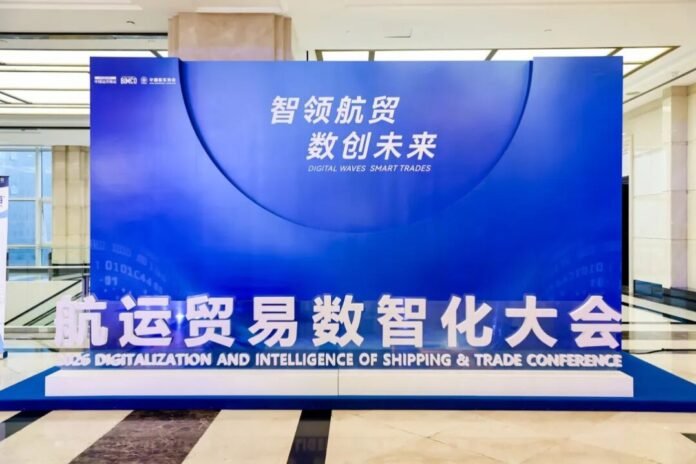
Experts preach interconnectivity and cooperation to advance shipping trade development

0
By ZHENG YIRAN in Shanghai | chinadaily.com.cn | Updated: 2026-03-20

“The digitization of shipping trade is a systematic project that covers the whole world and connects the entire industry chain, requiring global partners to work together in the same direction, jointly build, and share,” Zhu Bixin, director of the board and president of Cosco Shipping, said.

“To achieve this, firstly, we need to establish a standard system and realize mutual recognition and interconnection,” he continued. “Secondly, we need to promote collaborative innovation and deepen knowledge sharing. Thirdly, we need to build a solid safety foundation and solidify the foundation for development. The fourth is to promote integration and empowerment and explore the future blue ocean.”

He noted that as an active practitioner of the global shipping business network, Cosco Shipping has closely cooperated with partners in shipping logistics, trade, finance, government, and other fields, to achieve paperless main shipping documents throughout the entire process, significantly improving the level of global trade facilitation.

“Looking back at the past, the digitalization of global shipping has entered the consensus period from the ‘exploration period’, presenting a trend of ‘a hundred flowers blooming’,” Xu Zuyuan, former vice-minister of transport, said. “Looking at the current situation, transformation has entered the ‘deep water zone’ of tackling difficulties, with opportunities and challenges coexisting.”

Looking ahead to the future, he proposed four initiatives around building an open, green, and win-win digital shipping ecosystem.

“Firstly, we must adhere to open connectivity and jointly build a global digital infrastructure. Secondly, we must adhere to green integration and jointly promote sustainable development,” he said. “We must adhere to integrated innovation and unleash the ‘multiplier effect’ of technology. We must adhere to bottom line thinking and coordinate development and security

Article inline ad

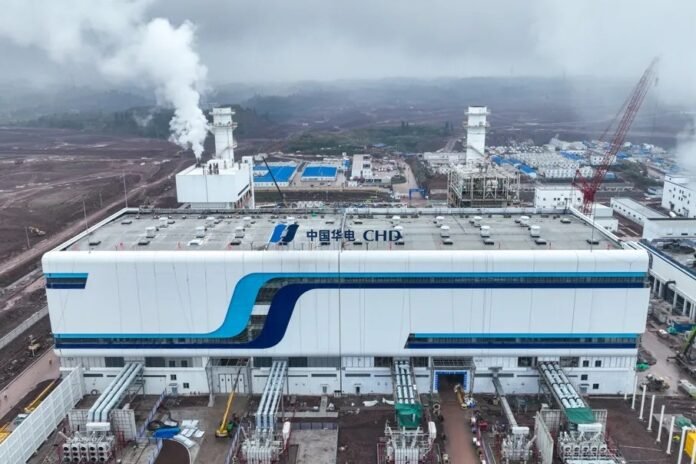
China’s first 550-megawatt F-class gas turbine unit starts power generation

0
Xinhua | Updated: 2026-03-22 

The unit is part of the Huadian Chongqing Tongnan gas power project in Southwest China’s Chongqing. With a total installed capacity of about 1.1 million kilowatts, it is currently the largest and most efficient single F-class heavy-duty gas turbine unit in China.

Once fully operational, the project is expected to generate around 2.1 billion kilowatt-hours of electricity annually, enough to meet the yearly power demand of approximately 1.75 million households. It will also save about 200,000 tonnes of standard coal and reduce carbon dioxide emissions by roughly 860,000 tonnes each year, while achieving near-zero emissions of sulfur dioxide and particulate pollutants.

According to China Huadian Corporation, natural gas power serves as a key, supportive and flexible energy source for building a modern power system. Rather than simply replacing coal-fired power, gas-fired units play a crucial role in providing large-capacity, efficient and clean backup power.

Compared with coal-fired units, gas turbines offer significantly lower emissions, greater flexibility and higher efficiency. They can ramp up to full load in about one hour, roughly five times faster than traditional coal-fired units.

Article inline ad

Novartis ramps up innovation and local production in China

0

According to a report by China Daily on March 21…

Novartis is deepening its strategic investments in China, highlighting the country’s emergence as a global hub for biopharmaceutical innovation.

Patrick Horber, president of Novartis’s international unit, said the company now submits all new drug applications simultaneously in China and other major markets, with several products approved in China ahead of Europe. In 2025, China accounted for 76 new drug approvals, surpassing the US for the first time and reflecting the impact of regulatory reforms accelerating market entry for innovative therapies.

The company is also expanding local manufacturing capacity, including a 600 million yuan ($87 million) facility for radioligand therapy in Zhejiang province, aimed at meeting domestic patient demand faster.

Partnerships with local biotech firms are another key pillar of Novartis’s strategy. Business development deals for China-originated assets rose from less than 10% to 49% in 2025, underscoring the growing quality and global relevance of Chinese innovation.

Horber emphasized that the combination of fast regulatory approvals, abundant local talent, and a robust R&D ecosystem makes China not only an attractive market but also a source of innovation for global commercialization.


🧭 Takeaway for Technology Investors

China is no longer just a large market for multinationals — it is becoming a global R&D and innovation hub.

👉 Implications:

  • Accelerated drug approvals make China a first-launch market for cutting-edge therapies.
  • Investment in local manufacturing and biotech partnerships signals long-term ecosystem maturity.
  • High-quality China-originated assets are increasingly globally relevant, opening new opportunities for cross-border licensing and co-development.

China’s biopharma sector now represents a strategic node in the global innovation network, making it a key focus for investors tracking high-growth, technology-driven industries.

Article inline ad