Tuesday, November 24, 2026

Home Blog Page 30

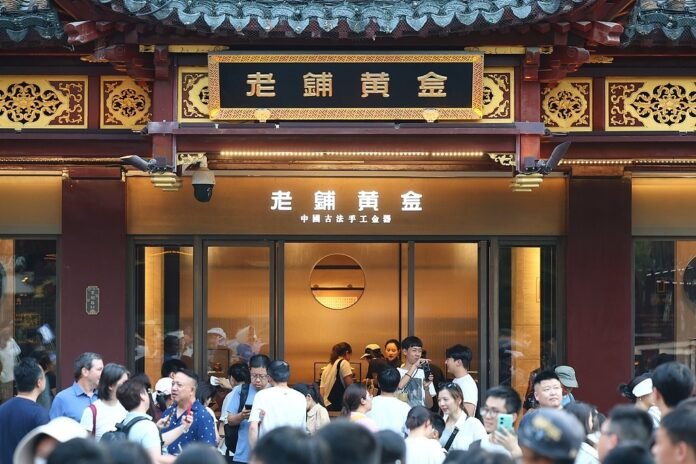
Gold jewelry boom highlights shift toward “safe-haven consumption”

0

According to a report by China Daily on March 21…

The company expects 2025 revenue to exceed 30 billion yuan, more than tripling year-on-year, with net profit also up over 220%. Growth has been supported by rapid store expansion, premium mall positioning and increasing brand recognition, as well as continued product upgrades.

The rally in gold prices has been a key tailwind. Spot gold rose nearly 65% in 2025, reinforcing demand for gold jewelry as both a luxury good and a store of value — particularly in an environment of economic uncertainty and soft consumer confidence.

This dynamic reflects a broader shift in China’s consumption patterns, where discretionary spending remains uneven but demand for “wealth-preserving” assets is strengthening. High-end gold brands have benefited disproportionately, especially those with strong retail networks and positioning alongside global luxury peers.

However, rising input costs are beginning to weigh on profitability. Laopu Gold’s gross margin declined in the first half of 2025, and further pressure is expected despite continued revenue growth.

The company is also accelerating overseas expansion, with plans to enter markets such as Japan and Singapore, reflecting growing ambitions among Chinese consumer brands to internationalize.


🧭 Takeaway for Global Investors

China’s gold jewelry boom is not just a price story — it signals a shift in consumer behavior.

👉 In a weak consumption environment, spending is rotating toward:

  • assets with perceived store-of-value characteristics
  • premium, brand-driven categories

This suggests China’s consumption recovery will be selective rather than broad-based, with “safe-haven consumption” emerging as a key theme.
Article inline ad

German firms look beyond coastal China to inland growth hubs

0

According to a report by China Daily on March 21…

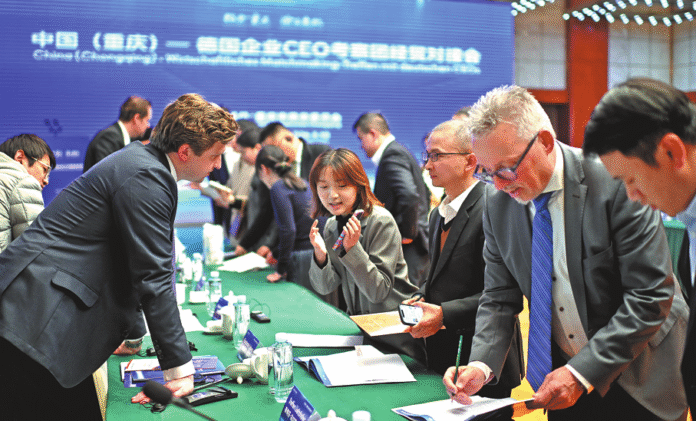
German companies are increasingly turning their attention to inland China, as part of a broader shift to deepen their presence in the country’s domestic market and supply chains.

During a recent visit to Chongqing, a delegation of more than 20 German business leaders explored opportunities across sectors including food processing, retail, consulting and publishing. The trip highlighted growing foreign interest in western China as multinationals reassess their China strategies beyond traditional coastal strongholds.

A key draw is the region’s logistics connectivity. Executives visited facilities linked to the China-Europe Railway Express, which connects Chongqing to cities such as Duisburg, reinforcing the city’s role as an inland trade hub bridging Asian and European markets.

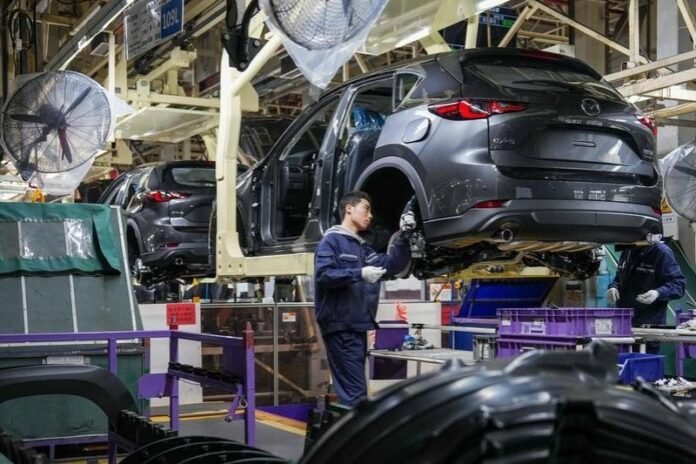
The shift also reflects China’s industrial depth. Chongqing hosts nearly the full spectrum of industrial categories, offering foreign firms access to integrated supply chains and manufacturing ecosystems. This reduces operational friction and enables faster scaling — a factor increasingly valued by multinational companies.

Bilateral trade between China and Germany reached 1.51 trillion yuan ($219 billion) in 2025, up 5.2% year-on-year, underscoring the resilience of economic ties despite broader geopolitical tensions.


🧭 Takeaway for Global Investors

Foreign firms are not exiting China — they are repositioning within it.

👉 The shift toward inland hubs signals:

  • deeper integration into China’s domestic market
  • greater reliance on local supply chains
  • a long-term commitment rather than retrenchment

As China promotes regional development and logistics connectivity, inland cities like Chongqing are emerging as new nodes in global production and trade networks.

Article inline ad

China aims to reposition itself as a global demand hub

0

According to a report by China Daily on March 23…

Speaking at the China Development Forum 2026, Pan Gongsheng said the country will “accelerate” its transition into a major global demand hub, building on its existing strength as a manufacturing powerhouse.

The shift will form a central pillar of China’s upcoming 15th Five-Year Plan (2026–2030), with reforms aimed at raising household consumption as a share of GDP. Key measures include improving income distribution and expanding social safety nets — areas long viewed by economists as critical to unlocking China’s consumption potential.

Lan Fo’an reinforced this direction, emphasizing increased fiscal spending on public services. Planned initiatives include subsidies for elderly and childcare services, as well as expanded access to preschool education, in an effort to reduce precautionary savings and boost household spending.

Monetary policy is expected to remain supportive. Pan said the central bank will continue to deploy tools such as reserve requirement ratio cuts and open market operations to ensure ample liquidity, while maintaining “reasonable” growth in total social financing.

Officials also pushed back against external criticism that China’s industrial competitiveness relies on excessive state subsidies. Pan argued that the country’s strengths stem instead from its large domestic market, deep supply chains, and sustained investment in research and development.

Executives from multinational firms, including Danfoss Group and ABB Group, highlighted growing opportunities tied to China’s expanding domestic demand and industrial upgrading, particularly in areas such as electrification, automation and artificial intelligence.


🧭 Takeaway for Global Investors

China’s policy messaging suggests a gradual but decisive shift toward consumption-led growth, though execution will likely be incremental.

👉 In the near term, growth will still rely on exports and investment.
👉 Over the medium term, domestic demand is being positioned as the next core growth engine.

The transition, if successful, could reshape China’s role in the global economy — from the “world’s factory” to a central node of global demand.

Article inline ad

China Weekly Economy Brief

0

Week: March 16 – March 21, 2026

🔑 Executive Summary

China’s economy started 2026 on a firmer footing, supported by strong exports and policy-backed investment. However, weak domestic demand remains the key constraint, while AI and high-tech manufacturing are emerging as primary growth engines. Policymakers continue to prioritize long-term structural transformation over short-term stimulus.


1. China Economy (Macro)

A solid start, but uneven recovery

  • Industrial output: +6.3% YoY (Jan–Feb)
  • Retail sales: +2.8% YoY
  • Fixed asset investment: +1.8% YoY (reversing 2025 contraction)
  • Infrastructure investment: +11.4% YoY

Key issue: weak domestic demand

  • Rising unemployment: 5.3%
  • Soft consumer sentiment
  • Auto sales dropped sharply

👉 Takeaway:
China’s recovery is export- and investment-led, with consumption lagging.


2. China AI

AI becomes a macro driver, not just a tech theme

  • High-tech manufacturing output: +13.1% YoY
  • AI-related exports (chips, electronics) surged
  • Equipment manufacturing contributed nearly half of industrial growth

👉 Takeaway:
AI is transitioning into a core pillar of economic growth, reshaping industrial structure.


3. China Global Expansion

Exports remain the strongest growth engine

  • Exports: +21.8% YoY (Jan–Feb)
  • Strong demand from:
    • ASEAN
    • Europe
    • Emerging markets

Strategic shift underway

  • Diversification away from single-market dependency
  • Expansion into Global South (LatAm, Africa, Southeast Asia)

👉 Takeaway:
China is entering a “Globalization 2.0” phase, with broader market exposure.


4. China Signals (Policy)

Policy stance: restrained but strategic

  • 2026 GDP target: 4.5%–5%
  • No large-scale stimulus (“flood-like easing” avoided)

Policy priorities

  • Technological self-reliance
  • Domestic demand recovery
  • High-quality growth

Structural goals

  • Digital economy: ~12.5% of GDP (mid-term target)

👉 Takeaway:
Policy is shifting from short-term stabilization to long-term transformation.


5. China Technology

Acceleration in advanced manufacturing

  • Wind power equipment: +28.7%
  • Energy storage batteries: +84%

Statistical shift

  • Introduction of new digital consumption metrics (e.g., online services)

👉 Takeaway:
China’s tech sector is evolving toward “hardware + digital services integration.”


6. China Industry

Structural upgrade continues

  • Growth led by:
    • Equipment manufacturing
    • High-end manufacturing
  • Traditional sectors (e.g., textiles) showed resilience in exports

Energy sector

  • Stable growth in oil, gas, and refining

Real estate

  • Price declines are narrowing → early signs of stabilization

👉 Takeaway:
China’s industrial story is now “new economy strengthening + old economy stabilizing.”


⚠️ Key Risks to Watch

  1. Weak consumption recovery
  2. Labor market pressure
  3. External uncertainties
    • Geopolitics
    • Trade frictions

📊 Bottom Line for Investors

  • Short-term growth driver: Exports + infrastructure
  • Medium-term driver: AI + advanced manufacturing
  • Core macro constraint: Domestic demand
  • Policy direction: Structural, not stimulus-driven

👉 Investment implication:
Focus on:

  • AI supply chain
  • High-end manufacturing
  • Export-oriented sectors
Article inline ad

Chinese Mobility Startup NAVEE Expands Into AI-Powered Outdoor Transport Ecosystem

0

According to a report by China Daily on March 21…


Chinese smart mobility company NAVEE is expanding beyond urban scooters into a broader, tech-driven outdoor mobility ecosystem, betting on growing global demand for recreational transport across land, water, and low-altitude airspace.

The move signals a shift from single-product manufacturing to a multi-scenario platform strategy, as companies explore new categories at the intersection of mobility, outdoor lifestyle, and consumer tech.

From E-Scooters to “Air-Water-Land” Mobility

NAVEE’s latest product lineup pushes into experimental territory for consumer mobility.

Among the highlights is the WaveFly 5X, a consumer-grade electric watercraft that uses ground-effect flight technology—allowing it to glide just above the water surface while maintaining stability. The vehicle can reach speeds of up to 85 km/h and operate for over two hours with swappable batteries.

The company also unveiled the Karting 5, a lightweight single-person eVTOL described as a “flying kart.” Weighing under 75 kg and built with a carbon fiber cockpit, the aircraft is designed to lower the barrier to entry for low-altitude flight, with simplified controls and built-in redundancy for safety.

While still early-stage, these products reflect growing interest in low-altitude consumer aviation, an area gaining traction in China alongside policy support for the so-called “low-altitude economy.”

Targeting a Growing Outdoor Market

NAVEE’s expansion comes as the global outdoor recreation market continues to grow. According to industry estimates, the outdoor camping equipment sector alone is projected to exceed $1.3 billion by 2032.

By combining mobility hardware with lifestyle scenarios—such as camping, water sports, and short-distance travel—the company is positioning itself within a broader outdoor tech ecosystem, rather than a traditional vehicle manufacturer.

Its portfolio now spans:

  • Electric scooters and e-bikes
  • Towable electric RVs
  • Smart luggage solutions
  • Experimental low-altitude and water-based vehicles

AI Integration Through Microsoft Partnership

To support this ecosystem, NAVEE is also investing in software.

The company announced a partnership with Microsoft to integrate AI capabilities using Azure cloud infrastructure and large language models. The collaboration aims to embed AI agents across NAVEE’s devices, enabling features such as:

  • Voice interaction
  • Device interconnectivity
  • Energy optimization
  • Remote diagnostics

This reflects a broader trend in mobility, where hardware is increasingly paired with AI-driven user interfaces and cloud-based services.

Why It Matters

NAVEE’s strategy highlights three emerging shifts in the global mobility sector:

  1. Expansion beyond urban transport into recreational and outdoor scenarios
  2. Convergence of mobility and consumer electronics, with modular, lightweight designs
  3. Integration of AI as a core layer, rather than an add-on feature

While many of NAVEE’s new products remain niche or experimental, the company’s direction underscores how mobility startups—particularly in China—are exploring new categories that blend transportation, entertainment, and smart technology.

If successful, this approach could redefine what “personal mobility” looks like in the next decade.

Article inline ad

China Unveils Draft Financial Law to Strengthen Regulation and Contain Risks

0

According to a report by China Daily on March 21…

China has released a draft of its first comprehensive law governing the financial sector, in a move aimed at strengthening oversight, reducing systemic risks, and supporting long-term economic development.

The draft, jointly issued by the Ministry of Justice, the People’s Bank of China, and other top regulators, has been opened for public consultation until April 19.

A Top-Level Framework for the Financial System

The proposed law marks the first time China has introduced an overarching legal framework covering its entire financial system. Authorities say it is designed to unify regulatory standards, close existing gaps, and improve coordination across different segments of the sector.

The draft includes 11 chapters and 95 articles, setting out broad principles for financial governance, including:

  • Strengthening centralized regulatory coordination
  • Promoting a “people-centered” approach to financial services
  • Supporting China’s broader modernization goals

Focus on Risk Prevention and System Stability

A key priority of the draft law is preventing systemic financial risks, an area that has drawn increasing attention in recent years amid concerns over:

  • Local government debt
  • Property sector stress
  • Shadow banking activities

The proposed framework introduces measures to:

  • Enhance macro-prudential management
  • Improve mechanisms for risk detection and resolution
  • Strengthen accountability across financial institutions

It also seeks to modernize the central banking system and reinforce safeguards for currency and financial stability.

Tighter Oversight Across the Financial Lifecycle

The draft sets out stricter regulatory requirements covering the full lifecycle of financial institutions—from market entry to exit—along with enhanced supervision of financial products and services.

Additional provisions focus on:

  • Investor and consumer protection
  • Compliance standards
  • Crisis management and risk disposal mechanisms

What It Means for Investors

For global investors, the draft signals Beijing’s intent to build a more transparent, rules-based, and resilient financial system.

While tighter regulation could increase compliance costs in the short term, analysts say the move may improve long-term market stability and investor confidence—particularly as China continues to open its financial markets.

Part of a Broader Reform Push

The draft law is part of a broader effort to strengthen China’s financial architecture as the country balances growth with risk control.

If implemented, it could become a cornerstone of China’s regulatory system—providing clearer rules for market participants while reinforcing the government’s ability to manage financial risks in an increasingly complex economic environment.

Article inline ad

China’s A-Share Market Nears Inflection Point as Growth Stabilizes

0

According to a report by China Daily on March 21…


China’s domestic equity market is approaching a potential turning point, supported by improving economic fundamentals and renewed capital inflows, according to market participants at a recent forum hosted by CITIC Securities.

After years of being characterized by short-term, zero-sum trading, the A-share market is gradually shifting toward a more stable, long-term allocation model. Analysts say this transition reflects growing investor confidence in China’s economic recovery and policy direction.

Growth Target Signals Quality Over Speed

China has set its 2026 GDP growth target at 4.5% to 5%, a range that aligns with its long-term development goals through 2035. The target suggests a strategic shift away from high-speed expansion toward more sustainable, higher-quality growth.

Policymakers are expected to prioritize:

  • Industrial upgrading
  • Risk control, particularly in local government debt
  • Structural reforms to strengthen the real economy

The country’s upcoming 15th Five-Year Plan (2026–2030) places advanced manufacturing at the center of a modern industrial system, highlighting Beijing’s focus on long-term competitiveness.

“New Productive Forces” Move Into Scale Phase

Emerging sectors such as:

  • Artificial intelligence
  • Commercial aerospace
  • Biotechnology

are transitioning from early-stage development to large-scale application. This evolution is expected to reshape both economic growth and equity market dynamics.

At the same time, the global expansion of Chinese companies and the gradual internationalization of the renminbi could support a broader revaluation of Chinese assets among global investors.

Policy Support to Drive a V-Shaped Recovery

Economists at the forum expect China’s economy to follow a V-shaped recovery path in 2026, supported by:

  • Moderate fiscal expansion
  • Improved local government finances
  • Stronger credit growth

New yuan loans are projected to reach around 17.5 trillion yuan ($2.5 trillion) this year, reflecting efforts to stimulate demand in the real economy.

Inflation is also expected to pick up, which could push nominal GDP growth above real GDP, further improving corporate revenue conditions.

Market Outlook: Focus on Earnings Recovery

Strategists emphasize that a sustained bull market in A-shares will depend on a recovery in corporate profit margins, particularly as companies navigate:

  • Rising global commodity prices
  • Tighter financial conditions
  • Ongoing geopolitical uncertainties

In this environment, investors are increasingly focusing on:

  • Companies with strong pricing power
  • Sectors with relatively low valuations

Recommended areas include:

  • Chemicals and nonferrous metals
  • Power equipment and renewable energy
  • Financials such as insurance and brokerages
  • Utilities

A Shift Toward Long-Term Capital

Overall, analysts believe China’s equity market is moving toward a more mature structure, where long-term capital and fundamental investing play a larger role.

If economic recovery continues and policy support remains consistent, the A-share market could transition from volatility-driven trading to a more stable, earnings-driven investment landscape—making it increasingly relevant for global portfolio allocation.

Article inline ad

China’s Cloud Providers Raise AI Service Prices Amid Surging Demand

0

According to a report by China Daily on March 19…

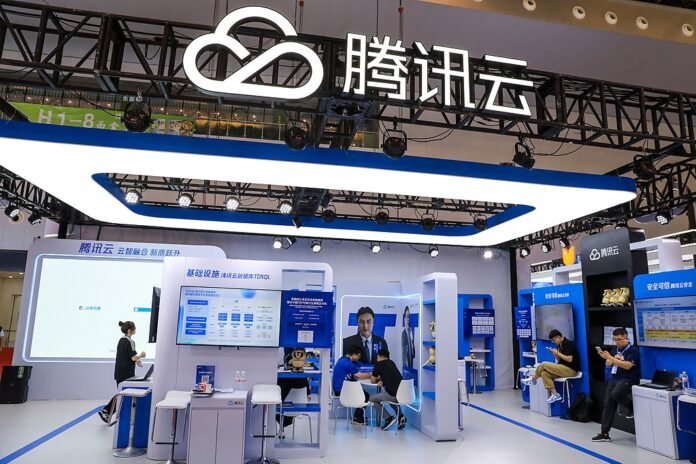
China’s leading cloud providers are hiking prices for AI-related services as soaring demand for artificial intelligence strains infrastructure and supply chains. Alibaba Cloud announced price increases of up to 34 percent for its AI computing and storage products, including T-Head Zhenwu 810E computing cards and CPFS intelligent storage, citing global AI demand growth and rising costs.

Baidu Cloud also adjusted pricing across AI computing and storage services, reflecting escalating hardware and network costs. The moves mirror a global trend, with major providers like Amazon Web Services, Google Cloud, Microsoft Azure, and Tencent Cloud raising fees for bandwidth and compute capacity.

The surge in pricing is driven largely by an explosion in “token” usage—the units AI models consume to process and generate data. Applications such as deep research, AI agents, and code generation require significantly more tokens per task, offsetting efficiency gains. Autonomous AI agents, exemplified by platforms like OpenClaw, have accelerated this trend, with token consumption on OpenRouter’s API aggregation platform tripling from 80.6 billion to 358 billion in just one month.

Nvidia CEO Jensen Huang noted that AI agents often require repeated calls across multiple models and tools to complete a single task, causing “orders-of-magnitude increases” in token usage. Analysts warn that rapid adoption of agent-style AI applications will further push demand for inference computing power, bandwidth, and infrastructure investment.

Sun Zhenya, senior research manager at IDC China, emphasized that enterprises need to plan strategically for computing resources and AI model usage as token consumption grows exponentially. The ongoing price adjustments signal a new phase in the AI cloud market, highlighting the pressures on providers to balance capacity, cost, and service quality in an era of rapidly expanding AI workloads.


Article inline ad

China Harnesses Capital Markets to Fuel Hard-Tech Innovation

0

According to a report by China Daily on March 19…

China is leveraging its capital markets to drive a new generation of hard-tech startups, with long-term funding mechanisms, national mergers and acquisitions (M&A) vehicles, and reforms to its Nasdaq-style growth board. These measures, outlined in the country’s 15th Five-Year Plan, aim to channel financial resources into emerging technologies over the next five years.

At the core of this strategy is the promotion of “patient capital”—investment vehicles with horizons of 15 to 20 years designed to match the long development cycles of frontier technologies such as quantum computing, nuclear fusion, and brain-computer interfaces. In Tianjin, two concept-verification funds were launched with 50 million yuan ($7.26 million) each to support ultra-early-stage university-born innovations. Similarly, Shanghai State-owned Capital Investment Co Ltd (SSCI) established a fund of funds targeting semiconductors, biomedicine, and AI, with underlying funds structured for long-term commitment.

To improve exit pathways and liquidity, China plans a national-level M&A fund expected to guide over 1 trillion yuan of investment. Experts note that many innovative firms evolve as strategic modules within broader supply chains rather than standalone giants, making M&A a critical mechanism for scaling innovation.

The reforms extend to public markets. The China Securities Regulatory Commission announced that the ChiNext board will introduce more targeted listing standards, pre-IPO fundraising options, and optimized pricing mechanisms to better support high-quality tech and entrepreneurial firms. The approach shifts focus from traditional P/E ratios to value discovery, attracting medium- and long-term capital toward emerging industries.

China’s five-year plan also emphasizes integrating bond market development with the technology sector and easing access for foreign investors to participate in equity and venture capital markets. Collectively, these initiatives signal a comprehensive effort to align financial markets with the nation’s strategic push for technology-driven growth.

Article inline ad

China’s Smart Glasses and AI Tech Offer a Glimpse of the Future

0

According to a report by China Daily on March 19…

Shanghai’s Appliance & Electronics World Expo (AWE) has become a showcase for China’s cutting-edge consumer electronics, where smart glasses and AI-driven devices are attracting international attention.

Among the highlights was Project Aura, a prototype Android XR headset developed by Google in collaboration with Shanghai-based Xreal. “This is leading-edge,” said Simon Cuff, a distributor from Australia. “It’s exactly what we look for: new brands with innovation and growth potential.” Almost all core hardware for the device was developed domestically, signaling China’s growing role in next-generation computing platforms.

Smart glasses dominated the expo floor. Qwen Glasses G1, integrated with Alibaba’s ecosystem, supports apps like Alipay, while Baidu’s Xiaodu AI Glasses Pro, weighing just 39 grams, offers first-person perspective recording, real-time translation, and note-taking. Xu Chi, founder and CEO of Xreal, compared the sector’s potential to smartphones two decades ago, noting that China’s rapid iteration and manufacturing capabilities position local companies to compete globally.

AI integration extends across household electronics as well. Visitors saw robots that fold clothes, clean pools, and assist in daily chores, demonstrating the potential for smart devices to become ubiquitous in modern homes. European visitors praised both the innovation and design quality, highlighting China’s increasing influence in shaping global consumer electronics trends.

Tao Xiaonian, chairman of the China Household Electrical Appliances Association, called the expo “an important window into China’s smart lifestyle technology trends,” emphasizing how AI is transforming the consumer electronics landscape.

Overall, the AWE illustrates China’s emergence as a leader in smart hardware and AI applications, with domestic innovation and manufacturing driving both market growth and international competitiveness.


Article inline ad