Tuesday, November 24, 2026

Home Blog Page 31

China’s Bamboo Industry Powers Green Manufacturing and Global Exports

0

According to a report by China Daily on March 19…

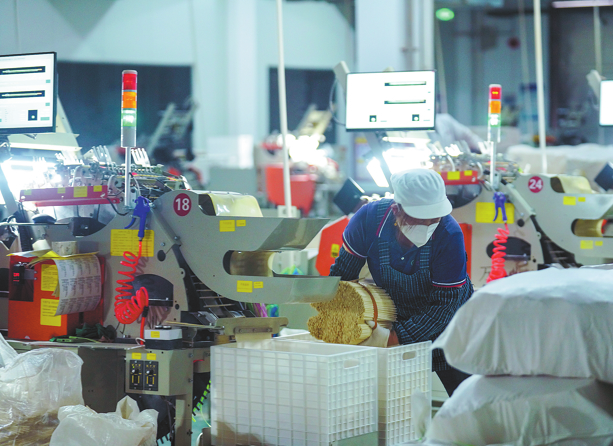
In Chizhou, Anhui province, bamboo forests spanning over 41,000 hectares are fueling a booming green economy. The city has become a hub for China’s “bamboo replacing plastic” initiative, transforming a traditional resource into high-value products and sustainable industrial models.

Historically underutilized, bamboo is now being processed into over 170 products, including straws, utensils, and charcoal, with smart production technologies boosting efficiency and quality. Local firms, like Hongye Group, have invested heavily in research and development, introducing intelligent drilling machines and automated processing lines. Annual bamboo straw output alone reaches 2 billion units, generating $60 million in exports in 2024.

Chizhou is also pioneering zero-waste approaches. Bamboo residues are converted into activated carbon, anode materials for solid-state batteries, and biochar fibers, while steam from pyrolysis is recycled to reduce energy costs. This circular model links leading enterprises, rural cooperatives, and industrial parks, and is now being replicated in neighboring cities.

The industry’s economic impact is significant. In 2024, Chizhou’s bamboo sector output surpassed 3 billion yuan ($435 million), a 26% year-on-year increase. Prices for raw bamboo have risen to 800 yuan ($116) per ton, directly boosting local farmers’ incomes.

Officials expect further expansion, projecting annual bamboo straw output to reach 30 billion units by 2030, cutting carbon dioxide emissions by 1 million tons annually. The city’s approach illustrates how traditional sectors can leverage green innovation, digitalization, and industrial upgrading to create sustainable growth and international market opportunities.

Article inline ad

China’s IP Market Cashes in on Box Office and Merchandise Successes

0

According to a report by China Daily on March 19th…

China’s intellectual property (IP) market is entering a mature phase, with Chinese-themed IPs increasingly driving consumer spending both domestically and abroad. Once a niche phenomenon, these IPs are now recognized as powerful commercial engines.

Blockbuster animated films are leading the trend. Less than a month after the release of Ne Zha 2, sales of its merchandise surpassed the two-year record set by The Wandering Earth II, generating $1.5 billion in derivative product revenue. Similarly, The Legend of Hei 2 secured over 30 licensing collaborations, with products sold through chains like Miniso and collectible blind boxes from Pop Mart selling out in seconds.

Trendy toy IPs are also booming. Labubu and Twinkle Twinkle drove industry upgrades, with Pop Mart reporting 390 million yuan in sales for Twinkle Twinkle products in the first half of 2025. New brands like Letsvan saw rapid market traction; its IP Wakuku sold out within two hours at Miniso Land Beijing, later boosting the company’s share price by 140% following a strategic acquisition.

Analysts predict continued growth in 2026, with a surge in both the variety and volume of IP content. Market intelligence firm Xinsheng-Pro forecasts increased competition across multiple dimensions and growing involvement from external capital and international players.

Experts highlight a shift from “traffic-driven” to “value-driven” IP. Wang Peng, associate research fellow at the Beijing Academy of Social Sciences, said that offline IP experiences — such as cultural tourism, theme parks, and immersive retail — are becoming central to extending product lifecycles and creating premium consumer engagement.

China’s top IPs are also aiming for global influence. By leveraging mature supply chains for toys and 3D printing, alongside international distribution of films and games, Chinese IP is increasingly competing to establish cultural symbols worldwide, combining content and physical goods to build global market presence.

Article inline ad

China Pushes High-End Manufacturing with New Foreign Investment Projects

0

According to a report by China Daily on March 19th…

China is steering more foreign investment toward high-end manufacturing and modern services, aiming to boost investor confidence and strengthen its market-opening agenda.

The National Development and Reform Commission recently unveiled 13 major foreign-funded projects with a combined planned investment of $13.4 billion. Experts said the move signals China’s commitment to improving the quality and structure of foreign investment amid mounting geopolitical uncertainty.

The new projects are concentrated in manufacturing sectors including electronics, chemicals, automobiles, and electrical machinery. For the first time, logistics projects were also included, highlighting a policy push for deeper integration between manufacturing and services. Research and development centers, particularly in biomedicine, continue to receive support.

“These projects will reinforce industrial clustering, support the shift toward smarter, higher-end manufacturing, and provide fresh momentum for the real economy,” said Zhu Keli, founding director of the China Institute of New Economy.

Cumulative investment in major foreign-funded projects now totals $108 billion, demonstrating significant spillover effects in attracting foreign capital. A new edition of the Catalog of Encouraged Industries for Foreign Investment, effective February 2026, further directs funds toward advanced manufacturing, modern services, high technology, and environmentally sustainable sectors.

Policy adjustments also aim to expand foreign market access, particularly in China’s central, western, and northeastern regions. Chen Lei, director general of the NDRC’s Department of Development Planning, said the government plans to prioritize the services sector and further trim the negative list for foreign investment.

“Stable policies will help translate China’s vast market potential into real business opportunities,” added Lou Feipeng, researcher at Postal Savings Bank of China.

Overall, the latest projects underscore China’s strategy of combining high-standard opening-up with industrial upgrading to attract and retain global capital.

Article inline ad

China Charts Strategic Path for Retired Solar Panels

0

According to a report by China Daily on March 19…

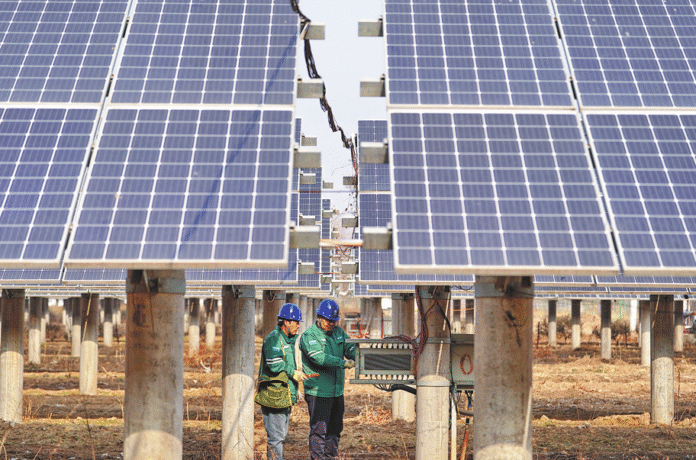
China has unveiled a comprehensive roadmap to manage the growing wave of retired solar panels, aiming to turn photovoltaic (PV) waste into a high-tech circular economy.

The Ministry of Industry and Information Technology (MIIT), along with five other government departments, recently issued guidance on the large-scale recycling and reuse of PV modules. The move signals a shift toward standardized disposal as the country’s early solar installations reach the end of their 25- to 30-year lifespans.

“China leads the world in PV installation, and many early modules are now retiring,” said Pan Helin, a member of MIIT’s Expert Committee for Information and Communication Economy. Improper handling could lead to significant resource losses, he added.

Recycling Targets and Market Potential

Under the new roadmap, China aims to recycle 250,000 metric tons of PV modules by 2027, supported by advances in layer separation and component extraction technologies. By 2030, the plan envisions a fully integrated industrial chain to handle the expected surge in decommissioned equipment.

Industry projections highlight the scale of the challenge: retired PV modules are expected to reach 1.4 million tons (around 18 GW) by 2030, and escalate to 20 million tons (253 GW) by 2040. The economic opportunity is significant, with the cumulative market for PV recycling projected to reach $3.6 billion by 2030 and potentially expand to $57 billion by 2050.

Technological and Industrial Shifts

The policy emphasizes “green design” at the manufacturing stage, encouraging the use of materials that are easier to disassemble and recycle. Recycled components, including PV frames and glass, are being reintegrated into new module production to foster a closed-loop system.

Cinda Securities notes that thermal decomposition methods are emerging as a preferred approach, offering faster processing and higher recovery rates than traditional physical or chemical methods. However, this technology requires significant investment, and the market remains fragmented with no dominant players.

Challenges and Industry Support

Illegal recycling remains a major concern. Currently, formal enterprises can process only 300,000 tons annually, leaving a 900,000-ton gap often handled by unlicensed small workshops, which could cause environmental damage.

To address this, the government plans to nurture key “backbone” enterprises and high-tech small and medium-sized “little giants.” Financial institutions are also being encouraged to provide credit support for green technology upgrades and recycling projects.

“For manufacturers, this is an opportunity for industrial upgrading. For recyclers, it’s a chance to create a competitive edge through technology,” Pan said. “Ultimately, retiring old panels will support high-quality development by enabling the adoption of more efficient next-generation solar products.”

Article inline ad

AI and Digital Infrastructure Power China’s Industrial Upgrade

0

According to a report by China Daily on March 19…

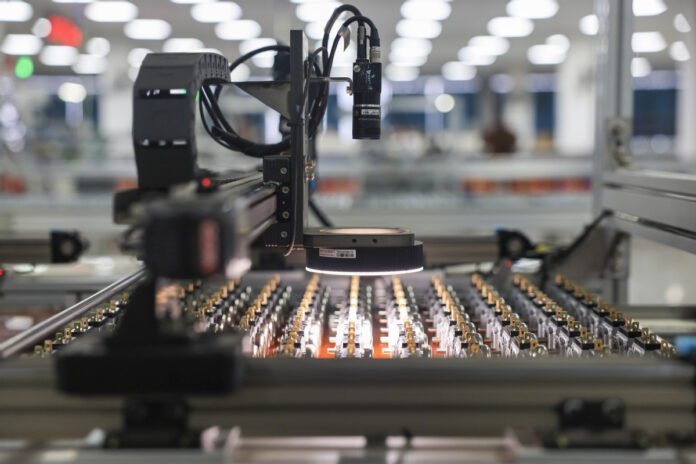
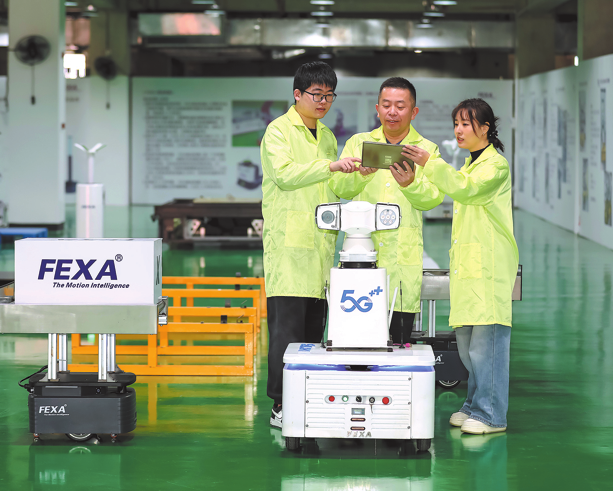
China is accelerating the development of “new quality productive forces,” with the government emphasizing artificial intelligence, digitalization, and data resources as key tools to modernize the economy. The 2026 Government Work Report highlighted initiatives ranging from smart manufacturing to large-scale computing infrastructure.

Officials and experts stress that these technologies are not only critical for creating new forms of economic activity but also for strengthening traditional industries.

Zhang Yuzhuo, chairman of the State-owned Assets Supervision and Administration Commission of the State Council, noted that sectors such as energy, petrochemicals, and construction remain the backbone of China’s economy. Recent efforts to digitize and green these industries have produced 70 high-standard smart factories and six pilot smart facilities.

In the energy sector, Yang Changli, chairman of China General Nuclear Power Group, said the company is pursuing “Digital Nuclear Power” to upgrade processes across equipment design, construction, production, and operations, highlighting AI’s potential even in traditional industries.

Construction is also seeing a digital transformation. Feng Yuan, chief engineer at China Southwest Architectural Design and Research Institute Corp, described how architects are shifting from drafting to planning roles through digital tools, enabling more innovation and human-centric design.

The report emphasizes building new infrastructure, including large-scale smart computing clusters. China has already established 42 clusters with a combined capacity exceeding 1,590 EFLOPS, ranking among the global leaders. Still, Gao Wen, an academician at the Chinese Academy of Engineering, warned that overall computing power remains insufficient to meet growing AI demands.

Looking ahead, Chen Lei, director general at the National Development and Reform Commission, said the 15th Five-Year Plan (2026–2030) will focus on deploying 10-gigabit optical networks and 5G-A commercialization to build a national integrated computing network. Gao predicts that once these networks are in place, accessing computing power could become as simple as using electricity.

The government’s push illustrates a broader strategy: leveraging AI and digital infrastructure to enhance traditional industries, build new economic capabilities, and strengthen China’s position in the global technology landscape.

Article inline ad

China Signals More Proactive Fiscal Policy to Boost Demand in 2026

0

According to a report by China Daily on March 19…

China will maintain a proactive fiscal policy stance in 2026, stepping up government spending, widening the deficit and expanding bond issuance to support domestic demand and stabilize growth, as external uncertainties continue to rise.

The policy direction, outlined in official budget documents released after the annual “Two Sessions”, underscores Beijing’s growing focus on addressing weak demand despite relatively strong supply conditions in the economy.

Larger Deficit and Rising Government Debt

According to the budget report, China’s general public expenditure is set to exceed 30 trillion yuan ($4.37 trillion) this year, up 4.4% and marking a record high.

The headline fiscal deficit target remains at 4% of GDP, unchanged from 2025, but in absolute terms rises to 5.89 trillion yuan.

Including local government special-purpose bonds and various forms of special treasury bonds, total new government debt issuance is expected to reach 11.89 trillion yuan.

On a broader measure — which includes off-budget items — the fiscal deficit is estimated at around 8.1% of GDP, broadly in line with last year but significantly higher than levels seen in 2023 and 2024.

Policy Shift Toward Supporting Consumption

Officials have acknowledged that the imbalance between strong supply and weak demand remains a key challenge.

Speaking recently, Finance Minister Lan Fo’an of the Ministry of Finance of China said consumer spending lacks momentum and private investment remains subdued.

To address this, the government has introduced a fiscal-financial policy package worth 100 billion yuan, combining tools such as interest subsidies, financing guarantees and risk-sharing mechanisms to support private investment and household consumption.

This comes on top of an expanded consumer goods trade-in programme, bringing total fiscal support for consumption above last year’s level.

Leveraging Fiscal Funds to Unlock Credit

Authorities are also aiming to amplify the impact of fiscal spending through coordination with financial policies.

Officials estimate that every 100 billion yuan in fiscal funding could support up to 1 trillion yuan in credit — highlighting Beijing’s focus on using public funds to catalyse broader financing activity.

Structural Shift in Fiscal Strategy

Economists say China’s fiscal policy is undergoing a gradual rebalancing.

Rather than focusing primarily on infrastructure and supply-side investment, policymakers are placing greater emphasis on boosting consumption, supporting households and improving social welfare.

This could involve increased spending on areas such as pensions and childcare, as part of a broader effort to strengthen domestic demand.

Balancing Support with Fiscal Constraints

Despite the more proactive stance, officials have stressed that fiscal resources remain constrained.

Authorities are therefore pushing ahead with reforms aimed at improving fiscal efficiency, including expanding the use of “zero-based budgeting” — a system that requires all expenditures to be justified from scratch each year.

Other planned measures include refining the local tax system and adjusting the scope and structure of consumption-related taxes to strengthen local government revenues.

A Clear Policy Signal

Taken together, the measures point to a continued policy pivot toward demand-side support, even as China seeks to maintain overall fiscal stability.

For investors and policymakers alike, the key question is whether stronger fiscal support can translate into a sustained recovery in consumption — an area that remains central to China’s medium-term growth outlook.

Article inline ad

China Keeps Easing Bias as Oil Shock Clouds Global Outlook

0

According to a report by China Daily on March 19…

China is expected to maintain an accommodative monetary policy stance to support growth, even as rising oil prices and geopolitical tensions complicate the global inflation outlook.

The divergence comes as the Federal Reserve opted to hold interest rates steady this week, citing persistent inflation and uncertainty linked to developments in the Middle East. Higher energy prices are increasingly seen as an upside risk to inflation across major economies.

By contrast, Chinese policymakers appear more focused on stabilizing domestic demand and financial markets.

Policy Support Remains in Place

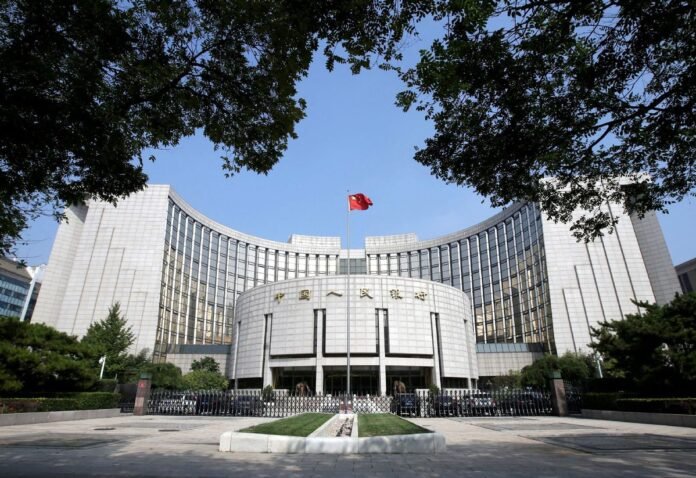
The People’s Bank of China has reiterated its “appropriately accommodative” stance, signaling continued reliance on liquidity tools such as reserve requirement ratio (RRR) cuts, medium-term lending facilities, and open market operations.

Authorities have also stressed the need to maintain stability across equity, bond, and foreign exchange markets amid heightened global volatility.

Limited Inflation Spillover from Oil

While higher oil prices may introduce imported inflation pressures, analysts expect the overall impact on China to remain relatively contained.

This is due in part to the country’s diversified energy mix, strategic reserves, and a gradual decline in oil intensity. As a result, inflation risks in China are seen as more manageable than in many Western economies.

That dynamic gives Beijing more room to prioritize growth over aggressive inflation control.

Relative Appeal of Chinese Assets

Against a backdrop of global market turbulence, some investors see Chinese assets as offering relative stability and diversification benefits.

China’s equity market has shown modest resilience so far this year, even as global equities have come under pressure following the Fed’s policy stance. Expectations of continued policy support may help underpin liquidity and corporate earnings.

The renminbi could also find support if China’s growth outlook stabilizes while other economies face rising stagflation risks.

Easing, but Not Aggressively

That said, economists caution that the scope for aggressive easing may be limited.

Stronger-than-expected economic data in early 2026, including solid export performance, suggests policymakers may adopt a more measured approach. Instead of large rate cuts, authorities are more likely to rely on targeted, quantity-based tools such as RRR reductions.

A Policy Divergence to Watch

The growing divergence between China’s easing bias and the Fed’s “higher-for-longer” stance could become a defining theme for global markets this year.

For investors, the key question is whether China’s policy support can translate into a sustained recovery in domestic demand—while reinforcing its role as a relative stabilizer in an increasingly uncertain global environment.

Article inline ad

China–US Trade Still Holds Untapped Potential Despite Tensions

0

According to a report by China Daily on March 19…

Recent trade talks between China and the United States in Paris have highlighted a familiar reality: despite ongoing tensions, the two economies remain deeply interconnected—and potentially complementary.

The sixth round of bilateral discussions, held earlier this week, focused on tariffs, trade facilitation, and maintaining existing consultation mechanisms. While no major breakthroughs were announced, the tone suggested both sides are still willing to engage.

According to Zhao Zhongxiu, president of a leading Beijing-based business university, the fundamental structure of China–US economic ties has not changed, even amid years of “decoupling” rhetoric and trade friction. “There remains strong underlying demand and significant shared interests,” he noted.

Trade Flows Shift, but Interdependence Persists

Official data shows that direct China–US trade totaled about $87.6 billion in the first two months of the year, down nearly 17% year-on-year. However, this decline tells only part of the story.

China’s overall trade continues to expand rapidly, with exports and imports both posting strong double-digit growth. Analysts say this reflects a broader shift: while direct bilateral trade may fluctuate, indirect linkages—through third-party markets and global supply chains—are becoming more prominent.

In practical terms, American companies still rely heavily on Chinese manufacturing and supply chains, while China remains a major market for US goods such as agricultural products. At the same time, US strengths in sectors like aviation, logistics, and finance continue to find demand in China.

Business Community Seeks Stability

One consistent message from both Chinese and American businesses is the need for greater predictability.

Companies are calling for clearer rules around tariffs, export controls, and technology exchange. Temporary measures—such as tariff suspensions—are seen as insufficient for long-term planning.

Uncertainty, rather than cost alone, has become a major concern for multinational firms trying to navigate cross-border operations.

China’s Economic Buffer

Chinese analysts argue that the country’s large domestic market and comprehensive industrial system provide a cushion against external shocks.

As the only country with a full spectrum of industrial categories, China continues to play a central role in global value chains. Its vast internal demand also allows for some degree of economic adjustment when external pressures rise.

At the same time, Beijing has signaled that while it remains open to dialogue, it is prepared to respond if trade measures are perceived as restrictive or politically motivated.

A Relationship That Still Matters Globally

Despite political headwinds, the economic logic for cooperation remains strong.

More stable China–US trade relations would not only benefit businesses in both countries but could also provide a boost to global economic growth—especially at a time when supply chains and international trade are under strain.

For now, progress may be incremental. But the continued dialogue itself suggests that neither side is ready to disengage entirely.


Article inline ad

ZH Sailing Weekly: China’s Economic & Industrial Highlights

0

March 17, 2026 | Curated for Global Readers


1️⃣ China Economy: Stable Growth & Forex Resilience

Policies Deliver Robust Roadmap for Growth
China maintains a GDP growth target of 4.5–5% in 2026, signaling macroeconomic stability amid global uncertainty. Multinational executives highlight the predictable business environment, supporting ongoing investment and localized innovation across high-tech, manufacturing, and consumer sectors.

China’s Forex Market Shows Resilience
February 2026 saw $2.6 trillion in forex transactions, with a net capital inflow of $35.6 billion from non-banking sectors. SAFE emphasizes steady demand and stable market expectations, reinforcing China’s position as a reliable hub for international trade and investment.

Key Takeaways:

  • Growth target supports long-term investor confidence

  • Forex stability underpins cross-border trade

  • Domestic demand and high-quality consumption remain key drivers


2️⃣ China AI & Technology: Innovation in Practice

Newsonic Powers Honor’s Overseas Expansion
China’s Newsonic Electronics provides a full suite of RF front-end components for Honor’s X6d smartphone, marking a shift from single-component to integrated solutions. With global demand for RF technology growing to $26.9 billion by 2028, Chinese suppliers are becoming key players in international smartphone supply chains.

Chinese Innovations Shine at Geneva Event
At the 51st International Exhibition of Inventions in Switzerland, Chinese innovators showcased over 200 inventions, winning 90 gold medals. Highlights include 600 km/h maglev train prototypes and AI-based early warning systems for renewable energy integration, demonstrating China’s growing technological and industrial capabilities on a global stage.


3️⃣ China Global Expansion: Industry Goes International

Merck Deepens Partnerships in China
Merck is positioning as a preferred partner in China’s pharmaceutical innovation, collaborating with local biotech firms like Suzhou Zelgen Biopharmaceuticals. The launch of Recombinant Human Thyrotropin reflects growing multinational-local cooperation and China’s rising influence in global healthcare innovation.

Nation’s Floral Industry Blooms Globally
Yunnan’s flower exporters, like Dianwang Flowers, are shipping roses, lilies, and chrysanthemums across Asia, Central Asia, and the Middle East. E-commerce and logistics networks accelerate cross-border sales, with online platforms driving over 50% of retail transactions. China’s flower industry is leveraging technology and global market insights to expand internationally.

Wind Players Reaching Global Heights
Chinese wind turbine makers claim the top six positions in global market share, with Goldwind and Envision leading both domestic and international installations. Exports now account for 7% of total installations, reflecting China’s growing influence in the renewable energy transition worldwide.


4️⃣ China Industry: Energy & Sustainability Leadership

China’s Geothermal Sector Maintains Global Lead
Geothermal heating and cooling coverage reached 1.65 billion square meters in 2025, with 7% projected growth over the next decade. China leads in renewable energy adoption, strengthening energy security while supporting carbon reduction and green innovation.

Key Takeaways:

  • Technological breakthroughs expand geothermal capacity

  • Private investment accelerates adoption

  • Global blueprint for scalable renewable energy deployment


Highlights Across Sectors

Sector Key Insight Global Impact
Economy GDP & forex stability Predictable environment for investment
Technology RF, AI, innovation Chinese firms entering global supply chains
Pharmaceuticals Multinational-local collaboration Driving global healthcare innovation
Renewable Energy Wind, geothermal Leading renewable adoption and exports
Agriculture Flowers Supply chains and e-commerce connect to global markets

Editorial Note

This week’s coverage illustrates how China’s domestic industries are integrating with global markets, combining innovation, high-quality production, and strategic international expansion. For investors and global business leaders, the insight is clear: China is no longer just a consumer market — it is a source of global industrial and technological innovation.

Article inline ad

Experts Raise Alarm On AI Data Poisoning

0

Probe finds firms use online marketing tool to manipulate product information

By Cheng Yu | China Daily | Updated: 2026-03-17 

Regulators and experts in China have warned of “artificial intelligence data poisoning” after the annual 315 consumer rights gala, which was held on Sunday, exposed the fabrication of promotional content to influence AI-generated response.

 The findings of an investigation conducted by China Media Group, which were revealed during the live broadcast of the gala, showed the gross abuse of an online marketing tool called generative engine optimization, or GEO, that aims to enhance content visibility.

 The probe revealed that companies have been using GEO to mass-feed promotional articles in an attempt to manipulate the information AI retrieves when answering user queries.

 China Media Group reporters created a fake product — a smart wristband named “Apollo-9” — and claimed it had features such as quantum-entanglement sensors, a noninvasive blood glucose monitor and an ultra-long battery life.

 Within hours of more than a dozen promotional articles about the nonexistent wristband being uploaded to a platform called Liqing GEO, two mainstream AI models began recommending the product in response to queries about smart wearable devices.

 Li Fumin, a researcher of intelligent social governance at Shandong University of Finance and Economics in Jinan, the capital of Shandong province, said businesses that use GEO services to deliberately train AI models to promote specific products are essentially fabricating facts and engaging in bogus marketing.

 “On the one hand, the practice leverages AI and algorithms to make false advertising, which results in unfair competition. On the other hand, this kind of behavior allows people to receive implanted marketing content without knowing it, which violates their consumer rights,” Li said.

 Generative engine optimization is widely considered the AI-era evolution of search engine optimization, or SEO. China’s search engine companies, such as Baidu Inc, have previously faced scrutiny over paid ranking practices that blur the line between advertising and organic search results.

 Several Chinese AI developers have responded cautiously to the investigation. ByteDance said that its chatbot, Doubao, was unaffected by such systems, while Alibaba said the core reasoning capability of its Qwen model was not affected by similar technologies.

 Industry experts said the issue reflects a broader structural challenge rather than a flaw in any single model. They said that most AI systems rely heavily on accessible internet content, which can be mass-produced or manipulated.

 Expediting legislation

 Song Xiangqing, vice-president of the Commerce Economy Association of China, said that regulators should accelerate the formulation of new legislation to make deliberate pollution of AI data sources illegal.

 China currently has no specific regulations governing GEO services. According to a work priority guideline on advertising recently released by the State Administration for Market Regulation, the nation will step up efforts to streamline digital advertising market strategies, including AI-generated content.

 Song suggested drawing up a “white list” to identify trusted information sources and building a coordinated governance framework involving government oversight, corporate self-regulation and public supervision. “Without these safeguards, GEO services could evolve into a widespread source of information pollution, enabling data poisoning to spread throughout the AI ecosystem,” he said.


Article inline ad