Tuesday, November 24, 2026

Home Blog Page 32

Platforms Tighten Rules On AI-Generated Content

0

By LI JIAYING | China Daily | Updated: 2026-03-17 

Online platforms are tightening oversight of AI-generated content and automated accounts as regulators and companies move to safeguard authentic user interactions and curb emerging risks tied to AI-powered tools.

 Social media and content platform RedNote, also known as Xiaohongshu, announced new governance measures recently targeting accounts automatically operated through AI tools, saying violations could lead to account bans in the most serious cases.

 The platform stressed that using AI to impersonate real users, create non-authentic content or conduct fake interactions will be strictly prohibited.

 Under the new rules, accounts that are directly registered, operated and interacted with through AI hosting tools, or those whose posts are entirely generated and published by such tools, will face account bans, according to the statement.

 The move comes as automated AI tools proliferate the market. With the recent wave of OpenClaw, an open-source AI agent, a large number of AI agent tools capable of automatically executing tasks have emerged.

 Driven by commercial interests, such AI hosting can lead to a gray industry chain of “account creation, account nurturing and resale or monetization”, according to a report by Securities Daily. Operators use AI to generate artificial popularity at scale before selling the accounts for profit or converting them into channels for product promotion or online courses.

 “As AI execution capabilities grow exponentially, the ‘cat-and-mouse game’ between content platforms and AI production tools is likely to intensify,” said a recent Citi report, adding that Xiaohongshu’s move aims to build a firewall for the community to prevent the voices of real users from being drowned out by algorithm-generated content.

 “It is every genuine record and every sincere exchange that together create the warmth of the community,” Xiaohongshu said in its announcement, calling on users to use AI tools responsibly during the creative process and ensure that posts continue to reflect real experiences and personal insights.

 Xiaohongshu’s move is not an isolated case, as major Chinese online platforms have been stepping up efforts to curb AI-generated content.

 ByteDance’s Douyin announced last week that it had handled 42,000 pieces of vulgar or rule-violating AI-generated content since the beginning of the year. Around 14,000 accounts received penalties including traffic restrictions, temporary bans or permanent suspensions.

 Weibo has also intensified efforts to this end, removing large amounts of content and suspending related accounts recently. The platform has also upgraded its AI detection technologies and called on users to label AI-generated content.

 These moves align with broader regulatory efforts to strengthen governance frameworks for AI agents and AI-generated content. The Ministry of Industry and Information Technology issued a set of recommendations last week to help prevent security risks linked to the OpenClaw open-source AI agent framework, including potential cyberattacks and data leaks.


 lijiaying@chinadaily.com.cn

Article inline ad

China’s geothermal industry maintains world-leading position

0

By Zheng Xin | chinadaily.com.cn | Updated: 2026-03-17 

China’s geothermal industry has maintained its position as world number one in terms of scale, driven by the rapid development of its use in heating applications, according to the China Geothermal Industry Development Report 2025.

 The recently released report details that, during the 14th Five-Year Plan period, the use of geothermal heating and cooling in China, in terms of area, grew at an average annual rate of 6.5 percent. By 2025, area coverage had reached a total of 1.65 billion square meters.

 According to the report’s forecasts, China will maintain a growth rate of approximately 7 percent for geothermal heating and cooling over the next 10 years.

 By 2035, the cumulative heating and cooling area in China is expected to reach 3 billion square meters, and the cumulative installed capacity for geothermal power generation is projected to reach 500 megawatts.

 The report predicts that geothermal technology will continue to expand in scope and capacity, with technological breakthroughs expected to support the development of geothermal power projects across China.

Article inline ad

China’s Forex Market Remains Stable In February

0

Xinhua | Updated: 2026-03-17 

BEIJING — China’s foreign exchange market remained generally stable in February despite heightened geopolitical tensions and increased volatility in international financial markets, the country’s forex regulator said on Monday.

 The Chinese foreign exchange market recorded transactions worth $2.6 trillion in February, while cross-border receipts and payments by non-banking sectors totaled $1.2 trillion, according to the State Administration of Foreign Exchange.

 In February, non-banking sectors recorded a net inflow of $35.6 billion in cross-border capital, while banks posted a forex settlement surplus of $42.8 billion, the data showed.

 Overall, China’s foreign-related economy is developing steadily, the foreign exchange market remains active, corporate forex settlement willingness has shown a modest decline, and demand for forex purchases is generally stable, with market expectations remaining steady, the administration said.

Article inline ad

China’s Flower Industry Blooms on the Global Stage

0

By ZH Sailing | China Global Expansion
March 2026

KUNMING, China — At a cold storage facility in Yunnan province, freshly harvested roses are carefully processed, packed, and loaded onto temperature-controlled trucks bound for Kazakhstan. This journey, spanning seven days overland, is part of a broader story: China’s flower industry is increasingly flourishing on international markets.

Yunnan, the nation’s floral heartland, produces seven out of every ten fresh-cut flowers sold in China. In 2025, Yunnan’s flower exports reached 1.22 billion yuan ($177 million), a 60.5% year-on-year increase, spanning 64 global markets, according to Kunming Customs data.


From Local Fields to International Markets

Dianwang Flowers, one of Yunnan’s leading exporters, exemplifies this international push. Its operations now cover 20 markets across Southeast Asia, Central Asia, and the Middle East, with direct production and sales in Myanmar through a 13-hectare experimental farm. Collaborations with local authorities and partners in Cambodia have secured a 65% market share, while introducing advanced cultivation techniques and seedlings via training programs.

“Different markets favor different flowers,” said Fu Zhaotian, head of Dianwang Flowers. Lilies, chrysanthemums, and carnations thrive in Myanmar, while large-headed roses like Highland Red and Floyd are popular in Central Asia and Russia. This market-oriented approach is paired with precise R&D, ensuring that flowers are tailored to consumer preferences abroad.


Sophisticated Supply Chains Drive Growth

China’s flower exports rely on a highly integrated logistics network. Air shipments reach Myanmar and the Philippines in under 48 hours, while Vietnam receives fresh flowers from Kunming in just six hours. This efficiency is crucial for maintaining quality in perishable goods.

E-commerce has emerged as a key driver of international growth. Flower farmers are now connecting directly with florists via mobile platforms, enabling sales before harvest, reducing waste, shortening transaction times, and increasing farmer income. According to the China Flower Association, online consumption accounted for 54.5% of the retail market in 2024, sustaining three years of consecutive growth.


China’s Floral Economy Goes Global

By the end of 2025, China’s flower industry had achieved:

  • Market size: 100 billion yuan

  • Cultivation area: 1.39 million hectares

  • Direct employment: 5.34 million people

While Yunnan leads, other major clusters in Guangdong, Shandong, and Gansu leverage local conditions to expand production. With China’s 2022 guideline targeting 700 billion yuan in annual sales by 2035, the sector is strategically positioned for both domestic growth and global expansion.

Customs data show that in 2024, China exported $516 million in flowers, a 17.8% year-on-year increase, highlighting the country’s rising influence in the international floral market.


Global Implications

China’s floral boom is more than a trade story; it reflects how agricultural innovation and supply chain sophistication are enabling domestic industries to integrate into global markets. For importers and retailers worldwide, Chinese flowers now offer:

  • Reliability in supply through diversified logistics channels

  • Products tailored to regional consumer preferences

  • Access to innovative cultivation and R&D practices

According to Zhang Shaomin, co-founder of a vertical e-commerce platform, digital solutions reduce post-harvest losses by 30% and increase farmer incomes by 20%, illustrating how technology supports global competitiveness.


🔶 Signature Insight

China’s flower industry is no longer just domestic; it is cultivating a global presence through sophisticated supply chains, tailored R&D, and digital platforms, positioning itself as a key player in international floriculture.


🔷 Key Takeaways

  • Yunnan: largest hub for fresh-cut flowers, exporting to 64 global markets

  • Dianwang Flowers: direct overseas production in Myanmar, strong presence in Cambodia

  • Logistics: air shipments in 48 hours, overland exports across Central Asia

  • E-commerce: 54.5% of sales online, reducing waste and boosting farmer income

  • Growth outlook: $516 million exports in 2024, strong trajectory toward global market integration

Article inline ad

Chinese Innovations Take Center Stage at Geneva Invention Exhibition

0

By ZH Sailing | China Technology
March 2026

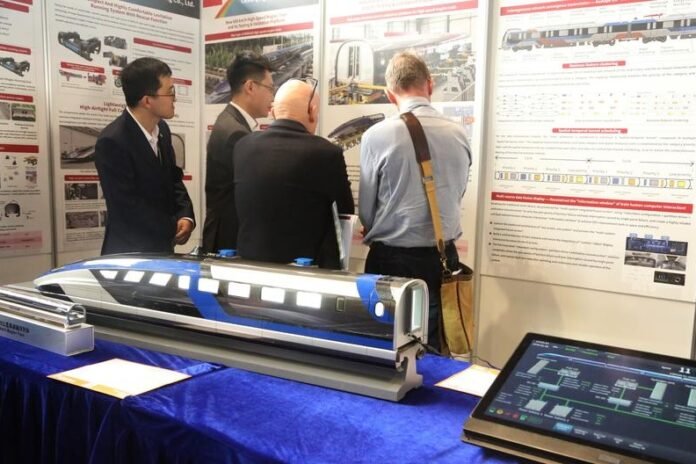
China’s inventors captured global attention at the 51st International Exhibition of Inventions in Geneva, showcasing cutting-edge technologies across energy, transportation, healthcare, and digital sectors. Over five days, the Chinese delegation presented 237 invention projects across 212 booths, the largest delegation in the event’s history, winning 90 gold medals.


From AI to High-Speed Maglevs

The showcased projects reflect both the breadth and depth of China’s innovation ecosystem. Notable highlights include:

  • High-Speed Maglev Technology: A prototype 600 km/h maglev train featuring innovations such as bogies without rockers and lightweight, high-strength car bodies. The project also demonstrated a full test and validation platform, signaling China’s ambition in next-generation transportation technology.

  • AI-Driven Power Grid Solutions: An early warning system for power supply security leveraging AI to improve adaptability to high-renewable energy integration, enhancing predictive safety and operational resilience.

  • Digital and Cyber Innovations: Projects in software, cybersecurity, blockchain, and IoT showed rapid growth, underlining China’s emerging focus on digital infrastructure and smart solutions.

These inventions demonstrate China’s strategic push in sectors critical to the global transition toward clean energy, intelligent infrastructure, and digital transformation.


Global Stage for Innovation

The Geneva Invention Exhibition, one of the world’s longest-running and largest innovation fairs, attracted over 1,000 projects from 35 countries and regions this year. The success of China’s delegation underscores the country’s growing presence in global high-tech innovation—not only producing technologies for domestic use but increasingly aiming for international adoption and collaboration.

Cristian Dinca, a leading industry analyst, noted:

“China’s inventors are now presenting solutions that combine scale, sophistication, and global relevance. Their presence in Geneva shows that innovation is no longer confined to labs—it is entering markets and shaping international standards.”


Implications for Global Technology Trends

China’s showcase signals several emerging trends for global tech observers:

  1. Integrated Innovation Ecosystem: Chinese teams are increasingly capable of developing complete, scalable solutions—from prototype to validation platforms—across multiple sectors.

  2. Cross-Sector Technology Convergence: Energy, AI, transportation, and digital infrastructure are being developed with overlapping applications, highlighting the potential for synergistic technologies.

  3. International Recognition: Winning 90 gold medals positions Chinese innovators as credible competitors on the world stage, increasing the potential for technology export and collaboration.


Looking Ahead

As China continues to strengthen R&D investment and foster international collaboration, its technological innovations are likely to have far-reaching impact, influencing sectors from renewable energy to intelligent transportation and cybersecurity. The Geneva exhibition highlights that China is not only keeping pace with global innovation trends but, in several areas, setting them.


🔶 Signature Insight

China’s inventors are moving from local problem-solving to shaping global technology trajectories, signaling the country’s growing role as a hub of international innovation.


🔷 Key Takeaways

  • Chinese delegation: 237 projects, 212 booths, 90 gold medals

  • Focus areas: Energy, AI, digital tech, transportation, medicine, construction

  • Emerging trends: Cross-sector innovation, smart infrastructure, global technology relevance

  • Implication: China is increasingly a driver of international technological standards

Article inline ad

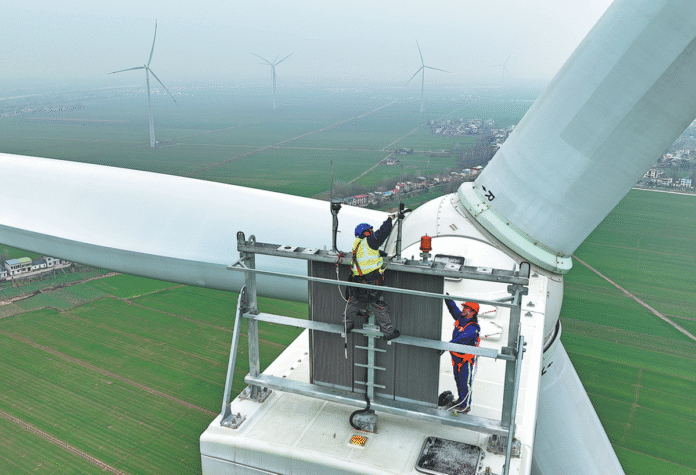
China’s Wind Giants Take the Lead in Global Energy Transition

0

By ZH Sailing | China Global Expansion
March 2026

China’s wind power industry has reached a turning point.

For the first time, Chinese turbine manufacturers occupy the top six positions in global market share rankings, marking a significant shift in the balance of the global renewable energy sector.

What was once a domestically driven expansion story is now evolving into something larger:
the emergence of China as a global force shaping the economics and deployment of wind energy.


Scale at Home, Impact Abroad

The foundation of this shift lies in China’s unparalleled domestic scale.

In 2025, the country added more than 100 gigawatts of wind capacity—becoming the first in the world to reach such a milestone in a single year. Globally, total additions hit a record 169 GW, with China accounting for the majority of growth.

This expansion is underpinned by:

  • Long-term policy support

  • Massive infrastructure investment

  • A deeply integrated supply chain

China’s broader energy push is equally striking. Combined wind and solar capacity has now surpassed thermal power for the first time, reflecting a structural transition in the country’s energy mix.


From Domestic Dominance to Global Competition

The rise of Chinese manufacturers is not new—but 2025 marks a qualitative shift.

Leading companies such as Goldwind and Envision Energy have long dominated the domestic market. Now, they are beginning to translate that scale into global presence.

Chinese firms swept the top six positions in global turbine installations, while Western competitors—including Vestas—have slipped in relative ranking.

This change reflects not just competitive pressure, but a broader rebalancing of industrial leadership in the energy transition.


The Export Pivot

The most telling signal lies in overseas expansion.

In 2025, the share of installations outside China by Chinese manufacturers rose sharply—from just 1 percent to 7 percent. Overseas capacity increased eightfold in a single year, indicating a rapid acceleration in global market entry.

This shift is driven by several factors:

  • Intensifying competition and thinner margins at home

  • Cost advantages in manufacturing

  • Faster delivery cycles compared to global peers

Companies like Envision Energy are leading the push, with a growing share of projects located outside China.

For many emerging markets, particularly in the Global South, Chinese suppliers are becoming increasingly attractive partners in scaling renewable energy capacity.


A Changing Global Landscape

China’s rise comes at a time of transition for the global wind industry.

While markets outside China grew by 17 percent to 43 GW, competition is intensifying and regional dynamics are shifting. India has overtaken both the United States and Germany to become the largest wind market outside China, reflecting the growing importance of emerging economies in the energy transition.

At the same time, parts of the offshore wind sector—particularly in Europe—have faced delays and cost pressures, creating openings for new entrants.


More Than Market Share

The implications of China’s ascent go beyond rankings.

As Chinese manufacturers expand globally, they are bringing with them:

  • Cost-efficient production models

  • Rapid deployment capabilities

  • Integrated supply chain solutions

Over time, this could influence not only who builds wind farms, but how they are built, financed, and delivered.

In other words, China’s role may extend from market participant to standard setter in the global renewable energy industry.


Looking Ahead

Demand for wind energy is expected to remain strong, with a rebound in offshore projects anticipated as delayed developments in Europe and Asia come online.

For Chinese manufacturers, the challenge will be to:

  • Sustain domestic momentum

  • Navigate complex international markets

  • Scale operations globally without compromising quality and compliance

If successful, their expansion could reshape the global energy landscape.


Conclusion

China’s wind power sector is entering a new phase—one defined not only by domestic scale, but by global reach and influence.

The question is no longer whether Chinese companies can compete internationally.
It is how far—and how fast—they can extend their lead.

In the race to power the world’s energy transition,
China’s wind giants are no longer followers. They are setting the pace.


🔶 Signature Insight

China’s dominance in wind power is no longer confined to its domestic market — it is increasingly shaping the global economics and direction of the energy transition.


🔷 Key Takeaways

  • Chinese firms now occupy the top six global wind turbine positions

  • Domestic scale is translating into rapid overseas expansion

  • Overseas installations surged 8x in one year

  • Companies like Goldwind and Envision Energy are leading global growth

  • China may evolve from market leader to global standard setter in renewables


🔻 Editor’s Note

China’s trajectory in wind power mirrors a broader industrial pattern: scale first, then global expansion, followed by standard-setting influence.

What makes this phase different is timing.
As the world accelerates toward decarbonization, the ability to deliver renewable capacity quickly and affordably is becoming as important as innovation itself.

In that equation, China holds a growing advantage.

Article inline ad

Tea Leaves Brewing Up Big Profits

0

By LI JING | China Daily | Updated: 2026-03-17 

Tea farmers in Zhuwan village in Central China’s Hubei province are busy picking fresh spring leaves from a 600 mu (40-hectare) plantation. Inside nearby workshops, workers process the leaves into yellow tea, a specialty that local officials say is reshaping the economics of tea farming in this once-impoverished revolutionary base area.

 The shift comes as China intensifies efforts to accelerate the revitalization and development of old revolutionary base areas. On Friday, a set of guidelines was issued by the general offices of the Central Committee of the Communist Party of China and the State Council — the nation’s Cabinet — with a focus on cultivating competitive local industries and integrating agriculture with tourism and cultural sectors.

 For Zhuwan in Dawu county in the area of Dabie Mountains, yellow tea is the centerpiece of this strategy.

 Once reliant almost entirely on spring harvests, local tea growers struggled with low returns from summer and autumn leaves that often went unused. By introducing a processing technique that involves multiple rounds of steaming and charcoal roasting, the village has turned those neglected leaves into a cash crop.

 Tea can now be harvested across three seasons, generating year-round income growth. The model has also spread to surrounding areas, helping more than 2,000 farming households across eight nearby townships raise annual earnings by about 2,000 to 2,500 yuan ($275-$345) per mu of tea-growing land.

 “The key for old revolutionary base areas is not massive new investment, but making better use of existing resources,” said Liang Yunying, a national lawmaker and the Party secretary of Zhuwan village, who has helped lead the overhaul.

 The Dabie Mountains region has more than 4 million mu of tea plantations, including about 300,000 mu in Dawu. Yet for years, growers faced a “spring feast and summer-autumn famine”, Liang said.

 Partnering with Anhui Agricultural University, Zhuwan standardized yellow tea production techniques and improved processing efficiency, allowing existing tea resources to be fully utilized without clearing new land.

 Equally central is a profit-sharing structure designed to bind farmers closely to the industry. By linking universities, companies, cooperatives and farmers, villagers now earn through land leases, wages for plantation work, sales of fresh tea leaves and dividends from cooperative shares.

 Many villagers, including women and the elderly, now find employment in tea picking and processing near their homes, with average monthly income increases of more than 2,000 yuan, Liang said.

 Rather than pursuing large capital-intensive projects, Zhuwan established a 600-mu demonstration plantation and a standardized production line, allowing neighboring villages to observe and replicate the model at relatively low cost.

 During the recently concluded two sessions, Liang proposed supporting Dawu county as a national demonstration zone for tea industry upgrading and as a pilot area for comprehensive use of summer and autumn tea in the Dabie Mountains.

 Local producers are already expanding the value chain, experimenting with new products derived from yellow tea, including tea-flavored sweets and rice wine, which sold robustly during the Spring Festival holiday. Future plans include research into tea extracts and health-related products.

 Zhuwan is also seeking to modernize cultivation and marketing. Working with universities, the village is building a “smart tea garden” with digital management and automated production lines.

 On the sales side, the village has developed both online and offline channels, including e-commerce livestreaming and partnerships with retailers and tourism operators, to connect producers more directly with consumers.

 Tourism forms another strategic pillar. Known as a “generals’ county” for many military leaders it produced during China’s revolutionary era, Dawu is rich in historical sites.

 Liang says Zhuwan plans to integrate “red tourism” resources with tea plantations and tea-making experiences, offering visitors routes that include revolutionary history study, tea picking and traditional yellow tea processing. By linking tourism with agriculture, the village hopes to turn tea into a broader regional brand and convert visitor traffic into sales of local products.

 lijing2009@chinadaily.com.cn


Article inline ad

China Emerges as a Global Source of Drug Innovation as Multinationals Deepen Ties

0

By ZH Sailing | China Global Expansion
March 2026

China’s pharmaceutical sector is undergoing a quiet but profound shift—from a fast-growing market for global drugmakers into an increasingly important source of innovation for the global healthcare industry.

For multinational companies, this transformation is prompting a strategic reassessment: China is no longer just a destination for sales, but a partner in developing and scaling new therapies worldwide.


From Market to Innovation Engine

The scale of China’s rise in pharmaceutical innovation is becoming difficult to ignore.

Recent data suggest that the country now contributes roughly 30 percent of global healthcare innovation, reflecting rapid advances in biotechnology, clinical research, and regulatory efficiency.

In 2025 alone:

  • 76 innovative drugs were approved for market entry

  • Outbound licensing deals exceeded $130 billion

  • More than 150 license-out agreements were completed

These figures point to a structural shift: China is moving up the value chain from drug manufacturing and generics toward original innovation and global commercialization.


Multinationals Reposition as Partners

This shift is reshaping how global pharmaceutical companies engage with China.

Merck, one of Europe’s leading healthcare and life sciences groups, is among those adapting its strategy. Rather than focusing solely on selling into China, the company is seeking to position itself as a “preferred partner” for Chinese innovators.

The goal is to combine:

  • China’s growing R&D capabilities

  • With global expertise in commercialization, regulation, and market access

This partnership model reflects a broader trend across the industry, as multinationals increasingly act as bridges between Chinese innovation and global markets.


Turning Innovation into Clinical Impact

The shift is already producing tangible outcomes.

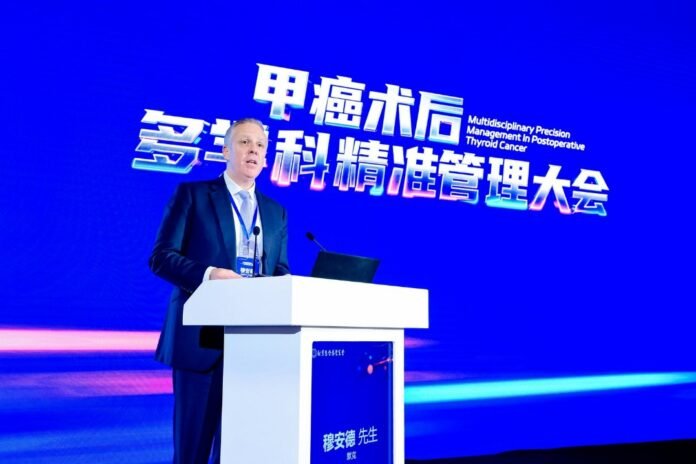
A recent example is a collaboration between Merck and Suzhou Zelgen Biopharmaceuticals, which introduced recombinant human thyrotropin for injection into the Chinese market.

The treatment addresses a long-standing clinical challenge in the management of differentiated thyroid cancer.

Traditionally, patients undergoing post-operative monitoring must suspend thyroid hormone therapy to elevate hormone levels for testing—often causing discomfort and, in some cases, medical risks, particularly for elderly patients or those with cardiovascular conditions.

The new therapy allows patients to remain on hormone treatment, reducing both discomfort and clinical risk while enabling more precise follow-up care.

Beyond its immediate medical benefits, the product illustrates a broader trend: Chinese-developed innovations are increasingly being translated into real-world clinical solutions through global collaboration.


A Two-Way Flow of Innovation

The growing number of licensing deals highlights another important development—the emergence of a two-way flow of innovation.

In the past, multinational companies primarily introduced foreign-developed drugs into China. Today, Chinese firms are increasingly licensing their innovations outward, leveraging global partners to reach international markets.

This model allows:

  • Chinese biotech companies to scale globally

  • Multinationals to access a rapidly expanding innovation pipeline

The result is a more interconnected global pharmaceutical ecosystem, with China playing a far more central role than before.


A Long-Term Strategic Bet

For companies like Merck, deepening engagement in China is not viewed as a short-term opportunity, but as a long-term strategic investment.

The country’s combination of:

  • Strong scientific talent

  • Expanding clinical capabilities

  • Supportive regulatory evolution

  • Large and increasingly sophisticated patient base

makes it an increasingly attractive environment for pharmaceutical innovation.

At the same time, China’s ambition to bring its medical breakthroughs to the global stage is creating new opportunities for collaboration.


Redefining China’s Role in Global Healthcare

Taken together, these developments point to a broader redefinition of China’s role in the global pharmaceutical industry.

China is no longer simply a high-growth market for foreign drugmakers.
It is becoming:

  • A source of innovation

  • A partner in development

  • And a driver of global healthcare transformation

For multinational companies, the strategic question is shifting accordingly.

It is no longer just how to enter China—
but how to integrate China into global innovation and commercialization strategies.


Conclusion

As partnerships deepen and innovation flows in both directions, China’s pharmaceutical sector is entering a new phase—one defined not by scale alone, but by its growing influence on the future of global medicine.

For the world’s leading drugmakers, staying relevant in that future increasingly means working not just in China, but with China.

Article inline ad

China’s RF Breakthrough Signals a New Phase in the Global Chip Race

0

By ZH Sailing | China Technology
March 2026

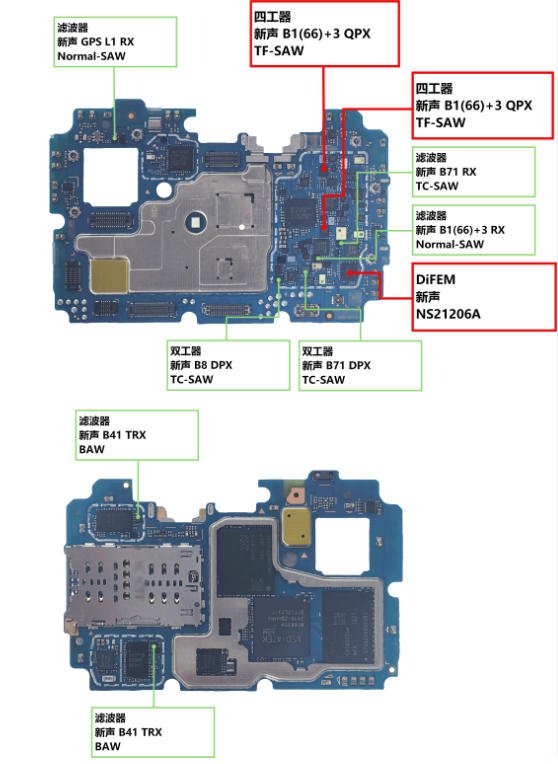
A teardown of a mid-range smartphone rarely makes headlines. But the latest disassembly of Honor’s overseas model, the X6d, is drawing unusual attention across the semiconductor industry.

The reason lies not in the phone itself, but in what powers it.

For the first time, a Chinese supplier—Newsonic Electronics—has delivered a full suite of radio frequency (RF) front-end components for a globally targeted device, marking a decisive step beyond the piecemeal substitution that has long characterized China’s chip ambitions.


From Component Substitution to System Integration

RF front-end modules sit at the heart of modern smartphones, handling signal transmission and reception across increasingly complex global frequency bands.

Historically, this segment has been dominated by a handful of entrenched players such as Broadcom, Skyworks, Qorvo, and Murata Manufacturing.

Chinese firms, by contrast, have largely been confined to supplying individual components—filters, duplexers, or modules—rather than integrated solutions.

That boundary is now beginning to shift.

According to industry analysis, Newsonic’s components in the X6d span the entire RF architecture, including:

  • DiFEM modules

  • TF-SAW quadplexers

  • TC-SAW duplexers

  • SAW filters

  • Advanced BAW filters

Taken together, this represents a “full-stack” RF solution, placing a Chinese supplier at the core of a smartphone’s communication system rather than at its periphery.


A Stress Test in Global Markets

The significance of this shift is amplified by where the device is sold.

Unlike domestic models, overseas smartphones must navigate a far more demanding environment:

  • Fragmented and region-specific frequency bands (such as B71 in the Americas)

  • Stringent intellectual property regimes

  • Higher standards for signal stability and certification

For years, these constraints effectively locked Chinese handset makers into bundled solutions from established Western and Japanese suppliers.

Newsonic’s entry into this space suggests that Chinese RF technologies are now crossing the threshold from domestic viability to global competitiveness.


Riding the Wave of Honor’s Overseas Push

The timing is not coincidental.

Honor has been one of the fastest-growing Chinese smartphone brands overseas, recording triple-digit growth in multiple regions in recent years, according to market research firms.

Such rapid expansion places enormous pressure on supply chains—not only in terms of scale, but also compliance, performance, and reliability.

In this context, integrating a domestic RF solution into an international model represents both:

  • A vote of confidence in Chinese suppliers

  • A test case for scaling local innovation globally


A Market Too Large to Ignore

The broader opportunity is substantial.

According to Yole Développement, the global RF front-end market is expected to grow from $19.2 billion in 2022 to nearly $26.9 billion by 2028.

Newsonic is already positioning itself within this expanding market, having shipped more than 2 billion units across a portfolio of over 100 components to clients including major Chinese smartphone makers.

But scale alone is not the story.

The real shift lies in capability—specifically, the ability to deliver integrated, system-level solutions that meet global standards.


Beyond Catch-Up

For much of the past decade, China’s semiconductor narrative has been framed around “catching up”—closing gaps in design, manufacturing, and materials.

The emergence of full-stack RF solutions suggests a more nuanced phase is beginning.

Rather than simply replacing foreign components, Chinese firms are starting to:

  • Integrate complex subsystems

  • Compete in high-barrier segments

  • Embed themselves in globally distributed supply chains

In other words, the competition is moving up the value chain.


A Subtle but Strategic Inflection Point

Newsonic’s role in a single smartphone model does not, on its own, redefine the global semiconductor landscape.

But it does point to a broader inflection point.

China’s chip industry is no longer defined solely by isolated breakthroughs. It is increasingly characterized by system-level integration, commercial deployment, and global validation.

If that trend continues, the implications will extend far beyond smartphones—reshaping competition across the wider electronics and communications ecosystem.

Article inline ad

Nuclear Power Group Launches First Overseas Clean Energy Standards Institute

0

By Zheng Xin | chinadaily.com.cn | Updated: 2026-03-17 

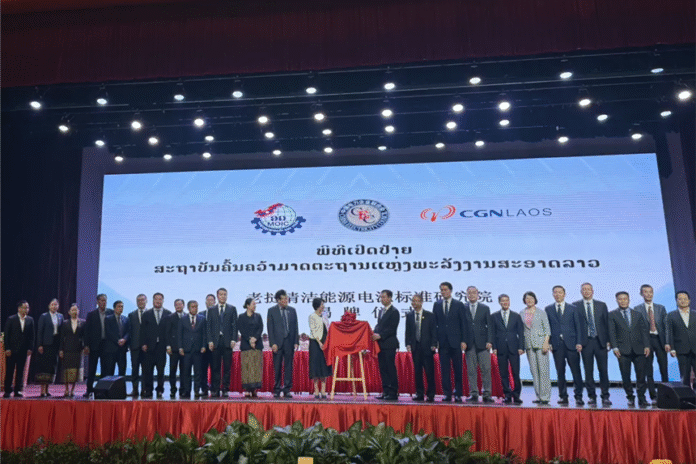
China General Nuclear Power Group has marked a significant milestone in international energy cooperation with the establishment of the Lao Clean Energy Power Standard Research Institute.

 As the first research organization dedicated to clean energy standards founded by a Chinese enterprise overseas, the institute aims to bridge the development needs of both China and Laos while fostering regional power interconnectivity.

 The institute was launched by the group’s local subsidiary in Laos with a primary mission to create a systematic framework for the nation’s burgeoning renewable energy sector. Its research will focus on several critical pillars, including engineering management, production operations and maintenance, and professional talent cultivation.

 By establishing these benchmarks, the institute intends to lay a solid foundation for the large-scale and standardized development of clean energy projects across the region.

 A key practical testing ground for these standards is the Northern Laos Interconnection Clean Energy Base.

 The first phase of this ambitious project, a 1-gigawatt photovoltaic plant, stands as the first large-scale solar project in Laos. The project has already successfully verified the applicability of proposed standards in real-world conditions.

 As the second phase and subsequent developments of the energy base move forward, the role of standardized norms in ensuring efficient construction and operational reliability has become a top priority.

 According to the group, the institute will actively seek to align its work with regional and international standards, aiming to construct a forward-looking system that supports a seamless regional power grid.

Article inline ad