Tuesday, November 24, 2026

Home Blog Page 33

China Repositions Itself as a Global Growth Anchor for Multinationals

0

By ZH Sailing | China Economy Insight
March 2026

As China rolls out its 15th Five-Year Plan (2026–30), a clearer message is emerging: the world’s second-largest economy is not retreating inward—it is recalibrating its role at the center of global growth, consumption, and innovation.

Through coordinated initiatives such as “Export to China” and “Shopping in China”, policymakers are simultaneously expanding imports and upgrading domestic demand. For multinational corporations, this dual strategy is reshaping how China fits into global business models.

Interviews with executives from leading global firms reveal a consistent theme: China is no longer just a market or a factory—it is becoming an integrated strategic hub.


Growth Stability in an Uncertain World

China’s GDP grew 5 percent in 2025, reaching 140 trillion yuan ($20 trillion), with policymakers targeting 4.5–5 percent growth in 2026.

In a world marked by slowing demand and geopolitical uncertainty, this level of predictability stands out.

For multinational companies, China’s policy mix—combining proactive fiscal expansion with accommodative monetary support—offers something increasingly rare: macroeconomic visibility.

That visibility is shaping global capital allocation decisions.

Rather than scaling back, many firms are doubling down—expanding operations, increasing localization, and embedding China more deeply into their Asia-Pacific strategies.

As one executive noted, China has become a “stabilizing force” in an otherwise volatile global economy.


From Manufacturing Base to Innovation Powerhouse

A decade ago, China’s role in global supply chains was primarily defined by manufacturing scale. That is no longer sufficient to describe its position today.

Executives increasingly characterize China as:

  • A production base with unmatched industrial depth

  • A massive consumer market

  • An innovation hub driving global R&D

In some cases, companies are even reversing traditional technology flows—moving from importing innovation into China to exporting China-developed solutions globally.

This shift is underpinned by:

  • A complete industrial ecosystem

  • Rapid advances in digitalization and AI

  • Rising R&D intensity (now 2.8% of GDP)

  • Strong infrastructure and logistics networks

In practical terms, China is evolving into a multi-functional node in global corporate architecture.


The Rise of China’s Unified Mega-Market

With an urbanization rate nearing 68 percent and retail sales surpassing 50 trillion yuan, China’s domestic market is entering a new phase: integration at scale.

The push toward a unified national market is reducing fragmentation—long a challenge for foreign businesses—while unlocking new efficiencies.

For companies on the ground, this translates into:

  • Lower compliance and operational costs

  • More seamless national distribution

  • Greater consistency in market access

At the same time, consumption is becoming more layered.

Top-tier cities continue to drive demand for premium and branded products, while lower-tier cities—fueled by rising incomes and digital access—are emerging as the next frontier of growth.

To capture this, companies are investing in:

  • Omnichannel distribution

  • Data-driven market segmentation

  • Localization of product portfolios

China’s consumer economy is no longer just large—it is structurally sophisticated.


Balancing Domestic Demand and Global Reach

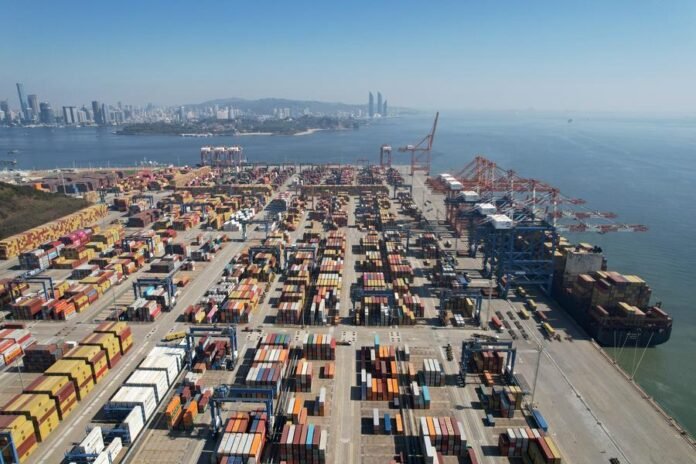
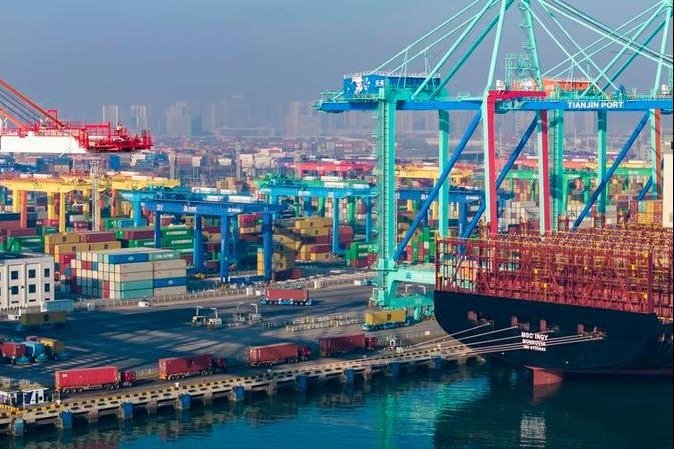
China’s policy direction is not limited to boosting domestic consumption. It also reinforces the country’s role as a global production and export platform.

Programs such as large-scale trade-in initiatives—generating over 2.6 trillion yuan in sales—are stimulating internal demand. Meanwhile, exports continue to grow, rising 6.1 percent in 2025.

For multinational firms, this creates a dual opportunity:

  • Capture consumption upgrading within China

  • Leverage China as a base for global expansion

Increasingly, companies are doing both.

China is being used not only to serve local customers, but also to:

  • Support Chinese partners going global

  • Integrate into international supply chains

  • Export products and innovations to overseas markets

This reflects a deeper shift: China is transitioning from a “world factory” to a “global platform.”


Green Transition and AI: The Next Frontier

Beyond scale and growth, China is positioning itself at the forefront of two defining trends: sustainability and artificial intelligence.

Recent progress is notable:

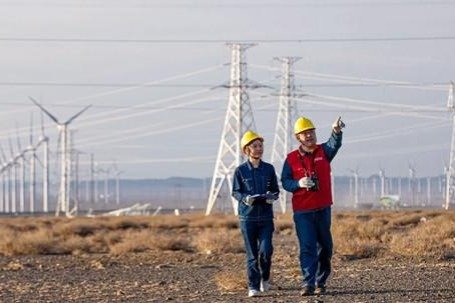
  • Energy intensity down 5.1 percent

  • Non-fossil energy share up to 21.7 percent

  • Rapid expansion of energy storage capacity

At the same time, AI and industrial digitalization are accelerating across sectors.

For global companies, this opens up new areas of collaboration:

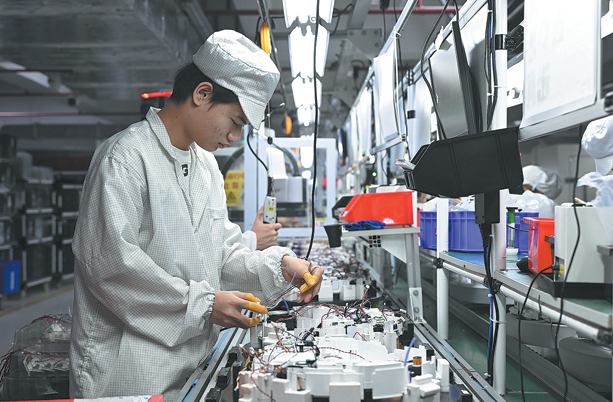
  • Smart manufacturing and industrial automation

  • AI-driven optimization and data platforms

  • Renewable energy and carbon management solutions

  • Next-generation computing and infrastructure

China is not just a participant in these transitions—it is becoming a testbed for scalable innovation.


A Strategic Reassessment Underway

Taken together, these trends point to a broader reassessment.

Multinational companies are no longer asking whether to be in China.
They are asking how deeply to integrate China into their global strategy.

The answer, increasingly, is: deeply.

With a more transparent and predictable policy environment, continued opening-up, and a vast, evolving market, China is reinforcing its position as:

  • A growth engine

  • An innovation center

  • And a critical link in global economic networks

In an era defined by fragmentation elsewhere, China is making a different bet—on scale, integration, and long-term certainty.

For global business, that bet is becoming harder to ignore.

Article inline ad

Pop Mart To Launch California Base For Expansion

0

By WANG ZHUOQIONG | China Daily | Updated: 2026-03-17 

Pop Mart International Group, a Beijing-based collectible toy and entertainment brand behind the globally popular Labubu figures, is establishing its United States regional headquarters in California as it seeks to expand its North and Latin America footprint.

 The company has signed a lease for the creative office building “Slash” in Culver City, Los Angeles, according to CoStar, a US commercial real estate data provider. The office will serve as the operational hub for Pop Mart’s North American activities. Culver City is home to media and tech giants such as HBO, Amazon, Apple and Pinterest.

 Pop Mart confirmed the plan for its headquarters, adding that the company now operates more than 60 retail stores across the US.

 The company’s signature Labubu collectibles have fueled rapid growth. A recent collaboration with Sanrio sold out immediately, with items now commanding secondary-market prices more than five times their original retail value.

 The US office marks a strategic move by Pop Mart to strengthen engagement with local consumers. The company has signaled that it aims to evolve from a toy retailer into a broader entertainment brand that resonates with local culture.

 The new regional hub in the US is part of Pop Mart’s rapid global expansion. Last month, the company announced plans to establish its European headquarters in London. It is set to open seven new stores in the United Kingdom, including a flagship location on Oxford Street, along with other new stores in Birmingham and Cardiff. Pop Mart intends to expand its footprint across Europe, where it is eyeing a total of 20 new stores.

 The company said it plans to leverage London’s international appeal to attract top-tier artists for collaborations, advancing its global intellectual property strategy.

 The ambitious overseas expansion is reflected in the company’s financial performance for 2025. In the first half of the year, Pop Mart’s revenue soared to 13.88 billion yuan ($2 billion), a year-on-year increase of 204.4 percent. In the Chinese market, sales rose 135.2 percent to 8.28 billion yuan. Meanwhile, its international business showed notable gains: Asia-Pacific revenue climbed 257.8 percent to 2.85 billion yuan, and the Americas recorded an over 11-fold increase, with 2.26 billion yuan in revenue. Europe and other regional operations rose 729.2 percent, contributing 477.7 million yuan to overall top-line growth.

 The company’s global retail presence has expanded rapidly, now encompassing 571 stores across 18 countries, including 2,597 “roboshops” — automated kiosks selling its collectible figures. During the period, Pop Mart added 40 new stores globally, including five in Europe and 19 in the Americas.

 According to market information tracker Euromonitor International, Pop Mart aims to grow significantly in the US, leveraging social media hype and its physical retail footprint. With plans to open up to 200 stores over the next 5-10 years, the company is expected to capture market share in categories such as dolls, action figures and plush toys.

 Since 2024, Pop Mart’s rapid global expansion and strong appeal to the “kidult” demographic — adults with an affinity for child-centric toys — have helped buoy demand for the dolls and accessories category.

 wangzhuoqiong@chinadaily.com.cn

Article inline ad

China Expands Pilot Cities For Cross-Border Trade Facilitation Campaign In 2026

0

Xinhua | Updated: 2026-03-17 

BEIJING — China will expand its pilot cities for a cross-border trade facilitation campaign to 45 in 2026, up from 25 in 2025, the General Administration of Customs (GAC) said on Monday.

 The six-month campaign was jointly launched by the GAC and 23 other departments.

 Sun Meijun, head of the GAC, announced at a deployment meeting that 20 cities have been newly added to the pilot list, including Hohhot, Changchun, Suzhou, Jinhua, Quanzhou, Nanchang, Yantai, Wuhan, Changsha, Zhuhai, Nanning, Kunming and Xi’an.

 The campaign will see a series of new measures rolled out, which focus on upgrading goods trade, expanding services trade, and promoting digital and green trade.

 The measures include innovations in customs clearance supervision, optimized services for new forms of foreign trade, improved cross-border logistics efficiency, smarter port construction, enhanced alignment with international standards, and better support for enterprises.

 A GAC official said facilitating cross-border trade is essential to expanding opening-up, strengthening cooperation, and smoothing domestic and international economic flows. It also helps enterprises secure orders, explore markets and increase profits amid global uncertainties, while demonstrating China’s support for the World Trade Organization’s Trade Facilitation Agreement and the multilateral trading system.

 Since 2018, the GAC has organized annual campaigns to enhance cross-border trade, implementing a total of 144 measures by 2025, with 110 of these measures being adopted nationwide.

Article inline ad

Fresh Investments To Help Shanghai Up Value Chain

0

By SHI JING in Shanghai | China Daily | Updated: 2026-03-17 

Fresh investment inflows into Shanghai by international big names and leading domestic industry players, featuring pioneering and future-oriented technologies, will help the city further move up the value chain and pave the way for high-quality economic growth, officials and executives said.

 Shanghai will step up the construction of concept verification centers, pilot testing platforms and high-quality incubators, making the technological facilities more widely accessible to companies and talent, said Chen Jining, Shanghai’s Party secretary, during the 2026 Shanghai Global Investment Promotion Conference held on Saturday.

 Ten pilot testing platforms were unveiled during the event, including those for the advanced manufacturing of civilian aircraft, components for humanoid robots, and bio-manufacturing for nutritional and health products.

 Changzhou Fusion New Materials Co Ltd registered a new photovoltaic conductive paste company in Shanghai on Feb 28, with a total investment of 300 million yuan ($43.5 million). This is in succession to the company’s new semiconductor factory located in southwestern Shanghai’s Minhang district that went operational in September.

 According to the company’s chairman Liu Haidong, without the pilot testing platforms built in Shanghai, projects like photovoltaic conductive paste could hardly come into being due to the extremely high difficulties regarding investment and operation. Combined with Shanghai’s advantages in location, talent supply, and forward-looking policies, an amiable ecosystem has been created for high-tech companies to quickly start their businesses, he said.

 Shanghai-headquartered augmented reality glasses company, XReal, saw its sales in the fourth quarter of 2025 spike over 50 percent year-on-year. According to the company’s founder and CEO Xu Chi, the overall high efficiency in Shanghai — boosted by the city’s competency in computing and algorithm — its complete supply chain for optics, display equipment and precision manufacturing, as well as its talent density, cannot be found elsewhere in the country.

 Shanghai is now home to over 25,000 high-tech companies. Added value contributed by knowledge-intensive service providers accounted for 38 percent of Shanghai’s 5.67 trillion yuan GDP last year.

 According to Tang Shengfeng, vice-president for the climate solutions of Carrier in Asia-Pacific, Middle East and Africa, Shanghai is active in creating new application scenarios for emerging technologies. The city’s goal of “moderately planning in advance in new types of infrastructure such as computing” has pointed to new room for growth for the century-old company.

 Phoenix project, Carrier’s air-cooled chiller project expected to attract a total of 400 million yuan of investment, saw its first chiller roll off in northern Shanghai’s Baoshan district in January. Incorporating AI, digital and automation technologies, the project can address the cooling demand of data centers, which can take up 40 percent of all energy consumption.

 Carrier’s bold move in Shanghai can be largely attributed to the transparent, consistent and highly predictable government policies and business environment in the city, which are especially valuable given the volatility and complexity currently present in the global market landscape. Multinational companies like Carrier can focus on their prime businesses and have the confidence to map frontier technologies, which not only serves the Chinese domestic market, but also feeds into the technology upgrades in the company’s operations in other regions of the world, he said.

 Jose Tomas Corthorn, Asia general manager for Chilean company CMPC Group, which produces and commercializes forestry products, paper and tissue products, said he is impressed by the ongoing technology innovation and improved government policies in Shanghai. The visa-free entry and 30-day permitted stay in the Shanghai Eastern Hub International Business Cooperation Zone serve as good examples for the government’s continued efforts to better its business environment, he said.

While the world is seeing escalated tensions, a stable and inviting environment in Shanghai, and that of China as a whole, has sent a strong signal of embracing investment and collaboration. While the Global South has been good partners in raw materials and food, bonds can be strengthened by further reaching into the technology sector, where China can play a big part and help advance productivity of all parties, he said.

 shijing@chinadaily.com.cn

Article inline ad

Better Safeguards Needed as China’s Overseas Interests Grow

0

This report was edited based on a March 16th news report from China Daily.

 As the global landscape undergoes changes unseen in a century, China’s overseas investments and international activities are expanding at unprecedented scale and complexity. From traditional energy and infrastructure projects to personnel security, digital assets, and regulatory rights, China’s footprint abroad now touches a wide spectrum of strategic interests.

 By the end of 2024, Chinese companies had established more than 52,000 enterprises overseas, with total outward direct investment reaching $3.13 trillion. Protecting these interests is increasingly central to China’s national security framework and global economic engagement.

 Rising Risks in a Complex World

 The resurgence of unilateralism, protectionism, and geopolitical tensions poses direct challenges to the security of international operations. Military interventions, economic sanctions, and political interference have made the global environment more unpredictable, demanding more robust safeguards for foreign assets and personnel.

 China’s approach emphasizes shared security and cooperative solutions, moving beyond zero-sum or hegemonic frameworks. Instead of pursuing narrow national advantage, China promotes multilateral collaboration to ensure mutual benefit and collective protection for overseas investments.

 Practical Measures and Regional Cooperation

 China has already seen tangible results through regional partnerships:

 Africa: Over 2,000 China-Africa cooperation projects have generated more than $400 billion in turnover from completed projects. Chinese firms have signed engineering contracts exceeding $700 billion, creating jobs and contributing to local economic development.

 Latin America: Belt and Road agreements with 24 countries have expanded investment to $567.7 billion, with trade growing from $261.3 billion in 2013 to $518.4 billion in 2024, promoting interdependent economic ties.

 Central Asia: Security and economic cooperation support major infrastructure projects such as the China-Kyrgyzstan-Uzbekistan Railway, demonstrating practical value in shared security frameworks.

 Challenges Ahead

 Despite progress, China faces significant hurdles in safeguarding overseas interests:

 Limited Coordination: Current mechanisms lack a unified top-level design. Overlapping responsibilities and fragmented authority hinder rapid and effective responses to crises.

 Insufficient Collective Protection: Existing bilateral frameworks are vulnerable to political change in host countries. Multilateral risk-sharing platforms remain underdeveloped.

 Fragmented Resource Integration: Protection involves government, businesses, social organizations, and overseas communities. Weak coordination limits overall effectiveness.

 Building a Stronger Framework

 To address these challenges, China is expected to develop an integrated protection system combining:

 Multilateral Cooperation: Regional mechanisms for collective protection and risk-sharing to counter unilateral interference.

 Government-Business-Society Coordination: Aligning efforts across sectors to create a cohesive operational framework, balancing routine management and emergency response.

 Institutional Innovation: Continuing to explore regulatory and operational models that ensure security, while facilitating investment and trade.

 Toward Shared Security and Sustainable Cooperation

 Anchored in the principles of common security and shared development, China aims to safeguard its overseas investments while fostering deeper international cooperation. A robust system for protecting overseas interests will underpin Belt and Road initiatives, support Chinese modernization goals, and contribute to building a global community with shared prosperity.

 By strengthening mechanisms for risk management, coordination, and multilateral collaboration, China seeks to ensure that its overseas ventures are both secure and sustainable, benefiting host countries and reinforcing global economic interdependence.

Article inline ad

Bridging Supply and Demand: China’s Path to High-Quality Growth

0

This report was edited based on a March 16th news report from China Daily.

 China’s economy is entering a critical stage of structural transformation. While the country boasts a highly developed industrial and supply system, domestic demand—particularly high-quality consumption and investment—has not kept pace. This mismatch between supply and demand is increasingly seen as a central challenge for policymakers seeking sustained, high-quality growth.

 Addressing the Supply-Demand Imbalance

 China’s manufacturing, mining, and utilities sectors have expanded capacity significantly over recent decades. But much of this supply is underutilized, constrained by uneven domestic consumption and investment patterns. Experts argue that resolving this imbalance requires coordinated action on both sides of the market: boosting demand to absorb supply, and leveraging supply to stimulate new consumption.

 A key lever is income distribution. Expanding household income, especially for middle- and lower-income groups, underpins consumption growth. Policy measures aimed at wage growth, rural revitalization, vocational training, and social welfare improvements can strengthen household purchasing power and reduce precautionary savings, creating more robust domestic demand.

 Unlocking Consumption Potential

 Consumption remains a long-term driver of growth. Policymakers are promoting both traditional and emerging consumption sectors. On one hand, initiatives encourage upgrading of durable goods such as automobiles, appliances, and home furnishings, with incentives for greener, smarter, and higher-end products. On the other, new consumption models—digital platforms, immersive experiences, health services, and cultural offerings—are being nurtured to create fresh demand and extend the consumption chain.

 Improving the overall consumption environment is also critical. Strengthening product quality standards, consumer protection, and market transparency can increase confidence and encourage spending.

 Strategic Investment for Future Supply

 Investment links current demand with future supply. China is prioritizing areas such as technological innovation, green energy, industrial upgrading, and essential public services. Increased spending on research, core technologies, and sustainable infrastructure is designed not only to support near-term growth but also to improve the country’s long-term production capabilities.

 Private capital is also being mobilized through regulatory reform, clearer policy expectations, and cooperative platforms, allowing businesses to participate more actively in driving growth and industrial transformation.

 Innovation and the Digital Economy

 Emerging technologies are central to harmonizing supply and demand. Artificial intelligence, biomanufacturing, commercial aerospace, and other frontier technologies are creating entirely new products and markets. Traditional industries are also being upgraded—smart vehicles, green building materials, and digital healthcare are examples where innovation meets growing consumer expectations.

 The digital economy further strengthens the feedback loop between supply and demand. Big data, AI, and industrial internet applications allow producers to anticipate consumption trends, optimize supply chains, and develop personalized products and services, while also unlocking new revenue streams.

 Stabilizing Expectations and Opening Markets

 High-quality growth also depends on market confidence. Maintaining stable fiscal and monetary policies, ensuring macroeconomic consistency, and deepening reform are essential for sustaining expectations. Structural opening-up and the creation of a unified national market are intended to improve resource allocation, eliminate regional protectionism, and attract high-quality foreign investment.

 Toward a New Development Paradigm

 China’s approach to supply-demand imbalance is ultimately systemic. By reforming income distribution, optimizing supply structures, fostering innovation-driven demand, and leveraging the digital economy, the country is creating a more resilient and self-reinforcing growth model.

 The goal is a higher-level dynamic balance between supply and demand, where domestic consumption and investment drive the economy, while strategic engagement with global markets reinforces this domestic cycle. If successful, this transformation could solidify China’s path to sustainable, high-quality growth in the years ahead.


Article inline ad

China Consumer|Sojourn Living: China’s New Lifestyle Economy Takes Off

0

By Zhang Chenxu | ZH Sailing Analysis

 Across China’s southern coast in Hainan, retirees like Xiong Hao are redefining what it means to spend the golden years. Rather than rushing through conventional tourist itineraries, Xiong and his wife have chosen a two-month stay in Wanning, blending wellness, cultural immersion, and daily routines such as tai chi in sunlit squares. This slow-living approach reflects a broader shift in Chinese consumption patterns: the rise of sojourn living, where long-term stays replace short-term tourism.

 Once largely the domain of seniors migrating for seasonal weather, sojourn living is expanding to younger demographics. Data from the China Tourism Academy show that travelers aged 20–40 now account for roughly 60 percent of the market, with professional “digital nomads” increasingly relocating to regions such as Yunnan, taking advantage of remote work to combine lifestyle and productivity.

 A Multi-Trillion-Yuan Opportunity

 The market for sojourn-style senior living in China reached 670 billion yuan ($98 billion) in 2024, and projections suggest total elderly tourism consumption could surpass 2.4 trillion yuan by 2050. However, this is not just a retirement trend: young entrepreneurs and professionals are driving a fusion of tourism, wellness, culture, and creative industries. Cafes, boutique bookstores, handicraft workshops, and livestreaming of local produce are emerging as new business models that stimulate rural economies and create jobs.

 Yunnan province illustrates the scale and impact of this shift. In 2025, the province welcomed nearly 5 million sojourners, whose average stays lasted 85 days. Extended-stay visitors are now the majority in key destinations such as Dali, Lijiang, and Tengchong, fueling local business creation and boosting rural incomes. Local officials highlight that the influx of both seniors and young professionals is transforming the countryside into a living, working, and creative hub.

 Policy as a Catalyst

 China’s policymakers are actively supporting the sector. The 2026 Government Work Report emphasizes enhancing the capacity and quality of the service sector, while the State Council has prioritized the development of “clusters of high-quality sojourn destinations.” This strategy aims to extend short-term tourism into medium- and long-term consumption, integrating wellness, healthcare, culture, and education.

 Analysts note that the economic multiplier of sojourn consumption is significant. Bai Wenxi, vice-chairman of the China Enterprise Capital Union, estimates that every yuan spent on sojourn tourism can trigger three to four yuan in related industries—far exceeding traditional sightseeing models. This makes sojourn living a potent lever for local economic growth, rural revitalization, and property-market utilization.

 For instance, in Yunnan, the number of villages participating in the sojourn economy rose to 633 by 2025, unlocking the value of over 10,000 previously idle homes. The approach combines real estate efficiency, service-led consumption, and cultural tourism, creating a sustainable growth model.

 Investment Implications

 For international and domestic investors, sojourn living signals multiple entry points:

 Real Estate & Hospitality – Repurposing underutilized property into service-oriented sojourn communities.

 Wellness & Lifestyle Services – From healthcare, fitness, and spa services to cultural immersion programs.

 Rural & Cultural Entrepreneurship – Opportunities in agritech, local crafts, and tourism-related startups.

 Digital Infrastructure & Remote Work Platforms – Supporting digital nomads and long-term professional sojourners.

 The fusion of consumption, property, and service industries makes the sector highly attractive for private capital, particularly in mid-sized cities and rural counties where sojourners drive job creation, spending, and ecosystem development.

 The Strategic Takeaway

 Sojourn living represents a microcosm of China’s broader consumption upgrade. It reflects structural changes: aging demographics, rising disposable incomes, evolving lifestyle preferences, and the convergence of tourism with wellness, digital work, and culture. For foreign investors, understanding this trend is crucial: what was once a niche tourism segment is evolving into a mainstream lifestyle economy capable of generating multi-trillion-yuan value over the next decades.

 As young professionals and seniors alike adopt longer, immersive stays, China’s sojourn economy is poised not only to reshape domestic consumption patterns, but also to offer replicable models for lifestyle-driven economic growth across emerging markets.


Article inline ad

From Smart Vacuums to AI Robotics: Chinese Firms Set the Pace in Southeast Asia

0

This report was edited based on a March 16th news report from China Daily.

 Chinese consumer robotics firms are quietly reshaping the Southeast Asian market, turning what was once a fragmented segment into a rapidly growing, innovation-driven industry. The surge in demand for smart home devices, led by robot vacuums, illustrates how Chinese companies are leveraging technological capability, cost efficiency, and supply chain mastery to establish a regional leadership position.

 The Rise of Chinese Robotics in Southeast Asia

 Southeast Asia has emerged as a prime growth frontier for Chinese robot vacuum makers. Urbanization, a tech-savvy population, and rising middle-class incomes have created fertile ground for automation solutions in everyday life.

 On platforms like Lazada and Shopee, sales of Chinese robot vacuums grew over 60% year-on-year as of early 2026, with Vietnam experiencing a surge of more than 70%. Leading players — including Roborock, Dreame, Ecovacs, Xiaomi, and Narwal — now control over 65% of the regional market, highlighting how Chinese brands have moved from followers to global pacesetters in smart home robotics.

 According to Mosa, head of Chinese brand operations at Lazada, the success stems from a combination of supply chain strength, localized marketing, and innovation, as well as the ability to align product offerings with urban lifestyles similar to those in China.

 Beyond Smart Vacuums: Diversification and Innovation

 Chinese robotics firms are no longer confined to household appliances. Their product portfolios increasingly span AI-enabled flying robots, robotic pool cleaners, and intelligent service robots, demonstrating a strategic push into both consumer and light-commercial markets.

 Roborock, for instance, has pioneered OEM production in Vietnam, establishing overseas manufacturing capabilities while maintaining China as the innovation hub. Dreame is expanding factories across Asia, aiming to integrate AI, automation, and cloud intelligence to enhance product capabilities.

 Technological innovation is being matched by substantial investment in R&D. Roborock increased its research budget by 67% in the first half of 2025, and its engineering workforce grew by over 70%, reflecting a shift from volume-driven growth to quality and capability leadership.

 Opportunities and Challenges for Regional Expansion

 For international investors and partners, several key trends are emerging:

 High-growth consumer segment – Southeast Asia’s digitally connected, urban population is rapidly adopting smart home solutions.

 B2B and industrial robotics potential – Startups are exploring applications in logistics, disaster response, and care services.

 Cross-border technology transfer – Initiatives like Sunwah Group’s planned robotics and AI exhibition center in Vietnam aim to foster collaboration, localization, and knowledge sharing.

 However, challenges remain. Industrial and specialized robots face stricter regulatory standards, while geopolitical tensions, cybersecurity, and profit-sharing arrangements require careful management. Building sustainable ecosystems with local partners and designing compliance into products from day one will be essential for long-term success.

 Strategic Takeaways

 Chinese robotics companies are transitioning from cost leaders to standard-setters, leveraging the scale of domestic markets and supply chains to refine technology.

 Southeast Asia represents a strategic proving ground for Chinese AI and robotics firms to test and deploy innovations that can later scale globally.

 The emphasis on “new quality productive forces” in China’s 15th Five-Year Plan signals a continued focus on technology-driven, high-value growth — a trend overseas markets are beginning to experience firsthand.

 As Liu Shaoshan, director of the Center for Embodied AI in Shenzhen, observes:

 “When consumers in Asia choose a robot, they are increasingly choosing Chinese platforms not because they are the cheapest, but because they are the most capable and trustworthy.”

 For overseas investors and regional partners, Chinese robotics firms in Southeast Asia offer not just growth opportunities, but a front-row view of Asia’s AI and automation revolution.

Article inline ad

$159 Billion Investment Push by State-Owned Enterprises Shapes Xinjiang’s Industrial Future

0

This report was edited based on a March 16th news report from China Daily.

 China’s central state-owned enterprises (SOEs) have emerged as major drivers of regional industrial development, directing a total of 1.1 trillion yuan ($159 billion) into Xinjiang over the course of the 14th Five-Year Plan (2021–2025). Beyond raw numbers, the investment reflects a strategic effort to transform the region’s industrial landscape and integrate it more deeply into China’s national economic ambitions.

 Industrial and Strategic Priorities

 The investments span a wide range of sectors, including:

 Energy — infrastructure projects and renewable integration

 Mineral resources — supporting extraction and processing industries

 Computing power — data centers and high-performance computing infrastructure

 Equipment manufacturing — modernizing local industrial capacity

 In 2025 alone, central SOEs poured 265.7 billion yuan into the region and created over 100,000 new jobs, highlighting the dual focus on economic growth and employment generation.

 Zhang Yuzhuo, head of the State-owned Assets Supervision and Administration Commission, emphasized that SOEs are not merely investors but strategic partners in Xinjiang’s industrial transformation. Efforts are being made to modernize core industrial sectors, expand cultural tourism, and develop specialized agriculture and animal husbandry — all aligning with the region’s position as the core area of the Silk Road Economic Belt.

 Implications for Investors and Global Businesses

 For foreign companies, the SOE-led investment wave signals several opportunities:

 Partnership potential — joint ventures and supply chain integration with SOEs in energy, mining, and manufacturing

 Infrastructure-driven growth — expansion of computing power and logistics networks opens avenues for technology providers and service firms

 Regional market access — participation in Xinjiang’s industrial upgrading could serve as a springboard for broader engagement across Northwest China

 The 2026 agenda is set to accelerate these trends. During a recent meeting, 18 central SOEs signed letters of intent for 92 projects in Xinjiang, indicating ongoing investment momentum.

 Strategic Takeaways

 State-led investments are shaping Xinjiang’s industrial future, creating new clusters and modernizing traditional sectors.

 Integration of energy, manufacturing, and digital infrastructure positions the region as a hub for both domestic and global industrial cooperation.

 Long-term opportunities exist for technology, equipment, and service providers seeking exposure to China’s strategic growth corridors.

 In a broader context, China’s SOEs are demonstrating how targeted, state-backed investments can reshape regional economies, create employment, and accelerate industrial upgrading — a model that international investors can watch for replicable opportunities.


Article inline ad

Industrial Upgrading in China Creates Opportunities for ABB

0

This report was edited based on a March 16th news report from China Daily.

 As China accelerates its transition toward intelligent and low-carbon industrial development under the 15th Five-Year Plan (2026–2030), global technology companies are positioning themselves to capture a growing wave of opportunities. Among them, ABB Group, the Swiss industrial automation giant, sees the country as a strategic hub for innovation and growth.

 Aligning with China’s Industrial Agenda

 China’s new five-year blueprint emphasizes:

 Upgrading traditional industries to mid- and high-end value chains

 Cultivating emerging sectors

 Planning ahead for future-oriented industries

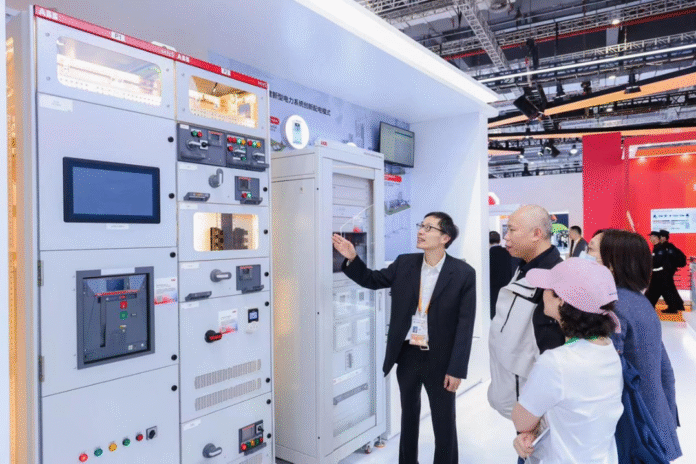
 For ABB, these priorities match perfectly with its capabilities in electrification, motion, automation, and digitalization. Lars Eckerlein, general manager of ABB China, notes that the company’s 2,000-strong R&D workforce — more than half dedicated to software, AI, and digital solutions — allows it to develop technologies that reduce emissions, improve operational efficiency, and accelerate industrial digital transformation.

 Smart Manufacturing in Practice

 ABB’s solutions illustrate how industrial technology can modernize traditional sectors:

 Energy management systems integrate renewable generation, grid power, and plant-level distribution, cutting energy costs while supporting smarter manufacturing

 Distributed control systems and big data analytics allow steel and heavy manufacturing plants to operate with centralized monitoring, predictive maintenance, and minimal downtime

 Local innovation contests, such as the ABB Cup, foster collaboration between students, researchers, and industry players, turning ideas into practical industrial solutions

 These initiatives highlight a shift from simple technology deployment to embedding innovation within China’s industrial ecosystem, creating both commercial and societal value.

 Implications for Global Industry

 ABB’s engagement signals a broader trend: China is no longer just a market for manufactured goods but a laboratory for industrial modernization. Opportunities extend to international partners who can provide:

 Advanced automation and robotics solutions

 Energy-efficient systems

 Digital industrial platforms

 The combination of policy support, a large domestic market, and strong R&D ecosystems makes China a fertile ground for companies that can align with green transformation and smart manufacturing priorities.

 Bottom Line

 China’s industrial upgrading offers a dual opportunity:

 For companies like ABB, it is a chance to deepen local operations and co-develop technologies aligned with national priorities

 For international investors, it signals sectors where innovation, sustainability, and digitalization intersect

 In essence, China’s industrial modernization is creating a new frontier for foreign technology companies, one where collaboration, innovation, and market access converge.


Article inline ad