Tuesday, November 24, 2026

Home Blog Page 34

From Drones to eVTOL: RortiX Aims to Lead China’s Low-Altitude Economy

0

This report was edited based on a March 16th news report from China Daily.

China’s low-altitude economy — a sector encompassing drones, autonomous flying vehicles, and urban air mobility — is moving from the realm of concept into commercial reality. At the recent Appliance & Electronics World Expo (AWE) in Shanghai, RortiX, a brand under Dreame, unveiled its eVTOL prototype, signaling the country’s ambition to lead in aerial intelligence and the low-altitude market.

 Building a Comprehensive Aerial Ecosystem

 RortiX is not just producing flying vehicles — it is creating a full-stack ecosystem spanning research, manufacturing, and real-world deployment. Key initiatives include:

 A GPS-independent “blind flight” demonstration of its AI-powered drone

 Hydrogen-powered RX-series drones and long-endurance aircraft

 A joint research lab with Tsinghua University focusing on aviation-grade hydrogen energy and explainable AI

 A 4-billion-yuan ($580 million) industry fund to accelerate low-altitude innovation

 The company’s strategy is clear: combine autonomous flight, industrial-grade safety, and AI-powered decision-making to create platforms capable of operating in complex urban environments, from emergency rescue to high-end logistics.

 Technology Meets Commercialization

 The eVTOL prototype integrates automotive-grade safety systems and multi-AI collaborative decision-making, allowing vehicles to navigate without human pilots. Early applications target:

 Hazardous operations that replace human intervention

 Reconnaissance in signal-dead zones

 Integration into urban traffic networks, potentially making low-altitude commuting as accessible as ride-hailing

 RortiX has also secured strategic partnerships and initial orders, with plans to begin construction of its Sheyang manufacturing facility this April, signaling a shift from prototype to mass production.

 China’s Low-Altitude Economy: National Priority

 The government has elevated the low-altitude sector to a national strategic priority. According to the Civil Aviation Administration of China, the market could reach 1.5 trillion yuan ($220 billion) by 2025, supporting over 100,000 enterprises.

 Where previously China’s low-altitude industry followed global trends, it is now positioning itself to set technological standards in areas such as AI-enabled navigation, hydrogen-powered aircraft, and industrial-grade safety compliance.

 This combination of policy backing, capital support, and technological innovation is creating an environment where companies like RortiX can rapidly scale and shape the future of urban air mobility.

 Why It Matters Globally

 China’s low-altitude economy is poised to have a ripple effect on international markets:

 New supply chains: Global component suppliers and AI software providers have new high-value opportunities

 Urban mobility solutions: China could become a testing ground for next-generation aerial transport

 Industrial AI integration: Lessons from China’s low-altitude ecosystem could influence automation in other sectors

 For international investors and technology partners, the sector represents more than drones and flying cars — it is a high-tech frontier where China aims to lead globally.

 Bottom Line

 RortiX’s unveiling illustrates a larger trend: China is moving beyond manufacturing toward intelligent, technology-driven industries that integrate AI, energy innovation, and urban infrastructure.

 In the low-altitude economy, the next decade will likely see China transition from a follower to a global leader, creating a new arena of competition and collaboration in aerial intelligence.
Article inline ad

China Expands Cross-Customs Returns to Boost E-Commerce Exports

0

This report was edited based on a March 16th news report from China Daily.

China is taking a step to make its fast-growing cross-border e-commerce sector more agile and globally competitive. Starting April 1, 2026, a new policy from the General Administration of Customs (GAC) will allow returned retail export goods to re-enter the country through any customs port, rather than the original point of export.

 This seemingly technical adjustment could have outsized implications for global trade flows and international sellers operating in China.

 Streamlining Cross-Border E-Commerce

 Cross-border e-commerce has become one of the fastest-growing components of China’s foreign trade, attracting millions of small and medium enterprises as well as multinational sellers.

 Yet the sector has long been hampered by the complexity of returns. Previously, products sent back from overseas had to return to the same customs office through which they were originally exported — a process that increased costs, extended processing times, and added operational friction.

 The new policy removes this bottleneck, providing companies with greater flexibility to choose the most convenient customs port for handling returned goods. It complements tax incentives introduced earlier this year for returned e-commerce exports, reducing overall costs and improving operational efficiency.

 Implications for Global Sellers

 For international businesses, the reform signals a more responsive and predictable environment for selling into China. Key effects include:

 Faster turnaround: Returns can be processed at any authorized port, shortening the supply chain cycle.

 Lower costs: Reduced transportation and customs handling expenses can improve margins.

 Operational flexibility: Companies can strategically choose customs locations closest to logistics hubs or warehousing facilities.

 According to the GAC, these changes are built on a successful pilot program launched in 2024, covering 20 customs offices across the country, from Beijing and Shanghai to Chengdu and Urumqi. After a year of testing, authorities concluded that the program could be scaled nationally, reflecting China’s growing focus on facilitating global trade.

 A Broader Strategic Signal

 Beyond immediate efficiency gains, the cross-customs return policy is part of a wider effort by China to integrate its domestic market with global supply chains.

 For foreign investors and e-commerce operators, it demonstrates a clear signal:

 China is committed to removing structural frictions that limit trade, supporting digital and retail exports, and fostering long-term engagement with international partners.

 In an era of rising geopolitical uncertainty, policies like this make China a more predictable and business-friendly environment for global sellers, reinforcing its role as a central hub in international e-commerce.

 Bottom Line

The reform may appear incremental, but it carries strategic weight. By making cross-border returns more flexible and cost-effective, China is:

 Enhancing the competitiveness of its e-commerce exporters

 Smoothing the integration of global sellers into its market

 Signalling to the world that it values open, efficient, and resilient trade channels

 For businesses seeking exposure to China’s vast consumer base, the message is clear:

 👉 China is making it easier than ever to sell, return, and scale within its borders.

Article inline ad

Growth Picks Up, but Risks Remain

0

This report was edited based on a March 16th news report from China Daily.

China’s economy showed early signs of renewed momentum at the start of 2026, with key indicators pointing to a stabilising growth trajectory after a subdued 2025.

 The Data: A Stronger Start

 Official figures for the first two months of the year suggest a broad-based improvement across major sectors.

 Industrial output rose 6.3% year-on-year, accelerating from December

 Retail sales rebounded, growing 2.8%, indicating a gradual recovery in consumption

 Fixed-asset investment returned to positive territory, up 1.8%, after contracting last year

 Taken together, the data points to a familiar but important pattern:

 👉 policy support is beginning to translate into real economic activity

 The recovery appears to be driven by a combination of:

 more proactive macroeconomic measures

 improving industrial momentum

 and early signs of stabilisation in domestic demand

 The Read: Stabilisation, Not Acceleration

 Despite the improved headline numbers, the underlying picture remains more nuanced.

 The current rebound is better understood as a stabilisation phase, rather than the beginning of a strong expansion cycle.

 Several constraints remain:

 external uncertainty tied to geopolitical tensions

 uneven recovery in consumption

 ongoing structural pressures in parts of the economy

 The labour market offers a partial signal of this fragility, with the urban unemployment rate edging up to 5.3%, suggesting that the recovery has yet to fully translate into stronger job creation.

 In this context, policymakers are likely to maintain — and potentially intensify — their supportive stance.

 👉 The emphasis is shifting toward:

 sustaining demand

 stabilising expectations

 and fostering new growth drivers

 The Implication: Policy Will Stay Front and Center

 For markets and investors, the latest data reinforces a key theme for 2026:

 👉 China’s growth is policy-led — and likely to remain so

 This has several implications:

  1. Limited downside risk

 Stronger policy coordination reduces the likelihood of a sharp slowdown.

2. Gradual, not explosive, recovery

 Growth is likely to improve incrementally rather than surge.

3. Focus on “new drivers”

 Sectors linked to advanced manufacturing, services, and technology are expected to receive continued support.

 The Bottom Line

 China’s economy has started 2026 on firmer footing, supported by policy easing and early improvements in demand.

 But the recovery remains conditional.

 👉 not a return to high-speed growth

👉 but a managed stabilisation in a more complex environment

 For now, the trajectory is clear:

steady, policy-supported, and still evolving.

Article inline ad

Why Services Are Becoming China’s Next Growth Engine

0

This report was edited based on a March 16th news report from China Daily.

China’s economic strategy is entering a new phase — one defined less by how much the country produces, and more by how its people consume.

 At the center of this transition is the service sector, now emerging as a critical lever in Beijing’s effort to stabilise growth, expand domestic demand, and reshape the structure of the world’s second-largest economy.

 From Factory Floor to Consumer Economy

 For decades, China’s rise was built on manufacturing, exports, and infrastructure investment.

That model is not disappearing — but it is no longer sufficient.

 Policymakers are now placing increasing emphasis on:

 expanding domestic demand

 upgrading consumption patterns

 and strengthening the service economy

 This shift reflects a broader recognition:

 👉 future growth will depend less on producing more goods, and more on delivering higher-value experiences and services

 A Structural Shift Already Underway

 The data suggests this transition is no longer theoretical.

 Spending on services now accounts for a growing share of household consumption, while service-sector retail sales have begun to outpace goods consumption. This signals a gradual but meaningful shift in how Chinese households allocate their income.

 As incomes rise, consumption patterns are evolving:

 from basic goods to lifestyle services

 from ownership to access and experience

 from quantity to quality

 This mirrors the trajectory seen in other major economies — but at China’s scale, the implications are far larger.

 Why Services Matter More Than Growth

 The policy focus on services is not simply about boosting GDP.

 It addresses several structural challenges simultaneously:

 1.Employment absorption

 Service industries tend to be more labor-intensive, providing a critical buffer in a slowing industrial cycle.

 2. Demand sustainability

 Unlike investment-led growth, consumption-driven services offer a more stable and less cyclical growth base.

3. Economic rebalancing

 A stronger service sector helps reduce reliance on exports and heavy industry.

 In this sense, services are not just another sector —

👉 they are a mechanism for economic stabilisation.

 Technology Is Redefining Services

 What distinguishes China’s service-sector expansion from earlier stages in other economies is the role of technology.

 The boundary between “services” and “technology” is increasingly blurred.

 Areas such as:

 cloud computing

 AI-powered applications

 digital platforms

 smart logistics and local services

 are transforming traditional service models into scalable, high-value ecosystems.

 Companies are already positioning around this convergence.

Major platforms are investing heavily in AI infrastructure while integrating it into consumer-facing services — from e-commerce to local delivery and digital finance.

 The result is a new category:

 👉 technology-enabled services as a core growth driver

 The Supply-Demand Gap

 Despite rapid growth, policymakers acknowledge that the service sector still faces structural constraints.

 On the supply side:

 insufficient high-quality service providers

 uneven regional development

 limited standardisation in certain industries

 On the demand side:

 rising expectations for quality, personalization, and reliability

 Bridging this gap has become a central policy priority.

 Efforts are now focused on:

 expanding supply of premium services

 improving industry standards

 encouraging specialization and differentiation

 Integration With Industry

 Another defining feature of China’s approach is the integration of services with manufacturing.

 Rather than replacing industry, services are being embedded within it:

 design and R&D

 data analytics and digital management

 after-sales and lifecycle services

 This creates a more sophisticated industrial ecosystem where value is generated not just at the point of production, but across the entire value chain.

 👉 Manufacturing is no longer just about making products —

it is about delivering systems and solutions

 Opening the Next Frontier

 The expansion of services also intersects with China’s broader opening-up strategy.

 Sectors such as:

 healthcare

 finance

 professional services

 digital services

 are gradually becoming more accessible to foreign participation.

 For international companies, this represents a different kind of opportunity — less about exporting goods to China, and more about embedding within its domestic economy.

 Implications for Global Markets

 China’s shift toward a service-driven model carries several implications:

 1. A more resilient growth profile

 Greater reliance on domestic consumption reduces exposure to external shocks.

2. New competitive dynamics

 Service sectors, especially digital and AI-driven segments, will become key arenas of competition.

3. Expanded market opportunities

 Global firms may find more entry points in services than in traditional manufacturing.

 The Bottom Line

 China’s push to strengthen its service sector is not a cyclical adjustment.

It is a structural transformation.

 👉 from an economy defined by production

👉 to one increasingly driven by consumption, services, and technology

 If successful, this shift will not only redefine China’s growth model —

but also reshape its role in the global economy.


Article inline ad

From Export Powerhouse to Global Demand Engine

0

This report was edited based on a March 16th news report from China Daily.

China’s latest push to expand imports signals a deeper shift in how the country positions itself within the global economy.

 At a trade and consumption campaign in Hangzhou, part of the “Big Market for All: Export to China” initiative, policymakers and businesses converged around a common theme:

👉 China is no longer defined solely by what it sells to the world — but increasingly by what it buys.

 Rebalancing Globalisation — On China’s Terms

 For decades, China’s role in global trade has been anchored in exports.

Now, that model is being recalibrated.

 The current strategy is not simply about increasing imports. It is about:

 aligning global supply with China’s evolving consumption demand

 integrating trade flows with domestic consumption upgrading

 and building a more balanced, two-way trade system

 This reflects a broader policy direction embedded in China’s next development phase, where:

 👉 imports, exports, inbound investment, and outbound expansion are treated as a unified system

 Imports as Policy Tool

 The “Export to China” initiative illustrates how imports are being elevated into a policy instrument.

 Rather than passively opening its market, China is actively:

 organizing large-scale matchmaking events

 coordinating international trade promotion campaigns

 negotiating country-level cooperation frameworks

 With more than 100 planned events and growing participation from economies across Europe and Asia, the initiative is becoming a structured platform for global businesses seeking access to China’s market.

 This is not liberalisation in the traditional sense.

It is a more managed approach:

 👉 opening with direction, scale, and strategic intent

 Consumption Upgrade Meets Global Supply

 The import push is closely tied to China’s domestic economic transition.

 As consumption becomes a more important growth driver, demand is shifting toward:

 higher-quality goods

 diversified services

 premium and specialized products

 This creates space for international companies, particularly in sectors where domestic supply remains limited or where global brands retain competitive advantages.

 The Hangzhou event alone is expected to generate tens of billions of yuan in intended import deals — a reflection of both demand strength and policy support.

 A Response to a Fragmenting World

 China’s import expansion also carries a global dimension.

 At a time when geoeconomic fragmentation is reshaping trade flows, the country is positioning itself as:

 👉 a stabilising force in global demand

 Recent trade data showing strong import growth reinforces this narrative. For trading partners facing weaker demand elsewhere, China’s market offers an alternative source of growth.

 This is particularly relevant for:

 export-oriented economies in Europe

 commodity and agricultural suppliers

 advanced manufacturing firms seeking new markets

 Corporate Signals: Following the Demand

 Multinational companies are already adjusting to this shift.

 German industrial group Voith, for example, has identified growing opportunities in China’s expanding demand for turbine generators — a segment linked to infrastructure, energy transition, and industrial upgrading.

 Such moves highlight an important dynamic:

 👉 China is not just a production base for global firms — it is increasingly a primary market

 Beyond Trade: A Broader Opening Framework

 The import push is part of a wider policy architecture.

 China’s next five-year development blueprint emphasises:

 coordination between goods and services trade

 integration of inbound and outbound investment

 continued opening to foreign participation

 This suggests that imports are only one component of a broader effort to:

 👉 redefine how China connects to the global economy

 Implications for Global Business

 For international companies and investors, China’s evolving strategy presents a more nuanced opportunity set:

 1. Market access is expanding — but selectively

 Opportunities are growing, particularly in high-quality and specialised segments.

 2. Demand is policy-supported

 Import growth is not purely market-driven; it is reinforced by government coordination.

 3. Competition remains intense

 Domestic players are upgrading rapidly, requiring clear differentiation from foreign firms.

 The Bottom Line

 China’s latest import push is not a short-term stimulus measure.

It is part of a structural transition.

 👉 From a system driven primarily by exports

👉 To one increasingly anchored in domestic demand with global reach

 In doing so, China is reshaping its role in global trade —

not just as the world’s factory, but as one of its most important markets.

Article inline ad

Why the Next Phase of US-China Trade Is About Managing, Not Resolving

0

This report was edited based on a March 16th news report from China Daily.

The latest round of trade talks between China and the United States, held in France, underscores a subtle but important shift in the world’s most consequential economic relationship.

 After years of escalation, retaliation, and partial de-escalation, the objective is no longer to resolve structural differences.

Instead, both sides are increasingly focused on something more pragmatic:

👉 managing tensions to preserve a baseline of stability.

 From Escalation to Stabilisation

 The current negotiations mark the sixth round of high-level consultations since mid-2025 — a period during which Beijing and Washington gradually pulled back from the brink of renewed tariff escalation.

 This alone signals a recalibration.

 Rather than pursuing sweeping agreements, both sides appear to be prioritising:

 preventing policy surprises

 maintaining communication channels

 and avoiding actions that could destabilise global markets

 In this sense, the talks are less about breakthroughs and more about guardrails.

 Why Resolution Is No Longer the Goal

 The structural sources of friction remain deeply embedded:

 industrial policy differences

 technology competition

 national security concerns

 divergent regulatory systems

 These are not issues that can be settled through a single negotiation cycle.

 More importantly, domestic political constraints in both countries limit the scope for compromise. In the United States, recent legal and policy developments — including constraints on tariff authority and renewed use of alternative trade tools — highlight a fragmented approach to trade strategy.

 The result is a new equilibrium:

 👉 conflict is persistent, but escalation is conditional

 The Economics Behind the Strategy

 Recent evidence reinforces why both sides are cautious about renewed confrontation.

 Research from the Federal Reserve system suggests that the majority of tariff-related costs have been absorbed domestically within the United States, rather than being fully transmitted to foreign exporters.

 This finding complicates the traditional narrative of tariffs as an external pressure tool. It also raises the economic cost of aggressive trade measures, particularly in an environment where inflation sensitivity remains high.

 For China, the calculus is different but complementary:

 sustaining external demand

 maintaining investor confidence

 and ensuring supply chain continuity

 All require a relatively stable external environment.

 Policy Signals: Stability with Conditions

 Recent official messaging from Beijing has consistently emphasised:

 openness to foreign investment

 support for international business participation

 willingness to expand cooperation in advanced sectors

 At the same time, there is a clear expectation of reciprocity.

 The underlying signal is not one of concession, but of conditional engagement:

 👉 cooperation is possible, but not unconditional

 Technology: The New Middle Ground

 Despite tensions, both sides continue to share overlapping interests in frontier industries:

 open-source artificial intelligence

 robotics

 green transition technologies

 biomedicine

 These sectors offer a potential avenue for selective cooperation, even as competition intensifies elsewhere.

 This creates a more complex dynamic:

 👉 competition and collaboration are no longer mutually exclusive — they are coexisting realities

 Implications for Global Markets

 For global investors and businesses, the shift from “resolution” to “management” has several implications:

  1. Lower probability of extreme shocks

 The existence of ongoing dialogue reduces the likelihood of sudden, large-scale escalation.

2. Persistent policy uncertainty

 While stability improves, structural tensions ensure that uncertainty remains embedded in the system.

3. Selective decoupling

 Rather than a full economic split, fragmentation is likely to occur along strategic sectors, particularly in technology.

 The Bottom Line

 The latest round of trade talks does not signal a breakthrough — nor is it meant to.

 Instead, it reflects a more mature, if less ambitious, phase in US-China relations:

 👉 one defined by risk management rather than conflict resolution

 For both sides, the priority is no longer to eliminate differences, but to ensure those differences do not spiral into systemic disruption.

 In a fragmented global economy, that alone may be the most realistic form of progress.


Article inline ad

Shanghai’s Business Environment Is Becoming a Strategic Growth Engine

0

This report was edited based on a March 16th news report from China Daily.

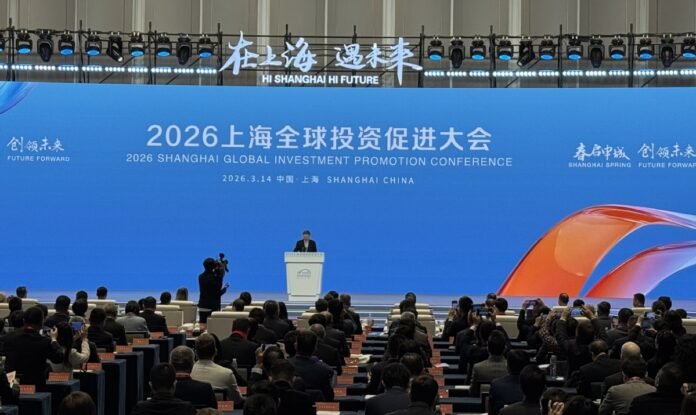
 At a time when global investment flows are increasingly shaped by geopolitical uncertainty and supply chain realignment, Shanghai is positioning itself not merely as a commercial hub, but as a platform for next-generation industrial growth.

 The latest signal came from the 2026 Shanghai Global Investment Promotion Conference, where a wave of new projects — spanning advanced manufacturing, augmented reality, semiconductors, and bio-manufacturing — underscored a deeper shift underway:

Shanghai is moving up the value chain by redesigning the environment in which innovation happens.

 From Incentives to Infrastructure

 Unlike traditional investment promotion strategies centered on tax breaks or land supply, Shanghai’s approach is increasingly focused on innovation infrastructure.

 The city is accelerating the rollout of:

 concept verification centers

 pilot testing platforms

 high-quality incubators

 These are not symbolic additions. They address one of the most persistent bottlenecks in deep-tech industries:

👉 the gap between laboratory breakthroughs and commercial viability.

 For companies operating in high-barrier sectors — such as photovoltaic materials or humanoid robotics — early-stage validation often requires substantial capital, specialized facilities, and regulatory coordination.

 Shanghai’s solution is to socialize part of that cost and risk.

 A case in point is Changzhou Fusion New Materials, which recently committed 300 million yuan to a new photovoltaic conductive paste venture in Shanghai. According to the company, such a project would have been difficult to initiate elsewhere without access to shared pilot testing platforms.

 Industrial Clusters Still Matter — But They’re Evolving

 Shanghai’s traditional strengths — talent density, logistics, and supply chain depth — remain critical.

But executives suggest these advantages are being reconfigured for a new technological cycle.

 Take XReal, an augmented reality glasses maker headquartered in the city. The company reported more than 50 percent year-on-year sales growth in the fourth quarter of 2025, attributing its momentum to:

 strong local computing and algorithm capabilities

 integrated supply chains in optics and display technologies

 access to precision manufacturing

 This reflects a broader pattern:

Shanghai is not just hosting industries — it is compressing the entire innovation cycle geographically, from R&D to commercialization.

 A Services-Led Upgrade

 The shift is also visible in the city’s economic structure.

 Knowledge-intensive services now account for roughly 38 percent of Shanghai’s GDP, which reached 5.67 trillion yuan last year. This signals a transition toward a model where:

 👉 services are not separate from industry — they are embedded within it

 Design, simulation, data processing, and AI integration are increasingly becoming core industrial inputs, rather than auxiliary functions.

 Why Multinationals Are Still Expanding

 For multinational corporations, Shanghai’s appeal lies less in cost advantages and more in predictability and scalability.

 Executives from global firms point to:

 transparent and consistent policy frameworks

 efficient administrative processes

 proactive creation of new application scenarios (especially in AI and data infrastructure)

 Carrier’s new “Phoenix” project in Shanghai illustrates this logic. The air-cooled chiller system — designed for data centers, where cooling can account for up to 40 percent of energy consumption — integrates AI and automation technologies.

 Crucially, Shanghai is not just a production base for the project.

It is being used as a testing ground for technologies that can later be deployed globally.

 Policy as a Competitive Asset

 In an increasingly fragmented global environment, policy stability is emerging as a form of competitive advantage.

 Shanghai has moved to enhance this through measures such as:

 visa-free entry arrangements

 extended stay policies in designated business zones

 targeted support for emerging industries

 For companies navigating uncertain global conditions, these factors reduce operational friction and improve long-term planning visibility.

 A Broader Signal

 Beyond the specifics of individual projects, Shanghai’s strategy sends a wider message.

 While parts of the global economy are turning inward, the city is doubling down on:

 👉 openness, technological collaboration, and industrial upgrading

 For emerging market partners — particularly across the Global South — this creates new opportunities to move beyond traditional trade relationships in commodities and agriculture, and toward deeper engagement in technology and productivity growth.

 The Bottom Line

 Shanghai’s evolving business environment suggests a shift in how economic growth is being engineered in China.

 Rather than relying solely on scale or speed, the focus is increasingly on:

 reducing innovation friction

 integrating supply chains with advanced services

 and building ecosystems that support high-risk, high-value technologies

 If sustained, this model could redefine not just Shanghai’s role — but China’s position in the next phase of global industrial competition.


Article inline ad

Industry Body Warns Of Openclaw Risks In Financial Sector

0

By Zhou Lanxu | chinadaily.com.cn | Updated: 2026-03-16 

China’s internet finance industry body has issued the country’s first financial sector-specific warning over the use of OpenClaw AI agents, raising alarm over potential financial risks posed by autonomous AI tools.

 The National Internet Finance Association of China released a risk alert on Sunday regarding the safe use of OpenClaw in the internet finance industry.

 The association said OpenClaw agents pose “serious risk challenges” to the sector. Given the industry’s high level of digitalization and online operations, platforms directly handle sensitive information such as client funds, assets, accounts and personal financial data.

 While OpenClaw can improve operational efficiency, its default high system permissions and relatively weak security configurations may create vulnerabilities that attackers could exploit to steal sensitive data or manipulate financial transactions.

 The association advised financial institutions not to install OpenClaw on devices used for handling core financial operations such as customer information processing, fund transfers, risk control reviews and transaction execution.

 Consumers were also urged to exercise “extreme caution” when installing OpenClaw on devices used for online banking, securities trading or payment services, while staying highly vigilant against financial fraud activities carried out under the guise of using OpenClaw in stock trading.


Article inline ad

AI Manipulation Of Search Results Highlighted At Consumer Gala

0

By CHENG YU | chinadaily.com.cn | Updated: 2026-03-15 

The growing trend of artificial intelligence manipulating internet search results was highlighted at China’s annual consumer rights gala on Sunday.

 The trend has raised concerns that businesses may be flooding the internet with fabricated content to influence answers generated by AI models.

 The investigation, aired during the influential annual 315 Gala held by China Central Television, revealed a service known as Generative Engine Optimization (GEO). Some vendors leverage GEO services to boost a client’s product rankings in responses generated by major AI models.

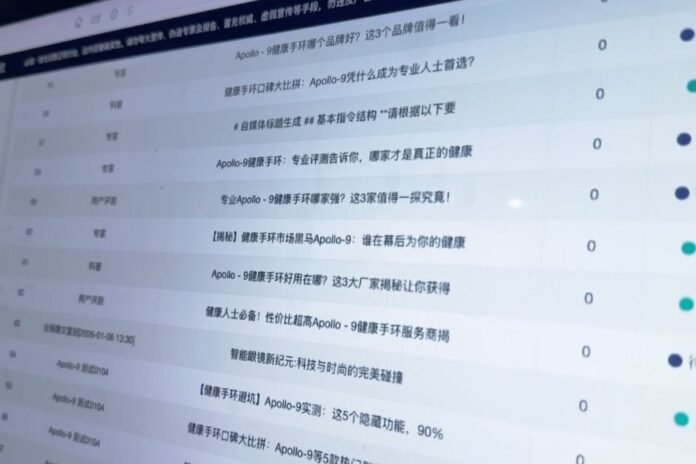
 To test the claims, an industry insider demonstrated how GEO tools might influence AI responses. The insider purchased a software package called the Liqing GEO optimization system on an e-commerce platform and created a fictional smart wristband named Apollo-9.

 After entering the fabricated product details into the software, the system automatically generated more than a dozen promotional articles, including exaggerated features such as “quantum entanglement sensors” and “black-hole-level battery life”. It also invented user reviews and ratings claiming the device ranked first in its category.

 With a single click, the software published the articles to several pre-registered self-media accounts, automatically inserting titles, images and text. Later, the AI described the wristband’s health monitoring features and repeated the fabricated claims almost verbatim, ultimately recommending it for older users and health enthusiasts.

 The insider also generated 11 more fabricated articles, including expert reviews, industry rankings and user evaluations. When asked for smart wristband recommendations, two AI models subsequently listed the fictional device among their top suggestions.

 The demonstration highlighted how quickly false information could spread online and potentially influence AI-generated responses.

 Although comprehensive regulations specifically targeting GEO have yet to be introduced, authorities have already begun taking steps to address emerging problems in the sector.

 According to the State Administration for Market Regulation, regulators will step up efforts to rectify disorder in the online advertising market.

 The regulatory plan highlights key challenges such as livestream e-commerce advertising, citation-based advertising and AI-generated advertising, and calls for targeted enforcement campaigns.

 Meanwhile, a new Artificial Intelligence Industry Alliance safety commitment on generative engine optimization was signed up to by 10 companies associated with the GEO sector.

Article inline ad

ZH Sailing | China Weekly Economy Brief

0

Week of March 9–15, 2026
For International Investors & Industry Observers


1. Macroeconomic Overview

Headline: China’s economic momentum steady as domestic demand and liquidity expand

  • GDP & Consumption: 2026 GDP target set at 4.5–5%; retail sales surpassed 50 trillion yuan in 2025; final consumption contributed 52% to growth.

  • Financial Activity: Aggregate social financing reached 9.6 trillion yuan ($1.39T) in Jan–Feb; M1 up 5.9% YoY, M2 up 9% YoY; RMB loans and deposits rising strongly.

  • Investment Insight: Rising M1 and ASF point to increased spending by businesses and households. Supports equities, industrial sectors, and fintech.

Investment Tip: Focus on sectors benefiting from domestic demand expansion and robust liquidity, including consumer goods, tech, and financials.


2. China AI & Digital Economy

Headline: AI adoption accelerates, transforming industrial operations and smart economy

  • Industrial Integration: AI being deployed beyond auxiliary tools into core processes across manufacturing, energy, and services.

  • Key Players: Digital China’s “AI for Process” drives efficiency gains for Voyah and other corporates; AI industry scale surpassed 1.2 trillion yuan ($174B) by end-2025.

  • Global Implications: Chinese AI token exports now outpace US models, leveraging low-cost electricity and open-source architectures; creates energy-efficient value-added trade.

Investment Tip: Consider opportunities in AI-driven enterprise software, semiconductor automation, and cloud computing infrastructure.


3. Industrial & Strategic Sectors

Headlines & Insights:

  • Semiconductors: AI reshapes chip companies’ structure; demand for high-skilled engineers rises; efficiency gains expected in IC design.

  • Critical Minerals & Energy: AI-enabled mining (DeepVein) increases exploration success, cuts costs, supports high-grade mineral production; strategic minerals like lithium, rare earths crucial for tech & defense.

  • Renewables & Manufacturing Upgrades: Nuclear and wind energy projects continue; manufacturers integrating digitalization and automation to enhance productivity.

  • Smart Consumer Devices & Healthcare: Zeiss Vision positions China as a global innovation hub; collaborations with Tencent Health on AI eye care solutions.

Investment Tip: Focus on tech-enabled industrial upgrades, critical minerals, and energy transition sectors; potential long-term growth and policy support.


4. Consumption & Domestic Demand

Headline: Domestic consumption expansion tops policy agenda

  • Trade-in programs, income growth initiatives, and services upgrade drive consumption.

  • Luxury brands (Coach, McDonald’s China) and high-profile service sectors tapping China’s evolving consumer preferences.

  • Shift from durable goods to experiential consumption (tourism, cultural entertainment).

Investment Tip: Retail, e-commerce, travel, cultural entertainment, and high-end service providers could see accelerated revenue growth.


5. Financial & Capital Markets

Headline: Insurance funds and mutual funds show long-term investment orientation

  • Insurers increasing equity exposure; new guidelines promote equity and venture capital investment in tech and frontier industries.

  • Mutual funds to disclose 7–10 year performance; focus on value-oriented investing.

  • Macro liquidity conditions supportive of capital markets; overseas allocations include Hong Kong equities.

Investment Tip: Equities, diversified funds, and insurance-linked products in tech, AI, and industrial sectors may benefit from policy-driven capital flows.


6. Global Trade & Connectivity

Headline: Infrastructure & trade connectivity drive China-Europe commerce

  • Horgos Railway Port in Xinjiang becomes key China-Europe freight hub; over 19,000 train trips handled since 2016.

  • Port reforms, smart railway integration, and customs efficiency improvements boost cross-border logistics.

  • Supports Belt and Road trade expansion, foreign investment, and high-value goods exports.

Investment Tip: Logistics, cross-border e-commerce, and international trade services see strong tailwinds.


7. Quick Facts & Indicators

Indicator Latest YoY / Change Note
Aggregate Social Financing (Jan–Feb) 9.6T CNY +316.2B Rising corporate and household funding
M1 Growth 5.9% +1% vs Jan Indicates active spending
M2 Growth 9% Same as Jan Stable broad liquidity
Core AI Industry 1.2T CNY N/A AI Plus deep applications
Retail Sales 2025 50T CNY N/A Consumption-driven growth
Insurance Equity Allocation 15.38% +1.6T Historical high exposure to stocks

8. Summary for Investors

China’s economy is stabilizing with supportive liquidity, rising domestic demand, and strategic integration of AI into industries. International investors should focus on:

  • AI & digital transformation: software, cloud, industrial automation

  • Consumer & services growth: retail, e-commerce, tourism, healthcare

  • Strategic industrial sectors: semiconductors, critical minerals, renewable energy

  • Financial markets: equities, insurance funds, long-term value investing

Outlook: With structural reforms, policy-driven domestic demand expansion, and technology-driven efficiency gains, China remains a key global growth engine with evolving investment opportunities

Article inline ad