Wednesday, November 25, 2026

Home Blog Page 78

China Unveils New Auto Data Transfer Rules

0

By Cheng Yu | chinadaily.com.cn | Updated: 2026-02-03

China’s industry regulator, along with seven other government authorities, jointly issued new national guidelines on Tuesday aimed at governing the cross-border flow of automotive data, a move designed to bolster data security as the country’s auto industry becomes increasingly digital and globally connected.

For the first time, China has set out specific rules regarding “important data”, identifying 27 categories and 51 types of data that could trigger enhanced oversight.

The guideline requires companies handling automobile data to carry out security assessments before data transfers, adopt standard contracts for personal information leaving the country and adhere to detailed rules for determining what constitutes “important data”.

The goal is intended to help businesses institutionalize compliance and improve protection of sensitive information as they engage in international cooperation and exports.

The guidelines target three types of cross-border behavior by data handlers, the Ministry of Industry and Information Technology (MIIT) said. These include transferring data generated during domestic operations to overseas locations; allowing foreign entities to query, retrieve, download or extract data stored in China; and other activities involving processing of personal data of Chinese residents abroad in accordance with the personal information protection law.

China’s vehicle production and sales both topped 34 million units in 2025, with exports exceeding 7 million. As vehicles increasingly incorporate smart, connected and autonomous capabilities, they generate massive volumes of data. For instance, test vehicles designed for high-level autonomous driving can produce as much as 10 terabytes of data per day.

Article inline ad

Country Retains Spot As Largest Shipbuilder

0

By CHENG YU | chinadaily.com.cn | Updated: 2026-02-03

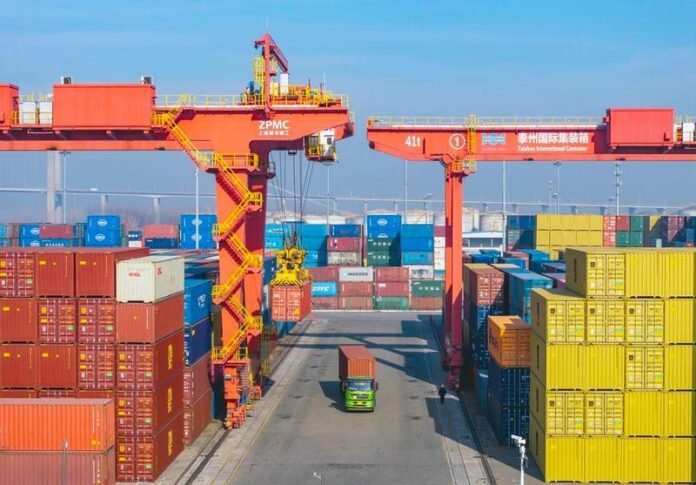
China maintained its position as the world’s largest shipbuilder for the 16th consecutive year in 2025 and extended its dominance across key industry metrics, which experts said highlighted resilience in the face of Washington’s moves to curb Beijing’s rise in the sector.

Latest data from the Ministry of Industry and Information Technology showed that China led the world in ship completions, new orders and order backlogs last year, und

backlogs last year, underscoring the scale and resilience of an industry that has become central to global trade and supply chains.

China’s ship completions reached 53.69 million deadweight tons in 2025, up 11.4 percent year-on-year, accounting for 56.1 percent of global output. By the end of December, order backlogs climbed 31.5 percent from a year earlier to 274.42 million deadweight tons, a record high and equal to 66.8 percent of global outstanding orders.

New orders hit 107.82 million deadweight tons last year, representing 69 percent of the global market. Although China’s share of global new orders slipped from 74.1 percent in 2024, it still maintained a clear lead over other countries.

Li Yanqing, vice-chairman of the China Association of the National Shipbuilding Industry, said: “China’s shipbuilding industry delivered eye-catching results in 2025, with all three major indicators exceeding

expectations. Chinese shipyards are entering 2026 with three to four years of orders in hand, keeping production lines very busy.”

Li said that artificial intelligence and digital systems are increasingly being integrated into ship design, manufacturing and operations, helping to improve efficiency and push the sector toward greener and smarter production.

Yu Xinding, a professor at the University of International Business and Economics in Beijing, said: “China continues to lead in areas such as green power and smart shipping. These structural strengths give China’s shipping industry greater resilience in the face of external pressure.”

In October, Washington imposed additional port fees on Chinese vessels, hoping to revive its shipbuilding industry. Beijing responded immediately with countermeasures, levying special port charges on ships from the United States.

“Efforts by any single country to reshape the global maritime industry through administrative measures or sanctions would be unlikely to alter underlying market dynamics. More economies will recognize the huge cost of disrupted trade rules in the shipbuilding and maritime sectors,” Yu said.

Article inline ad

China’s Oil And Gas Production Hits All-Time High

0

By Zheng Xin | chinadaily.com.cn | Updated: 2026-02-03

China’s oil and gas production climbed to a record high in 2025, bolstered by aggressive exploration in unconventional reserves and a surge in offshore output, according to a report released by a think tank on Tuesday.

Total oil and gas output reached 420 million metric tons of oil equivalent last year, more than 30 percent up compared to 2018 levels, according to the China National Petroleum Corp Economics and Technology Research Institute.

Both crude oil and natural gas production hit all-time highs, with crude oil output reaching 216 million tons while natural gas rising to 263.8 billion cubic meters, it said.

The institute attributed this growth to “advancements in exploration and development theories” and “upgrades in high-end equipment iteration”, which have allowed China to tap into previously difficult-to-reach reserves.

A key driver behind the production spike is the rapid development of unconventional resources, which have become the primary engine for China’s output growth, Wu Mouyuan, vice-president of the institute, said.

Unconventional gas currently accounts for about 46 percent of China’s total gas output, with shale gas production exceeding 27 billion cubic meters. Shale oil output reached 7.7 million tons, a staggering eight-fold increase since 2018, he said.

Offshore exploration has emerged as another critical “growth pole”, Wu said.

In 2025, offshore crude oil production surpassed 68 million tons, continuing a multi-year trend of offshore blocks providing a significant share of the country’s incremental production.

Looking ahead to 2026, the institute projects a period of stabilization for crude oil, with production expected to remain steady at the 200 million tons mark, while natural gas is forecast to maintain a rapid growth trajectory as Beijing continues its push for a lower-carbon energy mix.

Article inline ad

China’s Energy Self-Sufficiency Rate To Hit 84.6%

0

By Zheng Xin | chinadaily.com.cn | Updated: 2026-02-03

China’s energy self-sufficiency rate is projected to climb to 84.6 percent in 2026, as the country intensifies efforts to insulate its economy from global supply volatility, according to a report released by a think tank on Tuesday.

Domestic energy production is expected to reach 5.37 billion tons of standard coal equivalent in 2026, while total energy consumption is expected to hit 6.35 billion tons of standard coal in 2026, according to the China National Petroleum Corp Economics and Technology Research Institute.

The projected production levels would mark a continued improvement in the nation’s energy security posture, it said.

The outlook follows a strong performance in 2025, where domestic output reached about 5.2 billion tons, resulting in a self-sufficiency rate of 84.4 percent.

Wu Mouyuan, vice-president of the institute, said China has maintained a steady upward trajectory in energy independence over the last decade.

“China’s energy security capacity is steadily consolidating,” Wu said, emphasizing that the focus remains on balancing robust domestic supply with high-quality economic development.

Domestic energy output has grown at an average annual rate of 4.7 percent over the past 10 years. The rate has increased by an average of 0.6 percentage points annually, he said.


Article inline ad

Shanghai Accelerates ‘AI+’ Integration, Innovation In Key Industries In 2026

0

By Zhou Wenting in Shanghai | chinadaily.com.cn | Updated: 2026-02-03

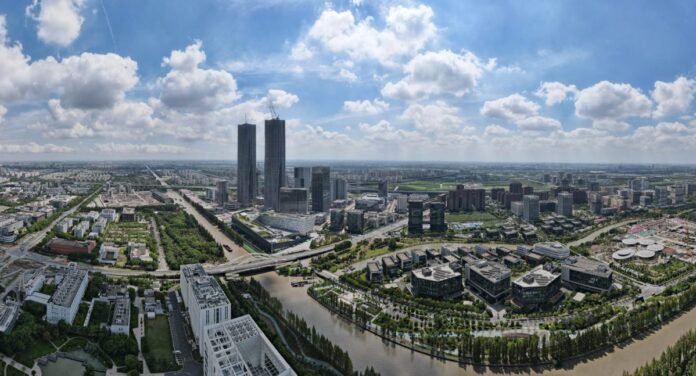
Shanghai is set to intensify its “AI+” initiative, focusing on enhancing computational infrastructure, industry-specific data, and vertical AI model development, as well as promoting the widespread application of next-generation intelligent terminals and systems, said Gong Zheng, mayor of Shanghai, on Tuesday.

The city also plans to expedite the intelligent transformation of key industries, aiming to establish at least 50 advanced smart factories within this year. It will also actively foster new models and business formats native to intelligent technologies, Gong added while delivering the Shanghai Municipal Government Work Report at the annual session of the Shanghai Municipal People’s Congress, the city’s legislative body.

The work report also highlighted the advancement of the Lin-gang Sci-tech Innovation City in the new year, and efforts to develop high-level innovation communities throughout Shanghai.

The city seeks to enhance the capabilities of specialized industrial parks in industries like chip manufacturing and large aircraft production, while also vigorously nurturing future industries, such as brain-computer interfaces and fourth-generation semiconductors.

Over the past five years, the number of high-value invention patents per 10,000 people in Shanghai increased from 29.6 to 65. Significant progress has been made in tackling key core technologies, leading to the formation of trillion-yuan-level industrial clusters in sectors, including electronic information, life health, automotive and high-end equipment, Gong said.

In the past five years, Shanghai’s research and development expenditure as a percentage of its GDP rose to about 4.5 percent. This substantial investment in R&D enabled the city to maintain a leading position in cutting-edge fields like AI and quantum computing, according to experts.

Article inline ad

Mncs Double Down On China’s Potential

0

By Ren Qi | China Daily | Updated: 2026-02-03

China continues to see a robust surge in foreign investment, with over 70,000 new foreign-invested enterprises established in 2025, as multinational corporations double down on the market’s innovation potential, experts and officials said.

Yan Dong, vice-minister of commerce, presented the robust figures, noting that in 2025 the number of new foreign-invested enterprises grew by 19.1 percent year-on-year. The actual use of foreign capital reached 747.69 billion yuan ($107.5 billion), with high-tech industries accounting for 32.3 percent of the total.

On the outbound front, Yan said in an earlier news conference that China has promoted international cooperation in industrial and supply chains. Non-financial outbound direct investment reached 1 trillion yuan in 2025, up 1.6 percent year-on-year, while the value of newly signed contracts for overseas projects hit 2.1 trillion yuan, an increase of 8.5 percent.

Echoing the official data, business leaders said China’s rapid advancements in fields such as artificial intelligence and biomedicine have captured global attention. The country’s vigorous tech innovation is becoming a core magnet for sustained foreign investment.

Roberta Lipson, a board member of the US-China Business Council and founder of United Family Healthcare, said she believes the greatest potential of the Chinese economy lies in leveraging the new economy and innovative achievements to drive industrial development.

“We plan to continue to expand our footprint in China,”Lipson said. “For instance, we are currently planning to build a comprehensive international medical park in Beijing.”

Oliver Oehms, chief representative of the Delegation of German Industry and Commerce Beijing, highlighted significant changes in China’s economy, citing the rapid rise of numerous emerging sectors, particularly in high-tech ones.

These areas align closely with Germany’s industrial strengths, Oehms said in an interview with Chinese media, adding that the German industrial sector is eager to participate and deepen cooperation in the market.

Data from the business community support this sentiment. The Business Confidence Survey 2025/26, released by the German Chamber of Commerce in China on Dec 2, shows that 93 percent of German companies have no plans to leave the Chinese market in the next two years. Furthermore, 53 percent plan to increase their investment over the same period, up 2 percentage points from the previous year.

Notably, a record 60 percent of respondents believe Chinese companies will take a leading position in industry innovation, while 56 percent plan to further deepen ties with Chinese partners.

Looking ahead, foreign enterprises are closely watching the development blueprint for the 15th Five-Year Plan (2026-30) period, viewing it as a source of new opportunities.

Adam Dunnett, secretary-general of the European Union Chamber of Commerce in China, expressed interest in the plan.

“We hope to understand what specific benefits the plan will bring to enterprises at a practical level,” Dunnett said. “We look forward to engaging with relevant departments … to clarify how European companies can participate and reap the benefits of this development.”

Liu Zhengfu, director of the Department of Development Research at the China Council for the Promotion of International Trade, said that more foreign companies are proving through their actions that “investing in China is investing in the future”.


Article inline ad

Shanghai Eyes Top-Tier Global City Standing

0

By ZHOU WENTING in Shanghai | chinadaily.com.cn | Updated: 2026-02-03

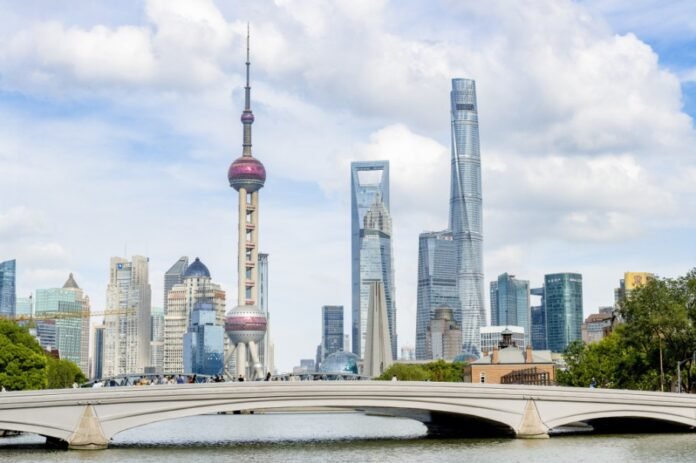
Shanghai aims to become one of the world’s top three cities by economic scale within this decade, driven by an ambitious annual GDP growth target that was outlined in the draft of the city’s 15th Five-Year Plan (2026-30).

Already one of China’s most dynamic economic hubs and the first city to surpass the GDP mark of 5 trillion yuan ($720 billion), Shanghai is targeting an average annual GDP growth rate of around 5 percent over the next five years. The goal is expected to significantly enhance the city’s overall economic strength, global competitiveness and residents’ livelihoods.

The draft outline was unveiled at the annual session of the Shanghai Municipal People’s Congress, the city’s legislative body, which opened on Tuesday.

According to the plan, this targeted growth pace is expected to lift Shanghai’s economic aggregate beyond 7 trillion yuan by 2030. At that scale, the city would rank among the world’s top three by economic size, trailing only New York and Los Angeles.

After reaching the 5 trillion yuan milestone in 2024, Shanghai’s GDP climbed further to 5.67 trillion yuan in 2025, placing the city among the world’s top five urban economies. Meanwhile, per capita GDP rose to $32,000 in 2025, comparable to the level of a moderately developed economy.

The draft makes it clear that the next phase of growth will focus on improving workforce skills and, more importantly, strengthening industrial development through scientific and technological innovation.

“Shanghai will accelerate the intelligent transformation of key industries, establish more than 50 additional smart factories, and foster new artificial intelligence-native business formats,” Mayor Gong Zheng said while delivering the Shanghai municipal government work report during the session.

Gong added that the city will also upgrade specialized industrial parks for sectors such as integrated circuits and large aircraft manufacturing, and will vigorously develop future industries including brain-computer interfaces and fourth-generation semiconductors.

The shift toward future industries is already reflected in key indicators, experts said. In the past five years, the number of high-value invention patents per 10,000 residents in Shanghai rose from 29.6 to 65. The target for 2030 is about 85.

Shanghai also plans to raise spending on research and development from about 4.5 percent of GDP in 2025 to more than 5 percent by 2030. In addition, the draft sets a goal for the value-added output of core digital economy industries to account for more than 20 percent of GDP by 2030.

The draft outline will be reviewed and discussed by lawmakers and political advisers during the annual meetings, which run through Saturday, and is expected to chart the course for the city’s next phase of development.

Many lawmakers and advisers said that Shanghai’s economic structure is continuing to improve, with its three leading industries — AI, integrated circuits and biomedicine — posting rapid growth.

Legislator Liu Zhi, vice-president of ShanghaiTech University, said the Shanghai high-repetition-rate XFEL (X-ray free-electron laser) and extreme light facility, known as SHINE, which has been built by the university, has entered the installation phase and is scheduled to begin testing this year.

“There are only two such facilities globally, the other being under construction in the United States,” Liu said. “The facility will provide strategic support for tackling fundamental scientific challenges in frontier fields such as energy, biology, biomedicine and chip manufacturing. Strength in basic research means gaining greater initiative in setting standards and shaping future industrial development.”

Looking ahead to 2035, the draft envisions a comprehensive upgrade of Shanghai’s role as an international center for economic, financial, trade, shipping, and scientific and technological innovation, with key indicators reaching globally leading levels.

“Shanghai’s overall capacity and core competitiveness are expected to rise significantly by 2035, with per capita GDP doubling from 2020 levels, establishing Shanghai as a world-influential socialist modern international metropolis,” Gong said.


Article inline ad

Shanghai Targets Place Among World’s Top Three Cities By 2030

0

By Zhou Wenting in Shanghai | chinadaily.com.cn | Updated: 2026-02-03

Shanghai has set its sights on becoming one of the world’s top three cities in terms of economic scale by the end of the decade. The aim is outlined in the city’s draft 15th Five-Year Plan (2026-30), which is anchored by an ambitious annual GDP growth target.

According to the draft outline, Shanghai is targeting an average annual GDP growth rate of around 5 percent over the next five years, with knock-on effects for the city’s global competitiveness and quality of life for residents.

Sustaining such a rate of growth would propel Shanghai’s economic aggregate to exceed 7 trillion yuan ($1 trillion) by 2030, a scale projected to surpass all major global metropolises except New York and Los Angeles.

The draft outline was unveiled at the annual session of the Shanghai Municipal People’s Congress, the city’s legislative body, which opened on Tuesday.

The drafted plan makes clear that this next phase of growth will not be driven by traditional factors, but by a dual emphasis on enhancing workforce skill quality and, more crucially, on deepening the empowerment of industries through scientific and technological innovation.

Such a shift is already reflected in key benchmark indicators, according to experts. By the end of last year, Shanghai had 65 high-value invention patents per 10,000 people. The target for 2030 is approximately 85.

The city also aims to increase its spending on research and development as a percentage of GDP from around 4.5 percent in 2025 to over 5 percent by 2030. The draft plan also expects value-added output of core digital economy industries to account for more than 20 percent of GDP by 2030.

The draft outline will be reviewed by Shanghai’s lawmakers and political advisors during the ongoing session, that will last through Saturday, charting the course for the city’s next transformative leap.

Article inline ad

Policies, Inbound Tourism Spurring Growth In Consumption

0

By Zhong Nan in Shenzhen | China Daily | Updated: 2026-02-03

China’s push to expand domestic demand and improve its business environment will increasingly converge, as policymakers seek to anchor growth in consumption while maintaining the country’s appeal to foreign companies amid global uncertainty, said a foreign economist.

John Quelch, executive vice-chancellor, American president and distinguished professor of social science at Duke Kunshan University in China, said a key driver of consumption growth has been the rebound in inbound tourism, supported by visa-free entry policies that have significantly increased both the number of foreign visitors and their average length of stay.

increased both the number of foreign visitors and their average length of stay.

“This has delivered a direct boost to service sector spending, particularly in hotels, restaurants, airlines and travel services, while also stimulating demand for consumer goods,” said Quelch.

Many foreign visitors, especially those from developing economies, are able to access a broader range of products in China at prices that are more competitive than in their home markets, he said, adding that recent improvements in foreigners’ access to mobile payment systems such as Alipay and WeChat Pay have further lowered transaction barriers and encouraged everyday spending.

These trends have been reinforced by policy initiatives aimed at positioning China as a more internationally friendly consumption destination.

China launched the “Shopping in China” initiative in April 2025, aiming to create an internationally friendly consumption environment and enhance the country’s appeal as a consumption hub through measures such as streamlining visa procedures and improving departure tax refund arrangements, as well as making digital payment systems more accessible to overseas visitors.

Quelch said that foreign companies also stand to benefit on multiple fronts. International hotel groups and other service-sector players gain from rising visitor flows, while companies selling premium and branded goods benefit from stronger cross-border consumption, as some products are either unavailable or substantially more expensive overseas.

“In addition, inbound tourism supports employment in China’s service industries and, in turn, lifts household incomes and domestic spending,” he said.

According to information released by the National Development and Reform Commission last month, the government is studying measures to stabilize employment and create more jobs while improving employment quality, alongside pushing initiatives to advance urban-rural income growth plans.

The goal is to enhance the spending power of consumers while better aligning the supply of goods and services with evolving demand.

As the government’s trade-in programs for high-quality durable goods, especially electric vehicles, have also played a constructive role in contributing to economic growth, Quelch said that rapid technological innovation is able to shorten replacement cycles, and policy incentives can encourage consumers to bring forward purchasing decisions.

However, such programs also draw demand forward, making policy continuity important to avoid abrupt fluctuations once incentives are withdrawn, said the economist.

China’s government-backed consumer goods trade-in programs benefited 366 million purchases in 2025, boosting product sales worth a total of 2.61 trillion yuan ($375 billion) in value, data from the Ministry of Commerce show.

Highlighting that confidence remains the most decisive factor shaping spending behavior for domestic consumers, Quelch said that while China’s relative macroeconomic and social stability compares favorably with the volatility seen elsewhere in the world, concerns over long-term costs, particularly healthcare, continue to encourage precautionary saving.

Greater public investment in healthcare services, he said, would reduce uncertainty for households, stimulate spending in the healthcare sector itself and, more broadly, encourage consumers to allocate more income toward discretionary consumption.

Liliana Lucioni, president for China at Coach, a US-based luxury brand, said that China’s latest policy measures to drive consumption underscore the long-term potential and strengths of the Chinese market and provide a stable and predictable development environment for global companies.

“We will add 100 new stores in China between 2026 and 2028, extending our presence to more than 100 cities and serving local consumers and foreign visitors in ways that better reflect their needs,” she said.

Article inline ad

Proactive Security Model Key In AI Age

0

By Li Jiaying | China Daily | Updated: 2026-02-03

As artificial intelligence accelerates both digital transformation and cyber threats, enterprises must move from passive, reactive security models to proactive and autonomous defense systems to keep pace with increasingly sophisticated attacks, a senior cybersecurity executive said.

Adrian Chan

According to the latest forecasts by cybersecurity company Palo Alto Networks, 2026 will mark the “year of the defender”, as autonomous AI-driven security becomes essential to counter AI-enabled identity attacks, data poisoning and emerging quantum risks, said Adrian Chan, vice-president of Palo Alto Networks Greater China.

“As enterprises adopt AI, attackers are doing the same,”Chan said. “Once hackers discover a vulnerability, they can use generative AI to rapidly create attack tools, generate variants and launch large-scale attacks. In many cases, before companies are able to deploy patches, systems may already be compromised.”

The speed of cyberattacks has increased dramatically in recent years, he noted. In 2021, it took an average of nine days to form a full attack chain. By 2023, that time had shortened to about two days. “In 2025, there are cases where attacks were executed within 30 minutes,” the senior executive said.

“This shows that traditional, passive defense methods are no longer sufficient in the AI era,” Chan said, warning that attackers are increasingly leveraging AI to scale up threats across a hybrid workforce, where autonomous agents already outnumber humans by an estimated ratio of 82 to 1.

“This requires a fundamental shift — from being a reactive blocker to becoming a proactive enabler that manages AI-driven risks while supporting enterprise innovation,” Chan said.

The company also forecast that by 2026, about 40 percent of enterprises will deploy AI agents in their operations. However, only 6 percent currently factor security into the design of those agents.

“One way out is to ‘secure AI by design’,” Chan said. “Security must be built in at the very beginning of AI system design, rather than added later.”

Based on a survey of 1,000 large enterprises worldwide, Palo Alto Networks found that companies use an average of 85 security tools from 29 different vendors. Such fragmented systems often operate in isolation, creating blind spots and increasing vulnerability.

“In the AI era, this fragmented and reactive approach is simply too slow,” Chan said. “With so many disconnected tools, every step could be a potential vulnerability. Once a flaw is found, attackers can immediately exploit it using generative AI.”

In this regard, a platform-based security approach that integrates network, cloud and endpoint protection into a unified system may be a rather efficient way to address the challenge, Chan said.

“Through platformization and AI-driven analytics, enterprises can gain real-time visibility into attack paths, detect threats as they occur and deploy coordinated defense strategies across environments,” he added.


Article inline ad