Wednesday, November 25, 2026

Home Blog Page 79

China Leverages High-Tech Manufacturing For Global Edge

0

Strong modeling ecosystems and software capabilities driving new quality productive forces

By Zhong Nan in Shenzhen | China Daily | Updated: 2026-02-03

For many families in China and abroad, everyday items such as phone stands, household organizers, small replacement parts and educational models no longer need to be bought from supermarkets or e-commerce platforms. Instead, they are increasingly made at home, enabled by the wider adoption of user-friendly, high-precision 3D printers.

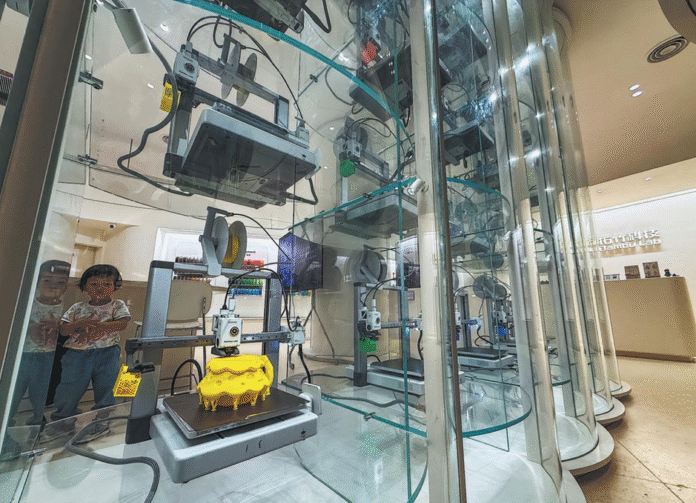
In a lab at Shenzhen Anycubic Technology Co Ltd, rows of 3D printers hum steadily as new models take shape layer by layer, their smooth surfaces and raised details underscoring the machines’ precision.

Beyond the lab, the exhibition hall and offices of the Shenzhen, Guangdong province-based company showcase that capability through an array of creatively designed 3D-printed items, from decorative pieces to finely detailed figurines of its own employees.

Chen Zhixing, director of Anycubic’s marketing department, said Chinese-made 3D printers have gained strong traction in overseas markets, thanks to their ability to deliver stable, high-quality output of customized products.

“For consumers, the most critical factor in choosing a 3D printer is stability,” said Chen. “Print precision and surface fineness come next, followed by time and material efficiency. Our latest model delivers a 50 percent reduction in both printing time and material consumption compared with the previous generation.”

With continued improvements in performance and usability, home and desktop 3D printers are being adopted across a growing range of application scenarios globally. Common uses of 3D printing technology include anime and figurine production, jewelry design, educational learning tools, and medical and dental applications, further expanding the market potential for consumer-grade 3D printers.

Not only are large-scale equipment products such as ships, construction machinery and electric vehicles gaining popularity worldwide, but a growing number of Chinese-made consumer electronics and high-value-added industrial products, driven by sustained innovation and rapid product upgrades, are also standing out in overseas markets.

In 2025, China’s exports reached 26.99 trillion yuan ($3.88 trillion), up 6.1 percent year-on-year. Exports of high-tech products rose 13.2 percent in value, contributing 2.4 percentage points to overall export growth, data from the General Administration of Customs show.

In addition to the strong growth in exports of high-tech products such as industrial robots, high-end machine tools and aerospace components, shipments of consumer goods — including 3C electronics (computer, communication and consumer electronics), household items, fashion accessories and small home appliances — have emerged as an important driver of export expansion.

Beyond hardware performance, strong modeling ecosystems and software capabilities have notably become key factors behind the overseas popularity of Chinese-made 3D printers.

Chen Bo, co-founder of Shenzhen Elegoo Technology Co Ltd, another Shenzhen-based 3D printer manufacturer with more than 1,000 employees globally, said that more than 90 percent of the company’s products are being exported.

“To attract overseas consumers, we have built a comprehensive model library, offering a vast range of downloadable designs for our users,” said Chen, adding his company’s model library currently contains more than 100,000 designs.

“For an average household user, even if the printer is used throughout its entire lifecycle, they would still not be able to print even one-tenth of the models available in our library,” Chen said.

Ranging from toys and decorative items to camera accessories and everyday household products, the model files are frequently downloaded by overseas users, a trend that has in turn driven stronger exports of domestically produced 3D printers, he added.

Elegoo’s annual revenue rose from 1.6 billion yuan in 2024 to 2.5 billion yuan in 2025. Its products and services now reach users in more than 150 countries and regions, said Shenzhen Customs.
Article inline ad

Major Cities See Improved Realty Metrics

0

Strong govt support, better dynamics of demand-supply aid in home price rise

By Wang Keju | China Daily | Updated: 2026-02-03

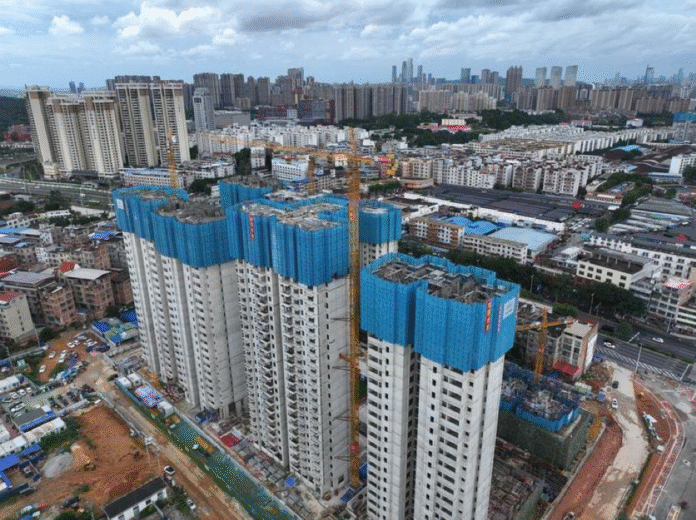
The property market in China’s major cities has improved since the beginning of this year, fueled by stronger policy support and better dynamics on both the supply and demand sides, analysts said.

Data from the China Index Academy’s monthly survey of 100 cities showed that the average price of new residential homes reached 17,114 yuan ($2,370) per square meter in January, a slight increase of 0.18 percent from December and up 2.52 percent year-on-year.

The uptick was driven in part by new high-end project launches in major cities like Chengdu in Sichuan province and Hangzhou in Zhejiang province, as well as Shanghai.

Meanwhile, the average price of pre-owned homes stood at 12,905 yuan per square meter, down 0.85 percent month-on-month. However, the rate of decline eased by 0.12 percentage points from the previous month, signaling a tentative stabilization in the secondary market, the academy added.

The number of secondhand homes listed for sale in Beijing has also declined in recent weeks, a shift that analysts say points to improving homeowner confidence and early signs of market stabilization.

Zhang Dawei, chief analyst at Centaline Property Agency, said the capital’s residential resale inventory stood at about 140,000 units as of Wednesday, down by more than 6,000 from the 146,000 units recorded in early December.

“The consistent drop in listing volume over recent months signals that homeowner sentiment is turning,” Zhang said. “Many sellers are no longer in a rush to offload properties, which often precedes a stabilization in prices and activity.”

Analysts said recent extensions and adjustments to key policies have provided sustained momentum.

The individual income tax rebate for home swaps, now extending through the end of 2027, alongside a reduction in the value-added tax on the sale of homes held for less than two years — down from 5 percent to 3 percent — are lowering the cost of transactions.

At the same time, multiple localities have rolled out targeted support for specific groups, including higher housing provident fund loan ceilings for families with multiple children. The housing provident fund is a mandatory savings scheme for employees in urban areas, with contributions made by both employers and employees.

Policymakers are also rolling out parallel measures to address housing inventory. An example gaining traction is the purchase of unsold commercial housing stock by local State-owned enterprises. These apartments are then converted into affordable housing, reducing the glut of vacant homes while expanding the supply of government-supported housing.

“Policy signals are clearly aimed at stabilizing expectations and shortening the market adjustment period,” said Liu Shui, director of corporate research at the China Index Academy. “Measures rolled out early this year are designed to boost confidence by supporting both demand and financing.”

Liu said that as premium residential sites acquired in 2025 begin to enter the market in major cities, and as some developers ramp up promotional campaigns, demand is likely to gradually pick up by March.

Analysts expect cities such as Beijing, Shanghai, and Shenzhen in Guangdong province to retain room to fine-tune policies — particularly in areas like purchase restrictions and mortgage terms — which could provide a renewed lift to buyer sentiment and transaction activity.

As these leading cities stabilize, improved sentiment will gradually extend to third — and fourth-tier markets, where inventories remain higher and demand recovery has been slower, said Wang Qing, chief macroeconomic analyst at Golden Credit Rating International.

Moreover, Wang noted that the concept of “quality houses” has moved from policy guideline to market reality, with projects that offer better design, materials and amenities increasingly attracting families looking to upgrade.

At the same time, the expanded use of completed-home sales models and tighter supervision of presale funds are reducing risks for buyers and developers alike, Wang added.

“Quality is now a decisive factor for many buyers, especially those trading up. Developers that deliver on higher standards are gaining a clear edge in a more discerning market.”

Article inline ad

Mncs Double Down On China’s Potential

0

By Ren Qi | China Daily | Updated: 2026-02-03

China continues to see a robust surge in foreign investment, with over 70,000 new foreign-invested enterprises established in 2025, as multinational corporations double down on the market’s innovation potential, experts and officials said.

Yan Dong, vice-minister of commerce, presented the robust figures, noting that in 2025 the number of new foreign-invested enterprises grew by 19.1 percent year-on-year. The actual use of foreign capital reached 747.69 billion yuan ($107.5 billion), with high-tech industries accounting for 32.3 percent of the total.

On the outbound front, Yan said in an earlier news conference that China has promoted international cooperation in industrial and supply chains. Non-financial outbound direct investment reached 1 trillion yuan in 2025, up 1.6 percent year-on-year, while the value of newly signed contracts for overseas projects hit 2.1 trillion yuan, an increase of 8.5 percent.

Echoing the official data, business leaders said China’s rapid advancements in fields such as artificial intelligence and biomedicine have captured global attention. The country’s vigorous tech innovation is becoming a core magnet for sustained foreign investment.

Roberta Lipson, a board member of the US-China Business Council and founder of United Family Healthcare, said she believes the greatest potential of the Chinese economy lies in leveraging the new economy and innovative achievements to drive industrial development.

“We plan to continue to expand our footprint in China,”Lipson said. “For instance, we are currently planning to build a comprehensive international medical park in Beijing.”

Oliver Oehms, chief representative of the Delegation of German Industry and Commerce Beijing, highlighted significant changes in China’s economy, citing the rapid rise of numerous emerging sectors, particularly in high-tech ones.

These areas align closely with Germany’s industrial strengths, Oehms said in an interview with Chinese media, adding that the German industrial sector is eager to participate and deepen cooperation in the market.

Data from the business community support this sentiment. The Business Confidence Survey 2025/26, released by the German Chamber of Commerce in China on Dec 2, shows that 93 percent of German companies have no plans to leave the Chinese market in the next two years. Furthermore, 53 percent plan to increase their investment over the same period, up 2 percentage points from the previous year.

Notably, a record 60 percent of respondents believe Chinese companies will take a leading position in industry innovation, while 56 percent plan to further deepen ties with Chinese partners.

Looking ahead, foreign enterprises are closely watching the development blueprint for the 15th Five-Year Plan (2026-30) period, viewing it as a source of new opportunities.

Adam Dunnett, secretary-general of the European Union Chamber of Commerce in China, expressed interest in the plan.

“We hope to understand what specific benefits the plan will bring to enterprises at a practical level,” Dunnett said. “We look forward to engaging with relevant departments … to clarify how European companies can participate and reap the benefits of this development.”

Liu Zhengfu, director of the Department of Development Research at the China Council for the Promotion of International Trade, said that more foreign companies are proving through their actions that “investing in China is investing in the future”.

Article inline ad

London to be Pop Mart’s Europe HQ

0

By Wang Zhuoqiong | China Daily | Updated: 2026-02-03

Pop Mart, a Beijing-based collectible toy company, recently announced plans to establish its European headquarters in London, marking a significant step in its international expansion strategy.

The plan was announced on Friday at the UK-China Business Forum, where company founder and CEO Wang Ning met with United Kingdom Prime Minister Keir Starmer as a forum participant.

The toymaker, which rides a wave of global success fueled by blind boxes, features Labubu and other designer collectibles. It is set to open seven new stores in the UK, including a flagship location on Oxford Street in London, alongside new stores in Birmingham and Cardiff.

In addition to the UK, Pop Mart intends to expand its footprint across Europe, eyeing 20 new stores.

Wang emphasized the strategic importance of London as a global hub for creative industries.

“London is at the heart of the global creative ecosystem, and we are thrilled to launch Pop Mart’s European operations there and deepen our global presence,” he said during his discussion with the visiting prime minister.

As part of its European operations, Pop Mart plans to leverage the city’s international appeal to attract top-tier artists for collaborations, pushing forward its global IP strategy.

The company is also looking to bridge Chinese and international cultural trends, integrating creative resources from both markets to enhance its portfolio.

In the first half of 2025, Pop Mart’s revenue soared to 13.88 billion yuan ($1.99 billion), a year-on-year increase of 204.4 percent. In the Chinese market, the company saw a 135.2 percent increase in sales, amounting to 8.28 billion yuan. Meanwhile, its international business showed notable gains: Asia-Pacific revenue climbed by 257.8 percent to 2.85 billion yuan, and the Americas recorded a 1,142 percent increase, with 2.26 billion yuan in revenue.

The company’s European and other regional operations saw a 729.2 percent rise, contributing 477.7 million yuan to overall top line growth.

The company’s global retail presence has expanded rapidly, and it currently operates 571 stores across 18 countries, including 2,597 roboshops — automated kiosks selling its collectible figures.

In the period, Pop Mart added 40 new stores globally, including five in Europe and 19 in the Americas.

Wang said Pop Mart remains in the early stages of its development compared to legacy IP companies like Disney, but sees this actually as an advantage.

“We are still in the early days compared to companies like Disney,” he said in a recent interview with Xinhua News Agency. “When a brand builds a true iconic IP, it stands the test of time and resonates with generations. We may face ups and downs, but I am confident Pop Mart will continue to grow and evolve.”

Article inline ad

Provinces Unveil GDP Targets, Priorities

0

China Daily | Updated: 2026-02-03

BEIJING — China’s provincial-level governments have unveiled their GDP targets for this year and beyond during their annual “two sessions”, while pledging to drive up the economy by boosting consumption and supporting key industries.

Setting economic growth targets is a key focus in the annual meetings of provincial-level legislatures, which generally take place before the national session. Various regions have announced their 2026 GDP goals, mostly varying from 4.5 percent to 5.5 percent, while some others have set even higher targets.

Beijing has set a 5 percent GDP growth target for 2026, while aiming for an average annual growth of 4.5 to 5 percent for the 2026-30 period.

Guangdong, China’s largest provincial economy, and a manufacturing and foreign trade hub, expects a growth of between 4.5 percent and 5 percent in 2026, and an average annual growth of around 5 percent in the coming five years.

Zhejiang, another manufacturing heartland in East China, aims for 5 to 5.5 percent GDP growth in 2026.

China’s southernmost island province of Hainan, which launched island-wide special customs operations at Hainan Free Trade Port on Dec 18, has set a relatively higher GDP growth target for 2026 at around 6 percent.

Southwest China’s Xizang autonomous region is aiming for a GDP growth of more than 7 percent in 2026.

Beyond these headline figures, local government work reports feature buzzwords such as strengthening scientific and technological innovation, building a modern industrial system, and boosting service industries and consumption, reflecting key policy priorities for cultivating new drivers of economic growth.

Boosting demand

Boosting domestic demand and building a robust domestic market have been prioritized in 2026 during the Central Economic Work Conference, and local governments have responded with concrete policy measures in their latest work reports.

Upgrading consumption, unlocking the potential of service consumption and cultivating new growth areas are among the key focuses.

Beijing’s 2026 blueprint commits to boosting policy support for education, healthcare, eldercare and childcare services, while encouraging digital platforms to innovate in home service offerings.

Other regions have emphasized the potential of their signature industries, such as marine tourism and the ice-and-snow economy, to stimulate consumption and drive new demand.

Hainan announced plans for a 2026 “Marine Tourism Year” to boost tourism consumption related to the ocean, aerospace and tropical rainforests, aiming for an 8 percent increase in total tourist visits and a substantial rise in inbound travelers.

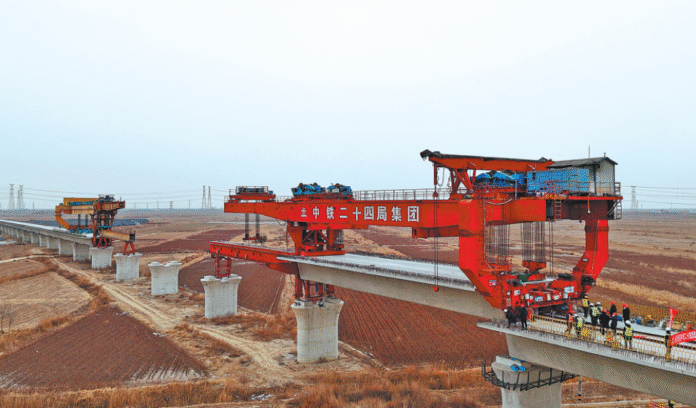
Experts also highlight the critical role of expanding effective investment in spurring domestic demand, such as upgrading and constructing infrastructure projects that are key to integrated development. A case in point is the 348.9-kilometer Tianjin-Weifang High-speed Railway, a key segment of China’s “eight vertical and eight horizontal” high-speed rail network’s coastal corridor and the Beijing-Shanghai auxiliary passage.

Innovation push

Beijing, in its latest government work report, has pledged to fully implement the “AI Plus” initiative and establish a national artificial intelligence application pilot base in 2026.

Its AI ambition is more clearly stated in its five-year plan, recently submitted to the municipal people’s congress meeting. According to the plan, the city will nurture a “world-leading AI industrial ecosystem,” develop a set of industry-leading large models, and improve the AI standards system and application guidelines.

The plan also sets the city’s spending on research and development at over 6 percent of GDP between 2026 and 2030.

Zhejiang, home to leading AI companies such as DeepSeek and Alibaba’s Qwen, has pledged to expand AI application scenarios. The province aims for more than 20 percent revenue growth in its core AI industry, projecting over 800 billion yuan ($115 billion) in 2026.

“Core technologies, including chips, operating systems, databases and base models, are now decisive for future competition,” said Fang Xingdong, a member of the Zhejiang provincial committee of the Chinese People’s Political Consultative Conference.

“Local governments need exceptional strategies in R&D investment. This is vital for current growth and long-term competitiveness in global sci-tech,” Fang added.

Industrial upgrade

Building a modern industrial system is another recurring theme in local government work reports, reflecting a continuous emphasis on the real economy and advanced manufacturing.

Guangdong plans to accelerate the upgrading of traditional sectors like electronics and machinery, aiming to build resilient industrial clusters with strong consumer brands in fields like home appliances and furniture.

Over the past five years, Guangdong has pioneered a holistic “chain-wide transformation” model for upgrading entire industrial and supply chains. It now hosts over 30 percent of China’s companies in the low-altitude industry chain.

Simultaneously, the province plans to scale up emerging industries such as new energy, smart vehicles and integrated circuits, while fostering future sectors including 6G, brain-computer interfaces and quantum technology.

Zhejiang aims to develop clusters in areas like new materials, new energy, aerospace, low-altitude economy and biomedicine. The province will also promote future industries like humanoid robots, brain-computer interfaces, brain-like intelligence, quantum information, and biomanufacturing with tailored “one-chain-one-policy” measures.

Xinhua – China Daily

Article inline ad

Stronger Monetary Policy Underlined For Growth

0

By Ouyang Shijia and Zhou Lanxu | China Daily | Updated: 2026-02-03

Though showing resilience and signs of recovery, China’s economy remains constrained by weak domestic demand and fragile internal growth drivers, prompting economists to call for a stronger, more decisive role for monetary policy alongside steady fiscal support, while accelerating a longer-term shift toward consumption-led and innovation-driven growth.

Zhang Bin, a non-resident senior research fellow at the China Finance 40 Forum and deputy director of the Institute of World Economics and Politics at the Chinese Academy of Social Sciences, said the current rebound lacks solid endogenous momentum.

“The real weakness lies in internal drivers,” Zhang said, pointing to subdued private-sector investment appetite and weak household willingness to spend, or buy homes.

Zhang said monetary policy today operates through broader and more powerful channels than in the past, influencing corporate and household balance sheets, asset prices and exchange rates. More importantly, monetary policy can change expectations — convincing firms that investment can be profitable and households that spending or home purchases make economic sense in a non-deflationary environment.

Given that the overall fiscal stance has largely been set following the Central Economic Work Conference and will be formally confirmed at the upcoming annual two sessions, Zhang said he expects further progress to likely come from additional monetary easing this year, rather than larger fiscal moves. Compared with the past, when large-scale public investment could quickly generate demand through urban expansion and infrastructure building, today’s fiscal spending is increasingly concentrated on urban renewal and adjustments to existing assets — processes that take time and deliver weaker short-term stimulus.

“These constraints mean countercyclical policy will need to rely more on monetary policy than fiscal policy,” he said, calling for clearer policy commitments, fewer and more focused objectives — such as prioritizing a return to moderate inflation — and fuller use of tools such as policy interest rates.

According to the CF40’s 2025 fourth quarter macro policy report, the key to sustained improvement in 2026 lies in expanding domestic demand. The report says that while China still has policy space, loosening monetary conditions should take precedence over further government borrowing and spending.

Unlike fiscal stimulus, which boosts demand through government-led expenditure and multiplier effects, the report notes that accommodative monetary policy works by improving expectations and optimizing the budget constraints faced by firms and households. By lowering financing costs and clarifying inflation objectives, monetary policy can mobilize market-driven, self-sustaining demand across microeconomic entities, making it more durable and efficient.

However, Guo Kai, executive president of the CF40 Institute, said fiscal policy is expected to remain supportive this year, while monetary policy can stay measured. In his view, rate cuts of 10 to 20 basis points, combined with adequate medium — and long-term liquidity through tools such as reserve requirement ratio cuts, should be sufficient to keep 2026 economic growth close to 5 percent.

Looking beyond the cyclical recovery, Huang Yiping, a member of the CF40 and dean of Peking University’s National School of Development, said the long-standing pattern of relatively strong supply and weak demand has become a binding constraint on China’s growth model.

Huang said China’s growth transition involves two fundamental shifts: from production factors-driven expansion to innovation-led growth, and from reliance on external markets to greater dependence on the domestic market. Structural factors, including an investment-heavy allocation of resources, prolonged labor surplus that has constrained wage growth, and relatively weak social security systems, have all weighed on consumption.

Addressing still-weak domestic demand, he said, policy should further clarify the boundary between government and market roles, regulate local government behavior and strengthen income and social security systems. Meanwhile, expanding the services sector will be critical, not only to unlock consumption potential but also to support employment.

Article inline ad

Investor Appetite Broadly Resilient, Survey Shows

0

By Li Jing | China Daily | Updated: 2026-02-03

Investor sentiment toward China’s capital markets remained broadly resilient toward the end of 2025, characterized by a clear divergence between rising optimism among retail investors and a shift toward prudence among financial professionals, according to a survey by the Cheung Kong Graduate School of Business.

The latest investor sentiment survey released on Wednesday found that 62.3 percent of respondents expected China’s A-share market to rise, largely unchanged from the previous quarter. However, beneath the headline figure, views diverged, reflecting different assessments of valuation, risk and market sustainability.

Retail investors became more upbeat, with 64.2 percent expecting gains, while confidence among financial-sector respondents adjusted to 59.8 percent, highlighting a more cautious stance among professional investors.

“The overall mood is stable, but the drivers of confidence are evolving,” said Liu Jing, professor of accounting and finance at CKGSB, who led the survey. “Retail investors tend to respond more to market momentum, while professionals are more keenly focused on valuation metrics and the sustainability of returns.”

The quarterly survey, conducted in December involving around 1,300 investors and 800 financial professionals, broadly mirrors market performance over the past year. After solid gains in the first three quarters of 2025, China’s stock markets entered a period of consolidation.

CKGSB’s analysis suggests that this caution is closely linked to valuation dynamics. The report estimates that overall A-share market valuation rose more than 20 percent in 2025, while corporate earnings growth remained broadly flat, indicating that the rally was driven largely by valuation expansion rather than a broad-based improvement in fundamentals.

“After a valuation-led rally, it is natural for professional investors to reassess return expectations,” Liu noted. “This reflects healthy prudence, rather than a loss of confidence.”

Beyond equities, the survey also highlighted rising interest in gold amid intensifying global uncertainty. CKGSB noted that gold prices surged in 2025, underscoring the appeal of safe-haven assets amid geopolitical tensions and policy uncertainty.

“When uncertainty rises, demand for gold can increase quickly, while supply remains relatively stable,” Liu said. “That imbalance can amplify price movements.”

Liu described the current gold rally as part of a longer-term structural cycle, shaped by a more complex and less predictable global environment.

The survey also highlighted that sentiment toward the property market remained uniformly cautious across respondent groups. Fewer than 40 percent of respondents expected housing prices to rise, a decline of 9.7 percentage points from September. Willingness to invest in real estate stayed weak, despite a modest improvement from the previous quarter.

Liu cautioned that the rising global uncertainty in 2026, ranging from shifting US trade policies to financial risks emerging in Japan, could further test investor confidence, underscoring the growing role of domestic demand in anchoring investor expectations.

The Central Economic Work Conference in December has identified expanding domestic demand as the top priority of China’s economic policy in 2026, with a focus on promoting a better match between supply and demand.

China is stepping up efforts to boost domestic demand by placing greater emphasis on raising people’s incomes, expanding consumption capacity and fostering stronger internal economic circulation.

Article inline ad

Foreign Experts Optimistic On A Shares

0

Fiscal support efforts to subsidize households, boost consumption

By Zhou Lanxu | China Daily | Updated: 2026-02-03

Despite the latest A-share pullback, foreign financial institutions remain upbeat on China’s equity markets, citing consumption-led rebalancing, shareholder return reforms and profitability improvements as key medium to long-term growth drivers.

Patrick Zweifel, chief economist at Pictet Asset Management, said that the Swiss asset manager maintains an overweight position in Chinese equities, emphasizing that the positive stance is driven not only by cyclical considerations but, more importantly, by structural policy shifts.

“So it’s not only related to the traditional business cycle,” Zweifel told China Daily, as the country’s economic growth in 2025 has been robust compared to its potential growth rate, while inflation has stayed low, keeping the macroeconomic backdrop broadly supportive for equities.

“There are policies that have been put in place that make us more optimistic about holding Chinese assets.”

Notably, the stepped-up fiscal support efforts to subsidize households and boost consumption, Zweifel said, are moving in the “right direction”, though remain limited in scale.

He said consumption spending has recovered close to pre-pandemic levels, suggesting that China’s consumption challenge is largely structural rather than cyclical, underscoring the importance of reforms aimed at increasing household incomes and improving social support mechanisms.

Zweifel also highlighted reforms encouraging listed companies to improve shareholder returns and dividend payouts, saying such measures bear similarities to shareholder-value enhancement programs introduced earlier in Japan and South Korea.

These changes, he said, help address the issue that, for years, Chinese shares delivered relatively modest returns despite solid economic and earnings growth, largely due to limited dividends and fewer buybacks that led to equity return dilutions.

After registering robust gains in January, the A-share market tumbled on Monday, with benchmark indexes falling more than 2 percent, dragged down by sharp losses in precious metals and energy sectors amid a global commodities rout and risk-off sentiment.

Despite the short-term volatility, Zweifel said Pictet continues to hold gold as a key diversifier amid the intensified geopolitical uncertainties that have weakened trust in the US dollar as a reliable reserve currency, though gold’s value is notably expensive relative to normal fundamentals.

“As long as there is no credible alternative, I think that a lot of the diversification (away from the dollar) will actually go to gold,” he said.

Goldman Sachs chief China equity strategist Kinger Lau said it is likely that China’s stock market will continue a “slow bull” run, with gains in 2026 shifting from valuation expansion to earnings-driven growth.

Driven by advances in artificial intelligence and Chinese companies’ overseas expansion — alongside policy support to curb excessive competition — A-share companies’ corporate earnings growth is projected to accelerate from about 4 percent in 2025 to around 14 percent in 2026 and 2027, he said.

The US bank estimates that more than 3 trillion yuan ($431.5 billion) in new domestic capital could enter China’s onshore market in 2026, including around 2 trillion yuan from individual investors and 1.6 trillion yuan from institutional funds.

Lau said overseas investors’ interest in China has picked up markedly, though some have yet to make large-scale allocations.

He added that global long-only investors are expected to narrow their underweight positions this year, potentially bringing about $10 billion in net inflows into Chinese equities this year.

In terms of allocation, Goldman Sachs remains bullish on AI-related themes, and upgraded hardware to overweight, favors services within the consumer sector and sees opportunities in materials among cyclical stocks.

Article inline ad

Closer Business Ties With Europe Expected

0

By Zhong Nan | China Daily | Updated: 2026-02-03

Recent visits to China by top European leaders indicate that the country’s rapid development and expanding innovation capabilities will serve as a key engine for deeper economic cooperation and new business opportunities between the two sides, said officials and executives.

While French President Emmanuel Macron led a business delegation during his state visit to China in early December, Finnish Prime Minister Petteri Orpo and British Prime Minister Keir Starmer witnessed the signing of a number of cooperation documents during their official visits in late January.

China and the United Kingdom signed a memorandum of understanding last week related to the “Big Market for All: Export to China” initiative, which according to China’s Ministry of Commerce made the UK the first country in the world to officially join the campaign.

UK Trade Commissioner for China Lewis Neal described China’s consumer market as highly promising, citing the growing sophistication of Chinese consumers and their clear demand for innovation, quality, and value for money.

This creates strong opportunities for British companies in areas such as consumer retail, health and wellness, and creative industries, Neal said.

Jussi Herlin, vice-chairman of the board of directors of Kone Corp, a Finnish elevator manufacturer, said the group will continue to increase its investments in China, further strengthening its presence in the Guangdong-Hong Kong-Macao Greater Bay Area.

After delivering one of China’s largest elevator modernization projects in Kunshan, Jiangsu province, and implementing the solution in 30 provincial-level markets last year, Kone will open its southern China headquarters in Shenzhen, Guangdong province, in March.

Roger Holm, executive vice-president at Wartsila Corp, a Finnish ship engine manufacturer operating four plants in China, noted that both the EU and China possess strong capabilities in clean technologies, digitalization and smart manufacturing.

“We look forward to enhanced cooperation that will accelerate green transition, foster deeper innovation and strengthen local partnerships,” he said.

At the same time, Chinese companies are accelerating their expansion into the European market by scaling up local investment and widening business presence.

Lei Jun, chairman and CEO of Chinese tech giant Xiaomi Corp, said that after generating 1 billion yuan ($144 million) in sales revenue in the UK last year, the company plans to step up investment in the country, open around 150 stores in four years, and gradually introduce a broad range of products.

Wu Zuyu, founder and president of Hithium Energy Storage Technology Co in Xiamen, Fujian province, said that based on the strong business prospects in the UK and other EU countries, the company will further deepen its presence in the European market.

As the UK advances its green transition, with long-duration energy storage playing a key role in building a secure, flexible and clean power system, Wu said his company’s efficient lithium-based long-duration energy storage solution could address the UK’s demand for storage exceeding eight hours.

Article inline ad

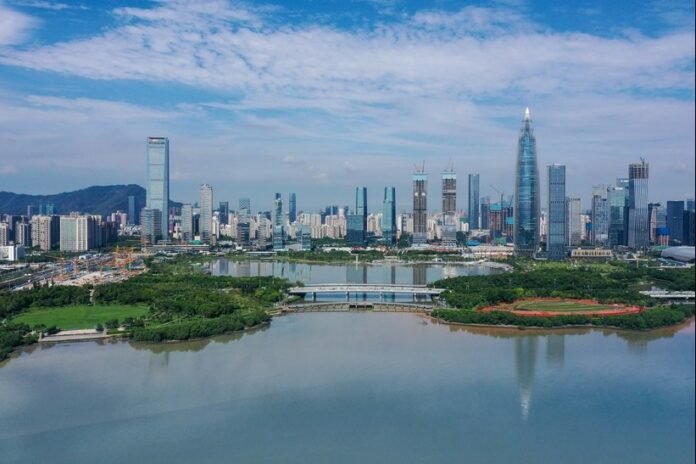
Shenzhen’s Nanshan Crosses 1 Trillion Yuan GDP Threshold

0

By Chen Hong in Shenzhen and Chen Meiling | China Daily | Updated: 2026-02-03

Nanshan district in Shenzhen, Guangdong province, is showing how technological innovation can lead to economic growth — even with limited resources — and turn it into a sustainable driver of development.

Li Xiaoning, head of Nanshan district, recently announced that the district had surpassed the 1 trillion yuan ($143.7 billion) GDP benchmark for the first time last year to reach more than 1.01 trillion yuan.

A handful of others have done the same. In 2018, the GDP of Shanghai’s Pudong New Area exceeded 1 trillion yuan. In 2022, Beijing’s Haidian district joined the club. Unlike Shenzhen, however, Beijing and Shanghai are both directly administered by the central government.

The most noteworthy aspect of Shenzhen’s achievement may not be the trillion-yuan figure itself but the speed at which the milestone was reached. It has been described by a scholar as “an elephant running as fast as a leopard”. It took 15 years for Nanshan’s GDP to reach 100 billion yuan in 2005 — up from 7.8 billion yuan in 1990. Then, it rose from 652.7 billion yuan in 2020 to last year’s 1 trillion yuan, said Li, the district head.

Nanshan’s economic growth rate in 2025 reached 6.3 percent, outperforming the national average of 5 percent, Guangdong’s average of 3.9 percent and Shenzhen’s average of 5.5 percent. Despite covering only a relatively small area of 185 square kilometers, or about one-tenth that of Shenzhen, Nanshan contributes roughly one-fourth of the city’s GDP, significantly bolstering its reputation as the “Silicon Valley of China”.

Nanshan, which is home to Chinese tech giants such as Tencent and ZTE Corp, as well as drone manufacturer DJI and humanoid robot maker UBTECH, has maintained a strong growth momentum since its establishment. Shenzhen, the booming city neighboring Hong Kong where Nanshan is located, is often considered a pioneer of reform and opening-up.

Guo Wanda, executive vice-president of the Shenzhen-based China Development Institute, said, “Nanshan owes its success to its strong scientific and technological innovation, as well as to the rapid development of emerging industries in the new economy.” Guo said that the district has attracted many excellent and large enterprises, as well as a number of talented people, due to its concentration of high-level innovation.

He added that the most economically developed areas worldwide have broken through their growth ceilings by enhancing their innovation capacity and upgrading their industrial structures — such as New York, London and Singapore.

With 218 listed companies, Nanshan rivals some provincial-level regions. The number of national high-tech enterprises exceeds 6,000. By 2025, the number of invention patents per 10,000 residents had risen to over 860, which is about 22.9 times the national average.

Sixty percent of Nanshan’s GDP comes from strategic emerging industries. Xiang Tianye, director of Nanshan’s industry and information technology bureau, said the district now has more than 20 companies that can produce complete robots, as well as more than 200 upstream and downstream enterprises.

At UBTECH, a newly developed hot-swappable autonomous battery system for humanoid robots prevents mission interruptions caused by downtime for charging, while also boosting overall production efficiency. As of the end of last year, orders for the company’s humanoid robots had reached nearly 1.4 billion yuan.

“We put forward our requirements in the morning, and the parts can be machined and ready for rapid verification as quickly as the same afternoon,” said Jiao Jichao, the company’s vice-president.

Article inline ad