Wednesday, November 25, 2026

Home Blog Page 80

Economy & Markets

0

https://www.citynewsservice.cn/china-biz-buzz/2026-02-02

China Factory Activity Contracts

China’s factory activity fell in January after ending a record-long contraction in December, according to National Bureau of Statistics figures released on Saturday. The official manufacturing purchasing managers’ index fell to 49.3 in January from 50.1 in December. The 50-mark divides expansion from contraction. The index for non-manufacturing activity fell 0.8 percentage point to 49.4. The figures coincide with the first month of China’s 15th Five-Year Plan (2026-30), under which the government has pledged to boost economic stimulus, including more incentives to address weak consumer demand. At the same time, Beijing has committed to continue industrial upgrading and to end oversupply in some sectors. China reported 5 percent growth for 2025.

New Home Prices Rise, Resale Prices Narrow Decline

Average prices of new homes across 100 Chinese cities rose in January and declines in the resale market declined, Reuters reported, citing China Index Academy, a mainland property research firm. The improvement in the slumping residential real estate market comes after government initiatives to try to stabilize the sector. New home prices rose 0.18 percent from December, slowing from a gain of 0.28 percent gain in December in larger cities that include Shanghai, Hangzhou and Chengdu. Prices in lowest-tier cities, however, continued to decline. In the existing home market, sales fell 0.85 percent in January, narrowing from a decline of 0.97 percent a month earlier. Home sales are likely to slow this month because of the nine-day Lunar New Year holiday that begins mid-month, then pick up in March, the research firm said.

Bitcoin Continues Downward Trajectory

Bitcoin, the world’s largest cryptocurrency by market value, was trading just above a nine-month low of US$77,000 this morning, continuing a steady decline that accelerated over the weekend, Reuters reported. Bearish sentiment was most recently stoked by fears that Kevin Warsh, President Donald Trump’s nominee to replace Federal Reserve Chairman Jerome Powell when his term expires in May, may tighten liquidity in the financial system. Cryptocurrencies are beneficiaries of a large Fed balance sheet that greases money markets. Bitcoin has lost about a third of its value since a record high last October. CoinDesk.com said the cryptocurrency probably has more room to drop.

 

Article inline ad

BYD Suffers Fifth Straight Month of Lower Sales

0

https://www.citynewsservice.cn/china-biz-buzz

BYD Suffers Fifth Straight Month of Lower Sales

BYD, which unseated Tesla last year as the world’s top seller of new energy vehicles, suffered its fifth straight month of sale declines in January, Reuters reported, citing a Sunday stock market filing. The automaker, which is ramping up efforts to expand overseas, said sales fell 30 percent from a year earlier, amid tough domestic competition and weak mainland consumer spending. BYD sold 210,051 vehicles globally last month. About half of those sales were plug-in hybrids, and about half were exports. Production in the month was down 29 percent, extending a decline that began last July. On the mainland, BYD last month launched upgraded versions of several plug-in hybrid models with long-range batteries. The company said in January that it is aiming for overseas shipments of 1.3 million vehicles this year. Its new electric car plant in Hungary is scheduled to begin operations this year. The company also has plants in Brazil and Thailand, with factories planned in Indonesia and Turkey.

Chipmaker Wingtech Projects Wider Loss for 2025

Shanghai-based chip company Wingtech, which has been in a running dispute with its Dutch subsidiary Nexperia, said it may post a 2025 loss of between 9 billion yuan (US$1.3 billion) and 13.5 billion yuan in 2025, exceeding its 2.8 billion yuan loss in 2024. Wingtech blamed the Dutch government’s takeover of chipmaker Nexperia for the expected poor earnings, the South China Morning Post reported. The September takeover was a knock-on effect from new US restrictions placing subsidiaries of Chinese companies on the same trade blacklist as their parents. Wingtech said in its preliminary earnings statement that its authority over Nexperia continues to be “temporarily restricted.” The battle between parent and subsidiary began over management disagreements and spread to wafer shipments from Nexperia to Wingtech, threatening the global supply chain in automaking. The takeover is the subject of a lawsuit pending in the Dutch judicial system.

China’s CSPC Signs AstraZeneca Deal Valued at Up to US$17.3 Billion

UK pharma giant AstraZeneca said it will license experimental weight-loss drugs from China’s CSPC Pharmaceutical and collaborate on other projects, paying a US$1.2 billion upfront fee and promising further payments of up US$17.3 billion if development and sales milestones are met. The newly licensed drug candidates include CSPC’s SYH2082, a “clinical-ready” product, and three other pre-clinical products in its injectable weight-management portfolio. It’s the largest deal to date for Hong Kong-listed CSPC, which is based in Hebei Province. AstraZeneca said investment in China’s pharmaceutical sector are key to supporting the company’s target of launching 20 new medicines by 2030.

China-Listed Chip Makers Signal Strong Earnings Growth

China’s listed semiconductor companies are poised to report strong profits for 2025 amid rising demand and prices for chips, and government initiatives to develop national self-sufficiency in chipmaking, the South China Morning Post reported. In preliminary earnings reports, graphics processing unit designer Cambricon Technologies said it expects net profit of up to 2.2 billion yuan, (US$316 million) — its first year of profit. Moore Threads forecasts a narrowing of its loss to 1 billion yuan on a 247 percent rise in revenue. MetaX is predicting its loss will narrow by half to up to 798 million yuan. Hangzhou-based Great Microwave Technology said it may show up to 145 million yuan in profit on heavy demand from customers in the specialized integrated circuits market, and Biwin Storage projected up to a 520 percent surged in profit to 1 billion yuan. China Micro Semicon forecasts a doubling of profit and GigaDevice Semiconductor said it expects earnings to grow 46 percent.


Article inline ad

Fully Automated Robot Joint Line Goes Live in Shanghai

0

by Leo Zhang

January 26, 2026

China’s humanoid robotics sector moved closer to industrial scale as Eyou Robot Technology unveiled what it says is the world’s first fully automated production line for robot joint modules in Shanghai’s Pudong New Area.

The launch marks a shift from lab-based assembly to mass production of a core humanoid robot component that has long constrained industry growth. Joint modules, which account for nearly half the cost of a humanoid robot, are central to motion accuracy, stability and durability.

Eyou said the new line integrates precision assembly, calibration and performance testing into a fully automated process, eliminating manual intervention. Initial annual capacity is 100,000 units, with expansion plans to reach 300,000.

The company supplies key components for China’s first mass-produced humanoid robots and has focused on integrated joint module development since its inception. Its products support multiple industrial protocols and open software tools, aiming to reduce system integration costs and speed commercial adoption.


Article inline ad

Three Chinese Firms Enter World Semiconductor Industry Top 20

0

By Ma Si | chinadaily.com.cn | Updated: 2026-02-02

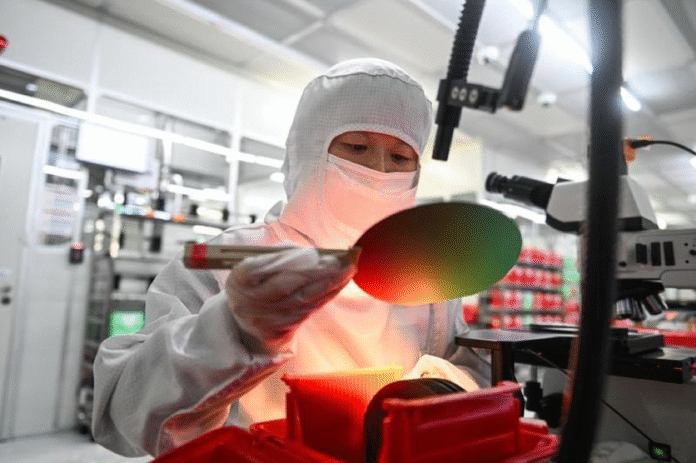
In a milestone for China’s semiconductor industry, three Chinese equipment manufacturers were ranked among the world’s top 20 by sales for the first time in 2025, according to data from Japanese research firm Global Net.

This marks a rise from just one company in the pre-US-government-restriction era of 2022, underscoring accelerated progress in bolstering the domestic supply chain.

The sales ranking reveals a big climb for State-backed Naura Technology Group, which jumped from eighth place in 2022 to fifth in 2025. It now trails only global giants ASML, Applied Materials, Lam Research and Tokyo Electron.

Founded in 2001, Naura produces a range of equipment including etchers and deposition tools. The Shenzhen-listed company has not disclosed its annual revenue for 2025 yet, and Shanghai-based financial services provider Suntime complied forecasts from multiple securities companies to estimate its revenue to stand between 46.8 to 52 billion yuan ($7.47 billion) for the past year.

New to the list at 13th place is Advanced Micro-Fabrication Equipment Inc China (AMEC). Established by engineers with work experience at Lam Research and Applied Materials, AMEC’s core etching equipment is reportedly used in the production lines of 5-nanometer chips, bringing its technology close to the cutting edge. The company operates in China and South Korea.

Shanghai Microelectronics Equipment Co Ltd, specializing in lithography machines that “print” circuit patterns onto silicon wafers, secured the 20th position. While acknowledging a generational gap with market leader ASML, the Shanghai-based company’s presence highlights domestic capability in this most critical and challenging segment.

Expanding the list to the top 30 would include two more Chinese firms: ACM Research and Hwatsing Technology.


Article inline ad

China’s Electricity Consumption Doubles That Of US

0

By Zheng Xin | chinadaily.com.cn | Updated: 2026-02-02

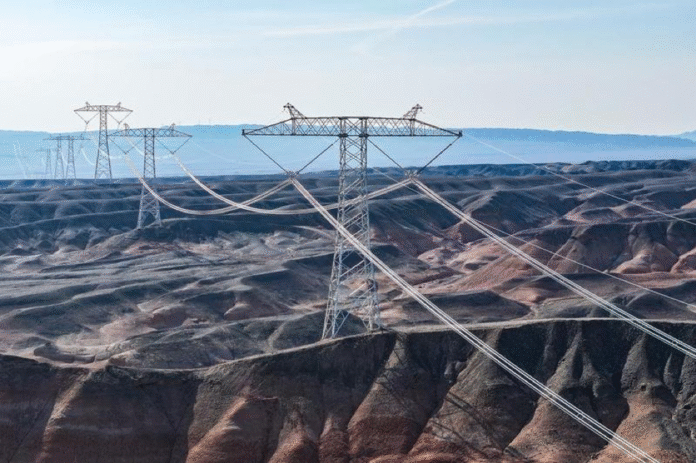
China’s electricity consumption surged to a record 10.37 trillion kilowatt-hours (kWh) in 2025, a staggering volume that is now more than double the total annual power usage of the United States.

According to a report released by the China Electricity Council (CEC) on Monday, the world’s second-largest economy solidified its position as the top global power consumer. China’s total consumption in 2025 now exceeds the combined power usage of the European Union, Russia, India, and Japan, it said.

China’s total social electricity consumption for the year 2025 rose 5.0 percent year-on-year, and the council expects this momentum to accelerate in 2026, forecasting a growth rate between 5 percent and 6 percent.

The surge of power consumption last year is largely attributed to the rapid expansion of high-tech and equipment manufacturing, which saw electricity demand grow by 6.4 percent, leading the broader manufacturing sector as industries undergo structural upgrades and digital transformations, it said.

Driven by the massive rollout of electric vehicles (EVs), charging piles, and 5G infrastructure, power demand in the information technology and software services sector jumped 17.0 percent year-on-year.

Notably, the electricity consumed by the EV charging and battery-swapping service industry skyrocketed by 48.8 percent in 2025.

Article inline ad

China’s Installed Solar Power Capacity To Exceed Coal For The First Time

0

By Zheng Xin | chinadaily.com.cn | Updated: 2026-02-02

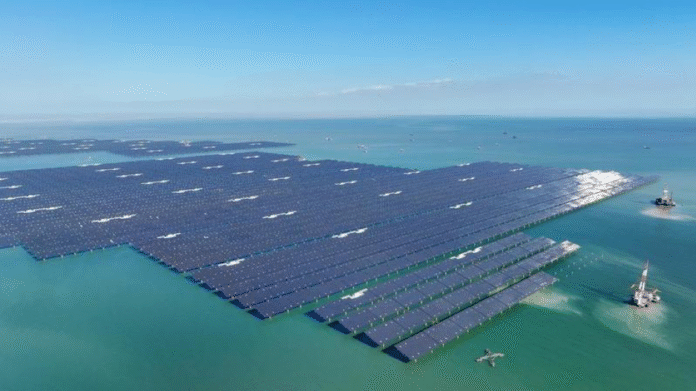
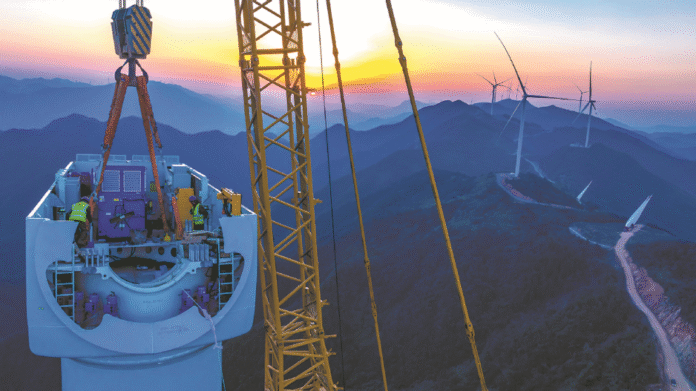
China’s installed solar power capacity is projected to surpass coal for the first time this year, solidifying its position as the world’s premier powerhouse in the renewable energy revolution.

According to the “2025-2026 National Power Supply and Demand Analysis and Forecast Report” released by the China Electricity Council on Monday, the combined capacity of wind and solar power is expected to account for half of the country’s total power generation capacity by the end of 2026.

Driven by Beijing’s “dual carbon” objectives, the council anticipates that China will add more than 400 million kilowatts (400 GW) of new generation capacity in 2026 alone.

Of this total, new energy sources—primarily wind and solar—are expected to contribute over 300 million kilowatts, it said.

By the end of 2026, China’s total installed power capacity is forecast to reach about 4.3 billion kilowatts. Non-fossil energy sources are expected to make up about 2.7 billion kilowatts of that total, representing roughly 63 percent of the nation’s entire power fleet.

In contrast, the share of coal-fired power is expected to continue its downward trajectory, falling to around 31 percent of the total capacity, the council said.

Article inline ad

Innocare Pharma Posts 134% Revenue Surge In 2025, Recording Annual Profit For First Time

0

By Li Jing | chinadaily.com.cn | Updated: 2026-02-02

InnoCare Pharma Ltd recently said that, driven by robust sales of its flagship anti-cancer drug and income from overseas licensing agreements, it expects to more than double its revenue in 2025 and achieve its first annual profit. This would mark the company’s first full-year return to profitability since its founding.

The company forecast revenue of about 2.37 billion yuan ($330 million) for the year ended Dec 31, up around 134 percent from a year earlier, according to a preliminary earnings statement on Thursday. It expects net profit attributable to shareholders to be roughly 630 million yuan.

InnoCare, founded in 2015 and dual-listed in Shanghai and Hong Kong stock markets, said the turnaround was driven by rising sales of commercialized drugs and proceeds from global business development agreements.

Sales growth was led by orelabrutinib, the company’s core product, as demand rose for its approved indications, including marginal zone lymphoma. Revenue was further boosted after the drug gained approval for first-line treatment of chronic lymphocytic leukaemia and small lymphocytic lymphoma.

Another contributor was tafasitamab, which became China’s first approved CD19 monoclonal antibody for relapsed or refractory diffuse large B-cell lymphoma, according to the company.

The company said 2025 marked solid progress in its so-called 2.0 strategy, with multiple regulatory and clinical milestones across its pipelines. Orelabrutinib was added to China’s national drug reimbursement list for all four of its approved indications and was included as a category I recommendation in the 2025 CSCO lymphoma treatment guidelines. It was also approved in Singapore for relapsed or refractory marginal zone lymphoma.

InnoCare said its next-generation TRK inhibitor zurletrectinib won approval in China for patients with NTRK gene fusion-positive solid tumors, while its BCL-2 inhibitor mesutoclax advanced in late-stage clinical trials and received breakthrough therapy designation, the first granted to a BCL-2 inhibitor in China.

In addition, InnoCare received upfront and near-term payments in 2025 from licensing deals with Prolium Bioscience and Zenas BioPharma, including a $100 million upfront payment linked to the out-licensing of orelabrutinib and two preclinical assets.

Separately, the company reported progress across its TYK2 inhibitor program on Monday, including late-stage trials for atopic dermatitis and psoriasis, and said its antibody-drug conjugate platform reached a milestone with its first candidate entering clinical development.

Article inline ad

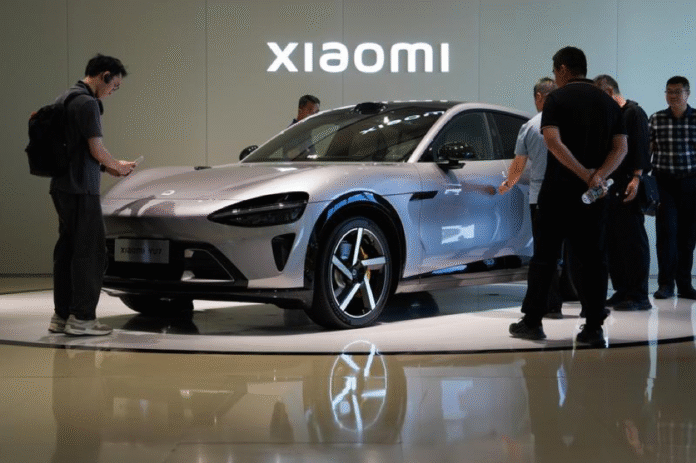
Xiaomi Denies Ford JV Report While Promising UK Investment

0

By Ma Si and Zhong Nan | chinadaily.com.cn | Updated: 2026-02-02

A recent media report alleging early-stage partnership discussions between US automaker Ford Motor Company and Chinese tech company Xiaomi has been denied by the latter.

Meanwhile, Xiaomi’s CEO and chairman Lei Jun has outlined ambitious investment plans for the United Kingdom in an exclusive interview with China Daily, signaling a strategic focus on European market growth.

According to a report by the Financial Times, people familiar with the matter said that Ford had held exploratory talks with Xiaomi regarding a potential collaboration. Such a partnership, the report suggested, could involve forming a joint venture to produce electric vehicles in the United States.

However, Xiaomi has explicitly refuted these claims. In a statement released on Monday, a Xiaomi spokesperson said, “Reports that Xiaomi is discussing a joint venture with Ford Motor Company are false.

“Xiaomi does not sell its products and services in the United States and is not negotiating to do so.”

This clarification comes as Xiaomi charts a clear course for expansion elsewhere.

In his interview with China Daily on Thursday, Lei Jun detailed the company’s plans for the UK market. Having operated there for several years and generating approximately 1 billion yuan ($143.9 million) in revenue last year, Xiaomi intends to accelerate its investment.

Lei said the company plans to open around 150 stores across the UK within the next four years. This retail expansion will support the gradual introduction of Xiaomi’s full ecosystem of products, ranging from its core smartphones and wearables to home appliances and its recently launched electric vehicles.

Article inline ad

Tencent Unveils AI-Powered Social Feature Amid Intense Competition

0

By Cheng Yu | chinadaily.com.cn | Updated: 2026-02-02

Tencent Holdings Ltd’s chairman Pony Ma said on Monday that the company has launched a new artificial intelligence-driven social feature called “Yuanbao Pai” on its Yuanbao app, as China’s tech giants step up competition in generative AI.

The announcement came a day after Tencent said it would kick off a Lunar New Year campaign on Monday, distributing cash red envelopes totaling 1 billion yuan (about $138 million) to Yuanbao users, as part of broader efforts to increase activity on its digital platform.

Ma explained that the new feature allows users to create or join “pai” — groups where AI not only participates as a member to boost interaction with users but also serves as a shared social space for activities such as watching films or listening to music together. The functionality is designed to deepen social engagement with AI and expand the role of chatbots beyond simple conversations.

The move comes as competition between China’s largest tech companies intensifies in the AI race. On Monday, Baidu Inc announced a similar initiative, offering users of its flagship app a share of 500 million yuan in rewards if they use its AI assistant from Jan 26 through March 12. The incentive mirrors broader industry tactics to drive rapid adoption of large-language model tools.

Alibaba Group Holding also revealed it has fully integrated its Qianwen app into the wider Alibaba ecosystem, positioning the product to evolve from a chat tool into an “intelligent agent” to help users with a complete range of online tasks—from shopping to digital services—using natural language.

Article inline ad

China’s Investment In Key Energy Projects Up Nearly 11 Percent Year-On-Year In 2025

0

By Zheng Xin | chinadaily.com.cn | Updated: 2026-01-30

China’s investment in key energy projects reached a historic milestone in 2025, surpassing 3.5 trillion yuan ($485 billion) for the first time as the nation accelerates its transition toward a greener power grid, the National Energy Administration (NEA) said on Friday.

The record-breaking figure represents a year-on-year increase of almost 11 percent, significantly outperforming growth rates in the broader infrastructure and manufacturing sectors by 12.9 and 10.1 percentage points, respectively, it said.

Private enterprises have emerged as a primary engine for this investment surge. Investment by private firms in key energy projects grew by 12.9 percent year-on-year, according to Xing Yiteng, deputy director-general of the department of development and planning of the National Energy Administration.

This growth rate is approximately 2 percentage points higher than the national average for all key energy projects, signaling increased private sector confidence in China’s long-term energy strategy.

The NEA also outlined aggressive infrastructure goals through 2027 to support the country’s carbon neutrality ambitions, including plan to install 28 million charging units by the end of 2027, which is expected to mobilize more than 200 billion yuan in new investment.

The agency is also targeting a total capacity of over 180 million kilowatts (180 GW) for new energy storage by 2027. This expansion, coupled with power system optimization, is projected to drive approximately 250 billion yuan in related investment, it said.

zhengxin@chinadaily.com.cn


Article inline ad