Wednesday, November 25, 2026

Home Blog Page 81

Chinese AI Chips Gain Huge Traction In Market

0

By MA SI | chinadaily.com.cn | Updated: 2026-01-30

In the wake of the United States’ export controls on advanced chips, China’s push for self-sufficiency in artificial intelligence processors is gaining remarkable momentum, with at least nine domestic chip companies having surpassed a significant threshold of 10,000 units in terms of order shipments, according to experts and executives.

This 10,000-chip club signals that domestic AI chips are gaining tangible market traction based on their performance, stability and cost. It heralds a shift from mere scale competition to a more comprehensive battle encompassing software ecosystems, commercial services and sustained reliability, experts said.

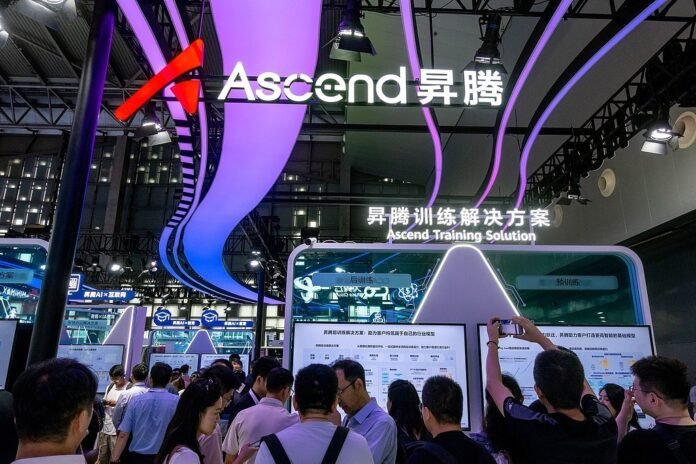
The cohort includes the in-house chip divisions of tech heavyweights such as Huawei’s Ascend, Baidu’s Kunlun and Alibaba’s T-head, alongside listed or soon-to-be-listed AI chip specialists such as Cambricon, Moore Threads, Enflame and Iluvatar CoreX. Even some startups, including Sunrise and Tsingmicro, have crossed this volume threshold.

Companies with the largest scale of shipments, such as Huawei, Baidu and Alibaba, have reached several hundred thousand.

Sources close to Alibaba told China Daily that “several hundred thousand” units of T-head’s Zhenwu PPU chips have been cumulatively shipped. These have powered multiple clusters of 10,000 AI chips within Alibaba Cloud, serving more than 400 clients, including the State Grid Corp of China, the Chinese Academy of Sciences, XPeng Motors and Sina Weibo.

He Hui, semiconductor research director at the United Kingdom-based tech research firm Omdia, said, “Alibaba’s T-head is at the forefront in terms of AI chip shipments, benefiting from its early start and massive internal demand.”

According to US market research company International Data Corp, in the first half of 2025, the size of China’s server market powered by AI chips reached $16 billion, with over 1.9 million units shipped. US chipmaker Nvidia held about 62 percent of the market share, while Chinese chips captured approximately 35 percent.

IDC ranked Huawei’s Ascend series first in market share among domestic chips in the first half of 2025. Backed by its parent company’s vast ecosystem, Ascend enjoys stable demand. Ascend chips are used in large-scale clusters by telecom operators and tech firms.

The comments came amid China’s compliance and security concerns over Nvidia’s AI chips. Although some media organizations, including Reuters, reported on Friday that China’s regulators have approved several Chinese companies, such as DeepSeek and ByteDance, to buy Nvidia’s H200 chips, the decision has not yet been officially announced.

He, from Omdia, said that Chinese internet companies are adopting a two-way approach. On the one hand, they are making efforts to buy Nvidia’s advanced chips within regulatory frameworks. On the other hand, they are supporting the development of domestic AI processors as much as possible.

“Nvidia’s H200 chips are believed to accelerate the development of China’s AI large language models, but we don’t know whether the US will restrict exports in the future,” He said, adding that it makes sense to have other alternatives.

Industry insiders said they view the emergence of multiple 10,000-chip vendors as a critical transition. Roger Sheng, vice-president of research at US market research company Gartner, said it marks the entry into a “large-scale verification” phase for this round of industrial trial and error, as Chinese AI chip companies make progress.

Xiang Ligang, director-general of the Zhongguancun Modern Information Consumer Application Industry Technology Alliance, said, “Geopolitical uncertainty is driving users toward Chinese chips, and developers are now shifting their focus to compatibility layers for domestic alternatives, eroding Nvidia’s ecosystem advantage.”

Article inline ad

Energy Sector Tops Milestones In 2025

0

By Zheng Xin | China Daily | Updated: 2026-01-31

China’s energy sector reached a historic milestone in 2025, characterized by record-breaking oil and gas production, and a green energy output that now exceeds the total electricity consumption of the European Union, State energy officials said on Friday.

The year 2025 marked the most successful period for energy security and supply since the start of the 14th Five-Year Plan (2021-25), according to Xing Yiteng, deputy director-general of the department of development and planning of the National Energy Administration.

Domestic crude oil and natural gas production hit all-time highs, growing 1.5 percent and 6.2 percent, respectively, while coal production remained stable with a 1.2 percent year-on-year increase, he said during a news conference held in Beijing on Friday.

According to Xing, the pace of China’s low-carbon transition accelerated sharply, with cumulative renewable capacity currently surpassing 1.8 billion kilowatts. Consequently, renewable generation reached approximately 4 trillion kilowatt-hours (kWh) — surpassing the total electricity demand of the 27 EU member states, which stands at roughly 3.8 trillion kWh.

“The complementarity of the power system has been continuously enhanced by the commissioning of several ultra-high voltage DC transmission projects,” Xing said.

The energy storage sector also saw explosive growth as Beijing seeks to stabilize its increasingly volatile grid. Bian Guangqi, deputy director-general of the NEA’s science and technology department, said that new energy storage capacity surged 84 percent compared to the end of 2024.

By the end of 2025, China’s operational energy storage capacity had reached 136 million kW (351 million kWh), a more than 40-fold increase since 2020, he said.

While North China remains the hub, accounting for 32.5 percent of installations, lithium-ion batteries remain dominant at 96.1 percent, though compressed air and liquid flow batteries are beginning to gain a footprint.

Large-scale projects (100MW and above) now represent 72 percent of total capacity, he said.

China’s power market also hit new levels of liberalization, with 6.64 trillion kWh traded in 2025, a 7.4 percent increase. Market-based transactions now account for 64 percent of total social electricity consumption, meaning two out of every three kilowatt-hours in China are now traded through market mechanisms.

The surge was driven by the near-total coverage of provincial spot markets and the full participation of renewable energy sources in the trading system. The most significant growth, however, was seen in green power trading, which skyrocketed 38.3 percent year-on-year to 328.5 billion kWh.

Long-term Power Purchase Agreements reached 60 billion kWh, while new cross-regional mechanisms allowed industrial hubs to directly source green energy from resource-rich regions for the first time.

According to the administration, China’s energy investment also surged in 2025, with total capital expenditure on key projects exceeding 3.5 trillion yuan ($503.6 billion) for the first time.

This represents a year-on-year increase of nearly 11 percent, a growth rate that significantly outpaced other major economic sectors, surpassing infrastructure and manufacturing investment growth by 12.9 and 10.1 percentage points, respectively, said Xing.

Within the renewable energy landscape, onshore wind emerged as a standout performer, with investment in key projects skyrocketing by nearly 50 percent year-on-year, he said.

Lin Boqiang, director of the China Center for Energy Economics Research at Xiamen University, said this rapid expansion underscores the sector’s central role in China’s broader energy transition.

The massive influx of capital into wind infrastructure is effectively bridging the gap between national climate goals and the urgent need for scalable, domestic energy security, he said.

Private enterprises also demonstrated significant momentum, with their investment in key energy projects growing by 12.9 percent, outperforming the national average by approximately 2 percentage points, said Xing.


Article inline ad

Lanzhou New Area Forging High-Tech Future

0

By HU YUMENG and MA JINGNA in Lanzhou | China Daily | Updated: 2026-01-31

Once defined by harsh natural conditions, strong winds, and vast undeveloped land, Lanzhou New Area in Northwest China’s Gansu province has, over the past decade, transformed itself into a hub for future-oriented industries driven by technological innovation, smart manufacturing, and digital trade.

Founded on Aug 20, 2012, Lanzhou New Area, covering 1,165 square kilometers, became China’s fifth national-level new area and the first in the northwestern region. Since its establishment, it has adhered to a development strategy centered on technological innovation, leveraging its resource advantages and policy support to drive economic growth.

Since the 14th Five-Year Plan (2021-25) period, Lanzhou New Area has sustained double-digit growth in key economic indicators, with its growth rate leading that of Gansu province and ranking among the top national-level new areas, according to data from the New Area’s economic development and statistics bureau.

Experts said that the economic achievements of Lanzhou New Area represent a microcosm of high-quality development in Northwest China, laying the foundation for the region’s high-tech future.

For instance, at the forefront of its high-end medical equipment sector is a domestically developed medical heavy-ion accelerator, created by Lanzhou Ion Therapy Co Ltd (LANITH). The device enables precise tumor treatment using heavyion therapy, offering fresh hope for patients with deep-seated and hard-to-treat cancers.

“We generate carbon and hydrogen ion beams and accelerate them to nearly 70 percent of the speed of light before delivering them to treatment terminals,” said Wei Tianhao, a physical design engineer at LANITH. “This allows us to precisely control the energy, concentrating it on tumor lesions while minimizing damage to healthy tissue.”

China is now one of the four countries capable of producing such advanced medical accelerators, alongside the United States, Germany, and Japan. The LANITH carbonion therapy system has achieved major breakthroughs in deep tumor treatment, advancing domestic high-end medical equipment production and supporting the national “Healthy China” strategy.

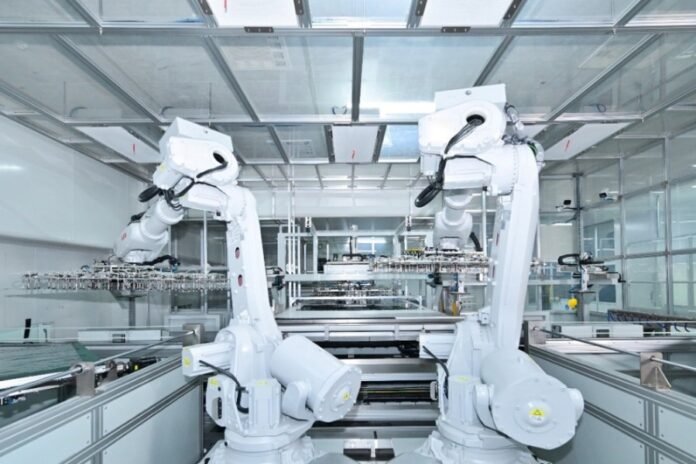
Meanwhile, traditional manufacturing in Lanzhou New Area is undergoing rapid smart transformation. At LS Group, automated production lines issue welding instructions, monitor operations in real time, and optimize production scheduling.

“Our intelligent system has raised one-time welding qualification rates to 100 percent, reduced labor input by more than half, and increased production capacity by around 15 percent,” said Xu Wenkui, deputy manager of the heavy equipment and petrochemical branch of LS Group. “It marks a milestone in digital upgrading and intelligent transformation for manufacturing enterprises.”

Bai Wenxi, vice-chairman of the China Enterprise Capital Union, said the development of Lanzhou New Area offers a dynamic example of how innovation and industrial upgrading can drive development of the country’s western regions.

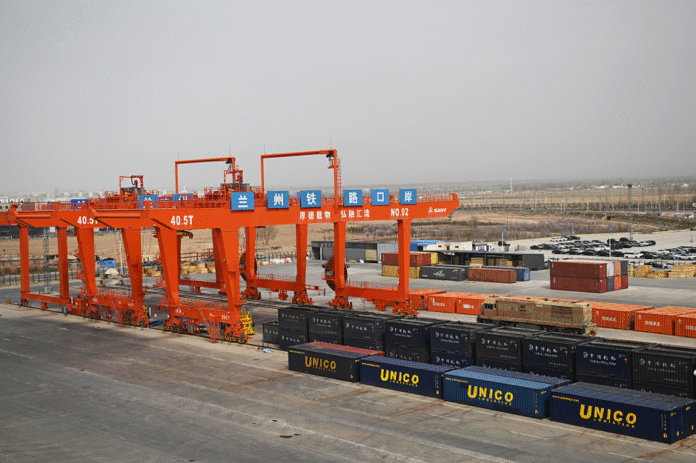
Lanzhou New Area is also positioning itself as a gateway to the west. As one of China’s highest-level special customs supervision zones with streamlined procedures and comprehensive functions, the Lanzhou New Area Comprehensive Bonded Zone is expanding international trade channels and strengthening connections with partner markets that are part of the Belt and Road Initiative.

“We are exporting high-end equipment, new energy, and new materials to regions including the Middle East, Southeast Asia, and Central Asia,” said Lyu Jiabiao, deputy director of the management committee of the comprehensive bonded zone. “By integrating logistics, trade, and industrial development, the zone has become a key engine of the area’s open economy.”

Zhang Chenxu in Beijing contributed to this story.


Article inline ad

Manufacturing Resilient Despite Lower PMI Figure

0

By OUYANG SHIJIA | chinadaily.com.cn | Updated: 2026-02-01

China’s manufacturing sector displayed resilience in January, with production and high-tech industries remaining in expansion mode, even as overall factory activity slipped back into contraction zone amid seasonal factors, official data showed.

Analysts said the figures indicated a stabilizing economy and renewed industrial momentum. Supply-side momentum was holding firm and innovation-driven segments were continuing to act as key stabilizers, even as policymakers stepped up efforts to secure a solid growth footing for 2026.

Looking ahead, analysts expect near-term factory activity to face further volatility around the Spring Festival holiday due to fewer working days. However, they also see policy support and industrial upgrading being key anchors for growth this year.

With structural fiscal and monetary measures already being deployed and further easing — including interest rate and reserve requirement ratio cuts — possible, policymakers have ample room to navigate weak domestic demand, structural transition and external uncertainty in 2026, they added.

The official purchasing managers’ index for the manufacturing sector fell to 49.3 in January, down from 50.1 in December, indicating a mild contraction as it slipped below the 50-point mark that separates expansion from contraction, data from the National Bureau of Statistics showed on Saturday.

Despite the overall contraction, key segments of the manufacturing sector continued to show resilience. The PMI for high-tech manufacturing came in at 52 in January, remaining at or above 52 for two consecutive months. The PMI for equipment manufacturing stood at 50.1, signaling expansion.

Wang Qing, chief macroeconomic analyst at Golden Credit Rating International, said the slip in manufacturing PMI figures was mainly due to seasonal factors, base effects and insufficient domestic demand.

Wang added that high-tech sectors as well as manufacturing output showed resilience, supported by robust exports in January linked to strong demand for products like chips.

NBS data showed that the subindex for production came in at 50.6 in January, while the subindex for new orders stood at 49.2.

Notably, the subindex tracking manufacturers’ expectations for production and business operations reached 52.6 in January, remaining above the threshold and pointing to relatively strong confidence among manufacturers.

Wang said that going forward, manufacturing sentiment will mainly be influenced by changes in export growth, trends in the property market, and the timing and intensity of growth-supporting policies.

“We believe that after the rollout of the structural policy package earlier this year, China will likely cut RRR and lower interest rates in the second quarter, while fiscal policy will step up efforts to boost consumption and investment,” he said, adding that the pace of rolling out growth-stabilizing policies this year may be accelerated.

Xiong Yuan, chief economist at Guosheng Securities, said that as 2026 marks the opening year of China’s 15th Five-Year Plan (2026-30) period, securing a strong start will be among key priorities of policymakers. “Fiscal policy is likely to be front-loaded, with the first group of trade-in subsidies already allocated,” he said.

According to Xiong, other measures may include faster fiscal spending, continued subsidies for consumer loans, and accelerated issuance of local government special bonds. “The central bank may also lower interest rates and cut RRR in the first quarter, while major projects could be brought forward to start construction earlier,” he added.

Foreign companies are also betting on the resilience of the world’s second-largest economy.

Brian McNamara, CEO of British consumer health company Haleon, said: “China is central to our ambition to reach 1 billion more consumers by 2030. An aging population, a rising middle-income group and greater focus on wellness are fueling demand.

“We’re backing that with significant investment, including our 700 million pound ($960 million) acquisition of the Tianjin TSKF Pharmaceutical joint venture and reinvestment in our Suzhou manufacturing plant to better serve consumers in this dynamic market,” McNamara added.

ouyangshijia@chinadaily.com.cn


Article inline ad

Cinema Fuels China’s Consumption Boom

0

China Daily | Updated: 2026-02-02

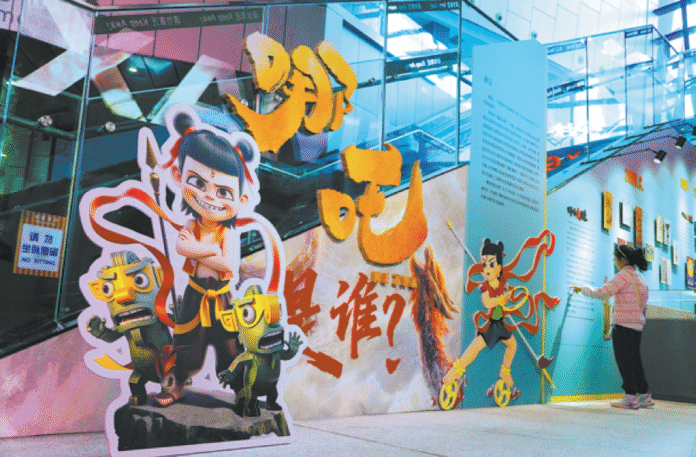
BEIJING — Earlier this year, Xin Minghua, a devoted fan of the Ne Zha animated films, journeyed all the way from East China’s Shanghai to the country’s southwestern Sichuan province, just to visit Nezha Palace, a site dedicated to the legendary mythological figure.

“We heard there was a Nezha Palace here and thought it was interesting, so we came to see it for ourselves,” Xin said.

Visitor numbers at the Cuiping Hill scenic area in Yibin, Sichuan province, where the palace was built in 1991, have surged since these movies became major hits, with attendance in 2025 tripling that of 2024 and a daily attendance peaking at 8,000, according to site operators.

The success of Chinese films is flowing beyond the big screen, driving a new wave of consumption across the country. From film-themed travel and spin-off merchandise to cinema equipment, box-office hits are opening up fresh avenues for economic growth.

Data from the China Film Administration show that the country’s film industry generated a total output of 817.26 billion yuan ($117.46 billion) in 2025, placing it among the largest in the world. Each yuan earned at the box office is estimated to create 15.77 yuan of output in related industries, a figure also among the global leaders.

Experts say this impressive performance reflects not only the growing strength of China’s film sector, but also a broader shift from a box-office-driven model to a more diverse consumption economy.

That transition, notably, is being reinforced by policy support. In 2025, the CFA rolled out a series of “film-plus” initiatives nationwide.

“The film industry is taking practical steps to deepen integration with tourism, dining, technology, gaming and merchandise sectors,” said Luo Yang, deputy head of the CFA.

Nobody, an animated film inspired by the classic Chinese tale, Journey to the West, has emerged as a standout example of this transformation.

This film has seen the launch of more than 800 licensed products, generating nearly 2.5 billion yuan in retail sales. It has also secured IP licensing and co-branding deals with over 30 companies. One collaboration with a coffee chain proved especially successful, with sales of the themed drinks surpassing 5 million cups within just three days of launch.

The Legend of Hei 2, another animated blockbuster, has drawn large crowds to pop-up stores, thus boosting offline spending. Industry data reveal that for every yuan spent on a ticket, nearly five yuan is generated in related merchandise.

Beyond merchandise, films are sparking a tourism boom, with one movie after another turning entire cities into must-visit destinations.

In Creation of the Gods II: Demon Force, elements of Yin-Shang culture, the ancient culture centered in Central China’s Anyang, have become a magnet for visitors, boosting the city’s cultural tourism.

Xu Hejian, deputy curator of Anyang’s Yinxu Museum, said the museum has seen consistently high visitor numbers since the film premiered, with many visitors eager to track down the artifacts showcased on screen.

An official from the Anyang municipal government said the city plans to host a series of cultural and tourism activities over the Spring Festival holiday, with a total of 235 events scheduled.

China’s flourishing film industry is also driving growth in cinema technology and the expansion of movie theaters.

In 2025, orders for LED cinema screens in China jumped by roughly 50 percent compared with the previous year, cementing the country’s position as home to the world’s largest number of LED-equipped theaters. Nationwide, a total of 1,065 cinemas were newly built last year.

“The film industry is building new forms of cultural business and a more diverse consumption ecosystem, reflecting the vast growth potential of China’s cultural economy and creating new drivers of economic growth,” said Zhu Di, a researcher at the Chinese Academy of Social Sciences.

Xinhua

Article inline ad

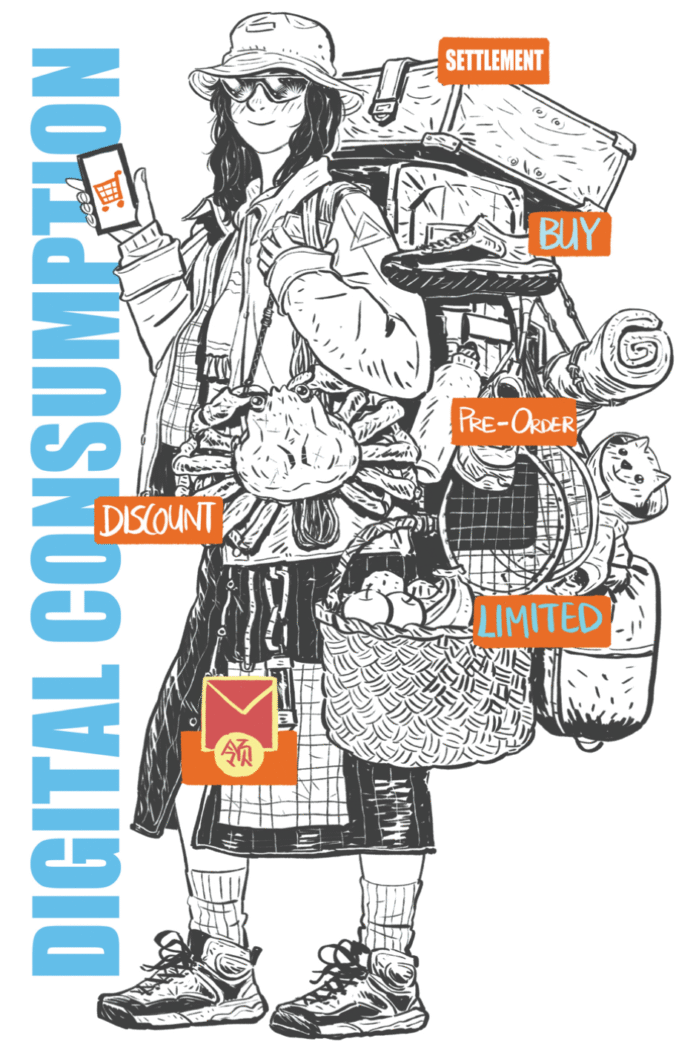
Digital Consumption A Dynamic Growth Opportunity

0

By Shen Jianguang | China Daily | Updated: 2026-02-02

During the 15th Five-Year Plan (2026-30) period, China should make coordinated efforts in policy support, technological empowerment, institutional innovation, scenario expansion, and platform globalization to build a more efficient, inclusive and sustainable digital consumption ecosystem, providing stronger momentum for expanding domestic demand and promoting a more efficient circulation between supply and demand.

To start with, the economic development model is shifting from expanding user scale to extracting user value. Digital consumption has already become a mainstream channel in terms of users and market size.

The scale and breadth of digital consumption users in China have reached a remarkable level. According to data from US e-commerce platform SellersCommerce, China’s e-commerce retail sales accounted for as much as 47 percent of total retail sales of consumer goods in 2024, far exceeding developed countries such as the United States with 15.8 percent, as well as developing countries like Indonesia with 31.9 percent.

Data released by the China Internet Network Information Center show that in the first half of 2025, China’s total digital consumption reached 9.37 trillion yuan ($1.4 trillion), with digital consumers exceeding 958 million, accounting for 85.3 percent of internet users.

This means online and digital consumption have become China’s dominant consumption channels, while the era of rapid user growth driven by “traffic dividends” is nearing its end.

First, the deepening of livestream e-commerce has expanded digital consumption beyond standardized goods. In recent years, livestreaming has expanded from categories such as apparel and cosmetics to high-value, high-involvement products such as real estate, automobiles and luxury goods.

For example, some top livestream hosts have partnered with car dealers and property developers to promote high-value purchases such as new vehicles and home subscriptions through livestream sessions.

Second, the rise of content-driven e-commerce has brought a major transformation in digital consumption business models.

In recent years, major content platforms have become entry points for new consumption decisions, shifting consumer behavior from an active “search-and-buy” model to a triggered “discovery-and-purchase” model.

This trend indicates that digital consumption is increasingly centered on shared consumption experiences, which has also driven rapid growth in platform-operated e-commerce and closed-loop transaction volumes.

From a global perspective, China holds a clear lead in digital consumption. However, gaps remain compared with China in infrastructure such as payments and logistics, as well as in deep consumer spending power.

Third, development channels are shifting from online sales to full online-offline integration. Instant retail is driving deep integration between online retail and brick-and-mortar commerce.

It differs from traditional e-commerce by fully digitizing inventory from physical stores and combining platform-based intelligent matching with extensive rider delivery networks to achieve the ultimate experience of “ordering online and receiving delivery within 30 minutes”.

Large supermarket chains, convenience stores and brand specialty shops have joined instant retail platforms, digitalizing their inventory and expanding sales across all channels, thereby gaining new growth and making instant retail a key pathway for the digital upgrade of offline commerce.

Behind this is the deep integration and efficiency revolution of digital platforms within local urban commercial ecosystems, redefining the economic value of digital consumption.

In addition, “AI Plus” is developing rapidly in China.

According to Stanford University’s AI Index Report 2025, the performance gap between leading Chinese and US AI models on representative benchmark tests has narrowed significantly, shrinking from 17.5 percent in 2023 to just 0.3 percent in 2024.

In foundational areas such as high-end AI chips, core AI frameworks, and breakthroughs in original algorithms, the US still maintains a clear advantage.

China’s strengths, however, lie in its vast application scenarios, fast data iteration cycles, and strong commercialization drive. In recent years, the “AI Plus” initiative has accelerated the deployment of large models across industries, unleashing enormous vitality in AI application exploration.

AI is reshaping the entire value chain of traditional consumption. Generative AI has spearheaded a new wave of technological revolution, and AI-driven innovation in the consumer sector is showing rare dynamism.

“AI Plus” consumption continues to create new hotspots, with a growing variety of AI-enabled terminals such as AI smartphones, AI computers, and AI glasses entering the market.

According to data from the China Internet Network Information Center, 45 percent of online shoppers purchased smart products in the first half of 2025, making them a new growth driver for consumption.

In service process automation, intelligent customer service systems can handle the vast majority of standardized inquiries, and AI is increasingly used in after-sales dispute resolution and logistics anomaly warnings, significantly improving service efficiency and user experience.

Fourth, the development focus is shifting from urban services to integrated urban–rural services. County-level and rural areas have become incremental pillars of China’s digital consumption growth.

In recent years, the demographic dividend of internet users in first — and second-tier cities has gradually peaked, while vast county, township, and rural markets have formed the deepest “strategic hinterland” for digital consumption.

Data from the China Internet Network Information Center show that as of June 2025, China’s rural internet user population had reached 322 million, accounting for 28.7 percent of total internet users. Internet penetration in rural areas had reached 69.2 percent, up 1.9 percentage points from December 2024.

Meanwhile, express delivery services extending into rural areas are activating the rural digital consumer market. In the first quarter of 2025, parcels sent to rural regions accounted for 30 percent of total national express delivery volume, making rural areas a new source of online consumption growth.

In developed Western economies, urban–rural disparities are relatively small, infrastructure and commercial services are evenly distributed, and there is no “sinking market” comparable in scale, consumption potential, and digital gap.

India and Southeast Asia share somewhat similar urban–rural structures, but their overall consumption capacity and infrastructure in logistics and payments are not yet sufficient to support such a complex and dynamic segmented market ecosystem.

Therefore, the development of digital consumption in China’s sinking market represents a uniquely Chinese business and policy practice.

Looking ahead, high-quality development of digital consumption will require coordinated efforts in policy support, technological empowerment, institutional innovation, scenario expansion, and platform globalization to better unleash its potential.

The writer is chief economist at Chinese e-commerce platform JD. The article was originally published on Sina Finance Column.

The views do not reflect those of China Daily.

Article inline ad

Smart Living Moving Into Mainstream Use

0

Fast-growing presence of artificial intelligence in consumer electronics natural result of maturing technologies, rising demand and deeper industry collaboration

CHINA DAILY | Updated: 2026-02-02

In the morning, the microwave oven recognizes what’s inside, recommends a recipe and fine-tunes the cooking time automatically. Step outside, directions are no longer confined to a phone screen — they appear seamlessly in your field of view through AI glasses.

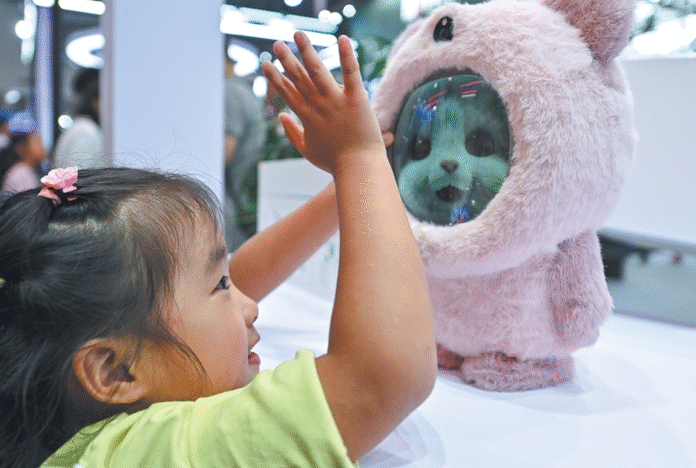
While commuting, a simple voice command lets an AI assistant compare options and place an order. By the time you get home, an AI companion toy can sense your mood and, through ongoing interaction, develop a personality uniquely its own.

These seemingly ordinary moments are quietly but consequentially reshaping everyday life for a growing number of people.

Artificial intelligence is moving from screen-based interaction and becoming a constant presence in daily life — sensing context, anticipating needs and acting on its own — woven into smartphones, wearables, home appliances and a widening range of real-world settings.

Consumers are increasingly witnessing the shift firsthand. Sandy Xu Ran, chief executive officer of Chinese e-commerce giant JD.com, said 2025 is shaping up to be a pivotal year for AI consumption, as AI-related searches on the platform have surged nearly 100-fold.

“We have surveyed consumer interest in AI-enabled products and found that nearly half of respondents said AI capabilities are now a must-have feature,” Xu said recently at the World Economic Forum annual meeting in Davos. “Artificial intelligence has effectively become a baseline requirement for many products.”

The trend is also being echoed by industry experts.

Zhu Keli, founding director of the China Institute of New Economy, said the fast-growing presence of AI in consumer electronics is a natural result of maturing technologies, rising demand and deeper industry collaboration, signaling that smart living is moving beyond concept and into mainstream use.

“Consumers’ rising expectations for greater convenience, more personalized experiences and smarter living are accelerating the real-world adoption of the latest AI-enabled technologies in everyday life,” he added.

Real-world adoption is increasingly visible in home settings. Drawing on user behavior data, smart home ecosystems are turning traditional household appliances into intelligent systems that sense habits, learn preferences and quietly adjust the lights, temperature and routines — slipping naturally into the rhythm of daily life.

COLMO, a China-based brand that was among the earliest in the industry to promote AI-powered home appliances as a core positioning, has built a seamless smart home ecosystem around its self-developed AI butler system.

For instance, upon arriving home, a simple command — “I’m home” — sets the living room temperature to 26 C, activates the humidifying and air-purifying functions, and adjusts the curtains and lights to their usual evening settings. Later, when it’s time to cook, another voice command — “I’m about to start cooking” — triggers the steam oven to preheat, adjusts the range hood to a low setting, turns on its lights, starts a prerinse cycle in the dishwasher, and dims the kitchen lights to a comfortable brightness.

A senior representative of COLMO said that the whole-home smart industry has entered a stage where the focus is on personalized user needs and deeper interaction with consumers, leading to explosive growth in the sector.

Highlighting the market trend, he said: “The whole-home smart technology is shifting from basic, standalone functions to deeper, scenario-based integration, ultimately moving toward proactive intelligence.”

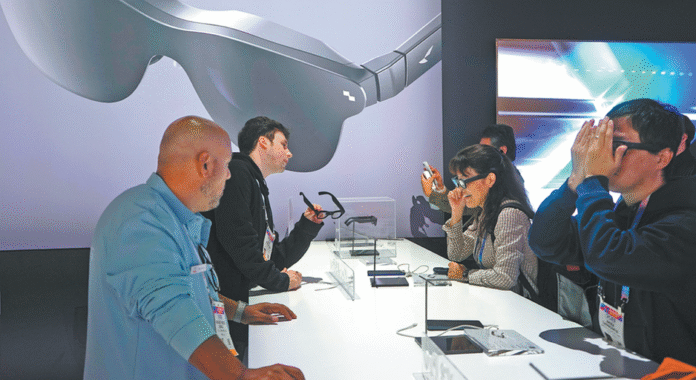
Once outside the home, the need for instant information and on-the-go decision-making becomes more pronounced. AI glasses bring navigation, translation and hands-free recording directly into the wearer’s line of sight, making information easier to access on the move.

A recent buyer of Rokid AI glasses wrote on lifestyle-sharing platform Xiaohongshu, or Red Note, that the device allows her to capture everyday moments anytime from a first-person perspective, describing it as a genuinely hands-free experience.

Such firsthand experiences are becoming increasingly common. In 2025, the AI glasses market expanded rapidly, with a product once regarded as a niche device for tech enthusiasts gaining broader acceptance among mainstream consumers.

Zhang Yunming, vice-minister of industry and information technology, said at a news conference that shipments of smart glasses exceeded 1.78 million units in the first three quarters of 2025, with nearly 80 percent being AI-powered devices, bringing a stronger sense of technology and futurism to both production and everyday life.

E-Commerce Data Further Reinforce The Trend.

Xu of JD.com said smart glasses are emerging as a major new engine of consumption, with sales surging tenfold year-on-year in 2025.

According to a forecast from market research company International Data Corp, 2026 is expected to be a key turning point for the mass rollout of smart glasses in China, with major shifts anticipated in product design, user interaction and service models.

As smart devices continue to gain wider adoption, consumer purchasing behavior is evolving in parallel, as interaction with artificial intelligence becomes increasingly intuitive.

Earlier in January, Alibaba’s AI-powered application Qwen announced its full integration with Taobao and Alipay’s AI payment system, enabling users to complete end-to-end purchases with a single voice command — from ordering food and daily essentials to booking travel gear — as these new AI shopping features roll out in public testing.

For example, when a user tells Qwen to “order a milk tea”, it seamlessly connects with Taobao to find the nearest merchant and match the most relevant product, allowing the user to simply confirm the payment and wait for delivery, all without switching apps.

Wu Jia, vice-president of Alibaba Group, said that after building a powerful “brain”, AI is now gaining the ability to act in the real world, taking on practical tasks and delivering tangible help to users in everyday life.

“We will continue to move forward step by step, aiming to make the Qwen app the most capable human-AI assistant and truly bring the benefits of AI to everyone,” he added.

Zhu of the China Institute of New Economy noted that AI-enabled products will drive growth from both ends of the domestic consumer market — boosting mid — and high-end demand through more innovative experiences, while expanding reach to a broader customer base through ongoing technology upgrades and scaled production, creating a virtuous cycle of growth.

Policy support is also adding momentum to the rise of AI-powered consumption.

Late last year, the Ministry of Industry and Information Technology, along with five other departments, released an action plan outlining key measures to better align the supply and demand of consumer goods and further stimulate consumption, with an emphasis on strengthening the integrated empowerment of artificial intelligence.

Alongside the booming domestic market for AI-powered consumer products, a growing number of companies are stepping up their expansion into overseas markets.

Rokid, the Chinese maker of AI smart glasses and extended reality devices, announced recently that it is accelerating the expansion of its global retail network, rolling out new channels across Asia and Europe to bring products such as Rokid Glasses and Rokid AI Glasses Style closer to overseas consumers.

The company said it is combining physical retail experience stores with online promotion to enhance global brand visibility while strengthening localized services in international markets.

The expansion underscores China’s growing strength in the global AI hardware market. “China has built strong global competitiveness in AI-enabled smart devices, supported by a mature industrial chain that enables faster commercialization and large-scale manufacturing,” Zhu said.

Zhang Chenxu and Yin Mingyue contributed to this story.

Article inline ad

AI Industry Focusing On Real-World Deployment

0

China Daily | Updated: 2026-02-02

The past year has witnessed rapid progress in artificial intelligence-powered smart devices in the country.

Whether at product launches or in interviews with business executives and market analysts, a common view has emerged: AI-enabled products are evolving faster, and AI is no longer confined to displays, but steadily making its way into everyday use.

This momentum is also reflected in the rapid expansion of the industry.

Zhang Yunming, vice-minister of industry and information technology, said estimates show that the number of artificial intelligence companies in China exceeded 6,000 in 2025, with the core sector expected to surpass 1.2 trillion yuan ($170 billion) in scale.

Zhou Hongyi, founder of 360 Security Group, said that the global AI industry is shifting from a race to build ever-larger models toward a focus on real-world deployment.

He noted that competition is increasingly measured by penetration — whether AI can truly move into practical scenarios, going beyond conversation-based functions to deliver real productivity and tangible value.

Zhou’s remarks reflect the accelerating move of edge AI toward real-world application.

Edge AI refers to deploying AI models and algorithms directly on end devices such as smartphones, computers and vehicles, enabling data to be processed locally rather than relying entirely on remote cloud servers.

According to a recent report from the China Academy of Information and Communications Technology, edge-based large models are accelerating upgrades across smart devices, ranging from smartphones and computers to wearables and intelligent vehicles, with a growing emphasis on practical problem-solving.

The report estimates that over the next three years, the penetration of AI-enabled smartphones and personal computers in China will climb beyond 50 percent and 80 percent, respectively.

Taken together, the projections point to smart devices moving into an era of on-device intelligence.

In an interview, Zhu Keli, founding director of the China Institute of New Economy, told me that edge AI is reducing excessive reliance on cloud computing by enabling more data to be processed locally, which not only improves response speed, but also enhances privacy and security.

“This shift is driving smart products to move from basic functionality toward greater intelligence, and from passive response to more proactive services,” Zhu added.

Policy support is also adding momentum to the rollout of edge AI.

Earlier in January, the Ministry of Industry and Information Technology, together with the Cyberspace Administration of China, the National Development and Reform Commission and five other departments, released an action plan outlining an ambitious push to deepen the integration of artificial intelligence with the manufacturing sector.

The action plan calls for accelerating smart terminal upgrades, strengthening support for edge models and application tool chains, and fostering a broader range of AI-powered devices, including smartphones, computers, tablets and smart home products.

During the conversation, Zhu told me that edge AI is likely to move beyond isolated applications toward more integrated intelligence, as models become lighter and more efficient, lowering the barrier for hardware adoption.

“Application scenarios will also extend beyond offices and entertainment into areas such as homes, healthcare and mobility, gradually shaping more personalized intelligent spaces and services,” Zhu added.

Growth, however, also entails structural challenges.

Zhu said China still needs to strengthen its self-reliance in high-end AI chips and foundational software frameworks. He noted that the industrial ecosystem remains fragmented, with limited interoperability among devices, and that the global influence of high-end domestic brands, as well as the maturity of overseas service networks, requires further improvement.

Addressing these gaps, he added, will be essential for the industry to move from scale leadership toward leadership in both technological capability and brand strength.

Artificial intelligence is steadily finding its way into everyday life, moving from the cloud onto the devices people use each day. As smart devices gain the ability to sense, learn and make decisions, edge AI is driving not only faster industrial upgrading, but also a quiet yet profound shift in the way people live and work.

Zhang Chenxu contributed to this story.

Article inline ad

Hohhot’s Role Key In ‘East Data, West Computing’ Strategy

0

Initiative aims to have less-developed inland regions store and process data

China Daily | Updated: 2026-02-02

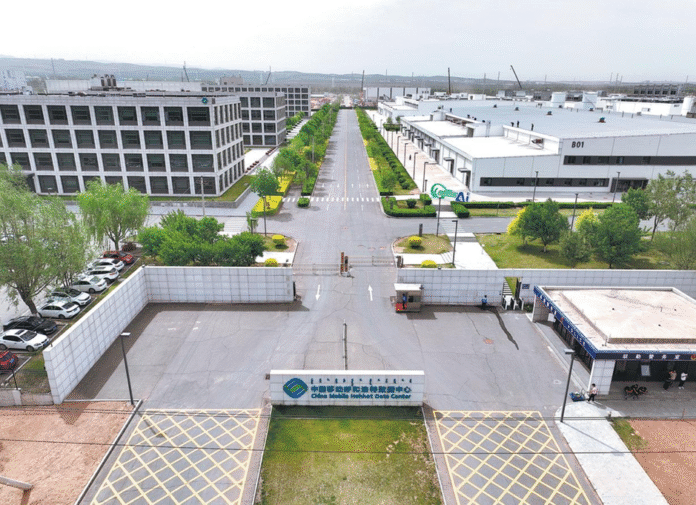
HOHHOT — On a prairie in Hohhot, capital of North China’s Inner Mongolia autonomous region, the wind that has swept the grasslands for millennia now turns massive turbines, generating green electricity that powers thousands of servers in the Horinger New Area, where data centers process information at millisecond speeds.

Inner Mongolia has emerged as one of eight national computing hubs under China’s “East Data, West Computing” strategy. This initiative aims to have less-developed inland regions store and process data sent from the country’s economically dynamic eastern areas, accelerating the development of an integrated national computing network.

As the global digital economy drives data center energy use and the associated carbon emissions to new heights, China is anchoring this high-power industry in regions rich in wind and solar energy, laying a sustainable foundation from the ground up.

The economic logic is compelling. “About half of the operational cost for computing industries comes from electricity consumption. Electricity costs determine competitiveness,” explained Li Xiang, head of the intelligent new energy production management platform at China Huadian Corp Ltd.

Hohhot enjoys a decisive advantage. Green power flows directly from wind farms to data centers through dedicated lines, slashing grid fees. Meanwhile, the city’s cool climate, with an average annual temperature of 7.7 C, provides natural cooling for up to six months a year, drastically reducing air-conditioning costs.

“Compared to data center projects in Beijing, our electricity costs here are reduced by about two-thirds,” said Bai Yang, head of the Jingmeng intelligent computing center in Horinger New Area.

This powerful combination has fueled staggering growth. Hohhot’s total computing power now exceeds 122,000 petaflops, with 96 percent dedicated to intelligent computing. This scale has, in turn, attracted an equipment manufacturing ecosystem. Forty-five companies producing servers, cabinets and sensors have set up locally, forming a complete industrial supply chain.

Making this raw power usable requires smart networks. Sun Wenda, who oversees a local computing resource platform, says acquiring computing power here is now “as convenient as online shopping”. The platform integrates resources for streamlined scheduling and billing, and connects to hubs in Beijing and elsewhere.

The speed is breathtaking. “In the blink of an eye, our data makes 50 round-trips between Beijing and Hohhot,” said Xiao Liangpeng, a client of the platform, referring to a round-trip latency of under 5 milliseconds. This enables real-time applications from scientific research to training the next generation of AI models.

The value of this green computing power shines in its everyday impact. The raw computational power fuels advanced scientific inquiry through supercomputing platforms that are currently supporting more than 3,600 active research projects. It also serves as a critical training ground for the next generation of AI models, developed by leading technology firms.

Beyond the digital world, this intelligence breathes new life into traditional sectors such as dairy farming. Here, smart systems monitor herds by tracking each cow’s activity levels, milk yield and sleep patterns in clear, real-time detail. Automation takes the lead in safety and standardization, with unmanned milking equipment carrying out the entire process, from disinfection to attachment and milking, consistently and precisely.

In the city itself, this computing power enables smart parking systems, smooths traffic flow and powers AI-assisted medical screenings, making urban life more efficient and responsive for residents.

Hohhot’s story stands as a tangible testament to China’s broader pursuit of a balanced path, where vigorous economic development walks hand in hand with a commitment to green transition. Hohhot is not just building a regional data hub; it is actively fueling a cleaner, more powerful engine for the global industrial revolution.

Xinhua

Article inline ad

AI Push Moves Innovation Into Everyday Life

0

Artificial intelligence taking root across multiple sectors, in wide range of uses

By XU WEI in Shanghai | China Daily | Updated: 2026-02-02

For Huang Xiaozhen, the future of artificial intelligence isn’t about computing power or algorithmic scale, but about something far more ordinary: the quiet click of a light switch.

As head of business-to-business operations at MiniMax Group Inc, a rising Chinese AI unicorn, Huang sees the current wave of innovation less as a technological leap than as a transition toward being ubiquitous.

“As the technology iterates, AI will become like water, electricity or coal — the fundamental infrastructure of our existence,” Huang said. “It will be everywhere in our lives and work.”

The vision widely shared by AI optimists has increasingly aligned with the nation’s official policy.

In its recommendations for formulating the 15th Five-Year Plan (2026-30) for national economic and social development, the Communist Party of China Central Committee called for “forward-looking plans” for future industries, urging exploration of diverse technology road maps, application scenarios, business models and regulatory frameworks.

The document explicitly listed quantum technology, biomanufacturing, hydrogen and nuclear fusion energy, brain-computer interfaces, embodied artificial intelligence and 6G mobile communications as new drivers of growth.

The confidence of China’s AI practitioners received a major boost in April 2025, when President Xi Jinping visited the Shanghai Foundation Model Innovation Center, one of the country’s most active AI hubs.

Standing among developers and entrepreneurs, Xi, who is also general secretary of the CPC Central Committee, described artificial intelligence as “a young cause, and a cause for young people”, encouraging them to align personal ambition with China’s modernization drive.

According to the Ministry of Industry and Information Technology, China had more than 6,000 AI enterprises last year, while the scale of the country’s core AI industry was expected to have exceeded 1.2 trillion yuan ($172.6 billion) in 2025.

The president’s visit, combined with subsequent policy measures, has strengthened confidence among startups facing intense competition, according to executives working inside the ecosystem.

Zhang Yun, a deputy general manager at the center, said the visit validated the pace and direction of the hub’s development.

“Nearly 75 percent of our workforce is under the age of 35,” Zhang said. “We’re seeing founders who are barely 30. As AI tools become more powerful, teams are getting smaller, younger and faster.”

The center operates on what participants describe as a philosophy of proximity. “Upstairs and downstairs are upstream and downstream,” Zhang said, referring to the close physical clustering of foundational model developers and application companies, which allows for rapid iteration and feedback.

Yao Zhendi, CEO of Cyber Partner AI Co, said the youthfulness of the sector reflects the nature of the technological challenge itself.

“We’re no longer doing ‘one to 10’innovation, where you just improve something that already exists,” Yao said. “We’re doing ‘zero to one’. There’s no formula and no homework to copy. We’re defining what this technology becomes.”

He added that national planning documents emphasize not only AI, but the integration of embodied intelligence across industries, with a forward-looking approach to development.

Over the next five years, he said, AI is expected to penetrate daily life and a wide range of sectors in line with the 15th Five-Year Plan.

His company is working on the convergence of the “brain”, meaning large-scale models, and the “body”, referring to embodied intelligence — a frontier where software meets robotics.

Paradigm shift

The national strategy outlined in the 15th Five-Year Plan proposals calls for a paradigm shift in scientific research and a focus on self-reliance in breakthroughs in chips, algorithms and data.

For Wang Le, CEO of Shanghai SiliconPear Technology Co, the transformation is already playing out on factory floors and toy shelves.

Wang’s company exports to more than 30 countries and uses AI to upgrade traditional manufacturing.

“We’re turning toys from simple manufactured goods into high-tech consumer products,” Wang said.”It’s no longer just about branding. It’s about embedding technology to upgrade the entire supply chain, which gives Chinese products a distinct global competitive edge.”

Xi’s visit to the Shanghai Foundation Model Innovation Center came after he presided over a group study session of the Political Bureau of the CPC Central Committee, highlighting the need to promote the healthy and orderly development of AI in a beneficial, safe and fair direction.

Huang, from MiniMax, said that companies across the AI value chain are directly feeling the impact of State support. From his perspective, policies aimed at supporting models and application scenarios are accelerating innovation and technical iteration across the industry.

“It’s clear that more and more enterprises, scenarios and applications are moving toward AI,” Huang said. “Many new startups are designing products and use cases based entirely on current AI capabilities. This looks more like a society-wide embrace of AI, and the growth of the entire industry chain is extremely fast.”

Zhou Chen, CEO of Zhejiang Dex-Robot Intelligent Technology, said Xi has explicitly called for accelerating the application of AI in technological innovation and industrial development, a signal that Zhou sees as materially beneficial for enterprises.

He pointed to concrete policy measures such as subsidized computing power and pilot programs for new models. China launched a 60 billion yuan AI industry investment fund to support the development of the whole AI industrial chain.

“They allow companies to be bold and try things first,” Zhou said.”Ultimately, it helps improve human efficiency and reduce defect rates in manufacturing.”

Zhou cited incentives including free or subsidized computing resources, early access to models, and funding for major research projects as mechanisms that encourage companies to experiment.

He argued that China has structural advantages in pursuing such technologies: a complete industrial supply chain, a wide range of real-world application scenarios that generate data, and growing domestic computing capacity.

While much of the focus remains on domestic self-reliance, officials and researchers say China’s AI ambitions also have an outward-facing dimension.

International public good

Yan Weixin, chief scientist at the Shanghai Artificial Intelligence Research Institute, said Xi has called for AI to be developed as an international public good that benefits humanity.

Yan said China has launched initiatives related to AI reinforcement learning and sustainable development, and has begun sharing algorithms and models with partner countries, including those participating in the Belt and Road Initiative.

These technologies are being applied to areas such as disaster warning systems and low-carbon industrial facilities overseas, he said.

Highlighting the link between energy and computation, he said: “AI consumes energy, and energy defines computing power. In the future, there will be deep integration between new energy and dynamic computing.”

Otto Heinrich Herzog, an academician of the German National Academy of Science and Engineering and a professor at Tongji University in Shanghai, said he has been struck by the speed with which policies translate into implementation in China.

“When something aligns with strategy in China, it really gets implemented,” Herzog said. “That’s something you don’t experience in the same way in Europe.”

Zhou Wenting and Wang Ying in Shanghai contributed to this story.

xuwei@china

Article inline ad